Mastering the Creamy Red Cabbage Slaw Technique
Most people have experienced the disappointment of a beautiful coleslaw turning into a soupy, watery mess at the bottom of the bowl. You spend time shredding and whisking, only to find your crisp vegetables swimming in a diluted, bland liquid after just twenty minutes. This happens because cabbage is packed with internal moisture that releases the moment it hits the salt and acid in your dressing.
The secret to a professional, deli-style crunch lies in a salt-wilting technique that draws out that excess moisture before you ever add the dressing. By treating the cabbage first, you ensure the texture stays incredibly crisp while the dressing remains thick and flavorful. This specific method creates a bold profile that is tangy, earthy from whole caraway seeds, and deeply creamy without ever feeling heavy.
I’ve found that red cabbage is the perfect candidate for this technique because its sturdy leaves hold up beautifully to the wilting process. The secret is the “bone-dry” rule; if you don’t dry the cabbage thoroughly after rinsing the salt away, the dressing won’t cling. When you get this right, every bite delivers a satisfying snap and a punch of bright, acidic flavor that balances any rich main course.
The Science of Preventing Watery Slaw
Understanding why slaw gets soggy requires a quick look at osmosis. When you sprinkle salt over shredded cabbage, it creates a high concentration of solutes on the outside of the vegetable’s cell walls. This naturally draws the water out from inside the cells to balance the concentration, effectively “pre-shrinking” the cabbage before it hits your plate.
Red cabbage specifically requires this treatment more than its green counterpart because it possesses a much denser fiber structure. The leaves are thicker and more rigid, which can often make raw red cabbage feel “tough” or “woody” in a standard salad. Salt-wilting softens these tough fibers just enough to make them pleasant to chew while maintaining a superior crunch.
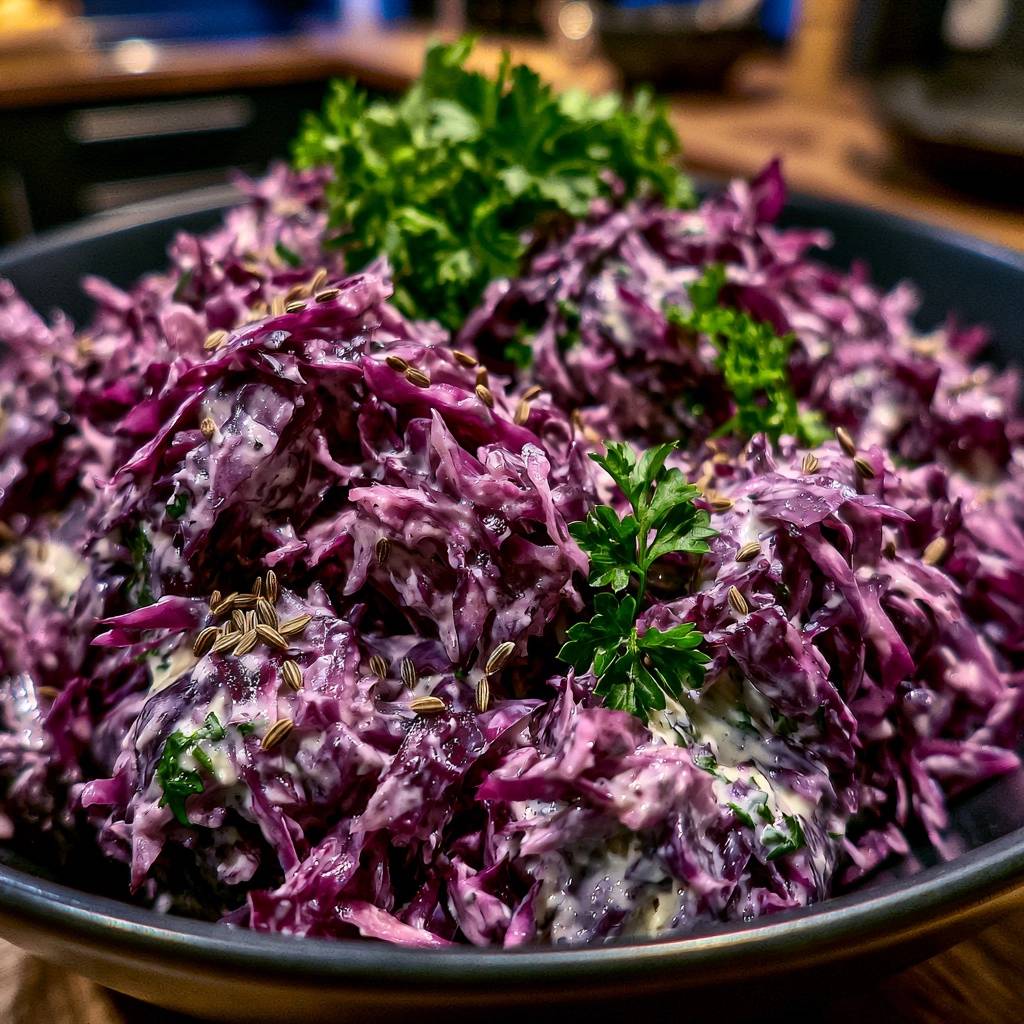
By removing this cellular water upfront, you prevent it from leaking out later and thinning your mayonnaise base. This ensures that the creamy emulsion you worked hard to whisk stays exactly where it belongs—clinging to the cabbage. You’ll notice the cabbage becomes more vibrant in color and slightly more flexible, which is the visual cue that the science is working.
Essential Components for Creamy Red Cabbage Slaw
Quality ingredients make a massive difference when the list is this short and focused. I always recommend using Kosher salt for the wilting process rather than fine table salt. The larger grains are easier to distribute evenly by hand, and they are much easier to rinse away later so your final dish isn’t an salt bomb.
The caraway seeds are another non-negotiable component for an authentic, earthy flavor profile. They provide a warm, slightly anise-like counterpoint to the natural sulfurous notes of the cabbage. When paired with the sharp tang of apple cider vinegar, these seeds elevate the slaw from a simple side dish to a complex, chef-quality accompaniment.
Fresh curly parsley adds the final hit of brightness and a necessary pop of green. Unlike flat-leaf parsley, the curly variety provides a structural “mound” that looks beautiful for presentation. It also offers a mild, grassy flavor that cuts through the richness of the mayonnaise and sour cream base.
Selecting and Prepping the Red Cabbage
When you’re at the grocery store, look for a head of red cabbage that feels heavy for its size with tightly packed leaves. If the outer leaves are starting to peel away or feel limp, the cabbage is likely older and will have less natural sweetness. A firm, shiny head is your best bet for that signature snap.
The thickness of your shred is the next critical factor for success. You want bite-sized pieces that are thin enough to soften but thick enough to retain their “backbone.” If you shred it too thin on a mandoline, it can turn to mush during the wilting phase; too thick, and it becomes difficult to eat gracefully.
The Creamy Base: Mayo vs. Sour Cream
This recipe utilizes a specific 3:1 ratio of mayonnaise to sour cream to achieve the perfect consistency. While mayonnaise provides the classic richness we expect in a slaw, sour cream introduces a lactic tang and a structural thickness that mayo lacks on its own. This combination ensures the dressing is sturdy enough to coat the cabbage without sliding off.
To balance the sharp acidity of the apple cider vinegar, a touch of honey is essential. Honey acts as a mellowing agent that rounds out the flavors without making the slaw taste “sweet” like a dessert. It also helps the dressing emulsify, creating a glossy finish that looks incredible on the dark purple leaves.
Step-by-Step: The Salt-Wilting and Rinsing Process
Start by placing your shredded cabbage in a large colander and tossing it thoroughly with the Kosher salt. You really want to use your hands here to massage the salt into the fibers. Within about ten minutes, you’ll actually see the cabbage start to glisten as the moisture begins to bead on the surface.
Let the cabbage sit for at least 20 to 30 minutes to allow the osmosis to finish its work. You’ll notice the volume of the cabbage in the colander will actually shrink slightly as it loses water. Once the time is up, rinse the cabbage thoroughly under cold running water to stop the curing process and wash away the excess sodium.
Don’t be afraid to really get in there and move the cabbage around under the tap. If you skip the rinse, the final slaw will be far too salty to enjoy. The cold water also helps shock the cabbage, keeping the remaining cell structure firm and crisp for the best possible mouthfeel.
Achieving Bone-Dry Cabbage for Maximum Adhesion
This is the most important step in the entire process: you must get the cabbage bone-dry. If there is a film of water on the surface of the leaves, the fat-based dressing will simply slide off. A salad spinner is the most efficient tool for this, as the centrifugal force pulls water out of every crevice.
If you don’t have a spinner, pile the rinsed cabbage into a clean, lint-free kitchen towel. Gather the corners and squeeze firmly over the sink until no more water drips out. You want the cabbage to feel almost dry to the touch before it ever meets the dressing bowl.
Emulsifying the Tangy Dressing and Assembly
In a separate small bowl, whisk your mayonnaise, sour cream, vinegar, honey, and pepper until the mixture is completely smooth. You want to make sure the honey is fully incorporated so you don’t end up with sticky pockets. The dressing should be thick enough to hold a soft peak when you lift the whisk.
Transfer your dried cabbage to a large serving bowl and pour the dressing over the top. Toss it thoroughly until every single strand of purple cabbage is heavily and evenly coated. At this stage, fold in half of your caraway seeds so they are distributed throughout the mixture for consistent flavor.
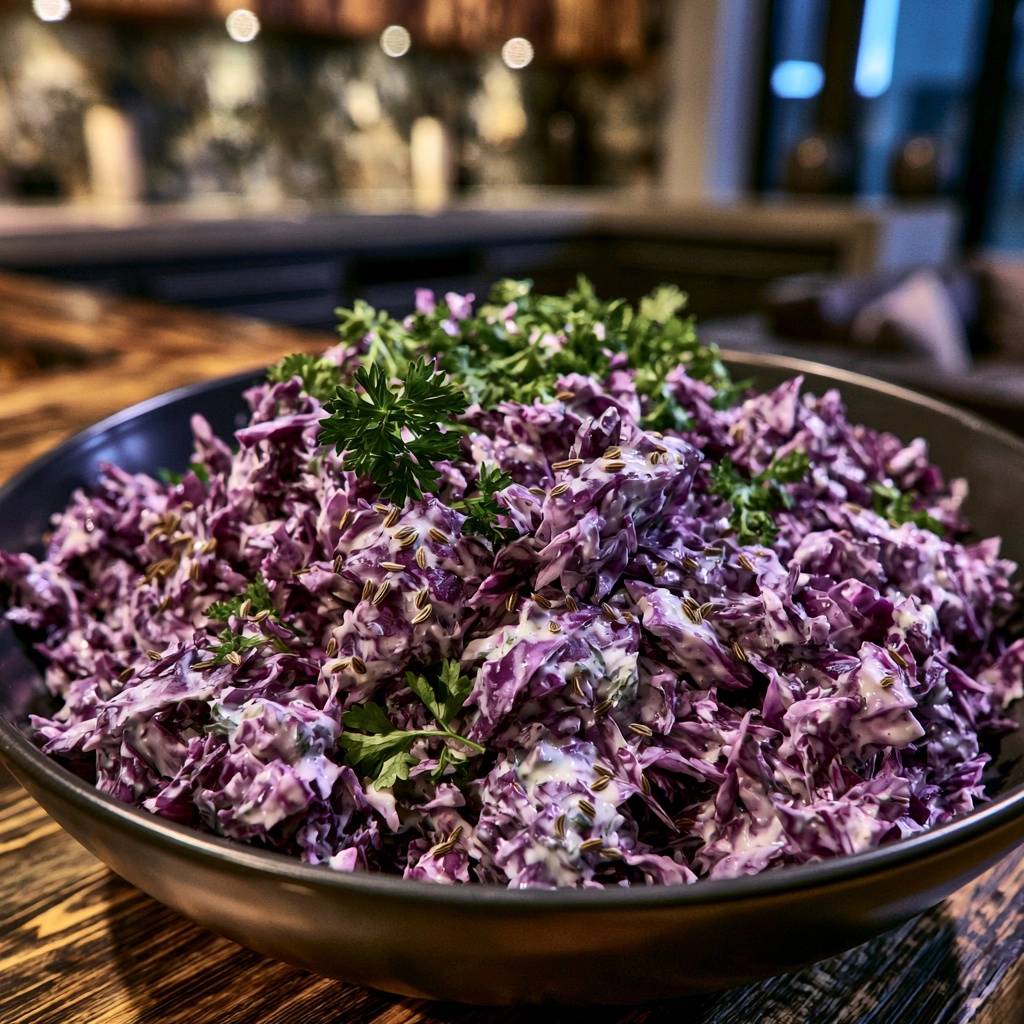
For a professional presentation, create a generous mound of fresh curly parsley sprigs right in the center of the bowl. Sprinkle the remaining caraway seeds over the top of the parsley and cabbage. This layered look makes the dish feel special and highlights the fresh ingredients used inside.
Flavor Variations and Ingredient Swaps
While this recipe is a classic, you can easily tweak it to suit your pantry or dietary needs. If you don’t have honey on hand, maple syrup makes an excellent substitute and adds a slightly woody sweetness. For those who prefer a more traditional “American” profile, you can swap the caraway seeds for celery seeds.
If you want to add more texture and a bit of sweetness, try tossing in some julienned Granny Smith apples or toasted walnuts just before serving. The tartness of the apple plays beautifully with the red cabbage. You could also add shredded carrots for a pop of orange color, though the red cabbage is stunning on its own.
For a lighter version, you can replace the sour cream with plain Greek yogurt. However, keep in mind that yogurt is slightly more watery than sour cream, so you may need to add an extra teaspoon of mayonnaise to maintain that thick, clingy texture that makes this recipe so successful.
Optimal Pairings for Red Cabbage Slaw
This slaw is a powerhouse side dish because its high acidity and creamy texture act as a perfect palate cleanser. It shines brightest when served alongside heavy, fatty proteins. Think of a slow-smoked brisket or roasted chicken where the vinegar in the slaw can cut through the richness of the meat.
It is also a fantastic topping for grilled portobello mushroom burgers or pulled beef sandwiches. The crunch of the cabbage provides a necessary textural contrast to soft buns and tender fillings. Because it doesn’t get watery, you can even pile it directly onto a sandwich without worrying about the bread getting soggy.
I also love serving this at barbecues because the vibrant purple color stands out against the typical browns and yellows of grilled foods. It brings a fresh, bright element to the plate that keeps people coming back for second helpings. It’s the kind of side dish that often steals the show from the main course.
Troubleshooting Common Slaw Issues
If you find that your cabbage is still too salty after the first rinse, don’t panic. Simply put it back in the colander and rinse it again with cold water, then dry it thoroughly. You can always add a pinch of salt back in later, but you can’t take it out once the dressing is on.
If your dressing feels a bit too thick to toss easily, whisk in a single teaspoon of apple cider vinegar to loosen it up. On the flip side, if it feels too thin, a tablespoon of extra sour cream will usually fix the body. Never dress the cabbage while it is still warm from the sun or a warm kitchen; the heat will break the emulsion.
Another common issue is the cabbage “bleeding” its purple color into the white dressing. While this is natural for red cabbage, you can minimize it by ensuring the cabbage is completely cold and dry before mixing. Serving it immediately after tossing also keeps the colors sharp and distinct.
Storage and Make-Ahead Preparation
Because we’ve removed the excess moisture through the salt-wilting process, this slaw has a much longer shelf life than standard recipes. You can store it in an airtight container in the refrigerator for up to three days. The texture will remain remarkably crunchy, though the color may bleed slightly more into the dressing over time.
If you are making this for a party, you can wilt and dry the cabbage a day in advance. Store the dry cabbage and the whisked dressing in separate containers in the fridge. When you’re ready to serve, just toss them together and add your fresh parsley garnish for a “just-made” taste and appearance.
To refresh leftovers the next day, give the slaw a quick stir to redistribute the dressing. I usually like to add a tiny pinch of fresh parsley or a few extra caraway seeds to brighten up the flavors. It’s one of the few salads that actually tastes just as good, if not better, the following afternoon.
Can You Freeze Red Cabbage Slaw?
No, you should never freeze red cabbage slaw. Freezing causes the water inside the vegetables to expand and burst the cell walls. Once thawed, the cabbage will lose all its structural integrity and turn into a mushy, unappealing mess, regardless of the salt-wilting technique used during preparation.
How long should I let the cabbage sit with the salt?
You should let the cabbage sit for at least 20 to 30 minutes. This timeframe is the “sweet spot” that allows the salt to draw out the maximum amount of moisture without completely curing the cabbage into a kraut-like texture. If you are in a rush, even 15 minutes is better than nothing, but 30 minutes ensures the dressing won’t get watery later.
Why is my slaw still salty after rinsing?
If the slaw tastes too salty, it usually means the cabbage wasn’t rinsed thoroughly enough or the pieces were shredded too thin, allowing them to absorb more salt. To fix this, you can rinse the cabbage again before adding the dressing. If it’s already dressed, adding a little more honey or a splash of vinegar can help balance the sodium levels on your palate.
Can I use green cabbage instead of red?
Yes, you can use green cabbage, but the texture will be slightly different. Green cabbage is less dense than red, so it may wilt faster. If you use green cabbage, I recommend checking it after 15 minutes of salting. The flavor will be milder, so you might want to add a bit more black pepper or caraway seeds to keep the profile bold.
What can I use if I don’t have apple cider vinegar?
White wine vinegar or champagne vinegar are the best substitutes. They provide a similar level of acidity without being overly harsh. Avoid using plain white distilled vinegar if possible, as it can be quite sharp and lacks the fruity undertones that make apple cider vinegar work so well with the honey and cabbage.
How do I keep the red cabbage from staining the dressing?
Red cabbage contains natural pigments called anthocyanins that bleed when they come into contact with moisture and acid. To keep the dressing looking white for as long as possible, ensure the cabbage is bone-dry before mixing. Also, keep the slaw chilled; the colder the ingredients, the slower the pigment will bleed into the creamy base.
Creamy Red Cabbage Slaw
Course: Side DishCuisine: AmericanDifficulty: easy6
servings35
minutes35
Minutes165
kcalAmerican
Ingredients
1 large head red cabbage, shredded into bite-sized pieces
1 tablespoon kosher salt
3/4 cup mayonnaise
1/4 cup sour cream (for extra thickness and tang)
2 tablespoons apple cider vinegar
1 tablespoon honey
1 teaspoon caraway seeds (whole)
1/2 teaspoon black pepper
1 cup fresh curly parsley, stems removed (large sprigs for garnish)
Directions
- Place the shredded red cabbage in a large colander set over a bowl or in the sink. Sprinkle the cabbage with the kosher salt and toss thoroughly with your hands to coat every strand.
- Let the cabbage sit for at least 20 to 30 minutes. This is the critical step to solve the sogginess problem; the salt draws out the cellular water that usually thins out your dressing.
- After 30 minutes, rinse the cabbage thoroughly under cold water to remove the excess salt.
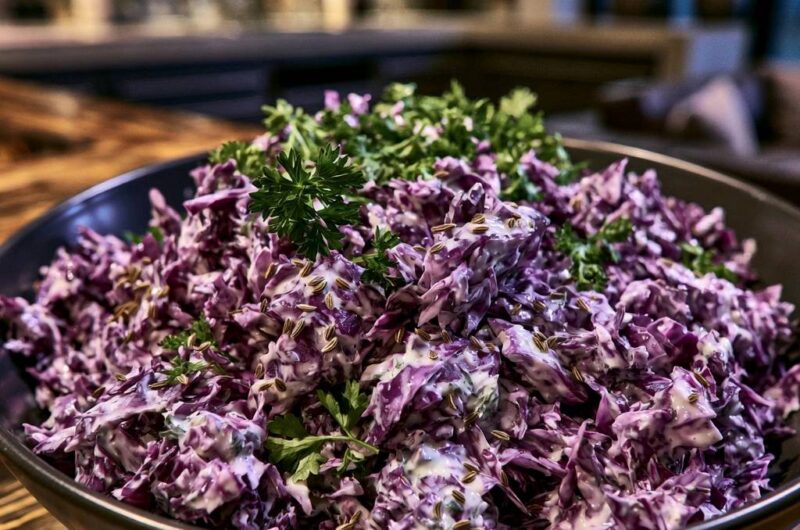
- Crucial Step: Transfer the cabbage to a salad spinner and spin until completely dry, or wrap in a clean kitchen towel and squeeze firmly. The cabbage must be bone-dry to ensure the thick dressing clings to the leaves as shown in the image.
- In a separate bowl, whisk together the mayonnaise, sour cream, apple cider vinegar, honey, and black pepper until smooth and thick.
- Transfer the dried cabbage to a large serving bowl. Pour the dressing over the cabbage and toss until every piece is heavily and evenly coated.
- Fold in half of the caraway seeds.
- To match the visual presentation: Top the slaw with a generous mound of fresh curly parsley sprigs in the center and sprinkle the remaining whole caraway seeds over the top. Serve immediately or chill for one hour. The texture will remain perfectly crunchy without any watery runoff.
Notes
- The salt-wilting step is essential to prevent the dressing from becoming thin and watery. Ensure the cabbage is completely dry before adding the dressing for the best results.