Mastering the Creamy Radicchio and Romaine Caesar
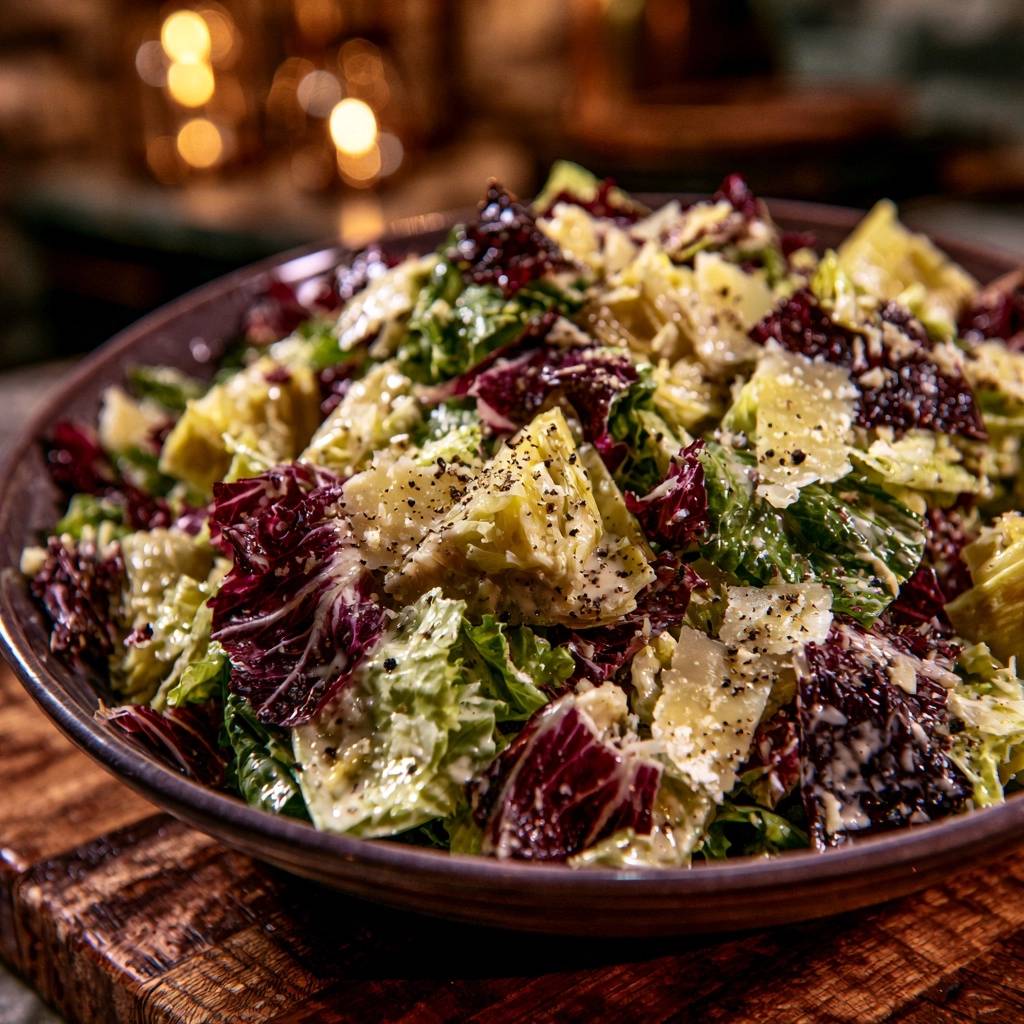
Stop serving limp, watery salads that lose their crunch before they even hit the table. The secret to a restaurant-quality Caesar lies in moisture management and a high-viscosity dressing that actually clings to the leaves. This recipe uses a chilled-leaf method and a specific layering technique to ensure every bite stays incredibly crisp and bold, even after being tossed.
You’ve likely experienced the disappointment of a Caesar salad that turns into a soggy mess within minutes. However, by combining the sturdy structure of Romaine with the peppery, bitter bite of Radicchio, you create a base that can stand up to a rich dressing. Therefore, this isn’t just a side dish; it’s a study in texture and balance.
The real trick to this “shatter-crisp” experience is the ice-water shock. By plunging your greens into a cold bath, you increase the turgor pressure within the plant cells, making them rigid and snappy. I’ve found that skipping this step is the number one reason home salads feel lackluster compared to professional versions.
The Physics of a Crisp Caesar Salad
Understanding the science of leaf structure is the first step toward salad mastery. Romaine and Radicchio have thick ribs that act as a skeleton, but they are highly susceptible to osmotic pressure. When you add salt and acid to a damp leaf, the water inside the leaf is drawn out, leading to immediate wilting.
In addition, a thin vinaigrette will simply slide off the waxy surface of the greens and pool at the bottom of the bowl. A high-viscosity dressing, built on a stable base, creates a thick coating that stays put. This ensures that the acid from the lemon juice doesn’t penetrate the leaf too quickly, preserving that essential crunch.
Why Radicchio Changes the Flavor Profile
Radicchio contains a bitter compound called intybin, which provides a sophisticated counterpoint to the heavy fats in a traditional Caesar. While Romaine offers a mild sweetness and watery crunch, the Radicchio adds a complex depth that keeps your palate engaged. Furthermore, the vibrant purple hues against the bright green Romaine make the dish visually stunning.

The Role of Moisture Management
Residual water is the enemy of flavor. If your leaves are even slightly damp, they will dilute your dressing, turning a punchy Caesar into a bland, runny disappointment. By cutting the Romaine into 1.5-inch squares, you maximize the surface area for the dressing to grab onto while maintaining enough structure to resist bruising.
Essential Components for the Creamy Radicchio and Romaine Caesar
Quality ingredients are paramount when the preparation is this simple. I recommend using a high-quality mayonnaise as your base because it provides a stable, thick emulsion that is much more reliable than raw egg yolks for home cooks. It ensures your dressing won’t break or separate as it sits.
Freshly squeezed lemon juice is non-negotiable here. The bottled stuff lacks the bright, floral notes needed to cut through the richness of the Parmesan and mayo. Similarly, using a high-quality extra virgin olive oil adds a peppery finish that rounds out the savory notes of the Worcestershire sauce and garlic.
Selecting the Best Romaine and Radicchio
When you’re at the market, look for Romaine heads that feel heavy for their size and have tightly packed leaves. Avoid any with brown spots on the ribs. For the Radicchio, choose a head that is firm and has a deep, grape juice-red color with bright white veins, as this indicates peak freshness and flavor.
The Importance of Coarsely Cracked Black Pepper
Pre-ground pepper is often dusty and one-dimensional. In contrast, coarsely cracked black pepper provides tiny “flavor bombs” that explode when you bite into them. These large fragments offer a sharp heat that cuts through the creamy Parmesan, providing a necessary textural contrast to the smooth dressing.
Step-by-Step: Preparing the Greens for Maximum Crunch
The washing and drying process is the most critical phase for the “Anti-Soggy” promise. Firstly, you must treat your greens with care to avoid bruising the delicate edges of the Radicchio. A gentle touch during the chopping and tearing phase ensures the leaves look as good as they taste.
Once the greens are prepped, they need to be revived. Even the freshest store-bought lettuce has lost some moisture during transport. By rehydrating them properly, you are essentially “inflating” the leaves back to their original, crispy state.
The Ice-Cold Water Shock Technique
Submerge your chopped Romaine and torn Radicchio in a large bowl of ice-cold water for at least five minutes. You will actually feel the leaves become stiffer and more resilient under your fingers. This cold shock firms the cell walls, which is the secret to that restaurant-style “snap” when you take a bite.
Achieving Bone-Dry Leaves Without a Spinner
If you don’t own a salad spinner, you can use a clean kitchen towel. Place the damp greens in the center of the towel, gather the corners to create a bundle, and gently swing it in a circular motion outdoors or over a bathtub. The centrifugal force will pull the moisture away from the leaves and into the fabric.
The 10-Minute Refrigerator Chill
After drying the leaves completely, place them in a bowl in the refrigerator for 10 minutes. This secondary chill further sets the crispness. It also ensures that when you add the dressing, the temperature remains cold, which prevents the fats in the dressing from becoming too runny.
Emulsifying the High-Viscosity Caesar Dressing
Building the dressing is an exercise in chemistry. You are looking to create a stable emulsion where the oil and water-based ingredients are perfectly suspended. This results in a creamy, luxurious mouthfeel that coats the tongue without feeling greasy.
Start by whisking your aromatics together. The garlic, Dijon mustard, and Worcestershire sauce provide the flavor foundation. By mixing these first, you ensure the pungent garlic and salty Worcestershire are evenly distributed before the fats are introduced.
Whisking the Base Ingredients
Combine the mayonnaise, lemon juice, and mustard in a small bowl. Whisk until the mixture is completely smooth. The mustard acts as a natural emulsifier, helping the oil bond with the lemon juice later in the process. Don’t rush this; a smooth base leads to a smooth finish.
Incorporating Olive Oil for Stability
Slowly drizzle the extra virgin olive oil into the bowl while whisking constantly. If you pour the oil too quickly, the dressing may split and look curdled. However, if this happens, you can usually fix it by whisking in a teaspoon of warm water to help the fats re-bind.
Using Finely Grated Parmesan as a Thickener
The two tablespoons of finely grated Parmesan aren’t just for flavor. Because the cheese is so fine, it acts as a structural binder. It absorbs a small amount of the liquid and creates a “velcro” effect, helping the dressing cling to the vertical surfaces of the Radicchio and Romaine.
The Layering Strategy to Prevent Wilting
The way you assemble the salad is just as important as the ingredients themselves. Most people pour the dressing directly onto the leaves, which can cause immediate wilting. Instead, we use a “barrier method” to protect the integrity of the greens.
By using the cheese as a physical shield, you create a buffer between the acidic dressing and the leaf surface. This small change in technique can buy you an extra 15 to 20 minutes of crunch time, making it perfect for dinner parties where guests might be slow to sit down.
Creating the Parmesan Shield
Add half of your shaved Parmesan flakes to the dry greens before you add a single drop of dressing. Toss them lightly so the flakes are distributed throughout. These large flakes act as a barrier, catching the dressing and preventing it from fully saturating the leaves too quickly.
Tossing for Even Distribution
Pour the dressing over the greens and use large tongs to gently lift and fold the salad. Avoid “mashing” the leaves. You want every piece to be glistening and coated, but you don’t want to break the delicate structure of the Radicchio. Stop as soon as the dressing is evenly distributed.
Flavor Variations and Ingredient Swaps
While this recipe is designed for maximum crunch, you can certainly adapt it to your preferences. The core principle of moisture management remains the same regardless of what you add. Just remember that any additions should be as dry as possible to maintain the dressing’s thickness.
If you want to add a bit of sweetness, a few dried cranberries can complement the bitterness of the Radicchio. Alternatively, a handful of toasted sunflower seeds can add an extra layer of nuttiness that pairs beautifully with the Parmesan cheese.
Adding Protein Without Adding Moisture
Grilled chicken or chickpeas are excellent additions. However, you must ensure they are cooled to room temperature before adding them to the bowl. Adding hot protein will steam the greens and cause them to wilt instantly, destroying all your hard work in the chilling phase.
Vegan Substitutions for Creamy Textures
For a vegan version, use a high-quality vegan mayonnaise and replace the Parmesan with nutritional yeast or a cashew-based vegan parm. These substitutions maintain the high-viscosity requirement. Ensure your vegan mayo is thick and not a “light” version, which tends to be more watery.
Troubleshooting Your Caesar Salad
Why is my dressing pooling at the bottom?
This usually happens for two reasons: either the leaves weren’t dried properly or the emulsion wasn’t stable. If you see liquid at the bottom, try adding another tablespoon of finely grated Parmesan to the bowl and tossing again. The cheese will help soak up the excess moisture and re-thicken the sauce.
How do I mellow out the garlic bite?
If you find raw garlic too pungent, try microplaning the garlic directly into the lemon juice and letting it sit for five minutes before adding the other ingredients. The acid in the lemon juice “cooks” the garlic slightly, removing the harsh sulfurous bite while keeping the savory flavor.
Can I make this salad ahead of time?
You can prep the components ahead of time, but do not toss them until the very last second. Store the washed and dried greens in a zip-top bag with a dry paper towel in the fridge for up to 24 hours. The dressing will stay fresh in an airtight jar for up to three days.
What if I don’t have Radicchio?
If Radicchio isn’t available, you can substitute it with Belgian endive or even very thinly sliced red cabbage. Red cabbage provides a similar color and crunch, though it lacks the specific bitter profile of Radicchio. If using cabbage, slice it very thin so it doesn’t overpower the Romaine.
Why does the recipe call for both shaved and grated Parmesan?
The two textures serve different purposes. The finely grated cheese is a functional ingredient that thickens the dressing and ensures it sticks to the leaves. The shaved flakes provide “pops” of salty, nutty flavor and a beautiful visual contrast against the dark purple and green leaves.
Expert Serving Suggestions
For the ultimate experience, place your serving bowl in the freezer for five minutes before plating. A chilled bowl keeps the salad crisp for much longer. Finally, finish the dish with an extra sprinkle of that coarsely cracked black pepper and the remaining Parmesan flakes to give it a professional, textured look.
How should I store leftovers?
Unfortunately, once a Caesar salad is tossed, it does not store well. The salt and acid will inevitably break down the greens overnight, resulting in a soggy texture. It is best to only toss the amount you plan to eat immediately. If you have extra, keep the dressing and greens in separate containers in the refrigerator for up to two days.
Why is my dressing too salty?
Parmesan and Worcestershire sauce are both naturally very high in sodium. If your dressing tastes too salty, add a tiny pinch of sugar or a little more lemon juice. The sweetness or acidity will help balance the saltiness without thinning out the texture of the dressing too much.
Can I freeze the dressing?
I do not recommend freezing this dressing. Because it is mayonnaise-based, the emulsion will likely break when it thaws, resulting in an oily, separated mess. Since it only takes a few minutes to whisk together, it is much better to make it fresh or keep it in the fridge for a few days.
What is the best way to mince the garlic?
For this recipe, using a garlic press or a microplane is better than hand-mincing with a knife. You want the garlic to be almost a paste so it integrates fully into the dressing. This ensures you get a consistent garlic flavor in every bite rather than biting into a large, spicy chunk of raw garlic.
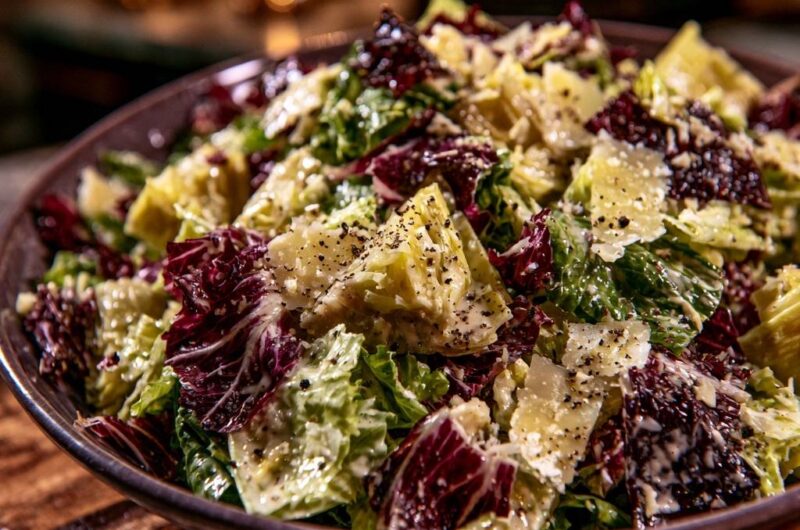
Creamy Radicchio and Romaine Caesar
Course: SaladCuisine: AmericanDifficulty: easy4
servings15
minutes15
Minutes265
kcalAmerican
Ingredients
1 large head Romaine lettuce, chopped into 1.5-inch squares
1 small head Radicchio, torn into bite-sized pieces
1/2 cup shaved Parmesan cheese (large flakes)
2 tablespoons finely grated Parmesan cheese (for the dressing)
1/3 cup high-quality mayonnaise
1 tablespoon fresh lemon juice
1 teaspoon Dijon mustard
1 teaspoon Worcestershire sauce
1 clove garlic, pressed or finely minced
1/2 teaspoon coarsely cracked black pepper (plus extra for garnish)
1/4 teaspoon sea salt
2 tablespoons extra virgin olive oil
Directions
- To solve the soggy salad problem, wash the Romaine and Radicchio in ice-cold water. Spin them completely dry in a salad spinner. If you do not have a spinner, pat them dry with paper towels until no visible moisture remains. Place the dried greens in a bowl in the refrigerator for 10 minutes; chilling the leaves firms the cell walls for maximum crunch.
- In a small mixing bowl, whisk together the mayonnaise, lemon juice, Dijon mustard, Worcestershire sauce, minced garlic, salt, and pepper.
- Slowly drizzle the olive oil into the mixture while whisking constantly to create a thick, stable emulsion. Stir in the 2 tablespoons of finely grated Parmesan; this thickens the dressing further so it clings to the leaves rather than pooling at the bottom.
- Remove the chilled greens from the fridge. Add half of the shaved Parmesan flakes to the greens first and toss lightly. This creates a physical barrier that helps protect the leaves from wilting.
- Pour the dressing over the greens and toss gently using large tongs until every leaf is glistening and coated.
- Transfer to a chilled serving bowl. Top generously with the remaining shaved Parmesan flakes and a heavy sprinkle of coarsely cracked black pepper to match the visual texture of the dish. Serve immediately.
Notes
- The secret to the anti-soggy texture is ensuring the greens are bone dry and chilled before adding the dressing.