One-Pan Garlic Herb Chicken and Potatoes
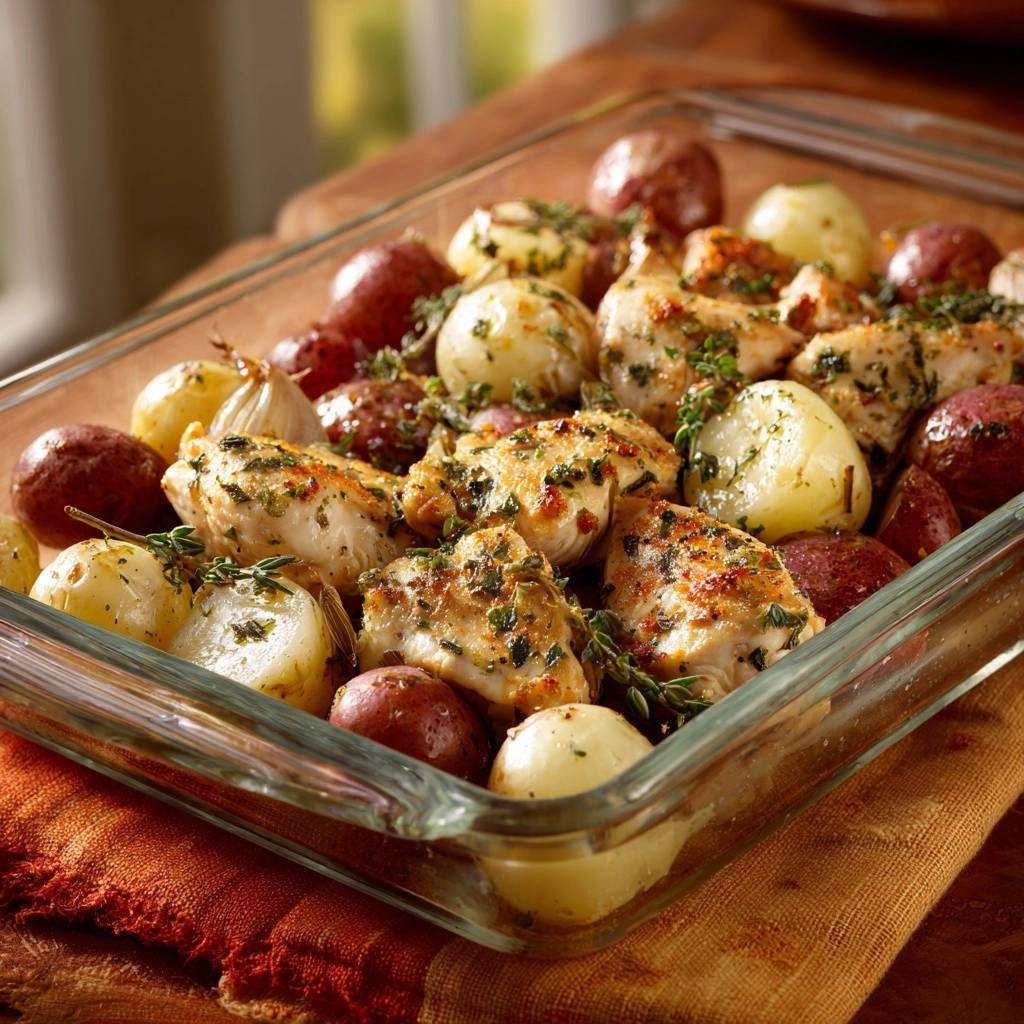
Tired of dry, tough chicken thighs straight from the oven? This one-pan garlic herb chicken and potatoes fixes that fast. You get tender, juicy chunks nestled on a bed of golden baby potatoes that soak up every bit of flavor, all in under an hour. Imagine the garlic bursting sweet and creamy, herbs filling your kitchen with that irresistible aroma, and crispy potato edges begging for a fork.
Here’s why it works so well. The potatoes create steam pockets at 425 degrees F, basting the chicken from below while absorbing extra fat. Thighs beat breasts every time thanks to their higher fat content and collagen that melts into gelatin for unbeatable moisture. Plus, you’ll save cash over takeout with fresh control.
The real secret? Pat the chicken ultra-dry before coating. That simple step triggers the Maillard reaction for crispy herb crusts while locking juices inside. No more bland, leathery bites.
Why Potatoes Prevent Dry Chicken Thighs
Baby potatoes form the perfect foundation in this dish. They release steam during roasting, which rises to keep chicken thighs succulent. In addition, they soak up rendered fat, turning crispy on the edges without sogginess.
Contrast this with plain oven bakes. Without that moisture barrier, chicken dries out fast. However, at 425 degrees F, the high heat crisps the skin via Maillard browning, especially after patting dry.
Thighs shine here because their dark meat collagen breaks down into juicy gelatin. Therefore, you avoid the toughness of overcooked white meat. Always hit 165 degrees F internally, then rest five minutes so juices redistribute evenly.
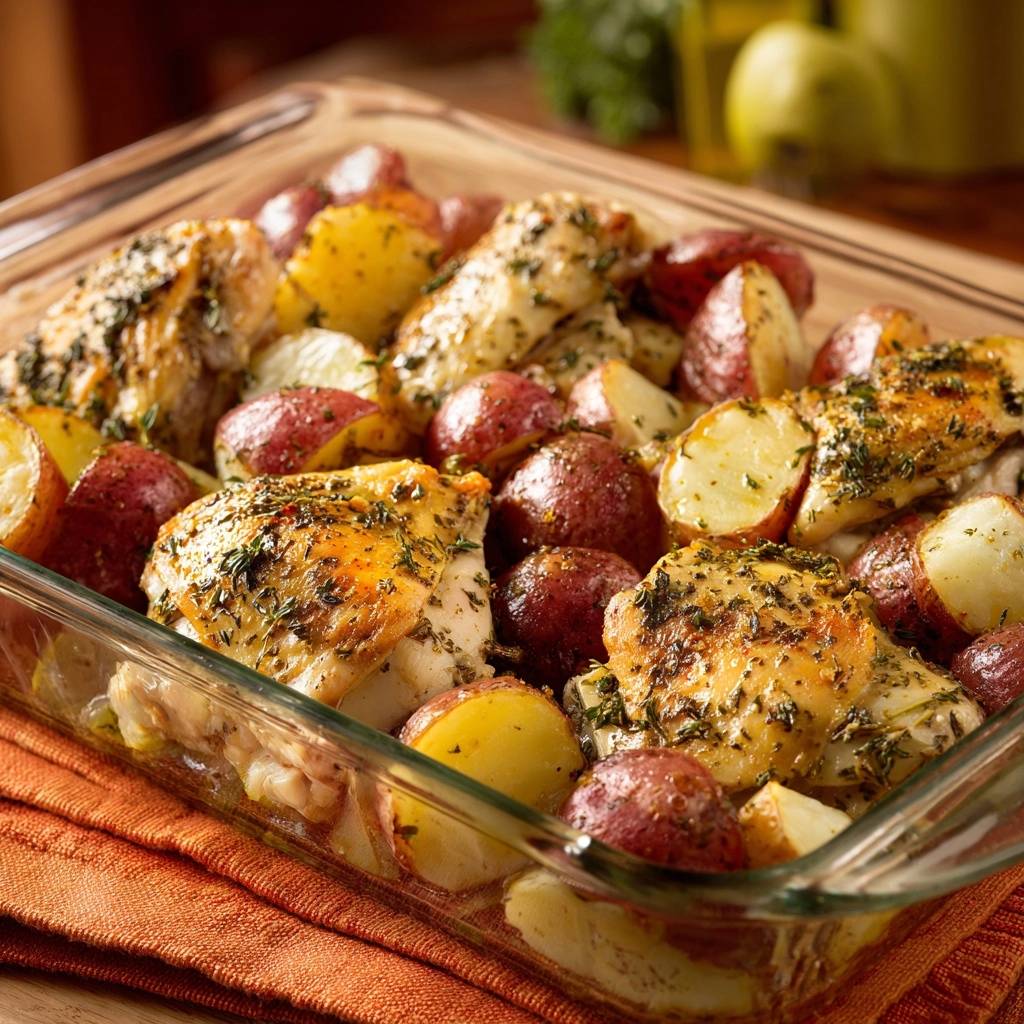
Thighs vs. Breasts: Moisture Science
Chicken thighs pack 20 to 30 percent more moisture-retaining collagen than lean breasts. Breasts dry out above 150 degrees F, but thighs stay forgiving. Chunk them for even cooking, and you nail juicy results every time.
USDA guidelines confirm 165 degrees F as safe. Therefore, thighs’ marbling ensures tenderness without guesswork.
Key Ingredients for Garlic Herb Coating
Baby potatoes, a mix of red and white, bring color and varied texture. Their starch absorbs chicken juices perfectly. Use 1 1/2 pounds whole for 4 servings; organic boosts earthy flavor.
Whole unpeeled garlic cloves roast sweet and nutty. Fresh thyme sprigs and chopped parsley release volatile oils at high heat, far better than dried. In addition, 3 tablespoons olive oil handles the 425 degrees F smoke point smoothly.
Paprika adds smoky depth and color without spice overload. Salt and pepper tie it all together. These potassium-rich potatoes balance the protein punch too.
Whole Garlic Cloves Role in Flavor
Roasting unpeeled protects the cloves from burning. Natural sugars caramelize into nutty sweetness that infuses the potatoes. Just squeeze them out post-roast, way better than minced which scorches easily.
Fresh Herbs vs. Dried in One-Pan Roasts
Fresh parsley and thyme hold up to high heat, releasing oils gradually for bold aroma. Dried works in a pinch at one-third the amount, but it lacks vibrancy. Chop parsley fine for the paste to cling tight to chicken.
Equipment Choices for Even One-Pan Roasting
Grab a 13×9-inch glass baking dish for superior heat retention. Its deeper sides trap steam better than shallow sheet pans, preventing dry edges. Ceramic works too, but skip reactive metal.
Therefore, you get even roasting without hot spots. An oven thermometer ensures true 425 degrees F. Tongs handle the halfway stir easily; no fancy tools needed.
Prepping the Potato Bed Foundation
Start by patting 2 pounds chicken thigh chunks ultra-dry with paper towels. This removes surface moisture for crisp coating later. Do it right before rubbing to maximize results.
Next, toss 1 1/2 pounds baby potatoes and 10 garlic cloves with 2 tablespoons olive oil, salt, pepper, and 4 thyme sprigs. Coat evenly to avoid sticking. Spread in a single layer in your glass dish; this creates steam vents that baste upward.
Avoid overcrowding, or you’ll get mush. Look for that glossy shine on potatoes as your cue they’re ready for chicken.
Patting Chicken Dry Technique
Press paper towels firmly on all chicken surfaces, flipping chunks as needed. This step kickstarts Maillard browning and seals interior juices. Time it just before the herb paste for peak crispiness.
Creating the Garlic Herb Paste Rub
Mix 1 tablespoon olive oil, 2 tablespoons chopped parsley, 1 teaspoon paprika, salt, and pepper into a thick paste. It emulsifies for great adhesion. Rub it generously over every chicken chunk; get into crevices for full coverage.
Paprika brings color and subtle smoke without overpowering garlic. Test texture: the paste clings without dripping. Therefore, your chicken gets a flavorful, crispy shell.
Assembling and Nestling Chicken on Potatoes
Nestle the coated chicken pieces right on the potato bed. Press slightly so juices drip down during roasting. Space them for air flow; this crisps edges beautifully.
For a perfect pairing, try our One-Pan Honey Garlic Chicken & Veggies: Perfectly Juicy Every Time.
Roast uncovered to maximize browning. In addition, the setup ensures potatoes catch every flavorful drop.
Roasting Timeline for Juicy Results
Slide into the preheated 425 degrees F oven for 40 to 45 minutes. Stir potatoes at the 20-minute mark to rotate for even crisp. Check chicken temp in the thickest piece at 35 minutes; pull at 165 degrees F.
Visual cues include golden skin and fork-tender potatoes. Rest five minutes post-oven; myosin proteins relax, letting juices settle. Timeline: prep 10 minutes, roast 40 to 45, total under an hour.
Halfway Stirring Potatoes Precisely
At 20 to 22 minutes, use tongs to flip potato edges to center. This promotes uniform caramelization and stops soggy bottoms. Quick move, big payoff in texture.
Avoiding One-Pan Garlic Herb Pitfalls
Undercooked chicken? Check temp early; thighs forgive a few extra minutes. For mushy potatoes, halve any larger ones before tossing and stick to single layer.
Bland results mean double the fresh herbs next time. Convection ovens? Cut time by 5 minutes. Scale for 6 by using a larger dish, keeping it single-layer.
Fixing Overcooked or Pale Chicken
Prevent by chunking thighs evenly; tent with foil if browning too fast. If overdone, slice thin over saucy potatoes to revive moisture. Pale skin? Up oven temp 25 degrees next round.
Flavor Twists on Garlic Herb Chicken Potatoes
Go Mediterranean with lemon zest and oregano. French twist: rosemary and Dijon mustard in the paste. For smoky vibes, try cumin and coriander.
Spice it up with chili flakes. These keep the one-pan ease while switching flavors fast. Oh man, the lemon version pops with brightness!
Vegetable Bed Alternatives
Swap half the potatoes for radishes that crisp up nicely, or onions for extra sweetness. Keep some starch to maintain moisture basting. Carrots or parsnips add hearty chew too.
Meal Prep and Storage for Garlic Herb Chicken
Assemble uncooked up to 24 hours ahead; flavors meld in the fridge. Freeze post-roast portions up to 3 months, thaw overnight. Reheat covered at 350 degrees F to lock in moisture.
Portion into lunch bowls with greens. Therefore, weeknight dinners stay effortless.
Pairing Sides with One-Pan Chicken Potatoes
A bitter arugula salad cuts the richness perfectly. Steamed broccoli adds crisp nutrients alongside. Cool it down with yogurt tzatziki for that garlicky dip.
Sparkling grape juice pairs crisp and fresh. Time sides to finish as the pan roasts for seamless meals.
One-Pan Garlic Herb Chicken Potatoes FAQ
Can I Use Chicken Breasts Instead?
Yes, but pound to even thickness and check at 160 degrees F. Add extra oil for moisture. However, breasts dry out easier than thighs’ fatty collagen.
Substitute Baby Potatoes?
Sure, fingerlings or Yukon Golds work great. Quarter larger ones to match roast time. Avoid russets; they’re too starchy and fall apart.
How to Know When Done?
Chicken hits 165 degrees F internally with clear juices. Potatoes turn fork-tender, skin golden. Rest five minutes so juices redistribute fully.
Make It Dairy-Free or Paleo?
It’s already dairy-free and Paleo-compliant with whole foods only. Nut-free too, all natural ingredients as listed.
Double Recipe for Leftovers?
Yes, use a larger dish for single layer; time stays the same. Freeze extras in portions up to 3 months. Reheats beautifully for meal prep.
How Do I Store Leftovers?
Cool completely, then store in an airtight container in the fridge up to 4 days. Freezes well for 3 months; thaw overnight and reheat at 350 degrees F covered to keep juicy. Avoid microwaving potatoes straight from freezer; they get grainy.
Why Is My Chicken Still Dry?
Common issue from skipping the dry pat or overcrowding. Pat extra firm, use single potato layer for steam, and don’t exceed 165 degrees F. Thighs’ fat helps, but rest time lets juices settle inside.
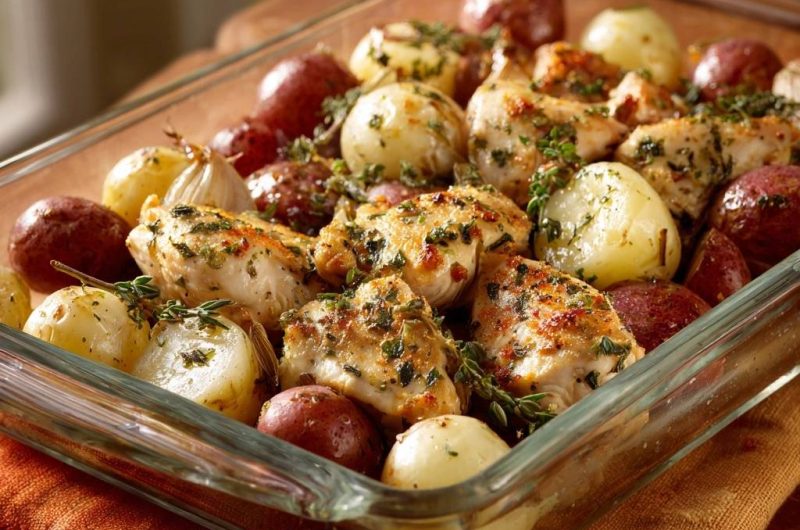
Garlic Herb Chicken and Potatoes
Course: Main CourseCuisine: AmericanDifficulty: easy4
servings15
minutes45
minutes650
kcal60
MinutesDry oven chicken is a thing of the past. This recipe uses a potato bed and herb oil coating to lock in juices for tender, flavorful chicken every single time.
Ingredients
2 pounds chicken thighs, cut into chunks
1 1/2 pounds baby potatoes (mix of red and white, whole)
10 garlic cloves, whole and unpeeled
3 tablespoons olive oil, divided
2 tablespoons chopped fresh parsley
4 sprigs fresh thyme
1 teaspoon paprika
Salt and black pepper to taste
Directions
- Preheat oven to 425 degrees F. Pat chicken dry with paper towels to ensure crisp coating and moisture lock.
- In a large bowl, toss baby potatoes and garlic cloves with 2 tablespoons olive oil, salt, pepper, and thyme sprigs until evenly coated.
- Spread potatoes and garlic evenly in a glass baking dish to form a single layer bed. This creates steam pockets that baste the chicken and prevent drying.
- In a small bowl, mix 1 tablespoon olive oil, chopped parsley, paprika, salt, and pepper into a thick paste. Rub generously all over chicken chunks, coating every piece.
- Nestle chicken pieces directly on top of the potato bed, pressing slightly so juices drip down during roasting.
- Roast uncovered for 40 to 45 minutes, stirring potatoes halfway. Chicken is done at 165 degrees F internal temperature. The potato bed absorbs fat and releases moisture upward, guaranteeing juicy chicken without overcooking. Let rest 5 minutes before serving.
Notes
- Use a glass baking dish for even cooking. Chicken is done when internal temperature reaches 165°F. Let rest 5 minutes before serving for maximum juiciness.