Philly Cheesesteak Grilled Cheese: Crispy No-Sog Method
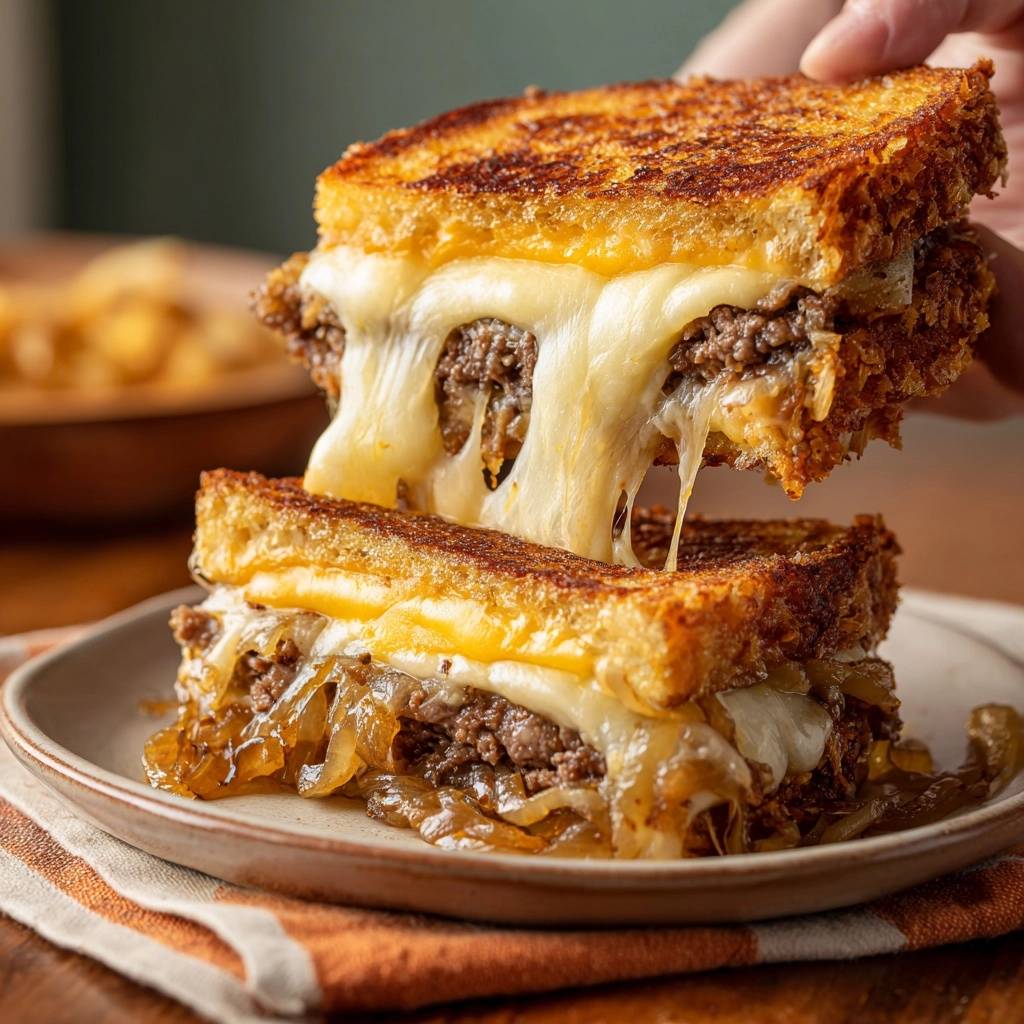
Nothing kills a grilled cheese faster than soggy bread from juicy fillings. You’ve bitten into that mess before, right? This Philly cheesesteak grilled cheese flips the script with a smart caramelization step that dries out the beef and onions completely.
Therefore, you get that perfect crunch outside and gooey melt inside every time. No more mushy disappointments. It’s the Philly cheesesteak grilled cheese sandwich that actually holds up.
This same butter-toasting trick gives a perfect crisp to these cheesy pulled beef sliders too.
The real game-changer? Melt cheese right onto the bread first. It forms a sealed barrier that locks out any sneaky moisture. Trust me, this one trick elevates your sandwich game instantly.
Why Philly Cheesesteak Grilled Cheese Succeeds
Moisture Traps That Ruin Regular Sandwiches
Juicy ground beef and onions release tons of water during cooking in standard recipes. That liquid soaks straight into the bread, turning your Philly cheesesteak grilled cheese into a soggy disaster fast. However, most folks skip the full dry-out.
Here, you caramelize everything until it’s jammy and nearly dry. In addition, this technique evaporates excess moisture upfront. Picture crisp edges instead of limp bread.
Cheese Barrier Innovation Explained
Melt shredded cheese directly on buttered bread over low heat. It creates a lipid-protein seal around the edges in just two minutes. This blocks juices from the beef mixture completely.
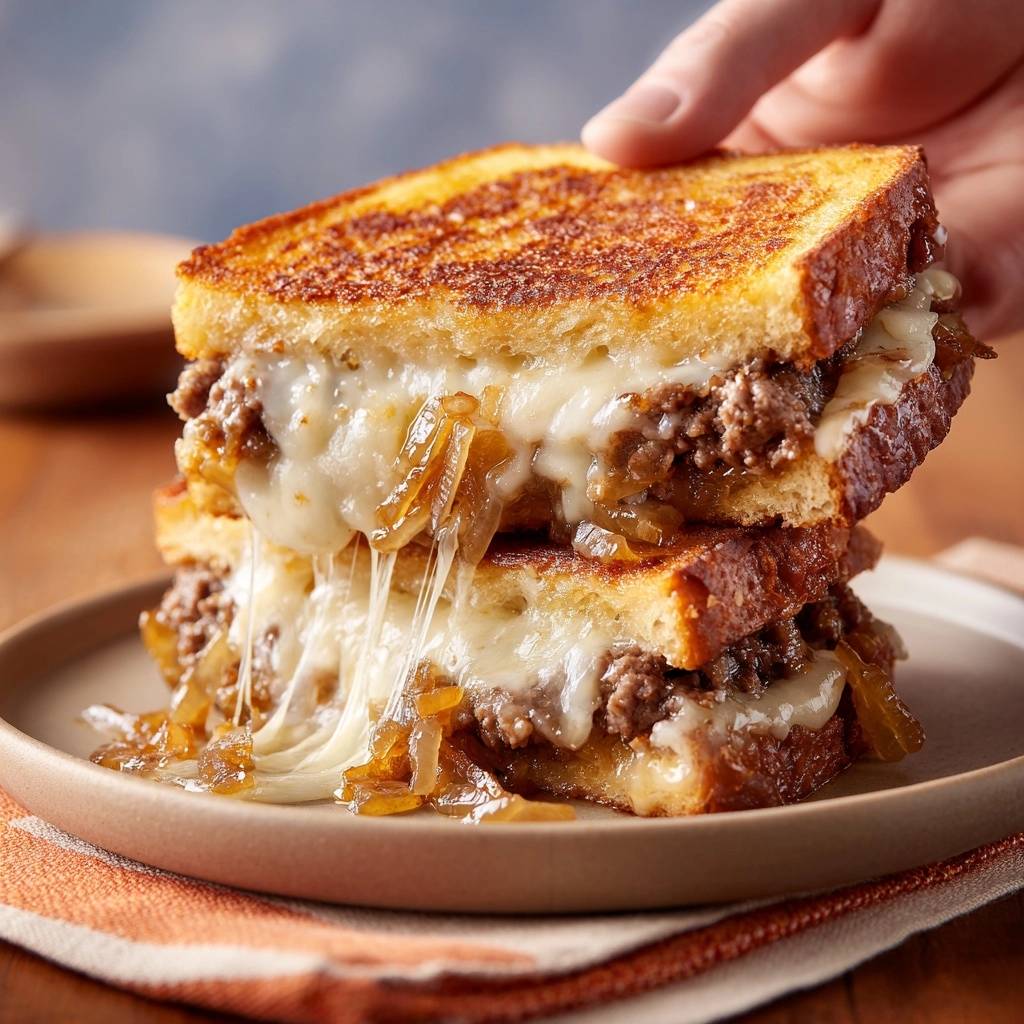
Food science backs it: the cheese’s fats and proteins form an impermeable layer. Therefore, your Philly cheesesteak grilled cheese stays crispy even when loaded up. Simple, but brilliant.
Key Ingredients for Philly Cheesesteak Grilled Cheese
Beef and Onion Foundation Choices
Grab 1 lb of ground beef, ideally 80/20 for that rich fat content that browns evenly. It renders out during cooking, adding flavor without greasiness. Thinly slice 2 large yellow onions too; their natural sugars caramelize beautifully.
Why yellow? They soften sweetly without sharpness. Slice thin so they release water fast and turn jammy. This duo builds the hearty base your Philly cheesesteak grilled cheese craves.
No thin slicing tool? Use a sharp knife and go slow. It’ll make all the difference in even cooking.
Cheese and Bread Texture Pairings
Shred 2 cups of cheddar or provolone yourself; pre-shredded has starch that clumps and melts unevenly. Fresh shreds go gooey smooth. Pick thick sourdough slices for tang that cuts through the richness.
White bread works if you want neutral softness. Soften 2 tablespoons butter first; it spreads evenly for golden crusts. Therefore, every bite crisps up perfectly in your Philly cheesesteak grilled cheese.
Seasonings That Build Umami Depth
Salt and black pepper season the beef first for even flavor. Add 1 teaspoon garlic powder and Worcestershire sauce right away; they infuse as it cooks. That umami punch mimics real Philly cheesesteak vibes.
Don’t overpower; these amounts enhance without dominating. In addition, Worcestershire adds a savory tang. Swap garlic powder for fresh minced if you have it, but powder dissolves quicker.
Science of Caramelizing Beef and Onions
Maillard Reaction in Philly Cheesesteak Filling
Medium heat triggers the Maillard reaction, browning proteins and sugars for deep, nutty flavors. Break up the beef and stir often; this evaporates liquids while building taste. Aim for 5-7 minutes on beef alone.
Then add onions for 10-12 more. The mixture turns from wet and loose to sticky and jammy. That’s your cue: rich aroma, no pools of liquid. This prevents soggy Philly cheesesteak grilled cheese every time.
Evaporation Physics for Dry Mixtures
Raw beef and onions hold about 70% water. Cooking reduces it to near zero through steady evaporation. Medium heat and frequent stirring speed this up without burning.
Test doneness by tilting the pan; no liquid should pool. Therefore, your filling hits ideal water activity below 0.85. Crispy sandwiches guaranteed for Philly cheesesteak grilled cheese.
Step-by-Step Philly Cheesesteak Grilled Cheese Assembly
Phase 1: Browning Beef with Seasonings
Heat a large skillet over medium. Add ground beef and break it up with a spoon. Season immediately with salt, pepper, garlic powder, and Worcestershire.
Cook 5-7 minutes until browned and fragrant. The meat sizzles and firms up. This order builds a flavor-packed base for your Philly cheesesteak grilled cheese.
Phase 2: Caramelizing Onions Fully
Stir in sliced onions. Cook 10-12 minutes more, stirring frequently. They soften, then turn golden and jammy with a sweet, caramel scent.
Wipe the skillet clean after removing the mix. Check for dryness; any liquid means cook longer. Pro tip: this step is non-negotiable for no-sog Philly cheesesteak grilled cheese.
Phase 3: Building Cheese Barriers
Spread softened butter on one side of each of 4 thick bread slices. Place 2 slices butter-side down in the skillet over medium-low heat.
Layer ½ cup shredded cheese on each right away. Let it melt 2 minutes until edges seal. You’ll see it bubble and crisp, forming that juice-proof barrier.
Phase 4: Stacking and Crisping Sandwiches
Divide the beef-onion mix over the cheese. Top each with another ½ cup cheese, then cap with remaining bread, butter-side up.
Press gently with a spatula. Cover and cook 3-4 minutes until golden. Flip carefully; lid keeps steam in for perfect melt. Slice hot for gooey pulls.
Equipment Choices for Perfect Results
Skillet and Lid Importance
A cast iron or nonstick skillet holds even heat for uniform browning. It sears the beef perfectly without hot spots. The lid traps steam, melting cheese fully without drying the bread.
No lid? Use foil. Griddles work great for batches. These tools ensure your Philly cheesesteak grilled cheese crisps reliably.
Spatula and Butter Spreader Tools
Pick a sturdy metal spatula; it presses and flips heavy sandwiches without bending. For butter, a silicone spreader glides on softened sticks evenly.
Budget plastic works if wide. Uniform butter means no burnt patches on your Philly cheesesteak grilled cheese.
Avoiding Philly Cheesesteak Grilled Cheese Pitfalls
Skipping the Dry-Out Step
Moist filling soaks bread instantly, ruining texture. If your mix is wet, drain it and cook longer. Prevention: always check for jamminess before assembling.
Extend time by 3-5 minutes if needed. This keeps your Philly cheesesteak grilled cheese crispy.
High-Heat Bread Burning Fixes
Medium-low prevents char while cheese melts. If it browns too fast, lower heat or tent with foil. Recovery: scrape off burnt bits and finish covered.
Patience here pays off big.
Flavor Twists on Philly Cheesesteak Grilled Cheese
Cheese and Protein Swaps
Provolone brings authentic meltiness; pepper jack adds kick. For lighter, use ground turkey but caramelize fully to keep it dry. Mushrooms mimic beef texture veg-style.
Always shred fresh and build the barrier. These swaps keep the no-sog magic in your Philly cheesesteak grilled cheese.
Vegetable and Spice Additions
Toss in sliced bell peppers or mushrooms after onions; extra 5 minutes caramelizes them. A dash of hot sauce boosts heat without moisture.
Regional riff: green peppers for classic Philly. Balance with that dry-out step.
Pairing Sides with Philly Cheesesteak Grilled Cheese
Crispy fries cut through the richness perfectly. Coleslaw adds cool crunch, pickle spears bring tang. Iced tea refreshes alongside.
Meal prep tip: make extra filling for quick lunches. Reheat dry in a skillet. This sandwich shines with simple contrasts.
Philly Cheesesteak Grilled Cheese FAQ
Can I Use Steak Instead of Ground Beef?
Yes, thinly slice ribeye and cook it like the ground beef. Brown first, then caramelize with onions until dry and diced small for even distribution. It takes about the same 17-19 minutes total. Keeps the Philly cheesesteak grilled cheese authentic and crisp.
How to Store Leftovers?
Store in an airtight container in the fridge up to 2 days. Reheat in a hot skillet, pressing to recrisp bread; microwave makes it soggy. Freezes well up to 1 month wrapped tightly, thaw overnight and skillet-reheat for best texture.
Gluten-Free Bread Options?
Thick gluten-free bread works if sturdy; brands like Udi’s hold up best. Use extra softened butter and the cheese barrier to prevent crumbling. Caramelize filling dry as always for no-sog success in your Philly cheesesteak grilled cheese.
Why Sourdough Over White Bread?
Sourdough’s tang pairs with beefy umami, and its dense crumb resists sogginess better. White bread softens quicker but stays neutral. Both crisp up with butter; sourdough just elevates flavors in Philly cheesesteak grilled cheese.
Scaling for Crowd Size?
Double ingredients for four sandwiches; use two skillets or a large griddle. For bigger crowds, bake assembled sandwiches on a sheet at 375°F for 10-12 minutes per side after initial sear. Press with another pan for even melt and crisp.
Philly Cheesesteak
Course: Main CourseCuisine: AmericanDifficulty: easy2
sandwiches15
minutes25
minutes1200
kcal40
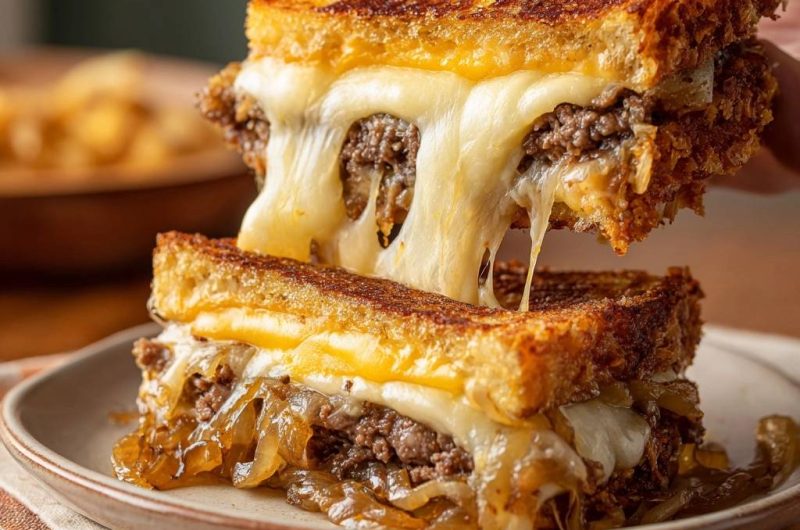
MinutesTired of juicy fillings turning your loaded grilled cheese into a mushy mess? This foolproof method caramelizes the beef and onions first to drive out excess moisture, then melts cheese directly onto the bread as a barrier before assembling. Crispy outside, gooey perfection inside every time.
Ingredients
4 slices thick sourdough or white bread
2 cups shredded cheddar cheese (or provolone)
1 lb ground beef
2 large yellow onions, thinly sliced
2 tablespoons butter, softened
Salt and black pepper to taste
1 teaspoon garlic powder
1 teaspoon Worcestershire sauce
Directions
- Heat a large skillet over medium heat. Add ground beef, breaking it up with a spoon. Season with salt, pepper, garlic powder, and Worcestershire sauce. Cook for 5-7 minutes until browned, then add sliced onions. Stir frequently, cooking 10-12 minutes more until onions are deeply caramelized and all moisture has evaporated—the mixture should be nearly dry and jammy. This is the key step: no liquid left means no soggy bread. Remove from heat and set aside. Cook until no pink remains and it reaches 160°F (71°C).
- Wipe skillet clean. Spread softened butter on one side of each bread slice. Place 2 slices butter-side down in the skillet over medium-low heat.
- Immediately layer ½ cup cheese on each bread slice in the skillet. Let cheese melt for 2 minutes until it forms a sealed edge around the bread—this creates an impermeable barrier against juices.
- Divide the dry beef-onion mixture evenly over the cheese. Top each with another ½ cup cheese, then place remaining bread slices on top, butter-side up.
- Press down gently with a spatula. Cover skillet with a lid and cook 3-4 minutes per side until bread is golden and crispy, cheese is fully melted and pulling. Flip carefully once.
- Slice and serve hot. Pair with fries if desired. Perfect texture guaranteed.
Notes
- Key step: Ensure beef-onion mixture is nearly dry and jammy before assembling to avoid soggy bread. Use thick bread for best results.