The Ultimate Brown Sugar Pecan Sweet Potato Casserole
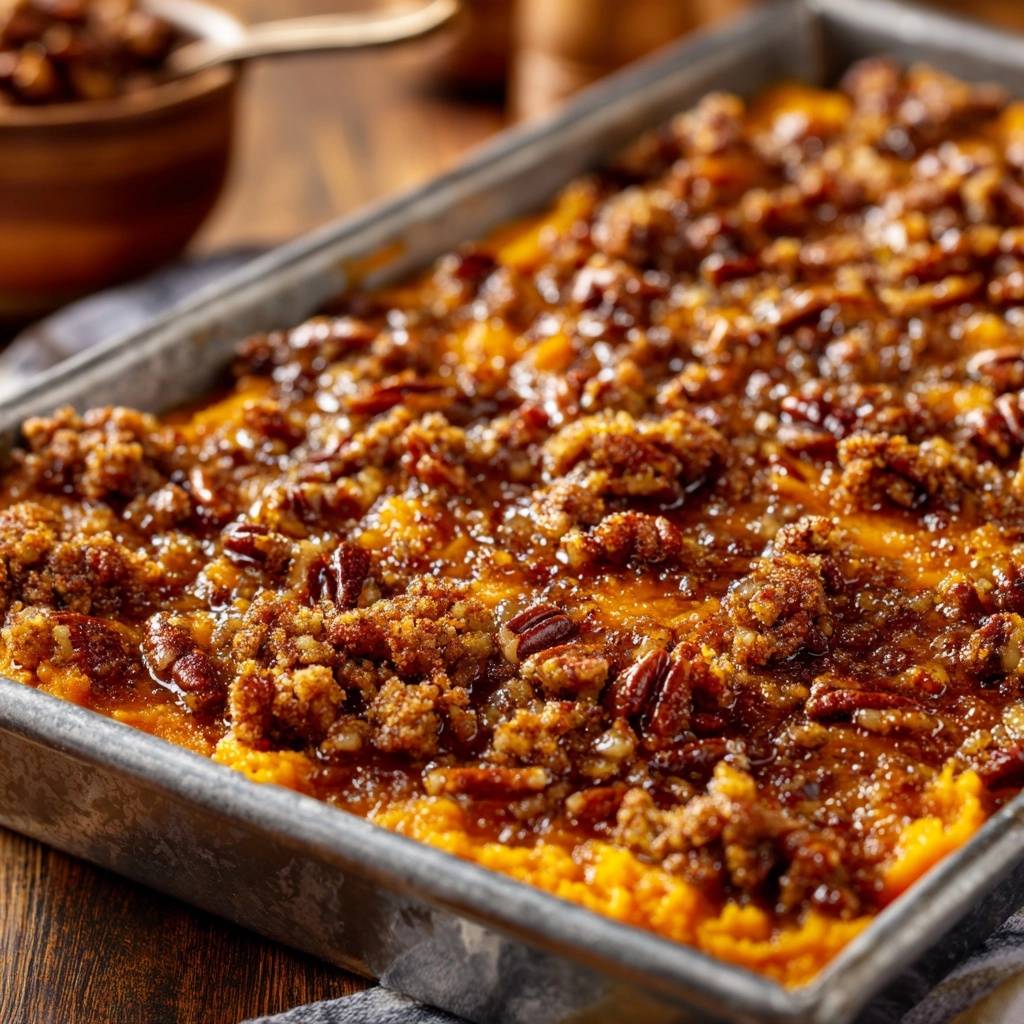
Nothing ruins a holiday spread faster than a watery, mushy sweet potato side dish that bleeds into your turkey and stuffing. Most recipes fail because they rely on boiling the potatoes, which traps excess moisture inside the vegetable and leads to a soupy, unappealing mess. This Brown Sugar Pecan Sweet Potato Casserole solves that “soggy bottom” epidemic by ditching the pot of water entirely.
The secret to a dense, velvety base lies in roasting the potatoes whole in their skins. This method allows moisture to evaporate while the natural sugars concentrate, creating a rich texture that feels like a treat rather than a side dish. When you combine that concentrated flavor with a heavy, praline-style crust, you get a dish that actually holds its shape on the plate.
I’ve found that the real trick to the “Anti-Soggy” promise is the resting period after the final bake. While it’s tempting to scoop into that bubbling sugar immediately, waiting ten minutes allows the starches to set and the topping to harden into a crackable, candy-like shell. You’ll notice the difference the moment your spoon hits the surface and meets a satisfying resistance.
Why Roasting Beats Boiling for Sweet Potatoes
When you boil a sweet potato, the water penetrates the cell structure, diluting the flavor and making the flesh heavy with liquid. Roasting at 400°F triggers the Maillard reaction, a chemical process where heat transforms proteins and sugars into complex, savory-sweet flavors. This high-heat environment ensures that the interior of the potato stays creamy without becoming waterlogged.
Furthermore, roasting converts the starches into maltose, a natural sugar that provides a deeper sweetness than any bag of white sugar ever could. As the potatoes bake in their skins, they essentially steam in their own juices, preserving every bit of nutrition and flavor. You’ll see a noticeable difference in the color of the mash, which remains a vibrant, deep orange rather than a pale, washed-out tan.
By the time you peel the roasted skins away, the flesh is already partially caramelized. This means you don’t need to overwork the mash to get it smooth, which prevents the release of excess starch that can make casseroles gummy. It’s a simple change in technique that fundamentally upgrades the structural integrity of your entire holiday meal.
Essential Components for the Praline Topping
To achieve a base that is sturdy yet light, we use four pounds of sweet potatoes balanced with heavy cream and eggs. The eggs are non-negotiable here because they act as a binder, providing the structural integrity needed to support the heavy pecan topping. Without them, the mash would simply collapse under the weight of the sugar and butter.
Heavy cream is another vital player because it offers a high fat content without the water found in standard milk. This fat coats the potato fibers, creating a mouthfeel that is incredibly luxurious and smooth. When measuring your brown sugar for the topping, make sure it’s firmly packed into the cup to ensure the right density for that iconic praline crunch.
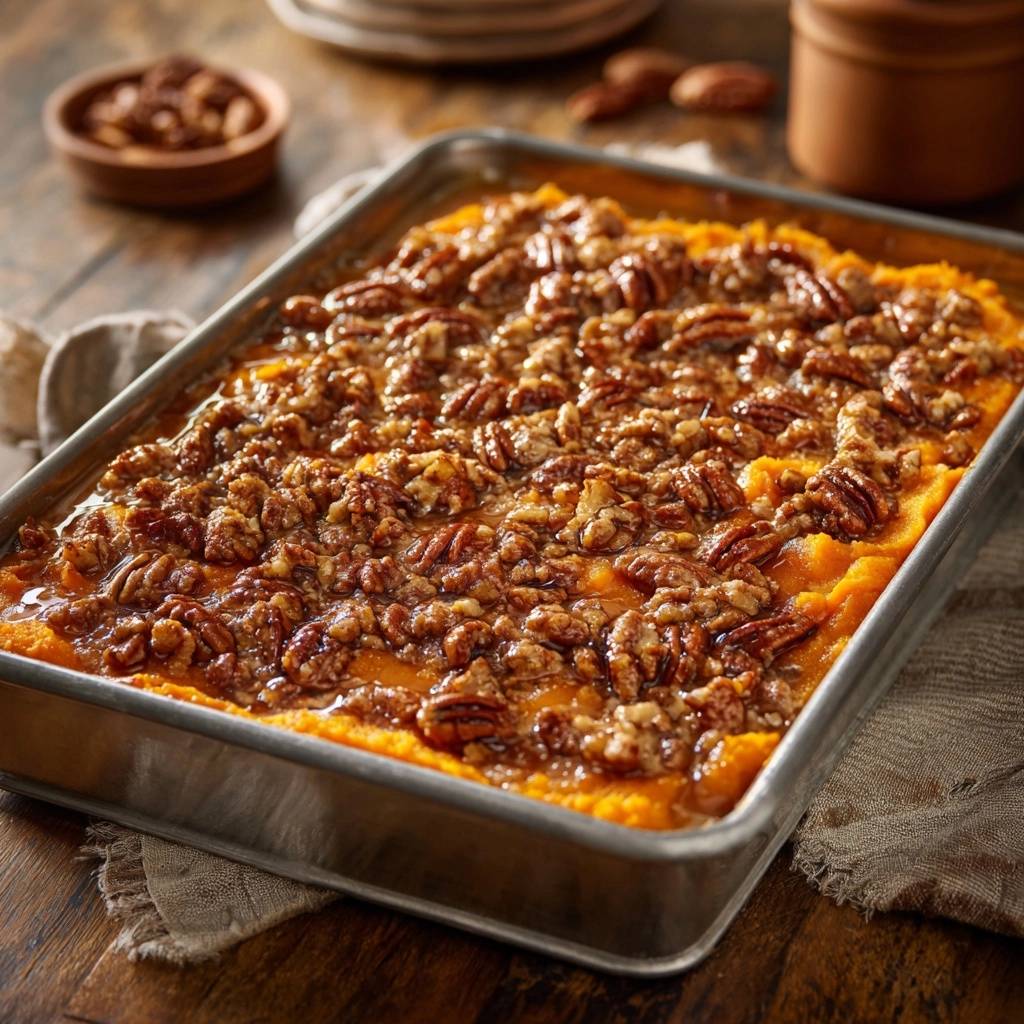
The topping relies on a specific ratio of pecans to flour to create a “clumpy” texture. This isn’t a light dusting of nuts; it’s a thick, structural layer designed to caramelize into a solid sheet. Using 1.5 cups of chopped pecans ensures that every single bite has a distinct, nutty snap that contrasts beautifully with the soft potato base below.
Selecting the Right Sweet Potato Variety
For this Brown Sugar Pecan Sweet Potato Casserole, you must choose high-starch, orange-fleshed varieties like Jewel or Beauregard. These potatoes have the moisture balance required to become creamy without turning into liquid. Avoid the lighter-skinned, starchy “white” sweet potatoes, as they tend to be too dry and crumbly for a smooth casserole base.
Garnet potatoes are another excellent choice due to their deep purple-red skin and moist, bright orange interior. They possess a high sugar content that shines when roasted. Whichever variety you pick, try to select potatoes of a similar size so they all reach that perfect, fork-tender stage at the same time in the oven.
The Role of Fats: Butter vs. Alternatives
Unsalted butter is the gold standard for this recipe because it allows you to control the sodium levels precisely. Since we add a half-teaspoon of salt to the mash, using salted butter could easily push the dish into “too salty” territory. The butter in the topping is what creates that “candy-shell” finish as it bubbles and fuses with the flour and sugar.
As the butter melts in the oven, it fries the pecans slightly, intensifying their toasted flavor. This caramelization process is what gives the casserole its professional, glossy look. If you try to cut back on the butter, the topping will likely turn out sandy and dry rather than rich and crackling.
Step-by-Step: Preparing the Roasted Potato Base
Start by preheating your oven to 400°F and prepping your potatoes. You don’t need to peel them yet; just scrub them clean and prick them several times with a fork to let steam escape. Place them on a foil-lined sheet to catch any sugary drips that might leak out during the roasting process.
Roast them for 45 to 60 minutes. You’ll know they’re ready when a knife slides into the thickest part with zero resistance. Once they’re cool enough to touch, the skins should practically slip off in your hands. This method preserves the flavorful layer of flesh just beneath the skin that is often lost when using a vegetable peeler on raw potatoes.
After peeling, mash the potatoes while they are still warm to ensure a completely smooth consistency. You can use a hand masher for a bit of texture or an electric mixer if you prefer a whipped, souffle-like finish. Once the base is smooth, whisk in your butter, cream, eggs, and spices until the mixture looks light and aerated.
Achieving the Perfect Praline Topping Texture
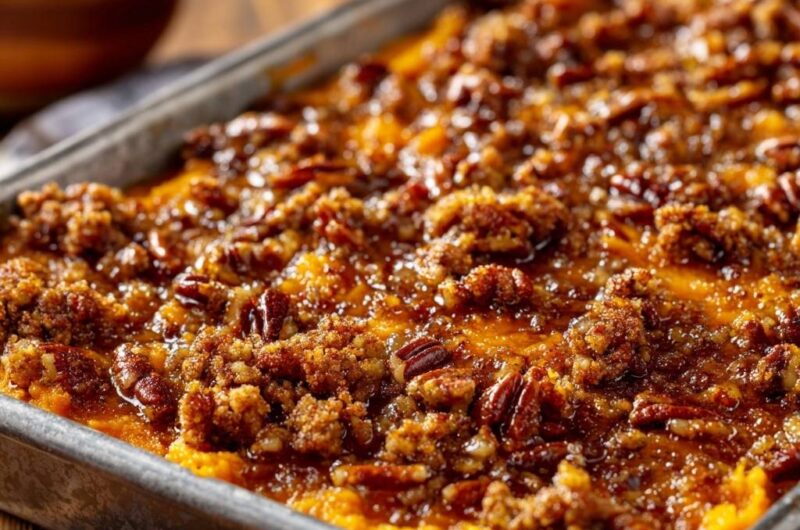
The topping should never be a fine powder; it needs to be clumpy and saturated. When you stir the melted butter into the brown sugar, flour, and pecans, look for the mixture to hold together in small clusters. These clumps are what create the “peaks and valleys” on the surface of the casserole, leading to different levels of crunch.
For a perfect pairing, try our Cheesy Black Bean Stuffed Sweet Potatoes: Creamy & Tender Every Time!.
If the mixture looks too dry, the flour won’t hydrate properly and you’ll end up with a dusty mouthfeel. The 1.5 cups of pecans provide the necessary “visual density,” meaning the top of the dish should be completely obscured by a sea of golden-brown nuts. This thick layer acts as an insulator, helping the potato base cook evenly without drying out.
Baking Phases and Temperature Management
After the initial high-heat roast, you must drop the oven temperature to 350°F for the final bake. This lower temperature allows the egg binder in the mash to set slowly and gently, preventing the edges from becoming rubbery. It also gives the sugar in the topping enough time to melt and caramelize without burning the pecans.
Keep an eye on the edges of the dish during the last ten minutes of baking. You are looking for vigorous bubbling around the perimeter, which signifies that the internal temperature has risen enough to cook the eggs and thicken the cream. The topping should transition from a pale tan to a deep, mahogany brown before you pull it out.
The Critical 10-Minute Resting Period
Resist the urge to serve this dish the second it leaves the oven. Thermodynamics play a huge role in the final texture of the “Anti-Soggy” casserole. As the dish cools slightly, the starches in the sweet potatoes undergo a process called retrogradation, where they firm up and create a more stable, scoopable structure.
Simultaneously, the sugar and butter in the topping are currently in a liquid, molten state. As the temperature drops, that liquid crystallizes and hardens into the signature praline crust. If you cut into it too early, the topping will simply slide off the potatoes. A ten-minute rest ensures that every serving looks as good as it tastes.
Troubleshooting Common Casserole Failures
If you notice the pecan topping is browning too quickly but the center still feels soft, simply tent the dish with a piece of aluminum foil. This reflects the direct heat while allowing the interior to continue cooking. This is especially common in convection ovens where the air circulates more rapidly.
If the center of your casserole remains cold, check the material of your baking dish. Ceramic dishes hold heat beautifully once warm but take longer to heat up than metal pans. If using heavy stoneware, you might need to add five minutes to the bake time. Also, ensure you measured your flour correctly; if the topping seems oily, it usually means there wasn’t enough flour to absorb the melted butter.
Make-Ahead Strategies for Holiday Planning
You can easily prepare the roasted potato mash up to 24 hours in advance. Store the mashed base in your baking dish, covered tightly with plastic wrap in the refrigerator. This actually allows the flavors of the cinnamon and nutmeg to marry and deepen overnight, making the dish even more flavorful.
However, you must keep the topping separate until the very last second. If you put the sugar and flour mixture on the wet potatoes ahead of time, the flour will hydrate and the sugar will dissolve, resulting in a gummy, soft crust. Mix the topping in a small bowl, keep it at room temperature, and sprinkle it on just before you slide the dish into the oven.
Optimal Main Dish Pairings
This Brown Sugar Pecan Sweet Potato Casserole is quite sweet, so it pairs best with savory, high-protein main courses. A classic roasted turkey with a salty herb rub provides the perfect counterpoint. The acidity in a cranberry sauce also helps cut through the richness of the heavy cream and butter.
For a non-traditional holiday, try serving this alongside a smoked beef brisket or an herb-crusted lamb rack. The smoky notes of the meat complement the toasted pecans beautifully. Because this dish is so decadent, you’ll want to round out the plate with something bright and crisp, like a garlicky sautéed kale or a shaved Brussels sprout salad.
Frequently Asked Questions
Can I use canned yams for this?
I strongly recommend against using canned yams if you want to avoid a soggy casserole. Canned yams are packed in syrup or water, which saturates the potato flesh and makes it impossible to achieve a dense, velvety texture. They also contain processed sugars that can make the dish cloyingly sweet. Stick to fresh, roasted sweet potatoes for the best results.
How do I reheat leftovers without losing the crunch?
Avoid the microwave at all costs, as it will turn the praline topping into a soft, sticky glaze. Instead, place leftovers in a 325°F oven for about 15 minutes. This gentle heat allows the sugar in the pecan topping to re-crystallize and regain its crunch while warming the potato base evenly throughout.
Is there a substitute for heavy cream?
If you don’t have heavy cream, full-fat coconut milk is a great high-fat alternative that maintains the creamy texture. Be aware that it will introduce a slight coconut flavor to the dish. You can also use half-and-half, though the final result may be slightly less rich. Avoid skim or 1% milk, as the high water content will compromise the “Anti-Soggy” goal.
Why is my topping sinking into the potatoes?
This usually happens for two reasons: either the potato mash was still steaming hot when you added the topping, causing the butter to melt instantly, or the topping lacked enough pecans and flour to stay buoyant. Ensure your mash has cooled slightly before topping, and double-check that you used the full 1.5 cups of pecans to provide structural support.
Can I use walnuts instead of pecans?
Yes, walnuts are a fine substitute, though they have a slightly different flavor profile. Walnuts contain more tannins, which can add a subtle bitterness that balances the sugar. However, pecans are traditional because their high oil content leads to a superior, buttery crunch when caramelized with brown sugar.
Sweet Potato Casserole
Course: Side DishCuisine: AmericanDifficulty: medium10
servings20
minutes1
hour385
kcal80
MinutesThis recipe avoids the common pitfall of watery sweet potatoes by roasting them whole instead of boiling. The result is a velvety, rich base topped with a caramelized, candy-like pecan crust that stays crisp.
Ingredients
4 pounds large sweet potatoes
1/2 cup unsalted butter, melted
1/4 cup heavy cream (for a richer, non-watery base)
2 large eggs, beaten
1 teaspoon vanilla extract
1/2 teaspoon salt
1/2 teaspoon ground cinnamon
1/4 teaspoon ground nutmeg
For the Praline Topping:
1 cup brown sugar, packed
1/2 cup all-purpose flour
1 1/2 cups chopped pecans (extra for visual density)
6 tablespoons unsalted butter, melted (to achieve the glossy, caramelized finish shown)
Directions
- Preheat your oven to 400°F (200°C). Prick the sweet potatoes several times with a fork and place them on a foil-lined baking sheet. Roast for 45 to 60 minutes until very tender when pierced with a knife.
- Remove potatoes from the oven and let them cool until safe to handle. Peel away the skins and place the flesh in a large mixing bowl. Mash thoroughly with a potato masher or electric mixer until smooth.
- Lower the oven temperature to 350°F (175°C). Grease a 9×13 inch metal or ceramic baking dish.
- To the mashed potatoes, add the 1/2 cup melted butter, heavy cream, beaten eggs, vanilla, salt, cinnamon, and nutmeg. Whisk until fully incorporated and fluffy. Spread the mixture evenly into the prepared baking dish.
- In a medium bowl, prepare the topping: Combine the brown sugar, flour, and chopped pecans. Pour the 6 tablespoons of melted butter over the mixture and stir until the dry ingredients are fully saturated and clumpy.
- Distribute the pecan mixture evenly over the sweet potato base. The melted butter in the topping is essential for creating the bubbling, candy-like glaze seen in the image.
- Bake for 35 to 45 minutes. The topping should be deeply browned, fragrant, and bubbling vigorously around the edges.
- Remove from the oven and let the casserole rest for at least 10 minutes. This resting period is crucial for the “Anti-Soggy” promise, allowing the starches to set and the praline topping to harden into a crisp crust.
Notes
- Roasting the potatoes whole is the secret to preventing a soggy base. Ensure the casserole rests for 10 minutes after baking to allow the praline topping to harden and the starches to set.