Almond Croissants: Flaky Bakery Perfection at Home
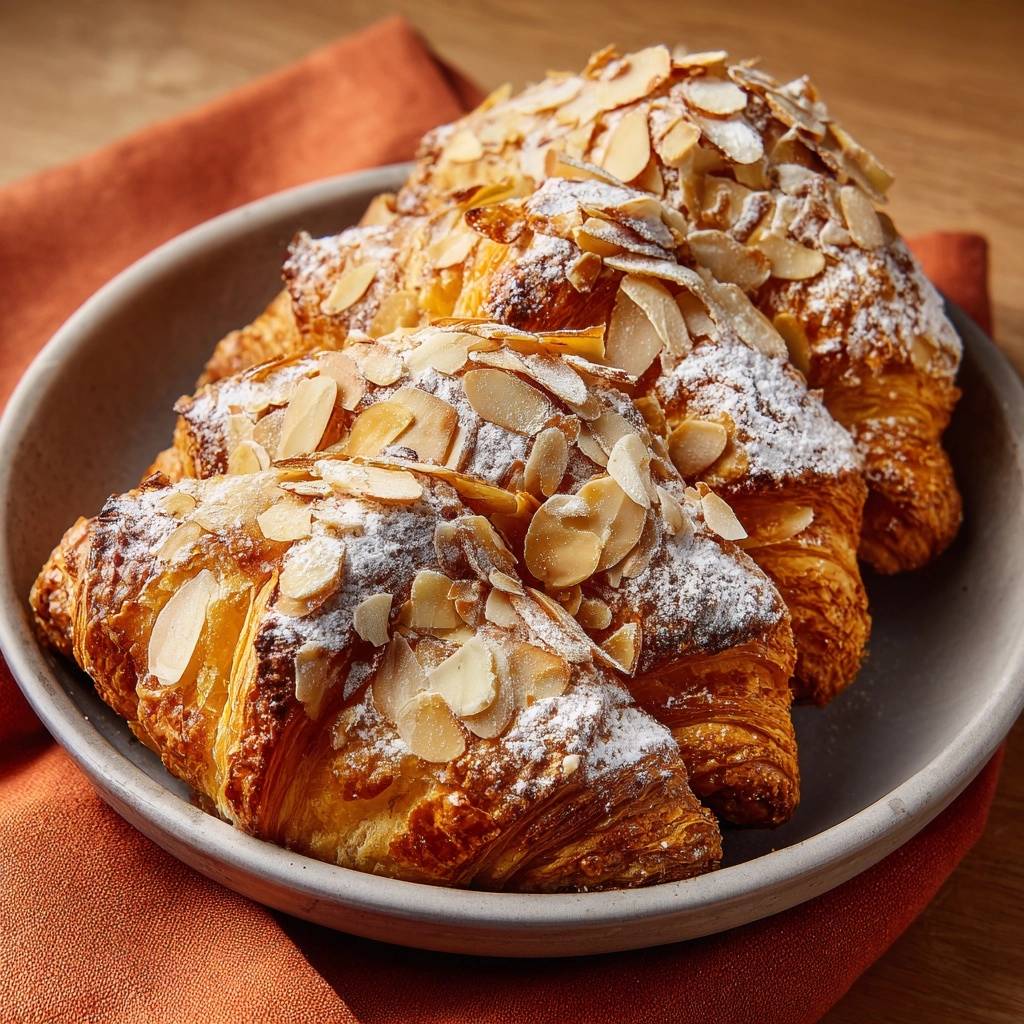
Ever bitten into an almond croissant that turns into a soggy mess? Most recipes fail because they stuff fresh croissants with frangipane, and the moisture wrecks everything. However, this method uses day-old croissants as the base, so they soak up the filling perfectly without getting mushy.
That’s why these almond croissants deliver that true bakery crispness every time. You get flaky layers outside and a moist, nutty heart inside. In addition, the high-heat bake seals it all in.
The secret lies in slicing those day-old croissants just three-quarters through. This pocket holds the frangipane without splitting, and the immediate 350-degree blast triggers the perfect crisp.
Day-Old Croissants: Foundation for Flaky Almond Croissants
Day-old croissants work magic for almond croissants because they’ve lost excess moisture. Fresh ones release steam during baking, turning soggy. Therefore, stale bases absorb the creamy frangipane while staying structured.
Picture this: a fresh croissant wilts under filling weight, but day-old ones puff up golden and hold firm. You’ll notice the edges crisp beautifully. Plus, they’re easier to slice cleanly.
Source plain croissants from your bakery’s discount bin. If they’re not quite stale enough, leave them out overnight. This simple step guarantees flaky almond croissants.
Selecting and Storing Day-Old Croissants
Choose plain croissants, not chocolate or filled ones. They provide a neutral base for the almond filling. Avoid anything too dry or crumbly, though.
Store them in a paper bag at room temp for up to two days to perfect staleness. If needed, dry further in a 200-degree oven for 10 minutes. This preps them ideally for almond croissants.
Frangipane Filling: Heart of Almond Croissants
Frangipane makes almond croissants irresistible with its buttery, nutty core. Start with 1/2 cup softened unsalted butter, beaten creamy with 1/2 cup granulated sugar for about two minutes. Unsalted prevents overly salty results.
Next, mix in one large egg and one cup almond flour until smooth. The egg adds moisture and structure, while almond flour brings rich, toasty flavor. This ratio keeps it spreadable, not runny.
Fine almond flour yields the silkiest texture in your almond croissants. Coarse versions add crunch but can feel gritty. Always beat until no lumps remain for even baking.
Almond Flour Choices for Superior Texture
Blanched almond flour gives a lighter, smoother bite in almond croissants. Unblanched keeps skins for deeper nutty taste and flecks of color. Both work great.
Grind your own from whole almonds in a food processor for freshness. Pulse until fine, but don’t overdo it or it turns into butter. This boosts flavor in every almond croissant.
Science of Crisp Almond Croissants
High heat at 350 degrees sparks the Maillard reaction, browning the almonds and edges for that bakery snap. Meanwhile, steam from the egg in frangipane puffs the filling high and firm.
Day-old croissants provide structure, so the exterior crisps while the interior stays moist. Therefore, you avoid the common soggy pitfall. Bake right after filling to lock in this balance.
Rotation halfway through ensures even crisping. Watch for golden almonds and puffed centers as doneness cues in your almond croissants.
High-Heat Baking Dynamics Explained
Immediate baking post-filling traps steam inside, crisping the outside fast. Lower temps let moisture escape slowly, leading to mush. Stick to 350 for perfect almond croissants.
Rotate the sheet at nine minutes for uniform Maillard browning. This pro move prevents hot spots and guarantees flaky results every time.
Essential Tools for Almond Croissants
Parchment-lined baking sheets prevent sticking and promote even heat flow. No parchment? Lightly grease, but paper’s better for crisp bottoms on almond croissants.
A stand mixer creams butter and sugar fastest, but a hand mixer works too. Beat two full minutes for airy frangipane. A serrated knife slices pockets cleanly without squishing.
These tools avoid disasters like torn croissants or uneven filling. You’ll assemble almond croissants like a pro with minimal mess.
Knife Techniques for Clean Croissant Pockets
Slice three-quarters deep with a gentle sawing motion using a serrated knife. This creates a sturdy pocket for frangipane in almond croissants. No serrated? A sharp bread knife does fine.
Avoid pressing down hard, or you’ll compress layers. Steady the croissant with one hand for control. Perfect pockets every time.
Assembling Almond Croissants Step-by-Step
First, preheat to 350 degrees and line a sheet with parchment. Slice six day-old croissants lengthwise, three-quarters through. You should feel resistance but see the pocket form easily.
Beat softened butter and sugar two minutes until pale and fluffy. Why the time? It aerates for light frangipane. Then mix in egg and almond flour smooth, no lumps.
Spoon 1-2 tablespoons into each pocket, plus one on top. Press sliced almonds firmly into the top layer. They stick better now, before baking. Place on the sheet and bake immediately for crisp almond croissants.
Filling and Topping Precision
One to two tablespoons inside prevents overflow, while one on top browns beautifully. This ratio balances moist center with crunchy lid in almond croissants.
Press almonds down hard so they adhere during the bake. Even distribution means nutty crunch in every bite.
This pressing technique mirrors the method used for achieving the perfect crumb in these buttery almond crescent cookies.
Baking Almond Croissants to Golden Crisp
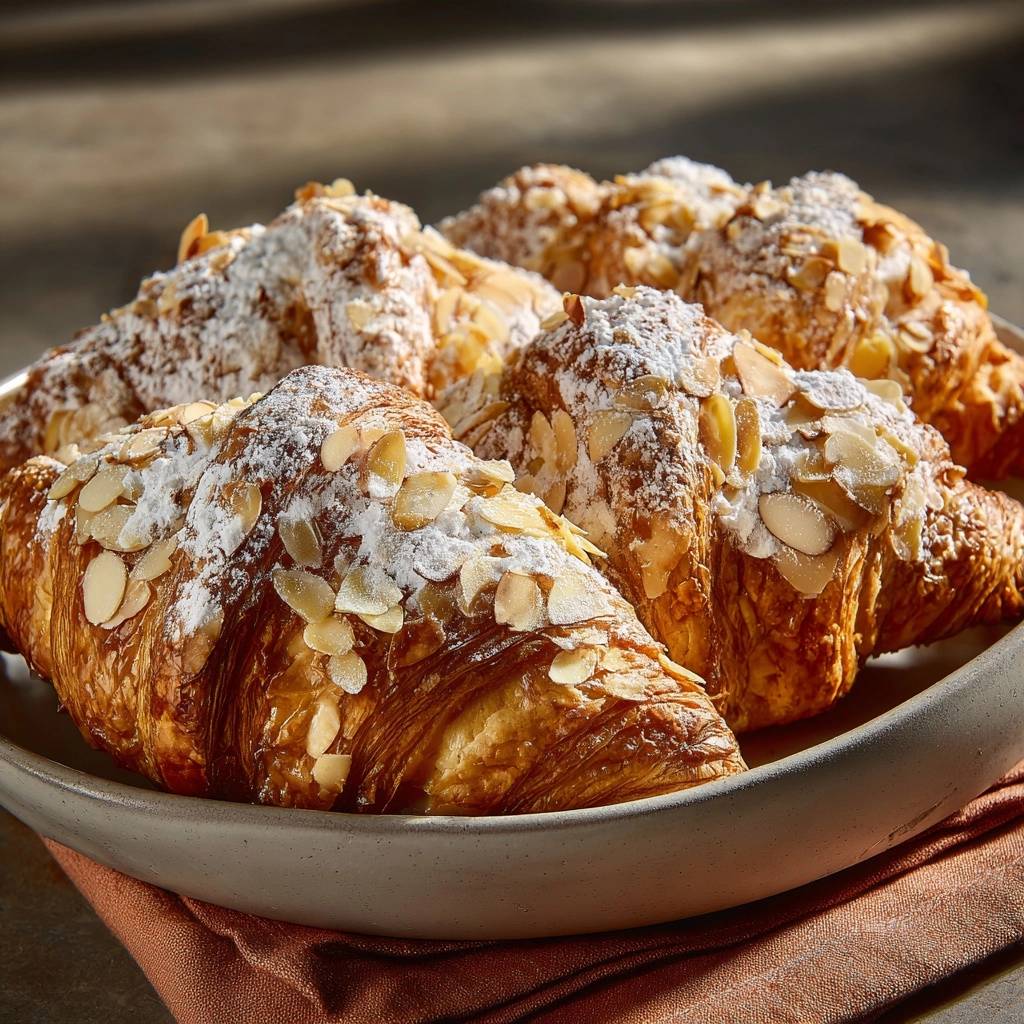
Bake 18 minutes at 350, rotating halfway. Look for puffed, firm filling, golden almonds, and crisp edges. The aroma hits sweet and toasty around minute 15.
Cool five minutes on the sheet. This traps steam for extra flakiness. Your almond croissants emerge bakery-worthy.
Pro tip: If edges brown too fast, tent loosely with foil. Even baking ensures perfection.
Post-Bake Powdered Sugar Dusting
After five-minute cool, sift 1/4 cup powdered sugar generously over warm almond croissants. It melts slightly, creating a snowy bakery sheen.
This dusting adds subtle sweetness and ties flavors together. Dust right before serving for best look and crunch.
Avoiding Soggy Almond Croissants Pitfalls
Fresh croissants soak up filling and steam out, causing sogginess. Low heat doesn’t crisp fast enough. Overfilling spills and weighs down layers.
Delayed baking lets frangipane seep too much. Fixes? Use day-olds, blast at 350, fill moderately, bake now. Science backs these for crisp almond croissants.
Underfilled? They dry out. Balance is key for that flaky bite.
Quick Fixes for Baking Errors
Underbaked filling? Return to oven five more minutes. Almonds falling off? Press harder pre-bake or brush with egg white first.
Edges too dark? Lower to 325 next time. These tweaks save your almond croissants.
Flavor Twists on Almond Croissants
Add one teaspoon vanilla extract to frangipane for warmer depth. Orange zest brings citrus brightness without overpowering the almonds.
Swap half the almond flour for hazelnut for earthy notes. Chocolate chips in the filling melt gooey. All keep the flaky focus of almond croissants.
Start small with twists to nail ratios. They elevate without complicating.
Seasonal Adaptations for Almond Croissants
Spring? Lemon zest in frangipane cuts richness. Fall calls for a pinch of cinnamon in the almonds.
Test one teaspoon per batch first. These keep almond croissants flaky and fresh year-round.
Pairing Almond Croissants Perfectly
Espresso cuts through the buttery richness perfectly. Black tea’s tannins balance the sweetness in almond croissants.
Fresh berries add tart pop, while sliced pears bring gentle fruitiness. Serve for breakfast with herbal tea or dessert alongside coffee.
Contrasts make each bite shine. Avoid heavy pairings that mute the flake.
Make-Ahead Almond Croissants Guide
Assemble unfilled croissants, wrap, and freeze up to a month. Thaw, fill, and bake fresh for crisp almond croissants.
Filled ones store in fridge up to 24 hours. Cover loosely to avoid sogginess. Reheat at 350 for five minutes to revive crunch.
Pro tip: Freeze baked extras, then warm straight from freezer. Breakfast ready fast.
Almond Croissants Troubleshooting
Why are my almond croissants soggy?
Sogginess comes from fresh croissants or delayed baking. Day-olds absorb filling without mush, and high heat crisps immediately. Always bake right after filling for flaky almond croissants. If soggy, rebake at 350 for 5-7 minutes to dry out.
How do I store leftover almond croissants?
Store in an airtight container at room temp for up to two days. Fridge works for three days but softens flake; reheat at 350 for five minutes. Don’t freeze baked ones long-term, as filling weeps upon thaw. Unbaked assembled freeze best up to a month.
Can I substitute almond flour in almond croissants?
Yes, use finely ground hazelnut or walnut flour 1:1. Avoid all-purpose flour; it bakes dense, not creamy. For nut-free, try sunflower seed flour, but toast it first for flavor. Stick close to ratios for proper puff and crisp.
Why isn’t my frangipane filling setting?
Undermixing or small egg causes runniness. Beat butter-sugar two full minutes, then incorporate egg and flour smooth. Bake fully until puffed and firm, about 18 minutes. If still soft, your oven might run cool; use an instant-read thermometer.
Almonds burning on top of almond croissants?
High heat toasts them fast, so check at 15 minutes. Tent with foil if browning too quick, or chop finer for even color. Press firmly pre-bake so they don’t shift and expose edges unevenly.
Can I scale this almond croissants recipe?
Double easily for 12; frangipane scales 1:1. Use two sheets and rotate both halfway. Don’t overcrowd, or steam softens bottoms. Halve for three croissants if testing flavors.

Almond Croissants
Course: DessertCuisine: FrenchDifficulty: easy6
croissants15
minutes18
minutes550
kcal33
MinutesBakery-style almond croissants that stay perfectly flaky thanks to the day-old croissant base and quick high-heat bake that crisps the outside while locking in moist filling. No mushy disasters here!
Ingredients
6 day-old plain croissants
1/2 cup unsalted butter, softened
1/2 cup granulated sugar
1 cup almond flour
1 large egg
1/2 cup sliced almonds
1/4 cup powdered sugar, for dusting
Directions
- Preheat oven to 350 degrees F. Line a baking sheet with parchment paper.
- Slice each croissant lengthwise, about three-quarters of the way through, to create a pocket.
- In a bowl, beat softened butter and granulated sugar until creamy, about 2 minutes. Mix in egg and almond flour until smooth. This is your frangipane filling.
- Spread 1-2 tablespoons frangipane inside each croissant pocket and 1 tablespoon on top. Press sliced almonds firmly onto the top filling.
- Place croissants on the prepared baking sheet. The no-soggy secret: Day-old croissants are drier and absorb filling without turning mushy. Bake immediately at high heat for 18 minutes until almonds are golden, filling puffs up firm, and edges crisp. Rotate sheet halfway for even browning.
- Cool 5 minutes on sheet. Dust generously with powdered sugar. Enjoy flaky perfection that holds every bite!
Notes
- The no-soggy secret: Use day-old croissants which are drier and absorb filling without turning mushy. Bake immediately at high heat for flaky perfection.