Almond Crusted Stuffed French Toast: The Anti-Soggy Method
Nothing ruins a slow Saturday morning faster than a plate of mushy, weeping French toast. You know the kind—it looks beautiful for exactly ten seconds before the center collapses into a soggy mess under the weight of the syrup. Most recipes fail because they treat the bread like a sponge, letting it soak up so much liquid that the structural integrity vanishes before it even hits the pan.
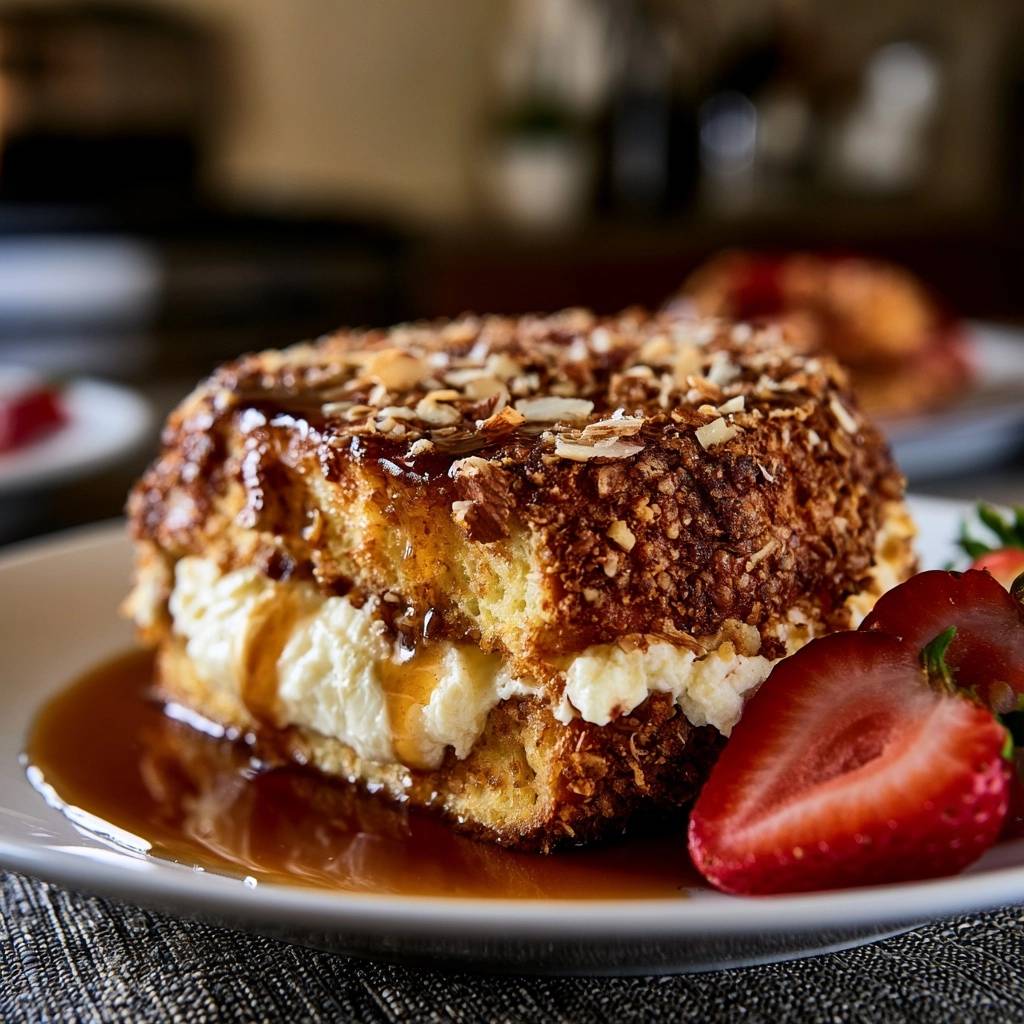
This Almond Crusted Stuffed French Toast is the definitive fix for that breakfast heartbreak. We use a specialized double-coating technique that creates a moisture-proof barrier around the bread. By locking the creamy custard inside while building a shatteringly crisp exterior, you get that coveted restaurant-quality crunch that holds up until the very last bite.
The secret to this masterclass in texture isn’t just the ingredients; it’s the physics of the crust. We aren’t just making breakfast; we’re engineering a “mahogany shield” of almonds and cereal. This guide will walk you through every nuance, from the 5-second dip rule to the wire-rack finish, ensuring your French toast never goes soft on you again.
The Structural Integrity of Brioche and Challah
When you’re stuffing bread with sweetened cream cheese, you need a foundation that can handle the weight. Standard white sandwich bread is far too flimsy and will disintegrate during the dipping process. You need a high-protein, enriched bread like Brioche or Challah to act as your vessel.
Brioche is the gold standard here because its high butter content creates a tight, tender crumb that toasts beautifully. Challah is a fantastic runner-up, offering a slightly sturdier structure that stands up well to heavy fillings. If you’re in a pinch, a thick-cut Texas Toast can work, but it lacks the rich flavor profile of the egg-based breads.
The most important rule is to use day-old bread. Fresh bread is full of moisture, which means it has no room to absorb the custard without becoming limp. By using slightly stale slices, you’re starting with a “dry sponge” that can take on the egg mixture while maintaining its shape. If your bread is fresh, leave the slices out on the counter for a few hours before you start cooking.
Essential Components for the Almond Crust and Filling
Quality ingredients are the difference between a greasy breakfast and a gourmet meal. For the custard, always reach for heavy cream instead of skim or 2% milk. The higher fat content in heavy cream creates a silky mouthfeel and prevents the egg mixture from becoming watery, which is a primary cause of sogginess.
The filling requires full-fat cream cheese to maintain its body when heated. We add a touch of lemon zest here, which might seem small, but it’s actually a non-negotiable. The acidity of the zest cuts through the richness of the cheese and the sugar, brightening the entire flavor profile and preventing the dish from feeling too heavy.
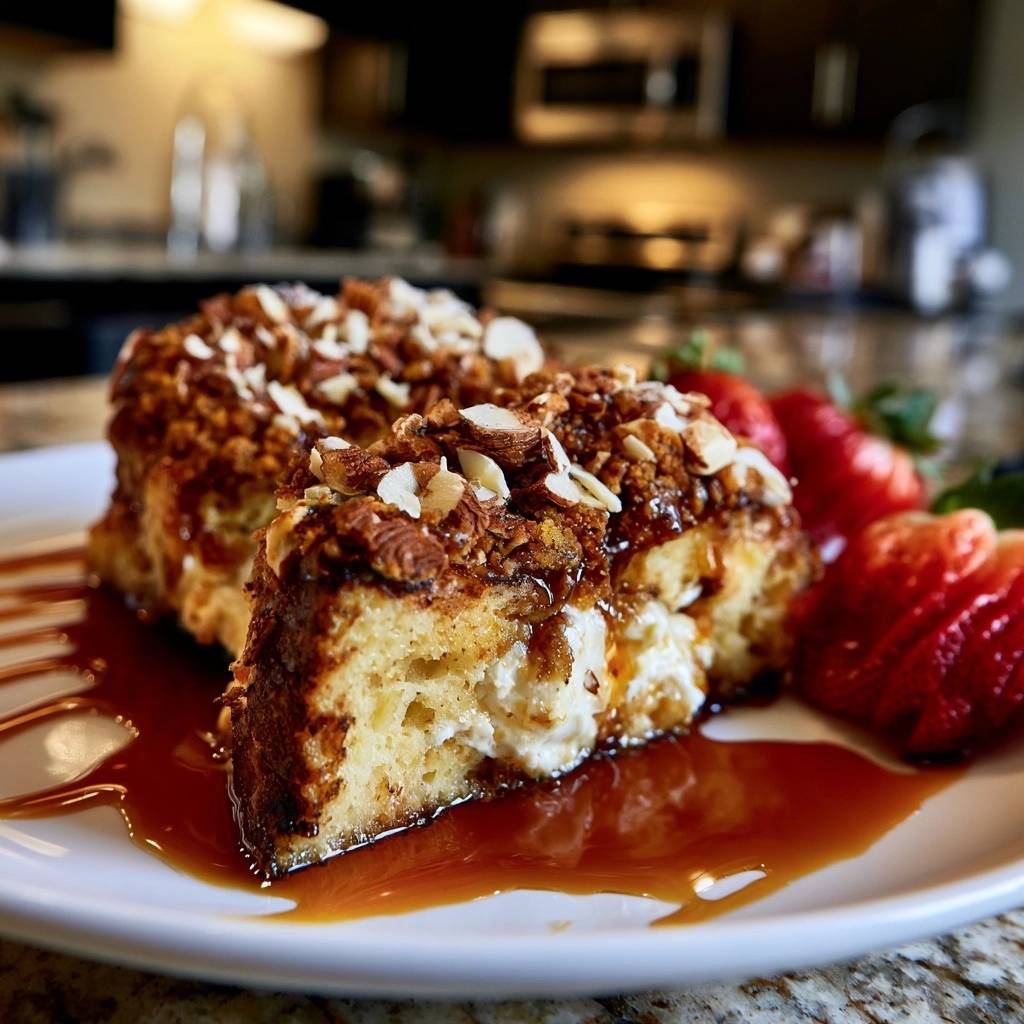
For the crust, the ratio of sliced almonds to cereal is vital. You want enough almonds for that nutty, toasted flavor, but the crushed cornflakes provide the “glue” that fills the gaps between the nut pieces. This combination creates a dense, protective layer that shields the bread from direct contact with the hot butter.
Selecting the Right Cream Cheese
Always use the block-style cream cheese rather than the whipped variety found in plastic tubs. Block cream cheese has a lower moisture content and a firmer structure, which is essential for keeping the filling inside the bread. Whipped versions contain added air and stabilizers that can cause the filling to liquefy and leak out during the frying process.
Think of the cream cheese as the “glue” for your sandwich. When you whip it with powdered sugar, it becomes light and spreadable but remains thick enough to stay put. This stability ensures that when you bite into the toast, you get a distinct pocket of warm cream rather than a runny mess.
The Dual-Texture Coating: Almonds and Cornflakes
The science of the “dry barrier” is what makes this recipe a success. By combining finely crushed cornflakes with sliced almonds, you create a multi-layered defense system. The cornflakes act as a fine dust that adheres to every millimeter of the egg-soaked bread, while the almonds provide the larger, crunchy “shingles.”
This coating does more than just add flavor; it protects the bread from the heat of the pan. It allows the interior to warm through and the cream cheese to soften without the bread itself burning. It’s the ultimate insurance policy against a burnt exterior and a cold, raw interior.
The Science of the Five-Second Dip
Most people make the mistake of letting their French toast soak in the custard until it’s heavy. This is a recipe for disaster. Bread works through capillary action, pulling liquid into its center. If you let it soak too long, the core becomes oversaturated, and no amount of frying will ever dry it out.
The “Five-Second Rule” is your best friend. You want to dip the sandwich into the egg mixture just long enough to coat the surface and let it penetrate about 1/8th of an inch. This ensures the custard stays on the outer layers, where it can cook quickly and create a seal, leaving the very center of the bread fluffy and dry.
Immediately after the dip, move the sandwich to the almond mixture. The moisture from the egg acts as the adhesive for your crust. If you wait too long, the egg starts to sink deeper into the bread, leaving the surface too dry for the almonds to stick. Speed is the key to a perfect coating.
Step-by-Step: Constructing the Stuffed French Toast
Start by spreading your cream cheese mixture generously, but leave a 1/4-inch border around the edges of the bread. This “safety zone” is crucial. When you press the two slices together, the filling will naturally spread toward the edges. If you start at the very edge, the cheese will ooze out into the pan and burn.
Once you’ve topped the filling with the second slice of bread, give the sandwich a firm but gentle press with the palm of your hand. You want to marry the two slices together so they behave as a single unit. This physical bond prevents the sandwich from sliding apart when you flip it in the skillet.
When dredging in the almond and cereal mix, don’t just lay the bread on top. Use your fingers to press the coating into the bread firmly. You should even roll the sides of the sandwich in the crumbs. Every square inch of exposed bread should be covered in that protective almond armor.
Executing the Perfect Pan-Sear
Heat management is where most home cooks lose the battle. You want your butter to be foaming before the bread hits the pan. That foam is the water evaporating out of the butter; once it subsides, the butter is at the perfect temperature to sear. If the pan is too cold, the bread will just soak up the grease.
However, almonds have a high oil content and can go from toasted to burnt in seconds. If you see the nuts darkening too quickly, turn the heat down to medium-low immediately. You are looking for a deep mahogany color. This slower cook time ensures the heat has enough time to travel through the thick bread and melt the cream cheese center.
Use a large, heavy-bottomed non-stick skillet if possible. This provides even heat distribution and prevents the delicate almond crust from sticking and tearing away. If you’re cooking multiple batches, wipe the pan out between rounds to remove any stray burnt almond bits that might bitter the next sandwich.
The Tongs Technique for Crispy Edges
Don’t ignore the sides of your French toast! Because these sandwiches are so thick, the edges often remain pale and soft if you only cook the top and bottom. This is where the “sidewall sear” comes into play. It’s a professional touch that makes a massive difference in the final texture.
Use a pair of silicone-tipped tongs to carefully stand the sandwich up on its side. Hold it there for about 30 to 60 seconds per edge. This not only crisps up the crust on the sides but also “sets” the egg mixture that acts as the seal for your stuffing. It turns the sandwich into a fully enclosed, crunchy package.
The Wire Rack Resting Secret
The biggest mistake you can make is moving your hot French toast directly onto a flat ceramic plate. As the toast cools, it releases steam. On a flat plate, that steam has nowhere to go, so it gets trapped under the bread, turning your beautiful almond crust into a soggy sponge within minutes.
Instead, transfer the finished toast to a wire cooling rack for about two minutes. This allows air to circulate 360 degrees around the bread, letting the steam escape without compromising the crust. This short rest also gives the melted cream cheese a moment to set so it doesn’t gush out the moment you slice into it.
Troubleshooting Common Texture Issues
If you find that your center is still cold but the outside is perfectly brown, your heat was likely too high. Next time, start on medium to get the sear, then drop to low and cover the pan with a lid for two minutes. This creates a mini-oven effect that drives heat into the center without burning the crust.
If your crust is falling off in the pan, it usually means the bread wasn’t wet enough during the dredging step or you didn’t press the almonds in firmly enough. Make sure the egg wash is still “tacky” when you hit the almond plate. Don’t be afraid to really push those nuts into the bread fibers.
Leaking filling is almost always caused by overfilling or skipping the 1/4-inch border. If it happens, don’t panic. Just use a spatula to scrape away the escaping cheese before it burns, and lower the heat slightly. The “sidewall sear” mentioned earlier is your best defense against leaks, as it cooks the “seam” of the sandwich shut.
Flavor Variations and Nut-Free Swaps
Once you master the base technique, you can get creative with the flavors. For a sophisticated twist, swap the cream cheese for mascarpone and add orange zest and a splash of orange juice. You can also tuck a few thin slices of fresh banana or a spoonful of raspberry jam inside the sandwich before sealing.
If you have a nut allergy, you don’t have to miss out on the crunch. Replace the crushed almonds with crushed pretzels or toasted coconut flakes. Both options provide a similar “shield” effect and a fantastic salty-sweet contrast. Just ensure whatever you use is crushed to a similar consistency so it adheres well.
For a savory-sweet vibe, try adding a pinch of cardamom to the egg wash. It pairs beautifully with the almonds and maple syrup. Regardless of the flavor profile you choose, always stick to the “Anti-Soggy” structural rules: thick bread, quick dip, and a dry, crunchy exterior coating.
Optimal Pairings for a Rich Breakfast
Because this dish is incredibly rich and decadent, you want to pair it with something that offers high acidity. Fresh, tart berries like raspberries or blackberries are perfect. You can also macerate strawberries in a little bit of lime juice and sugar to create a bright topping that cuts through the cream cheese.
When it comes to syrup, quality matters. Use a Grade A Dark maple syrup; its robust, caramel-like flavor stands up better to the toasted almonds than the lighter Amber varieties. A tiny pinch of flaky sea salt over the top right before serving will also make the flavors of the vanilla and cinnamon pop.
If you want a full spread, serve this alongside some crispy turkey bacon or a simple arugula salad with a lemon vinaigrette. The bitterness of the greens or the saltiness of the protein provides a much-needed balance to the sweet, custardy center of the French toast.
Expert Tips for High-Volume Cooking
Cooking for a crowd can be tricky with French toast because it’s best served hot. To manage this, preheat your oven to 200°F and place a wire rack inside a baking sheet. As you finish each sandwich, slide it into the oven. The low heat will keep them warm and the wire rack will keep them crisp while you finish the rest.
Never stack the French toast on top of each other in the oven. Stacking creates steam, and steam is the enemy of the almond crust. Keep them in a single layer with space between them. This allows you to serve everyone at once with the same level of crunch for every plate.
You can also prep the cream cheese filling and the almond-cereal mix the night before. Having your “stations” ready to go makes the morning process much smoother. Just don’t dip the bread until you are ready to put it in the pan, or you’ll end up with the very sogginess we worked so hard to avoid!
Frequently Asked Questions
Can I use gluten-free bread for this recipe?
Yes, but you must choose a very sturdy, dense gluten-free loaf. Many gluten-free breads are quite porous and fragile, which means they can fall apart during the 5-second dip. Look for a “brioche-style” gluten-free bread or a sourdough. I recommend lightly toasting the gluten-free slices in the oven for 5 minutes before stuffing them to give them extra structural integrity.
How do I prevent the almonds from falling off in the pan?
The key is the “firm press” and the temperature of the pan. When you dredge the bread in the almond mixture, use the heel of your hand to physically push the coating into the egg-soaked bread. Furthermore, ensure your butter is foaming when you add the toast. The heat immediately begins to cook the egg, which acts as a cement to hold the almonds in place. If the pan is too cold, the egg stays liquid and the almonds will simply slide off.
Can the cream cheese filling be made in advance?
Absolutely. You can whip the cream cheese, powdered sugar, and lemon zest up to three days in advance. Store it in an airtight container in the refrigerator. When you’re ready to use it, let it sit on the counter for about 15 minutes to soften slightly, making it easier to spread without tearing the bread. This is a great way to save time on a busy morning.
Why is my French toast soggy even with the crust?
This usually happens for one of two reasons: the dipping time or the pan temperature. If you let the bread soak for more than 5-10 seconds, the liquid reaches the center of the bread where the heat can’t evaporate it. Alternatively, if your pan isn’t hot enough, the bread “stews” in the butter rather than searing. Make sure you hear a distinct sizzle the moment the bread touches the skillet to lock in that texture.
What is the best way to reheat leftovers?
Never use a microwave to reheat this dish; it will turn the almond crust rubbery and the bread mushy. The best method is an air fryer or a toaster oven. Heat it at 350°F for about 4-5 minutes. This dry, circulating heat will re-crisp the almonds and warm the cream cheese center perfectly. If using a standard oven, place the toast on a wire rack to ensure the bottom stays crunchy.
Almond Crusted Stuffed French Toast
Course: BreakfastCuisine: AmericanDifficulty: easy2
servings15
minutes12
minutes27
Minutes640
kcalAmerican
Ingredients
4 thick slices (at least 1-inch) of day-old Brioche or Challah bread
6 ounces softened cream cheese
2 tablespoons powdered sugar
1/2 teaspoon lemon zest
1/2 cup crushed cornflakes or Panko breadcrumbs
3/4 cup sliced almonds, finely crushed
3 large eggs
1/3 cup heavy cream
1 teaspoon vanilla extract
1/2 teaspoon ground cinnamon
3 tablespoons unsalted butter
Maple syrup and fresh strawberries for serving
Directions
- In a small bowl, whip the cream cheese, powdered sugar, and lemon zest until light and fluffy. Spread a very thick, even layer onto two slices of bread, leaving a 1/4-inch border at the edges. Top with the remaining slices to create two thick sandwiches. Press the edges slightly to seal.
- In a shallow dish, whisk the eggs, heavy cream, vanilla, and cinnamon until fully combined.
- In a separate wide, flat plate, combine the crushed cornflakes and crushed almonds.
- To prevent sogginess, perform a quick 5-second dip per side in the egg mixture. Do not let the bread soak to the core. Immediately dredge the sandwich in the almond-cereal mixture, pressing firmly so the coating adheres to the top, bottom, and all four sides. This dry crust is the key to the “Anti-Soggy” result.
- Heat a large non-stick skillet over medium heat and melt the butter. Once the butter is foaming, add the sandwiches.
- Cook for 4 to 5 minutes per side. Adjust heat to medium-low if the almonds brown too quickly. The goal is a deep mahogany crust and a warm, softened cream cheese center.
- Using tongs, stand the sandwiches on their sides for 30-60 seconds per edge to ensure the entire exterior is crisp and the “seal” is cooked.
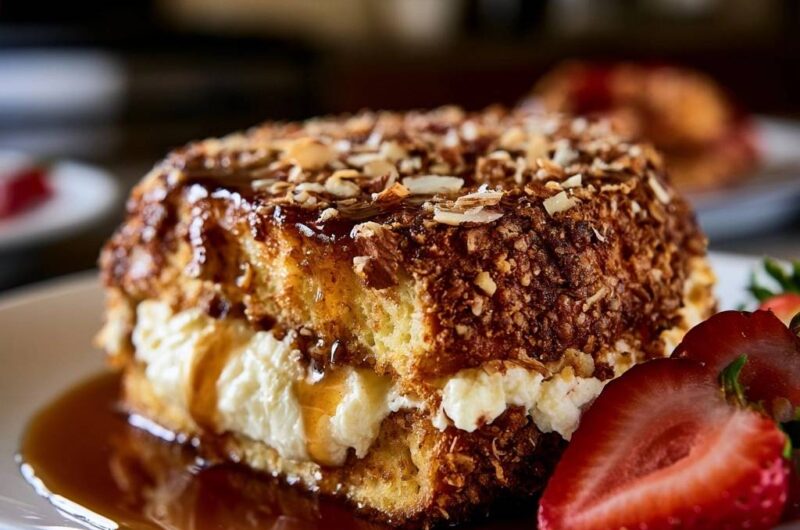
- Remove from the pan and let rest on a wire rack for two minutes. This allows the steam to escape so the bottom doesn’t soften. Slice diagonally and serve immediately with a heavy pour of maple syrup and fresh strawberries.
Notes
- To ensure the best results, use day-old bread and let the finished toast rest on a wire rack for two minutes to allow steam to escape without softening the crust.