Mastering Braised Sesame Garlic Cod for Flaky Results
Imagine sliding your fork into a piece of cod and having it fall away in thick, pearly flakes that melt the moment they hit your tongue. Most home cooks struggle with white fish because it often turns out dry, bland, or rubbery. This Braised Sesame Garlic Cod changes that narrative by using a gentle cooking method that guarantees a buttery texture every single time.
The secret lies in the contrast between a high-heat sear and a low-heat braise. You get that gorgeous, golden-brown crust on the outside while the interior stays incredibly moist. By finishing the fish in a shallow pool of savory garlic and ginger broth, you’re essentially bathing the proteins in flavor rather than blasting them with dry heat.
Expert chefs know that the key to perfect cod is moisture management. If you’ve ever had fish that felt like a pencil eraser, it’s because the proteins tightened up and squeezed out all their juices. My favorite trick is to sear only one side of the fish. This creates a flavor-packed “lid” while the rest of the fillet poaches gently in the sauce, keeping the delicate structure perfectly intact.
The Science of Braising White Fish
Cooking cod is a race against thermodynamics. Because cod is a very lean fish, it doesn’t have the fat marbling that protects salmon or sea bass from overcooking. When you apply high heat for too long, the muscle fibers contract violently. This results in a tough, chewy texture that no amount of sauce can fix.
Braising acts as a natural temperature regulator. The liquid in the pan never rises above the boiling point, which provides a much gentler environment for the fish. Therefore, the internal temperature of the cod rises slowly and evenly. This prevents the “rebound” effect where the outside is overdone before the center is even warm.
In addition, the braising liquid creates a humid environment in the skillet. This steam prevents the surface of the fish from drying out. As the sauce reduces, it also becomes more concentrated, allowing the garlic and sesame flavors to penetrate the outer layers of the cod without making it soggy.
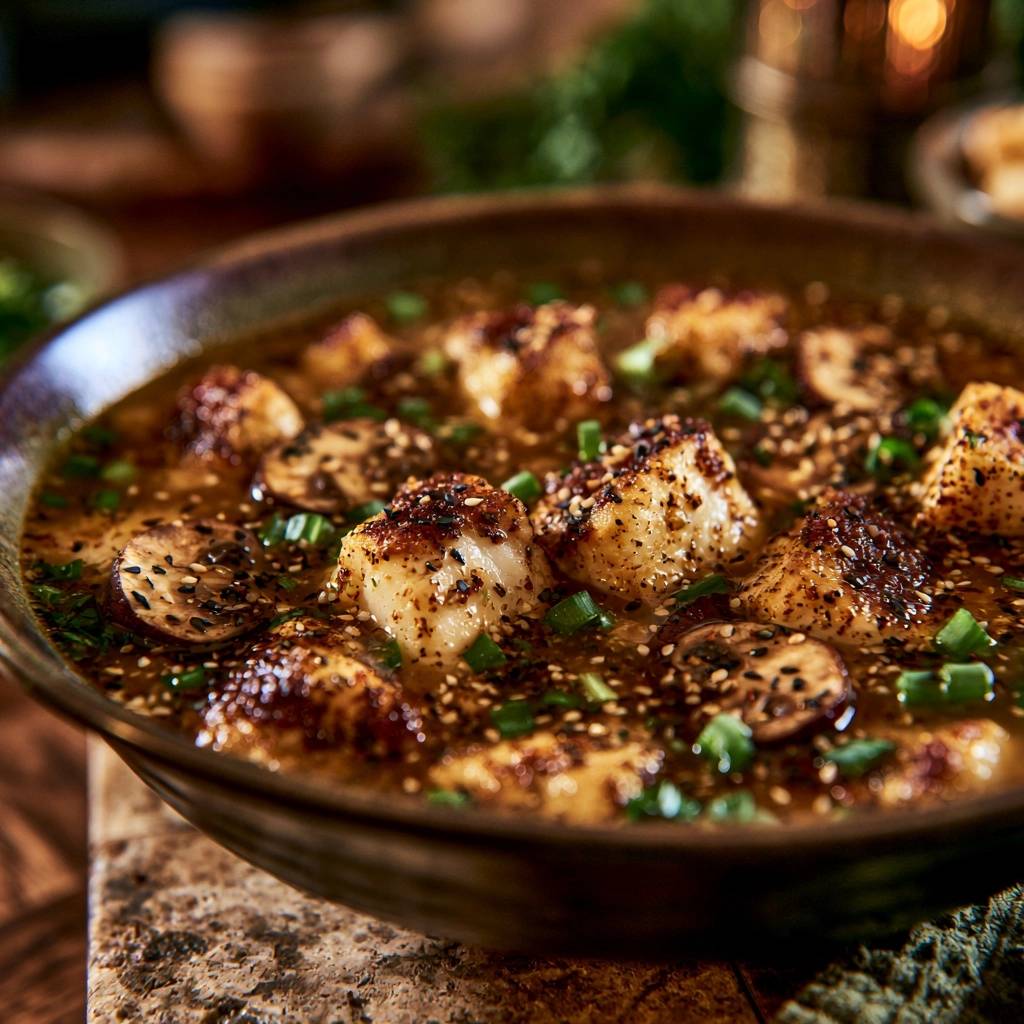
Why Cod Responds Best to Gentle Heat
Cod has a unique large-flake structure that is both its best feature and its biggest challenge. Atlantic cod tends to be slightly firmer, while Pacific cod is often more delicate. Regardless of the variety, the lack of connective tissue means it can fall apart if handled too roughly in a dry pan.
This sesame garlic braise is essential because it provides a “cushion” for the fish. Since we aren’t flipping the cod multiple times, the flakes stay together beautifully. The savory broth fills the gaps between the flakes, ensuring every bite is seasoned from the inside out.
Essential Components for the Sesame Garlic Base
The flavor profile of this dish relies on a balance of aromatics, salt, and sweetness. Fresh garlic and ginger are non-negotiable here. While jarred versions are convenient, they often have an acidic, metallic aftertaste that can ruin the delicate flavor of the cod. Freshly minced garlic provides a pungent punch, while grated ginger adds a bright, peppery heat.
Honey plays a vital role beyond just adding sweetness. It acts as a thickening agent that helps the sauce cling to the fish. Furthermore, the sugars in the honey balance the deep salinity of the soy sauce. This creates a well-rounded “umami” profile that makes the broth drinkable.
Using a high-quality vegetable broth is also important. It serves as the canvas for all other flavors. If your broth is too salty, the final reduction will be overpowering. Always taste your broth first; if it’s very salty, you might want to use a low-sodium soy sauce to keep the flavors in check.
Selecting High-Quality Cod Fillets
When shopping for cod, look for fillets that are translucent and firm to the touch. If the fish looks dull, milky, or has a strong “fishy” odor, it’s past its prime. Fresh cod should smell like the clean ocean breeze. If you can find “center-cut” loins, grab them, as their uniform thickness ensures even cooking.
Frozen cod is a great, sustainable option, but you must thaw it correctly. Never thaw fish at room temperature or in warm water, as this destroys the cell structure and leads to a mushy mess. Instead, let it thaw slowly in the refrigerator overnight. Pat it extremely dry once thawed to remove any excess moisture from the freezing process.
The Role of Toasted Sesame Oil and Seeds
There is a massive difference between regular sesame oil and toasted sesame oil. Regular sesame oil is for frying, but toasted sesame oil is a finishing oil with a deep, nutty aroma. We add it at the very end because high heat can turn its delicate flavor bitter. It provides that signature “restaurant” scent that hits you the moment the plate reaches the table.
The sesame seeds aren’t just for looks, either. Using a mix of black and white seeds adds a subtle crunch that contrasts with the soft fish. The black seeds have a slightly more earthy flavor, while the white seeds are sweeter. Together, they provide a visual and textural density that makes the dish feel complete.
Preparation: The Secret to a Perfect Sear
The most common mistake people make is putting damp fish into a hot pan. If there is water on the surface of the cod, it will turn into steam immediately. This prevents the Maillard reaction, which is the chemical process that creates that savory, golden crust. You must pat the cod chunks completely dry with paper towels until they feel tacky.
Seasoning timing is also a factor. If you salt the fish too early, the salt will draw moisture out to the surface, making it wet again. Season with the cracked black pepper just seconds before the fish hits the oil. This ensures the surface stays dry enough to develop a deep, flavorful sear in under two minutes.
Step-by-Step: Executing the Braised Sesame Garlic Cod
Executing this dish requires moving through three distinct phases. Firstly, you focus on the texture of the fish. Secondly, you build the flavor in the pan. Finally, you marry the two together using a classic French technique. It sounds complicated, but the whole process takes less than fifteen minutes.
Phase 1: Achieving the Golden Crust
Start by heating your vegetable oil until it is shimmering and just starting to wisps of smoke. Carefully place the cod pieces in the pan, seared-side down. You should hear a loud, aggressive sizzle immediately. If you don’t, the pan isn’t hot enough. Leave the fish alone for at least 60 seconds to let the crust form.
We only sear one side because we want to protect the delicate proteins. If you seared both sides, the fish would likely become dry by the time the center cooked through. Once you see a golden edge creeping up the side of the fillet, remove the pieces and set them aside. They will still be raw in the middle, which is exactly what we want.
Phase 2: Building the Aromatic Braising Liquid
After removing the fish, lower the heat so you don’t burn the garlic. Sauté the garlic and ginger in the leftover oil for just 30 seconds. You’ll know it’s ready when the kitchen starts to smell incredible. Pour in the broth, soy sauce, and honey, using a wooden spoon to scrape up any browned bits from the bottom of the pan.
The cornstarch slurry is the “glue” for this sauce. Whisk it in quickly to prevent any lumps from forming. As the liquid simmers, you will see it transform from a thin soup into a glossy, translucent glaze. It should be thick enough to coat the back of a spoon but thin enough to still feel like a broth.
Phase 3: The Basting Technique for Tenderness
Place the cod back into the simmering liquid, keeping the seared side facing up. The liquid should reach about halfway up the fish. Now, use a large spoon to continuously pour the hot sauce over the top of the cod. This is called “arrosé,” and it’s a professional way to cook the top of the fish without flipping it.
This gentle basting finishes the cooking process in about 3 to 4 minutes. The hot liquid cooks the center of the fish while the seared crust stays crispy and dry on top. Once the fish is opaque and the flakes start to separate slightly, it’s done. Remove it from the heat immediately to prevent carry-over cooking.
Troubleshooting Common Cod Cooking Issues
If your sauce tastes too salty, don’t panic. You can easily fix this by adding a splash of water or a little extra honey to balance the flavors. Sometimes the soy sauce reduces more than expected, concentrating the salt. A squeeze of fresh lime juice can also help brighten the dish and cut through the saltiness.
If the fish starts to fall apart when you put it back in the pan, it usually means it was handled too much during the searing phase. Use a wide spatula to move the fish gently. If it does break, don’t worry! It will still taste amazing. Just serve the smaller pieces in a shallow bowl with plenty of broth, and no one will be the wiser.
Flavor Variations and Ingredient Swaps
This recipe is very adaptable to what you have in your pantry. If you don’t have honey, maple syrup or brown sugar works perfectly as a substitute. For those who need a soy-free option, coconut aminos provide a similar savory depth with a slightly sweeter finish. You can also swap the vegetable broth for chicken broth if that’s what you have on hand.
If you like a bit of heat, there are several ways to spice this up. Adding a teaspoon of chili crisp to the sauce during the reduction phase adds a wonderful smoky heat. Alternatively, you can sauté a few red pepper flakes with the garlic and ginger. The sweetness of the honey and the richness of the sesame oil handle spice exceptionally well.
Optimal Side Dishes for Braised Seafood
Since this dish produces a generous amount of flavorful broth, you want a side dish that can soak it all up. Fluffy jasmine rice is the classic choice, as its floral aroma complements the ginger and sesame. Rice noodles are another fantastic option; they act like a sponge for the garlic sauce and provide a fun, slurpable texture.
To balance the richness of the sesame oil, I recommend something bright and crunchy. A simple smashed cucumber salad with rice vinegar and a pinch of salt provides a refreshing contrast. Steamed bok choy or snap peas also work well, as their natural sweetness pairs beautifully with the savory cod. The goal is to have something light that doesn’t compete with the delicate fish.
Expert Tips for Professional Presentation
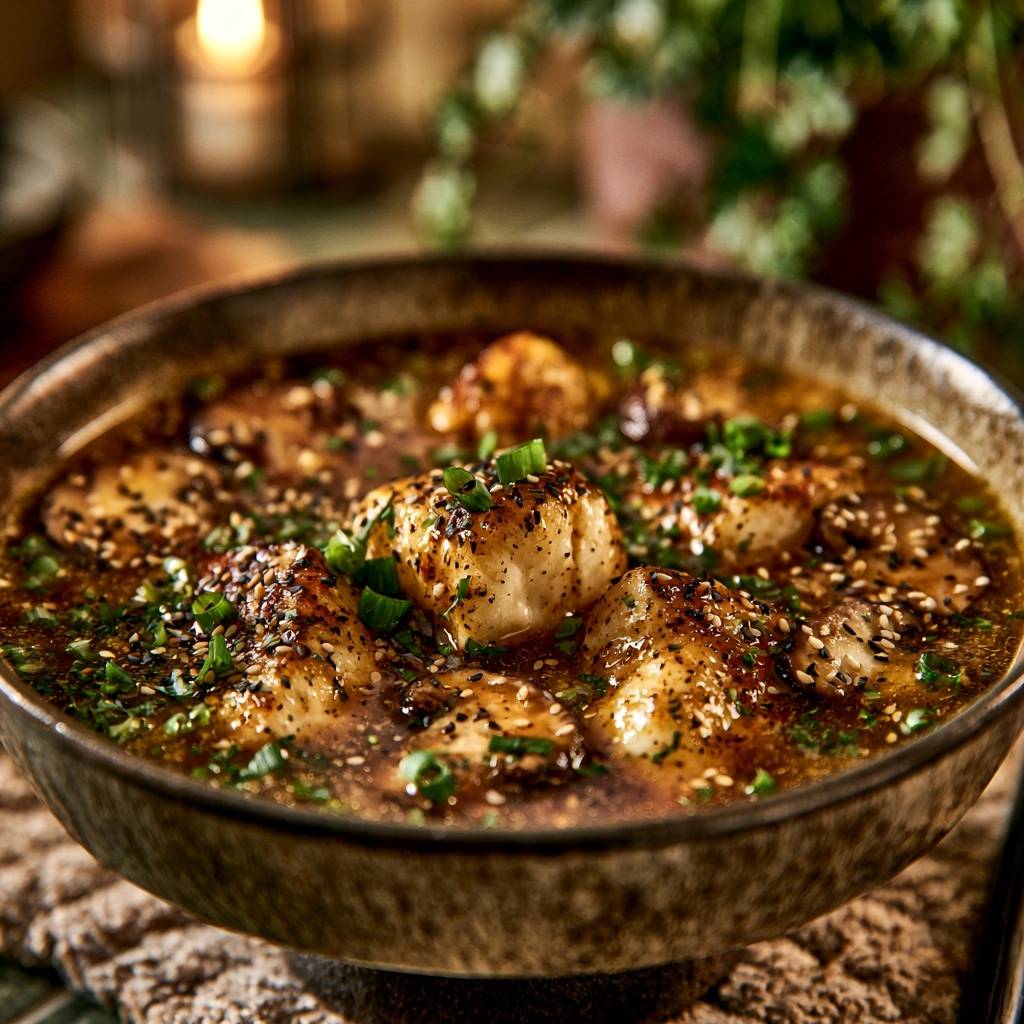
Presentation is all about the vessel. Use a shallow bowl rather than a flat plate. This allows the fish to sit in a pool of the sesame garlic broth, keeping it warm and moist throughout the meal. Pour the extra sauce around the fish, not directly over the seared crust, to maintain that textural contrast you worked so hard to achieve.
For the garnish, cut your green onions on a sharp bias (a long diagonal). This creates long, elegant slivers that look much more professional than standard rounds. Sprinkle the mixed sesame seeds from high above the bowl to get an even, snow-like distribution. These small details turn a simple home meal into a restaurant-quality experience.
Storing and Reheating Leftover Braised Fish
Fish is notoriously difficult to reheat, but it can be done if you are gentle. Store any leftovers in an airtight container with all the remaining broth. The liquid is essential for keeping the fish moist during the second round of heating. It will stay fresh in the fridge for up to two days.
To reheat, avoid the microwave if possible, as it often turns cod into rubber. Instead, place the fish and broth in a small skillet over low heat. Cover the pan with a lid and let it steam gently for 4 to 5 minutes until just warmed through. If you must use a microwave, use the 50% power setting and heat in 30-second bursts with plenty of extra sauce.
Frequently Asked Questions
How do I know when the cod is perfectly cooked?
The best way to check for doneness is the “flake test.” Take a fork or a knife and gently press down on the thickest part of the fillet. If the layers of the fish separate easily and the color is opaque (not translucent) all the way through, it is ready. You can also use an instant-read thermometer; you are looking for an internal temperature of 145°F.
Can I use a different type of fish for this recipe?
Yes, this braising method works beautifully with other white fish. Halibut, haddock, or even thick fillets of tilapia are great substitutes. Just keep in mind that thinner fillets will cook much faster than the 2-inch thick cod chunks, so you will need to reduce the basting time accordingly to avoid overcooking.
Why is my sauce not thickening?
If your sauce stays thin, it’s likely because the cornstarch slurry wasn’t mixed thoroughly or the liquid didn’t reach a high enough temperature. Cornstarch needs to reach a simmer to “activate” its thickening properties. Make sure the liquid is bubbling gently after you add the slurry. If it’s still too thin, mix another half-teaspoon of cornstarch with cold water and whisk it in.
Is it okay to use frozen ginger or garlic?
While fresh is always best for the most vibrant flavor, frozen ginger or garlic paste is a much better alternative than the dried or jarred versions. Many grocery stores sell “ginger cubes” in the freezer section that retain the sharp, spicy bite of fresh ginger. Just avoid using garlic powder, as it won’t provide the same aromatic base needed for the braising liquid.
Can I make this dish ahead of time?
Cod is best served immediately after cooking to maintain its delicate texture. However, you can prep all the components in advance. Mince the garlic, grate the ginger, and whisk the broth, soy sauce, and honey together hours before dinner. Having your “mise en place” ready means the actual cooking will only take about 15 minutes when you’re ready to eat.
What if I don’t have a wide skillet?
If your skillet is too small, the fish will be crowded, and the temperature of the oil will drop too quickly. This leads to steaming rather than searing. If you don’t have a wide pan, sear the fish in two batches. Once all the fish is seared, you can then proceed with making the sauce and fit all the pieces back in for the final basting step.
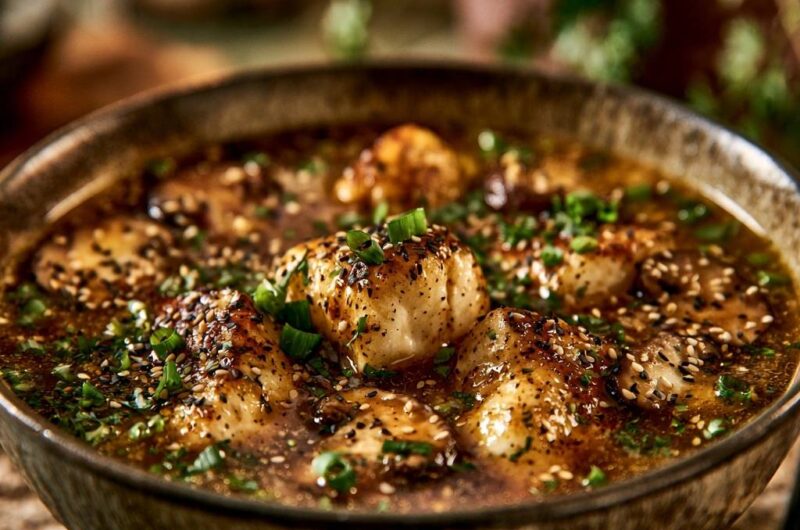
Braised Sesame Garlic Cod
Course: Main CourseCuisine: Asian FusionDifficulty: easy2
servings10
minutes15
minutes25
Minutes360
kcalAsian Fusion
Ingredients
1 pound fresh cod fillets, cut into 2-inch thick chunks
2 tablespoons vegetable oil
3 cloves garlic, minced
1 teaspoon fresh ginger, grated
1 cup vegetable broth
2 tablespoons soy sauce
1 tablespoon honey
1 teaspoon cornstarch (mixed with 1 tablespoon cold water)
1 teaspoon toasted sesame oil
1 tablespoon toasted sesame seeds (mix of white and black)
2 green onions, thinly sliced
1/2 teaspoon cracked black pepper
Directions
- Pat the cod chunks completely dry with paper towels. This is crucial for a quick sear that does not steam the fish. Season the tops generously with cracked black pepper.
- Heat the vegetable oil in a wide skillet over medium-high heat. Once the oil is shimmering, add the cod pieces. Sear for 60-90 seconds on one side only until a deep golden-brown crust forms. Remove the fish and set aside on a plate, seared-side up.
- Lower the heat to medium. Add the minced garlic and ginger to the residual oil and sauté for 30 seconds until fragrant.
- Pour in the vegetable broth, soy sauce, and honey. Bring the liquid to a simmer. Whisk in the cornstarch slurry and stir for 1 minute until the sauce slightly thickens and develops a glossy sheen.
- Carefully place the cod back into the skillet, seared-side up. The liquid should come about halfway up the sides of the fish.
- Reduce heat to low. Use a spoon to continuously baste the tops of the fish with the hot liquid for 3 to 4 minutes. This gentle poaching finishes the center of the fish while keeping the crust intact.
- Once the fish is opaque and flakes easily, remove from heat. Drizzle with toasted sesame oil.
- Transfer the fish and the plentiful broth into shallow bowls. Garnish heavily with the mixed sesame seeds and sliced green onions to match the visual density of the dish. Serve immediately.
Notes
- Patting the fish completely dry is essential for a proper sear. Basting the fish with the sauce while it simmers on low heat ensures the center stays moist and tender.