Candied Sweet Potatoes: Firm Texture, Glossy Glaze
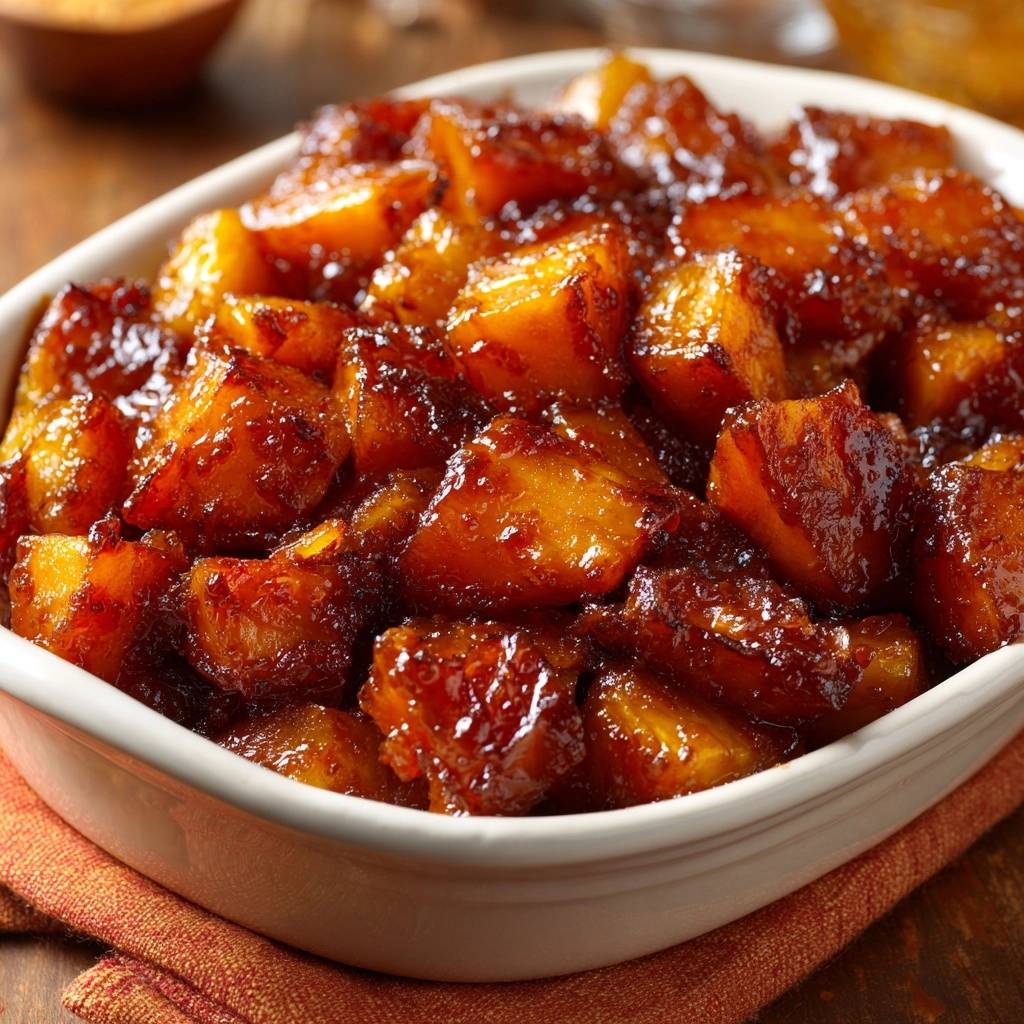
Ever pull candied sweet potatoes from the oven only to find a soggy pile? You’re not alone. Most recipes boil or steam them first, trapping moisture that turns firm chunks into mush. But this method flips the script with a quick dry roast. You’ll get caramelized edges and perfect firmness every time.
So why does this work so well for candied sweet potatoes? Traditional approaches drown the starch in liquid, breaking it down too fast. Here, roasting at 400°F evaporates excess water upfront. Therefore, the glaze clings without watering down.
The real secret lies in that initial 20-minute roast. It firms the cell walls just enough so they hold shape during glazing. No more heartbreak over mushy yams. These candied sweet potatoes stay glossy and bite after bite.
Why Candied Sweet Potatoes Fail
Moisture Traps in Traditional Recipes
Boiling sweet potatoes before glazing sounds smart, but it backfires. Water soaks into the starch, causing it to gelatinize unevenly. The result? A watery mess that never sets.
This recipe skips the boil. Instead, you dry-roast chunks first. That step pulls out about 30% of their natural moisture. Consequently, your candied sweet potatoes boast firm texture and shiny glaze.
Texture Science of Sweet Potato Starch
Sweet potato pectin breaks down with too much heat and moisture. That’s why wet-baking leads to collapse. However, a 400°F pre-roast firms those cells without over-softening.
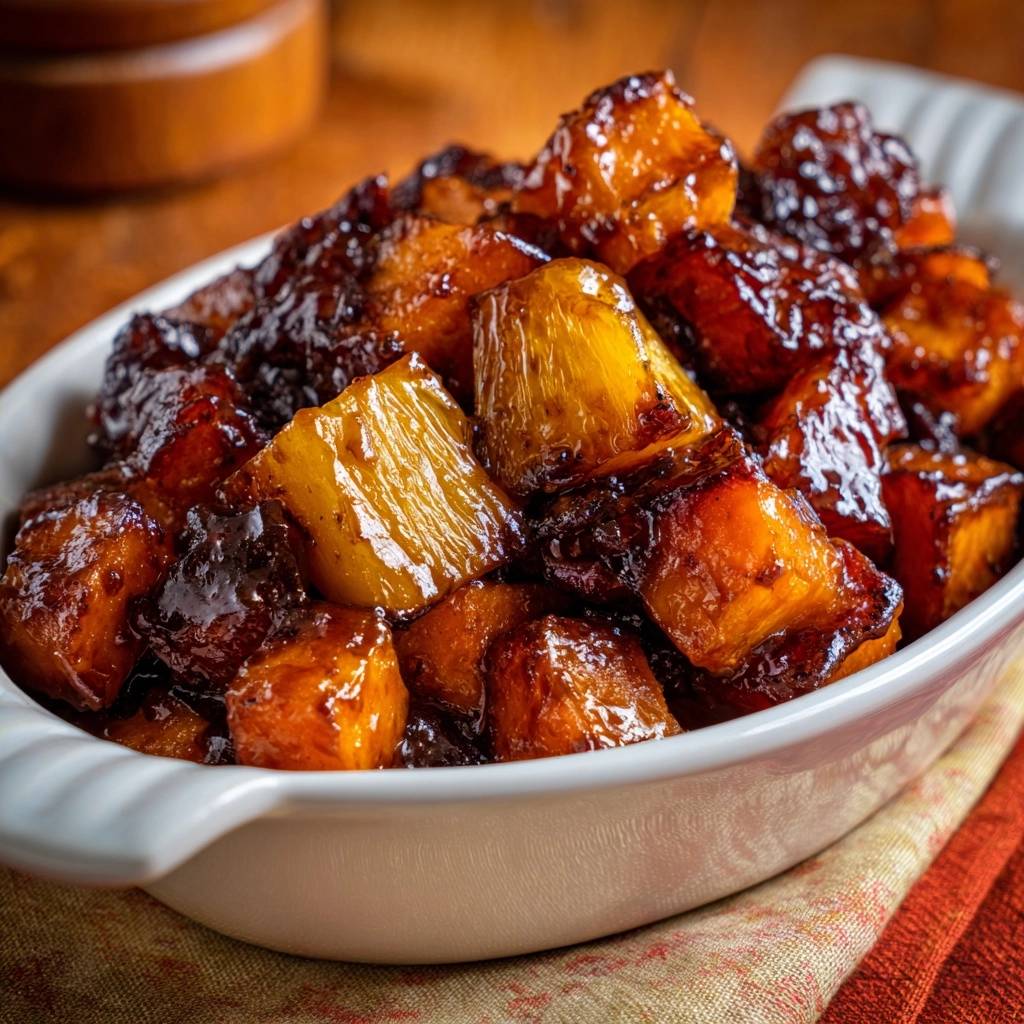
Then the sugar syrup interacts perfectly, triggering Maillard browning on the edges. Glazed sweet potatoes emerge caramelized, not soupy. It’s science you can taste.
Key Ingredients for Candied Sweet Potatoes
Selecting Firm Sweet Potatoes
Grab orange-fleshed varieties like Beauregard. They’re naturally sweeter and hold up better. Cut into uniform 1.5-inch chunks for even roasting.
Avoid white-fleshed ones; they turn mushy fast. Firm, medium-sized potatoes ensure your candied sweet potatoes shine.
Brown Sugar and Butter Ratios
Dark brown sugar brings deep molasses flavor over light. It melts into a rich glaze. Pair it with unsalted butter to control saltiness.
The 1/4 cup water thins it just right for caramelization. Too thick, and it burns. This balance nails glossy candied sweet potatoes.
Cinnamon and Salt Balance
Ground cinnamon releases warm oils when simmered. It elevates the glaze without dominating. Add salt to sharpen all flavors.
A pinch more if you like savoriness. These tweaks keep your candied sweet potatoes balanced and craveable.
Equipment Essentials for Perfect Glaze
Baking Sheets and Parchment Role
Use a rimmed baking sheet with parchment. It catches juices and absorbs moisture during roasting. Single layer prevents steaming.
No parchment? A Silpat works too. This setup guarantees firm candied sweet potatoes.
Saucepans for Glaze Stability
Pick a heavy-bottomed saucepan for even heat. Stainless steel handles sugar best without sticking. Your 9×13 dish needs grease for easy release.
These tools ensure smooth glaze every time.
Roasting Phase: Building Firm Base
Preheating and Chunk Prep
Preheat to 400°F sharp. Peel and chop sweet potatoes into 1.5-inch pieces. Spread in a single layer on parchment-lined sheet.
Roast 20 minutes, stirring halfway. You’ll smell sweet earthiness as edges lightly brown. This builds the firm base for candied sweet potatoes.
20-Minute Dry Roast Science
That roast evaporates natural water, fixing candied sweet potatoes texture issues. Look for fork-tender but still firm chunks. No mush here.
It prevents glaze dilution later. Pro tip: Test one piece; it should resist slight pressure.
Glaze Mastery for Candied Sweet Potatoes
Melting Butter Base
Melt butter over medium heat. Start with softened for smoothness; cold can separate. Stir constantly till foamy.
This base sets up a stable glaze.
Simmering Sugar Syrup
Add brown sugar, water, cinnamon, and salt. Simmer 5 minutes till thickened to 220°F. Stir to avoid crystals.
Bloom cinnamon last for max aroma. Your glaze now coats perfectly.
Coating and Final Bake Method
Gentle Toss with Hot Potatoes
Drop oven to 375°F. Toss hot roasted potatoes in glaze gently. Transfer to greased 9×13 in single layer.
Hot potatoes absorb glaze better. No piling; that steams them soft.
Basting for Caramelized Edges
Bake uncovered 20-25 minutes. Baste every 10 with pan juices. Edges turn golden, glaze bubbles.
Rest 5 minutes; pectin firms up. Glossy, firm candied sweet potatoes achieved.
Avoiding Mush in Candied Sweet Potatoes
Overcrowding Pitfalls
Never stack chunks. Steam builds and softens them. Use two sheets if needed.
Single layer in dish too. Keeps air circulating for crisp edges.
Glaze Thickness Errors
Too much water makes soup; skip it and glaze burns. Simmer to soft-ball stage.
Check temp if unsure. Perfect thickness clings without pooling.
Resting and Cooling Mistakes
Skip the 5-minute rest, and they’ll fall apart. Pectin sets as they cool slightly.
Serve warm. Hot collapses the structure.
Flavor Twists on Candied Sweet Potatoes
Nutty Additions Like Pecans
Sprinkle toasted pecans last 10 minutes. They add crunch against the glaze. Or stir in vanilla for depth.
Simple boost to spiced candied yams vibes.
Spice Variations Beyond Cinnamon
Try nutmeg or ginger for extra warmth. Swap maple syrup for brown sugar; it tenderizes gently.
These tweaks refresh your candied sweet potatoes.
Pairing Candied Sweet Potatoes
Holiday Roast Companions
They shine with turkey or ham. Green beans add snap to the sweetness.
For a perfect pairing, try our Caramel Apple Upside-Down Cake with Foolproof Release.
Balances any roast feast.
Everyday Meal Sides
Pair with grilled chicken or tofu bowls. A crisp salad cuts the richness.
Versatile weeknight win.
Make-Ahead for Candied Sweet Potatoes
Roast and Glaze Storage
Roast ahead, fridge glaze up to 3 days. Assemble and bake fresh. Or freeze roasted chunks in bags up to 2 months.
Thaw overnight for easy holidays.
Reheating Without Sogginess
Oven at 350°F with foil off beats microwave mush. Baste to revive glaze.
Stays firm and glossy.
Candied Sweet Potatoes Questions
Can I Use Canned Sweet Potatoes?
No way. Canned ones pack excess moisture that ruins texture. Stick to fresh for firm candied sweet potatoes. The roast step won’t save them.
How to Scale for Crowds?
Double everything, use two sheets for roasting. Same bake time in larger dish. Baste diligently; feeds 12 easily.
Vegan Substitutions Work?
Yes, swap butter for plant-based. Maple for sugar keeps it vegan. Texture holds; flavor’s just as warm.
Why Are Mine Still Mushy?
You likely skipped the dry roast or overcrowded. Always single layer and roast fully till firm. Gentle tossing prevents breakdown too.
Storage Lasts How Long?
Fridge in airtight container up to 4 days. Freezes well for 2 months in bags; thaw and reheat at 350°F. Discard if smell off or mold appears.
Sweet Potatoes
Course: Side DishCuisine: AmericanDifficulty: easy6
servings15
minutes50
minutes320
kcal65
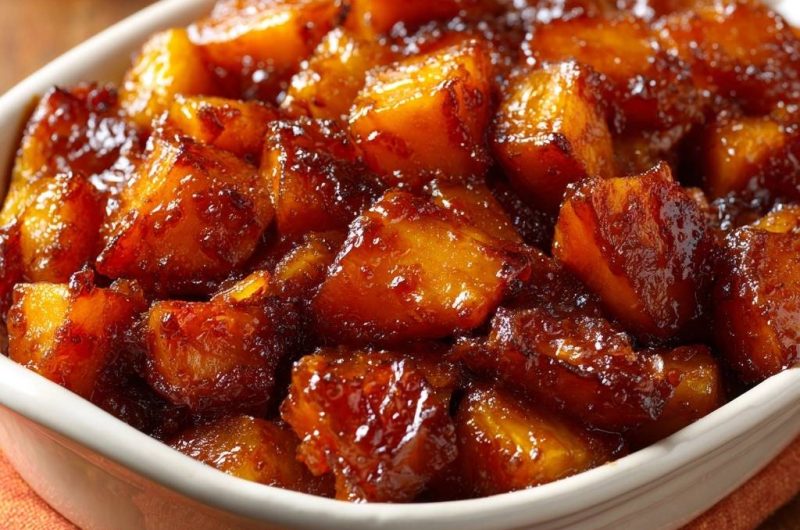
MinutesSick of candied yams that fall apart into a soggy mess? This foolproof method roasts the chunks first for firm texture, then locks in a glossy glaze without excess moisture. Perfect caramelized edges every time.
Ingredients
4 large sweet potatoes, peeled and cut into 1.5-inch chunks
1 cup brown sugar
1/2 cup unsalted butter
1/4 cup water
1 teaspoon ground cinnamon
1/2 teaspoon salt
Directions
- Preheat oven to 400 degrees F. Spread sweet potato chunks in a single layer on a parchment-lined baking sheet. Roast for 20 minutes, stirring once halfway, until just tender but still firm. This dry-roast step evaporates natural moisture to prevent mushiness, the key fix for perfect texture.
- While potatoes roast, melt butter in a saucepan over medium heat. Stir in brown sugar, water, cinnamon, and salt. Bring to a simmer, stirring until smooth and slightly thickened, about 5 minutes. Remove from heat.
- Remove potatoes from oven. Reduce oven to 375 degrees F. Toss hot potatoes gently in the glaze until evenly coated. Transfer to a greased 9×13-inch baking dish in a single layer.
- Bake uncovered for 20-25 minutes, basting with pan juices every 10 minutes. The uncovered bake caramelizes the glaze while keeping chunks firm. Potatoes are done when edges are golden and glaze is bubbly.
- Let rest 5 minutes before serving. Enjoy firm, glossy candied sweet potatoes that hold their shape!
Notes
- Dry-roast step evaporates natural moisture to prevent mushiness. Baste every 10 minutes for best caramelization. Let rest 5 minutes before serving for firm, glossy results.