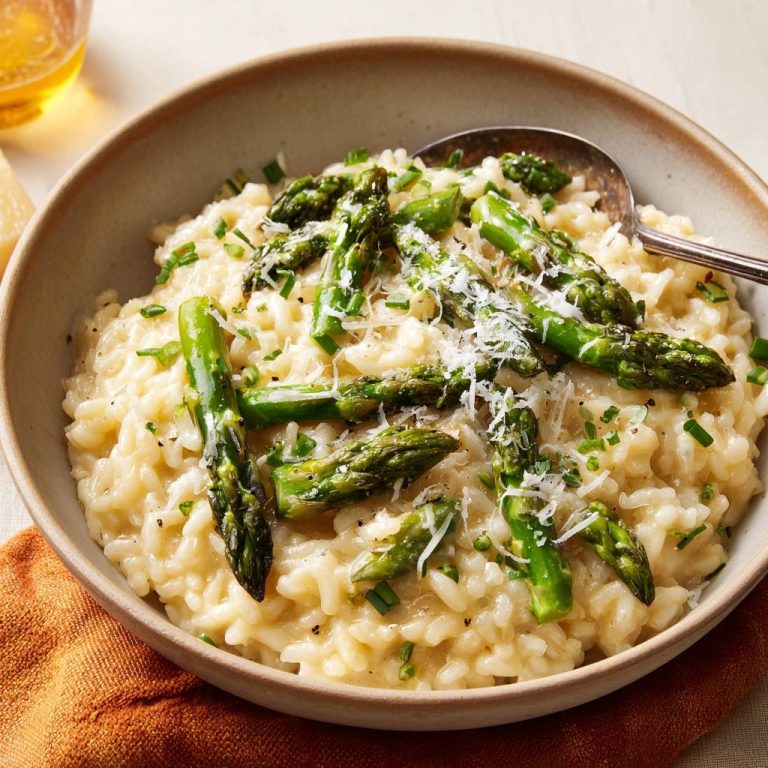
Creamy Mushroom Asparagus Pea Risotto Recipe
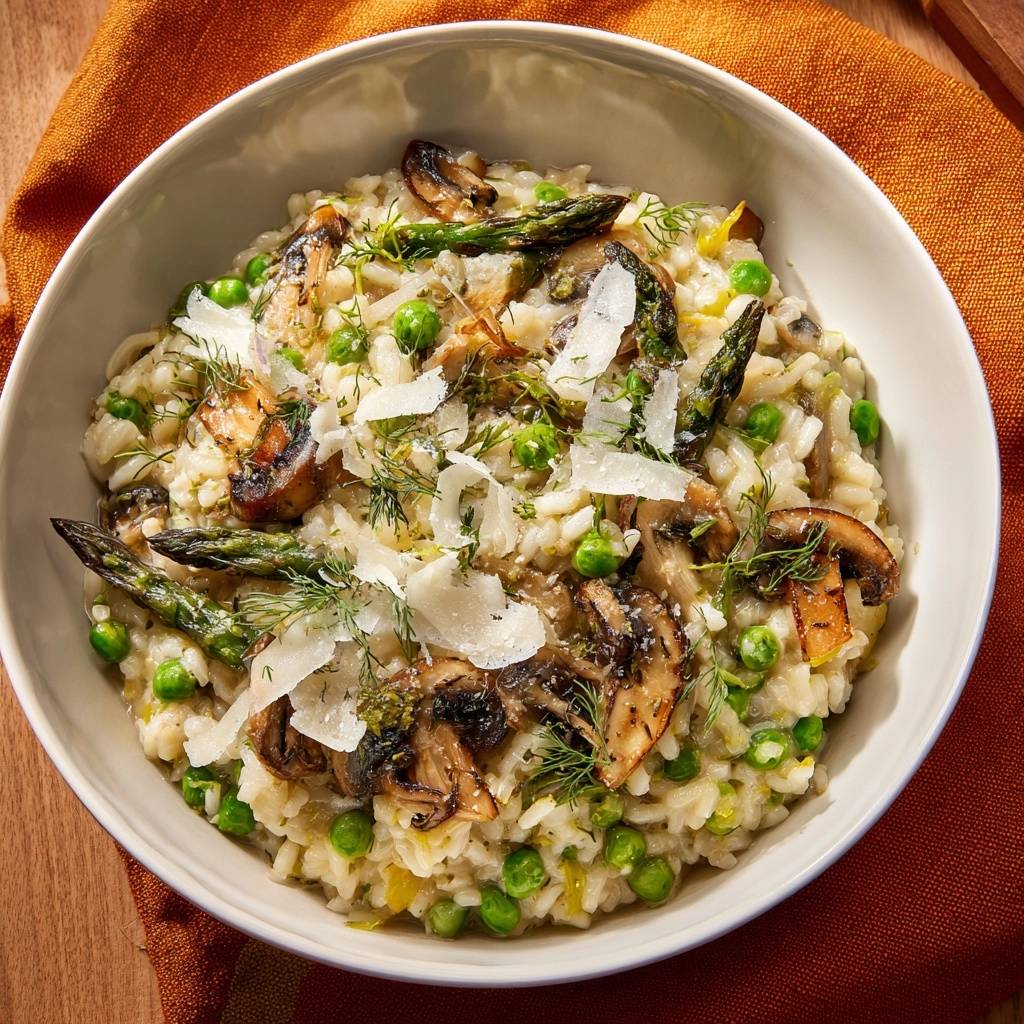
Why This Creamy Mushroom Asparagus Pea Risotto Succeeds
Ever ended up with a gluey mess when you tried risotto at home? Most folks stir too much or skip a key step, and it turns into wallpaper paste. But this creamy mushroom asparagus pea risotto changes everything with one simple toasting trick that seals the rice for silky, restaurant-quality results.
That’s why you’ll love it. Fresh spring veggies like asparagus and peas bring vibrant snaps of green and sweetness, all wrapped in nutty umami from mushrooms. Plus, it’s ready in about 30 minutes, vegetarian, and foolproof.
The secret? Dry-toasting the arborio rice until it’s golden and nutty-smelling. This creates a barrier that stops excess starch release, so you get creamy texture without the gumminess. Oh man, that first bite melts in your mouth with lemony brightness and cheesy richness.
Key Ingredients for Creamy Mushroom Asparagus Pea Risotto
Arborio rice is your star player here. Its high amylopectin content releases just enough starch for that signature creaminess when handled right. Grab 1 cup, and don’t swap it for long-grain stuff, or you’ll miss the magic.
Mushrooms, about 8 ounces sliced, deliver deep umami. Sauté them first for browned edges that amp up savoriness. Fresh ones beat canned every time.
A bunch of asparagus, trimmed and cut into 1-inch pieces, adds crisp earthiness. One cup of peas brings sweet pops, better fresh or frozen than canned for texture. Chop 1/4 cup fresh dill for herbal lift, and zest one lemon to cut the richness.
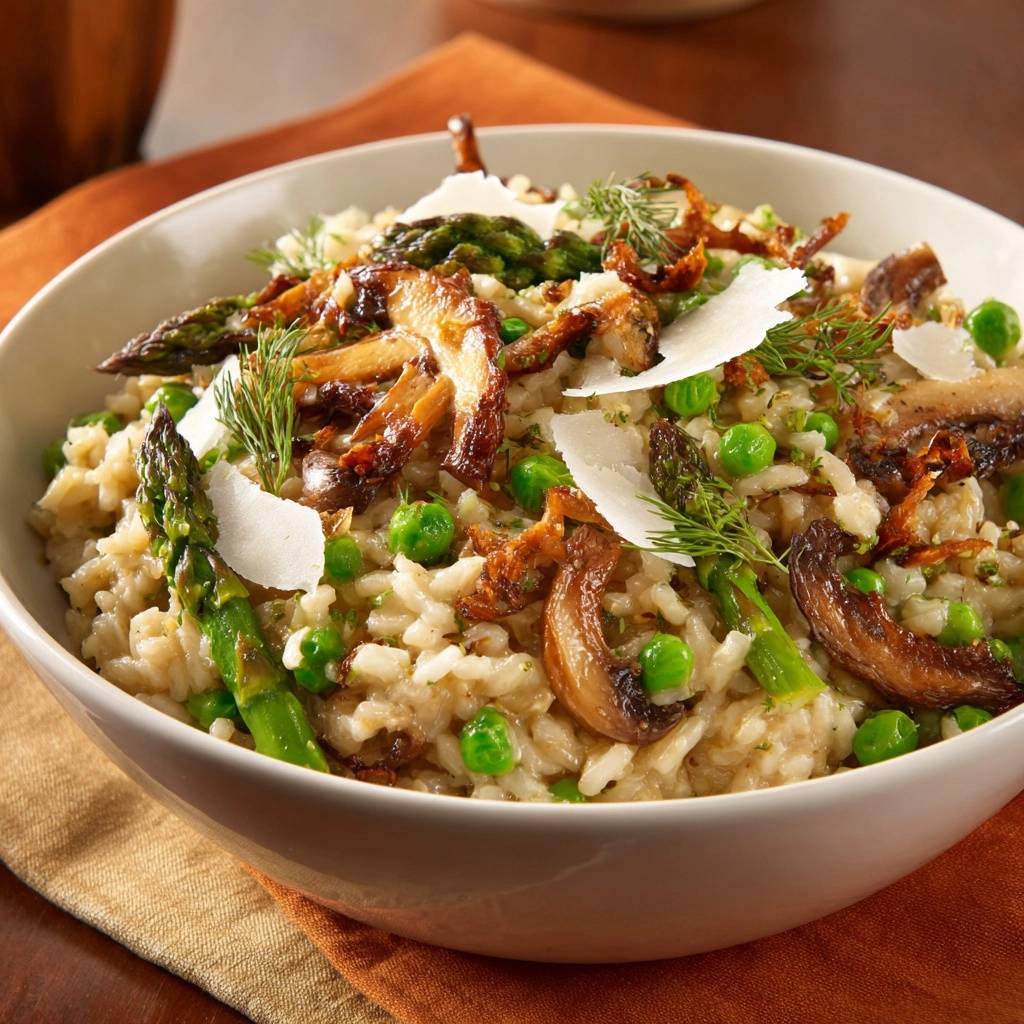
Grated parmesan, 1/2 cup plus extra, melts smoothly for nutty creaminess, fresher than pre-shredded. Heat 4 cups vegetable broth beforehand, so it doesn’t shock the rice. Two tablespoons each olive oil and butter, one finely chopped shallot, plus salt and pepper round it out.
Arborio Rice and Toasting Essentials
Arborio’s plump grains pack amylopectin, a starch that swells into creaminess. But without toasting, it over-releases and gums up. Dry-toasting for 2-3 minutes gelatinizes the exterior, forming a barrier for al dente perfection.
Parboiled rice fails here; it lacks the starch power. You’ll smell nuts toasting, a sign it’s working. This step takes seconds but saves your dish.
Mushrooms, Asparagus, Peas Synergy
Mushrooms’ glutamate boosts savoriness, pairing with asparagus’s grassy bite for balance. Peas add juicy sweetness that pops against the cream. Sauté 5 minutes until mushrooms brown and asparagus turns tender-crisp, not soggy.
Fresh asparagus snaps cleanly; frozen works but thaw first. This trio keeps every forkful exciting, earthy yet bright.
Rice Toasting Technique for Flawless Risotto
Start with olive oil in a large pan over medium heat. Add the shallot and cook 2 minutes until soft and fragrant. Then toss in mushrooms and asparagus; sauté 5 minutes for golden mushrooms and crisp-tender spears. Remove them to a plate.
Now the game-changer: Add arborio rice to the dry pan. Stir constantly over medium heat for 2-3 minutes. Watch grains turn lightly golden with a nutty aroma from the Maillard reaction. No liquid yet; it seals starch inside.
Untoasted rice soaks up too much starch and clumps. Toasted gives fluffy, separate grains in creamy sauce. Simple, right?
Building Creamy Mushroom Asparagus Pea Risotto Layers
Return veggies to the toasted rice. Pour in hot vegetable broth, 1/2 cup at a time. Stir gently until absorbed before adding more; repeat 20-25 minutes. The rice transforms from chalky to plumped and creamy.
Gradual addition hydrates evenly, preventing a raw core. Test al dente by biting a grain; it should hold a firm center. If it firms up too much, splash in extra hot broth.
Finishing with Butter, Herbs, and Cheese
Off heat, stir in 2 tablespoons cold butter for glossy emulsion, frozen peas for chill contrast, dill, lemon zest, parmesan, salt, and pepper. Let rest 2 minutes; starches settle for peak silkiness.
This monte completo builds layers: butter enriches, herbs brighten, zest balances. Serve right away with extra parmesan shavings. Pro tip: Taste salt last, as cheese adds plenty.
Science of Starch Control in Mushroom Asparagus Pea Risotto
Risotto starch splits into amylose for structure and amylopectin for cream. Toasting gelatinizes the outer amylopectin, curbing excess release. Gradual hot broth agitates inner starch just enough for sauce.
Lemon zest’s acidity tweaks pH, preventing gumminess. Veggies release moisture slowly, echoing Italian home traditions but simplified. No constant stirring needed; gentle works fine.
Result? Silky waves that coat your spoon, not glue. Heat evaporates excess water from asparagus and peas, concentrating flavors.
Avoiding Pitfalls in Creamy Mushroom Asparagus Pea Risotto
Gummy texture? You skipped toasting or over-stirred. Toast next time, and stir just to absorb. Mushy veggies happen from over-sautéing; pull at tender-crisp with a bright green snap.
Dry risotto comes from cold broth shocking the grains. Always heat it first. Bland? Mushrooms need browning for umami; don’t rush. Pro tip: Al dente test, blow on a grain; it dances free, not sticks.
Texture Troubleshooting for Silky Results
Perfect creaminess passes the wave test: Spoon risotto, it sheets then softly collapses. At 80% broth absorbed, grains have firm bite. Undercook slightly; carryover heat finishes it.
Flavor Twists on Mushroom Asparagus Pea Risotto
Swap crimini mushrooms for shiitake’s deeper umami. Try spinach instead of asparagus for wilted greens, or tarragon over dill for anise notes. Pecorino adds sharper tang than parmesan.
Vegan? Use nutritional yeast and cashew cream. Boost protein with grilled tofu chunks. Add saffron threads for luxury or white pepper for subtle heat. Scales easily to 4-6; double broth and rice.
Pairing Sides with Creamy Mushroom Asparagus Pea Risotto
Arugula salad’s bitter bite cuts the richness perfectly. Grilled artichokes echo asparagus’s earthiness. Crusty sourdough sopps up every creamy drop.
Sauvignon blanc’s crispness matches lemon zest. Sparkling apple cider refreshes too. End with lemon sorbet to amplify that zing.
Prep Ahead Strategies for Mushroom Asparagus Pea Risotto
Chop shallot, mushrooms, and asparagus a day early; store in fridge. Toast rice in batches and keep airtight up to a week. Heat broth on stove for quick assembly in 25 minutes.
Leftovers fridge well 3 days; reheat gently with broth splash. Freeze portions 1 month, thaw overnight, then stir on low. Best fresh for veggie snap, though.
Common Questions on Creamy Mushroom Asparagus Pea Risotto
How do I store Creamy Mushroom Asparagus Pea Risotto leftovers?
Store in an airtight container in the fridge for up to 3 days. Reheat on stovetop over low heat with a splash of hot vegetable broth to revive creaminess; microwave works but stir often to avoid drying. It freezes decently in portions for 1 month; thaw in fridge overnight, then reheat gently. Don’t refreeze after thawing, and note texture softens slightly but flavors hold strong.
Why did my risotto turn out gummy, and how do I fix it?
Gumminess comes from untoasted rice releasing too much starch or over-stirring. Always dry-toast the arborio 2-3 minutes until nutty and golden; it seals the grains. Next time, stir gently just until broth absorbs, and use hot broth to prevent clumping. If it happens, thin with extra hot broth and rest off-heat.
Can I substitute ingredients in Creamy Mushroom Asparagus Pea Risotto?
No basmati or brown rice; they lack amylopectin for creaminess, and brown takes 45+ minutes. Use green beans for off-season asparagus, or spinach for a softer green. Dairy-free? Swap butter for olive oil and parmesan for nutritional yeast or vegan parm. Vegetable broth keeps it vegetarian; don’t use cold versions.
Why toast the rice dry for risotto?
Dry-toasting triggers Maillard reaction for nutty flavor and gelatinizes the outer starch layer, preventing gluey excess. Without it, rice soaks unevenly and clumps. You’ll see golden grains and smell toastiness in 2-3 minutes; skip liquid during this step for best results.
If you enjoy the science of starch toasting for creaminess, this dreamy mushroom risotto follows the same method.
Can I make Creamy Mushroom Asparagus Pea Risotto vegan?
Yes, replace butter with olive oil or vegan butter, parmesan with nutritional yeast or cashew-based parm, and ensure vegetable broth. It stays creamy thanks to rice starch; add a splash of coconut cream at the end for extra richness if needed. Flavors shine just as bright.
Why let the risotto rest after cooking?
Resting 2 minutes off-heat lets residual heat finish cooking and starches fully hydrate for silky texture. It prevents gumminess by allowing flavors to meld and creaminess to peak. Stir in finishes right before, then cover loosely; rushing serve makes it separate.
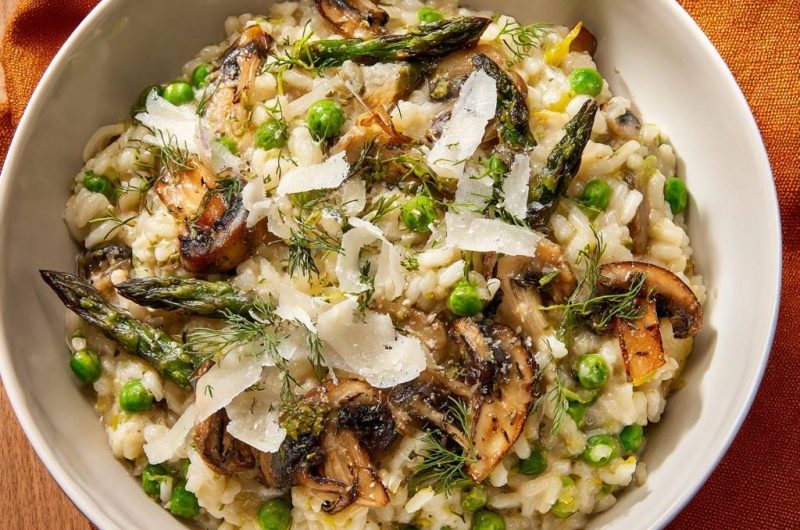
Risotto
Course: Main CourseCuisine: ItalianDifficulty: medium4
servings15
minutes30
minutes450
kcal45
MinutesRisotto often turns into a gluey disaster from over-released starch, but this simple toasting trick seals the rice grains for silky creaminess every single time. No more mushy fails, just restaurant-quality results at home.
Ingredients
1 cup arborio rice
8 oz mushrooms, sliced
1 bunch asparagus, trimmed and cut into 1-inch pieces
1 cup peas
1/4 cup fresh dill, chopped
1/2 cup grated parmesan cheese, plus extra for topping
4 cups vegetable broth, heated
2 tbsp olive oil
2 tbsp butter
1 shallot, finely chopped
1 lemon, zested
Salt and pepper to taste
Directions
- Heat olive oil in a large pan over medium heat. Add shallot and cook until soft, 2 minutes. Add mushrooms and asparagus. Saute until mushrooms brown and asparagus tender-crisp, 5 minutes. Remove veggies and set aside.
- In the same pan, add arborio rice. Here is the gummy-proof secret: Dry-toast the rice over medium heat, stirring constantly for 2-3 minutes until grains are lightly golden and nutty-smelling. This creates a protective barrier that prevents excess starch from making it gluey.
- Return veggies to pan. Gradually add hot vegetable broth, 1/2 cup at a time, stirring gently until absorbed before adding more. Repeat for 20-25 minutes until rice is creamy and al dente.
- Stir in butter, peas, dill, lemon zest, parmesan, salt, and pepper. Let rest 2 minutes for extra creaminess. Top with more parmesan. Serve immediately.
Notes
- Use arborio rice for best results. Keep broth hot while adding to ensure even cooking. Dry-toast rice to prevent gummy texture.