Mastering Crispy Beef Taquitos Without the Grease
There is a specific, satisfying sound when you bite into a perfect taquito. It should be a distinct, shatteringly crisp crunch that gives way to a savory, tender center. Most homemade versions, however, end up as a soggy disappointment or a greasy mess that falls apart before you can even dip it into the salsa.
The secret to achieving that professional-grade texture lies in the moisture barrier. By controlling the internal liquid and prepping the corn tortillas correctly, you can say goodbye to limp shells forever. This method focuses on a pan-seared finish that creates a golden, blistered exterior while keeping the beef filling juicy and flavorful.
I’ve found that the biggest mistake people make is using tortillas straight from the fridge. Cold corn tortillas are brittle and will snap the moment you try to roll them. If you want that tight, cigar-like shape that stays closed in the pan, you have to master the flash-heat technique to make the corn fibers pliable and resilient.
Essential Components for Crispy Beef Taquitos
Success starts with the right beef. I always recommend a lean ground beef, specifically a 90/10 or 93/7 blend. While fat usually equals flavor, too much rendered grease inside a taquito will soak into the tortilla from the inside out, making it impossible to get a true crunch. The lean beef provides plenty of protein structure without the oily residue.
Yellow onions are the unsung heroes of the filling. When finely diced and browned with the meat, they melt into the background, providing a subtle sweetness and essential aromatics. They shouldn’t be chunky; you want them to integrate fully so the filling remains compact and easy to roll tightly.
You might wonder why we add beef broth only to simmer it away. This is a crucial step for flavor concentration. The broth hydrates the taco seasoning and ensures the meat doesn’t become dry or “pebbly” during the frying process. It creates a tacky, cohesive filling that clings to the cheese rather than tumbling out of the ends of the tortilla.
Selecting the Right Corn Tortillas
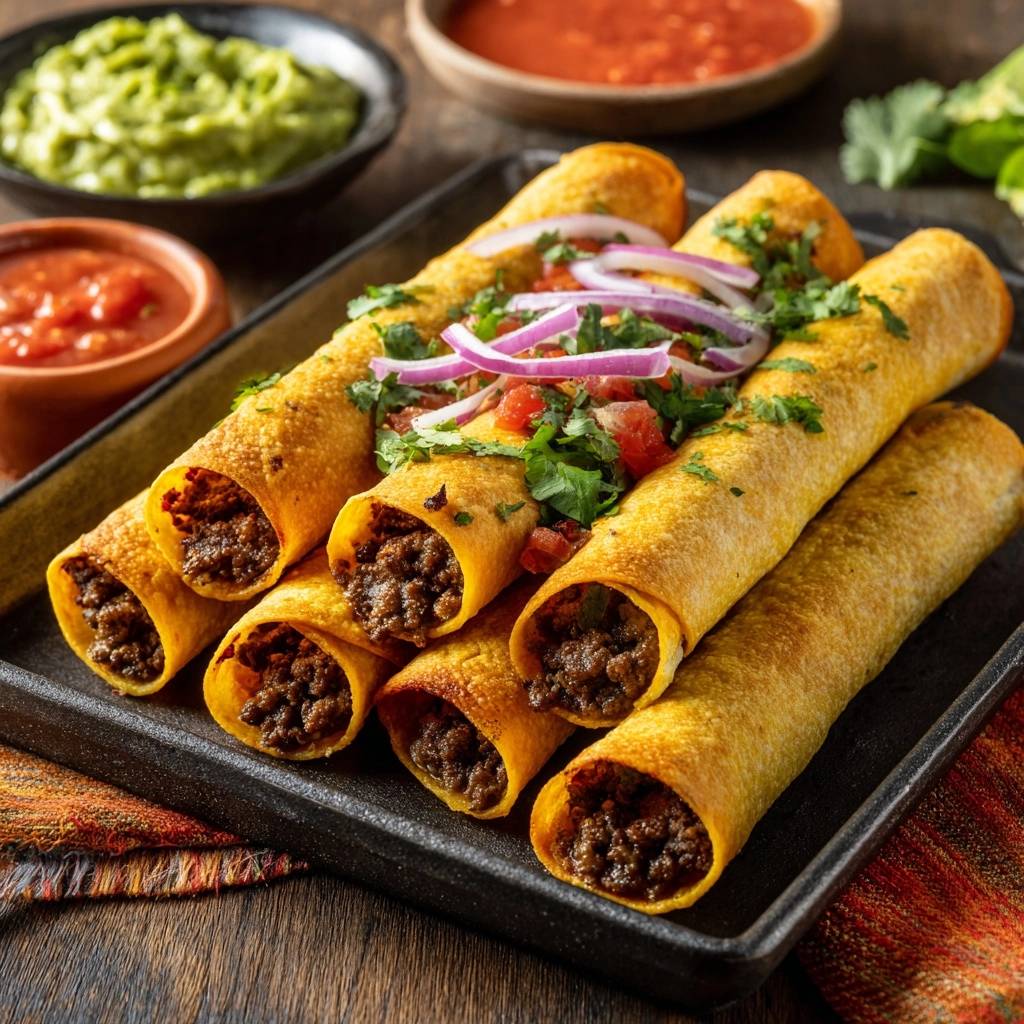
Yellow corn tortillas are generally the best choice for taquitos because they have a sturdier grain and a more pronounced toasted corn flavor. White corn tortillas are softer and more delicate, which can lead to tearing if you aren’t extremely careful. Avoid flour tortillas for this specific recipe; those are technically flautas and behave very differently in hot oil.
Check the “best by” date on your package. Freshness is your best friend here. Older tortillas lose their natural moisture and become stiff, making them prone to splitting even after they are heated. If you can find locally made, stone-ground tortillas, the extra texture will give you an even better blistered finish.
The Role of High-Smoke Point Oils
When it comes to frying, you need an oil that can handle the heat. Vegetable oil or canola oil are ideal because they have high smoke points and a neutral flavor profile. Avoid using butter or extra virgin olive oil, as they will burn and turn bitter before the tortilla reaches that deep golden brown color you’re looking for.
The oil needs to be between 350°F and 375°F. If the oil is too cold, the tortilla will act like a sponge and soak up the grease, resulting in a heavy, oily snack. If it’s hot enough, the oil immediately sears the surface, creating those beautiful tiny bubbles and a crisp shell that feels light and dry to the touch.
This same steam issue is what we tackle in these cheesy beef and bean enchiladas.
The Science of Preventing Soggy Tortillas
Sogginess is usually caused by steam, not just oil. When you wrap hot, wet meat inside a tortilla and then fry it, the water in the meat turns to steam. That steam has nowhere to go, so it softens the inside of the tortilla, turning it into mush. This is why the “Reduction Method” is so vital to this recipe.
By simmering the beef broth until it has completely evaporated, you are concentrating the beefy notes while removing the “free water” that causes steaming. You want the meat to look glossy and moist, but if you tilt the pan, no liquid should pool at the bottom. This ensures the only moisture inside the taquito is the melted cheese, which acts as a delicious glue rather than a softening agent.
Why We Drain Every Drop of Fat
After browning your beef and onions, you must drain the fat thoroughly. I often use a colander or even pat the meat with a paper towel. Residual grease prevents the taco seasoning from sticking to the meat and, more importantly, it prevents the cheese from binding the filling together. A clean, dry protein base is the foundation of a structurally sound taquito.
The Flash-Heat Technique for Pliability
To prevent cracking, we use a dual-purpose flash-heat method. By heating each tortilla in a lightly oiled skillet for about 10 seconds per side, you are doing two things. First, the heat relaxes the corn starches so the tortilla becomes as flexible as a piece of fabric. Second, that tiny amount of oil creates a microscopic barrier on the surface.
This barrier is the secret weapon. It prevents the moisture from the meat from soaking into the tortilla grain while you are rolling them. It also helps the exterior get a head start on the frying process, ensuring the crunch starts the second the taquito hits the large skillet. It’s a small step that makes a massive difference in the final result.
Step-by-Step: Preparing the Savory Beef Filling
Start by browning your beef and diced onions over medium-high heat. Use your spatula to break the meat into very small crumbles; large chunks will make the taquitos lumpy and hard to roll. Once the meat is browned and the onions are translucent, drain the fat completely. This is the point where you add your taco seasoning and the beef broth.
Turn the heat down slightly and watch the liquid. You’ll see it bubbling and reducing. As the broth disappears, the spices will coat the beef in a thick, savory glaze. When the pan looks dry and the meat is tacky, remove it from the heat. Let the filling cool for just a few minutes before you start rolling; if it’s boiling hot, it will be harder to handle and might tear the tortillas.
The Art of the Tight Roll
Placement is everything. Lay your warm, pliable tortilla flat and place about two tablespoons of the beef mixture on the lower third of the circle. Sprinkle a little Mexican blend cheese right on top of the meat. Don’t overfill! It’s tempting to pack them full, but an overstuffed taquito will burst open in the oil, creating a “blowout” that ruins your frying oil with burnt cheese.
Roll the tortilla away from you as tightly as possible, like a small cigar. The goal is to have no air pockets inside. Once rolled, place the taquito on a plate with the seam-side down. The weight of the filling will help seal the edge while you finish the rest of the batch. This “seam-side down” rule is the most critical step for keeping them closed without needing toothpicks.
The same hot oil technique works beautifully for getting a crisp crust on these sticky glazed teriyaki meatballs.
Shallow Frying for the Perfect Golden Blister
Shallow frying is superior to deep frying for taquitos because it gives you more control and uses less oil. Pour about half an inch of oil into your skillet. Once it’s shimmering, use tongs to carefully place the taquitos in the pan, always starting with the seam-side down. This “sets” the seal immediately so they won’t unroll when you flip them.
Don’t overcrowd the pan, or the oil temperature will drop, leading to greasiness. Fry them for about 2-3 minutes per side. You are looking for a deep golden color and a visible blistered texture on the surface. When they are done, move them to a wire cooling rack. Never use paper towels! Paper towels trap the rising steam underneath the taquito, which will turn your perfectly crisp bottom into a soggy mess in seconds.
Troubleshooting Common Taquito Failures
If your tortillas are still cracking during the rolling process, they aren’t warm enough or they are too dry. Try wrapping a stack of tortillas in a damp paper towel and microwaving them for 30 seconds before you do the oil-flash in the skillet. This extra hit of steam softens the core of the corn grain.
If the filling is falling out into the oil, you likely have too much liquid in your meat or you aren’t rolling them tightly enough. Ensure the meat is “tacky” before rolling. If the taquitos are unrolling when you flip them, you might be flipping them too early. Let that seam-side get dark golden and “locked” before you attempt to rotate them with your tongs.
Uneven browning usually happens when the oil level is too low or the pan is warped. Make sure the oil covers the entire bottom of the pan. If you notice one side is getting darker than the other, rotate the pan on the burner to account for any hot spots. Consistency is key to that professional look.
Flavor Variations and Protein Swaps
While beef is the classic choice, you can easily adapt this method for other proteins. For chicken taquitos, use shredded rotisserie chicken tossed with a little lime juice and the same taco seasoning. Just ensure the chicken isn’t dripping with sauce. If you want a vegetarian option, mashed black beans mixed with corn and diced green chiles work beautifully.
You can also play with the spice profile. If you like heat, fold in a tablespoon of minced chipotle in adobo to the beef mixture. For a smokier flavor, add a teaspoon of smoked paprika. Just remember the golden rule: whatever you add, keep the moisture level low so the tortilla stays crisp.
What to Serve with Crispy Beef Taquitos
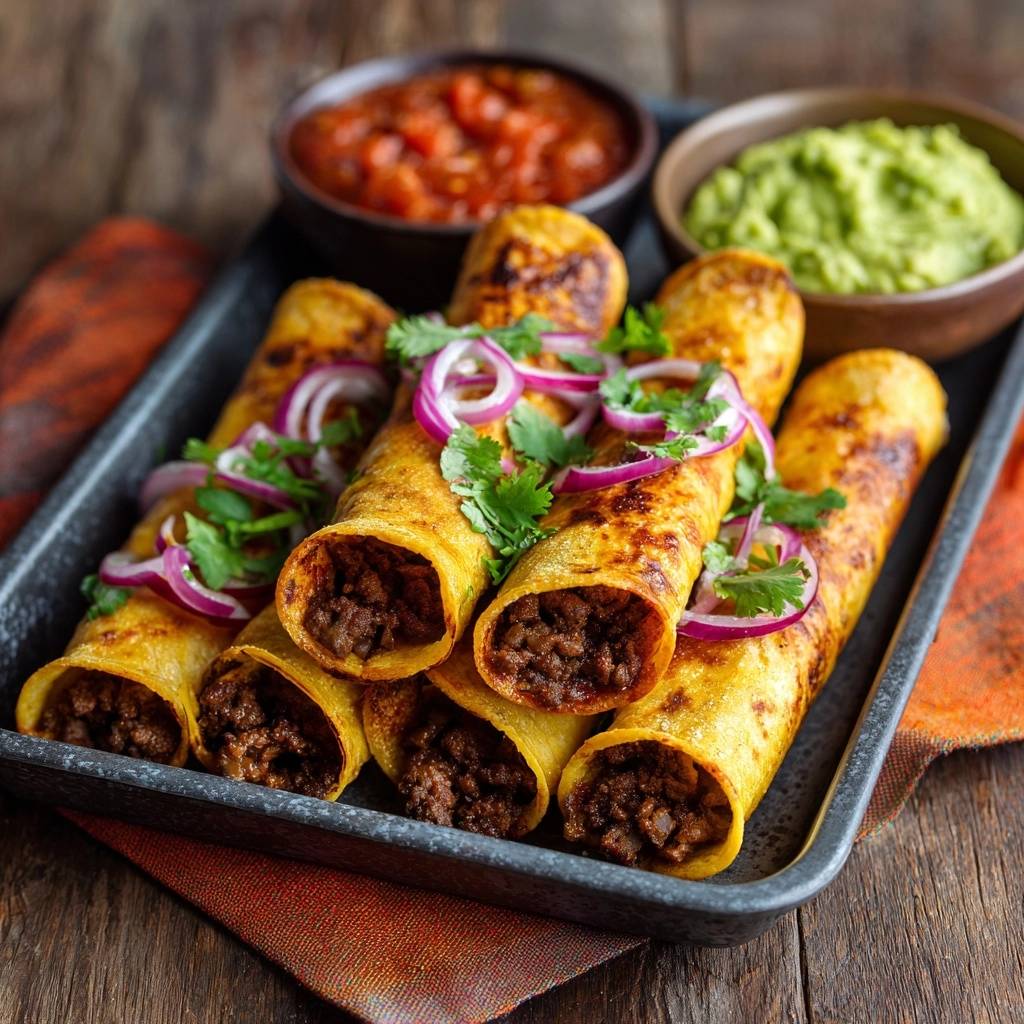
Taquitos are rich and savory, so they need bright, acidic toppings to balance the flavors. I love topping a platter of these with thinly sliced red onions that have been soaked in a little lime juice. The sharp “bite” of the onion cuts right through the fried shell and the melted cheese. Fresh cilantro adds a necessary pop of herbal freshness.
Temperature contrast is also a big part of the experience. Serve your taquitos piping hot alongside cold, creamy guacamole and room-temperature chunky salsa. The mix of the hot, crunchy shell with the cold, smooth dip is what makes this dish so addictive. A side of cool sour cream or Mexican crema is also a great way to mellow out any extra spice.
What to Serve Alongside Crispy Beef Taquitos
These taquitos are already packed with crunch and beefy flavor, but a couple of extra dishes can round out the meal with more texture and heat.
- For a bold, smoky veggie option that shares the same charred appeal, toss together a sheet pan of Sheet Pan Chicken Fajitas with Crispy Charred Edges – the peppers and onions add a fresh counterpoint to the fried tortillas.
- Cool down the spice with a creamy, cheesy dip:
Get the full recipe in your inbox in seconds – perfect for shopping and cooking.
Beef Taquitos
Course: Main CourseCuisine: Mexican-AmericanDifficulty: easy4
servings15
minutes20
minutes450
kcal35
MinutesA foolproof method for making crunchy corn tortilla taquitos filled with seasoned ground beef and melted cheese, designed to stay crisp even after frying.
Ingredients
1 pound lean ground beef
1/2 yellow onion, finely diced
1 tablespoon taco seasoning
1/2 cup beef broth (to keep filling moist but not wet)
12 corn tortillas
1 cup shredded Mexican blend cheese
1/2 cup vegetable oil (for shallow frying)
1/2 red onion, thinly sliced into half-moons
Fresh cilantro for garnish
Salsa and guacamole for serving
Directions
- In a skillet over medium-high heat, brown the ground beef and diced yellow onion until the beef is fully cooked. Drain every drop of excess liquid and fat. Stir in the taco seasoning and beef broth. Simmer until the liquid has reduced completely, leaving the meat seasoned and moist but with no standing liquid. This prevents the tortillas from steaming from the inside out.
- To solve the problem of tortillas cracking, heat a lightly oiled skillet over medium heat. Flash-heat each tortilla for 10 seconds per side until pliable. This creates a slight oil barrier on the surface that prevents the tortilla from absorbing excess grease during the final crisping.
- Place a small amount of beef and a sprinkle of cheese on the lower third of each warm tortilla. Roll them as tightly as possible. A tight roll ensures the filling stays intact and the oil doesn’t seep into the center.
- Heat 1/2 cup of vegetable oil in a large skillet over medium-high heat. Once the oil is shimmering, place the taquitos in the pan, seam-side down. Do not overcrowd the pan.
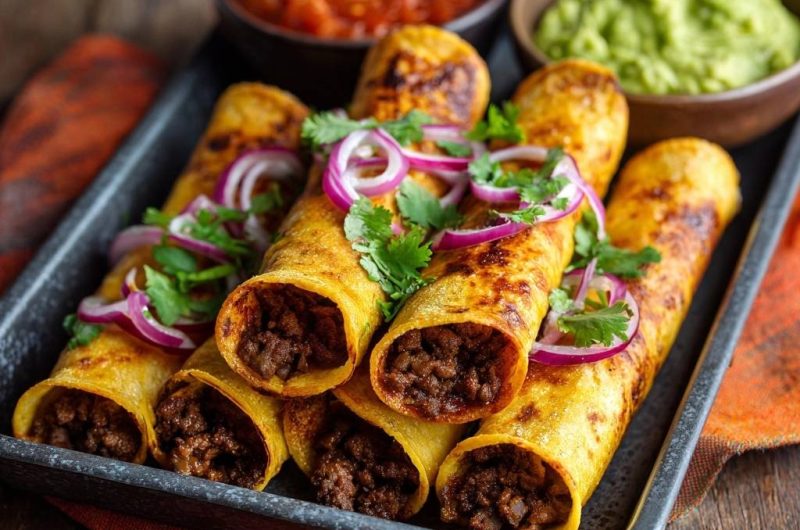
- Fry for 2-3 minutes per side, rotating with tongs, until the tortillas are golden brown and have a visible blistered texture as seen in the image. This shallow-fry method achieves the deep golden color and “shatter” crunch that baking cannot replicate.
- Drain briefly on a wire rack (not paper towels, which trap steam) to maintain maximum crispness.
- Arrange on a platter and top with the thinly sliced red onions and fresh cilantro. Serve immediately with bowls of chunky salsa and guacamole.
Notes
- Drain on a wire rack instead of paper towels to prevent steam from softening the shells. Ensure the beef filling has no standing liquid before rolling.