High-Protein Buffalo Chicken Whipped Cottage Cheese Bowl
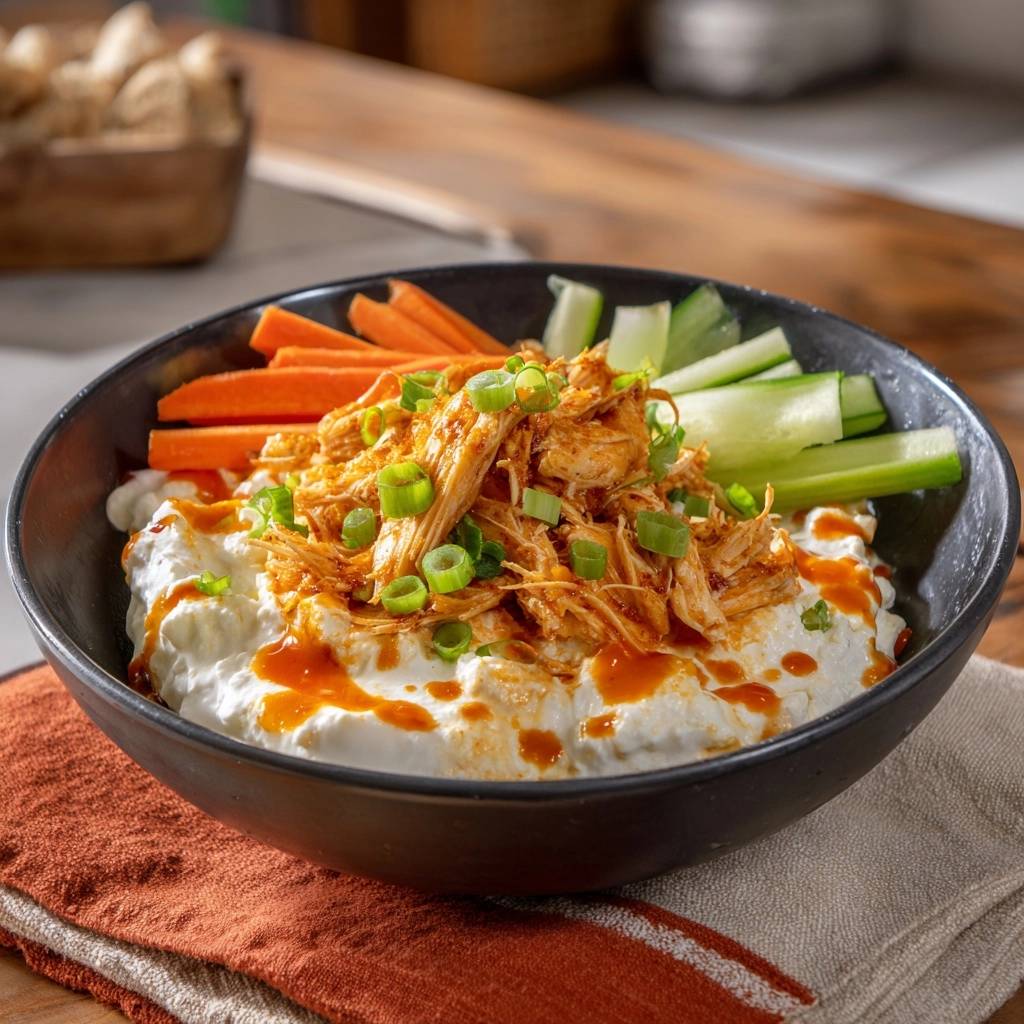
Imagine a snack that tastes exactly like your favorite decadent buffalo chicken dip but actually fuels your body with lean protein. This Buffalo Chicken Whipped Cottage Cheese Bowl delivers a velvety, cloud-like texture that will make you forget every bad experience you’ve ever had with lumpy curds. It’s the ultimate solution for anyone craving a savory, spicy kick without the heavy calories of a traditional cream-based dip.
The secret to this 380-calorie powerhouse lies in the transformation of the dairy base. By moving away from the standard “scoop and serve” method, we create a sophisticated crema that feels like a luxury meal. It’s thick enough to hold its shape yet smooth enough to coat every piece of spicy chicken and crunchy vegetable perfectly.
Expertise in this dish comes down to one non-negotiable rule: you must use full-fat cottage cheese. While it’s tempting to grab the fat-free tub, the 4% milkfat is what allows the proteins to emulsify into a glossy, stable peak. Without that fat, your bowl will likely turn into a thin, watery mess the moment the hot sauce touches it.
The Science of Emulsifying Cottage Cheese
When you toss cottage cheese into a high-speed blender, you’re doing more than just breaking up lumps. You’re actually performing a mechanical emulsion. The blades shear the milk proteins and fats, redistributing them into a uniform, aerated structure. This process changes the molecular feel on your tongue from “gritty” to “silky” in under a minute.
However, the stability of this emulsion depends heavily on the milkfat content. Using 4% cottage cheese provides the necessary lipids to coat the air bubbles you’re whipping into the mixture. If you use a lower-fat version, the structure is much weaker. This often results in the whey separating from the solids, leaving a puddle at the bottom of your bowl within minutes of plating.
To get that professional “crema” consistency, you need to blend for a full 45 to 60 seconds. Even if it looks smooth at the 20-second mark, keep going. That extra time ensures every single curd is pulverized. The result is a thick, spreadable base that mimics the mouthfeel of a high-end whipped ricotta or a thick Greek yogurt.
Why Cream Cheese Prevents Watery Separation
Adding a single tablespoon of softened cream cheese might seem like a small detail, but it’s actually a technical insurance policy. Cream cheese contains stabilizers like carob bean gum or guar gum. These ingredients act as binding agents that “trap” the moisture within the whipped cottage cheese, preventing the dreaded weeping or separation.
This addition gives the base a “peak-holding” capability. When you swirl your spoon to create a well for the chicken, the cheese stays exactly where you put it. Furthermore, it creates a barrier that prevents the vinegar in the buffalo sauce from breaking down the dairy proteins too quickly, ensuring your last bite is as creamy as your first.
Essential Components for the Buffalo Chicken Base
The foundation of this bowl relies on high-quality shredded chicken breast. Because the chicken is the star protein, you want it to be tender enough to soak up the buffalo sauce. I find that poaching or using a rotisserie chicken works best because the meat fibers are loose and ready to absorb flavor. Avoid large chunks; finely shredded chicken ensures you get a bit of spice in every single spoonful.
Flavoring the base itself is just as important as the topping. We use garlic powder and onion powder because they hydrate instantly within the moisture of the cheese. Unlike fresh garlic, which can be sharp and overpowering in a raw dip, these powders provide a mellow, savory backbone. They bridge the gap between the tangy dairy and the acidic heat of the buffalo sauce.
Don’t skip the “softened” part of the cream cheese instruction. If you drop a cold block of cream cheese into the blender, it won’t incorporate evenly. You’ll end up with tiny, waxy beads of fat throughout your smooth base. Let it sit on the counter for 15 minutes first to ensure a seamless blend.
Selecting the Right Buffalo Heat Level
Most buffalo sauces are vinegar-based, which is essential for cutting through the richness of the whipped dairy. The acidity brightens the entire dish. However, different brands vary wildly in salt and heat. If you’re using a very hot variety, stick strictly to the two-tablespoon limit to avoid thinning out the cheese base too much.
If you want more flavor without more heat, look for a “mild” buffalo sauce that still has that signature buttery aroma. The goal is a balanced drizzle that complements the garlic-infused cheese rather than drowning it out. Always taste a small drop of your sauce before drizzling to gauge how much your palate can handle.
Step-by-Step: Achieving the Silky Texture
Start by placing your cottage cheese, softened cream cheese, and spices into your blender or food processor. It’s helpful to pulse the mixture three or four times first to break up the largest curds. Once the initial chunks are gone, switch to a high-speed setting and let it run continuously.
Watch for the visual cues of a perfect emulsion. The mixture will transition from a dull, bumpy yellow-white to a bright, glossy sheen. About halfway through, you must stop and scrape down the sides with a rubber spatula. Small bits of grit often hide near the lid or the top of the bowl, and one scrape ensures they get pulled back into the blades.
When you finish, the texture should be thick enough that it doesn’t immediately fall off an inverted spoon. It should look like a heavy cake batter or a thick mousse. If you see any tiny dots or “sandiness,” blend for another 15 seconds. That extra effort is what separates a mediocre bowl from a restaurant-quality snack.
Preparing the Buffalo Chicken Topping
While your cheese base is ready and waiting, focus on the chicken. Tossing the shredded meat with the first tablespoon of sauce before heating ensures every strand is coated. Heating it separately is a crucial step. If you try to heat the entire bowl together, the whipped cheese will lose its aeration and turn into a liquid soup.
For a perfect pairing, try our Crispy Chicken Thigh Power Bowl: The Secret to Juicy Crunch.
Once the chicken is steaming and fragrant, it’s time to plate. Use the back of a large spoon to create a deep well in the center of your whipped cheese. This “nest” holds the warm chicken and keeps the juices from running all over the sides. This temperature contrast—cold, refreshing cheese against warm, spicy chicken—is what makes the dish so satisfying.
Troubleshooting Common Texture Issues
If your mixture looks too thin after blending, don’t panic. This usually happens if the cottage cheese had a high water content. You can fix this by adding another teaspoon of softened cream cheese and pulsing again. The extra fat and stabilizers will help tighten the structure back up almost instantly.
On the flip side, if the mixture is so thick the blender blades are spinning in an air pocket, add a single teaspoon of milk or water. Be very conservative here; a little liquid goes a long way. You want to add just enough to get the vortex moving again without turning the base into a pourable sauce.
Avoid over-blending for several minutes. High-speed blades generate heat through friction. If the dairy gets too warm during the blending process, the fats can begin to melt and separate, leading to a “soupy” result that won’t firm up even in the fridge. Stick to the 60-second rule for the best results.
Flavor Variations and Protein Swaps
Once you master the base, you can play with the flavor profile. For a “Ranch” inspired version, swap the buffalo sauce for a blend of dried dill, chives, and a squeeze of lemon juice. You can still keep the chicken, but the vibe becomes much more herbaceous and cooling. It’s a great alternative if you’re serving people who aren’t fans of spicy food.
If you want to change the protein, shredded turkey is a fantastic substitute that carries the buffalo sauce just as well as chicken. For a vegetarian option, smashed chickpeas work beautifully. Simply toss the chickpeas in the buffalo sauce and roast them for a few minutes until they’re slightly crispy before piling them onto the whipped cheese.
You can even go for a “BBQ” version by swapping the buffalo sauce for a smoky, sugar-free barbecue sauce. In this case, I recommend adding a pinch of smoked paprika to the cheese base to echo those deep, charred flavors. The whipped cheese acts as a neutral, high-protein canvas for almost any savory topping you can imagine.
Optimal Pairings for Your Protein Bowl
While the recipe calls for carrots and cucumbers, the pairing possibilities are endless. The key is to find items that offer a sturdy “crunch” to contrast the softness of the cheese. Celery hearts are a classic choice for anything buffalo-flavored, providing a watery, crisp bite that cleanses the palate between spicy mouthfuls.
For a heartier meal, toasted pita points or high-fiber seed crackers are excellent. They provide a salty, earthy base that can hold a heavy scoop of the chicken and cheese. If you’re keeping things low-carb, try using bell pepper “scoops” or even sturdy leaves of romaine lettuce to dip into the bowl.
The vegetable batons aren’t just for nutrition; they are functional tools. By cutting your cucumbers and carrots into long, sturdy sticks, you create the perfect vessel for reaching the bottom of the bowl. This ensures you get a balanced ratio of spicy chicken, creamy cheese, and fresh vegetable in every single bite.
Meal Prep and Storage Guidelines
You can absolutely meal prep the whipped cheese base, but there are a few things to keep in mind. It will stay fresh in an airtight container for up to 48 hours. However, because we’ve whipped air into the dairy, it may deflate slightly as it sits in the fridge. If it looks a bit flat, just give it a vigorous stir with a fork to revive the fluffiness.
Always store the buffalo chicken in a separate container. If you store the chicken on top of the cheese, the salt and acid in the sauce will cause the cheese to break down and become watery overnight. Keeping them separate also allows you to heat the chicken to a safe temperature without ruining the texture of the cold whipped base.
I don’t recommend freezing this dish. The freezing and thawing process wreaks havoc on the emulsion we worked so hard to create. The water in the cottage cheese will form ice crystals, and when they melt, the texture will become grainy and separated. This is definitely a dish that is best enjoyed fresh or within a couple of days.
Expert Tips for Professional Plating
To make this bowl look as good as it tastes, focus on the final drizzle. Instead of just dumping the remaining buffalo sauce on top, use a small spoon to drizzle it in a slow, circular motion. This creates a beautiful contrast against the white cheese and makes the dish look like it came from a high-end bistro.
Placement of the vegetables matters too. Tucking the carrot and cucumber sticks into the back of the bowl creates height and visual interest. Finally, the green onions provide a pop of bright green that signals freshness. Cut them on a sharp bias (diagonal) to give them a more professional, “chef-y” appearance before scattering them over the top.
Frequently Asked Questions
Can I use a regular blender instead of a food processor?
Yes, a regular blender works, but a high-speed blender (like a Vitamix or Ninja) is much more effective at removing the grit. If you use a standard, lower-power blender, you may need to blend for an extra 30 seconds and be very diligent about scraping down the sides to ensure no stray curds remain.
Is 2% cottage cheese acceptable?
You can use 2%, but the result will be noticeably thinner and less “velvety.” If you choose a lower-fat option, I highly recommend doubling the amount of cream cheese to provide the missing fat and stability. Avoid fat-free cottage cheese entirely, as it often contains fillers that don’t blend into a smooth emulsion.
How do I make this dairy-free?
Making this dairy-free is difficult because the recipe relies on the specific protein structure of cottage cheese. You could try using a dairy-free almond-based “ricotta” and blending it with a vegan cream cheese, but the protein content will be significantly lower, and the flavor will be much nuttier than the original.
Can I eat this bowl warm?
This dish is designed to be a cold-base bowl with a warm topping. If you try to microwave the entire bowl, the whipped cottage cheese will lose its air and turn into a thin, liquid sauce. If you prefer a warm dip, it’s better to bake a traditional buffalo dip recipe rather than using this whipped method.
What is the best way to shred the chicken for maximum sauce absorption?
The best method is to use two forks to pull the chicken apart while it is still warm. Warm meat fibers separate more easily and create more “nooks and crannies” for the buffalo sauce to cling to. For a very fine shred, you can even use a hand mixer on low speed in a deep bowl to break up cooked chicken breasts in seconds.

Buffalo Chicken Bowl
Course: Main CourseCuisine: AmericanDifficulty: easy1
serving10
minutes5
minutes380
kcal15
MinutesThis recipe transforms standard cottage cheese into a silky, decadent base using a high-speed blending technique. Topped with spicy buffalo chicken and crisp vegetables, it is a perfect meal for those who prefer a smooth texture over traditional cottage cheese curds.
Ingredients
1 cup full-fat cottage cheese (4% milkfat works best for a smooth emulsion)
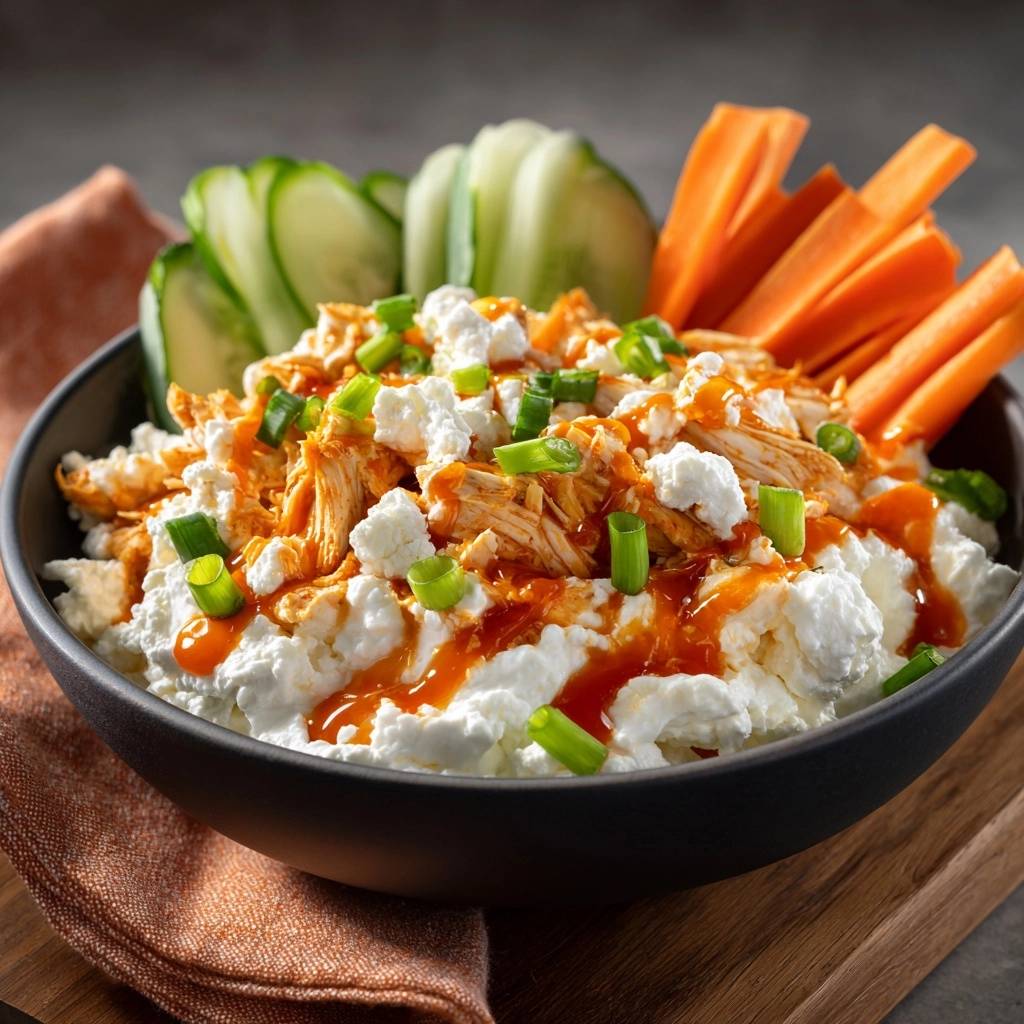
1 tablespoon cream cheese, softened (essential for the thick, velvet texture shown in the image)
1/2 cup shredded cooked chicken breast
2 tablespoons buffalo hot sauce, divided
1/4 cup carrot matchsticks
1/4 cup cucumber batons
1 tablespoon sliced green onions
1/2 teaspoon garlic powder
1/4 teaspoon onion powder
Directions
- To solve the common texture issue, place the cottage cheese, softened cream cheese, garlic powder, and onion powder into a small food processor or high-speed blender.
- Blend on high for 45 to 60 seconds. Stop halfway to scrape down the sides. Continue blending until the mixture is completely smooth, thick, and aerated. The addition of the cream cheese ensures the base holds its peaks and doesn’t become watery.
- Transfer the whipped cottage cheese into a serving bowl, using a spoon to create a slight well in the center.
- In a small microwave-safe dish, toss the shredded chicken with 1 tablespoon of the buffalo sauce. Heat for 30-45 seconds until warm.
- Pile the buffalo chicken in the center of the whipped cheese.
- Arrange the carrot matchsticks and cucumber batons along the back edges of the bowl as shown in the image.
- Drizzle the remaining 1 tablespoon of buffalo sauce in a circular motion over the cheese and chicken.
- Garnish generously with fresh green onions. Serve immediately with crackers or pita chips for dipping.
Notes
- Using full-fat cottage cheese and a touch of cream cheese is essential for achieving the thick, velvet texture and preventing the base from becoming watery.