Mastering Turmeric Spiced Mashed Potatoes with the Steam-Dry Method
Forget everything you know about the bland, white mounds of potato that usually sit forgotten on the side of a dinner plate. Most of us grew up with mashed potatoes that were either a bit too watery or, even worse, whipped into a gluey paste that lacked any real character. It’s time to change that narrative by introducing a dish that brings vibrant color, incredible aromatics, and a sophisticated texture to your table.
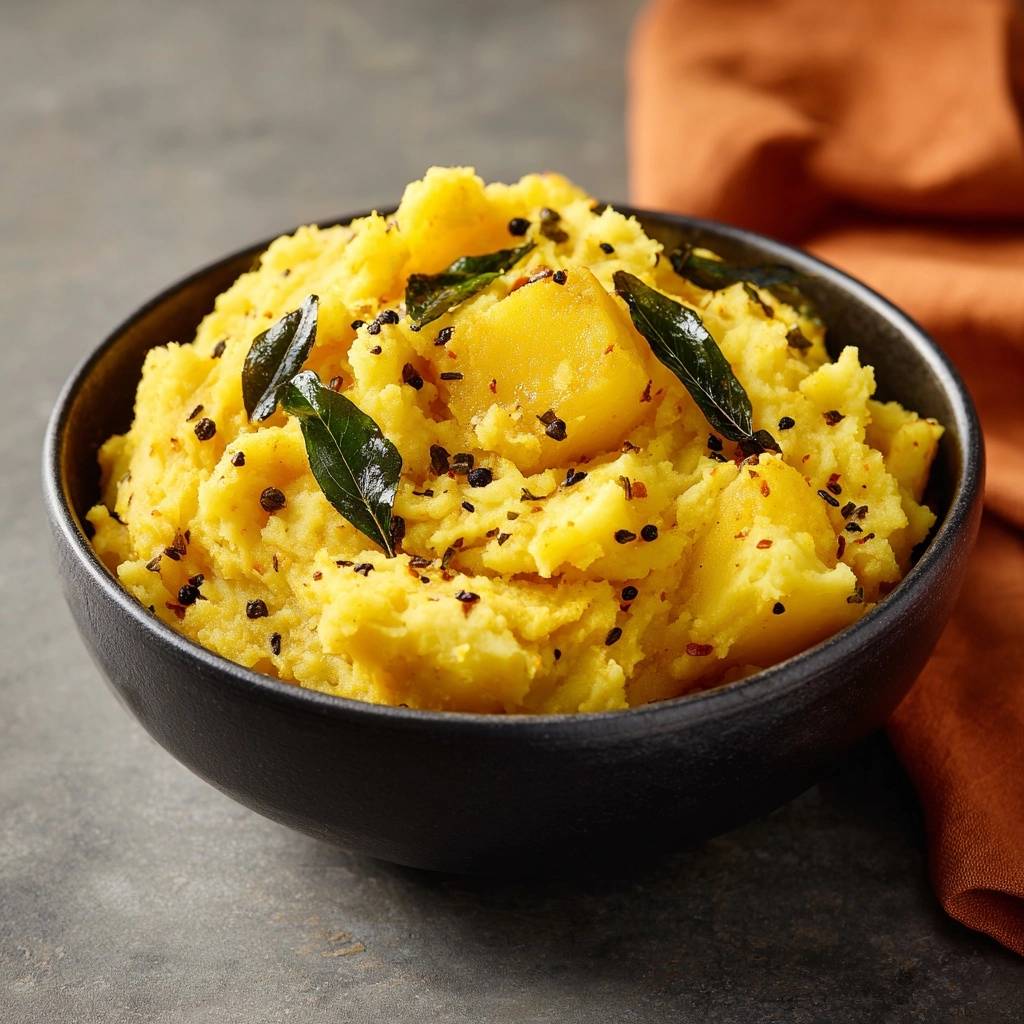
These Turmeric Spiced Mashed Potatoes aren’t just a side dish; they’re a sensory experience. Imagine the earthy, golden glow of turmeric combined with the rhythmic pop of mustard seeds and the nutty aroma of toasted curry leaves. By moving away from the heavy cream and butter of traditional Western mash, we unlock a profile that feels light yet deeply satisfying. The “Anti-Soggy” secret lies in how we treat the potato after it leaves the water, ensuring every bite is fluffy and infused with spice.
The secret to this recipe’s success is the steam-dry method. Most home cooks make the mistake of mashing potatoes while they’re still dripping with residual moisture, which leads to a heavy, gummy mess. By taking an extra ninety seconds to cook off that surface water, you create a “thirsty” potato. This allows the spiced ghee to actually penetrate the starch rather than just sliding off into a puddle at the bottom of the bowl.
The Science of Starch and Moisture Control
To understand why this method works, we have to look at the cellular structure of the potato. When you boil a potato, the starch granules swell and eventually burst. If there is too much water present when you start mashing, those starches bond with the liquid to create a gelatinous, sticky texture. This is why we always start our potatoes in cold, salted water. Starting with cold water ensures the potato heats evenly from the outside in, preventing the exterior from disintegrating before the center is tender.
Salt is equally vital during the boiling phase. Potatoes are incredibly dense, and if you don’t season the water heavily, the interior of the potato will remain bland no matter how much salt you add later. Think of it as seasoning from the inside out. Once the potatoes reach that perfect fork-tender stage, the “Steam-Dry” technique becomes your best friend. By returning the drained potatoes to the hot pot over low heat, you are using evaporation to your advantage.
As you shake the pot, you’ll see steam billowing out. This is the excess water leaving the building. Removing this moisture is essential because it changes the way the potato interacts with the fats you’re about to add. Without that water in the way, the ghee and turmeric can coat the starch molecules directly. This results in a fluffy, light consistency that holds its shape while remaining incredibly creamy on the tongue.
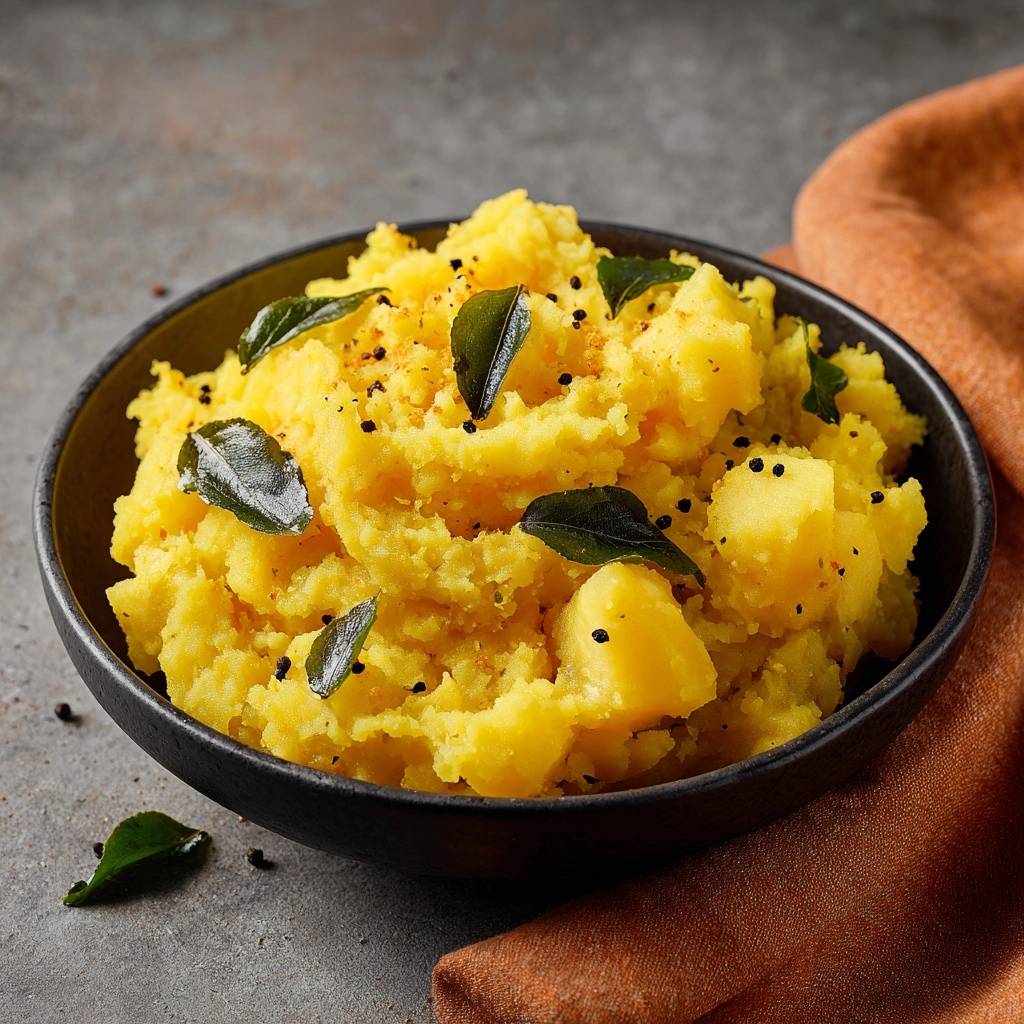
Why Yukon Golds Outperform Russets Here
While Russet potatoes are great for baking, they are often too mealy for this specific “smashed” style. Yukon Golds sit in the perfect middle ground between waxy and starchy. They have a naturally buttery flavor and a dense, creamy flesh that holds up beautifully to the 70/30 texture we want. This means 70% of the mash is smooth, while 30% remains in small, tender chunks that provide a satisfying bite. A Russet would simply fall apart into a fine powder, losing that rustic, handmade feel.
Essential Components for Vibrant Spiced Potatoes
Quality ingredients are the backbone of this dish. Since we aren’t hiding behind a pound of cheese or heavy cream, the spices and fats need to be top-tier. Turmeric is the star here, providing that iconic sunshine-yellow hue and a mild, earthy bitterness. However, turmeric needs a fat source to truly shine and for your body to absorb its benefits. This is why the choice of ghee or oil is so important.
The size of your potato cubes also matters more than you might think. Cutting them into 1.5-inch cubes is the “Goldilocks” zone. If they’re too small, they absorb too much water and get mushy. If they’re too large, the outside overcooks while the inside stays hard. Keeping them uniform ensures every piece finishes cooking at the exact same moment, which is the first step toward a perfect mash.
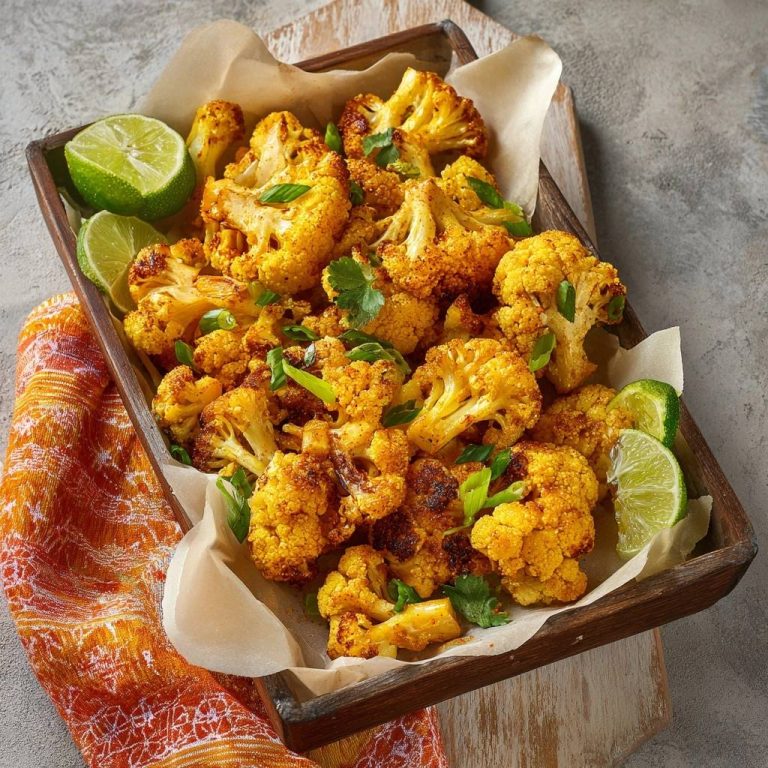
If you enjoy the warmth of turmeric here, this golden turmeric cauliflower curry uses the same spice to create a vibrant, creamy dish.
The Role of Ghee and Vegetable Oil
Ghee is clarified butter that has had the milk solids removed, giving it a high smoke point and a rich, toasted flavor. It provides a nutty depth that pairs perfectly with the earthiness of the turmeric. If you prefer a cleaner flavor or want to keep the dish lighter, a high-quality vegetable oil or coconut oil works well too. The fat acts as a carrier, pulling the flavors out of the spices and distributing them evenly throughout the potatoes.
Sourcing and Handling Fresh Curry Leaves
Fresh curry leaves are the “secret weapon” of this recipe. They don’t taste like curry powder; instead, they have a complex citrusy, herbal aroma that is impossible to replicate with dried herbs. You can usually find them at Indian or Asian grocery stores. If you buy a large bunch, they freeze remarkably well. Just make sure they are completely dry before you drop them into the hot ghee, or the water will cause the oil to splatter violently.
Phase One: Achieving the Perfect Potato Base
Start by placing your cubed Yukon Golds in a large pot and covering them with at least an inch of cold water. Don’t forget that generous pinch of salt! Bring the pot to a rolling boil, then turn the heat down to a simmer. You want a gentle bubble, not a violent boil that will knock the potatoes against each other and break them apart prematurely.
After about 12 to 15 minutes, start testing them with a fork. You’re looking for the moment the fork slides in with zero resistance, but the cube still holds its shape. If the edges are starting to look frayed and fuzzy, they’re ready to come out immediately. Drain them into a colander and let the water run off for a few seconds before moving to the next critical step.
Phase Two: The Critical Steam-Drying Step
This is where the magic happens. Put that empty, hot pot back on the stove over low heat. Dump the drained potatoes back in. For the next 60 to 90 seconds, you need to stay active. Shake the pot constantly or use a wooden spoon to gently move the potatoes around. You’ll hear a distinct sizzling sound as the moisture hits the hot metal and evaporates.
Watch the surface of the potatoes. They will go from looking wet and shiny to having a matte, slightly floury appearance. This is exactly what you want. Once that sheen is gone, remove the pot from the heat. Use a masher or a large fork to crush them. Remember the 70/30 rule: leave some of those small chunks intact for a better mouthfeel. The potatoes are now prepped and ready to soak up the spiced oil.
Phase Three: Mastering the Tadka Technique
Tadka, or tempering, is the process of heating spices in oil to unlock their essential oils. This is a fast-paced step, so have all your ingredients measured and ready. Heat your ghee in a small skillet until it’s shimmering. When you drop in a mustard seed and it immediately starts to sizzle and pop, the oil is ready. This popping is essential; it mellows the bite of the seeds and gives them a nutty flavor.
Once the seeds start their “dance,” toss in the curry leaves and chili flakes. The leaves will crackle and turn a beautiful translucent green in about 20 seconds. Now, here is the most important part: turn the heat to low and add the turmeric. You only want to “bloom” the turmeric for about 5 seconds. If it stays in the hot oil too long, it will scorch and turn a dark, bitter brown. You want it to stay bright and fragrant.
If you enjoy the creamy texture of these potatoes, you might like this creamy red lentil dal for another smooth, comforting side.
The Sequence of Aromatics
The order of operations is vital because each ingredient has a different heat tolerance. Mustard seeds need high heat to “pop” and release their flavor. Curry leaves need a medium-high flash fry to become crisp. Turmeric, being a fine powder, is incredibly delicate. By following this specific sequence, you ensure every layer of flavor is perfectly developed without anything burning.
Folding and Texturing for Maximum Flavor
Pour that hot, golden spiced oil directly over your smashed potatoes. Use a spatula rather than a whisk or a masher for this part. You want to gently fold the oil into the potatoes. This creates a beautiful marbling effect at first, which eventually turns the entire batch a uniform, stunning gold. Folding prevents you from overworking the starch, keeping the texture light and fluffy.
If you find the potatoes are a bit too stiff for your liking, this is the time to add a splash of warm coconut milk or broth. Add it one tablespoon at a time. The goal isn’t to make them soupy, but to reach a consistency that is creamy enough to melt in your mouth while still holding those rustic chunks. The result should be a vibrant, aromatic mash that looks as good as it tastes.
Troubleshooting Common Texture and Flavor Issues
If your potatoes end up gummy, it usually means they were overworked or not dried enough during the steam-dry phase. Unfortunately, you can’t “un-gum” a potato, but you can prevent it next time by being gentler during the folding process. If the flavor feels a bit flat, it’s likely a salt issue. Potatoes swallow up salt, so add a tiny bit more and see if the spices suddenly “pop.”
If the turmeric tastes raw or metallic, it didn’t bloom long enough in the oil. On the flip side, if the mash tastes unpleasantly bitter, the turmeric likely scorched. Next time, pull the pan off the heat the very second the turmeric hits the oil. Practice makes perfect with the tadka, and once you nail that 5-second window, the flavor is unbeatable.
Optimal Pairings for Turmeric Spiced Mash
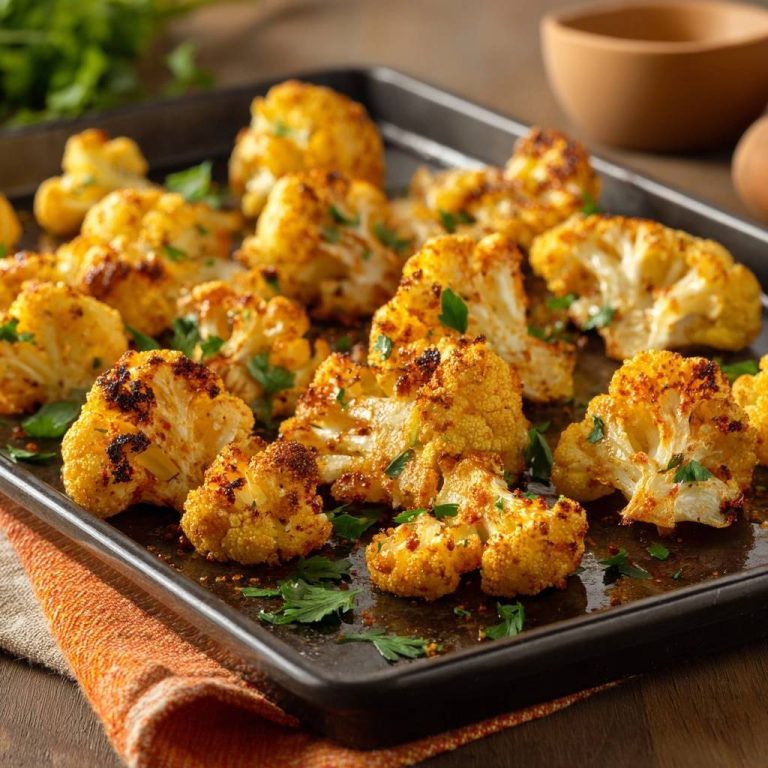
These potatoes are incredibly versatile. They pair beautifully with roasted chicken, where the golden juices from the meat mingle with the turmeric. They are also a natural fit for braised lamb or a hearty beef stew. The earthy spices complement the richness of red meat perfectly. For a vegetarian feast, serve them alongside a thick lentil dal or roasted cauliflower.
To balance the richness of the ghee, consider serving something with a bit of acidity on the side. A simple cucumber and red onion salad with a lemon vinaigrette works wonders. The brightness of the lemon cuts through the starch and fat, making every bite of the potatoes feel fresh. You can even squeeze a little lime juice directly over the potatoes right before serving to brighten the whole dish.
Storage, Reheating, and Make-Ahead Strategies
You can absolutely make these ahead of time. In fact, the flavors of the mustard seeds and curry leaves tend to deepen after sitting for a day. Store them in an airtight container in the refrigerator for up to three days. However, I don’t recommend freezing them. Potatoes contain a lot of water, and freezing often changes their cellular structure, leaving them grainy and watery once thawed.
Pair These Curries with Your Mashed Potatoes
These turmeric mashed potatoes have a warm, earthy base that pairs well with bold, spiced vegetable curries. Here are two options that share a similar flavor direction.
- The Sheet Pan Sweet Potato & Chickpea Coconut Curry uses roasted sweet potatoes and chickpeas, with coconut milk adding a creamy contrast to the turmeric potatoes.
- For a lentil-based option, the Vibrant Sweet Potato & Lentil Curry brings equal warmth from cumin and ginger, and the soft lentils match the mashed texture.
When it comes to reheating, avoid the microwave if possible, as it can make the potatoes rubbery. Instead, place them in a saucepan over low heat. Add a splash of broth or water and cover the pan with a lid. This creates a mini-steam chamber that gently rehydrates the potatoes without making them soggy. Stir occasionally until they are heated through and fluffy again.
Expert Tips for Customizing Your Spiced Mash
Once you’ve mastered the base recipe, feel free to experiment. You can add a teaspoon of freshly minced ginger to the tadka along with the mustard seeds for a zesty kick. If you love garlic, sauté a few smashed cloves in the ghee before adding the spices. For those who like heat, swap the chili flakes for a finely chopped fresh green chili. These small tweaks allow you to tailor the dish to whatever else you’re serving that night.
Frequently Asked Questions
Can I use frozen potatoes for this recipe?
It is best to avoid frozen potatoes for this specific dish. Frozen potatoes are often blanched and then frozen, which breaks down their structure. They tend to hold too much moisture and will likely turn out mushy or watery. For the “smashed” 70/30 texture and the success of the steam-dry method, fresh Yukon Gold potatoes are the only way to go.
What is a good substitute for fresh curry leaves?
Fresh curry leaves have a very distinct flavor, but if you can’t find them, you can use a couple of bay leaves or some fresh lime zest added at the very end. Keep in mind that the flavor will change significantly. Bay leaves provide an earthy depth, while lime zest adds brightness. Never use “curry powder” as a substitute, as it is a completely different spice blend.
Why did my potatoes turn a brownish color instead of bright yellow?
This usually happens if the turmeric was scorched during the tadka process. Turmeric is very sensitive to high heat. If the oil is too hot or if you leave the powder in the pan for more than a few seconds, it will burn. To prevent this, ensure you turn the heat to low (or even off) before adding the turmeric, and stir it into the potatoes immediately.
Can I make this recipe vegan?
Yes, this recipe is very easy to make vegan. Simply replace the ghee with a neutral vegetable oil, melted coconut oil, or a vegan butter substitute. If you want a creamier texture, use coconut milk instead of broth. The spices and the steam-dry method will still produce a fantastic, flavorful result without any animal products.
How do I scale this recipe for a large crowd?
You can easily double or triple this recipe. The main challenge when scaling up is the steam-drying phase. If you have a very large volume of potatoes, you may need to steam-dry them in two batches to ensure the moisture can escape efficiently. Also, make sure your tadka pan is large enough to hold the increased amount of oil and spices so they bloom evenly.
Turmeric Spiced Potatoes
Course: Side DishCuisine: Indian FusionDifficulty: easy4
servings10
minutes20
minutes185
kcal30
MinutesA vibrant alternative to traditional mashed potatoes using the steam-dry method to ensure a fluffy texture. These potatoes are infused with a tempered blend of turmeric, mustard seeds, and curry leaves for a bold, aromatic flavor profile.
Ingredients
2 pounds Yukon Gold potatoes, peeled and cut into 1.5-inch cubes
1 teaspoon ground turmeric
1 teaspoon black mustard seeds
1/2 teaspoon red chili flakes
12 to 15 fresh curry leaves
3 tablespoons ghee or vegetable oil
1.5 teaspoons salt (plus more for boiling water)
Optional: 2 tablespoons warm coconut milk or broth (only if a creamier texture is desired)
Directions
- Place the cubed potatoes in a large pot and cover with cold water. Add a generous pinch of salt. Bring to a boil, then reduce heat and simmer for 12 to 15 minutes until the potatoes are fork-tender but not falling apart.
- Drain the potatoes thoroughly in a colander. Return the drained potatoes to the hot, empty pot over low heat for 60 to 90 seconds. Shake the pot constantly. This “steam-dry” method removes excess surface moisture, which is essential for the vibrant yellow color to adhere and to prevent a gummy texture.
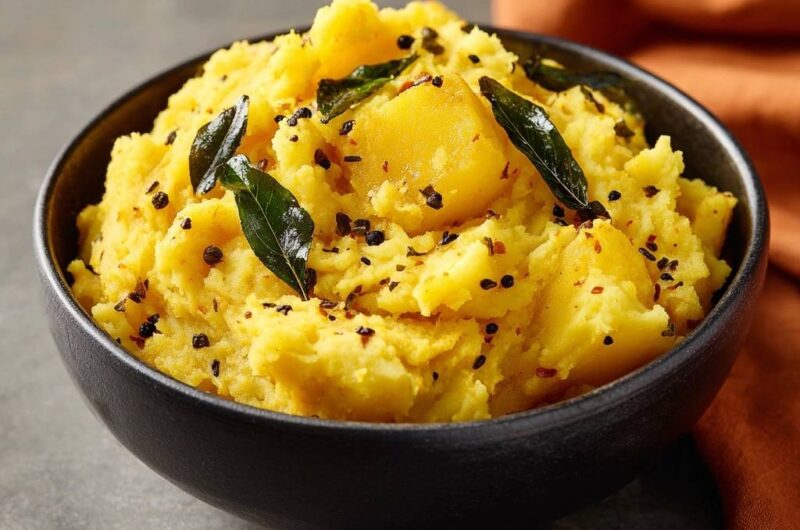
- Remove the pot from the heat. Using a potato masher or fork, crush the potatoes roughly. Aim for a “smashed” consistency where 70% is smooth and 30% remains in distinct, tender chunks as shown in the image.
- In a small skillet or tadka pan, heat the ghee or oil over medium-high heat. Add the mustard seeds. Once they begin to crackle and pop, immediately add the curry leaves and chili flakes. Fry for 20 seconds until the leaves are translucent and crisp.
- Reduce heat to low and stir the ground turmeric into the hot oil for exactly 5 seconds to bloom the spice. Do not let it scorch, or it will turn bitter.
- Immediately pour the hot, spiced oil (tadka) directly over the potatoes. Add the salt.
- Fold the mixture gently with a spatula. The goal is to marble the turmeric oil through the potatoes until they are uniformly golden. If the potatoes appear too dry, fold in a tablespoon of warm coconut milk or broth.
- Serve hot in a bowl, ensuring the crisp curry leaves and mustard seeds are visible on top.
Notes
- The steam-dry method is essential to prevent a gummy texture and ensure the vibrant yellow color adheres properly to the potatoes.