Honey Walnut Baked Brie: Perfect Melt Every Time
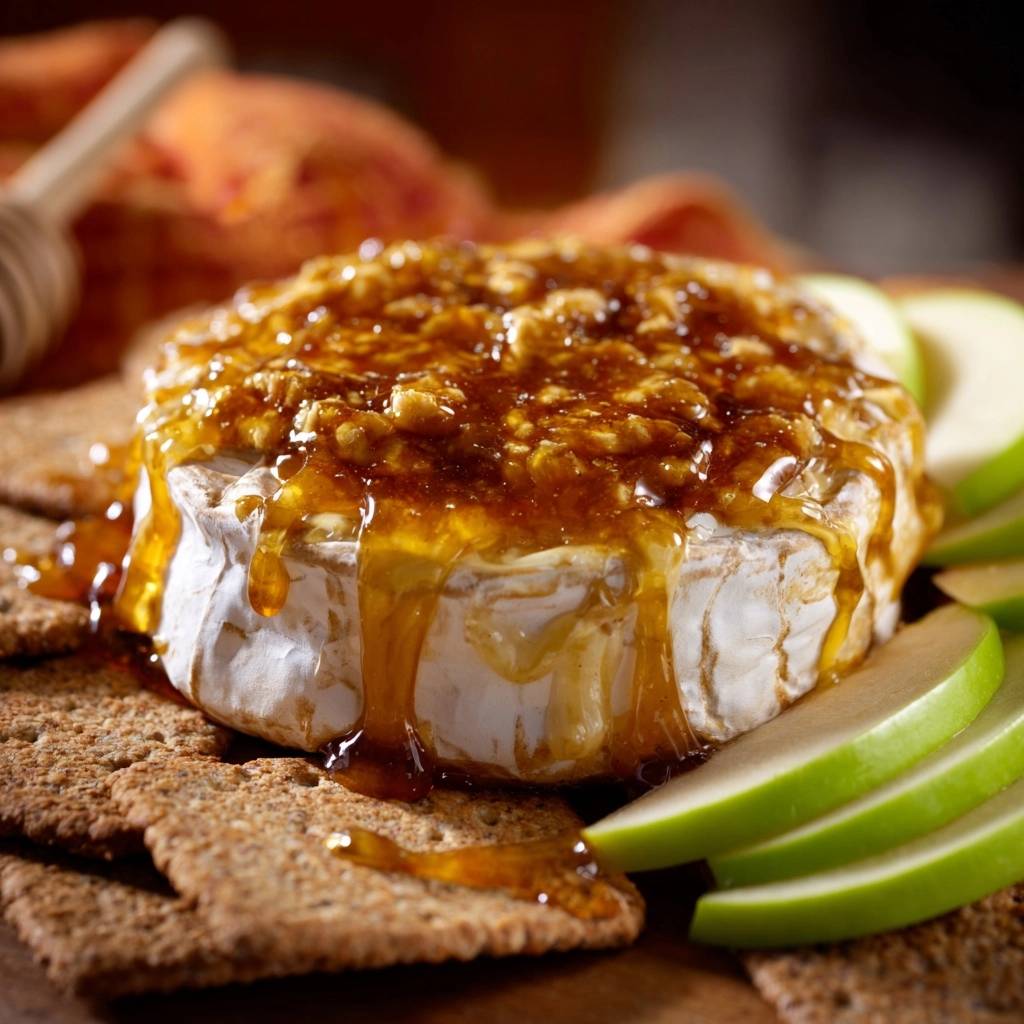
Picture this: you’re hosting friends, and your baked Brie decides to erupt like a volcano, oozing everywhere but where you want it. We’ve all seen that party disaster. But this Honey Walnut Baked Brie stays intact, thanks to a simple scoring trick that lets steam escape just right for that perfect, scoopable ooze.
Therefore, you get dinner party magic in under 20 minutes with just five ingredients. No mess, all glory. In addition, the low 325-degree bake keeps everything creamy inside while the honey caramelizes over crunchy walnuts.
Here’s the pro tip that nails it every time: score the rind in a shallow 1/4-inch crosshatch before baking. That prevents pressure buildup so your Brie puffs gently without splitting. You’ll taste the difference in that controlled, luxurious melt.
Why Scoring Transforms Honey Walnut Baked Brie
Brie Rind Pressure Dynamics
The rind on Brie traps steam as the interior softens. Without vents, pressure builds and bursts the sides. However, at 325 degrees F, the low heat melts the cheese evenly without breaking down the casein proteins that hold it together.
Fresh cow’s milk Brie works best here. Its bloomy rind flexes under gentle heat, unlike firmer varieties. So, you avoid separation and get that ideal creamy texture.
Crosshatch Technique Precision
Grab a sharp paring knife and chill the Brie first for clean cuts. Slice 1/4-inch deep lines, 1-inch apart, first one way, then cross them. These shallow vents release steam precisely without exposing too much cheese.
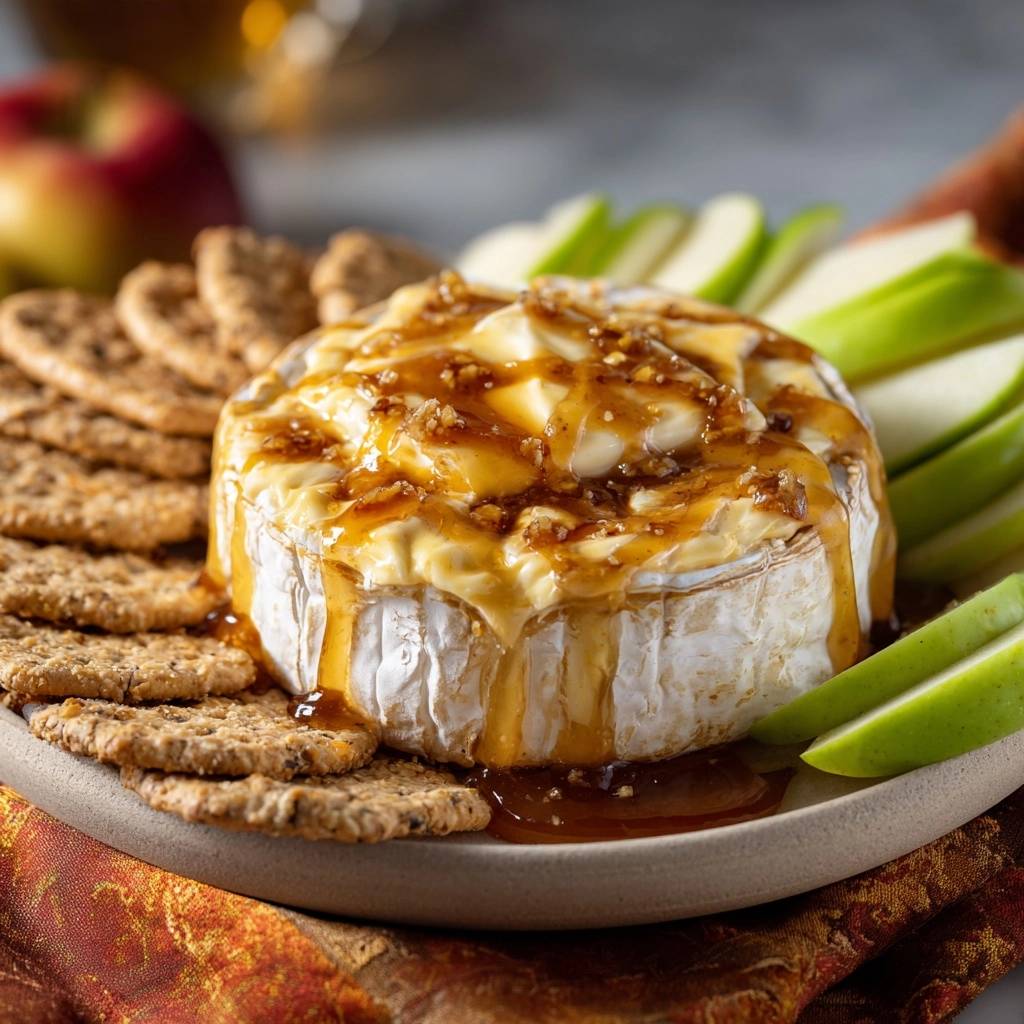
Pro tip: hold the knife at a 45-degree angle for smooth edges. You’ll see the top soften beautifully post-bake. Therefore, no blowouts, just oozy perfection.
Gathering Ingredients for Honey Walnut Baked Brie
Choosing the Right Brie Wheel
Pick an 8-ounce triple-cream Brie wheel for the creamiest melt. Check for a soft, powdery rind without cracks. Let it sit at room temp for 10 minutes so it scores evenly.
Honey and Walnut Pairing Science
Raw honey, about 1/4 cup, seeps into cuts and triggers a gentle Maillard reaction with walnuts at low heat. Chopped walnuts release their oils, creating a crunchy, caramelized crust. Clover honey flows best, but wildflower adds deeper flavor.
In addition, green apples sliced thin balance the richness with tart crunch. Wheat crackers provide sturdy dipping texture. For subs, try pecans if walnuts aren’t handy.
For a different take on that crunchy topping, try this fig walnut baked brie instead.
Equipment Essentials for Flawless Baked Brie
You need a parchment-lined baking sheet for easy release, a sharp paring knife for scoring, and an oven thermometer to hit 325 degrees F exactly. Skip casserole dishes; they trap heat and cause uneven melting. Air circulation keeps the rind firm.
A wooden board for serving lets extra honey pool nicely. Budget knives work if sharp. So, focus on precision tools for that pro result.
Knife Sharpening for Clean Scores
Use a whetstone or honing steel on your paring knife: 15 strokes per side at 20 degrees. Test on paper; it should slice cleanly. Safety first, grip steady for perfect crosshatches every time.
Step-by-Step: Scoring and Assembling Honey Walnut Baked Brie
Pre-Bake Oven Setup
Preheat to 325 degrees F and line a sheet with parchment. Crimp edges to contain drips. Center the Brie wheel; this temp softens gently over 350’s risk of splitting.
Perfect Crosshatch Scoring Method
Score the top rind in a 1-inch grid, 1/4-inch deep. You’ll smell subtle earthiness as you cut. Scatter 1/2 cup chopped walnuts evenly, then drizzle 1/4 cup honey so it fills the lines. Avoid deep cuts; they make cheese leak early.
Baking Honey Walnut Baked Brie to Oozy Perfection
Timing the Ideal Bake Window
Bake 12 to 15 minutes until puffed and soft to a gentle poke, no liquid escape. Internal temp hits about 100 degrees F. Overbaking causes seepage, so watch closely; convection ovens shave 1-2 minutes.
Post-Bake Rest and Plating
Rest 2 minutes off heat; this sets edges. Transfer to a board, drizzle extra honey. Arrange apple slices and crackers around for immediate warm scoops. Serve fast before it firms up.
Avoiding Blowouts in Honey Walnut Baked Brie
Common pitfalls include high heat, deep scores, or cheap Brie that separates. Always score shallow and check oven temp. In addition, start with fridge-cold cheese for control.
Prevention checklist: chill Brie, use thermometer, poke test at 12 minutes. Fixes save most messes. Therefore, your appetizer shines at every gathering.
If you’re swapping in maple syrup, you might also enjoy the savory-sweet contrast of these blue cheese stuffed pears.
Overbaking Warning Signs
Look for rind tears or pooling liquid. If slight, cool fast and top with more honey to mask. Prevention beats recovery every time.
Brie Quality and Temperature Fixes
President brand holds up well; local artisanal can vary. Start fridge-cold to slow melt. Room temp too long leads to blowouts.
Flavor Twists on Honey Walnut Baked Brie
Nut and Honey Variations
Swap walnuts for pecans or almonds; roast lightly first for extra crunch. Use spicy honey for heat or regional varieties like orange blossom for citrus notes.
Herb and Fruit Enhancements
Tuck thyme sprigs under honey or swap apples for pears. Fresh rosemary adds piney depth. These keep the wheel intact while boosting flavor.
Pairing Honey Walnut Baked Brie with Sides
Cracker and Fruit Combinations
Wheat crackers offer crisp contrast to ooze; slice green apples thin for tart pop. Baguette toasts work too. Texture balance makes every bite irresistible.
Board Presentation Ideas
Use a rustic wood board with apple slices fanned out for color. Cluster crackers nearby. It invites guests to dig in warmly.
Honey Walnut Baked Brie Make-Ahead Strategies
Score and top the Brie up to 24 hours ahead; cover and chill. Bake fresh for parties. Scale by using two wheels side-by-side for crowds.
Freezing and Reheating Guide
Assemble unbaked, wrap airtight, and freeze up to a month. Thaw overnight in fridge, bake as directed. Reheat leftovers in a 300-degree oven for 5 minutes; microwave toughens it.
Troubleshooting Honey Walnut Baked Brie Issues
No Ooze After Baking
Underbaked or low-fat Brie. Extend 2 minutes next time and press center gently. High-quality triple-cream fixes most cases.
What to Serve with Honey Walnut Baked Brie
That warm, gooey brie with honey and walnuts pairs nicely with dishes that share the same nutty-sweet notes or bring a fresh, earthy contrast.
- For a main course that echoes the honey-walnut theme, try Honey Glazed Walnut and Cranberry Salmon – the same crunchy walnuts and tangy cranberries complement the creamy brie.
- A
Get the full recipe in your inbox in seconds – perfect for shopping and cooking.
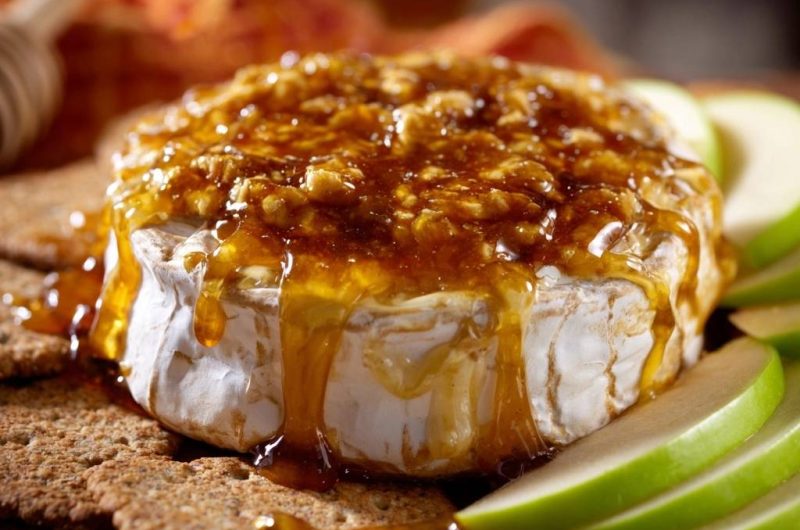
Baked Brie
Course: AppetizerCuisine: AmericanDifficulty: easy6
servings10
minutes15
minutes250
kcal25
MinutesTired of baked Brie bursting out of its rind and making a gooey mess? This simple scoring and low-temp bake controls the melt perfectly, keeping the wheel intact with just the right ooze for dipping.
Ingredients
1 (8-ounce) wheel Brie cheese
1/2 cup chopped walnuts
1/4 cup honey, plus extra for drizzling
2 green apples, sliced
Wheat crackers for serving
Directions
- Preheat oven to 325 degrees F. Line a baking sheet with parchment paper. Place the whole Brie wheel on the parchment.
- Using a sharp knife, lightly score the top rind of the Brie in a crosshatch pattern (1/4-inch deep cuts, 1-inch apart). This is the key step that prevents explosion: it releases steam evenly so the cheese softens inside without building pressure and bursting the sides.
- Scatter chopped walnuts evenly over the scored top. Drizzle honey generously over the walnuts, letting it seep into the cuts.
- Bake for 12 to 15 minutes, until the Brie is soft and puffed but the rind holds firm (gentle poke test: it yields without liquid leaking out). Do not overbake, as the low temp and scoring lock in the perfect texture.
- Remove from oven and let rest 2 minutes. Transfer to a serving board. Drizzle extra honey over top. Arrange apple slices and crackers around it.
- Serve warm. The controlled melt means easy scooping with no mess!
Notes
- The crosshatch scoring is crucial to release steam and prevent the Brie from exploding. Low temperature ensures perfect texture.