Mastering Honey Glazed Walnut and Cranberry Salmon
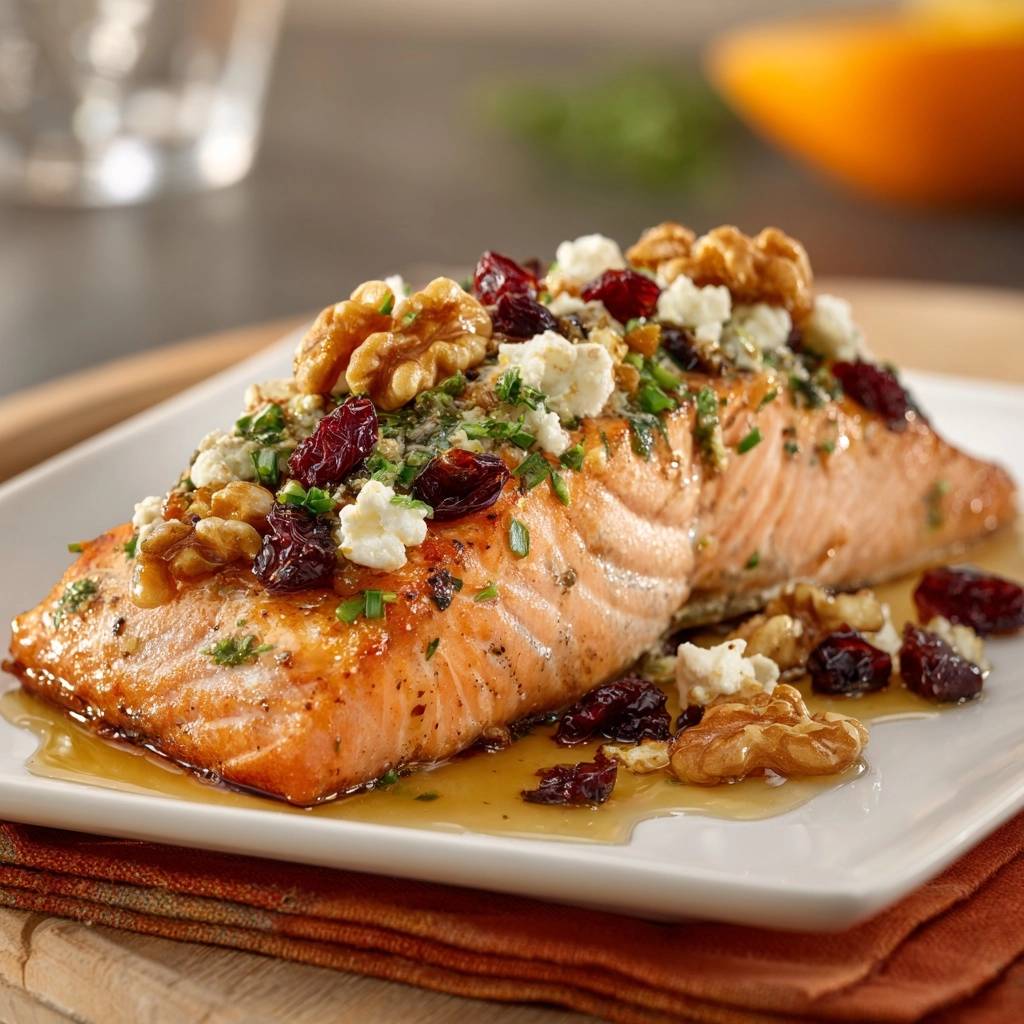
Stop settling for chalky, overcooked salmon that flakes into dry dust the moment your fork touches it. Most home cooks struggle with fish because they treat it like a steak, blasting it with high heat until the proteins tighten and squeeze out every drop of moisture. The result is a sad, rubbery fillet that requires a glass of water just to swallow.
This recipe changes the game by using a specific moisture-lock technique that guarantees a buttery, melt-in-your-mouth texture every single time. We combine a high-heat initial sear with a low-simmer glaze bath to trap juices inside the fillet before they have a chance to evaporate. You get a gorgeous, caramelized crust on the outside while the interior stays incredibly tender.
The flavor profile is a sophisticated balance of sweet, tart, and earthy elements. The floral sweetness of the honey mellows out the bright acidity of the cranberries, while toasted walnuts provide a necessary crunch. A final sprinkle of creamy feta adds a salty punch that ties everything together. The secret is patting the fish bone-dry before it hits the pan; any surface moisture will steam the fish instead of searing it, ruining that golden crust.
If you enjoy the sweet-tart balance here, try this pan-seared blackberry balsamic chicken for a similar twist.
The Science of the Moisture-Lock Searing Method
Understanding the thermodynamics of your skillet is the first step toward becoming a salmon expert. When you place a cold piece of fish into a shimmering hot pan, you trigger the Maillard reaction. This chemical reaction between amino acids and reducing sugars creates that savory, brown crust we all crave. This crust isn’t just for flavor; it acts as a structural barrier that helps retain the internal fats and juices.
However, the real magic happens during the flip. Most people keep the heat cranked up high for the entire cooking process, which is a recipe for disaster. High heat causes the muscle fibers in the salmon to contract violently, pushing out the albumin (that white stuff you sometimes see on the surface). By dropping the temperature to medium-low immediately after flipping the fish, you allow the internal temperature to rise gently.
This temperature drop prevents the protein fibers from “squeezing” out the moisture. Instead of the heat attacking the fish, the gentle simmer of the honey and butter creates a humid environment in the pan. This keeps the salmon hydrated from the outside in while the residual heat finishes the center. It is the difference between a fillet that is merely cooked and one that is truly succulent.
Essential Components for Honey Glazed Walnut and Cranberry Salmon
Quality ingredients are non-negotiable when the preparation is this simple. I always recommend using skin-on fillets. Even if you don’t plan on eating the skin, it acts as a natural heat shield during the second half of the cooking process, protecting the delicate flesh from the direct heat of the pan. It also helps the fillet hold its shape as the fats render down.
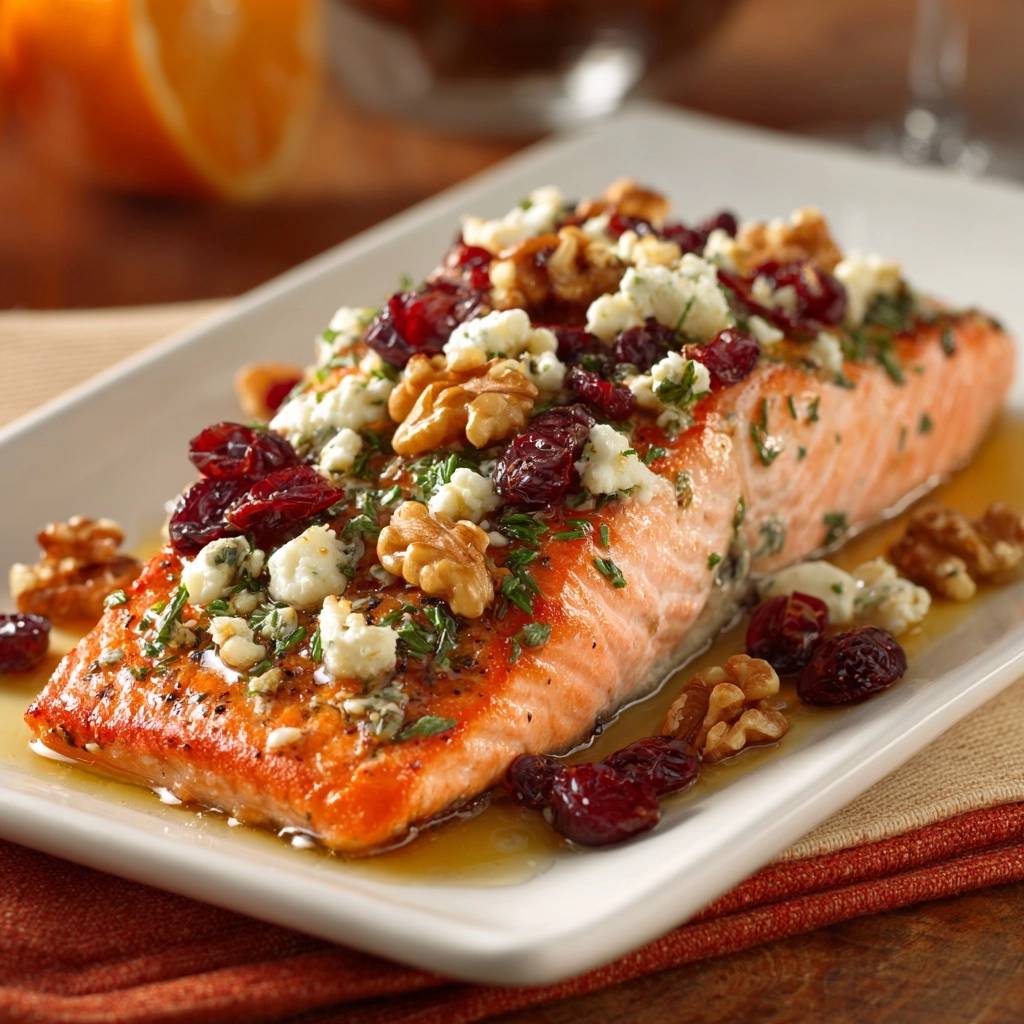
The glaze requires a specific consistency to coat the fish without becoming a sticky mess. While honey provides the body, a splash of orange juice acts as a surfactant. It thins the honey just enough to make it a pourable, elegant glaze that can be easily basted over the fish. Without that bit of acidity and liquid, the honey would likely burn or turn into a thick, tacky coating that overpowers the salmon.
Lastly, always reach for unsalted butter. This gives you total control over the sodium profile of your dish. Since feta cheese is naturally quite salty, using salted butter can quickly push the seasoning over the edge. By starting with a neutral fat base, you can season the fish precisely with kosher salt to highlight the natural sweetness of the seafood.
Selecting the Best Salmon Fillets
When you’re at the fish counter, look for King or Atlantic salmon if you want the highest fat content, which translates to a more forgiving cooking experience. Sockeye is leaner and has a more intense “salmon” flavor, but it can dry out faster if you aren’t careful with your timing. The flesh should be firm to the touch and bounce back when pressed, with no “fishy” or sour odor.
The Role of Texture: Walnuts, Cranberries, and Feta
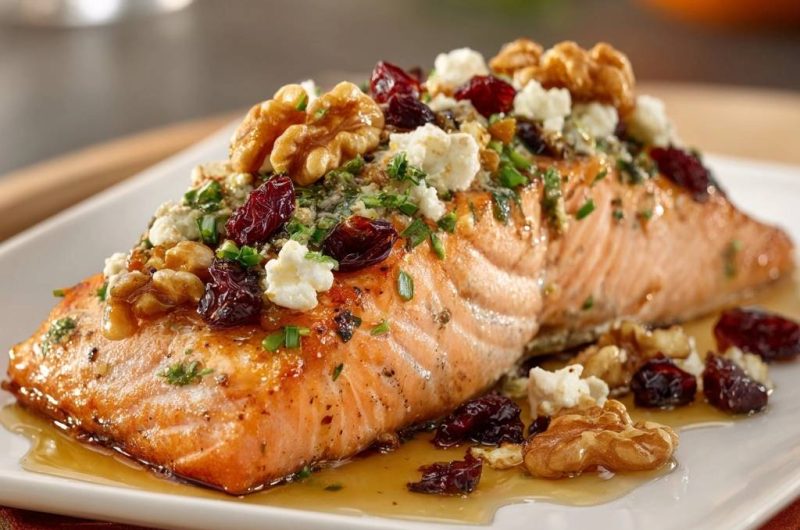
Texture is what makes a dish memorable. The walnuts in this recipe aren’t just a garnish; they toast directly in the honey-butter bath, developing a deep, nutty aroma and a satisfying snap. The dried cranberries rehydrate slightly in the pan juices, becoming little bursts of tartness that cut through the richness of the fish. The feta provides a creamy, tangy counterpoint that softens against the warm glaze.
Step-by-Step: Preparing the Perfect Glazed Fillet
Success in the kitchen starts with preparation. Before you even turn on the stove, make sure your walnuts are halved and your herbs are chopped. This recipe moves quickly once the fish hits the pan, and you don’t want to be fumbling with a honey jar while your salmon is overcooking. Have everything within arm’s reach so you can focus on the visual cues of the fish.
Phase 1: Surface Preparation and Initial Sear
Start by patting your salmon fillets with paper towels until they are completely dry on all sides. This is the most important step for a good sear. Season them generously with salt and pepper right before cooking. If you salt them too early, the salt will draw out moisture and make the surface wet again.
Heat your olive oil over medium-high heat. You’ll know it’s ready when the oil shimmers and moves fluidly across the pan like water. Carefully place the salmon flesh-side down. You should hear a loud, consistent sizzle. Leave it alone for 3 to 4 minutes. Resist the urge to peek; moving the fish too early will tear the delicate proteins before the crust has fully formed.
Phase 2: The Temperature Drop and Glaze Infusion
Once you see a golden-brown edge creeping up the side of the fillet, it’s time to flip. Use a flexible fish spatula to get underneath the crust. Immediately turn the heat down to medium-low. This is the “moisture-lock” moment. Add your butter, honey, and orange juice to the open spaces in the pan.
As the butter melts and bubbles into the honey, start basting. Use a large spoon to scoop up that liquid and pour it over the top of the salmon. Do this repeatedly. This technique, known as “arroser” in French cooking, keeps the top of the fish from drying out in the air and infuses the honey flavor deep into the flakes.
Phase 3: Toasting the Walnuts and Finishing
Toss the walnuts and cranberries into the bubbling glaze around the fish. They only need a few minutes to become fragrant and coated. Keep an eye on the center of the salmon; you want it to look just barely opaque. If you press the side of the fillet with a fork, the layers should begin to separate easily but still look moist.
Avoiding Common Mistakes with Glazed Salmon
The biggest pitfall with honey-based glazes is temperature control. If your pan is too hot, the sugars in the honey will smoke and turn bitter. If you see the glaze darkening too quickly or smelling like burnt toast, immediately add a tablespoon of water or extra orange juice to the pan to drop the temperature and loosen the sauce.
If you enjoy this sweet and tangy glaze, try it with chicken in these cranberry orange glazed chicken thighs.
Another common error is overcrowding the skillet. If you try to cook four fillets in a small pan, the temperature will drop too fast, and the fish will release liquid that can’t evaporate. This leads to “gray” boiled salmon instead of seared salmon. Give each fillet at least two inches of space so the air can circulate and the moisture can escape as steam.
Flavor Variations and Ingredient Substitutions
If you don’t have walnuts on hand, pecans make an excellent substitute as they have a similar fat content and buttery flavor. For those who prefer a deeper, more earthy sweetness, you can swap the honey for pure maple syrup. Keep in mind that maple syrup is thinner than honey, so you may need to simmer the glaze for an extra minute to reach the desired viscosity.
If cranberries aren’t your favorite, dried cherries or even golden raisins provide a similar chewy texture and sweetness. For a different cheese profile, goat cheese crumbles offer a much creamier, funkier vibe than feta, though they will melt much faster. If you want to skip the cheese entirely, a squeeze of fresh lime juice at the end can provide that necessary acidic “pop.”
Optimal Side Dishes for Honey Glazed Salmon
Because the glaze is quite rich and sweet, you want side dishes that offer a bit of contrast. A bed of bitter greens, like a simple arugula salad with a lemon vinaigrette, works beautifully to cut through the honey. Roasted asparagus or charred broccolini also provide a nice earthy bitterness that balances the dish.
What to Serve Alongside
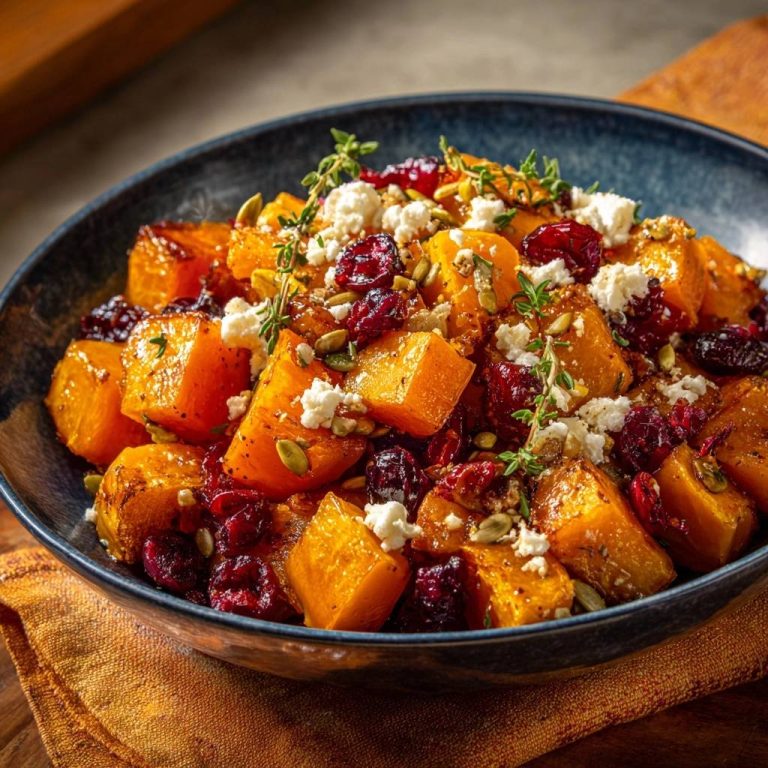
These recipes share the same sweet-tart cranberries and crunchy walnuts that complement the honey glaze on the salmon, making them natural partners for a seasonal dinner.
- Start the meal with a warm, gooey Cranberry Walnut Baked Brie – the creamy cheese and nutty topping set the same festive tone.
- For a lighter, savory-sweet side, try Blue Cheese, Walnut & Cranberry Stuffed Baked Pears
To make sure none of that delicious walnut and cranberry glaze goes to waste, serve the salmon over a neutral base. Quinoa, wild rice, or even a simple couscous will soak up the extra honey-butter sauce like a sponge. Avoid overly sweet sides like honey-glazed carrots, as the meal will become too one-dimensional and sugary.
Expert Tips for Handling and Storage
This dish is truly at its peak the moment it leaves the pan. The contrast between the hot, crispy fish and the cool, tangy feta is a major part of the experience. If you are cooking for a larger group, sear the fish in batches rather than crowding the pan. You can keep the finished fillets on a warm plate covered loosely with foil while you finish the rest.
If you do have leftovers, store them in an airtight container in the fridge for up to two days. When reheating, do so gently in a pan over low heat with a splash of water. Avoid the microwave if possible, as it will turn the salmon rubbery and make the walnuts lose their crunch. The feta will fully melt upon reheating, which creates a different but still delicious creamy sauce.
Troubleshooting and Technical FAQ
Can I use frozen salmon for this recipe?
Yes, you can use frozen salmon, but you must thaw it completely in the refrigerator overnight first. Once thawed, it is even more important to pat the fish dry, as frozen fish tends to release more moisture. Avoid thawing in the microwave, as this starts the cooking process unevenly and will result in a tough texture.
Why did my honey glaze turn into hard candy?
This happens when the glaze is cooked for too long or at too high a temperature, causing the water to evaporate and the sugar to reach the “hard ball” stage. To fix this, simply whisk in a tablespoon of warm water or orange juice over low heat until the glaze thins out again. Always keep the heat on medium-low once the honey is in the pan.
Is there a substitute for feta cheese?
Goat cheese is the best substitute if you want that same creamy, tangy hit. If you prefer something milder, you can use small dollops of ricotta, though it won’t have the same salty bite. If you are avoiding dairy, simply omit the cheese and add a few extra pinches of flaky sea salt and a bit more lemon or orange zest to compensate for the lost flavor.
How do I prevent the walnuts from becoming soggy?
The key is timing. Do not add the walnuts at the beginning of the cooking process. By adding them during the last 4 to 5 minutes of simmering, they have just enough time to toast and coat in the glaze without absorbing so much liquid that they lose their structural integrity. They should be glazed, not boiled.
Can I bake this instead of pan-searing?
You can bake the salmon at 400°F for 10 to 12 minutes, but you will lose the distinct “moisture-lock” crust that the pan-sear provides. If you choose to bake, pour the glaze over the fish halfway through the cooking time. To get a similar effect, you can broil the fish for the last 2 minutes, but watch it closely so the honey doesn’t burn.
Honey Glazed Walnut and Cranberry Salmon
Course: Main CourseCuisine: AmericanDifficulty: easyYields2
servingsPrep Time10
minutesCook Time12
minutesCalories510
kcalTotal Time22
MinutesA foolproof method for perfectly moist salmon using a high-heat sear and low-simmer glaze bath. Topped with walnuts, cranberries, and feta for a sweet and savory finish.
Ingredients
2 salmon fillets (6 ounces each, skin-on preferred for moisture)
2 tablespoons honey
1 tablespoon unsalted butter
1 tablespoon olive oil
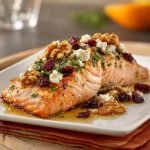
1 tablespoon orange juice (to create the thin, pourable glaze seen in the image)
1/4 cup walnut halves
2 tablespoons dried cranberries
2 tablespoons crumbled feta cheese
1 tablespoon fresh chopped parsley or chives
Salt and black pepper to taste
Directions
- Pat the salmon fillets completely dry with a paper towel. This is the first step to preventing steaming, which leads to toughness. Season both sides generously with salt and pepper.
- Heat the olive oil in a non-stick skillet over medium-high heat. Once the oil is shimmering but not smoking, place the salmon skin-side up (flesh-side down) in the pan.
- Sear for 3 to 4 minutes without moving the fish. This creates a caramelized golden crust that acts as a barrier, trapping the internal moisture.
- Flip the fillets carefully. Immediately reduce the heat to medium-low. This temperature drop is the “moisture-lock” secret that prevents the proteins from tightening and squeezing out the juices.
- Add the butter, honey, and orange juice to the pan. Once the butter melts and combines with the honey, add the walnuts and cranberries to the liquid around the fish.
- Cook for another 4 to 5 minutes, spooning the bubbling honey-butter glaze over the top of the fish repeatedly. This basting technique keeps the top of the fish hydrated and infused with flavor while the bottom finishes cooking.
- Remove from heat when the salmon is just opaque in the center and flakes slightly with a fork. Transfer the fillets to a plate.
- Pour the remaining glaze, walnuts, and cranberries from the pan directly over the top of the fish.
- Finish with a sprinkle of crumbled feta and fresh herbs. The residual heat will soften the cheese perfectly without drying out the fish.
Notes
- Patting the salmon completely dry before cooking is essential to prevent steaming and ensure a proper sear. Skin-on fillets are preferred for maximum moisture retention.