Loaded Baked Potatoes: Creamy, Fluffy Filling Mastery
Tired of loaded baked potatoes where the filling turns out crumbly and dry no matter what you do? You’ve got company. Most home cooks battle that same frustration from diner versions or boxed mixes that promise the world but deliver sadness.
However, this method changes everything. You mix the steaming hot potato flesh with dairy right away. That simple switch locks in moisture for ultra-creamy, fluffy loaded baked potatoes that taste like restaurant quality.
The secret lies in the heat. At over 200°F, the potato starch grabs the fats from butter and sour cream, forming steam pockets that keep things light and moist even after rebaking. You’ll never go back to dry filling again.
Selecting Russet Potatoes for Loaded Baked Potatoes
Why Russets Excel in Baking Texture
Russet potatoes shine in loaded baked potatoes because of their high starch content, especially amylopectin. This creates that fluffy, mealy interior you crave. Other varieties like Yukon Golds stay waxy and dense.
Pick large ones, around 10-12 ounces each. They bake evenly and give you plenty of filling for four generous servings. Look for firm skins without sprouts or green spots; that’s your sign of freshness.
In addition, organic russets often pack more flavor from better soil. Conventional works fine too, but scrub them well. Freshness ensures the best starch breakdown for perfect loaded baked potatoes.
Fresh Dairy and Bacon Pairings
Start with 1/2 cup softened unsalted butter. It melts into the hot potatoes, coating starches to lock in moisture without excess salt. Sour cream, at 1 cup, adds tang that balances the richness.
Milk, about 1/2 cup, thins the mix for creaminess; add more if needed. Shred 2 cups sharp cheddar yourself; it melts smoother than pre-shredded. Crisp up 8 slices of bacon and chop them for smoky crunch.
Finally, 1/2 cup chopped green onions bring fresh bite. Divide them: half in the filling, half for garnish. These portions serve four heaping loaded baked potatoes perfectly.
Crisp Skin Baking Technique for Loaded Baked Potatoes
Optimal Oven Setup and Pricking Method
Preheat your oven to 425°F. Prick each of the four russets all over with a fork; this vents steam and stops explosions. Place them directly on the oven rack for air circulation.
Therefore, you get ultra-crispy skins. Wrapping in foil traps moisture and leads to sogginess, so skip that. Bake 60 to 75 minutes until tender.
For the crispiest results, pair this filling with my technique for ultra-crispy baked potato skins.
Testing Doneness Without Guesswork
Pierce the largest potato with a knife; it should slide in easily with no resistance. Aim for an internal temp of 205-210°F if you use a thermometer. Skins will wrinkle slightly and give under gentle pressure.
Russets take longer than smaller spuds because of their size. Test at 60 minutes to avoid overbaking. This ensures fluffy loaded baked potatoes every time.
Hot Flesh Scooping: Moisture-Locking Secret
Slicing and Scooping Safely
Grab oven mitts or a towel. Slice each hot potato in half lengthwise right after baking. Use a spoon to scoop out the steaming flesh into a large bowl, leaving 1/4-inch shells.
Work quickly over the bowl to trap that heat and steam. Thin shells hold their shape better during refilling and rebaking. You’ll feel the potato give easily; no fighting it.
In addition, this step sets up moist loaded baked potatoes. Safety first: steady the potato on a cutting board if it wobbles.
The Science of Immediate Hot Mixing
The potato flesh hits 200°F or more when scooped. Add dairy immediately, and the heat creates an emulsion: fats from butter and sour cream coat the starches perfectly. Steam pockets form for fluffiness.
However, if you let it cool first, starches undergo retrogradation. That means they firm up and turn crumbly, no matter how much you mash later. Hot mixing prevents oxidation too, keeping flavors bright.
Basic potato chemistry shows starch gelatinizes during baking, then rebinds with hot dairy for stable, moist loaded baked potatoes. It’s the foolproof fix for dryness.
Mashing Loaded Baked Potatoes to Perfection
Ingredient Addition Order and Mashing Tools
Add butter first to the hot flesh; it melts fully and starts the emulsion. Follow with sour cream, milk, 1 1/2 cups cheese, half the green onions, salt, and pepper. Mash vigorously with a potato masher or ricer.
Skip the blender; it overworks starches into gumminess. If thick, splash in more milk for a pipeable consistency. You’ll smell the dairy blending with potato steam right away.
This order ensures even melting and smooth loaded baked potatoes. Taste as you go; potatoes soak up salt.
Achieving Ultra-Creamy, Fluffy Texture
Mash hard to break lumps while incorporating air. That lightness comes from those steam pockets. Sharp cheddar cuts through the richness with its bold bite.
Adjust salt and pepper generously; bland potatoes ruin the dish. The final mash should look fluffy, not pasty. Pro tip: a ricer gives the smoothest results for perfect loaded baked potatoes.
Refilling and Final Bake for Loaded Baked Potatoes
Mounding High and Topping Strategy
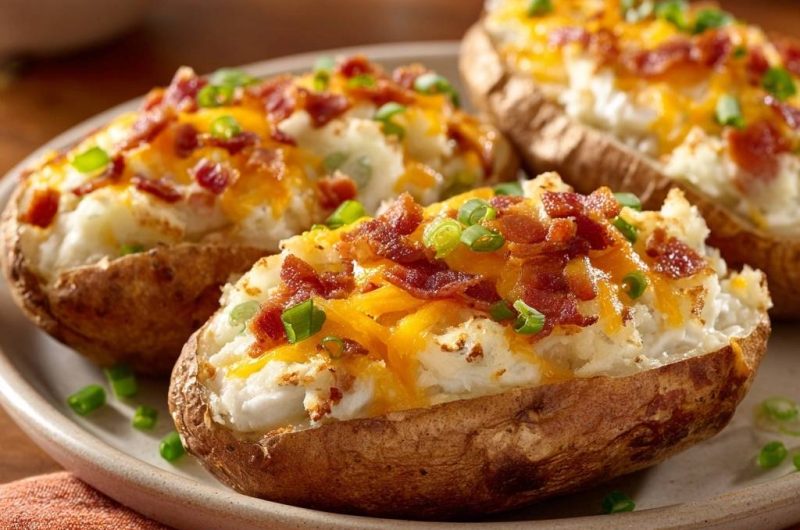
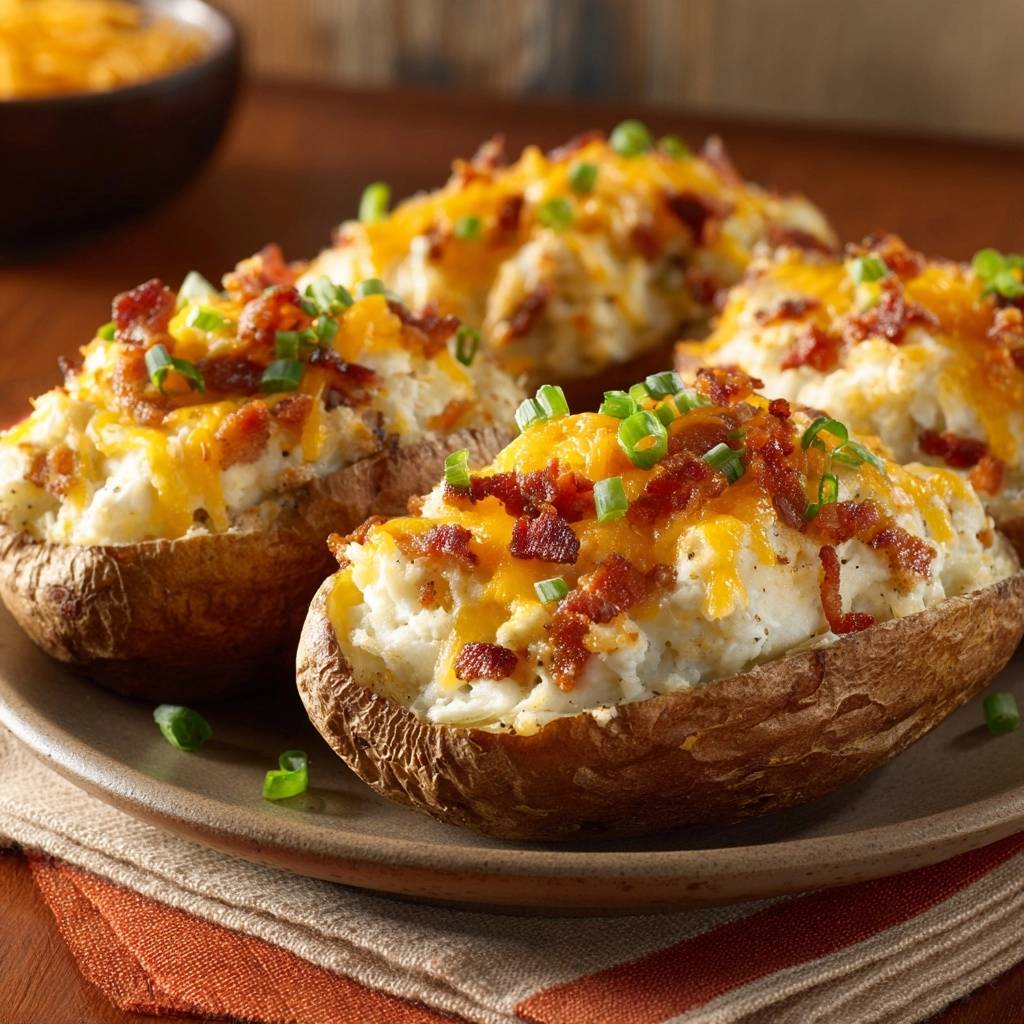
Pile the filling high into the shells; don’t skimp. Sprinkle remaining cheese first, then bacon on top. Cheese melts under the bacon for crisp edges.
Place on a baking sheet to catch spills. Mounding creates that indulgent look and feel. Ready for the quick rebake now.
Melting Phase Timing and Garnish
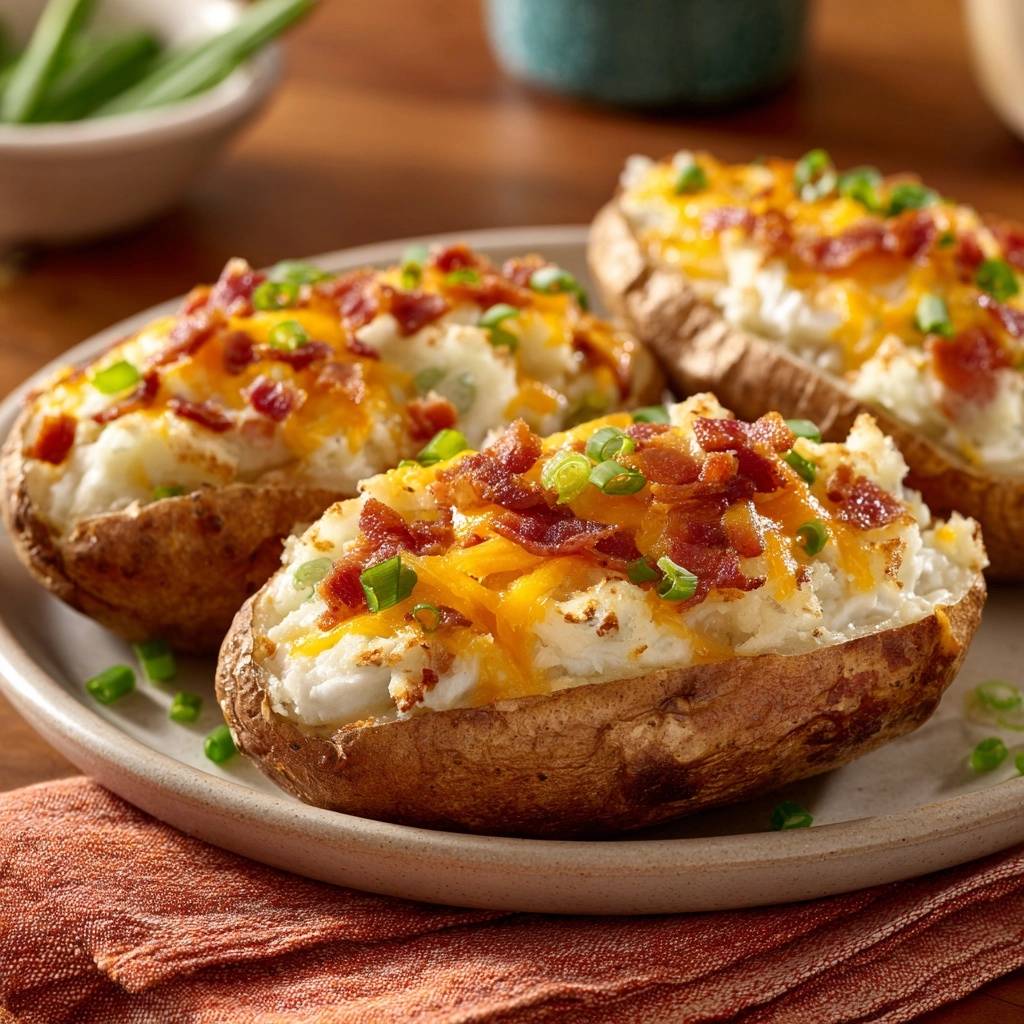
Bake at 425°F for 8 to 10 minutes until cheese bubbles and filling heats through. Garnish with remaining green onions for color and crunch. Serve right away to keep the creaminess intact.
You’ll see steam rising from fluffy insides against crisp skins. It’s loaded baked potatoes heaven.
If you love this creamy filling, try the same approach for fluffy loaded baked potatoes.
Science Behind Fluffy Loaded Baked Potatoes
Starch Gelatinization and Steam Dynamics
Baking at high heat gelatinizes russet starches, breaking them down into a soft matrix. Hot mixing with dairy lets fats coat those starches. Milk proteins stabilize the whole thing.
In addition, steam from the heat creates air pockets for fluffiness. Rebaking seals in those vapors, so moisture stays locked. No fancy equipment needed; just timing and heat.
This simple food science delivers fluffy loaded baked potatoes that hold up beautifully.
Why This Method Beats Traditional Recipes
Traditional twice-baked potatoes cool the flesh before mixing. That triggers starch retrogradation, drying out the filling by up to 20% more moisture loss. Your perfect loaded baked potatoes avoid that entirely.
However, the hot method keeps everything emulsified and steamy. It outperforms sad diner attempts or mixes every time. Crisp skins plus creamy insides? Game changer.
Avoiding Dryness in Loaded Baked Potatoes
Common Pitfalls and Fixes
Overbaking shrivels skins and dries flesh; set a timer at 60 minutes. Delayed mixing is the biggest killer; have dairy ready in mise en place. Insufficient dairy makes thick filling, so keep milk handy.
Therefore, work fast post-bake. These fixes guarantee moist loaded baked potatoes. No more crumbly disappointments.
Temperature Troubleshooting Tips
Check your oven calibration with an thermometer; many run hot. At high altitude, add 5-10 minutes bake time for density. If potatoes cool too much, pop shells back in briefly before scooping.
Pro tip: consistent heat prevents issues. You’ll nail loaded baked potatoes effortlessly.
Flavor Variations for Loaded Baked Potatoes
Cheese and Herb Swaps
Swap sharp cheddar for smoky Gouda or tangy blue cheese crumbles. Chives work great instead of green onions for milder bite. For vegan loaded baked potatoes variations, use cashew cream and nutritional yeast.
These tweaks keep the creaminess while adding twists. Fresh herbs brighten everything up.
Protein and Veggie Boosts
Try turkey bacon for leaner crunch or add broccoli bits for green goodness. Stir in pulled BBQ jackfruit for plant-based protein. Kick it up with jalapeños or garlic powder.
Loaded baked potatoes variations stay versatile. Balance spice with the creamy base.
Make-Ahead Guide for Loaded Baked Potatoes
Prep, Freeze, and Reheat Steps
Bake and scoop shells; freeze unfilled up to two months. Make filling separately and fridge it up to two days. Thaw overnight, refill, then rebake at 375°F for 15-20 minutes.
Portion for meal prep: one potato per airtight bag. This method keeps textures spot-on. Great for busy weeks.
Storage Longevity and Quality Checks
Fridge assembled loaded baked potatoes 3-4 days. Freezer holds two months max. Reheat in oven for crispiness; microwave softens skins.
Check for off smells before eating. Quality stays high with proper storage.
What Goes With Loaded Baked Potatoes?
Complement your creamy potato filling with a fresh, fruity starter or another hearty potato-based dish.
- For a bright, refreshing contrast to the rich potatoes, serve Minty Fruit Salsa with Crispy Pita Chips on the side — the cool mint and sweet fruit cut
Pairing Sides with Loaded Baked Potatoes
Light Salads and Veggies
Pair with crisp green salad dressed in vinegar for acidic contrast. Steamed broccoli or roasted Brussels sprouts add earthiness. These lighten the richness perfectly.
Fresh veggies cut through the cheese and bacon. Simple and satisfying.
Protein Complements
Grilled chicken or steak slices balance the hearty loaded baked potatoes. Pan-seared fish brings lightness too. Hearty mains match the indulgence without overwhelming.
Proteins round out the plate beautifully.
Troubleshooting Loaded Baked Potatoes
Soggy Skins? Gummy Filling?
Soggy skins come from foil wrapping; bake naked on the rack instead. Gummy filling happens with a food processor; stick to mashing. Delayed mixing dries it out, so add dairy to hot flesh immediately.
These quick fixes save your loaded baked potatoes. Crisp outside, creamy inside guaranteed.
Uneven Melting and Other Fixes
For uneven cheese melt, spread toppings evenly and rotate the sheet midway. Microwaving sacrifices crispness, so oven rebake always. Dairy-free? Use coconut cream and vegan cheese shreds.
Smaller potatoes bake 45-55 minutes; scale filling down. Double batch? Use two bowls to mash efficiently. Science backs even heat for flawless results every time.
FAQ
How do I store leftovers of loaded baked potatoes?
Store assembled loaded baked potatoes in an airtight container in the fridge for 3-4 days. For freezing, wrap unfilled shells and filling separately in freezer bags up to 2 months; they reheat well without separating. Thaw overnight, refill, and bake at 375°F for 15-20 minutes to restore crisp skins and fluffy texture. Avoid refreezing after fridge storage to prevent mushiness.
Why is my loaded baked potato filling dry and crumbly?
Dry filling usually means you let the scooped potato flesh cool before mixing in dairy. Heat is key: at 200°F+, it emulsifies fats with starches, trapping steam for moisture. Fix it by prepping butter, sour cream, and milk nearby and mashing immediately. If overbaked, flesh dries out; test doneness early next time.
Can I make substitutions in loaded baked potatoes?
Swap sharp cheddar for Gouda or vegan shreds; just ensure it melts well. No sour cream? Full-fat Greek yogurt works with a splash of lemon for tang. Use turkey bacon or plant-based alternatives for crisp protein. For dairy-free loaded baked potatoes, coconut cream plus nutritional yeast mimics the creaminess without altering fluffiness.
How do I get crispy skins on loaded baked potatoes?
Bake directly on the oven rack at 425°F, no foil. Prick skins well for steam escape. This air circulation crisps them up beautifully. Post-refill rebake on a sheet keeps that crunch while heating the filling evenly.
Can I make loaded baked potatoes ahead for a party?
Yes, bake and scoop shells a day ahead; store covered in fridge. Prep filling separately up to 2 days. Refill just before final 8-10 minute bake to serve hot and creamy. For larger crowds, scale russets evenly and keep oven space in mind for batch rebaking.
Why use russet potatoes specifically for loaded baked potatoes?
Russets have high amylopectin starch for fluffy, absorbent interiors that pair perfectly with creamy fillings. They bake to crisp skins unlike waxy varieties. Choose 10-12 oz size for even cooking and generous portions that hold mounded filling without collapsing.
Baked Potatoes
Course: Side DishCuisine: AmericanDifficulty: mediumYields8
servingsPrep Time15
minutesCook Time1
hour15
minutesCalories450
kcalTotal Time90
MinutesSick of loaded baked potatoes with crumbly, dry insides? This foolproof method mixes steaming hot potato flesh with dairy right away, locking in moisture for ultra-creamy, fluffy filling that stays perfect even after rebaking.
Ingredients
4 large russet potatoes
1/2 cup unsalted butter, softened
1 cup sour cream
1/2 cup milk, plus more if needed
2 cups shredded sharp cheddar cheese, divided
8 slices bacon, cooked crisp and chopped
1/2 cup chopped green onions (scallions), divided
Salt and black pepper to taste
Directions
- Preheat oven to 425 degrees F. Prick potatoes all over with a fork. Place directly on oven rack and bake for 60 to 75 minutes until skins are crisp and insides are tender when pierced with a knife.
- Remove potatoes from oven. Slice each in half lengthwise. Carefully scoop out the hot potato flesh into a large bowl, leaving 1/4-inch thick shells intact. (Work quickly; the heat is key!)
- To the steaming hot potato flesh, immediately add butter, sour cream, milk, 1 1/2 cups cheese, half the green onions, salt, and pepper. Mash vigorously until smooth and creamy. If too thick, add a splash more milk. This hot-mixing trick melts dairy evenly, creates steam pockets for fluffiness, and seals in moisture, preventing any dryness during rebaking.
- Pile filling back into potato shells, mounding high. Sprinkle tops with remaining cheese and bacon.
- Place on a baking sheet and bake at 425 degrees F for 8 to 10 minutes until cheese melts and filling is hot. Garnish with remaining green onions. Serve immediately for the creamiest loaded potatoes ever.
Notes
- Work quickly when scooping hot potato flesh to preserve heat for mixing dairy. Adjust milk for desired creaminess.