Mastering Creamy Cajun Surf and Turf Pasta
Forget those disappointing bowls of pasta where the sauce pools at the bottom like a thin, flavorless soup. We’ve all been there, and it’s frustrating when high-quality ingredients don’t deliver that luscious, restaurant-style cling. This Creamy Cajun Surf and Turf Pasta is the antidote to watery sauces.
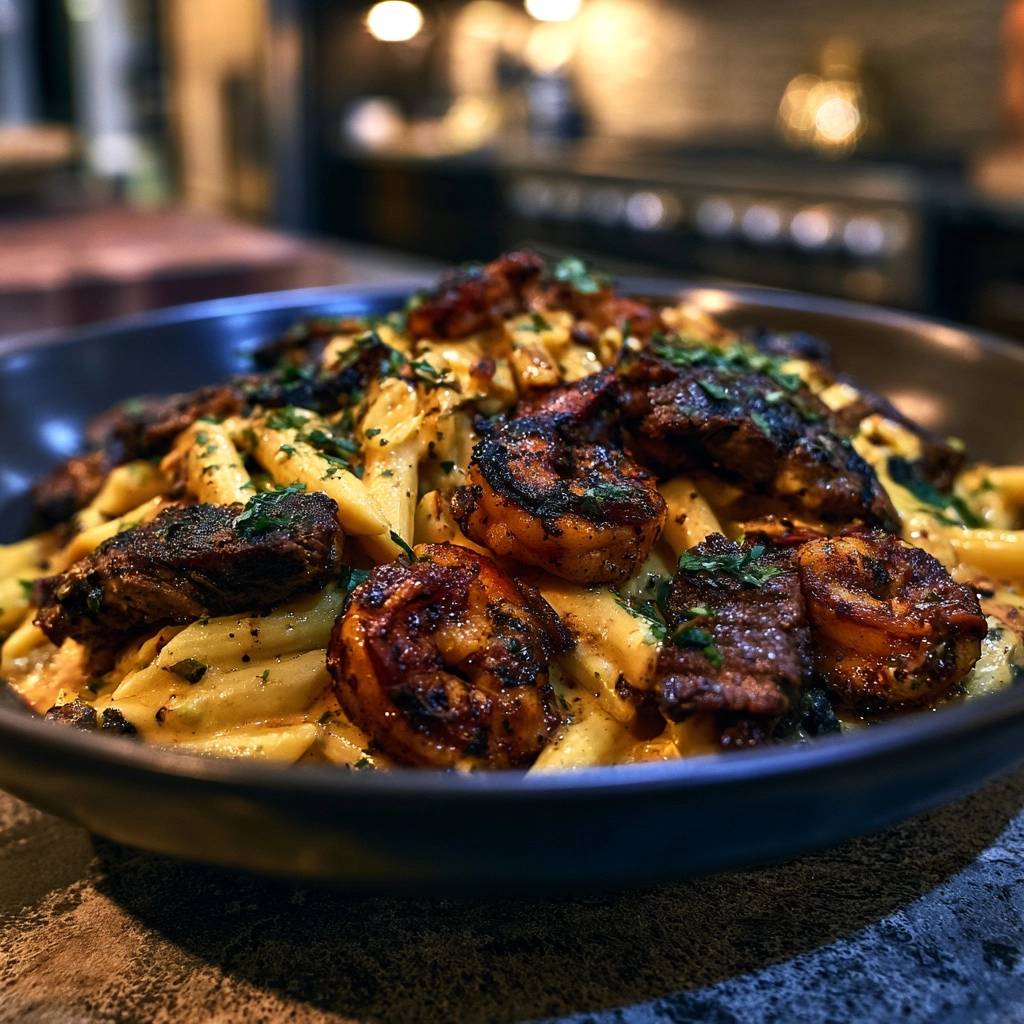
The secret lies in a dual-protein sear and a precise emulsion technique that creates a velvety, stable coating. By combining the deep, smoky char of ribeye and shrimp with a concentrated cream reduction, you get a dish that feels incredibly indulgent. It’s about the contrast between the blackened, spicy crust of the meat and the silky, cooling nature of the parmesan cream.
To ensure your sauce never breaks, you must master the “fond” and the “flick.” The browned bits left in the pan after searing your steak are pure gold. When you whisk in your cream and cheese at the right temperature, those bits dissolve into the sauce, providing a deep mahogany color and a complex savory backbone that a simple cream sauce just can’t match.
The Anatomy of a Non-Separating Cajun Sauce
Most home cooks reach for flour or cornstarch to thicken a sauce, but that often leads to a pasty, dull flavor. Instead, we use the power of reduction. By simmering the heavy cream, you’re evaporating the water content and concentrating the fats and proteins, which naturally thickens the liquid into a stable base.
Temperature control is your best friend here. If you boil the cream too violently after adding the cheese, the proteins in the parmesan will clump and seize, resulting in a grainy mess. You want a gentle simmer that allows the cheese to melt into the cream’s fat, creating a unified, glossy texture that coats the back of a spoon perfectly.
The “fond”—those caramelized bits of steak and Cajun spice stuck to the skillet—acts as a natural seasoning. As the cream bubbles, it lifts these bits, integrating the smoky heat of the spices directly into the sauce. This ensures the flavor isn’t just sitting on top of the pasta but is actually cooked into every single drop of the cream.
Why Starchy Pasta Water is Non-Negotiable
Think of starchy pasta water as the “glue” of the culinary world. When you boil penne, the noodles release amylose starch into the water. This cloudy liquid is an incredible emulsifier that helps the fat in the heavy cream and cheese bond with the water-based elements of the sauce.
Without this liquid gold, your sauce is much more likely to “break,” which is when the oil separates from the solids. By adding just a splash of that salty, starchy water at the end, you create a smooth bridge between the noodles and the sauce. It transforms a good pasta into a professional-grade dish with a cohesive, silky finish.
Essential Components for Creamy Cajun Surf and Turf Pasta
Quality is everything when you’re working with a short ingredient list. You need heavy cream with at least 36% fat content. Lower-fat options like half-and-half or whole milk contain too much water and won’t reduce properly, leaving you with that dreaded watery puddle at the bottom of your bowl.
The cheese choice is equally vital. Always buy a wedge of Parmesan and grate it yourself. Pre-shredded cheeses are coated in potato starch or cellulose to prevent clumping in the bag, but those additives prevent the cheese from melting smoothly into your sauce. Freshly grated cheese melts almost instantly, contributing to that signature “pull” and rich mouthfeel.
Don’t skimp on the Cajun seasoning either. Look for a blend that lists paprika and garlic high on the ingredient list. If you’re sensitive to salt, find a salt-free blend so you can control the seasoning yourself. The spices need to be fresh to provide that vibrant, aromatic heat that cuts through the richness of the cream.
Selecting the Right Cut: Ribeye vs. Sirloin
Ribeye is the gold standard for this recipe because of its intense marbling. As the fat renders in the hot skillet, it bastes the meat and helps create a crusty, blackened exterior while keeping the inside juicy. The fat also adds another layer of flavor to the pan for your sauce to pick up later.
If you prefer a leaner bite, sirloin is a fantastic alternative. It’s easier to slice into uniform strips and offers a beefy flavor that stands up well to the bold Cajun spices. Whichever you choose, make sure to slice against the grain so the meat remains tender and easy to chew alongside the pasta.
Shrimp Preparation: Size and Texture Standards
For the “surf” portion, large shrimp (16/20 count) are ideal. They are big enough to get a hard sear without overcooking in the center. If the shrimp are too small, they’ll turn rubbery before you can even develop a good crust. Always ensure they are fully peeled and deveined for the best eating experience.
The most important tip for the shrimp is the “dry-pat” method. Use paper towels to squeeze every bit of moisture off the surface before seasoning. If the shrimp are wet, they will steam in the pan instead of searing. Dry shrimp hit the hot oil and immediately develop that gorgeous, dark Cajun crust we’re looking for.
The Heat Factor: Achieving the Perfect Blackened Sear
To get a true “blackened” effect without burning the meat, you need high heat and a high-smoke-point oil like avocado or canola oil. The Maillard reaction is what we’re chasing—that chemical reaction between amino acids and reducing sugars that gives browned food its distinctive flavor.
Wait until the oil is shimmering and just starting to send up a tiny wisp of smoke. When you drop the steak in, you should hear a loud, aggressive sizzle. Don’t crowd the pan! If you put too much meat in at once, the temperature will drop, and the meat will gray and boil in its own juices rather than searing.
Cast Iron vs. Stainless Steel Performance
A heavy cast-iron skillet is the champion for this dish. It holds heat better than any other material, meaning when you add cold steak and shrimp, the pan stays hot. This consistent heat is what creates that uniform, dark crust that looks so beautiful against the white cream sauce.
Stainless steel is a solid runner-up because it’s excellent at developing “fond.” However, it can be stickier, so you’ll need to be more generous with your oil. Avoid non-stick pans for the searing phase; they simply can’t handle the high heat required to get a proper Cajun char on the proteins.
Step-by-Step: Building the Cajun Emulsion
The process begins with the sear. Once your steak and shrimp are beautifully charred and removed from the pan, don’t you dare wash that skillet! Those dark bits stuck to the bottom are concentrated flavor. Lower the heat immediately so you don’t burn the butter you’re about to add.
As the butter melts, add your minced garlic. You’ll smell it instantly—a warm, nutty aroma that signals it’s time for the cream. When you pour the heavy cream into the hot pan, use a wooden spoon to scrape the bottom. You’ll see the cream turn from white to a beautiful pale orange as it picks up the spices and beef drippings.
Let the cream simmer. You’re looking for the bubbles to change from small and watery to larger, “lazy” bubbles that pop slowly. This is the visual cue that the water has evaporated and the sauce is thickening. Once it coats the back of your spoon, whisk in the cheese in small handfuls, moving the pan off the heat if it looks too hot.
Finally, the marriage happens. Toss the al dente penne into the sauce along with a splash of that reserved pasta water. Use tongs to vigorously swirl the noodles. You’ll see the sauce transform from a liquid into a thick, glossy glaze that clings to every ridge of the penne. It’s a beautiful transformation that happens in about sixty seconds.
Deglazing the Pan for Maximum Flavor
Deglazing is the act of adding liquid to a hot pan to loosen the browned food particles. In this recipe, the butter and the moisture from the garlic do the initial work, followed by the heavy cream. This step is the “soul” of the dish, ensuring the spicy, beefy essence of the sear is present in every bite of pasta.
The Reduction Phase: Timing the Thickness
Timing is everything during the reduction. If you stop too early, the sauce will be runny. If you go too long, it will become oily and heavy. Look for the “nappe” consistency: dip a spoon into the sauce and run your finger across the back. If the line stays clean and the sauce doesn’t run into the gap, it’s perfect.
Troubleshooting Common Pasta Sauce Failures
If your sauce looks like it’s separating into a layer of oil and a layer of solids, don’t panic. This usually happens if the heat was too high. To fix a broken sauce, add a tablespoon of your reserved pasta water and whisk vigorously. The starch will help pull the fats back together into a smooth liquid.
Another common issue is the sauce becoming too thick as it sits. Pasta continues to absorb liquid even after it’s plated. If it looks a bit dry before you serve, simply stir in another tablespoon of pasta water or a tiny splash of warm cream to loosen it back up to that glossy finish.
Preventing the “Grainy” Cheese Texture
Graininess happens when the proteins in the cheese are shocked by high heat, causing them to tighten into little clumps. To prevent this, always turn the heat down to low or even turn it off entirely before adding your Parmesan. The residual heat of the reduced cream is more than enough to melt the cheese into a silky ribbon.
Flavor Variations and Protein Swaps
While ribeye and shrimp are the classic “Surf and Turf” duo, this recipe is very adaptable. You can swap the steak for blackened chicken breast or even spicy andouille sausage for a more traditional Louisiana feel. If you want to elevate the “Surf” side, seared sea scallops make a luxurious addition.
For a vegetable boost, try tossing in some baby spinach at the very end. The heat of the sauce will wilt it in seconds. Sautéed bell peppers or mushrooms also pair beautifully with the Cajun spice profile, adding texture and a bit of sweetness to balance the heat.
Adjusting the Scoville: Homemade Cajun Spice Ratios
If you want to make your own Cajun blend, start with a base of smoked paprika for color and depth. Add garlic powder, onion powder, dried oregano, and thyme. The heat comes from the cayenne pepper—start with a half teaspoon and work your way up. This allows you to get that deep, dark sear without making the dish too spicy for your guests.
Optimal Side Dishes for Rich Pasta Recipes
Because this pasta is so rich and creamy, you want side dishes that offer acidity or crunch to cleanse the palate. A simple arugula salad with a sharp lemon vinaigrette is perfect. The peppery greens and citrus cut right through the heavy cream and ribeye fat.
Charred broccolini with a squeeze of fresh lemon or roasted asparagus also works well. If you want to go the classic route, a piece of crusty sourdough bread is essential for mopping up any leftover sauce. Just make sure the sides are light so the pasta remains the star of the show.
Expert Tips for Restaurant-Style Presentation
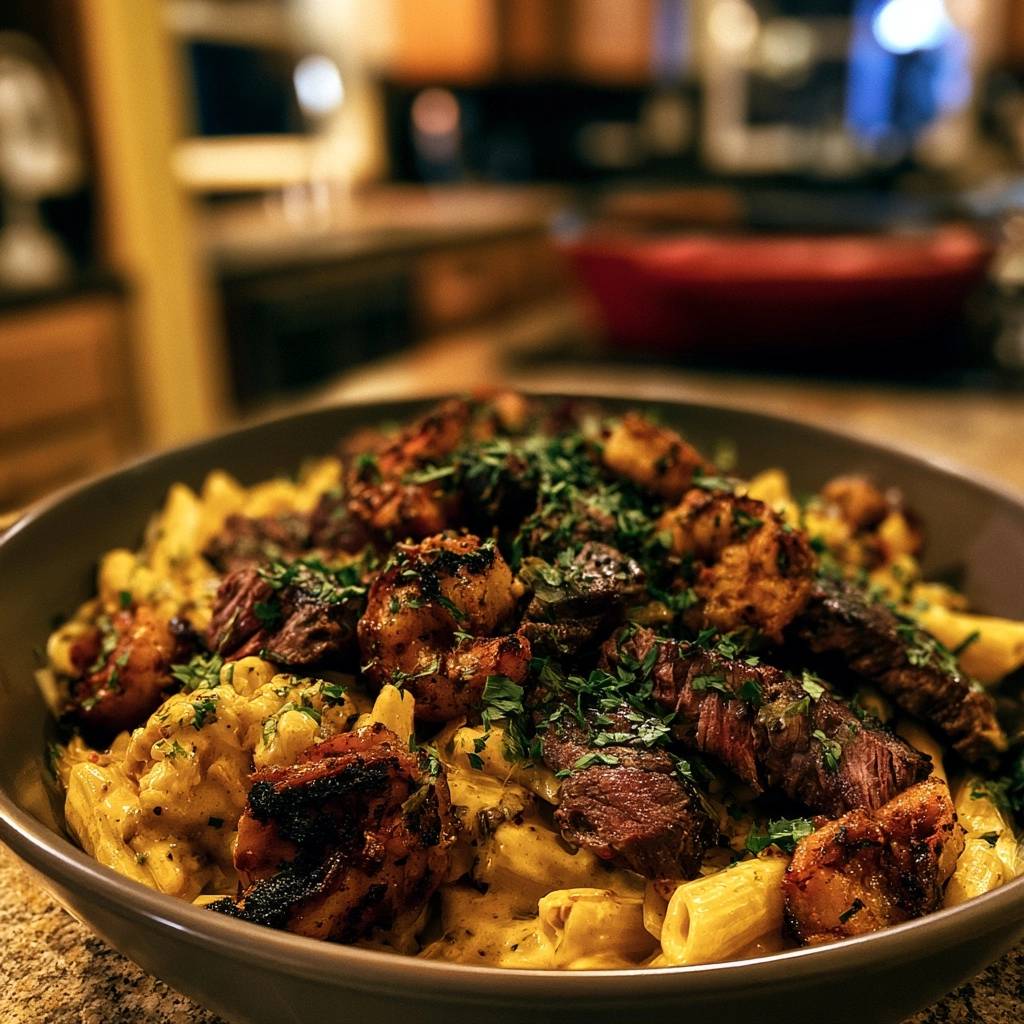
Presentation is about layers. Instead of tossing the steak and shrimp into the pot with the pasta, keep them separate until the very end. Mound the creamy penne into a wide, shallow bowl first. This creates a clean, appetizing base for your proteins.
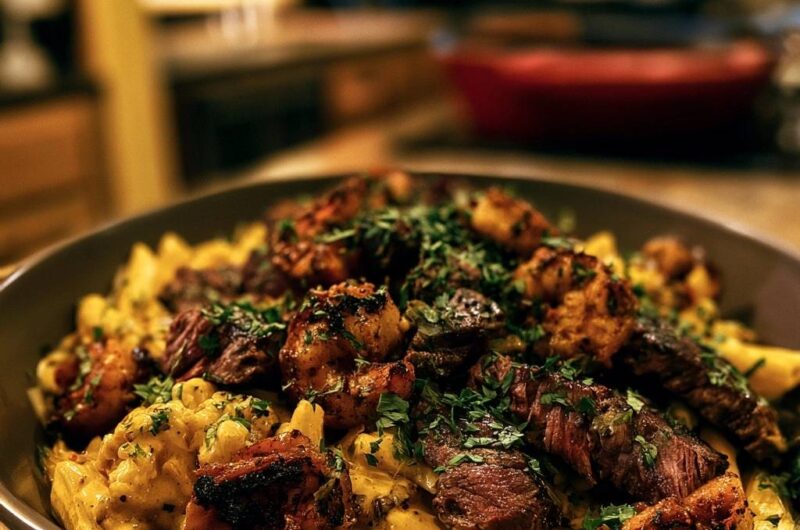
Carefully arrange the charred steak strips and blackened shrimp on top of the pasta. This ensures that the beautiful crust you worked so hard on stays visible and doesn’t get soggy. Finish with a heavy sprinkle of fresh, bright green parsley and a few cracks of black pepper for a professional, high-contrast look.
Frequently Asked Questions
Can I use half-and-half instead of heavy cream?
I don’t recommend it. Half-and-half has a much higher water content and lower fat content than heavy cream. It won’t reduce into a thick, stable sauce and is much more likely to “break” or curdle when you add the parmesan cheese and Cajun spices. For that signature velvety texture, stick with heavy cream.
How do I reheat this without the sauce separating?
The best way to reheat creamy pasta is on the stove over low heat. Add a small splash of milk or water to the pan first to help loosen the sauce. Stir constantly and gently until it’s warmed through. Avoid the microwave if possible, as the intense, uneven heat will almost always cause the oil in the sauce to separate from the cream.
What is the best pasta shape if I don’t have penne?
You want a shape with ridges or holes to “catch” the thick sauce. Rigatoni is an excellent substitute for penne. If you prefer long noodles, fettuccine or pappardelle work beautifully because their wide surface area provides plenty of space for the creamy Cajun sauce to cling to.
How do I keep the shrimp from getting rubbery?
Shrimp cook very quickly, usually in about 2 minutes. The key is to sear them over very high heat so they get that dark, flavorful crust on the outside while the inside stays tender. As soon as they turn opaque and form a “C” shape, remove them from the pan immediately. They will continue to cook slightly from residual heat.
Can I make the Cajun seasoning salt-free?
Absolutely. If you make your own blend using paprika, cayenne, garlic powder, onion powder, and herbs, you can omit the salt entirely. This gives you total control over the seasoning of the dish. Just remember to salt your pasta water heavily, as that is the primary way the noodles themselves get seasoned.
Creamy Cajun Surf and Turf Pasta
Course: Main CourseCuisine: AmericanDifficulty: easy4
servings15
minutes20
minutes35
Minutes720
kcalAmerican
Ingredients
1 pound penne pasta
1/2 pound large shrimp, peeled and deveined
1/2 pound ribeye or sirloin steak, sliced into 1/2-inch strips
3 tablespoons Cajun seasoning (divided)
2 cups heavy cream
3/4 cup freshly grated parmesan cheese
4 cloves garlic, minced
2 tablespoons unsalted butter
2 tablespoons olive oil
1/2 cup fresh parsley, finely chopped
Salt and cracked black pepper to taste
Directions
- Bring a large pot of heavily salted water to a boil. Cook the penne until it is al dente. Crucial Step: Reserve 1/2 cup of the starchy pasta water before draining.
- Pat the steak and shrimp completely dry with paper towels. Toss them in a bowl with 2 tablespoons of the Cajun seasoning and a drizzle of oil, ensuring a thick, even coating for a dark sear.
- Heat a heavy cast-iron skillet or large pan over high heat until wisps of smoke appear. Add olive oil. Sear the steak strips for 2 minutes per side until a dark, charred crust forms. Remove and set aside. In the same hot pan, sear the shrimp for 2 minutes until blackened on the edges and opaque. Remove and set aside.
- Reduce heat to medium-low. Add the butter to the pan, scraping up the browned bits (fond) from the proteins. Add the minced garlic and sauté for 1 minute until fragrant but not burnt.
- Pour in the heavy cream and the remaining 1 tablespoon of Cajun seasoning. Simmer the cream for 3-5 minutes, allowing it to reduce by about one-third. This natural reduction is the key to a thick, stable sauce.
- Gradually whisk in the parmesan cheese until smooth. Slowly add the reserved pasta water; the starch will emulsify the fats, preventing the sauce from breaking or becoming watery.
- Add the cooked penne to the skillet. Toss vigorously over medium heat for 1-2 minutes until the sauce transforms into a thick, glossy glaze that completely coats the pasta.
- Arrange the pasta in bowls and top with the charred steak and shrimp. Garnish heavily with fresh parsley and cracked black pepper to match the visual finish. Serve immediately.
Notes
- The secret to the thick sauce is the natural reduction of the cream and the addition of starchy pasta water to prevent separation.