Mastering Creamy Poppy Seed Coleslaw Without the Soggy Mess
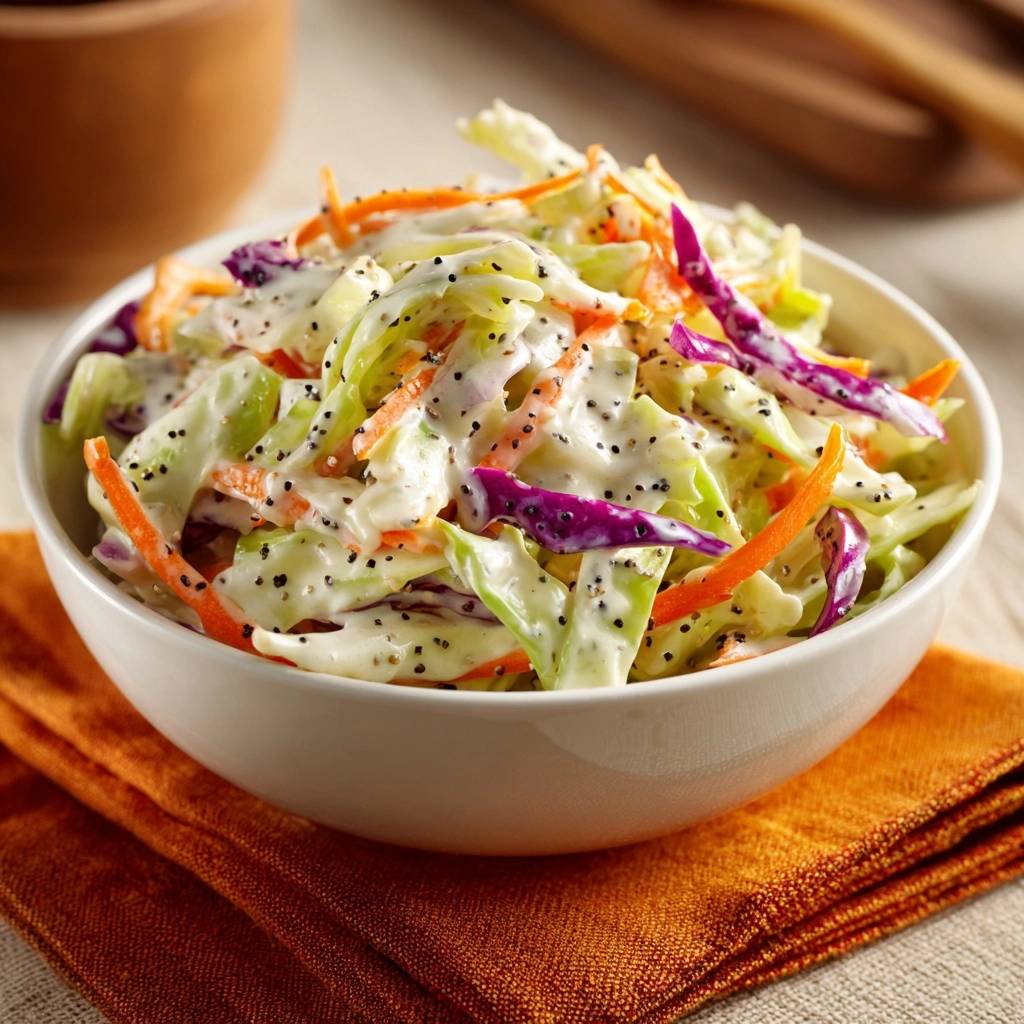
Nothing ruins a summer cookout faster than a bowl of coleslaw sitting in a pool of thin, watery liquid. Most people just toss the dressing on and hope for the best, but the secret to a professional, deli-style crunch is all in the moisture management. This recipe uses a specific salt-and-drain technique that draws out excess water from the cabbage before you add the dressing, ensuring your slaw stays thick, creamy, and crisp for hours.
You’ve likely experienced the disappointment of a side dish that looks great for ten minutes and then turns into a soggy soup. This happens because cabbage is over 90% water, and once it meets salt or sugar in a dressing, it begins to weep. By taking control of the moisture before the vegetables ever touch the mayonnaise, you create a structural integrity that stands up to the heaviest of dressings.
The real secret to this recipe is the 30-minute wilting period. While it might seem like an extra step, salting the cabbage ribbons first is the only way to guarantee that “snap” you find in high-end deli versions. This process doesn’t just season the vegetable; it physically alters the cell walls so they can no longer release water into your beautiful poppy seed sauce.
If you enjoy the thick, creamy texture of this dressing, try this creamy dill potato salad for a similar consistency.
The Science of Cabbage and Osmosis
To understand why coleslaw fails, you have to understand osmosis. When you sprinkle salt over shredded cabbage, you create a high concentration of solutes on the outside of the vegetable. Nature wants to balance this out, so it pulls the internal water through the cell walls to dilute the salt. This is why your colander will be dripping within minutes of starting the process.
This scientific reaction is your best friend in the kitchen. As the water leaves, the cabbage ribbons become more flexible and less prone to breaking. Instead of a brittle crunch that shatters, you get a satisfying “snap” that feels much more refined on the palate. It also creates tiny microscopic channels in the leaves where the dressing can actually “grip” rather than sliding off a wet surface.
Furthermore, this pre-treatment prevents the dressing from breaking down later. If you skip the salting, the cabbage will release that water directly into your mayonnaise mixture. This dilutes the fats, thins the vinegar, and results in that dreaded puddle at the bottom of your serving bowl. By forcing the osmosis to happen early, you ensure the final product stays thick and luscious until the last bite.
Essential Components for Creamy Poppy Seed Coleslaw
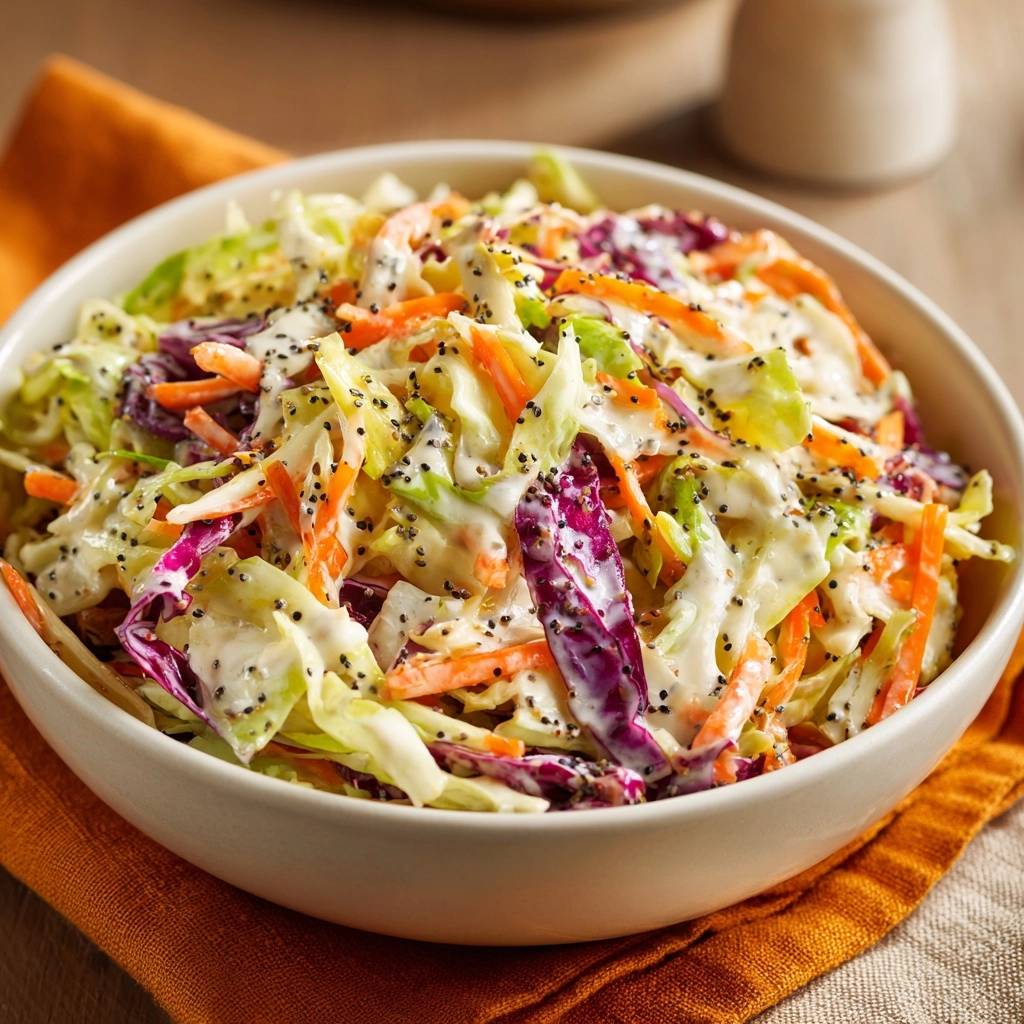
The foundation of a great slaw starts with the vegetable ratio. I prefer a mix of green and red cabbage for both color and texture. Green cabbage provides the bulk and a mild sweetness, while red cabbage offers a slightly peppery bite and a vibrant purple hue that makes the dish pop on a plate. Carrots add the final layer of natural sugar and a bright orange contrast.
How you prep these vegetables matters just as much as the ingredients themselves. I always recommend julienning your carrots into thin matchsticks rather than using a box grater. Grating carrots tends to crush the fibers, releasing orange juice that can tint your entire dressing a muddy peach color. Clean, sharp cuts keep the colors distinct and the textures varied.
High-quality mayonnaise is the backbone of the dressing. Since this is a cold dish, the flavor of the oil in the mayo will be very prominent. Choose a brand that is heavy on egg yolks for a richer mouthfeel. This provides the necessary fat to coat the cabbage ribbons and carry the flavors of the vinegar and spices throughout every forkful.
Selecting the Right Cabbage Varieties
When you’re at the grocery store, look for Cannonball cabbage, which is the standard green variety. It should feel heavy for its size and have tightly packed leaves. If the head feels light or airy, it likely has less moisture and a tougher, more fibrous texture that won’t soften properly during the salting phase.
Red cabbage is naturally denser and tougher than green. Because of this, I suggest slicing the red cabbage slightly thinner than the green ribbons. This ensures that both varieties reach the same level of tenderness at the same time. Avoid using Savoy cabbage for this specific recipe; its crinkly, delicate leaves are beautiful but they tend to collapse too much under the weight of a heavy poppy seed dressing.
I strongly advise against using pre-bagged coleslaw mixes. Those bags are often treated with preservatives to keep the cut edges from browning, which can impart a metallic aftertaste. Additionally, the cabbage in those bags is often dry and woody. Starting with a fresh head of cabbage ensures a much sweeter, cleaner flavor profile that makes a world of difference.
The Role of Poppy Seeds and Celery Salt
Poppy seeds are the star of the show here, providing more than just those iconic little black speckles. They offer a subtle, nutty earthiness that balances the sweetness of the sugar. When they hit the creamy dressing, they soften just enough to release a hint of their oil, which adds a complex layer of flavor you can’t quite put your finger on but would definitely miss if it were gone.
Celery salt is the “secret” ingredient that provides an umami backbone. While standard kosher salt handles the moisture removal, celery salt in the dressing adds a savory, herbal note. It mimics the flavor of fresh celery without adding the extra water content or the stringy texture. It’s the bridge between the sharp vinegar and the rich mayonnaise.
The Pre-Treatment: Eliminating Excess Moisture
The 30-minute wilting process is the most critical part of this recipe. You’ll want to place your shredded cabbage and carrots in a large colander and toss them with a teaspoon of kosher salt. Don’t worry about the saltiness yet; most of it will be washed away. Set the colander over a bowl or in the sink and let nature do the work. You’ll be shocked at how much liquid accumulates in the bottom of the bowl.
After the time is up, the cabbage will look slightly translucent and feel much more pliable. This is exactly what you want. However, you must perform a quick rinse under cold running water. This removes the surface salt so your final dish isn’t an electrolyte bomb. Work quickly—you want to wash the salt off, not soak the vegetables and re-hydrate the cells you just worked so hard to drain.
Why Paper Towels and Salad Spinners are Mandatory
Once the cabbage is rinsed, you face the biggest hurdle: surface moisture. If the cabbage is even slightly damp, the fat-based mayonnaise dressing will slide right off the leaves. It’s basic physics—oil and water don’t mix. To get that thick, clingy coating, your vegetables must be bone-dry before they meet the dressing bowl.
A salad spinner is the most efficient tool for this job. Give it several high-speed spins until no more water sprays against the sides. If you don’t have a spinner, spread the cabbage out on a clean kitchen towel or several layers of paper towels. Roll it up and squeeze gently. You want the cabbage to feel matte to the touch, not shiny or wet.
Building the Thick Poppy Seed Dressing
The chemistry of a great dressing relies on a perfect emulsion. By whisking the apple cider vinegar and sugar together first, you ensure the sugar crystals fully dissolve. If you add the sugar directly to the mayo, it can stay grainy. Apple cider vinegar is the best choice here because its fruity, fermented notes complement the earthy poppy seeds much better than the harsh bite of white distilled vinegar.
As you whisk in the mayonnaise and sour cream, the dressing should become glossy and thick. It should have the consistency of a heavy pourable cream. If it looks too thin at this stage, it’s likely because the vinegar-to-fat ratio is off. A thick dressing is essential because even with the salting technique, the cabbage will still release a tiny bit of moisture as it sits in the fridge.
The Sour Cream Secret for Texture
While many recipes use only mayonnaise, adding two tablespoons of sour cream is a game-changer. Sour cream provides a distinct lactic tang that cuts through the heavy oil of the mayo. It also adds a different kind of thickness—a structural body that helps the dressing stay suspended on the cabbage ribbons rather than pooling at the bottom.
Always use full-fat sour cream for this. Low-fat or fat-free versions often contain thickeners and gums that can react poorly with the vinegar, causing the dressing to look “broken” or curdled. The extra fat also helps carry the fat-soluble flavors of the black pepper and celery salt, making the entire dish taste more well-rounded and satisfying.
Step-by-Step: Mixing and Emulsifying
When you’re ready to assemble, start by whisking your dressing ingredients in a small bowl until the mixture is completely smooth. You should see the poppy seeds evenly distributed throughout the white cream. There should be no streaks of vinegar or clumps of sour cream. This ensures that every single bite of the coleslaw has the exact same flavor profile.
Once the dressing is ready, place your dried cabbage and carrots into a large mixing bowl. Pour the dressing over the top. It might look like a lot of dressing at first, but remember that the cabbage will soak up a small amount of the liquid as it chills. The goal is a heavy, even coat that makes the vegetables look like they’ve been lacquered in white silk.
The Folding Technique
Instead of stirring the slaw aggressively with a spoon, use a large rubber spatula to fold the ingredients together. Use a sweeping motion from the bottom of the bowl to the top. This prevents you from bruising the cabbage fibers. If you’re too rough, you can actually damage the vegetable cells, causing them to release more liquid and making the slaw turn limp faster.
Continue folding until you no longer see any dry patches of cabbage. The red cabbage will start to bleed a tiny bit of its purple juice into the dressing, creating a beautiful, very pale lavender tint. This is normal and actually adds to the visual appeal of the dish. Once it’s fully coated, you’re ready for the final chill.
Flavor Variations and Ingredient Swaps
If you want to put a unique spin on this classic, there are several ways to play with the flavors. For a bit of tartness and extra crunch, try adding a thinly sliced Granny Smith apple right before serving. The acidity of the apple mimics the vinegar in the dressing and provides a fresh, crisp contrast to the creamy sauce. Just be sure to toss the apple slices in a little lemon juice first to prevent browning.
For those who like a bit of texture, toasted slivered almonds or sunflower seeds can be folded in at the very last second. This adds a savory, toasted note that pairs beautifully with the poppy seeds. If you need to make this vegan, you can easily swap the mayonnaise for an aquafaba-based mayo and use a thick coconut-based yogurt in place of the sour cream.
What to Serve with Creamy Poppy Seed Coleslaw
This coleslaw is the ultimate palate cleanser for rich, fatty meats. The high acidity from the apple cider vinegar and the cool creaminess of the dressing make it the perfect partner for smoked brisket or pulled beef. It cuts right through the heavy smoke and spice of BBQ rubs, refreshing your mouth for the next bite.
It’s also a classic topping for fried fish tacos or crispy chicken sandwiches. Because this specific recipe stays crunchy, it provides a much-needed textural contrast to soft buns or corn tortillas. The celery salt and poppy seeds also pair exceptionally well with grilled seafood, making it a versatile side for a summer shrimp boil or grilled salmon.
Make Ahead and Storage Logistics
While you can eat this slaw immediately, it hits its “sweet spot” after about two hours in the refrigerator. This chilling time allows the sugar, vinegar, and spices to fully penetrate the cabbage ribbons. The flavors meld together, and the dressing thickens up even further as the fats in the mayo and sour cream cold-set.
Because of the salting technique, this coleslaw has an incredible shelf life compared to standard versions. It will stay crunchy and delicious in an airtight container for 24 to 48 hours. After the second day, the cabbage will begin to soften significantly, but it still won’t be as watery as a traditional recipe. I do not recommend freezing coleslaw, as the mayonnaise will break and the cabbage will become mushy upon thawing.
Troubleshooting Common Coleslaw Issues
If you find that your slaw is a bit too salty, don’t panic. This usually happens if the rinse step was too brief. You can fix this by adding a tiny bit more sugar and a teaspoon of apple cider vinegar to the mix. The extra acid and sweetness will mask the saltiness. Alternatively, you can shred a little more fresh cabbage and fold it in to dilute the seasoning.
If the dressing feels too thick for your liking, you can thin it out with a teaspoon of apple cider vinegar or even a splash of milk. Add it one teaspoon at a time; a little goes a long way. If the slaw lacks “zing,” it usually needs a bit more black pepper or a tiny pinch more celery salt. Always taste a piece of the cabbage with the dressing to get an accurate read on the seasoning.
Managing Sweetness Levels
The 1.5 tablespoons of sugar in this recipe provide a classic “sweet and tangy” profile. However, the natural sweetness of carrots and cabbage can vary by season. In the late summer, cabbage is often much sweeter than in the winter. Always taste your dressing before you pour it over the vegetables.
If you prefer a more savory slaw, start with just one tablespoon of sugar and work your way up. The goal is to balance the sharp vinegar, not to make the dish taste like dessert. The sugar is there to soften the acidic edges of the vinegar and the bite of the raw cabbage, creating a harmonious flavor that appeals to everyone at the table.
Expert Tips for Large Batch Preparation
When cooking for a crowd, you can easily scale this recipe up. The salting process is even more important for large batches because the weight of the cabbage in a large bowl can crush the bottom layers, forcing out even more moisture. Use multiple colanders if necessary to ensure the cabbage isn’t packed too tightly during the 30-minute wilt.
For the best results at a party, keep the dressed vegetables and the dressing separate in the fridge until about an hour before serving. While this recipe is designed to stay crunchy, nothing beats the texture of freshly tossed slaw. If you’re catering an outdoor event, keep the serving bowl nested in a larger bowl of ice to keep the mayonnaise-based dressing at a safe, chilled temperature.
How long can this coleslaw sit out at a picnic?
Because this recipe contains mayonnaise and sour cream, you should not leave it out at room temperature for more than two hours. If the temperature outside is above 90°F, that window drops to one hour. To keep it safe and crunchy, keep the bowl in a cooler or on a bed of ice until it is time to eat.
Can I use a different type of vinegar?
Yes, you can use white wine vinegar or champagne vinegar if you want a milder, more delicate flavor. I would avoid plain white distilled vinegar as it can be very harsh and lacks the complexity needed to make the poppy seeds shine. Red wine vinegar can be used in a pinch, but it will slightly discolor the creamy dressing.
Why is my coleslaw still watery even after salting?
This usually happens if the cabbage wasn’t dried thoroughly after the rinsing step. If there is any water left in the crevices of the cabbage ribbons, it will eventually thin out the dressing. Using a salad spinner or aggressively patting the cabbage dry with paper towels is the only way to prevent this. Also, ensure you are using full-fat mayonnaise and sour cream, as low-fat versions have a higher water content.
Can I substitute the sugar with a natural sweetener?
You can use honey or maple syrup, but keep in mind that these are liquid sweeteners and will slightly change the consistency of the dressing. If you use honey, you may need to whisk it vigorously with the vinegar to ensure it incorporates fully. For a sugar-free option, a granulated monk fruit sweetener works well as a 1:1 replacement.
Is it necessary to rinse the cabbage after salting?
Yes, rinsing is vital. The salt’s job is to draw out the moisture, but if you leave all that salt on the cabbage, the final dish will be unpalatably salty. A quick 10-second rinse under cold water removes the excess surface salt while leaving the cabbage perfectly seasoned and textured. Just remember to dry it completely afterward!
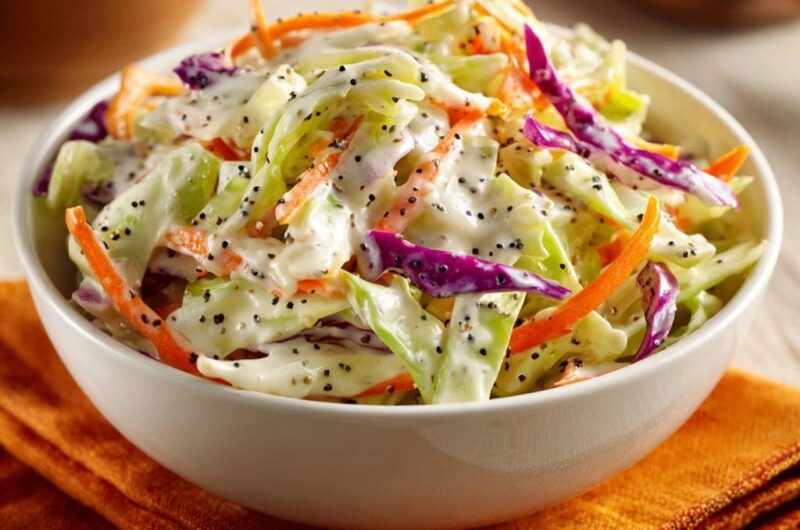
Creamy Poppy Seed Coleslaw
Course: Side DishCuisine: AmericanDifficulty: easy6
servings45
minutes165
kcal45
MinutesA deli-style coleslaw featuring green and red cabbage with julienned carrots, tossed in a thick and tangy poppy seed dressing. The recipe uses a specific wilting technique to ensure the salad stays crisp and the dressing remains creamy.
Ingredients
1 small head green cabbage, shredded into thick ribbons
1 cup red cabbage, shredded into thick ribbons
2 large carrots, julienned
1 teaspoon kosher salt
3/4 cup high-quality mayonnaise
2 tablespoons sour cream (for added thickness and tang)
2 tablespoons apple cider vinegar
1.5 tablespoons sugar
1 tablespoon poppy seeds
1/2 teaspoon black pepper
1/4 teaspoon celery salt
Directions
- Place the shredded green cabbage, red cabbage, and carrots in a large colander set over a bowl. Sprinkle with 1 teaspoon of kosher salt and toss well. Let the vegetables sit for at least 30 minutes. This is the critical step to draw out the moisture that usually thins out the dressing.
- After sitting, rinse the vegetables quickly under cold water to remove excess salt. Pat them very dry with paper towels or use a salad spinner. You want the vegetables as dry as possible so the dressing clings to them perfectly.
- In a separate small bowl, whisk together the mayonnaise, sour cream, apple cider vinegar, sugar, poppy seeds, black pepper, and celery salt until the sugar is fully dissolved and the dressing is thick and smooth.
- Transfer the dried cabbage and carrots to a large mixing bowl. Pour the creamy poppy seed dressing over the top.
- Toss everything together until the vegetables are heavily and evenly coated.
- Cover and refrigerate for at least 30 minutes before serving. This allows the flavors to meld while the pre-salted cabbage maintains its signature crunch without thinning out the sauce.
Notes
- The secret to this recipe is the 30 minute wilting period which prevents the dressing from becoming thin and watery. Ensure vegetables are patted very dry after rinsing.