Mastering Creamy Sun-Dried Tomato and Mushroom Chicken
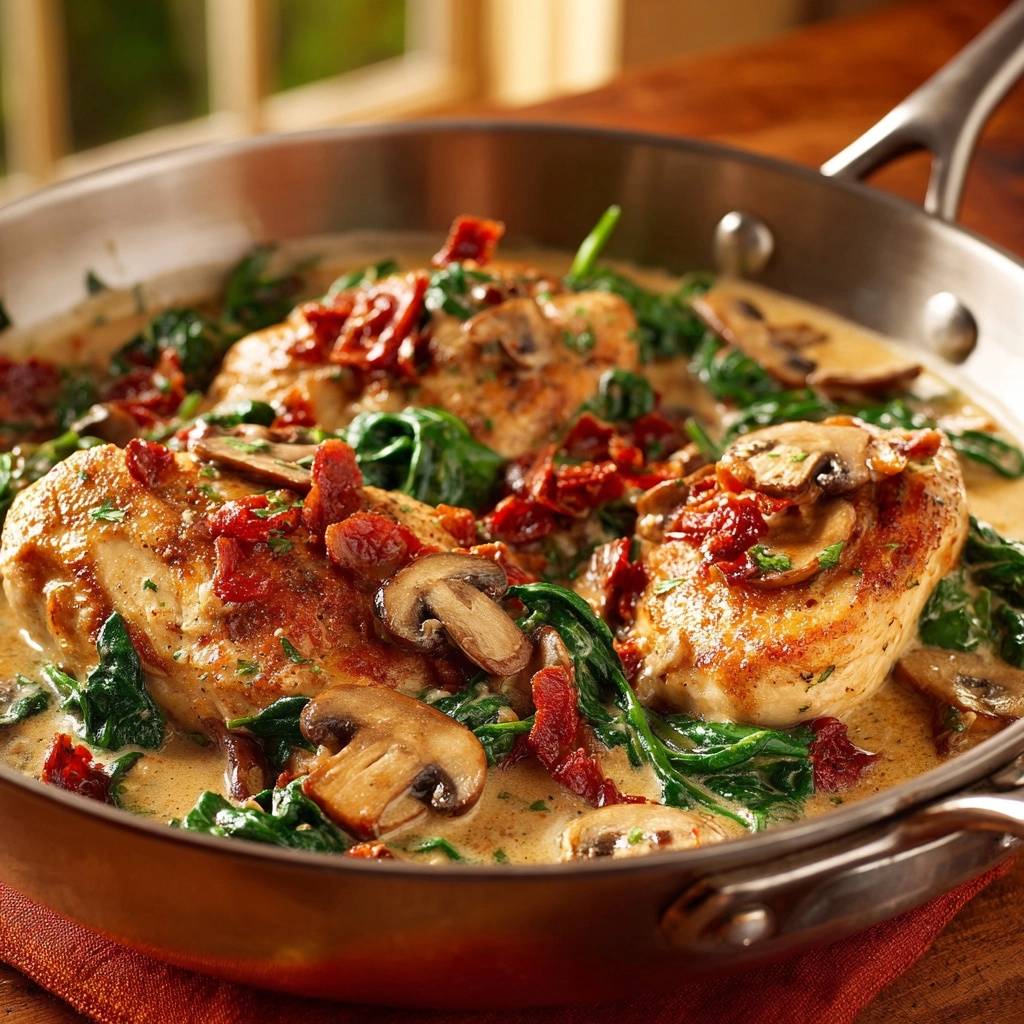
Imagine a fork sliding through a piece of chicken so tender it practically melts, followed by the punch of tart sun-dried tomatoes and the earthy depth of golden-brown mushrooms. This dish isn’t just about the ingredients; it’s about the contrast between the velvety, parmesan-infused cream and the savory, seared crust of the poultry. Every bite offers a balance of rich fats and bright acidity that keeps you coming back for more.
However, many home cooks struggle with the dreaded “rubbery chicken” syndrome, where the meat becomes tough and the sauce separates into a greasy mess. This recipe serves as your technical roadmap to fixing those common errors. By focusing on temperature control and proper searing techniques, you’ll transform a standard weeknight meal into a restaurant-quality masterpiece that feels truly indulgent.
If you’re enjoying this creamy chicken dish, the same luscious sauce technique works beautifully in this creamy mushroom chicken skillet.
The secret to this success lies in the emulsification of the sauce and the gentle finish of the meat. We aren’t just tossing things in a pan; we are building layers of flavor through deglazing and careful heat management. Once you master the transition from a high-heat sear to a low-heat simmer, you’ll never settle for dry, uninspired chicken breasts again.
The Science of Preventing Rubbery Chicken Breasts
Chicken breast is a lean protein with very little intramuscular fat, which makes it incredibly sensitive to heat. When you take a cold breast straight from the fridge and drop it into a hot pan, the protein fibers experience a thermal shock. They seize up instantly, squeezing out moisture like a wrung-out sponge, which results in that bouncy, rubbery texture we all want to avoid.
Therefore, you must let your chicken sit at room temperature for about 15 minutes before it ever touches the skillet. This small window allows the muscle fibers to relax, ensuring a more even heat distribution during the cooking process. In addition, you must address the surface moisture on the meat. If the chicken is damp, it will steam rather than sear, leaving you with gray, bland meat instead of a flavorful crust.
Patting the chicken completely dry with paper towels is a chemical necessity for the Maillard reaction. This reaction is the magical browning process that occurs when proteins and sugars are exposed to high heat. Without a dry surface, the pan’s energy is wasted evaporating water instead of browning the meat. A dry start guarantees a deep golden crust that locks juices inside the fibers.
Essential Components for the Creamy Tomato Sauce
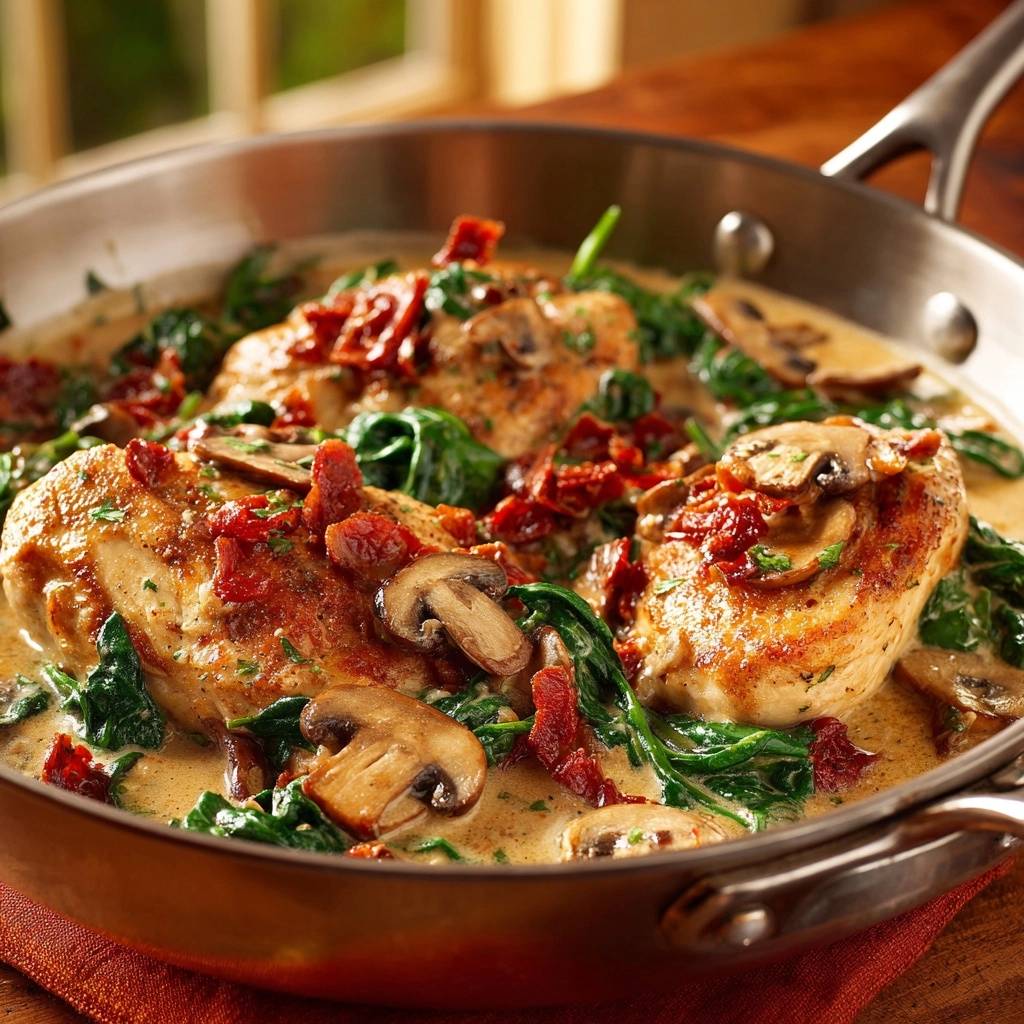
Quality ingredients are the backbone of this sauce, and small choices make a massive difference in the final flavor profile. For the mushrooms, I always recommend cremini (often sold as baby bellas) over standard white button mushrooms. Cremini are simply more mature, meaning they have a lower water content and a much more intense, savory umami flavor that stands up to the heavy cream.
When it comes to the sun-dried tomatoes, look for the jars packed in oil rather than the dry-packed pouches. The oil-packed variety stays plump and tender, whereas dry ones can sometimes feel leathery in a quick-cooking sauce. Plus, you can use a tablespoon of that flavorful tomato oil to sear your chicken for an extra layer of aromatic depth.
Furthermore, you must use freshly grated Parmesan cheese. Pre-shredded cheeses are coated in cellulose or potato starch to prevent clumping in the bag. That coating will prevent the cheese from melting smoothly, often resulting in a grainy or “broken” sauce. Grating your own cheese ensures it melts into a silky, cohesive emulsion that clings perfectly to the chicken.
Selecting and Preparing Your Poultry
Uniformity is your best friend when cooking chicken breasts. Most breasts are teardrop-shaped, with one thick end and one thin tapering end. If you cook them as-is, the thin end will turn into cardboard by the time the thick center is safe to eat. Use a meat mallet or a heavy rolling pin to pound the chicken to an even half-inch thickness.
This step ensures that every square inch of the meat reaches the target temperature at the same time. It also breaks down some of the tougher connective tissues, making the final result much more tender. Remember the principle of carry-over cooking: the internal temperature will continue to rise by about 5 degrees after you remove it from the heat, so timing is everything.
The Role of Aromatics and Dried Herbs
The combination of oregano, paprika, and garlic creates a Mediterranean-inspired flavor base that cuts through the richness of the cream. Paprika isn’t just there for a hint of earthiness; it provides a gorgeous sunset hue to the sauce. I like to season the meat directly with these herbs so they “bloom” in the hot oil during the sear, releasing their essential oils.
However, be very careful with your garlic. Garlic contains natural sugars that burn quickly and turn bitter. Always add your minced garlic at the very end of the mushroom sauté, cooking it for only about 60 seconds. You want it to smell fragrant and look translucent, not brown or charred, to keep the sauce sweet and savory.
Step-by-Step: Achieving the Perfect Golden Sear
To start, get your oil shimmering in a heavy skillet over medium-high heat. You’ll know it’s ready when the oil moves fluidly like water across the pan. Carefully lay the chicken away from you to avoid splatters. Now, here is the hardest part: do not touch it. For at least 5 minutes, resist the urge to peek or move the meat around.
The chicken needs uninterrupted contact with the heat to develop a crust. If you try to flip it and it sticks, it isn’t ready to turn yet. When a proper sear has formed, the meat will naturally release from the pan. This stage isn’t about cooking the chicken all the way through; it’s about creating “fond”—those little brown bits stuck to the bottom of the pan that hold all the concentrated flavor.
Building Umami: Sautéing Mushrooms and Deglazing
Once the chicken is out, toss in your mushrooms. A common mistake is crowding the pan, which causes the mushrooms to release their liquid and boil in their own juices. If you want that deep, dark sear, give them space. Let them sit undisturbed until they are browned on one side before tossing them. This develops a meaty texture that mimics the richness of the chicken.
After the mushrooms and garlic are ready, pour in your chicken broth to deglaze. Use a wooden spoon to scrape up every bit of that golden fond from the bottom of the skillet. As the broth bubbles, it dissolves those caramelized proteins, turning the liquid into a dark, flavorful base. This is the secret to the deep golden color of a professional-grade cream sauce.
Emulsification: How to Prevent Sauce Separation
Creating a stable cream sauce is a lesson in physics. Heavy cream is an emulsion of fat and water; if you subject it to high, boiling heat, the proteins will tighten and the fat will separate, leaving you with a greasy puddle. Therefore, you must lower your heat to medium-low before adding the dairy. This gentle temperature allows the cream to thicken without breaking.
As you whisk in the Parmesan, the cheese acts as a stabilizer, helping the sauce stay thick and glossy. When you add the spinach, do it in handfuls. You only want to wilt it until it turns a vibrant, bright green. If you overcook the spinach, it will release excess water into your sauce, thinning out that beautiful, velvety consistency you worked so hard to build.
Finishing the Chicken in the Skillet
Instead of pan-frying the chicken until it’s done, we use a “braising” finish. By nestling the seared chicken back into the warm sauce, you allow it to finish cooking gently. This prevents the exterior from becoming tough while the interior reaches the safe zone. The sauce acts as an insulator, keeping the meat moist and infusing it with the flavors of the tomato and garlic.
I highly recommend using a meat thermometer for this stage. You are looking for exactly 165°F in the thickest part of the breast. Spooning the sauce over the chicken as it simmers helps keep the top of the meat from drying out. This final 3 to 5 minutes of gentle heat is what separates a “good” chicken dinner from one that people will talk about for weeks.
Troubleshooting Common Texture and Flavor Issues
If your sauce feels too thin, don’t panic. Simply let it simmer for an extra minute or two without the chicken to reduce the liquid. Conversely, if the sauce becomes too thick or “gloopy,” whisk in a tablespoon of warm chicken broth to loosen it back up. The goal is a consistency that coats the back of a spoon without running off instantly.
If the dish tastes a bit flat, it likely needs a touch of acid. Even though we aren’t using lemon juice in the main recipe, a tiny splash of the oil from the sun-dried tomato jar can brighten things up. If you accidentally over-salted the dish, adding a little more heavy cream can help mellow out the saltiness and restore the balance of flavors.
Optimal Side Dish Pairings
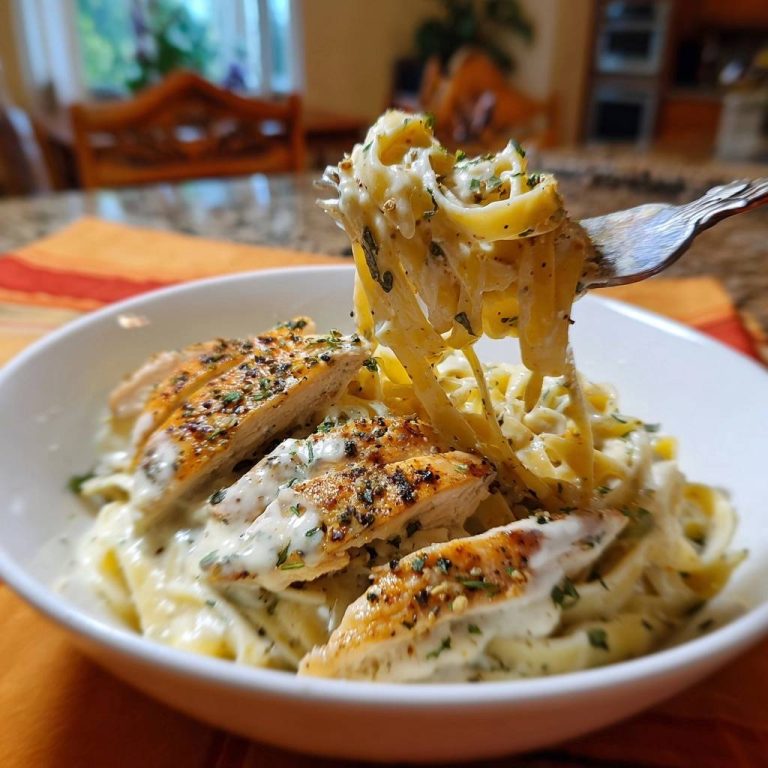
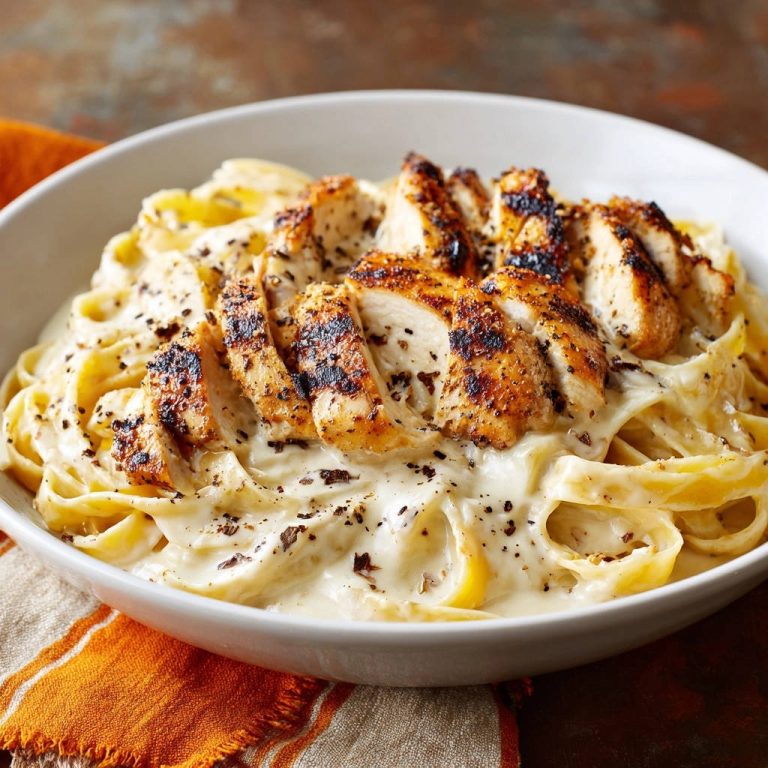
This sauce is the star of the show, so you need a side dish that acts as a sponge. Wide noodles like pappardelle or fettuccine are classic choices because the broad surface area captures the mushrooms and sun-dried tomatoes perfectly. If you prefer bread, a thick slice of toasted sourdough is essential for mopping up every last drop of the cream base.
To balance the richness of the heavy cream and Parmesan, I always serve this with something bright and crisp. A simple arugula salad tossed in a light lemon vinaigrette provides a peppery bite that cuts through the fat. The contrast between the hot, creamy chicken and the cold, acidic greens makes for a much more rounded dining experience.
Low-Carb and Grain-Free Alternatives
For those skipping grains, zucchini noodles (zoodles) or spaghetti squash are fantastic alternatives. However, these vegetables release a lot of water when heated. To prevent them from ruining your sauce, sauté the zoodles separately for just two minutes, drain them well, and then plate the chicken and sauce directly on top rather than tossing them in the pan.
Storage and Reheating for Optimal Texture
Cream sauces can be temperamental when reheated. If you pop this in the microwave on high, the cream will almost certainly break, leaving the chicken dry and the sauce oily. Instead, store leftovers in an airtight container for up to 3 days. When you’re ready for round two, reheat it in a small skillet over low heat on the stove.
Add a splash of chicken broth or water to the pan to help the sauce come back together. Stir gently as it warms up to re-emulsify the fats. I do not recommend freezing this dish. The cellular structure of the cream and the mushrooms changes during the freezing and thawing process, which usually results in a grainy texture and soggy vegetables once reheated.
Expert Tips for Flavor Customization
Once you have the base technique down, you can easily customize this meal. If you like a bit of heat, add a half-teaspoon of red pepper flakes when you sauté the garlic. This provides a “back-of-the-throat” warmth that pairs beautifully with the sweet tomatoes. For a heartier green, swap the spinach for chopped kale, but be sure to add the kale a few minutes earlier as it takes longer to soften.
Another sophisticated tweak is adding a teaspoon of balsamic vinegar right before serving. The dark, syrupy vinegar adds a complex sweetness that highlights the sun-dried tomatoes. If you want an even deeper earthy flavor, try using a mix of mushrooms like shiitake or oyster alongside the cremini for a true forest-floor aroma.
How do I store leftovers and will they freeze well?
Store your leftovers in an airtight container in the refrigerator for up to 3 days. I strongly advise against freezing this dish. Because the sauce relies on a heavy cream and Parmesan emulsion, the fats will separate during the freezing process. When thawed, the sauce will likely have a grainy, curdled texture and the mushrooms will become unpleasantly mushy.
Why did my chicken come out dry even though it was in a sauce?
Dry chicken is usually the result of overcooking during the initial searing phase or simmering it too long in the sauce. Even in a liquid, chicken proteins will tighten and push out moisture if they exceed 165°F. To fix this, ensure you are only searing for color, not doneness, and always use a meat thermometer to pull the chicken the second it hits the safe internal temperature.
Can I use milk instead of heavy cream?
I don’t recommend substituting milk for heavy cream in this specific recipe. Heavy cream has a high fat content that allows it to simmer without curdling. Milk, especially low-fat versions, will likely break and separate when it hits the acidic sun-dried tomatoes and the heat of the pan. If you must use a lighter option, half-and-half is a better bet, but you’ll need to be even more careful with the heat.
What is the best way to fix a broken or oily sauce?
If you see the oil separating from the cream, remove the pan from the heat immediately. Add a tablespoon of very warm chicken broth or even a teaspoon of warm water and whisk vigorously. This shot of liquid and mechanical agitation can often help the fats re-bind with the liquids. Adding a little extra grated Parmesan can also help thicken and stabilize the emulsion.
Can I use chicken thighs instead of breasts?
Absolutely! Chicken thighs are actually more forgiving than breasts because they have more dark meat and fat. If you use boneless, skinless thighs, you won’t need to pound them out. Just keep in mind that thighs may take an extra 2-3 minutes of simmering in the sauce to reach the safe internal temperature of 165°F, but they are much less likely to turn rubbery.
Chicken
Course: Main CourseCuisine: AmericanDifficulty: easy4
servings15
minutes25
minutes540
kcal40
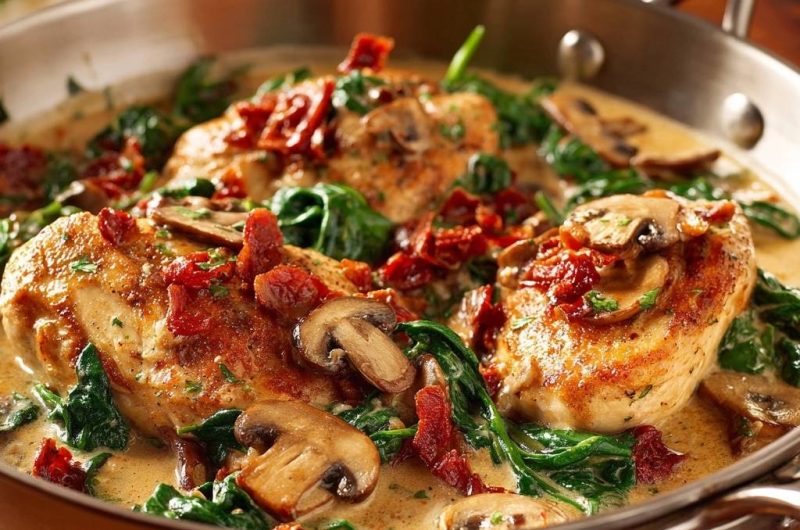
MinutesA decadent one-pan skillet meal featuring tender seared chicken breasts nestled in a rich heavy cream sauce with earthy cremini mushrooms, tangy sun-dried tomatoes, and fresh baby spinach.
Ingredients
4 boneless skinless chicken breasts (pounded to even thickness)
8 ounces cremini mushrooms, sliced
1/2 cup sun-dried tomatoes (packed in oil), drained and chopped
3 cups fresh baby spinach
1 cup heavy cream
1/2 cup low-sodium chicken broth
3 cloves garlic, minced
2 tablespoons olive oil (or oil from the sun-dried tomato jar)
1 teaspoon dried oregano
1/2 teaspoon paprika (for color)
Salt and black pepper to taste
1/2 cup freshly grated parmesan cheese
Fresh parsley, chopped (for garnish)
Directions
- To solve the rubbery chicken problem, ensure your chicken is at room temperature for 15 minutes before cooking. Pat the chicken completely dry with paper towels. Season both sides generously with salt, pepper, oregano, and paprika.
- Heat olive oil in a large stainless steel skillet over medium-high heat. Once the oil is shimmering, add the chicken. Sear for 5 to 6 minutes per side until a deep golden-brown crust forms. Remove chicken from the pan and set aside on a plate. The chicken does not need to be fully cooked through yet.
- In the same skillet, add the sliced mushrooms. Sauté for 5-7 minutes without crowding the pan until they release their moisture and develop a dark brown sear. Add the minced garlic and sun-dried tomatoes, cooking for just 1 minute until fragrant.
- Pour in the chicken broth to deglaze the pan, using a wooden spoon to scrape up all the brown bits (fond) from the bottom. This is essential for the deep golden color of the sauce seen in the image.
- Lower the heat to medium-low. This is the critical step to prevent the sauce from breaking. Slowly pour in the heavy cream and whisk in the parmesan cheese until melted and smooth.
- Add the fresh spinach to the sauce and stir for 1 minute until it just begins to wilt.
- Place the chicken and any accumulated juices back into the skillet. Spoon some of the sauce, mushrooms, and tomatoes over the top of the breasts. Simmer gently for 3 to 5 minutes until the chicken reaches an internal temperature of 165°F. Finishing the chicken in the sauce on low heat ensures the proteins don’t tighten up and become tough.
- Garnish with fresh parsley and serve immediately while the sauce is perfectly emulsified and the chicken is at its juiciest.
Notes
- To prevent rubbery chicken, ensure the meat is at room temperature before cooking and pat it dry. Lower the heat before adding cream to prevent the sauce from breaking or separating.