Mastering Crispy Glazed Eggplant Cubes Without the Grease
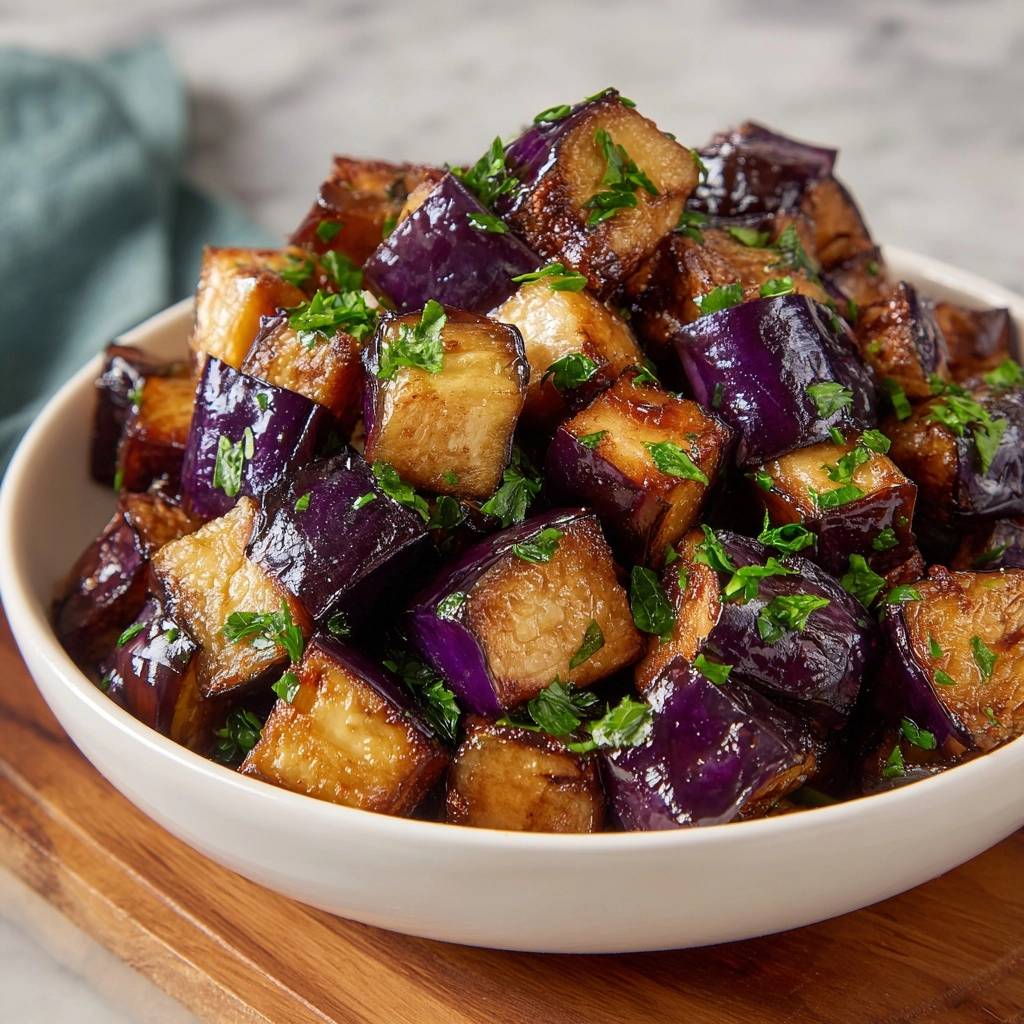
Eggplant is the ultimate kitchen chameleon, but it’s also a notorious culinary sponge. If you’ve ever tossed cubes into a pan only to watch them soak up every drop of oil and turn into a gray, mushy mess, you aren’t alone. Most home cooks struggle with the vegetable’s porous texture, which naturally wants to absorb liquid rather than repel it.
The goal of this guide is to transform that moisture-heavy vegetable into a structural, crispy vessel for flavor. We’re aiming for a specific architectural contrast: a shatter-crisp cornstarch crust that gives way to a velvety, custard-like interior. By the time you finish this recipe, you’ll have mastered the art of the “dry-fry” and created a dish that rivals any high-end bistro.
The secret to this transformation isn’t just high heat; it’s the preparation of the eggplant’s cellular walls. You have to physically change the vegetable before it ever touches the pan. Once you understand how to manage the internal moisture, you can achieve a golden, blistered exterior that holds its shape even under a thick, glossy glaze.
The Cellular Science of Soggy Eggplant
To cook eggplant perfectly, you have to understand its anatomy. If you look at a raw eggplant slice under a microscope, you’ll see a honeycomb of tiny air pockets. These pockets act like little vacuums the moment they hit hot oil. Without intervention, the air escapes and the oil rushes in to fill the void, resulting in a heavy, greasy bite that feels more like a wet sponge than a vegetable.
When you apply heat to an unprepared eggplant, the cell walls collapse almost instantly. This collapse releases the internal water, which then steams the vegetable from the inside out. This is why your eggplant often turns into a pile of mush in the skillet. To prevent this, we use the concept of osmosis to collapse those air pockets before the cooking even begins.
By drawing out the water and air ahead of time, you create a much denser, more resilient piece of produce. This structural change allows the eggplant to withstand the high temperatures of frying without disintegrating. It turns the vegetable from a fragile, water-logged plant into a sturdy base that can support a heavy cornstarch coating and a rich, savory sauce.
Why Salt is Your Most Important Tool
Kosher salt is the primary engine of this recipe. When you toss the cubes in salt, you’re triggering a process where the salt pulls moisture out through the cell walls. You’ll actually see beads of “sweat” forming on the surface of the cubes within minutes. This isn’t just about seasoning; it’s about engineering a better texture.
As the water leaves, the eggplant cubes change from bouncy and porous to dense and pliable. They become slightly smaller and much tougher, which is exactly what you want. This density prevents the oil from penetrating the center of the cube during the frying process. Skipping this step is the most common reason for failure, as it leaves the air pockets open and ready to drink up the frying oil.
Essential Components for Crispy Glazed Eggplant Cubes
For this specific cubing technique, Italian eggplants are your best friend. They have a thinner skin than the massive Globe eggplants and a more consistent seed pattern. While Japanese eggplants are delicious, their slender shape makes it harder to get those perfect one-inch cubes that provide the ideal ratio of crispy surface area to soft interior.
The choice of oil is equally critical. You need a high-smoke point oil like vegetable, canola, or grapeseed oil. Extra virgin olive oil is inappropriate here because its smoke point is too low for the sustained medium-high heat required to blister the skin. If the oil starts to smoke and break down, it will impart a bitter, burnt flavor to the delicate cornstarch crust.
The Starch Barrier: Cornstarch vs. Flour
When it comes to dredging, cornstarch is the undisputed king of crisp. Unlike wheat flour, which contains protein and gluten, cornstarch is pure starch. When it hits the hot oil, it creates a much thinner, more brittle, and “shatter-crisp” coating. Flour tends to create a heavier, doughy finish that can become gummy once the sauce is added.
Cornstarch also has the added benefit of being naturally gluten-free, making this a versatile dish for various dietary needs. Because cornstarch doesn’t brown as quickly as flour, it allows the eggplant inside to cook through completely while the outside stays a beautiful, pale golden color. It acts as a protective shield, locking the moisture inside the vegetable while keeping the oil out.
Building the Umami Glaze Profile
A professional-grade glaze relies on four pillars of flavor: salt, sugar, acid, and aromatics. Soy sauce provides the deep, salty umami base. Honey or maple syrup adds the necessary viscosity and sweetness to balance the salt. Without the sugar, the sauce won’t thicken into that signature glossy coating that clings to every corner of the cubes.
Rice vinegar provides the essential acidity to cut through the richness of the fried starch. Finally, fresh ginger and garlic provide the aromatic depth that makes the dish pop. When these four elements combine, they create a complex, restaurant-quality sauce that tastes far more sophisticated than the sum of its parts. The toasted sesame oil added at the end provides a nutty fragrance that ties everything together.
Step-by-Step: Preparing the Eggplant Foundation
Start by cutting your eggplant into uniform one-inch cubes. Consistency is key here; if the pieces are different sizes, they won’t cook at the same rate. Place them in a colander and toss them thoroughly with the kosher salt. Let them sit for at least 20 minutes. You’ll know they’re ready when the cubes look slightly shrunken and the bottom of the bowl is filled with dark, bitter liquid.
The “Rinse and Dry” cycle is the most important part of the preparation. You must rinse the cubes thoroughly under cold water to remove all the excess salt, or the final dish will be inedible. After rinsing, pat them extremely dry. Use a clean kitchen towel and press down firmly. If the eggplant is even slightly damp, the cornstarch will turn into a paste rather than a powder, and the eggplant will steam in the pan instead of frying.
The Dredging and Frying Technique
Place your bone-dry eggplant cubes into a large bowl with the cornstarch. Use a “toss and shake” method, lifting the cubes from the bottom to ensure every single side is white and fully coated. Before they go into the pan, shake off any excess starch. You want a thin, even veil of starch, not a thick, clumpy batter.
Heat your oil until it is shimmering. You can test this by dropping a small piece of eggplant into the pan; it should sizzle vigorously immediately. Do not overcrowd the pan. If you add too many cubes at once, the oil temperature will drop sharply. This causes the starch to absorb the oil rather than searing, leading to the very sogginess we are trying to avoid. Work in batches if you have to.
Achieving the Deep Golden Blister
As the eggplant fries, listen to the sound. It will start as a heavy, wet sizzle and gradually transition into a lighter, sharper crisping noise as the moisture evaporates from the crust. Use tongs to turn the cubes individually. You are looking for the skin to slightly blister and the cornstarch coating to turn a deep, sandy golden brown.
Before you even think about adding the sauce, check the structural integrity of a cube with your tongs. It should feel firm and “clink” slightly against the side of the pan. If it feels soft or squishy, it needs more time. The eggplant must be fully cooked and crispy before the liquid hits the pan, as the glazing process happens in a matter of seconds.
The Flash-Glazing Process
This is the most time-sensitive part of the recipe. Once the eggplant is crispy, drain any excess oil so only a thin film remains. Pour your whisked sauce over the cubes. You have about a 30-60 second window where the residual starch on the eggplant reacts with the liquid to create an instant emulsion. The sauce will bubble, darken, and thicken into a glaze right before your eyes.
Toss the cubes quickly over high heat to ensure every piece is coated. Be careful not to over-toss or leave them in the pan too long. If you cook the sauce for more than a minute, the moisture from the glaze will begin to penetrate the crispy crust, making it soft. Remove the pan from the heat the moment the sauce looks glossy and clings to the eggplant.
Troubleshooting Common Texture Issues
If your eggplant is still mushy, the culprit is almost always under-drying or low heat. If the cubes weren’t bone-dry before the cornstarch hit, the crust never had a chance to form. Similarly, if your oil wasn’t hot enough, the eggplant boiled in oil rather than frying. Next time, ensure the oil is shimmering and use a kitchen towel to squeeze the cubes even harder after rinsing.
If the sauce is too salty, you likely didn’t rinse the salt off thoroughly enough after the 20-minute resting period. The salt used for drawing out moisture is meant to be temporary. If this happens, you can try to balance it by adding a teaspoon more of honey or a splash of water during the glazing phase, but the best fix is a more vigorous rinse in the future.
Another common issue is the glaze not sticking. This happens if you shake off too much cornstarch or if you use too much oil in the final step. The glaze needs that tiny bit of starch to “grab” onto the cube. If the pan is too oily, the sauce will just slide off. Always drain the pan thoroughly before pouring in your sauce mixture.
Flavor Variations and Global Swaps
Once you master the crispy technique, you can swap the flavor profile easily. For a spicy Szechuan-style dish, replace the ginger and garlic with two tablespoons of chili crisp and a splash of black vinegar. This creates a numbing, spicy heat that pairs beautifully with the creamy interior of the eggplant. Keep the cornstarch method exactly the same for that essential crunch.
For a Mediterranean twist, ditch the soy sauce and ginger. Instead, glaze the crispy cubes with a mixture of pomegranate molasses, lemon juice, and a pinch of cumin. This version is bright and tangy. You can also go for a citrus-forward profile by using lime juice, honey, and a handful of fresh cilantro at the very end. All these variations stay within the pork-free and alcohol-free requirements while offering totally different experiences.
What to Serve with Crispy Glazed Eggplant Cubes
Because these cubes are rich and savory, you want pairings that offer a clean, refreshing contrast. Fluffy jasmine rice is the classic choice, as it soaks up any extra glaze. A chilled smashed cucumber salad with a light vinegar dressing is also excellent for cutting through the fried texture. The coolness of the cucumbers balances the heat of the eggplant perfectly.
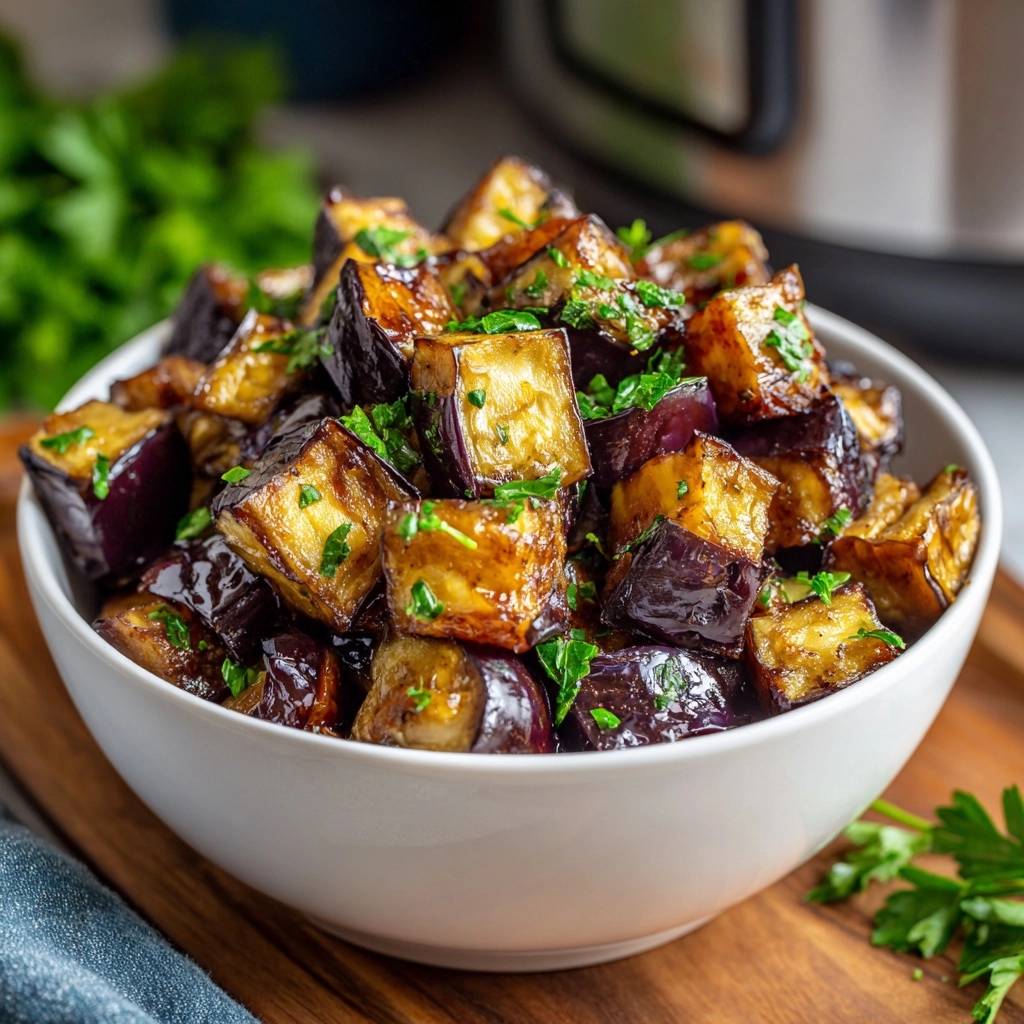
If you want a protein boost, serve the eggplant over a bed of quinoa or alongside some seared halloumi. When plating, try to pile the cubes in a mound rather than spreading them out in a single layer. This helps retain the heat. Serve the dish immediately; the longer it sits, the more the glaze will soften the crust. Garnish with the parsley at the very last second for a pop of color and a hit of freshness.
Storage and Reheating Realities
Fried eggplant is best eaten within minutes of cooking. However, if you have leftovers, do not put them in the microwave. The microwave will turn the cornstarch crust into a gummy, rubbery mess. Instead, store them in an airtight container in the fridge for up to two days. The eggplant will soften, but the flavor will remain excellent.
To revive the “shatter-crisp” texture, use an air fryer or a dry skillet. Place the cold cubes in an air fryer at 375°F for about 3-5 minutes until they sizzle. If using a skillet, heat it over medium heat with no extra oil and toss the cubes until they are heated through and the exterior firms up again. Do not freeze this dish, as the cellular structure of the eggplant will break down and become grainy upon thawing.
The same test for structural integrity applies to these air fryer pineapple glazed chicken bites.
Expert Tips for Success
If you have a wok, use it. The sloped sides of a wok allow for better heat distribution and make it much easier to toss the eggplant in the glaze without breaking the cubes. A flat skillet works, but you have to be much more careful with your spatula movements to keep the cubes intact.
Always grate your ginger fresh. Powdered ginger has a completely different flavor profile that is more woody and less “bright.” Fresh ginger provides a sharp, peppery bite that is essential for balancing the honey in the glaze. If you don’t have a microplane, you can finely mince it with a knife, but the grated texture integrates into the sauce much better.
To tell if your oil is at the 350°F-375°F sweet spot without a thermometer, stick the end of a wooden spoon into the oil. If bubbles start to form steadily around the wood, you’re ready to fry. If it bubbles violently, it’s too hot; if it does nothing, wait another minute. Finally, don’t skip the parsley. It isn’t just a garnish; its slight bitterness provides a necessary contrast to the sweet and salty glaze.
How do I keep the eggplant from getting soggy after adding the sauce?
The key is the “flash-glaze” technique. You must ensure the eggplant is extremely crispy before the sauce hits the pan. Once you pour the liquid in, work on high heat and stop as soon as the sauce thickens (usually 30-60 seconds). If you simmer the eggplant in the sauce, it will inevitably lose its crunch. Serving immediately is also vital.
Can I use a different starch like potato starch or arrowroot?
Yes, potato starch is an excellent substitute for cornstarch and actually produces an even crispier, longer-lasting crunch. Arrowroot also works well. Avoid using standard all-purpose flour if you want that specific “shatter” texture, as flour creates a much softer, bread-like coating that doesn’t hold up as well to the liquid glaze.
Why is my eggplant bitter even after salting?
Bitterness usually comes from older eggplants with many developed seeds. While the salting process removes most of the bitter compounds, very old eggplants might still retain some. When shopping, look for eggplants that feel heavy for their size and have smooth, shiny skin with no soft spots. Smaller eggplants generally have fewer seeds and less bitterness.
Can I bake these instead of frying them?
You can bake them at 425°F on a parchment-lined sheet after dredging in cornstarch and spraying generously with oil. However, they will not achieve the same deep golden blister or structural crunch as shallow frying. If you choose to bake, flip them halfway through and ensure they are spaced far apart so they roast rather than steam.
What is the best way to store and reheat leftovers?
Store leftovers in an airtight container in the refrigerator for up to 2 days. To reheat, avoid the microwave at all costs. Use an air fryer at 375°F for 4 minutes or a dry non-stick skillet over medium heat until the exterior becomes firm and crispy again. The sauce will caramelize slightly more during reheating, which actually tastes great.
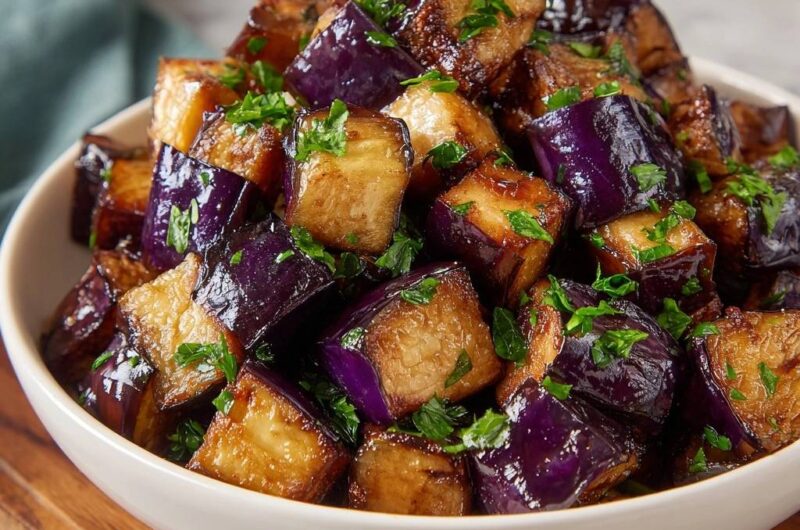
Crispy Glazed Eggplant
Course: Side DishCuisine: Asian FusionDifficulty: easy4
servings20
minutes15
minutes210
kcal35
MinutesA foolproof method for cooking eggplant that avoids the common greasy texture. By salting and dredging the cubes in cornstarch, you achieve a golden, crunchy exterior coated in a glossy ginger and garlic glaze.
Ingredients
2 large Italian eggplants, cut into 1-inch cubes
2 tablespoons kosher salt
1/2 cup cornstarch (for dredging)
1/3 cup vegetable oil (for shallow frying)
3 tablespoons soy sauce
1 tablespoon honey or maple syrup
1 tablespoon rice vinegar
1 teaspoon grated fresh ginger
1 clove garlic, minced
1 teaspoon toasted sesame oil
2 tablespoons fresh parsley, finely chopped
Directions
- Place eggplant cubes in a large colander and toss thoroughly with the kosher salt. Let them sit for at least 20 minutes. This draws out the bitter juices and collapses the eggplant’s cellular structure so it won’t absorb excess oil.
- Rinse the cubes thoroughly under cold water to remove all salt. Pat them extremely dry using a clean kitchen towel or several paper towels. Moisture is the enemy of crispiness.
- Place the cornstarch in a large bowl. Add the eggplant cubes and toss vigorously until every side of every cube is white and fully coated. Shake off any excess starch.
- Heat the vegetable oil in a large skillet or wok over medium-high heat until shimmering.
- Add the eggplant in a single layer, working in batches if necessary to avoid crowding. Fry for 8 to 10 minutes, turning with tongs or a spatula, until the edges are deep golden brown and the skin is slightly blistered.
- While the eggplant fries, whisk together the soy sauce, honey, rice vinegar, ginger, garlic, and sesame oil in a small bowl.
- Once the eggplant is crispy, drain any excess oil from the pan. Pour the sauce over the eggplant.
- Toss quickly over high heat for 30-60 seconds. The starch on the eggplant will naturally thicken the sauce into a glossy glaze that clings to the cubes.
- Remove from heat immediately to prevent the eggplant from softening. Garnish generously with fresh parsley and serve hot.
Notes
- Ensure the eggplant is patted extremely dry after rinsing to achieve maximum crispiness. Do not crowd the pan during the frying process.