Mastering the Tropical Green Smoothie Bowl: A Guide to Thick Consistency
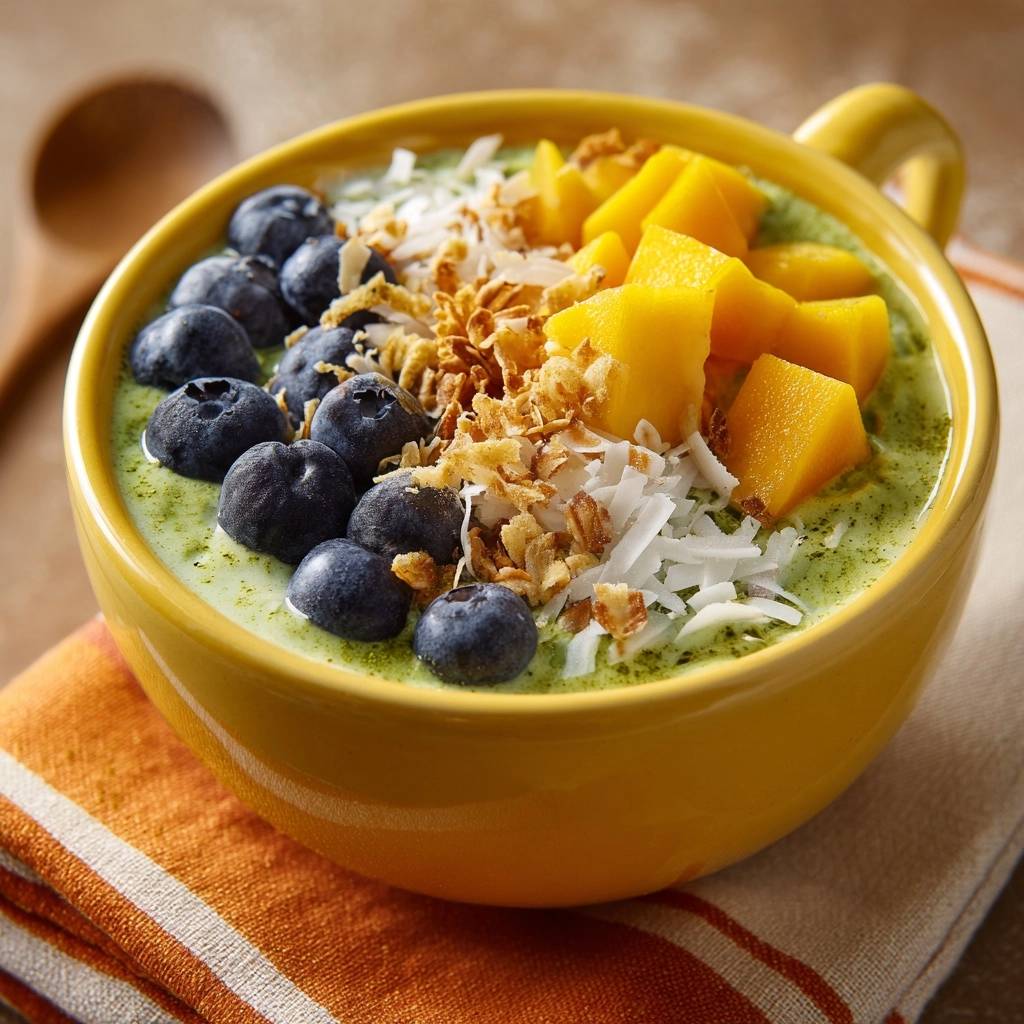
Stop settling for smoothie bowls that turn into soup before you can even grab a spoon. We’ve all been there, staring at a puddle of green liquid where a beautiful breakfast used to be. A true Tropical Green Smoothie Bowl should have the luxurious, scoopable texture of soft-serve ice cream. It needs to be sturdy enough to hold a mountain of toppings without a single blueberry sinking to the bottom.
The secret to this structural integrity isn’t a magic ingredient, but rather a specific ratio of frozen solids to liquids. When you get the balance right, the result is a vibrant, refreshing meal that feels like a treat. You’ll notice the bright, non-oxidized green color immediately, which stays bold thanks to the addition of high-quality matcha powder. It’s a sensory experience that starts with a thick, cold mouthfeel and ends with the tropical sweetness of sun-ripened mango.
Expertise in smoothie bowl making comes down to temperature control and patience. I’ve found that the biggest mistake people make is adding extra liquid the moment the blender struggles. If you want that professional, thick consistency, you have to resist that urge. Using a tamper and a chilled bowl are the two non-negotiable steps that separate a watery mess from a masterpiece.
The Physics of a Thick Tropical Green Smoothie Bowl
Creating a thick base is actually a lesson in food science and emulsification. Frozen mango serves as the “skeleton” of this bowl because of its high pectin content and fibrous structure. Unlike ice cubes, which melt into water and dilute the flavor, frozen mango creates a creamy, stable matrix when pulverized. This fruit provides the bulk and the chill necessary to keep the bowl frozen while you eat.
However, the mango can’t do it alone. The fiber in the fresh baby spinach needs to be fully broken down to avoid a gritty texture. When you blend these greens with the fats found in full-fat Greek yogurt, you create a smooth emulsion. The fat molecules coat the spinach fibers, resulting in a velvety mouthfeel rather than an icy or watery one. This interaction is what gives the bowl its “heft” and keeps you full until lunch.
Temperature is your greatest ally or your worst enemy here. As the blender blades spin, they generate friction and heat. If your ingredients aren’t cold enough, or if you blend for too long, that heat will break down the frozen structure of the mango. This is why we use a high-powered motor and a specific loading order to minimize blending time and keep the temperature as low as possible.
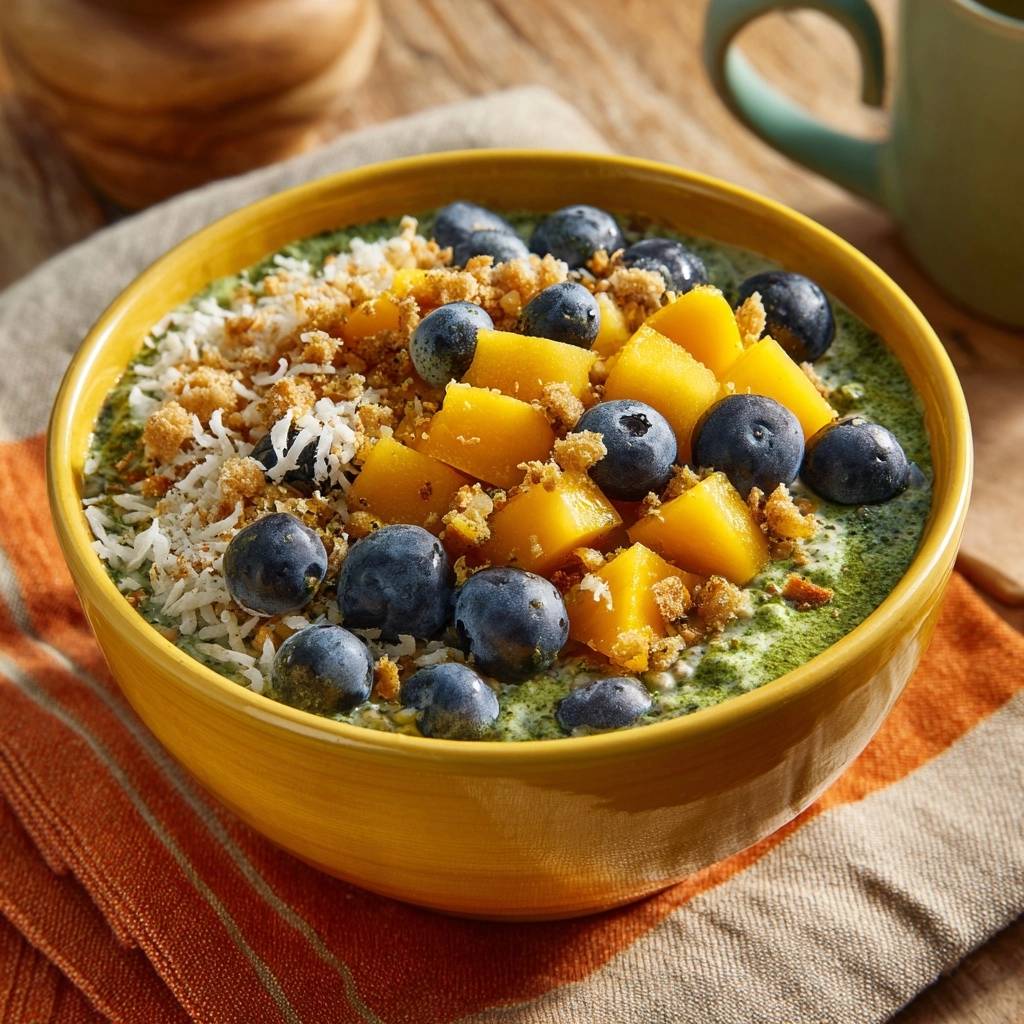
Essential Components for the Tropical Green Smoothie Base
Every ingredient in this bowl serves a functional purpose beyond just flavor. Full-fat Greek yogurt is my top recommendation because its low moisture content and high protein count provide incredible viscosity. If you use a thinner, low-fat yogurt, the base will lack that signature “peak” when you pour it into the bowl. The thickness of the yogurt acts as a binder for the frozen fruit.
For the liquid, I prefer unsweetened coconut milk from a carton rather than a can. Canned coconut milk is often too rich and can become grainy when blended with frozen fruit. The carton version provides a light, nutty flavor that complements the mango without overpowering it. It offers just enough moisture to get the blades moving without turning the mixture into a drinkable shake.
Matcha powder is the unsung hero of this recipe. While many people use it for the caffeine boost, it actually acts as a color stabilizer. It prevents the spinach from looking dull or “swampy” after a few minutes of air exposure. Additionally, the earthy bitterness of the matcha perfectly balances the intense sweetness of the frozen mango chunks.
If you love using frozen mango for a thick smoothie bowl, you will enjoy this tropical mango smoothie bowl as well.
Selecting the Best Frozen Mango Chunks
Quality matters when it comes to your frozen fruit. If you buy pre-frozen mango, look for bags where the chunks feel individual and loose. If the bag feels like one solid block of ice, it has likely thawed and refrozen, which ruins the texture. Smaller cubes are always better because they blend faster, which prevents the blender motor from heating up and melting your base.
If you have time, freezing your own fresh, overripe mango is a game-changer. Peel and dice the fruit into half-inch cubes, then freeze them in a single layer on a parchment-lined tray. Once they are frozen solid, transfer them to a bag. This ensures they don’t clump together and makes the blending process much smoother for your machine.
Why Matcha Powder is Your Secret Weapon
Matcha provides a sophisticated flavor profile that elevates this from a simple fruit smoothie to a gourmet bowl. It offers a grassy, umami note that cuts through the richness of the Greek yogurt. Beyond flavor, the fine powder helps absorb micro-moisture on the surface of the bowl once it’s poured. This creates a slightly “tacky” surface that helps your granola and coconut flakes stay exactly where you place them.
The Cold Chain: Equipment and Preparation
A high-powered blender is essential for this recipe because it can handle a high ratio of frozen fruit to liquid. If you are using a standard blender, you’ll need to be even more diligent with your tamper. The tamper allows you to push the frozen mango into the blades safely, ensuring every chunk is processed without needing to add more milk. It’s the only way to achieve that soft-serve texture.
The “Chilled Bowl Technique” is a step you should never skip. If you pour a frozen smoothie into a room-temperature ceramic bowl, the edges will begin to melt instantly. This creates a ring of liquid around your beautiful creation. Pop your serving bowl in the freezer for at least five to ten minutes before you start blending. This small step buys you several extra minutes of “perfect texture” time.
Step-by-Step: Achieving the Soft-Serve Texture
Achieving the perfect texture requires a method I call the “Vortex Method.” Most people throw everything into the blender at once, but that leads to uneven chunks and a watery base. You must follow a specific order of operations to ensure the blades can work efficiently. By starting with the liquids and soft items, you create a small pool of movement that eventually pulls the heavy frozen items down.
Start by pouring your coconut milk and Greek yogurt into the bottom of the blender. These are your lubricants. Next, pack in the fresh baby spinach. Because the spinach is light, it needs to be near the bottom so it gets pulverized early in the process. Finally, pile the frozen mango chunks on top. The weight of the mango will naturally press the other ingredients toward the blades.
When you turn the blender on, start at the lowest possible speed. You will hear the motor strain slightly—this is normal. Use your tamper to aggressively push the mango down into the corners. As the fruit breaks down, you’ll see four distinct mounds form on the surface, often called the “four-pillar vortex.” Once you see this, the smoothie is done. Stop immediately to prevent over-processing.
If you prefer a creamy base without dairy, this cinnamon apple walnut yogurt bowl uses a similar thick texture and a clever trick to keep the apples from browning.
Phase 1: The Liquid Foundation and Greens
In the first few seconds of blending, your goal is to turn the coconut milk, yogurt, and spinach into a bright green liquid. You don’t want any “leafy bits” or green flecks in your final bowl. By blending these three first, you ensure a professional, uniform aesthetic. This liquid base will act as the medium that carries the frozen mango into the blades.
Phase 2: Managing the Frozen Mango Load
As you move into the second phase, keep the speed low. If you crank the speed to high too quickly, the blades will just spin in an air pocket, a phenomenon known as cavitation. You’ll hear a high-pitched whirring sound if this happens. If it does, stop the blender, stir the contents to remove the air pocket, and start again on low. Patience here is what creates the thickness.
Artistic Assembly: Topping Your Tropical Green Smoothie Bowl
Once your base is in the chilled bowl, it’s time for the “Dusting Technique.” Take your remaining matcha powder and lightly sift it over the surface. This creates a beautiful, vibrant green speckled look that makes the colors of the fruit pop. It also adds a concentrated hit of flavor that greets you with the first spoonful.
I recommend a “Sectional Approach” for the toppings. Instead of scattering everything randomly, arrange the fresh blueberries, mango chunks, and granola in neat rows or wedges. This not only looks better for photos but also allows you to control the flavor of each bite. Place the granola last so it stays as crunchy as possible against the cold base.
Troubleshooting Common Smoothie Bowl Failures
If your bowl turns out grainy, it usually means the spinach wasn’t blended long enough with the liquid or the mango chunks were too large. To fix this next time, blend the greens and liquid for 30 seconds before adding the frozen fruit. If the base is currently too thin, you can try adding a tablespoon of chia seeds and letting it sit for two minutes. The seeds will absorb the excess moisture and thicken the mixture.
Rapid melting is usually caused by a warm blender jar or a warm bowl. If you find your smoothie is melting before you finish, try blending in a single ice cube at the very end. This can drop the temperature just enough to stabilize the mango. Also, ensure you aren’t over-blending; once the mixture is smooth, every extra second of blending adds heat that compromises the texture.
Nutritional Profile and Dietary Adjustments
This Tropical Green Smoothie Bowl is a powerhouse of nutrients. The mango provides a massive dose of Vitamin C and Vitamin A, while the spinach adds iron and folate. By using full-fat Greek yogurt, you’re getting a healthy dose of probiotics and enough protein to keep your blood sugar stable. It’s a balanced meal that covers your macros while tasting like a dessert.
If you need a dairy-free version, you can easily swap the Greek yogurt for a thick cashew cream or a coconut-based yogurt. However, make sure the substitute is high in fat and very thick. Avoid watery almond milk yogurts, as they won’t provide the necessary structure. For an extra protein boost, you can also whisk in a scoop of unflavored collagen or vanilla protein powder before blending.
What to Pair with Your Smoothie Bowl
If you want to keep the tropical fruit theme going, these two recipes add crunch and citrus to round out your breakfast or snack.
- For a contrasting crispy texture alongside the creamy smoothie bowl, try a Strawberry Crunch Parfait with its layered crunch and fresh berries.
- A bright Glazed Lemon Blueberry Loaf brings a tangy sweetness that complements the green smoothie’s earthy notes.
Optimizing Your Morning Workflow
You can turn this into a two-minute breakfast by using “smoothie packs.” On Sunday, portion out your spinach and frozen mango into individual freezer bags. In the morning, all you have to do is pour your liquid and yogurt into the blender, dump in the bag, and go. This eliminates the need for measuring when you’re in a rush.
Never blend your smoothie bowl the night before. The frozen structure relies on the fruit remaining in a semi-solid state. If you store a blended bowl in the fridge, it will turn into a thin juice by morning. Even in the freezer, it will freeze into a solid block of ice that loses its creamy soft-serve texture. Fresh is always best for this specific dish.
Expert Tips for Vibrant Food Photography
If you’re planning to snap a photo, you have a “window of opportunity” of about 120 seconds. After that, the granola will start to soften and the vibrant green of the base will begin to dull. Set up your lighting and props before you even turn on the blender. Natural light from a side window is best for capturing the texture of the toppings.
Use a small spoon to create “swooshes” in the base before adding toppings. This adds depth and shadows to the photo, making the bowl look even thicker and more appetizing. If the blueberries look a bit dull, a tiny drop of water or a light misting can make them look fresh and dewy. Work quickly, and remember that the bowl is meant to be eaten cold!
How do I keep my smoothie bowl from being watery?
The most important factor is the liquid-to-frozen-fruit ratio. Use only 1/4 cup of coconut milk for 1 1/2 cups of frozen mango. Always place the liquid at the bottom of the blender so the blades can move, and use a tamper to push the frozen fruit down. Never add extra liquid just because the blender seems stuck; instead, stop and stir or use the tamper more aggressively.
Can I use a different fruit instead of mango?
Yes, but you need a fruit that has a creamy texture when frozen. Bananas are the most common substitute and provide a very similar thickness. Frozen pineapple or peaches can also work, but they have a higher water content, so you may need to reduce the coconut milk even further to maintain the soft-serve consistency.
How should I store leftovers?
Smoothie bowls are best eaten immediately. If you have leftovers, the best option is to pour them into a silicone muffin tin or ice cube tray and freeze them. You can then pop these “smoothie cubes” back into the blender with a splash of milk for a quick refresh later. Storing the liquid smoothie in the fridge will result in a thin, separated drink within an hour.
Why is my smoothie bowl brown instead of bright green?
This usually happens due to oxidation or using the wrong greens. Ensure you are using fresh baby spinach rather than kale, which can have a more muted tone. Adding the matcha powder helps maintain the green hue. Also, avoid adding red fruits like strawberries or raspberries into the base, as red and green are complementary colors that will create a muddy brown when mixed.
Is it okay to use a food processor instead of a blender?
Actually, a food processor is an excellent tool for thick smoothie bowls if you don’t own a high-powered blender. The wide blades of a food processor are great at breaking down frozen fruit with very little liquid. It might take a minute or two longer, and you’ll need to scrape the sides down frequently, but the resulting texture is often very thick and consistent.
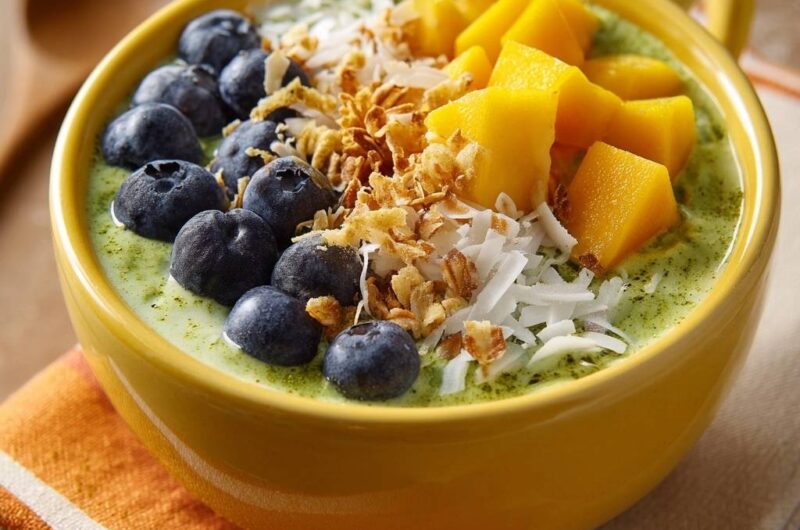
Tropical Green Smoothie Bowl
Course: BreakfastCuisine: AmericanDifficulty: easy1
serving10
minutes365
kcal10
MinutesA vibrant and nutrient-dense smoothie bowl featuring frozen mango, spinach, and Greek yogurt. This recipe focuses on a low-liquid blending method to ensure a thick base that supports heavy toppings without sinking.
Ingredients
1 1/2 cups frozen mango chunks (plus 1/4 cup fresh mango for topping)
1 cup fresh baby spinach, packed
1/2 cup plain Greek yogurt (full fat recommended for thickness)
1/4 cup unsweetened coconut milk (from a carton)
1 teaspoon matcha powder (divided)
1/2 cup fresh blueberries
2 tablespoons toasted granola
1 tablespoon large-flake unsweetened coconut
Directions
- To solve the watery texture issue, always place your liquid (coconut milk) and yogurt in the blender first, followed by the spinach, and then the frozen mango chunks on top. This allows the blades to catch the liquid and create a vortex that pulls the heavy frozen items down without needing extra water.
- Add 1/2 teaspoon of the matcha powder into the blender. Start your blender on the lowest speed. Use a tamper or stop to scrape the sides frequently. Do not be tempted to add more liquid. The friction of the blades will eventually turn the frozen mango into a thick, soft-serve consistency.
- Once smooth and ultra-thick, pour the base into a chilled bowl. A room temperature bowl will melt the base instantly, so pop your bowl in the freezer for 5 minutes beforehand.
- Before adding toppings, lightly dust the surface of the smoothie with the remaining 1/2 teaspoon of matcha powder to achieve the vibrant green speckled look seen in the image.
- Arrange the fresh blueberries, fresh mango chunks, granola, and coconut flakes in neat sections. Because the base is properly thickened using the low-liquid method, your toppings will sit right on the surface until the very last bite.
Notes
- For the thickest results, use full fat Greek yogurt and ensure your bowl is chilled in the freezer for 5 minutes before serving. Do not add extra liquid even if blending seems slow at first.