Mastering Crispy Sweet Potato Latkes: The Anti-Soggy Technique
We’ve all been there. You grate your vegetables with high hopes, fry them up, and end up with a limp, greasy mess that falls apart the second it hits the plate. It’s heartbreaking to watch all that prep work turn into a soggy pile of orange mush.
The secret to that restaurant-style crunch isn’t actually more oil; it’s all about the moisture squeeze. By using my specific double-wring method, you remove the hidden water that steams the potato from the inside out. This ensures every single strand of sweet potato fries up golden and rigid for the ultimate stackable crunch.
I’ve found that the real trick lies in the timing of your salt. If you salt the potatoes and let them sit too long before they hit the pan, you’ll create a swamp in your mixing bowl. Speed is your best friend here, so make sure your oil is shimmering and ready before you even think about cracking those eggs.
The Science of Moisture in Crispy Sweet Potato Latkes
Sweet potatoes are structurally different from your standard Russet or Idaho potatoes. They contain more natural sugars and a higher water content, which makes them prone to softening quickly when heat is applied. When you grate a sweet potato, you’re breaking open thousands of tiny cells that immediately begin weeping liquid.
If that liquid stays in the batter, it turns into steam the moment it hits the hot oil. Instead of the oil crisping the outside of the potato, the steam “boils” the potato from the inside. This is exactly why so many home cooks struggle with a mushy interior even when the outside looks brown.
The “Double-Wring” method is chemically necessary because it accounts for the delayed release of moisture. After the first hard squeeze, the cell walls continue to break down. Giving the mixture a two-minute rest allows that secondary wave of water to surface so you can squeeze it out for good, leaving you with “bone-dry” shreds.
Essential Components for the Perfect Shred
Choosing the right onion is just as important as the potato itself. I always reach for a small yellow onion because its high sulfur content provides a sharp, savory backbone that balances the sweetness of the tuber. Red onions can sometimes turn an unappealing gray color when fried, so stick to the yellow or white varieties.
Fresh herbs like parsley or cilantro aren’t just for looks; they provide a necessary “green” lift to the earthy sweet potato. Make sure your herbs are completely dry before chopping them. If you add wet herbs to your dry potato shreds, you’re undoing all that hard work you did during the double-wring phase.
When I say the shreds should be bone-dry, I mean they should feel almost like wood shavings. They shouldn’t stick to your hands or feel slippery. This dry surface is what allows the flour and egg to create a thin, lacquer-like coating that crisps up instantly in the pan.
Why Baking Powder is Non-Negotiable
You might think baking powder belongs in cake, but it’s a secret weapon for fried fritters. It creates a chemical leavening reaction that produces tiny micro-pockets of air within the latke. These air pockets allow the hot oil to penetrate deeper into the center of the patty.
Without it, the latke can become a dense, heavy “puck” that feels leaden in your mouth. The baking powder ensures the interior stays light and airy while the exterior maintains its structural integrity. It’s the difference between a heavy potato pancake and a light, crispy masterpiece.
Flour vs. Alternative Binders
All-purpose flour acts as a secondary insurance policy by absorbing any residual moisture that the towel missed. It creates a very light glue that holds the strands together without masking the texture of the potato. You only need a small amount—just enough to dust the shreds.
The same principles apply when making a classic version with ultra-crispy edges and fluffy centers in these crispy potato latkes.
If you’re looking for alternatives, chickpea flour is a fantastic choice that adds a nutty depth and keeps the recipe gluten-free. Potato starch is another great option if you want an even glassier, crunchier exterior. Just keep in mind that starch-based binders can make the latkes a bit more brittle.
Step-by-Step: Executing the Double-Wring Method
Start by placing your grated sweet potatoes and onions in the center of a clean, lint-free kitchen towel. Twist the top of the towel until it’s tight against the vegetables and squeeze with all your strength. You’ll be surprised at how much orange liquid pours out into the sink.
Now, here is the part most people skip: let the towel sit for two full minutes. This rest period allows the salt in the onion to draw out the deeper moisture from the sweet potato cells. Squeeze it one more time, and you’ll find even more liquid escapes. This second squeeze is the “pro move” for ultimate crunch.
Once the shreds are dry, move them to a bowl and toss with your dry ingredients immediately. You want to work fast here. The “salty sweat” phenomenon happens when the salt sits on the potato for too long, creating a new puddle of water at the bottom of your bowl. If you see liquid pooling, you’ve waited too long!
The Mechanics of Frying for Maximum Crunch
Heat management is the make-or-break moment for any fried dish. I prefer using vegetable oil or grapeseed oil because they have a high smoke point. Avoid using butter for the frying stage; the milk solids will burn long before the sweet potato is cooked through, leaving you with a bitter taste.
Always perform the “Sizzle Test” before dropping your first batch. Drop a single shred of potato into the oil. If it sinks or bubbles lazily, the oil is too cold, and your latkes will soak up the grease like a sponge. It should dance and sizzle violently the moment it touches the surface.
Don’t crowd the pan! Adding too many latkes at once drops the oil temperature significantly. This causes the oil to seep into the batter rather than searing the outside. Fry in small batches, giving each latke plenty of “breathing room” to ensure the edges get that lacy, dark golden fringe.
Achieving the Dark Golden Crust
Sweet potatoes contain natural sugars that undergo the Maillard reaction much faster than white potatoes. This means they can go from “perfectly golden” to “burnt” in a matter of seconds. Keep your heat at a steady medium-high rather than cranking it to the max.
You’re looking for the edges to turn a deep, bronzed brown while the center stays a vibrant orange. If the edges are black but the center is still raw and soft, your heat is too high. Lower it slightly and give the latkes an extra minute to cook through to the middle.
The Wire Rack Cooling Strategy
Most people instinctively reach for paper towels to drain fried food, but that’s a mistake here. When you place a hot latke on a flat paper towel, the steam from the bottom has nowhere to go. It gets trapped against the paper, softening the crust you just worked so hard to build.
Instead, use a wire cooling rack set over a baking sheet. This allows for 360-degree air circulation. The steam can escape from the bottom, keeping the entire latke crisp while the excess oil drips away. It’s a small change that makes a massive difference in the final texture.
For the crispiest results, skip the paper towels and use the same draining method as in these crispy potato latkes.
Elevating the Plate: The Yogurt and Pistachio Stack
While latkes are traditionally served with applesauce or sour cream, this version leans into a more sophisticated flavor profile. A thick, tangy Greek yogurt or Labneh provides a cooling contrast to the hot, fried potato. The acidity in the yogurt cuts right through the richness of the oil.
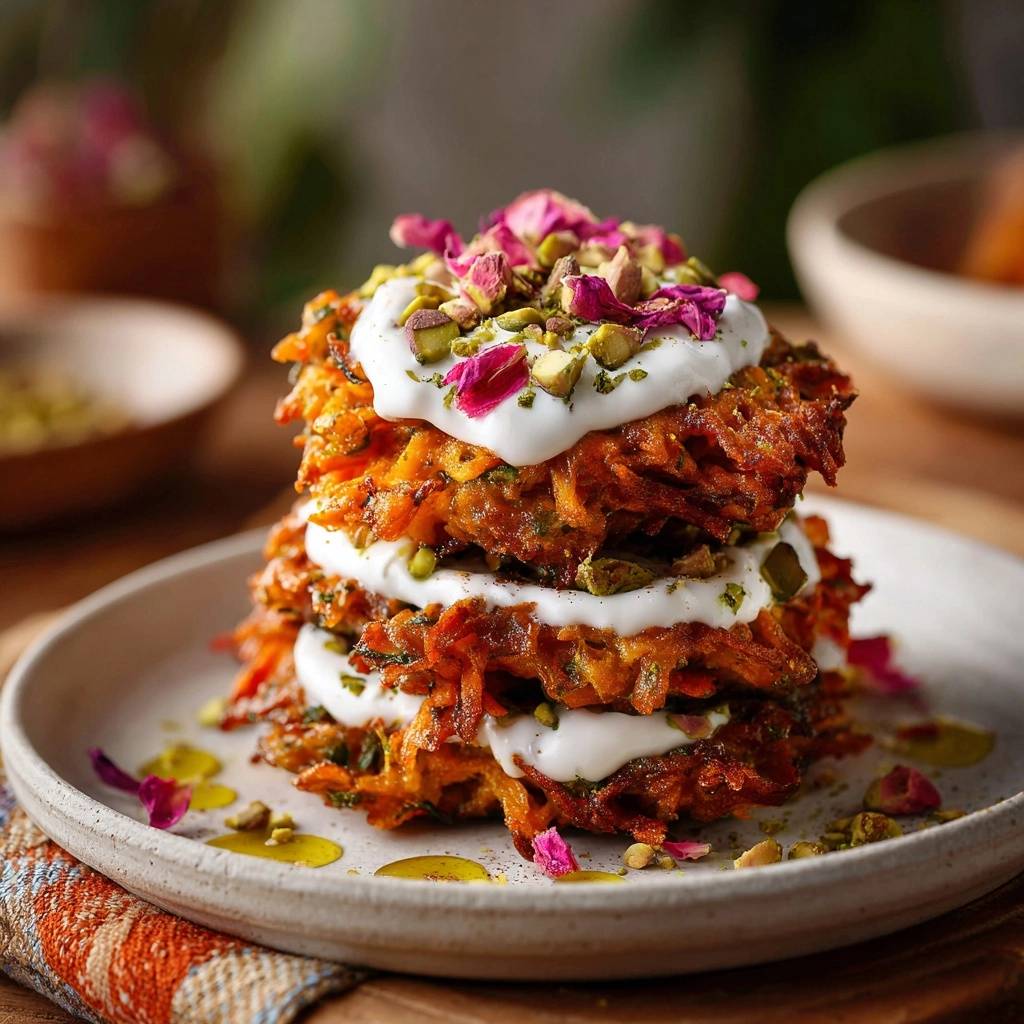
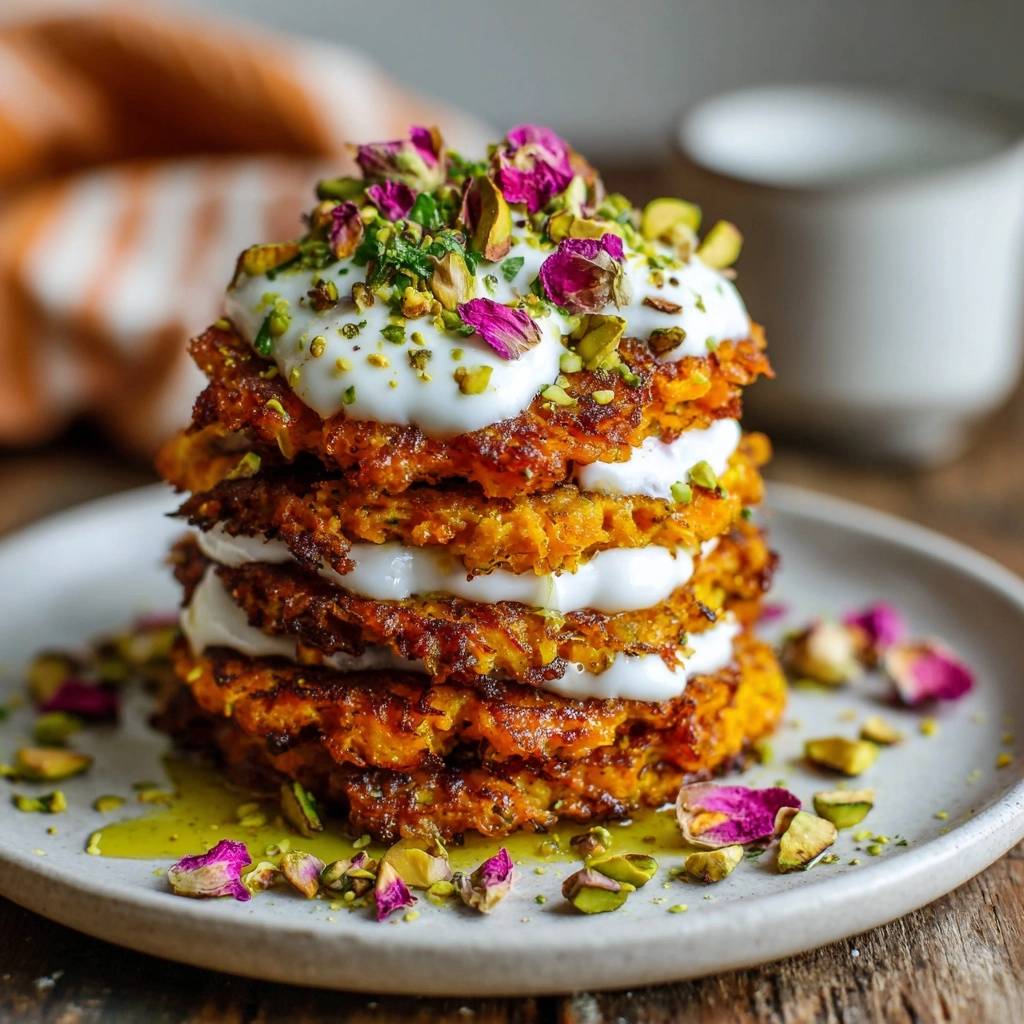
To create a show-stopping presentation, try the “Triple Stack.” Place one latke down, add a dollop of yogurt, and repeat until you have three layers. It looks like a savory Napoleon and makes the dish feel like a centerpiece rather than just a side dish. Oh man, the way the cool yogurt melts slightly against the hot potato is just incredible!
Floral and Nutty Garnish Profiles
The addition of dried edible rose petals might sound fancy, but they provide a delicate floral note that bridges the gap between the savory onion and the sweet honey. It turns a simple potato pancake into something that feels truly special and intentional.
Roasted pistachios add a necessary secondary crunch. While the latke is crispy, the pistachios offer a firm, nutty bite that lingers. If you want a bit of a kick, swap the regular honey for hot honey. The capsaicin heat against the cold yogurt and sweet potato is a flavor explosion you won’t forget.
Troubleshooting Common Latke Failures
If your latkes are falling apart in the pan, it’s usually one of two things: too much moisture or not enough binder. If the mixture feels “soupy,” try adding another tablespoon of flour. Also, make sure you aren’t flipping them too early. They need that bottom crust to form fully before they have the structural integrity to be turned.
For the “Burnt Outside, Raw Inside” dilemma, your oil is definitely too hot. Sweet potatoes are dense, and they need a few minutes to soften in the middle. If you find the outside browning too fast, turn the heat down to medium and cover the pan with a lid for 60 seconds to help the steam cook the center, then remove the lid to finish crisping.
A greasy mouthfeel is almost always caused by oil that isn’t hot enough or by draining on paper towels. If you notice the latkes are heavy and oil-slicked, check your temperature. The oil should be around 350°F to 365°F. If you don’t have a thermometer, that sizzle test is your best guide.
Make-Ahead Strategies and Reheating Protocols
If you’re hosting a big dinner, you can par-fry these latkes an hour in advance. Fry them until they are just barely golden, then set them aside on your wire rack. When your guests arrive, pop them into a 400°F oven for about 5 to 8 minutes. This finishes the cooking process and ensures they are piping hot and crispy when served.
Whatever you do, stay away from the microwave! Microwaves work by heating water molecules, which will turn your crispy latkes into soggy sponges in seconds. If you have leftovers, the oven or a dry skillet over medium heat are the only ways to revive that signature crunch.
Optimal Pairings for Savory Sweet Potato Cakes
Since these latkes are rich and fried, they pair beautifully with something tart and effervescent. A sparkling apple cider or a tart pomegranate spritzer with plenty of lime provides a refreshing palate cleanser between bites. The bubbles help lift the weight of the fried food.
For a side dish, I love a simple arugula salad tossed in a very sharp lemon vinaigrette. The bitterness of the arugula and the punch of the lemon cut through the honey and yogurt perfectly. It keeps the meal feeling light rather than heavy and greasy.
What’s Next?
Try these delicious pairings:
Expert Tips for Texture and Flavor
When grating your potatoes, use the coarse side of the grater. Fine shreds tend to turn into a paste, whereas coarse strands maintain their individual identity, creating those sought-after “lacy” edges that get extra crispy in the oil. It’s all about that surface area!
Always peel your sweet potatoes. While some people like the skin for nutrition, it can become leathery and tough when fried in this format. Peeling ensures that every single bite is uniform in texture. For an extra layer of flavor, you can crush a clove of garlic and toss it into the frying oil to infuse it before adding the batter.
Can I use a food processor?
You can certainly use a food processor with the grating attachment to save time. However, be aware that the high speed of the machine can “bruise” the vegetables more than a hand grater, leading to even more moisture release. If you use a machine, be even more diligent with your double-wring technique to ensure the shreds are dry.
How do I keep the first batch warm?
The best way to keep latkes warm while you finish the rest of the batter is to use your oven. Set it to 200°F and place the wire rack (with the baking sheet underneath) inside. This keeps them at a safe temperature without continuing to cook them or making them soggy. They can hang out there for about 30 minutes quite happily.
Is Labneh better than Greek Yogurt?
Labneh is essentially yogurt that has been strained even further to remove more whey. It is much thicker and has a more intense tang. If you want your “Triple Stack” to be very stable, Labneh is the superior choice because it won’t run or melt as quickly as standard yogurt. However, a thick, full-fat Greek yogurt works perfectly well too.
What if my batter gets watery at the bottom?
If you’re working in large batches and notice a pool of liquid at the bottom of the bowl toward the end, don’t panic. Do not stir that liquid back into the mix! Instead, gently tilt the bowl to drain the excess liquid into the sink. If the remaining batter feels a bit loose, sprinkle in one extra teaspoon of flour to bind it back together before frying the final batch.
How should I store and reheat leftovers?
Store any leftover latkes in an airtight container in the refrigerator for up to 3 days. To reheat, place them on a wire rack over a baking sheet and bake at 400°F for 5-7 minutes until they sizzle. Avoid the microwave, as it will make them permanently soggy. You can also freeze them for up to a month; just reheat them directly from frozen in a 425°F oven until crisp.
Why did my latkes turn out mushy in the middle?
Mushy centers are usually caused by skipping the “Double-Wring” method or having the oil too hot. If the oil is too hot, the outside burns before the heat can penetrate and cook the starch in the center. Ensure you squeeze the potatoes twice and keep your oil at a steady medium-high heat to allow the center to set while the outside crisps.
Can I make these gluten-free?
Yes! You can easily substitute the all-purpose flour with a 1:1 gluten-free flour blend, chickpea flour, or even potato starch. Chickpea flour is particularly good here as it adds a nice savory flavor and helps with the browning process. The measurements remain the same.
What is the best oil for frying latkes?
Use a neutral oil with a high smoke point, such as vegetable, canola, or grapeseed oil. Avoid olive oil or butter for the main frying process, as they will smoke and burn at the temperatures required to get a truly crispy crust. If you want a buttery flavor, you can add a tiny pat of butter to the oil during the last minute of frying, but don’t start with it.
Can I grate the potatoes in advance?
It is not recommended to grate the potatoes more than 20-30 minutes in advance. Sweet potatoes will oxidize and turn brown or gray when exposed to air, and they will continue to release moisture the longer they sit. For the best results, grate, squeeze, and fry immediately to capture the best texture and color.
Sweet Potato Latkes
Course: AppetizerCuisine: Jewish-AmericanDifficulty: medium8
latkes20
minutes15
minutes180
kcal35
MinutesA restaurant-style sweet potato latke recipe that solves the problem of soggy bottoms. These latkes are double-squeezed for maximum crunch and served as an elegant stack with savory yogurt and floral garnishes.
Ingredients
2 large sweet potatoes, peeled and coarsely grated
1 small yellow onion, grated
2 tablespoons fresh parsley or cilantro, finely chopped
2 large eggs, beaten
1/4 cup all-purpose flour
1/2 teaspoon baking powder (for extra lift and crispness)
1 teaspoon salt
1/2 teaspoon black pepper
1/2 cup vegetable oil for frying
1/2 cup thick Greek yogurt or Labneh
1/4 cup roasted pistachios, roughly chopped
2 tablespoons dried edible rose petals
1 tablespoon honey or hot honey for drizzling
Directions
- The Double-Wring: Place the grated sweet potatoes and onion in the center of a clean kitchen towel or several layers of cheesecloth. Twist the towel tightly and squeeze with all your strength over the sink. Let it sit for two minutes to allow more moisture to release, then squeeze again. This step is essential to prevent a soggy, mushy interior.
- The Mix: Transfer the bone-dry vegetable shreds to a large bowl. Add the chopped herbs. In a small separate bowl, whisk the flour, baking powder, salt, and pepper. Toss the dry ingredients into the potatoes until every strand is lightly coated.
- Bind: Stir in the beaten eggs until the mixture is just combined. Do not let the batter sit for too long, or the salt will begin to draw out more moisture.
- The Fry: Heat the vegetable oil in a large heavy skillet over medium-high heat. To test if it is ready, drop a small shred of potato in; it should sizzle immediately.
- Form: Drop large spoonfuls (about 1/3 cup) of the mixture into the hot oil. Use a spatula to press them down into flat, even discs.
- Golden Crust: Fry for 3 to 4 minutes per side until the edges are dark golden brown and the center is cooked through. Do not crowd the pan; fry in batches to maintain oil temperature.
- Drain: Remove the latkes and place them on a wire cooling rack set over a baking sheet. Air circulation around the bottom prevents them from steaming themselves soft.
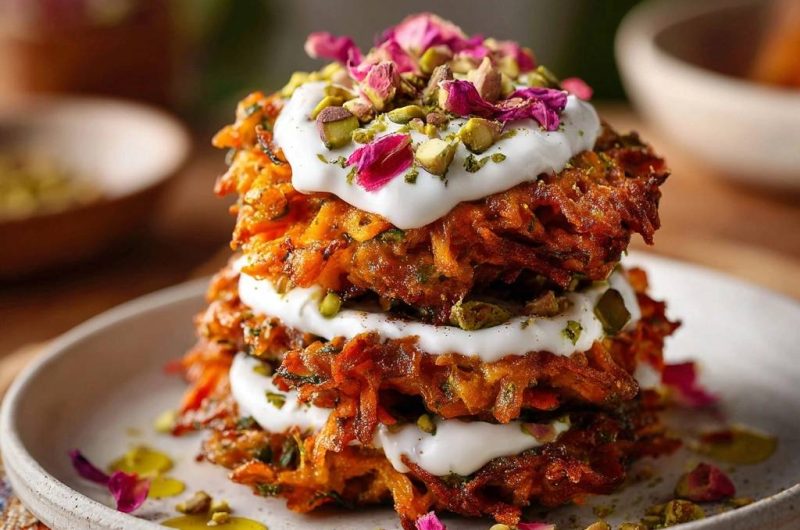
- The Stack: To achieve the visual in the image, create a stack by placing one latke on a plate, topping it with a generous dollop of Greek yogurt, and repeating for three layers.
- Garnish: Top the final layer with more yogurt, a heavy sprinkle of chopped pistachios, and the dried rose petals. Finish with a light drizzle of honey over the stack and the plate before serving immediately.
Notes
- The secret to success is the double-wring method using a kitchen towel. Do not let the batter sit after adding eggs and salt, as moisture will begin to release. Use a wire rack for draining to maintain crispness.