Mastering Garlic Ginger Chicken and Broccoli with Restaurant-Style Velveting
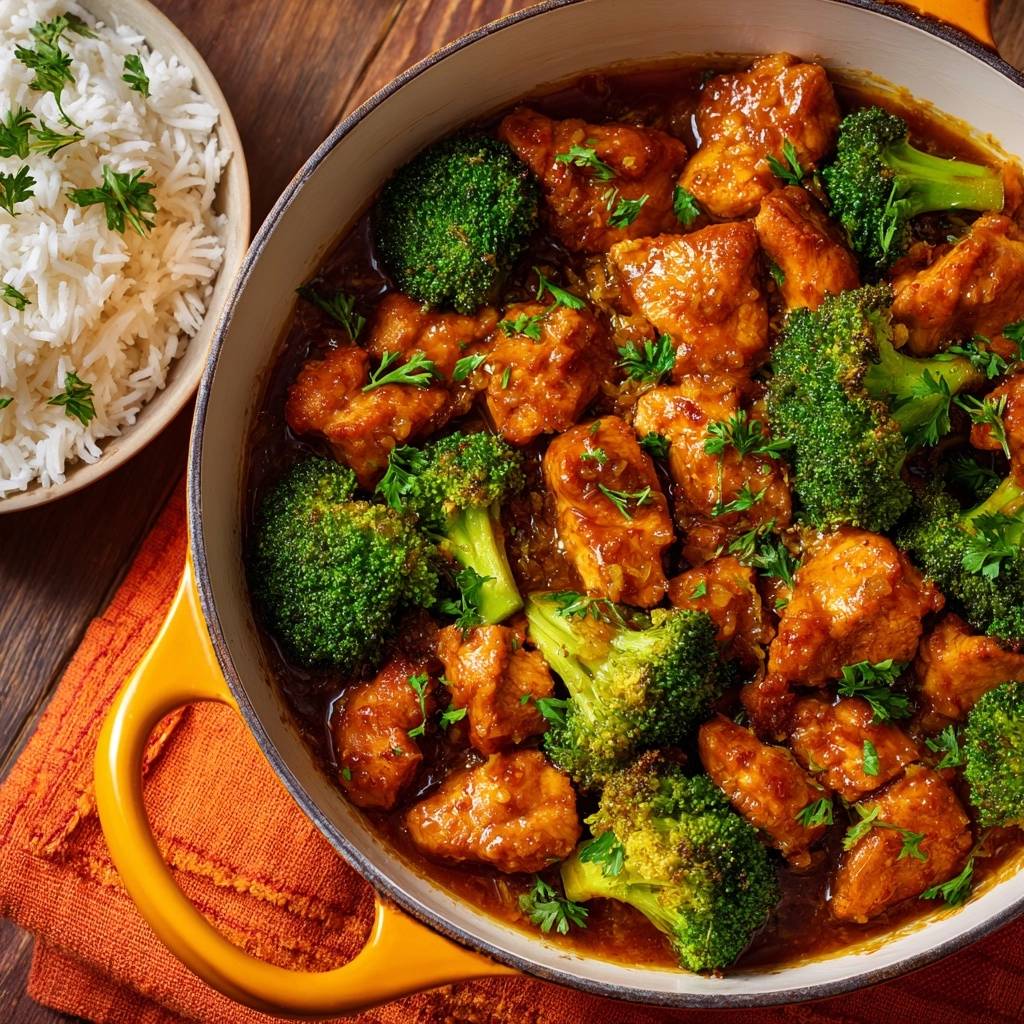
Most home cooks struggle with stir-fry because the chicken turns out dry, chewy, or strangely rubbery. You’ve likely experienced that frustration where the meat feels like a chore to eat despite a flavorful sauce. This Garlic Ginger Chicken and Broccoli solves that problem by using a professional technique that transforms humble chicken breast into something incredibly silky and tender.
The flavor profile hits every sensory high note with the sharp, warming bite of fresh ginger and the mellow, savory sweetness of minced garlic. These aromatics meld into a glossy, umami-rich glaze that clings to every cranny of the chicken and broccoli. It’s a vibrant, deeply satisfying meal that rivals the best high-end takeout you’ve ever had.
The secret to this success is “velveting,” a Chinese cooking method that protects the delicate proteins of the meat. By tossing the chicken in cornstarch before it hits the heat, you create a thin barrier that locks in moisture. This simple step ensures your chicken stays juicy while the exterior develops a beautiful, craggy texture to grab onto that delicious sauce.
The Science of Velveting for Tender Chicken
Velveting isn’t just a fancy term; it’s a chemical process that fundamentally changes how meat reacts to high heat. When you coat chicken pieces in cornstarch, the starch acts as a physical insulator. This barrier prevents the muscle fibers from tightening too quickly and squeezing out their natural juices, which is usually what causes that “rubbery” texture.
Furthermore, the cornstarch coating facilitates a superior Maillard reaction. While plain chicken breast can be difficult to brown without overcooking the center, the starch provides extra surface area for caramelization. This results in a golden-brown, slightly crisp exterior that feels substantial and “meaty” even though the inside remains perfectly soft.
If you compare this to un-coated searing, the difference is night and day. Without the starch, the chicken often releases its moisture into the pan, causing it to boil in its own juices rather than sear. Velveting ensures the moisture stays inside the meat, allowing the outside to get that restaurant-quality crust we all crave.
Essential Components for Garlic Ginger Chicken and Broccoli
Quality ingredients are the backbone of this dish, and fresh aromatics are absolutely non-negotiable. While jarred garlic or powdered ginger are convenient, they lack the volatile oils that provide the signature “zing” of a great stir-fry. Fresh ginger adds a peppery heat, while fresh garlic provides a pungent depth that mellows into sweetness as it hits the oil.
The sauce relies on chicken broth as a savory base, while honey provides the necessary viscosity and shine. Honey doesn’t just sweeten the dish; it helps the sauce reduce into a thick glaze that coats the ingredients rather than pooling at the bottom of the bowl. For the best results, use a high-smoke point oil like vegetable or grapeseed oil. Avoid olive oil here, as its low smoke point can lead to a bitter, burnt flavor at the high temperatures required for a proper sear.
Selecting and Prepping the Broccoli Florets
When shopping for broccoli, look for heads with tight, dark green beads and firm stalks. If you see any yellowing or limp stems, the broccoli is past its prime and will likely turn mushy when cooked. Freshness is key to achieving that vibrant, “snap-back” texture in the final dish.
Uniformity is your best friend during prep. Try to cut your florets into similar sizes so they all finish steaming at the exact same time. Don’t toss those stalks, either! If you peel away the tough outer skin and slice the tender inner core, they add a wonderful extra crunch and help reduce food waste.
Choosing the Right Soy Sauce and Aromatics
The type of soy sauce you choose will dictate the saltiness and color of your glaze. A standard all-purpose soy sauce works perfectly, but if you’re sensitive to salt, a low-sodium version allows you to control the seasoning more precisely. Avoid using “dark” soy sauce as the primary liquid, as it is very intense and can make the dish look overly dark and taste too earthy.
The red pepper flakes are an optional but highly recommended addition. They provide a subtle “back-end” heat that cuts through the richness of the honey and soy. This heat doesn’t overwhelm the ginger; instead, it balances the sweetness and makes the overall flavor profile feel more complex and professional.
Step-by-Step: Achieving the Perfect Sear and Glaze
Success in stir-frying comes down to timing and heat management. You want to have all your ingredients prepped and sitting in bowls next to the stove before you turn on the flame. Once the pan is hot, things move very quickly, and you won’t have time to mince garlic or whisk a sauce mid-cook.
Start by heating your oil until it is shimmering and just starting to show a tiny wisp of smoke. This high heat is essential for the “wok hei” or “breath of the wok” flavor. You should hear a loud, aggressive sizzle the moment the chicken touches the pan. If the sizzle is quiet, your pan isn’t hot enough, and the chicken will steam instead of sear.
Phase 1: The Dry Coating and Initial Sear
After tossing your chicken in the cornstarch, make sure to shake off any massive clumps. When you add the chicken to the pan, spread it out into a single layer. The most important rule here is to leave it alone! Let the chicken sear undisturbed for at least three minutes.
Moving the meat too early prevents the starch from forming a crust and often causes the chicken to stick to the pan. You’ll know it’s ready to flip when the pieces release easily from the surface. You are looking for a transition from a pale, powdery coating to a deep, golden-brown exterior that looks slightly craggy.
Phase 2: The Steam-Fry Technique for Broccoli
Once the chicken is set aside, it’s time for the broccoli. Adding a splash of water and immediately covering the pan with a lid creates a concentrated steam environment. This is the most reliable way to get broccoli that is bright green and “tender-crisp”—meaning it’s cooked through but still has a satisfying snap.
Keep the lid on for only about two minutes. If you go longer, the broccoli will lose its vibrant color and turn a dull, unappetizing grey. As soon as you pull the lid off, the remaining water should evaporate quickly, leaving the broccoli ready to be tossed with the aromatics.
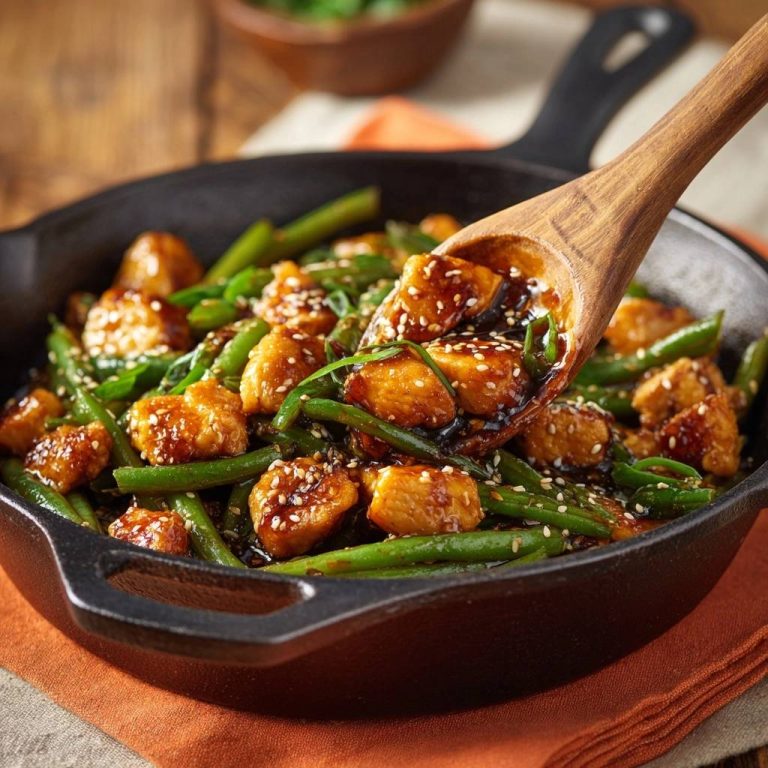
If you enjoy crisp-tender broccoli like this, you will also like the vegetable-rich sticky glazed chicken and veg stir-fry.
Phase 3: Emulsifying the Garlic Ginger Sauce
Push the broccoli to the edges and let the garlic and ginger hit the hot oil in the center. You only need 30 seconds here; you want to smell the “bloom” of the spices without letting the garlic turn brown and bitter. Give your sauce mixture one last whisk to incorporate any cornstarch that settled at the bottom.
Pour the sauce in and watch it closely. As it reaches a vigorous simmer, the cornstarch activates and the liquid will transform from a thin brown juice into a thick, dark, and glossy glaze. This is called the “nappe” stage, where the sauce is thick enough to coat the back of a spoon beautifully.
Avoiding Common Stir-Fry Mistakes
If your sauce turns out too salty, it’s likely because it reduced too much. You can easily fix this by stirring in a tablespoon or two of water or unsalted broth to thin it back out. Always taste your sauce right before serving to ensure the balance of sweet and salty is just right.
Soggy chicken is usually the result of overcrowding the pan. If you put too much meat in at once, the temperature of the pan drops, and the chicken releases moisture faster than it can evaporate. If you’re doubling the recipe, cook the chicken in two separate batches to maintain that high-heat sear.
Lastly, be very careful with the garlic. Because it is minced finely, it can burn in seconds. If your pan seems too hot after steaming the broccoli, take it off the heat for ten seconds before adding the garlic and ginger. This small pause can save the entire dish from a burnt, acrid aftertaste.
Flavor Variations and Ingredient Swaps
This recipe is incredibly adaptable to what you have in your fridge. While chicken breast is classic, you can use boneless, skinless chicken thighs for a richer flavor and even more moisture. Thighs are more forgiving and stay tender even if they stay in the pan a minute too long.
If you aren’t a fan of broccoli, snap peas, sliced bell peppers, or baby corn make excellent substitutes. You can also swap the honey for maple syrup or brown sugar if that’s what you have on hand. To make this dish gluten-free, simply use tamari instead of soy sauce and ensure your cornstarch is certified gluten-free.
Optimal Pairings for a Complete Meal
Long-grain white rice is the traditional choice because its neutral flavor allows the garlic-ginger sauce to shine. However, jasmine rice adds a lovely floral aroma that complements the ginger beautifully. For a heartier option, brown rice or even quinoa provides a nutty contrast to the sweet glaze.
If you want to round out the meal, consider a simple side with some acidity. A quick cucumber salad with rice vinegar and a pinch of sugar provides a refreshing “crunch” that cuts through the richness of the stir-fry. A simple slaw with lime juice also works wonders to cleanse the palate between bites.
Storage, Reheating, and Meal Prep Tips
This dish stores remarkably well in an airtight container for up to three days. However, the broccoli will continue to soften as it sits in the sauce. If you are meal prepping, consider slightly undercooking the broccoli during the steaming phase so it maintains some texture after reheating.
When it’s time to eat, avoid the microwave if possible, as it can make the chicken rubbery. Instead, toss everything into a skillet over medium heat with a tiny splash of water. This helps loosen the glaze and restores that glossy, restaurant-fresh look. The velveted chicken stays surprisingly tender even after a few days in the fridge.
Expert Troubleshooting: Frequently Asked Questions
Can I use frozen broccoli for this recipe?
You can, but it requires a slight adjustment. Frozen broccoli is blanched before freezing, so it releases a lot of water and can become mushy very quickly. Skip the steaming step entirely. Thaw the broccoli first, pat it very dry with paper towels, and toss it into the pan just to warm it through and coat it with the sauce at the very end.
Why is my sauce clumpy instead of smooth?
Clumpy sauce usually happens when the cornstarch isn’t fully dissolved in the cold liquid before being added to the hot pan. Cornstarch settles quickly, so you must give the sauce mixture a vigorous whisk right before pouring it in. If clumps do form, you can sometimes fix it by whisking the sauce rapidly while it simmers, but prevention is much easier.
Can I substitute ground ginger for fresh?
While you can use about 3/4 teaspoon of ground ginger in a pinch, the flavor profile will shift significantly. Ground ginger is more “dusty” and warm, lacking the bright, citrusy, and sharp notes of fresh ginger. If you must use ground, whisk it directly into the sauce mixture rather than sautéing it in the oil to prevent it from burning.
How do I double this recipe without steaming the meat?
To double the recipe, you must work in batches. Cook the chicken in two separate turns to ensure every piece gets a proper sear. If you crowd the pan with 3 lbs of chicken, the temperature will plummet, and you’ll end up with grey, boiled meat. Once both batches are seared, you can combine them at the very end when tossing with the sauce.
Is there a substitute for cornstarch?
Yes, arrowroot powder or potato starch are excellent 1:1 substitutes for cornstarch in both the velveting process and the sauce thickening. They provide a similar glossy finish and a neutral flavor. Avoid using regular flour for the coating, as it will create a gummy, pasty texture rather than the silky “velvet” finish we are looking for.
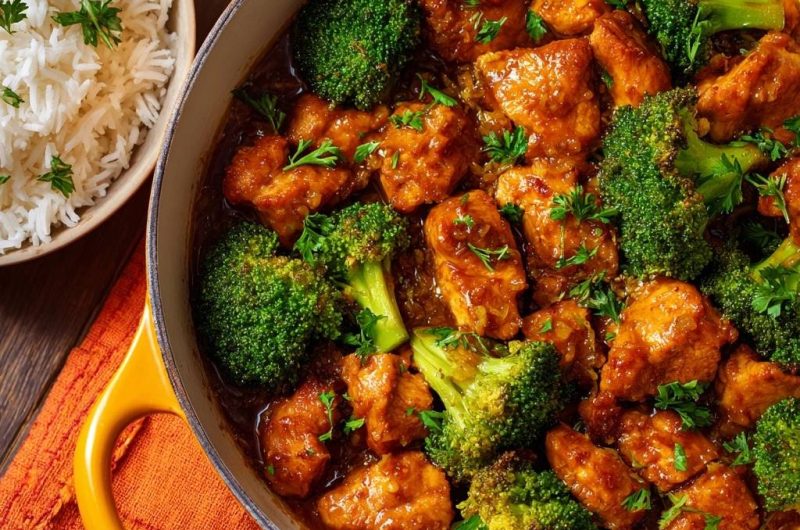
Garlic Ginger Chicken Broccoli
Course: Main CourseCuisine: Asian FusionDifficulty: easy4
servings15
minutes15
minutes380
kcal30
MinutesA flavorful stir-fry featuring tender velveted chicken breast, fresh broccoli florets, and a savory garlic ginger glaze served over white rice.
Ingredients
1.5 lbs chicken breast, cut into 1-inch bite-sized pieces
2 tablespoons cornstarch (divided: 1.5 tbsp for chicken, 0.5 tbsp for sauce)
3 tablespoons vegetable oil (divided)
3 cups fresh broccoli florets
4 cloves garlic, minced
1 tablespoon fresh ginger, grated
1/4 cup soy sauce
3 tablespoons honey or brown sugar
1/2 cup chicken broth
1 teaspoon sesame oil
1/2 teaspoon red pepper flakes (optional)
Fresh parsley, chopped for garnish
Cooked long-grain white rice for serving
Directions
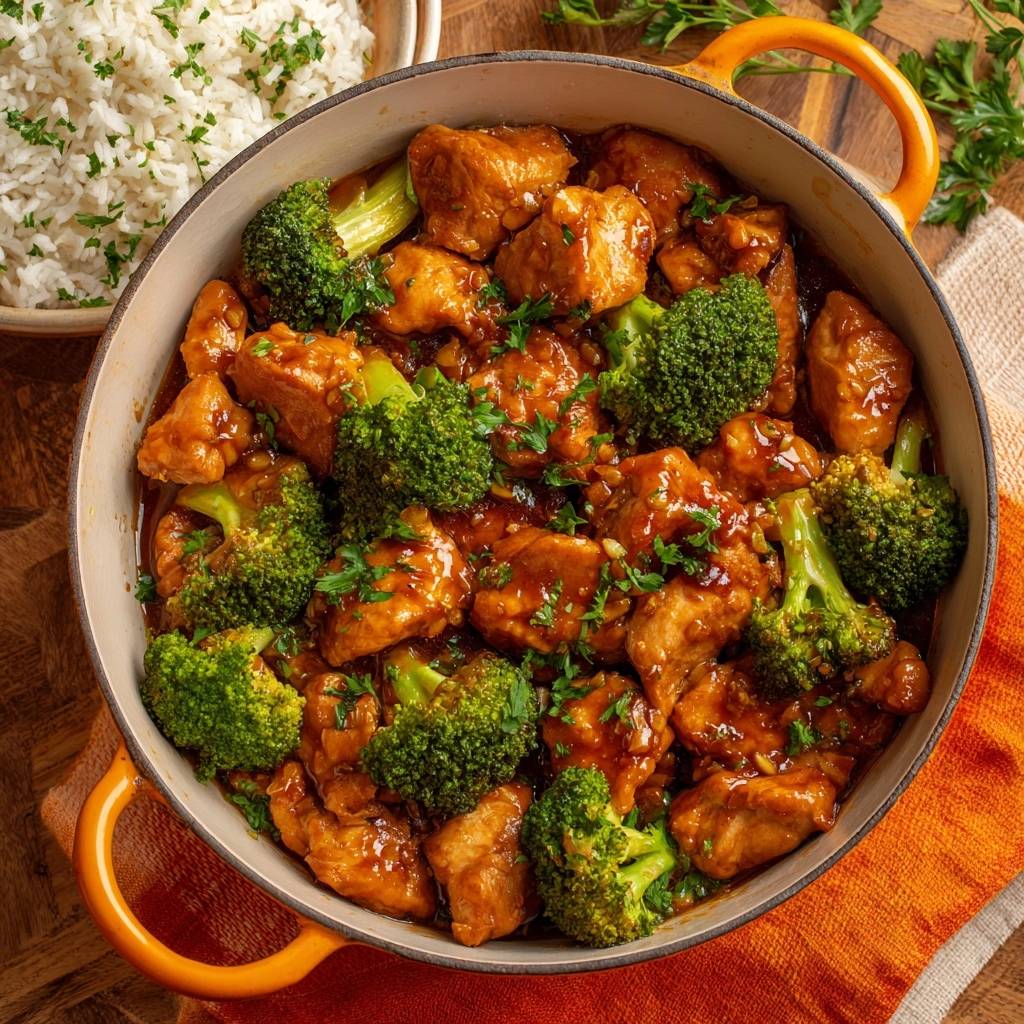
- Velvet the Chicken: Place the chicken pieces in a bowl and toss thoroughly with 1.5 tablespoons of cornstarch and a pinch of salt until every piece is evenly coated in a dry, powdery layer. This is the essential step to ensure the meat stays tender and develops the golden crust seen in the image.
- Prepare the Glaze: In a small bowl, whisk together the chicken broth, soy sauce, honey, sesame oil, and the remaining 0.5 tablespoon of cornstarch. Ensure the cornstarch is fully dissolved to prevent lumps.
- Sear the Chicken: Heat 2 tablespoons of vegetable oil in a large skillet or dutch oven over medium-high heat until shimmering. Add the chicken in a single layer. Let it sear undisturbed for 3 minutes to develop a deep golden-brown crust. Flip and cook for another 2 minutes until nearly cooked through. Remove chicken from the pan and set aside on a plate.
- Steam the Broccoli: Add the remaining tablespoon of oil to the same pan. Add the broccoli florets and 2 tablespoons of water. Immediately cover with a lid for 2 minutes to steam the broccoli until it is bright green and tender-crisp.
- Aromatics: Remove the lid and push the broccoli to the sides. Add the minced garlic, grated ginger, and red pepper flakes to the center. Saute for 30 seconds until fragrant.
- Thicken the Sauce: Give the sauce mixture a quick whisk and pour it into the pan. Bring to a vigorous simmer. Stir constantly for 1 to 2 minutes as the sauce reduces and transforms into a thick, dark, glossy glaze.
- Combine: Return the seared chicken (and any accumulated juices) to the pan. Toss everything together for 1 minute until the chicken is fully glazed and the sauce is bubbling.
- Garnish and Serve: Garnish generously with fresh chopped parsley. Serve immediately in the pan or over warm bowls of fluffy white rice.
Notes
- The secret to the tender texture is velveting the chicken with cornstarch. Ensure the pan is hot before searing to develop a golden crust.