Mastering Mediterranean Vegetable Couscous Without Mushy Grains
Most people treat couscous like a secondary thought, tossing it into boiling water and hoping for the best. However, the result is usually a clumped, soggy mess that lacks any real character or bite. If you have ever felt disappointed by a bland, mushy grain salad, you are not alone, but there is a better way to handle these tiny semolina pearls.
Mediterranean cuisine celebrates the grain by keeping it light, airy, and distinct. This recipe focuses on a specific “skyscraper” technique that ensures every single grain remains separate while absorbing the bright flavors of lemon and herbs. By mastering the hydration ratio, you can turn a simple pantry staple into a restaurant-quality centerpiece.
The secret to success lies in a professional trick: coating the dry grains in oil before they ever touch the liquid. This creates a waterproof barrier that prevents the starch from turning into a sticky paste. Once you try this method, you will never go back to the old “boil and stir” way again.
The Science of Non-Sticky Mediterranean Vegetable Couscous
Couscous is essentially tiny bits of toasted semolina flour, which means it behaves more like pasta than rice. When you hit dry starch with boiling water, the exterior of the grain wants to gelatinize immediately. If the grains are touching when this happens, they fuse together into those frustrating lumps we all want to avoid.
By using the “oil barrier” technique, you are essentially insulating each grain. When the boiling vegetable broth hits the bowl, the oil prevents the grains from sticking to their neighbors. This allows the steam to penetrate the center of the grain without creating a gummy exterior. It is a simple bit of chemistry that makes a massive difference in the final mouthfeel.
In addition to the oil, we use turmeric in the steaming liquid. While many think of turmeric only for its health benefits, here it serves two culinary purposes. Firstly, it provides that iconic, vibrant golden hue that makes the salad pop on the plate. Secondly, it adds a very subtle earthy depth that bridges the gap between the sweet bell peppers and the salty feta cheese.
Essential Components for a Vibrant Grain Salad
Quality ingredients are the backbone of this dish because there is nowhere for mediocre flavors to hide. Instead of using plain water, always reach for a high-quality vegetable broth. The grains act like tiny sponges, and if you hydrate them with seasoned broth, the flavor is baked right into the core of the salad.
When it comes to the vegetables, the English cucumber is your best friend. Unlike standard field cucumbers, the English variety has a thinner skin and far fewer seeds. This is crucial because the watery seeds of a regular cucumber will leak moisture into your fluffed grains, turning your masterpiece into a soggy bowl within an hour.
The balance of the dish comes from the contrast between the crunch of fresh peppers and the creamy, briny punch of the olives and feta. Use a firm feta that you crumble yourself rather than the pre-crumbled tubs. Freshly crumbled cheese has a much better moisture content and a cleaner tang that cuts through the richness of the olive oil.
Selecting the Right Semolina Grade
This recipe is specifically designed for Moroccan-style couscous, which is the smallest, “instant” variety found in most US grocery stores. It is important to distinguish this from Israeli (pearl) couscous or Lebanese (moghrabieh), which are much larger and require actual simmering on the stove. The 1:1 hydration ratio used here only works for the fine Moroccan grade.
The Role of High-Phenol Olive Oil
Extra virgin olive oil is not just a cooking fat in this recipe; it is a structural component. A high-quality, peppery oil carries the lemon acidity across your palate and keeps the vegetables looking glossy and fresh. Because we aren’t cooking the oil at high heat, its delicate floral notes remain intact, providing a luxurious finish to every bite.
Step-by-Step: The Hydration and Fluffing Process
The most important part of this process is the five-minute rest period. Once you pour that boiling broth over your oiled grains, you must cover the bowl immediately. Use a tight-fitting lid or plastic wrap to ensure no steam escapes. This trapped heat is what gently swells the grains to their perfect texture.
Follow the “No-Peeking” rule strictly. Every time you lift the lid to check on the progress, you release the very steam needed to finish the job. Set a timer for exactly five minutes. During this time, the grains are absorbing the liquid and the turmeric, transforming from hard yellow bits into soft, fluffy pearls.
After the timer goes off, the way you handle the grains determines the final texture. If you go in with a heavy hand, you will crush the delicate structure you just built. This is the moment where patience and the right tools become your greatest assets in the kitchen.
The Pre-Hydration Oil Rub Technique
Before adding any liquid, spend a minute rubbing the olive oil into the dry couscous. You can use a fork, but using your fingertips is actually more effective. You are looking for a specific visual cue: every single grain should be lightly glistening and look like wet sand. If you see dry, matte patches, keep mixing until the oil is evenly distributed.
Why You Must Use a Metal Fork
Never use a spoon to fluff your couscous. A spoon has a wide surface area that compresses the grains, essentially mashing them together. A metal fork, however, acts like a series of tiny rakes. Use a scraping motion across the top layer, gradually working your way down to the bottom of the bowl. This aerates the mixture and separates the grains without bruising them.
Prepping the Mediterranean Vegetable Medley
Uniformity is the secret to a professional-looking salad. When you dice your yellow and red bell peppers, aim for pieces roughly the size of a chickpea. This ensures that every forkful has a balanced mix of grain, vegetable, and cheese. It also makes the salad much easier to eat, as the vegetables won’t tumble off the fork.
Take your time with the knife work. Sharp, clean cuts on the cucumber and peppers prevent the vegetables from “weeping” their juices. When vegetables are bruised by a dull knife, they lose their structural integrity faster, which can lead to a watery salad if it sits for more than thirty minutes.
Managing Moisture in Fresh Produce
Temperature control is a major factor in maintaining texture. You must let the fluffed couscous cool for at least five to ten minutes before you even think about adding the vegetables. If you toss cold, crisp cucumbers into steaming hot grains, the residual heat will wilt the produce instantly. This “wilt factor” is the primary cause of soggy Mediterranean salads.
The Brine Element: Olives and Feta
The olives and feta provide the necessary salt to balance the sweetness of the peppers. If you find your olives are particularly salty, give them a quick rinse in cold water before slicing. This allows you to control the sodium levels more precisely. The creaminess of the feta acts as a beautiful foil to the snap of the raw peppers, creating a complex mouthfeel.
Flavor Variations and Regional Swaps
Once you master the base technique, you can easily pivot the flavor profile to suit your mood. For a Levantine twist, try adding a handful of fresh mint, some bright pomegranate arils, and a dusting of sumac. The sumac adds a unique, raisiny tartness that complements the lemon juice perfectly.
If you want to turn this side dish into a hearty main event, a protein boost is the way to go. Stirring in a can of rinsed chickpeas or a handful of toasted pine nuts adds both texture and staying power. The chickpeas soak up the dressing just as well as the grains do, making for a very satisfying meal.
For those who prefer a deeper, more mellow flavor, try a roasted version. Instead of raw bell peppers, use jarred roasted red peppers or char your own over a flame. The smoky sweetness of the roasted peppers creates a completely different experience than the bright, crunchy original version.
What to Serve with Mediterranean Vegetable Couscous
This salad is incredibly versatile and pairs beautifully with a variety of proteins. A simple grilled lemon-herb chicken breast is a classic choice, as the citrus notes in both dishes harmonize perfectly. If you prefer seafood, a piece of roasted sea bass or snapper provides a light, flaky contrast to the textured grains.
For a fully plant-based spread, serve the couscous alongside a dollop of creamy hummus and some warm, toasted pita bread. The acidity of the lemon dressing in the couscous is excellent for cutting through the richness of tahini-based dips. It also works well as a base for roasted eggplant or zucchini spears.
Troubleshooting Common Couscous Failures
Even with the best intentions, things can sometimes go wrong in the kitchen. The most common issue is ending up with grains that are still slightly crunchy in the center. This usually happens if your broth wasn’t at a rolling boil or if your bowl wasn’t sealed tightly enough to hold the heat.
Another frequent headache is an over-salted salad, often caused by a particularly salty batch of feta or olives. If you find the flavor too aggressive, don’t panic. You can easily dilute the saltiness by adding more fresh lemon juice or tossing in extra diced raw cucumber. The extra moisture and acid will help neutralize the salt.
Fixing Grains That Are Still Crunchy
If your grains are still hard after five minutes, you can perform a “rescue steam.” Sprinkle a tablespoon of hot water over the grains, cover the bowl tightly again, and microwave it for just 30 seconds. Let it sit for another two minutes. This extra burst of moisture and heat is usually enough to soften the centers without ruining the texture.
Correcting Over-Salted Salads
If the brine from the olives has taken over, adding a pinch of sugar can sometimes help balance the palate. However, the best fix is usually volume. Adding more bulk—like extra chopped parsley or another half of a bell pepper—spreads the salt across more ingredients, making it much more palatable.
Make-Ahead Strategy and Storage Logistics
This is one of those rare dishes that actually tastes better the next day. As the salad sits in the fridge, the grains continue to absorb the lemon juice and olive oil, deepening the overall flavor profile. If you are making this for a party, feel free to prep it 24 hours in advance.
When you are ready to serve leftovers, the grains might have tightened up a bit in the cold. To refresh the dish, simply add a fresh squeeze of lemon juice and a tiny drizzle of olive oil. Give it a gentle fluff with a fork to wake up the flavors. Note that this dish does not freeze well; the high water content in the cucumbers and peppers will cause them to turn to mush once thawed.
Expert Tips for Professional Presentation
Presentation is the final step in elevating this dish. Instead of serving it in a deep bowl where the weight of the ingredients can crush the bottom layer, use a wide, shallow platter. This keeps the salad looking voluminous and prevents the dressing from pooling at the bottom.
Save a bit of your feta and parsley for the very end. After you have tossed the salad and placed it on the platter, sprinkle the remaining cheese and herbs over the top. This ensures that the white of the feta and the bright green of the parsley stay distinct and vibrant, rather than getting stained yellow by the turmeric-tinted grains.
How do I prevent my couscous from becoming a solid block?
The most effective way to prevent clumping is to coat the dry grains in olive oil before adding any liquid. This creates a physical barrier that stops the starches from sticking together. Additionally, always use a fork to fluff the grains rather than a spoon, as the tines of the fork separate the grains while a spoon smashes them.
Can I use water instead of vegetable broth?
You can use water, but you will lose a significant amount of flavor. Couscous is relatively bland on its own, so the hydration phase is your best opportunity to infuse it with seasoning. If you must use water, be sure to increase the salt and perhaps add a bit more lemon juice or dried herbs to compensate for the lack of savory base notes.
Why is my salad watery the next day?
This usually happens because of the “wilt factor” or using the wrong type of cucumber. If you add vegetables to the couscous while it is still hot, the heat draws moisture out of the produce. Furthermore, the seeds in standard cucumbers are very watery; using an English cucumber and removing any excess seeds will keep your salad crisp and dry for days.
What is the best way to reheat leftover couscous?
Mediterranean vegetable couscous is best served at room temperature or cold. If you prefer it warm, do not microwave the entire salad, as the cucumbers will become soft and unappealing. Instead, you can warm the grains separately before adding the fresh vegetables, or simply let the cold salad sit on the counter for 20 minutes to take the chill off.
Can I substitute the turmeric?
If you don’t have turmeric, you can omit it without changing the texture of the dish. The turmeric is primarily for that beautiful golden color. For a different flavor profile, you could substitute it with a pinch of saffron threads for a more floral aroma, or a bit of smoked paprika for a reddish tint and a hint of woodsy flavor.
Is this recipe suitable for meal prep?
Yes, this is an excellent meal prep option. It stays fresh in an airtight container in the refrigerator for up to four days. Because it doesn’t require reheating, it is a perfect grab-and-go lunch. Just remember to give it a quick toss with a fork before eating to redistribute any dressing that may have settled at the bottom.
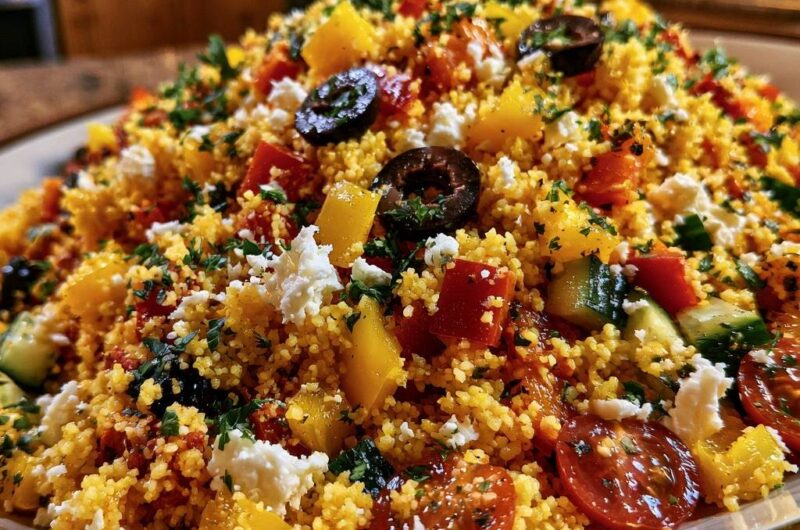
Mediterranean Vegetable Couscous
Course: SaladCuisine: MediterraneanDifficulty: easy4
servings15
minutes5
minutes20
Minutes325
kcalMediterranean
Ingredients
1.5 cups dry couscous
1.5 cups boiling vegetable broth
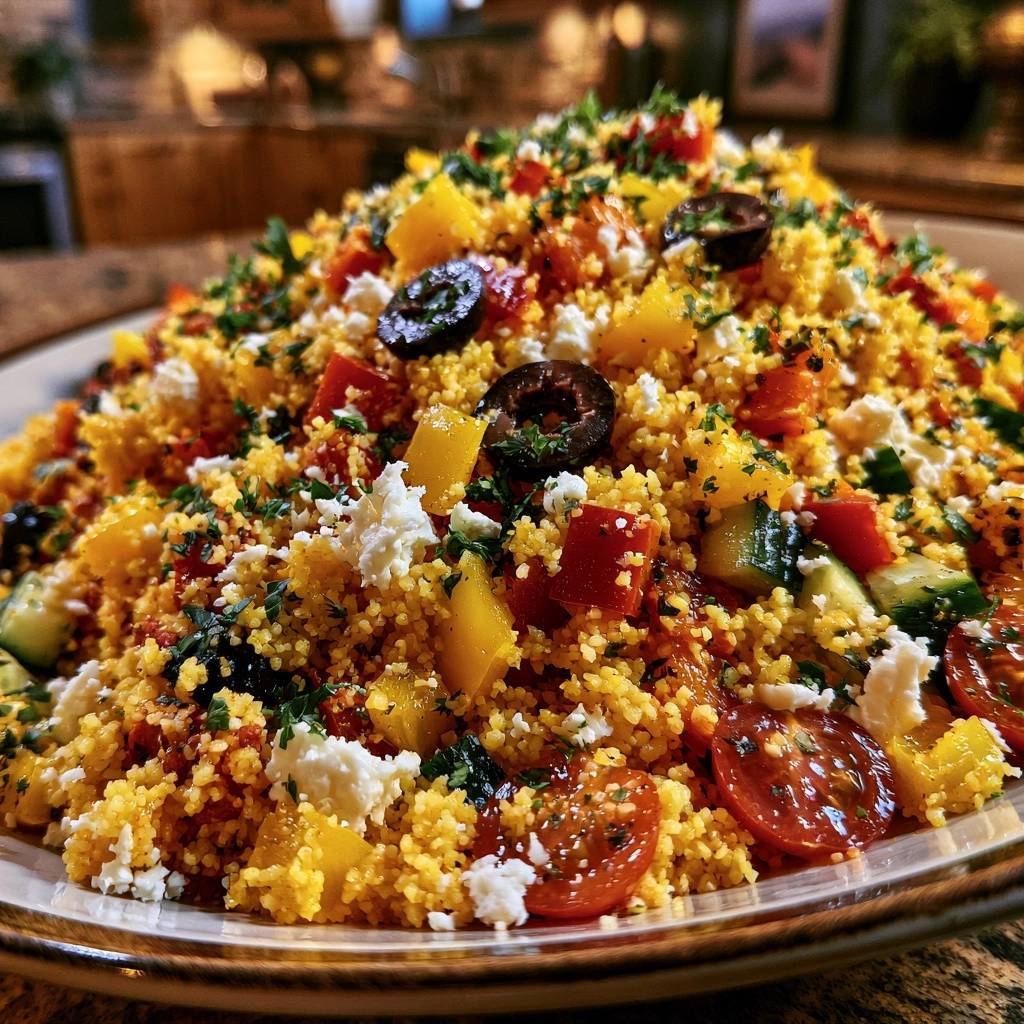
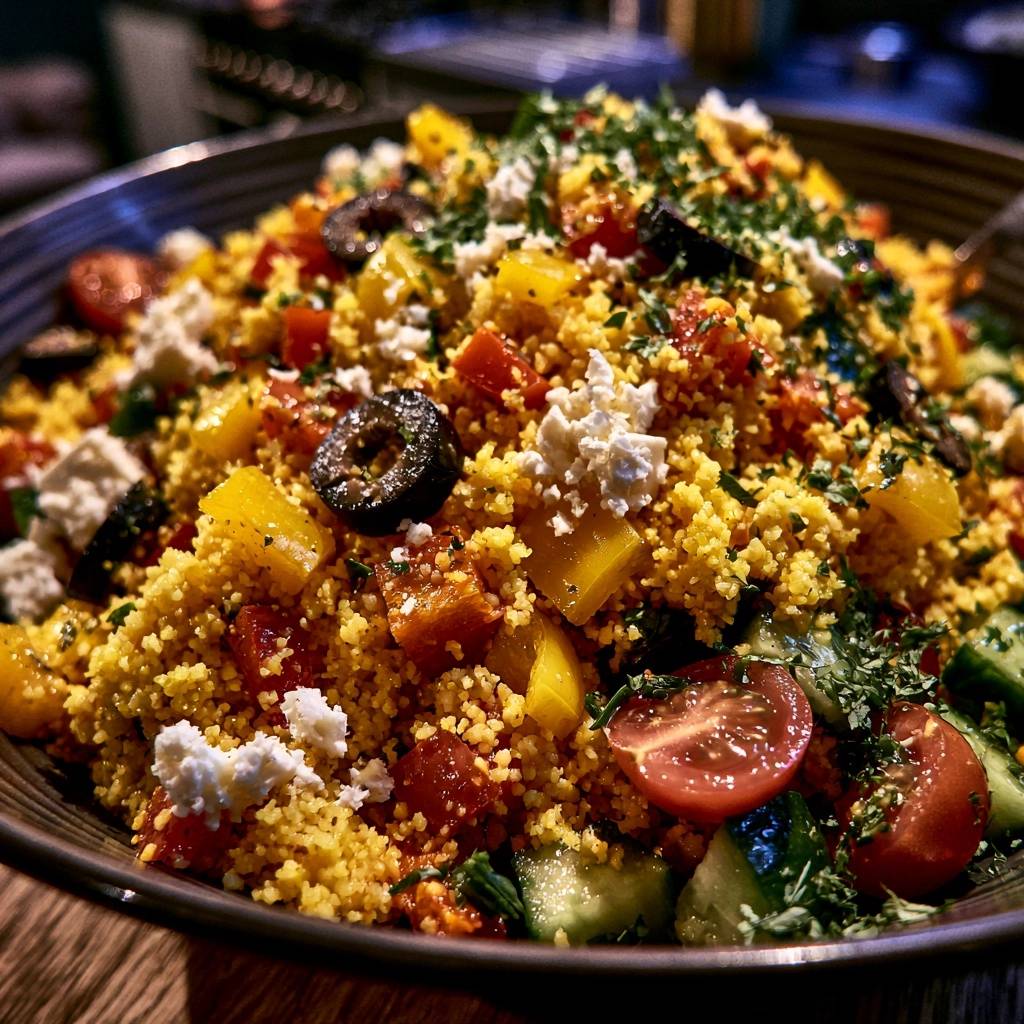
1/2 teaspoon turmeric (for the vibrant golden color shown in the image)
1 cup cherry tomatoes, halved
1 yellow bell pepper, diced
1 red bell pepper, diced
1/2 English cucumber, diced
1/2 cup black olives, sliced into rings
1/2 cup crumbled feta cheese
1/4 cup fresh parsley, finely chopped
4 tablespoons extra virgin olive oil (divided)
1 tablespoon lemon juice
1/2 teaspoon salt
1/4 teaspoon black pepper
Directions
- To solve the mushy grain problem, place the dry couscous in a large heat-proof bowl. Add the turmeric and 1 tablespoon of the olive oil. Use your fingers or a fork to rub the oil into the dry grains until every grain is lightly glistening. This oil barrier prevents the starch from gelatinizing and sticking together once the liquid is added.
- Pour the boiling vegetable broth over the oiled couscous. Immediately cover the bowl tightly with plastic wrap or a heavy lid to trap the steam. Let it sit undisturbed for exactly 5 minutes.
- While the couscous steams, whisk together the remaining 3 tablespoons of olive oil, lemon juice, salt, and pepper in a small bowl to create the dressing.
- This is the critical step: Remove the cover and use a large metal fork to scrape the top layer of grains, gradually working your way down. Do not use a spoon, which smashes the grains. Fluff vigorously until the grains are light, individual, and vibrant yellow.
- Allow the fluffed couscous to cool for at least 5-10 minutes before adding the vegetables. Adding them to steaming hot grains will cause the cucumbers and peppers to wilt and release water, making the dish soggy.
- Once cooled, fold in the halved tomatoes, diced peppers, cucumber, sliced olives, and most of the parsley.
- Drizzle the dressing over the salad and toss gently.
- Transfer to a serving platter and top with the crumbled feta cheese and the remaining fresh parsley to match the visual presentation. Serve at room temperature or chilled.
Notes
- The secret to non-mushy couscous is coating the dry grains in olive oil before adding boiling liquid and using a fork instead of a spoon to fluff.