Mastering Slow-Simmered BBQ Pulled Beef for Maximum Tenderness
We have all been there. You wait eight long hours for a roast to finish, your kitchen smells like a dream, but the meat comes out like a ball of dry, flavorless yarn. It is heartbreaking to put in that much time only to end up with beef that requires a gallon of water just to swallow.
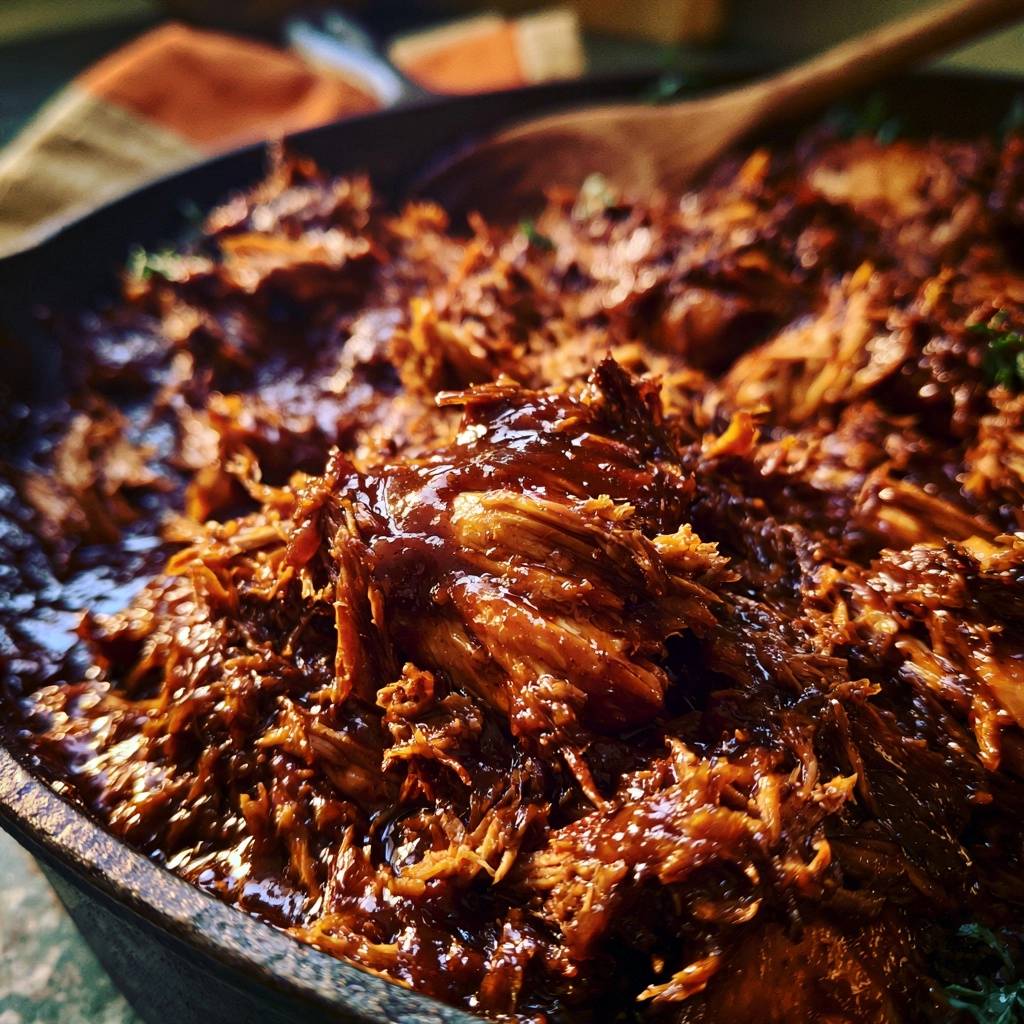
True Slow-Simmered BBQ Pulled Beef should be a different experience entirely. It should be succulent, glossy, and so tender that it practically melts when it hits your tongue. We aren’t just making a pot roast here; we are using a specific braising technique to turn a humble, tough cut of meat into a restaurant-quality masterpiece.
The secret to avoiding that dreaded stringy texture lies in the final glaze reduction. Most people just dump the meat back into the watery slow cooker juices. Instead, you must reduce those juices into a thick lacquer that coats every single fiber. This creates a moisture barrier that keeps the beef juicy long after it leaves the pot.
The Science of Succulent Braised Beef
When you cook a chuck roast, you are dealing with a lot of connective tissue and collagen. If you cook it quickly, those tissues tighten up and become rubbery. However, when you hold the meat at a steady, low temperature, a beautiful chemical transformation occurs.
The collagen slowly breaks down into gelatin. This gelatin is what gives the beef that silky, lip-smacking mouthfeel. You need to hit an internal temperature between 190°F and 205°F for this to happen fully. At this stage, the muscle fibers literally lose their grip on each other, allowing the meat to shred with zero resistance.
Why Low Heat Beats High Heat Every Time
It is tempting to toggle that slow cooker to “high” to save a few hours, but don’t do it. High heat causes the muscle fibers to seize up and squeeze out their internal moisture like a wrung-out sponge. Once that moisture is gone, no amount of bottled sauce can truly fix the internal dryness.
Low heat allows the fat to render slowly and the tissues to relax. By keeping the temperature gentle, you ensure the moisture stays trapped within the meat. This patience results in a finished product that is structurally sound but incredibly soft to the bite.
Essential Components for Slow-Simmered BBQ Pulled Beef
Quality ingredients make a massive difference when the list is this short. You want a thick, tomato-based BBQ sauce that has enough body to stand up to the beef broth. Avoid thin, watery sauces that will just disappear into the cooking liquid.
Apple cider vinegar is your secret weapon in this recipe. The acidity cuts through the heavy fats and balances the sugar in the BBQ sauce. Without it, the dish can feel one-note and overly sweet. The vinegar brightens the entire profile and helps tenderize the outer layers of the beef during the long simmer.
Selecting the Right Cut: Beyond the Chuck Roast
Chuck roast is the gold standard because of its excellent fat-to-lean ratio. The marbling throughout the meat acts as an internal basting system. As the fat melts, it keeps the surrounding protein hydrated and flavorful.
If you can’t find chuck, beef shanks or brisket are solid alternatives. Just keep in mind that brisket is leaner and might require a slightly longer cook time to reach the same level of tenderness. Always look for a cut with visible white streaks of fat running through the muscle.
The Aromatics: Building a Flavor Foundation
Yellow onions and fresh garlic aren’t just fillers; they provide the aromatic backbone of the sauce. As the onions cook down for eight hours, they almost dissolve, adding a natural sweetness and thickness to the braising liquid.
When you sear the beef, it leaves behind “fond,” those little brown bits stuck to the bottom of the pan. When you toss the onions in right after, they pick up all that concentrated beef flavor. This step ensures your sauce has depth and complexity rather than tasting like it came straight out of a jar.
Step-by-Step: Searing and Prepping the Beef
Before the beef ever touches the pan, you must pat it completely dry with paper towels. If the surface is wet, the meat will steam instead of sear. You want a hard, dark brown crust to form, which is known as the Maillard reaction. This crust is where the deep, savory “umami” flavor lives.
Heat your oil until it is shimmering and almost smoking. Lay the beef chunks in and leave them alone for at least four minutes. Don’t poke or prod them. You are looking for a deep mahogany color, not just a light tan. This sear is the first layer of flavor for your Slow-Simmered BBQ Pulled Beef.
Deglazing the Skillet for Maximum Depth
Once the beef is out, the pan will look a bit messy, but that is where the gold is. Add your onions and use a wooden spoon to scrape the bottom of the skillet. The moisture from the onions will loosen the flavorful crust.
This process, called deglazing, incorporates all that roasted beef flavor back into the aromatics. By the time you add the garlic, the onions should be soft and stained brown from the beef drippings. This mixture creates a savory bed for the roast to sit on in the slow cooker.
The Long Game: Slow Cooker Management
Layering matters when you are setting up the slow cooker. Place the onions and garlic at the very bottom so they are submerged in the liquid. Set the seared beef chunks on top of them. This prevents the bottom of the meat from scorching and allows the steam to rise through the beef.
Whisk your broth, BBQ sauce, and spices in a separate bowl before pouring them over the meat. This ensures the smoked paprika and onion powder are evenly distributed. If you just dump the spices on top, they can clump together and create bitter pockets of flavor.
Resisting the Urge to Peek
It is incredibly tempting to lift the lid and check the progress around hour six. Don’t do it! Every time you open the lid, you release the built-up steam and drop the internal temperature significantly.
Opening the lid can add twenty to thirty minutes to your total cook time. The slow cooker relies on a consistent, sealed environment to break down those tough fibers. Trust the process and keep the lid shut until the timer is completely up.
The Double-Sauce Technique for Glossy Texture
This is the step that separates amateur cooks from the pros. Most people shred the meat and serve it as-is. We use a double-sauce technique. The first stage happens in the slow cooker, where the flavors penetrate the meat. The second stage happens on the stovetop to create a sticky, professional finish.
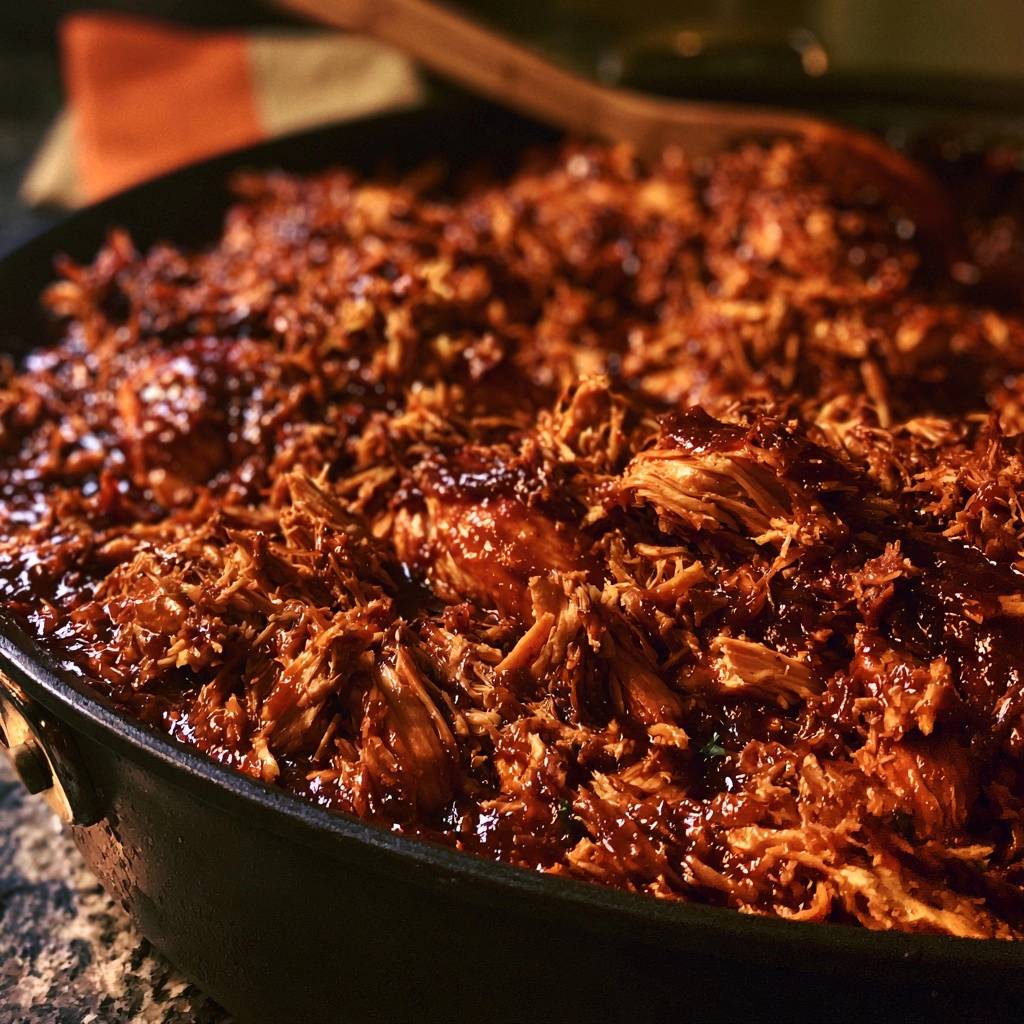
By reducing the cooking liquid, you are concentrating the flavors and creating a natural glaze. When you toss the shredded beef back into this reduction, it clings to every strand. This prevents the meat from drying out the moment it hits the air on someone’s plate.
Reducing the Braising Liquid to a Glaze
Strain the liquid from the slow cooker into your cast iron skillet. Bring it to a vigorous boil. You want to see big, popping bubbles. As the water evaporates, the sauce will darken and thicken into a syrupy consistency.
You know it’s ready when it reaches “nappe” consistency, which means it thickly coats the back of a spoon. Once you hit that point, fold in the shredded beef and the remaining fresh BBQ sauce. This combination of concentrated braising liquid and fresh sauce creates a multi-dimensional flavor profile.
Troubleshooting Common Pulled Beef Obstacles
If your beef is still tough after eight hours, it simply hasn’t cooked long enough. Every piece of meat is different, and some have more stubborn connective tissue than others. Don’t turn up the heat; just give it another thirty to sixty minutes on low.
If your sauce ends up too salty, you can balance it with a tiny pinch more of brown sugar or a splash of water. If it is too sweet, add another teaspoon of apple cider vinegar. The goal is a perfect balance of savory, sweet, and tangy.
Preventing the “Dry Yarn” Texture
Dryness usually happens because the meat was shredded and then left to sit without enough sauce. Beef fibers act like little straws; they will wick up whatever moisture is around them. If they are sitting in a dry bowl, they will lose their internal juices to the air.
Always keep your shredded beef tossed in the glaze until the very second you serve it. The gelatin-rich reduction acts as a protective barrier. If you aren’t serving it immediately, keep it covered tightly to prevent evaporation.
Optimal Pairings for Slow-Simmered BBQ Pulled Beef
Since this beef is incredibly rich and savory, you want sides that offer a crisp, acidic contrast. A vinegar-based coleslaw is the perfect partner. The crunch of the cabbage and the tang of the dressing cut right through the heavy fats of the beef.
For serving, toasted brioche buns are excellent because they are sturdy enough to hold the juicy meat without falling apart. If you want something different, try serving the beef over creamy polenta or even inside a charred corn tortilla with some pickled red onions on top.
Storage and Reheating for Leftover Quality
If you have leftovers, store the beef in an airtight container and make sure it is completely submerged in its own sauce. This prevents oxygen from reaching the meat, which can cause it to develop an “off” flavor. It will stay fresh in the fridge for up to four days.
When reheating, avoid the microwave if possible, as it can make the beef rubbery. Instead, place the beef and sauce in a small saucepan over low heat. Add a splash of beef broth or water to loosen the glaze, and heat it slowly until it is shimmering again.
Freezing Instructions for Batch Cooking
This recipe freezes beautifully. In fact, many people think it tastes even better after being frozen because the flavors have more time to meld. Use a heavy-duty freezer bag and squeeze out as much air as possible before sealing.
You can freeze the pulled beef for up to three months. To serve, thaw it overnight in the refrigerator. Reheat it on the stovetop as mentioned above, adding a little extra BBQ sauce if needed to bring back that glossy, fresh-cooked look.
Expert Tips for Professional Results
For an extra layer of flavor, try using a high-quality smoked paprika or even a pinch of chipotle powder if you like a little heat. The smokiness complements the beef broth and mimics the flavor of a backyard smoker.
Let the meat rest for about ten minutes after you shred it but before you toss it in the final glaze. This allows the fibers to relax slightly so they can better absorb the concentrated reduction. It is a small step that makes a noticeable difference in the final texture.
Frequently Asked Questions
How do I store leftovers?
Store the beef in an airtight container in the refrigerator for up to 4 days. Ensure the meat is well-coated in its sauce to prevent it from drying out. For longer storage, you can freeze it in a freezer-safe bag for up to 3 months. Thaw in the fridge before reheating on the stovetop over low heat.
Why is my pulled beef still tough after 8 hours?
Toughness usually means the collagen hasn’t fully broken down into gelatin yet. Every cut of beef is different, and some require more time. Simply put the lid back on and continue cooking on low for another 45 to 60 minutes. Do not increase the heat to high, as this will dry out the meat fibers.
Can I use a different cut of meat?
While chuck roast is ideal due to its fat content, you can use beef brisket or beef shanks. Avoid lean cuts like sirloin or round roast, as they lack the necessary fat and connective tissue to become tender during a long braise. They will likely turn out dry and crumbly rather than silky and shredded.
What if I don’t have a slow cooker?
You can make this in a heavy Dutch oven. Follow the searing and prepping steps exactly the same way. Instead of the slow cooker, place the covered Dutch oven in a 275°F oven for about 4 to 5 hours, or until the meat shreds easily with a fork. Check the liquid levels occasionally to ensure it hasn’t dried out.
Can I skip the searing step?
Technically yes, but you will lose a significant amount of flavor. Searing creates the Maillard reaction, which provides the deep, savory base for the sauce. Without searing, the meat will have a “boiled” flavor and the sauce will be much thinner and less complex. It is worth the extra 10 minutes of effort.
How do I fix a sauce that is too thin?
If the sauce is too thin after the reduction step, continue boiling it in the skillet for a few more minutes. If it still won’t thicken, you can whisk a teaspoon of cornstarch with a tablespoon of cold water and stir it into the boiling sauce. It should thicken almost instantly. However, reducing the natural juices is always the tastier option.
Slow-Simmered BBQ Pulled Beef
Course: Main CourseCuisine: AmericanDifficulty: easy8
servings15
minutes8
hours480
Minutes345
kcalAmerican
Ingredients
3 pounds beef chuck roast, cut into 3 large chunks
2 tablespoons vegetable oil
1 large yellow onion, thinly sliced
3 cloves garlic, minced
1 cup beef broth
1.5 cups high-quality BBQ sauce (thick, tomato-based)
2 tablespoons apple cider vinegar
1 tablespoon brown sugar
1 teaspoon smoked paprika
1 teaspoon onion powder
Salt and black pepper to taste
Fresh parsley for garnish
Directions
- Pat the beef chunks completely dry with paper towels. Season heavily with salt and pepper. Heat oil in a heavy cast iron skillet over high heat until shimmering. Sear the beef for 4 to 5 minutes per side until a deep, dark brown crust forms. This Maillard reaction provides the deep color and base flavor for the sauce.
- Remove the beef and set aside. In the same pan, lower heat to medium and add onions. Cook for 5 minutes until softened, scraping up the brown bits (fond) from the bottom of the pan. Add garlic and cook for 1 minute.
- Transfer the onions and garlic to a slow cooker. Place the seared beef on top.
- In a small bowl, whisk together the beef broth, 1 cup of the BBQ sauce (reserve the rest for the final glaze), apple cider vinegar, brown sugar, paprika, and onion powder. Pour this over the beef.
- Cover and cook on LOW for 8 to 9 hours. Avoid the high setting; high heat causes muscle fibers to seize and squeeze out moisture. Low heat allows the collagen to melt into gelatin, which is the key to “juicy” pulled meat.
- Once the beef is fork-tender, remove it to a large bowl. Use two forks to shred the meat into thick strands.
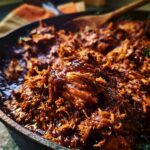
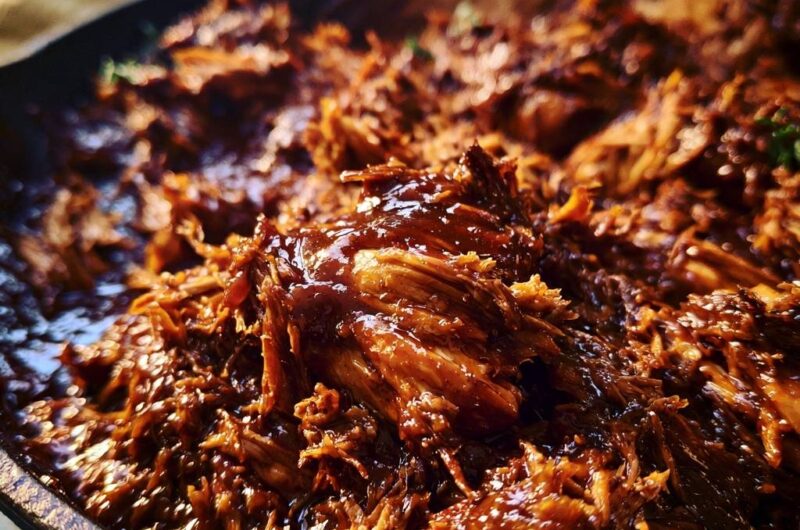
- To achieve the thick, glossy finish shown in the image, strain the cooking liquid from the slow cooker into the cast iron skillet. Bring to a boil over medium-high heat and reduce by half until it becomes a syrupy glaze.
- Add the shredded beef and the remaining 1/2 cup of fresh BBQ sauce back into the skillet. Toss the meat in the reduction for 5 minutes over medium heat. This “double-saucing” technique ensures the meat is not just wet, but coated in a sticky, concentrated glaze that prevents the fibers from drying out once served.
- Garnish with fresh parsley and serve immediately.
Notes
- Avoid using the high heat setting on the slow cooker to prevent muscle fibers from seizing. The secret to the texture is the final reduction of cooking liquids in a skillet to create a concentrated glaze.