Mastering the Blueberry Swirl Pound Cake: The Anti-Soggy Bottom Method
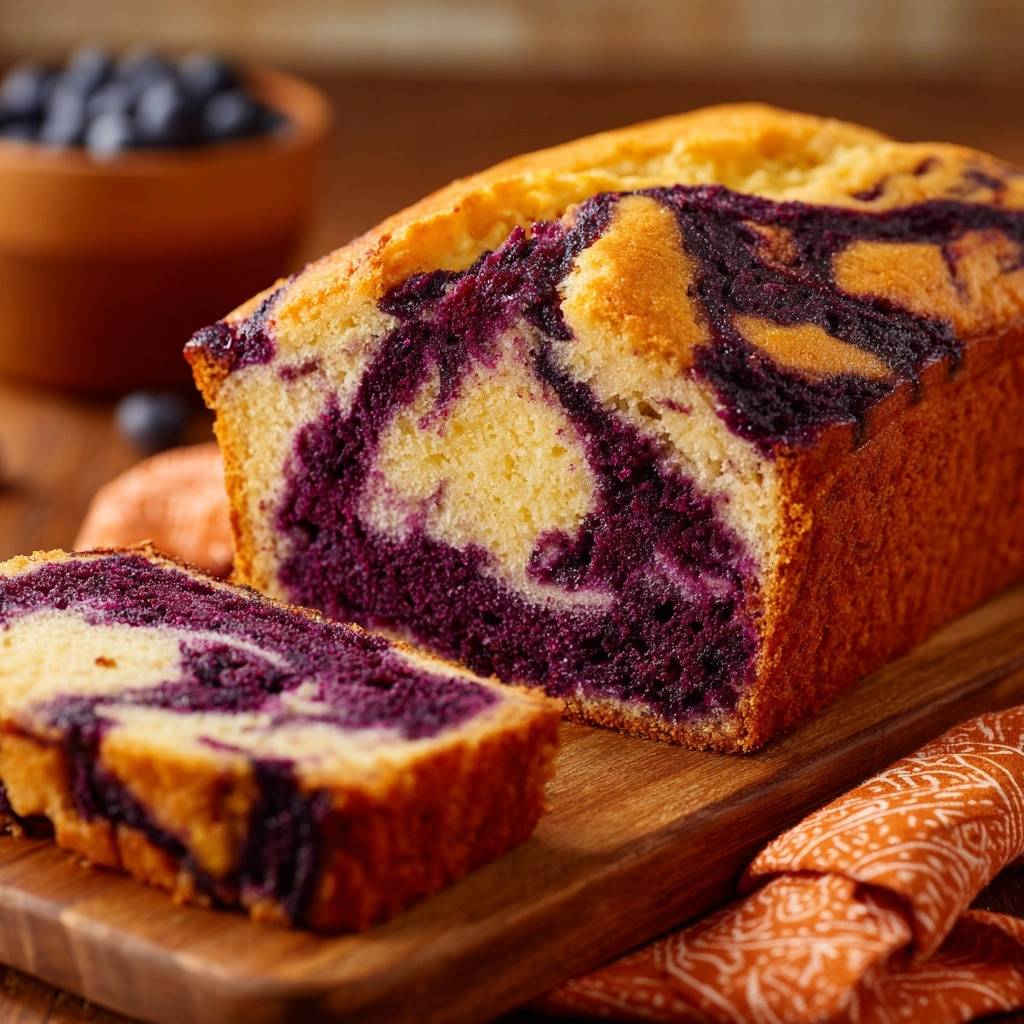
Most people struggle with fruit-based cakes because the berries inevitably burst, releasing a flood of juice that turns the bottom of the loaf into a gummy, purple mess. You’ve likely experienced that disappointing “soggy bottom” where the fruit sinks and the batter fails to set properly around it. This recipe solves that frustration by using a professional concentrated reduction technique that keeps the fruit exactly where you want it.
The secret to this perfect crumb lies in removing the excess water from the blueberries before they ever touch the batter. By simmering the berries into a thick, jam-like paste, you concentrate the flavor and the color without compromising the cake’s structural integrity. This ensures every slice is dense, buttery, and beautifully marbled with vibrant purple ribbons.
I’ve found that the temperature of your ingredients is the most critical factor for success here. If your butter is too cold, it won’t trap the air needed for a proper rise; if your eggs are cold, they’ll cause the creamed butter to seize and curdle. Always pull your dairy out of the fridge at least an hour before you plan to start mixing to ensure a silky, emulsified batter.
The Science of Moisture Control in Fruit Cakes
Baking with fresh berries is often a gamble because fruit is mostly water. When a raw blueberry heats up in the oven, the skin stretches and eventually pops, releasing steam and liquid directly into the surrounding crumb. This extra moisture prevents the flour from setting, which is why you often find wet, unbaked pockets of dough surrounding the fruit.
However, by reducing the berries into a concentrate first, you’re essentially performing a pre-bake extraction. You cook off the water while keeping the pectin and sugars, which creates a stable “swirl” that doesn’t migrate or bleed. This technique preserves the tight, velvety crumb that defines a classic pound cake while intensifying the tart, antioxidant-rich flavor of the fruit.
Essential Components for a Dense Blueberry Swirl Pound Cake
Quality ingredients are the backbone of any pound cake because there are so few of them. I recommend using a high-quality all-purpose flour with a protein content of around 10-11%. This provides enough strength to support the weight of the blueberry swirl without making the cake as tough as bread.
For a perfect pairing, try our Flaky Baked Chicken Empanadas: Leak-Proof Perfection.
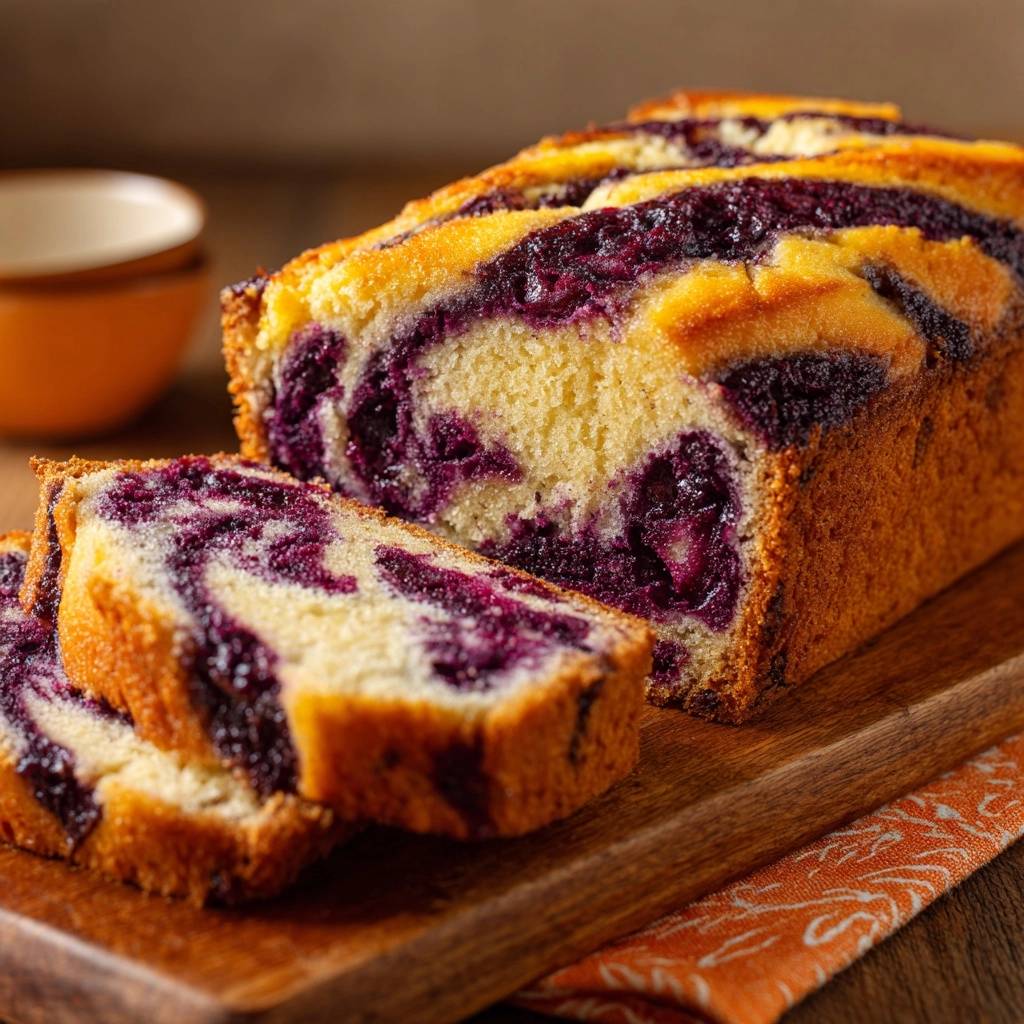
Furthermore, the fat content is where the flavor lives. Use a high-fat European-style butter if you can find it, as it has less water and more richness. Therefore, when you cream it with the sugar, you’ll achieve a much more stable aeration that holds up during the long bake time in the loaf pan.
Why Sour Cream Outperforms Milk in Pound Cakes
Sour cream is the secret weapon for a truly professional texture. Because it has a higher fat content than milk or buttermilk, it adds a luxurious richness that lingers on the tongue. Additionally, the natural acidity in sour cream works to tenderize the gluten strands in the flour.
This tenderizing effect is crucial because it allows the cake to remain soft even though it’s dense. The thick consistency of sour cream also ensures the batter stays heavy enough to support the blueberry concentrate. This prevents the purple layers from sinking to the bottom of the pan during the first twenty minutes of baking.
Selecting Berries: Fresh vs. Frozen for the Reduction
You can use either fresh or frozen blueberries for the reduction, but they behave slightly differently in the pan. Fresh berries have a firmer skin and may take a bit more mashing to release their juices. However, they often have a brighter, more floral flavor that shines through after the reduction process.
Frozen berries are usually picked at peak ripeness and then frozen, which breaks down their cell walls. Consequently, they release their liquid much faster than fresh ones. If you use frozen berries, you might need to simmer them for an extra 3 to 5 minutes to cook off the additional frost-related moisture and reach that target 1/3 cup volume.
The Reduction: Creating the Intense Blueberry Concentrate
To start the reduction, combine your berries, lemon juice, and a touch of sugar in a small saucepan. As the mixture heats up, you’ll see the berries begin to soften and release a deep violet juice. Use a wooden spoon to mash them thoroughly against the side of the pot to ensure every bit of pigment is released.
Keep simmering until the liquid transforms from a thin juice into a thick, glossy syrup. You’re looking for a “nappe” consistency, which means the sauce is thick enough to coat the back of a spoon without running off. Straining the mixture through a fine-mesh sieve is a vital step; it removes the skins and seeds, leaving you with a silky concentrate that blends perfectly into the batter.
Step-by-Step: Mixing the Perfect Pound Cake Base
The “Creaming Method” is the most important part of the mixing process. You aren’t just mixing butter and sugar; you’re using the sugar crystals to punch tiny holes into the fat, which then fill with air. Beat them together for at least 3 to 4 minutes until the mixture looks pale, almost like whipped cream.
When you add the eggs, do it one at a time and beat thoroughly after each addition. If the batter starts to look grainy or curdled, it’s usually because the eggs were too cold. Don’t panic; just keep beating, and the emulsion should smooth out as the ingredients reach a uniform temperature. This stable base is what gives the cake its height and fine texture.
Incorporating Dry Ingredients Without Developing Gluten
Once you add the flour, you must be gentle. Over-mixing at this stage develops gluten, which will turn your tender pound cake into something chewy and tough. Use the lowest speed on your mixer or a large spatula to fold the dry ingredients into the wet base.
Stop the moment you no longer see white streaks of flour. The batter should look matte and very thick, almost like a heavy frosting. If the batter looks shiny or stretchy, you’ve gone too far. A perfectly mixed batter will hold the blueberry swirl in place, creating those beautiful, distinct ribbons you see in professional bakeries.
The Art of the Marble: Layering and Swirling
To get that iconic marbled look, you need to be intentional with your layering. Start by spooning half of your plain batter into the pan and smoothing it out. Then, drop large dollops of the purple blueberry batter on top. Repeat this process one more time so you have distinct layers of color sitting on top of each other.
Now comes the fun part: the swirl. Take a butter knife and dip it deep into the batter. Move it in a slow, wide figure-eight motion only two or three times. If you over-swirl, the two batters will blend completely, and you’ll end up with a solid grey cake instead of a beautiful marble. Less is definitely more here!
Precision Baking: Temperature and Timing for Loaf Pans
Pound cakes are dense, so they need a long time in the oven to bake all the way through to the center. I find that 350°F is the ideal temperature. It’s hot enough to create a golden-brown crust but gentle enough that the middle can set without the edges burning.
Keep in mind that the material of your pan matters. Dark metal pans absorb more heat and can cause the sides to brown too quickly. If you’re using a dark pan, check the cake about 10 minutes early. A light-colored aluminum pan is the gold standard for pound cakes because it reflects heat, leading to a more even, gentle bake.
Troubleshooting Your Blueberry Swirl Pound Cake
If your cake sinks in the middle after you pull it out, it’s usually due to one of two things. Either the baking powder was expired and couldn’t provide enough lift, or the oven door was opened too early. Opening the door before the structure has set causes a sudden drop in temperature that can make the delicate air bubbles collapse.
If you notice the blueberry swirl bleeding into the rest of the cake, your concentrate might have been too warm when you mixed it. Always let the reduction cool completely to room temperature. If it’s still warm, it will melt the butter in the batter, causing the colors to run together and ruining the sharp contrast of the marble.
Preventing the “Dark Ring” Around the Crust
A dark, tough ring around the outer edge of the cake is often caused by the pan being too close to the bottom heating element. Always bake your loaf on the middle rack to ensure even air circulation. This allows the heat to hit the top and bottom of the pan at the same rate.
Additionally, make sure you aren’t over-greasing the pan with too much butter. Excess fat on the sides of the pan can actually “fry” the exterior of the cake, leading to a greasy, dark crust. A thin, even layer of butter followed by a light dusting of flour is all you need for a clean release and a perfect golden finish.
Optimal Storage: Keeping the Crumb Moist
Pound cake is unique because it often tastes better on the second day. As the cake sits, the moisture from the blueberry swirl and the fats from the butter redistribute, making the crumb even more tender. Store the cooled cake in an airtight container at room temperature for up to three days.
If you want to keep it longer, this cake freezes beautifully. Wrap individual slices tightly in plastic wrap and then place them in a freezer bag. They’ll stay fresh for up to three months. When you’re ready for a treat, just let a slice thaw on the counter for about 20 minutes, and it will taste just as fresh as the day it was baked.
Expert Tips for Serving and Presentation
To show off that beautiful swirl, use a long serrated knife to slice the cake. Use a gentle sawing motion rather than pressing down hard, which can squash the dense crumb. Slicing the cake while it’s still slightly warm can cause it to crumble, so patience is key; let it cool completely for the cleanest cuts.
Pound cake is best served at room temperature. When the cake is cold, the butter is firm, which can make the cake feel dry on the palate. At room temperature, the fats soften, allowing the flavors of the vanilla and blueberry to really pop. A simple dusting of powdered sugar is all you need to make this loaf look like it came from a high-end patisserie.
Frequently Asked Questions
Can I use this method with other berries?
Yes, you can absolutely use this reduction technique with raspberries or blackberries. However, keep in mind that these berries have much larger seeds than blueberries. Therefore, you’ll want to use a very fine-mesh sieve and press firmly to extract the pulp while leaving the seeds behind. Raspberries also have higher pectin levels, so the reduction may thicken even faster than the blueberry version.
Why did my blueberry swirl sink to the bottom?
The most common reason for a sinking swirl is a reduction that is too thin. If you don’t simmer the blueberry juice long enough, the concentrate remains watery and heavy. Because it’s denser than the cake batter, gravity pulls it to the bottom of the pan during the bake. Ensure your concentrate is thick enough to coat a spoon and has reduced to exactly 1/3 cup before mixing it into the batter.
Can I bake this in a Bundt pan instead?
You can, but you will need to double the recipe to fill a standard 10-cup Bundt pan. Since Bundt pans have a center tube that conducts heat, the cake will actually bake a bit faster than a loaf. Start checking for doneness at the 50-minute mark. Also, be sure to grease every nook and cranny of the Bundt pan very thoroughly, as the blueberry concentrate can be sticky and might cling to the design.
What is the best substitute for sour cream?
The only true 1:1 substitute for sour cream in this recipe is full-fat Greek yogurt. It provides the same acidity and thick consistency needed to support the blueberry swirl. Do not use low-fat or non-fat versions, as the lack of fat will result in a dry, tough cake. Avoid using liquid milk or buttermilk as a direct swap, as they will make the batter too thin to hold the marbled pattern.
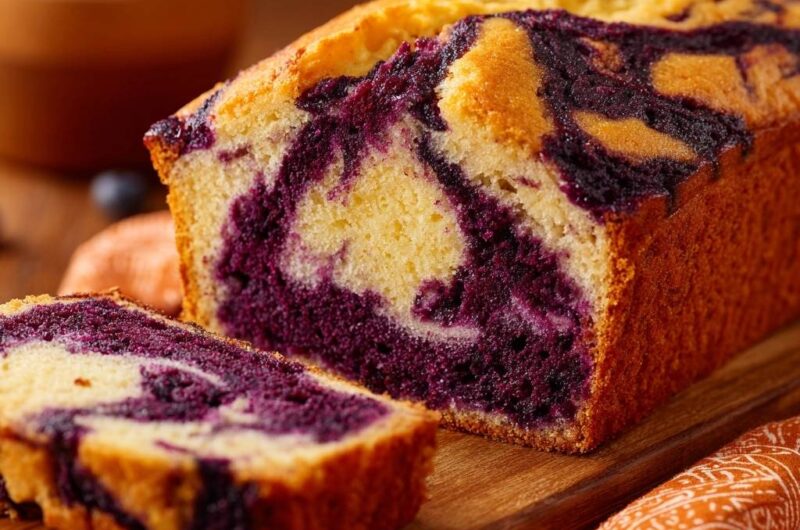
Blueberry Pound Cake
Course: DessertCuisine: AmericanDifficulty: medium10
servings25
minutes55
minutes340
kcal80
MinutesThis pound cake solves the common issue of soggy fruit pockets by using a blueberry reduction. The result is a dense, tender crumb with a vibrant, jam-like swirl that stays perfectly in place.
Ingredients
2 cups fresh or frozen blueberries
1 tablespoon lemon juice
1 tablespoon granulated sugar (for reduction)
1 3/4 cups all-purpose flour
1 teaspoon baking powder
1/2 teaspoon salt
1 cup granulated sugar
3/4 cup unsalted butter, softened
3 large eggs, room temperature
1/2 cup sour cream (for a dense, pound cake crumb)
1 teaspoon vanilla extract
Directions
- Create the Blueberry Concentrate: Place blueberries, lemon juice, and 1 tablespoon of sugar in a small saucepan over medium heat. Simmer for 12 to 15 minutes, mashing the berries thoroughly as they cook, until the liquid reduces significantly into a thick, jam-like paste. Strain through a fine-mesh sieve to remove skins, pressing hard to extract all the pigment. You should have about 1/3 cup of thick concentrate. Let it cool completely.
- Preheat and Prep: Preheat your oven to 350°F (175°C). Grease and flour a 9×5 inch loaf pan, or line it with parchment paper.
- Whisk Dry Ingredients: In a medium bowl, whisk together the flour, baking powder, and salt.
- Cream Butter and Sugar: In a large bowl, cream the softened butter and 1 cup of sugar together until very light and fluffy (about 3-4 minutes). Add the eggs one at a time, beating well after each addition, then stir in the vanilla and sour cream.
- Combine: Gradually add the dry ingredients to the wet mixture. Mix on low speed just until no streaks of flour remain. Do not overmix.
- Prepare the Swirl Batter: Transfer 1 cup of the plain batter into a separate bowl. Fold in the cooled blueberry concentrate until the color is a deep, uniform purple.
- Layer the Batter: Spoon half of the plain batter into the bottom of the prepared pan and smooth it out. Top with half of the blueberry batter in large dollops. Repeat with the remaining plain batter and the remaining blueberry batter on top.
- The Swirl: Use a butter knife or skewer to swirl the batters together using a figure-eight motion. To achieve the look in the image, keep the swirls large and avoid over-mixing, which would turn the whole cake purple.
- Bake: Bake for 55 to 65 minutes. Because the berry moisture was removed during the reduction, the cake will rise evenly without a soggy bottom. A toothpick inserted into the center should come out clean.
- Cool: Cool in the pan for 15 minutes before transferring to a wire rack to cool completely before slicing.
Notes
- The reduction technique ensures the cake rises evenly without the excess moisture typically released by whole berries.