Mastering Creamy Thai Peanut Noodles Without the Clump
Stop settling for sticky, clumped-up noodles that lose their texture the second they hit the pan. You know the ones—they look great in the bowl but turn into a solid, gummy block before you can even grab your chopsticks. It’s frustrating when you crave that silky, restaurant-style glide but end up with a dry, pasty mess instead.
The secret to restaurant-quality Thai noodles isn’t just the sauce; it’s the temperature control and the rinse. This recipe uses a specific cold-shock method to ensure every strand stays separate and perfectly coated in a velvety peanut sauce. We’re aiming for a perfect balance of savory umami, bright acidity, and rich fats that feels light rather than heavy.
I’ve found that the biggest mistake home cooks make is boiling rice noodles like Italian pasta. If you boil them on active heat, they release too much starch and disintegrate. The secret is an off-heat soak followed by a vigorous cold-water scrub to strip away that sticky surface starch before the noodles ever touch the skillet.
The Science of Starch: Why Rice Noodles Get Gummy
Rice noodles are primarily made of rice flour and water, which means they are packed with amylopectin and amylose starches. When these noodles sit in boiling water, the starch granules swell and eventually burst, leaking a sticky “glue” into the water and onto the surface of the noodle. If you don’t intervene, that glue sets as the noodles cool, bonding them together into a singular mass.
Over-hydration is the enemy of a good stir-fry. Traditional boiling methods often lead to “mush” because the high heat penetrates the core of the noodle too quickly. By using a “soak and shock” method, you allow the water to hydrate the noodle gradually. This maintains the structural integrity of the rice grain, resulting in a noodle that is flexible and chewy rather than soft and broken.
Essential Components for Creamy Thai Peanut Noodles
Your pantry staples do the heavy lifting here, but quality matters. For the base, I always recommend a creamy, well-emulsified peanut butter. While “natural” varieties with oil on top are delicious, they can sometimes break or feel gritty in a smooth sauce. A standard creamy peanut butter provides a stable emulsion that clings to the noodles without separating under heat.
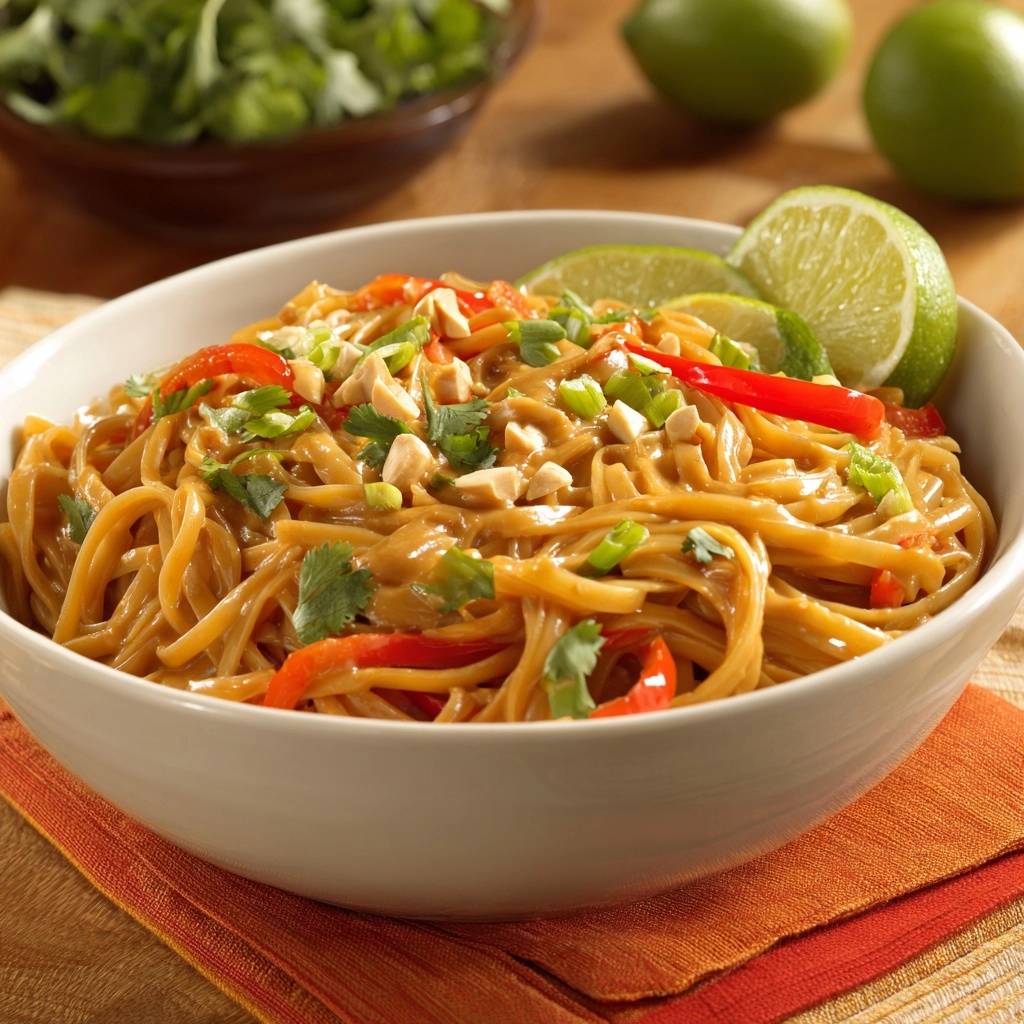
Low-sodium soy sauce is another non-negotiable. It allows you to build a deep, savory flavor profile without making the dish salt-heavy. Since the peanut butter already contains some salt, using a full-sodium soy sauce often pushes the dish over the edge. Freshly grated ginger and minced garlic provide a sharp, aromatic punch that pre-packaged powders simply cannot replicate.
Selecting the Right Rice Noodle Gauge
Rice noodles come in everything from thin vermicelli to massive wide ribbons. For this peanut sauce, the “linguine-style” or medium-width noodle is the absolute sweet spot. It offers enough surface area for the heavy sauce to coat every inch without the noodles becoming too heavy to toss. An 8-ounce package is the perfect ratio for the amount of sauce we are building.
The Aromatics: Building a Flavor Base
Preparation is key when the cooking process moves this fast. When you slice your red bell pepper, aim for thin “matchsticks” or julienne strips. This ensures they soften just enough during their short stint in the wok to match the texture of the noodles. Grating the ginger directly into the bowl ensures you catch all the flavorful juices that would otherwise be lost on a cutting board.
Step-by-Step: Achieving the Perfect Noodle Texture
Start by bringing your water to a rolling boil, then immediately turn off the heat. Submerge your noodles completely and let them hang out for about 6 to 8 minutes. You aren’t looking for “soft” here; you want them al dente. They should be flexible enough to twirl but still have a firm, slightly resistant bite in the very center.
Keep a close eye on them during the final two minutes. Rice noodles can go from perfect to overcooked in a matter of thirty seconds. Once they reach that opaque, flexible stage, they are ready for the most important step in the entire process.
The Cold-Shock Technique Explained
As soon as those noodles are ready, drain them and blast them with cold running water. Don’t just let the water sit on them; use your hands to toss and “scrub” the noodles under the stream. You will actually feel the slipperiness wash away as the cold water removes the surface amylose.
This cold shock does two things: it stops the internal cooking process instantly and ensures the noodles are cold to the touch. By starting with cold, clean noodles, you prevent them from absorbing too much sauce and becoming bloated. They should be slick, separate, and ready to be glazed.
If you enjoy these peanut noodles, the same rinse-and-drain method keeps this shrimp pad thai perfectly sticky-free.
Emulsifying the Velvety Peanut Sauce
Creating the sauce is an exercise in patience. Start by whisking your peanut butter with the soy sauce, honey, and aromatics. It will look thick and perhaps a bit curdled at first, but don’t panic. This is where the warm water comes in to save the day.
Add the warm water one tablespoon at a time, whisking vigorously after each addition. You are looking for the “ribbon stage,” where the sauce falls off the whisk in a smooth, continuous stream. The lime juice acts as a chemical lift, providing the acidity needed to cut through the heavy fats and brighten the entire palate.
The Assembly: Heat Control and Emulsion
When it’s time to combine everything, turn your heat down to low. You’ve already cooked the peppers and the noodles are hydrated, so you are really just “marrying” the components. Add the cold noodles to the skillet and pour that beautiful sauce over the top.
Use tongs to gently lift and fold the noodles. You only want to warm them through for about 60 to 90 seconds. If you leave them on the heat too long, the sauce will break and the noodles will start to disintegrate. Remove the pan from the burner the moment the sauce looks glossy and clings to the noodles.
What to Serve with Thai Peanut Noodles
These rich, creamy noodles pair well with something fresh and crunchy on the side.
- Add a cool contrast with a Thai-Inspired Beef Salad, where the tangy dressing cuts through the peanut sauce.
- For extra protein and texture, the Crispy Glazed Chicken Salad brings a savory crunch that matches the noodle bowl’s bold flavors.
Flavor Variations and Protein Swaps
This dish is incredibly versatile if you want to bulk it up. For a protein boost, seared tofu cubes or sautéed shrimp work beautifully. Just cook your protein first, set it aside, and toss it back in during the final assembly stage. This keeps the protein juicy and prevents it from overcooking.
If you want more crunch, try adding snap peas or shredded carrots along with the bell peppers. For a bit of greenery, bok choy or baby spinach can be wilted in during the last 30 seconds of cooking. Just remember to keep the vegetable-to-noodle ratio balanced so the sauce doesn’t get diluted.
Troubleshooting Common Peanut Sauce Issues
If your sauce feels too thick once it hits the pan, don’t reach for more oil. Instead, add a tiny splash of warm water. This thins the emulsion without changing the flavor profile. If the dish tastes a bit flat, it usually needs more lime juice or a tiny pinch more honey to balance the salt.
In the rare event your noodles still feel a bit sticky after the cold rinse, toss them with a teaspoon of neutral oil (like grapeseed or canola) before adding them to the skillet. This creates a microscopic barrier that keeps the strands moving freely while you wait for the sauce to be ready.
Optimal Garnishes for Texture and Contrast
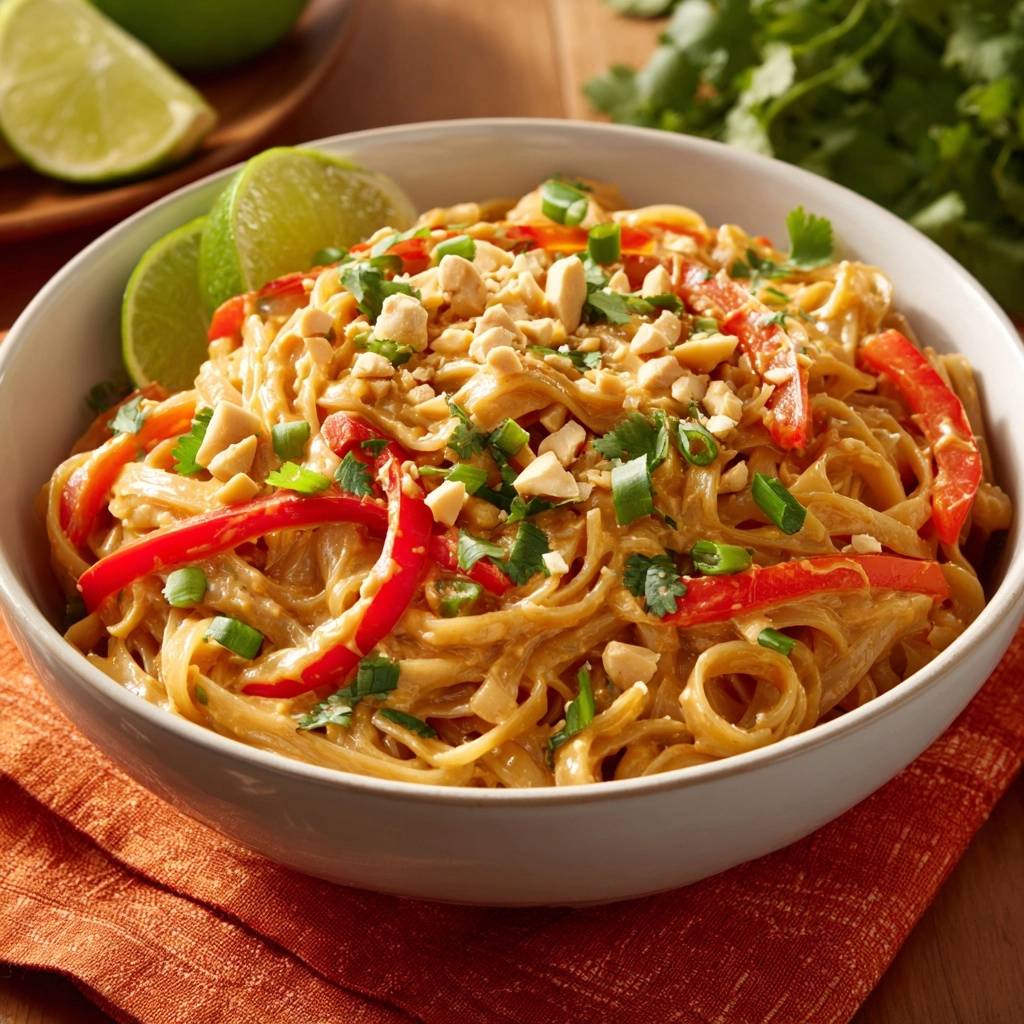
Garnishes aren’t just for looks; they provide essential texture. The chopped roasted peanuts offer a necessary crunch that contrasts with the soft noodles. Fresh cilantro adds a floral brightness, while sliced green onions provide a sharp, peppery bite that cuts through the richness of the peanut butter.
Always serve with extra lime wedges on the side. That final squeeze of fresh juice right before eating acts as a “reset” for your taste buds. It ensures that every bite tastes as vibrant and fresh as the first one, preventing the peanut flavor from becoming overwhelming.
If you love that bright lime finish, you’ll want to try these creamy peanut noodles for another silky, citrusy twist.
Storage and Reheating: Maintaining Creaminess
Peanut noodles are notorious for tightening up in the fridge because the fats in the peanut butter solidify when cold. To revive them, avoid the microwave if possible. Instead, place them in a small skillet with a tablespoon or two of warm water or coconut milk.
Heat them gently over low heat, tossing constantly until the sauce loosens back into its creamy state. If you must use a microwave, cover the bowl with a damp paper towel and heat in 30-second bursts, stirring in a little water between each interval to keep things moist.
Expert Tips for Success
To get the most out of your ginger without the woody fibers, use a microplane or the smallest holes on a box grater. If you find the ginger is too stringy, try freezing the root first; it grates into a fine snow much easier when frozen. This ensures the flavor is distributed evenly throughout the sauce.
Mise en place is your best friend here. Because the actual cooking time is less than ten minutes, you won’t have time to chop peppers or mince garlic once the heat is on. Have every ingredient measured and ready in small bowls before you even boil the water.
When it comes to heat, start small with the red pepper flakes. You can always add more at the end, but it’s hard to dial back the spice once it’s whisked into the peanut butter. If you want a deeper heat without the seeds, try whisking in a teaspoon of sriracha or chili garlic sauce instead.
Finally, never use “crunchy” peanut butter for the base sauce. It might seem like a shortcut for texture, but it prevents the sauce from emulsifying properly. Stick to creamy peanut butter for the glaze and rely on the freshly chopped peanuts at the end for that satisfying crunch.
How do I store leftover peanut noodles?
Store leftovers in an airtight container in the refrigerator for up to 3 days. Note that the noodles will absorb the sauce as they sit, so they will appear much drier the next day. To fix this, add a splash of water or broth when reheating to bring back the creamy consistency. Do not freeze this dish, as rice noodles become grainy and lose their structural integrity when thawed.
Why did my noodles turn into a giant clump?
Clumping usually happens for two reasons: overcooking or skipping the rinse. If you boil the noodles on active heat, they release too much starch. If you don’t rinse them under cold water until they are cold to the touch, that residual starch acts like glue. Make sure you are using the “off-heat” soak method and tossing them vigorously under the cold tap to wash away all that excess starch.
Can I use a different type of pasta?
Yes, you can substitute the rice noodles with linguine, fettuccine, or even spaghetti if that’s what you have on hand. If using wheat-based pasta, boil it according to the package directions for al dente. You don’t need to do the “off-heat” soak for wheat pasta, but a quick rinse can still help prevent sticking if you aren’t tossing them in the sauce immediately.
What can I use instead of soy sauce?
If you need a soy-free option, liquid aminos or coconut aminos are excellent substitutes. Keep in mind that coconut aminos are slightly sweeter and less salty than traditional soy sauce, so you may want to reduce the honey in the recipe and add a pinch of salt to balance the flavors. Tamari is also a great gluten-free alternative that tastes almost identical to soy sauce.
My sauce is too salty, how do I fix it?
If the sauce tastes too salty, the best fix is to add more acidity and a touch of sweetness. Squeeze in more lime juice and add an extra teaspoon of honey or agave. You can also thin the sauce with a little more warm water. Next time, ensure you are using “low-sodium” soy sauce, as the salt content in standard soy sauce varies wildly between brands.
Thai Peanut Noodles
Course: Main CourseCuisine: Thai InspiredDifficulty: easy4
servings15
minutes10
minutes420
kcal25
MinutesA vibrant and creamy noodle dish featuring wide rice noodles, a savory peanut sauce, and fresh vegetables. The recipe focuses on specific temperature control and rinsing techniques to ensure a perfect, non-sticky texture.
Ingredients
8 ounces wide rice noodles (Linguine-style)
1 large red bell pepper, thinly sliced into long strips
1/2 cup creamy peanut butter
3 tablespoons low-sodium soy sauce
1 tablespoon honey or agave nectar
1 tablespoon fresh lime juice
1 teaspoon rice vinegar
1 teaspoon grated ginger
2 cloves garlic, minced
1/2 teaspoon red pepper flakes (optional)
1/3 cup warm water (plus more if needed for consistency)
1/4 cup roasted peanuts, roughly chopped
2 green onions, sliced on the bias
1/4 cup fresh cilantro, roughly chopped
2 lime wedges for serving
Directions
- Prepare the Noodles: Bring a large pot of water to a rolling boil. Remove the pot from the heat and submerge the rice noodles completely. Soak for 6 to 8 minutes, testing frequently, until they are al dente (flexible but with a firm bite).
- The Anti-Gummy Secret: Immediately drain the noodles into a colander and rinse them under cold running water for at least 30 seconds while tossing them gently with your hands. This stops the cooking process and washes away the excess surface starch that causes clumping. Drain thoroughly and set aside.
- Whisk the Sauce: In a medium bowl, combine the peanut butter, soy sauce, honey, lime juice, rice vinegar, ginger, garlic, and red pepper flakes. Gradually whisk in the warm water one tablespoon at a time until the sauce reaches a smooth, pourable, cream-like consistency.
- Sauté the Aromatics: Heat a large skillet or wok over medium-high heat with a tablespoon of neutral oil. Add the red bell pepper strips and sauté for 2 to 3 minutes until they are vibrant and tender-crisp.
- Combine: Reduce the heat to low. Add the cold-rinsed noodles to the skillet. Pour the peanut sauce over the noodles.
- The Final Toss: Using tongs, toss the noodles and peppers gently for 1 to 2 minutes. You are only looking to warm the noodles through and allow the sauce to emulsify. If the sauce becomes too thick, add a splash of warm water. Remove from heat immediately to prevent the noodles from softening into a “gummy” state.
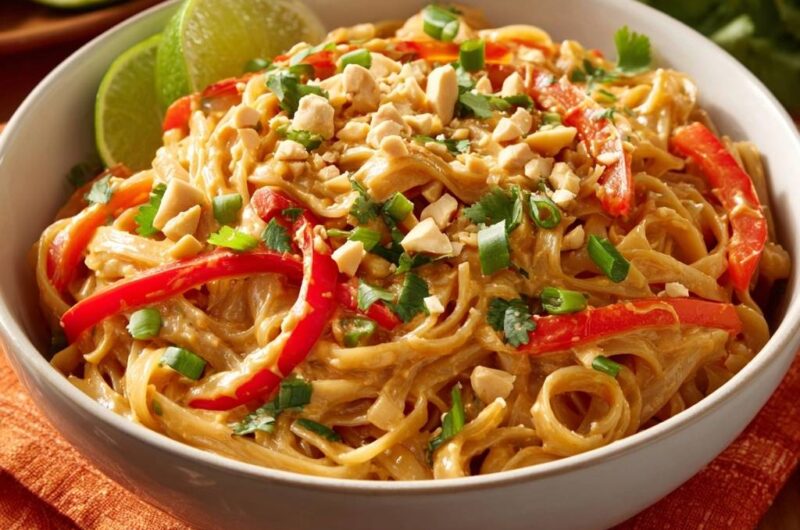
- Garnish and Serve: Transfer to a bowl. Top generously with chopped peanuts, sliced green onions, and fresh cilantro as shown in the image. Serve immediately with lime wedges to squeeze over the top for essential acidity.
Notes
- The secret to preventing gummy pasta is rinsing the soaked noodles under cold water for 30 seconds to remove excess starch. Always remove from heat immediately after warming to maintain the perfect texture.