Mastering the Cranberry Walnut Baked Brie
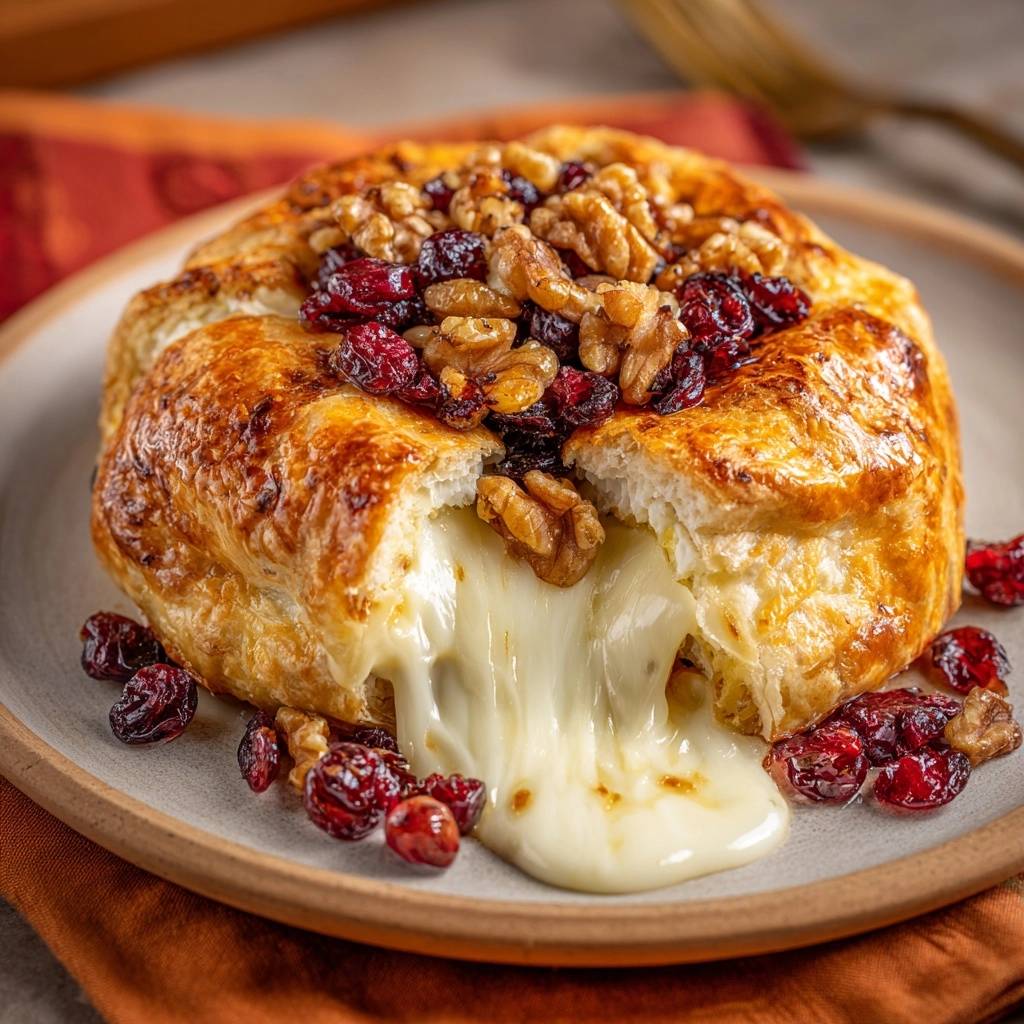
Imagine the sound of a knife shattering through layers of golden, buttery puff pastry to reveal a thick, molten river of warm cheese. It’s the ultimate appetizer experience, but so often, home cooks are disappointed by a doughy, pale base or a cheese wheel that leaks into a puddle before the crust is even cooked. This Cranberry Walnut Baked Brie is designed to solve those frustrations using a specific “Anti-Soggy Bottom” philosophy that ensures every bite is as crisp as it is gooey.
The secret lies in managing the temperature differential between the delicate pastry and the high-fat cheese. By using a strategic chilling method, we can push the oven temperature high enough to achieve a deep mahogany crunch without the cheese over-expanding and bursting through the seams. It’s a reliable way to get professional results that look like they came from a high-end bistro.
To guarantee success, you’ll want to focus on the moisture barrier. Most recipes fail because the cheese releases steam that gets trapped against the dough. My approach uses a functional steam vent and a specific egg wash technique to keep the pastry structural and dry. You’ll never have to deal with a sad, limp cheese parcel again.
The Science of the Double-Chill Technique
Achieving the perfect bake is all about thermal physics. When you place the Brie wheel in the freezer for 20 minutes, you aren’t trying to freeze it solid. Instead, you’re creating a cold core that acts as a temperature buffer. This allows the puff pastry to hit the 400°F heat and undergo the Maillard reaction—that beautiful browning and flavor development—well before the cheese fats reach their melting point.
Puff pastry relies on hundreds of thin layers of butter that steam and rise when they hit a hot oven. If the cheese inside is already room temperature, it will soften and release moisture into those layers before they have a chance to crisp up. This leads to the dreaded “doughy middle” where the pastry stays raw and gummy. The 20-minute chill ensures the pastry sets its structure first.
Furthermore, Brie has a high moisture content protected by its bloomy rind. If the rind gets too hot too fast, it breaks down and loses its ability to hold the liquid cheese. By keeping the wheel cold, you preserve the integrity of the rind, ensuring the cheese stays inside the pastry until you’re ready to slice into it at the table.
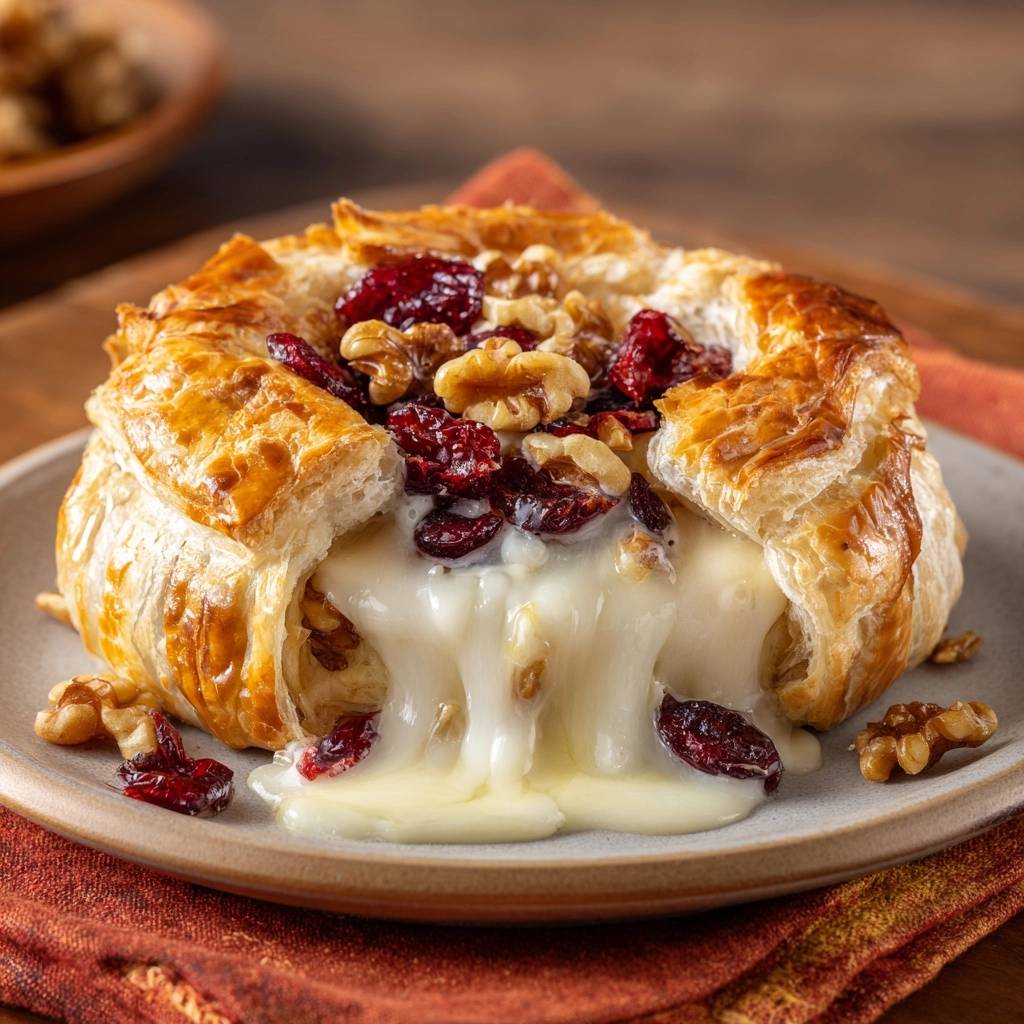
Essential Components for Cranberry Walnut Baked Brie
Quality ingredients are the foundation of this dish. For the best results, look for a high-quality Brie wheel that feels heavy for its size. While triple-cream Brie is incredibly decadent, it has a much higher fat content and a lower melting point, which can make it harder to contain. A standard double-cream Brie offers the perfect balance of rich flavor and structural stability for baking.
The puff pastry is equally important. You must use a brand that uses real butter for the best flavor and lift. Ensure the pastry is thawed enough to be pliable but still very cold to the touch. If the dough gets too warm while you’re working with it, the butter will melt into the flour, and you’ll lose those distinct, flaky layers that make this dish so iconic.
For the toppings, choose dried cranberries that are plump rather than shriveled. If yours seem a bit dry, you can soak them in a little warm water for five minutes and pat them dry before using. Fresh walnut halves provide a necessary earthy crunch that contrasts beautifully with the soft cheese and sweet honey.
Selecting the Right Brie Wheel
When shopping, check the “best by” date on the cheese. A younger Brie, which is further away from its expiration date, will have a firmer texture and a milder, buttery flavor. This is ideal for the “open-well” technique because it holds its shape as it warms. An ultra-ripe Brie will have a stronger, almost mushroom-like aroma and will turn to liquid almost instantly in the oven, increasing the risk of a blowout.
The Role of Walnuts and Dried Cranberries
The flavor profile here is a classic study in balance. The tannins in the walnuts provide a slight bitterness that cuts through the heavy fats of the cheese. Meanwhile, the tart acidity of the dried cranberries prevents the honey from making the dish cloyingly sweet. If you prefer a deeper, woodsy flavor, maple syrup is a fantastic substitute for honey, especially when paired with the toasted walnuts.
Step-by-Step: Achieving the Shatteringly Crisp Crust
Start by lightly flouring your work surface. You want just enough flour to prevent sticking, but not so much that it toughens the dough. Roll the cold pastry out into a square. When you place the chilled Brie in the center, you’ll begin pleating the edges upward. Think of this like folding a galette; you want the pastry to hug the sides of the cheese snugly to provide support.
The most important part of this step is leaving a 1-inch circular opening at the very top. Most recipes tell you to wrap the cheese completely and flip it over, but that traps steam inside, which leads to a soggy bottom. By leaving the top open, you create a natural chimney for steam to escape. This keeps the interior environment of the pastry dry and allows the bottom to bake through completely.
As you pleat the dough, press the folds gently to ensure they stay in place. You’re creating a “well” that will eventually hold your warm cranberry and walnut mixture. This functional design ensures that every slice of cheese comes with a generous portion of the sweet and crunchy topping without it sliding off the sides.
Applying the Egg Wash Barrier
The egg wash is more than just a browning agent; it’s a chemical seal. By whisking an egg with a teaspoon of water, you create a protein-rich glaze. When brushed over the pastry, it fills in the microscopic gaps in the dough. This creates a hydrophobic barrier that prevents any moisture from the fruit or honey from seeping into the pastry layers during the final minutes of baking.
The Precision Bake and Topping Integration
Watch for visual cues rather than just relying on the timer. You are looking for a deep, golden-brown color—think of the color of a well-baked croissant. If the pastry looks pale, it will taste doughy. Don’t be afraid of a little darkness on the edges of the pleats; that’s where the most flavor and crunch live.
Wait to add the honey-nut mixture until the Brie comes out of the oven. If you bake the walnuts and honey at 400°F for the full 20 minutes, the sugars in the honey will burn and the walnuts will turn bitter. Adding them to the hot cheese immediately after baking allows the residual heat to warm the topping and slightly soften the cranberries while maintaining the perfect crunch of the nuts.
If you prefer adding toppings after baking, the same logic applies to these pumpkin cranberry bars.
Why the Resting Period is Mandatory
It is incredibly tempting to cut into the Brie the second it leaves the oven, but patience is your best friend here. Just like a rested steak, the cheese needs time to redistribute its heat and stabilize. If you cut it immediately, the cheese will be too thin and will run across the plate like water, leaving you with an empty pastry shell.
During a 10-minute rest, the cheese begins to “set” into a thick, molten consistency. This is what creates that luxurious, slow-moving flow that clings to a cracker or a slice of apple. The resting period also allows the pastry to firm up slightly, making it much easier to transfer the entire wheel from the baking sheet to your serving platter without it collapsing.
Troubleshooting Common Baked Brie Failures
If you notice a small hole in your pastry where cheese is starting to peek through, don’t panic. You can often “patch” it by gently pinching the warm dough together with a spoon. To prevent a doughy bottom in the first place, always use a light-colored metal baking sheet. Dark pans can sometimes hold too much heat and burn the bottom before the middle is cooked, while glass dishes don’t conduct heat efficiently enough for puff pastry.
If your nuts look like they are browning too quickly once you’ve added them, simply tent a small piece of foil over the top. However, by following the post-bake addition method, you should avoid this entirely. If the cheese feels too firm after the resting period, you can pop it back into the oven for 2 minutes, but usually, the residual heat in the center of the wheel is more than enough to keep it melted for up to 30 minutes on the table.
Optimal Pairings for Your Cheese Board
When building your platter, choose accompaniments that offer a clean, crisp contrast to the richness of the Brie. Slices of Granny Smith or Honeycrisp apples are perfect because their natural acidity cleanses the palate between bites. Sturdy sea-salt crackers or toasted baguette rounds provide the structural integrity needed to scoop up the heavy, molten cheese.
For beverages, look for something with bubbles to cut through the fat. A sparkling apple cider or a tart pomegranate spritzer works beautifully. The carbonation acts as a palate cleanser, making each bite of the buttery pastry and creamy cheese feel as decadent as the first. Avoid overly sweet drinks, as the honey and cranberries already provide plenty of sugar to the pairing.
Preparation and Storage Logistics
You can easily prep this dish ahead of time for a party. Assemble the pastry around the chilled cheese, pleat it, and keep it covered in the refrigerator for up to 24 hours. However, do not apply the egg wash until you are ready to put it in the oven. The egg wash can soften the dough if it sits for too long, compromising that shatteringly crisp texture we’re aiming for.
If you have leftovers, don’t toss them! While the microwave is tempting, it will turn the puff pastry into a soggy mess. Instead, reheat leftovers in a 350°F oven or an air fryer for 5-7 minutes. This will recrisp the pastry and gently remelt the cheese. Store any leftovers in an airtight container in the fridge for up to three days, but keep in mind the pastry will lose some of its initial “shatter” after the first chill.
Expert Tips for Professional Presentation
For a “skyscraper” visual effect, pile the extra cranberries and walnuts high in the center well. Let some of them tumble naturally down the sides onto the serving platter. A final drizzle of fresh honey right before serving adds a glossy, jewel-like shine that catches the light and makes the dish look like it belongs in a food magazine.
Adding a few sprigs of fresh rosemary or thyme around the base of the plate adds a pop of green and a subtle herbal aroma that complements the earthy walnuts. Always serve with a small, sturdy cheese spreader or a dull knife to encourage guests to dig in while the cheese is at its molten peak.
Frequently Asked Questions
How do I store leftovers and can I freeze this?
Store any leftover baked brie in an airtight container in the refrigerator for up to 3 days. I do not recommend freezing the brie after it has been baked, as the texture of the cheese can become grainy and the puff pastry will lose its crispness. For the best results, reheat in the oven or air fryer to restore the crunch.
Why did my cheese leak out of the pastry?
Cheese usually leaks because of a “blowout” caused by trapped steam or a thin spot in the dough. To prevent this, ensure you don’t roll the pastry too thin and always leave the 1-inch vent at the top. The vent allows the internal pressure to escape so the cheese doesn’t force its way through the sides of the pastry.
Can I use a different type of nut or fruit?
Absolutely. While walnuts and cranberries are classic, you can substitute pecans or slivered almonds for the crunch. For the fruit, dried figs, apricots, or even a dollop of apricot preserves work beautifully. Just ensure any fruit you use is relatively low in moisture so it doesn’t make the pastry soggy.
What if I don’t have parchment paper?
If you don’t have parchment paper, use a silicone baking mat. If you must bake directly on the pan, grease it very lightly with a tiny bit of oil, but be careful—too much oil can fry the bottom of the pastry rather than baking it. Parchment is truly the best option for a clean release and a crisp base.
Can I use a larger wheel of Brie?
You can use a larger wheel, but you will need to adjust your pastry size and baking time. A larger wheel (16 ounces) will likely need an extra 10-15 minutes in the oven. Make sure to increase the freezer time to 30 minutes to ensure the center stays cool enough while the outer pastry bakes.
Baked Brie
Course: AppetizerCuisine: French AmericanDifficulty: easy6
servings15
minutes25
minutes310
kcal40
MinutesThis Cranberry Walnut Baked Brie features a unique par-freezing technique to prevent a soggy bottom. The puff pastry is baked until golden and crisp, then topped with a sweet and crunchy honey-nut mixture.
Ingredients
1 8-ounce wheel of Brie cheese
1 sheet frozen puff pastry, thawed but very cold
1/2 cup dried cranberries, divided
1/2 cup walnut halves, divided
3 tablespoons honey or maple syrup, divided
1 egg, beaten with 1 teaspoon water (egg wash)
1 tablespoon brown sugar (optional, for topping)
Directions
- Place the brie wheel in the freezer for 20 minutes. This is the secret to preventing the cheese from melting too fast and making the bottom crust soggy.
- Preheat your oven to 400°F (200°C). Line a baking sheet with parchment paper or a silicone baking mat.
- Roll out the cold puff pastry on a lightly floured surface into a square large enough to fully enclose the cheese.
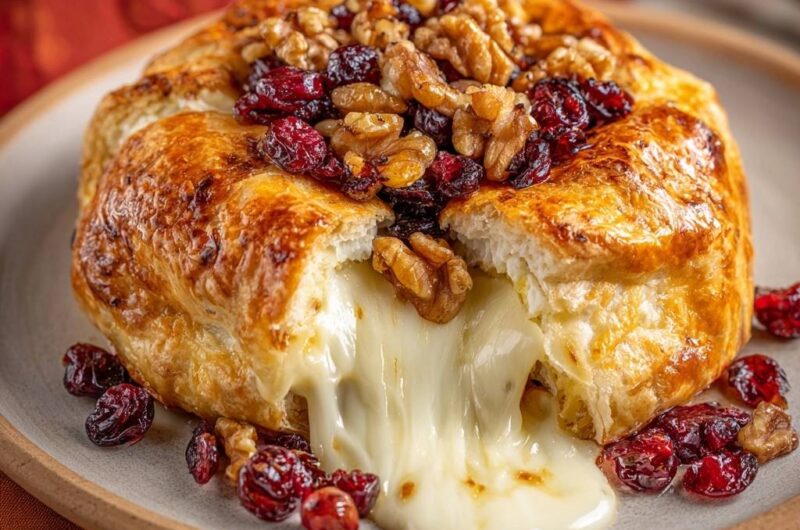
- Place the chilled brie in the center. Fold the edges of the pastry up and over the cheese, pleating as you go. Unlike traditional “en croûte” methods, leave a small 1-inch circular opening at the very top (do not flip the cheese over). This allows steam to escape and creates a “well” for the toppings shown in the image.
- Brush the top and all pleated sides thoroughly with the egg wash. This creates a moisture barrier and ensures a deep golden, glossy crunch.
- Bake for 20 to 25 minutes until the pastry is deep golden brown and visibly puffed.
- While the brie bakes, toss 1/4 cup of cranberries and 1/4 cup of walnuts with 1 tablespoon of honey and the brown sugar in a small bowl.
- Remove the brie from the oven. Immediately spoon the honey-nut mixture into the center opening and over the top of the hot pastry.
- Let the brie rest for 5 to 10 minutes on the baking sheet. This resting period is crucial for the cheese to set slightly so it achieves the thick, molten flow seen in the image rather than running out like water.
- Transfer to a serving plate. Garnish with the remaining fresh cranberries and walnuts around the base and a final drizzle of honey before serving.
Notes
- The secret to preventing a soggy bottom is freezing the brie for 20 minutes before wrapping. Leaving a small opening at the top allows steam to escape and creates a well for the honey and nut toppings.