Mastering Creamy Roasted Red Pepper Penne: The Starch-Emulsion Method
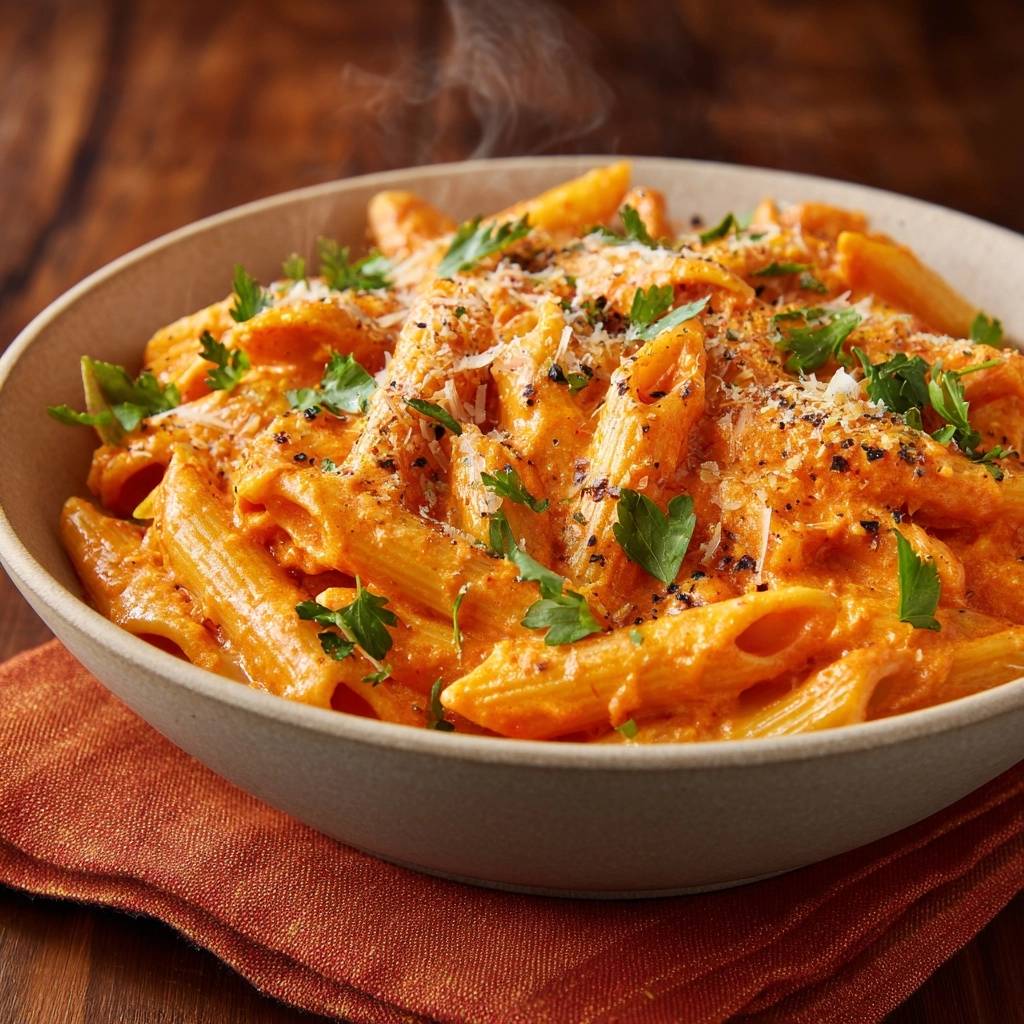
Most home cooks have experienced the disappointment of a pasta sauce that looks beautiful in the pan but leaves a watery, thin puddle at the bottom of the bowl. This separation happens because the water from the vegetables and the fats in the dairy never truly bonded. When you master the Creamy Roasted Red Pepper Penne, you aren’t just making dinner; you’re learning the professional secret to a sauce that clings to every ridge of the pasta with a velvety, stable grip.
The flavor profile here strikes a sophisticated balance between the natural sweetness of charred peppers and the sharp, salty bite of aged Parmesan. By focusing on a specific starch-emulsion technique, we ensure the sauce remains thick and glossy from the first bite to the last. You’ll achieve a restaurant-quality finish by controlling moisture levels and using the pasta’s own cooking liquid as a structural tool.
The real secret to this recipe lies in the reduction of the pepper purée before any dairy touches the pan. Jarred peppers are packed in brine, and if you don’t cook that excess moisture out, your sauce will inevitably break. I’ve found that simmering the purée until it deepens in color creates a concentrated base that can support the heavy cream and butter without thinning out.
The Science of Emulsion: Why This Sauce Never Breaks
Emulsion is the process of forcing two ingredients together that usually don’t mix, like oil and water. In this Creamy Roasted Red Pepper Penne, we use the starchy pasta water as a natural emulsifier. The starch molecules act as a physical bridge, holding the fats from the heavy cream and butter in suspension within the liquid base of the peppers.
Therefore, the “reduction phase” of the pepper purée is non-negotiable for structural integrity. When you simmer the blended peppers, you’re evaporating the water that would otherwise dilute your emulsion. This creates a thick, sugary concentrate that welcomes the fats, resulting in a stable, glossy coating rather than a broken, oily mess.
Finishing the pasta directly in the skillet is the final step in this scientific process. As the undercooked penne tosses with the sauce, it releases even more starch. This friction, combined with the addition of cold butter, creates a “Monte au Beurre” effect, giving the sauce a professional sheen and a luxurious mouthfeel that stays bonded even as it cools slightly on the plate.
Essential Components for the Perfect Red Pepper Base
Quality ingredients are the foundation of this dish, starting with the roasted red peppers. While you can roast your own, high-quality jarred peppers are a fantastic shortcut if you handle them correctly. Always choose peppers packed in water or mild brine rather than oil to keep the fat ratios predictable, and ensure you pat them bone-dry with paper towels before blending.
The dairy you choose also dictates the stability of the final sauce. Heavy cream is essential here because its high fat content makes it much more resistant to curdling when it hits the acidic peppers. If you try to use half-and-half or whole milk, the sauce will likely lack the necessary body and may separate during the final toss.
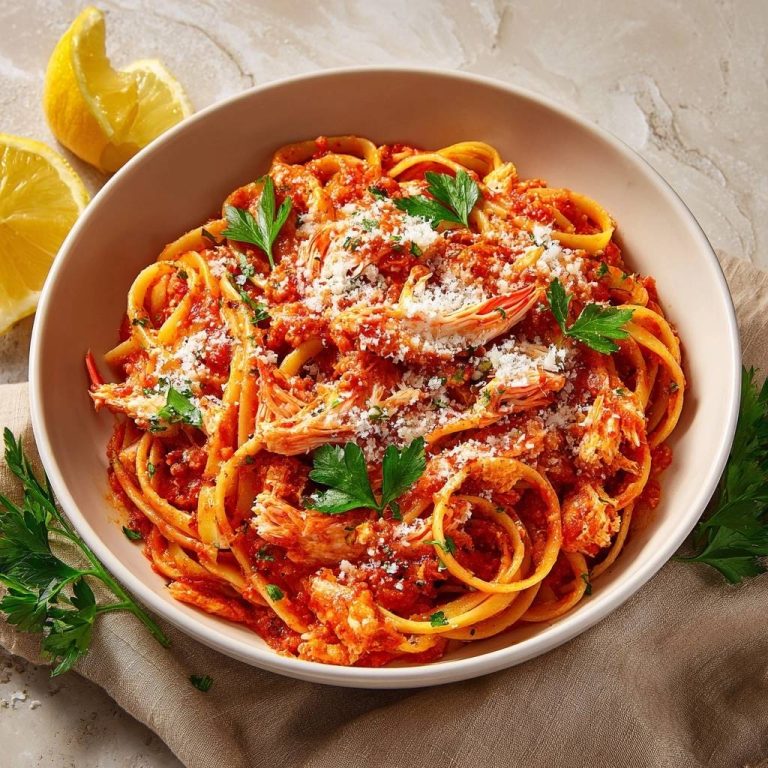
If heavy cream is the key to a stable sauce here, the same principle helps prevent a watery mess in this creamy lobster tagliatelle.
Freshly grated Parmesan cheese is another critical component that cannot be swapped for the pre-shredded variety. Pre-packaged cheese is often coated in potato starch or cellulose to prevent clumping in the bag. However, those additives prevent the cheese from melting smoothly into your sauce, often resulting in a grainy or “sandy” texture that ruins the velvet-like finish.
Selecting the Right Penne: Ridges vs. Smooth
When shopping for pasta, always look for “Penne Rigate,” which refers to the ridges on the exterior. These tiny grooves are designed specifically to catch and hold onto thick, puréed sauces. Smooth penne, or “Penne Lisce,” allows the sauce to slide right off, leaving you with naked pasta and a pool of sauce at the bottom of the bowl.
Furthermore, the hollow center of the penne acts as a reservoir for the creamy red pepper mixture. Cooking the pasta “Al Dente” is a functional requirement because the penne needs to be firm enough to withstand two minutes of vigorous tossing in the skillet. This allows the pasta to absorb the sauce’s flavor into its core without becoming mushy or losing its shape.
The Role of Cold Fats in Finishing
You might be tempted to throw the butter in at the beginning, but adding cold butter at the very end is a classic French technique. Cold fat emulsifies more slowly and effectively than melted fat or oil. As the cold butter cubes hit the hot pasta, they melt gradually, creating a microscopic suspension of fat droplets that results in a superior sheen.
This technique provides a richness that you simply can’t achieve with liquid fats. The butter works in tandem with the starchy water to thicken the sauce instantly. If the butter were already melted or warm, it would likely just turn into a greasy film on top of the pasta rather than becoming part of the creamy architecture.
Step-by-Step: Concentrating Flavor and Building Texture
Creating this dish requires a transition from simple assembly to active cooking. You’ll move through three distinct phases: The Reduction, The Marriage, and The Emulsion. Each phase builds upon the last to ensure the final texture is thick enough to coat a spoon and vibrant enough to brighten the table.
Phase 1: Puréeing and Reducing the Peppers
Start by blending your drained and dried peppers until they are completely smooth. When you pour this purée into the hot olive oil, it will look somewhat watery and bright red. As you simmer it over medium heat, watch for the color to shift toward a deeper, brick-red hue.
This same blending trick ensures a silky finish for this creamy shrimp fettuccine alfredo too.
You’ll know it’s ready when the purée has thickened significantly and you can draw a spatula through the center of the pan without the liquid immediately rushing back to fill the gap. This indicates that the excess brine has evaporated, leaving behind the concentrated sugars and smoky essence of the peppers.
Phase 2: Infusing Aromatics and Cream
Once the peppers have reduced, lower the heat before adding your minced garlic. You want to gently poach the garlic in the pepper base until it smells sweet and fragrant. If the garlic browns or burns, it will introduce a bitter note that clashes with the sweetness of the peppers.
Next, pour in the heavy cream. You’ll see the sauce transform from a deep red to a stunning, vibrant orange. Let this mixture simmer gently for a few minutes. This allows the cream to reduce slightly and bond with the pepper concentrate, creating a base that is already thick before the pasta even enters the pan.
Phase 3: The Vigorous Toss and Starch Integration
This is the most active part of the process. Add your undercooked penne and a splash of that cloudy pasta water to the skillet. Use a large spoon or tongs to toss the pasta vigorously over medium heat. You aren’t just mixing; you’re using physical force to marry the starch and fats.
Finally, turn off the heat before adding the Parmesan cheese. Adding cheese to a boiling pan is a recipe for clumping. By killing the heat, you allow the cheese to melt gently into the residual warmth of the sauce. The result should be a tight, glossy coating that looks like it was painted onto every piece of penne.
Troubleshooting Common Pasta Sauce Obstacles
If your sauce feels too thick or “gloopy” after adding the cheese,
What’s Next?
Try these delicious pairings:
- Chopped Antipasto Salad: Crisp Italian-Inspired Crunch
- Mastering Cranberry Sausage Stuffing with the Anti-Soggy Technique
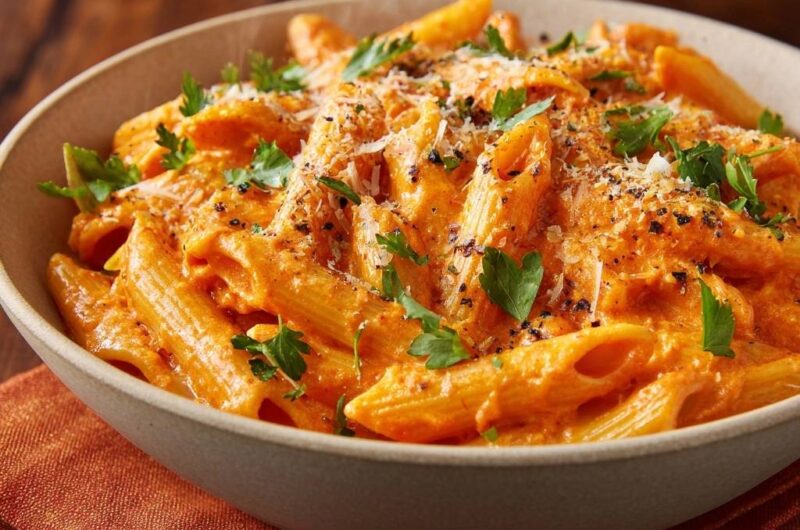
Roasted Red Pepper Penne
Course: Main CourseCuisine: Italian-AmericanDifficulty: easy4
servings10
minutes20
minutes440
kcal30
MinutesA vibrant and creamy pasta dish featuring a concentrated roasted red pepper puree, finished with cold butter and starchy pasta water for a restaurant-quality sauce that clings perfectly to penne.
Ingredients
1 pound penne pasta
1 jar (12 ounces) roasted red peppers, drained and patted dry
3 cloves garlic, minced
1/2 cup heavy cream
2 tablespoons unsalted butter, cold
3/4 cup freshly grated Parmesan cheese (plus extra for garnish)
1/4 teaspoon red pepper flakes
2 tablespoons olive oil
1 cup reserved starchy pasta cooking water
1/2 cup fresh Italian parsley, roughly chopped
Coarse black pepper and sea salt to taste
Directions
- Bring a large pot of heavily salted water to a boil. Cook the penne for 2 minutes less than the package directions for al dente. The pasta must be slightly underdone so it can absorb the sauce without becoming mushy.
- While the pasta cooks, place the drained and dried roasted red peppers in a blender. Process until completely smooth.
- Heat olive oil in a large skillet over medium heat. Add the minced garlic and red pepper flakes, sautéing for 1 minute until fragrant but not browned.
- Pour the pureed peppers into the skillet. Simmer for 6 to 8 minutes, stirring occasionally. This step is vital; you are evaporating the brine and water from the peppers to concentrate the sugars and prevent a watery base.
- Lower the heat to medium-low and stir in the heavy cream. Let it simmer gently for 3 minutes until the sauce turns a vibrant orange and thickens.
- Before draining the pasta, scoop out 1 cup of the cloudy, starchy pasta water. Drain the penne and add it immediately to the skillet with the sauce.
- Add the cold butter and 1/2 cup of the reserved pasta water. Toss vigorously over medium heat for 2 minutes. The friction and starch will create a thick, glossy emulsion.
- Turn off the heat and stir in the 3/4 cup of Parmesan cheese. Continue tossing until the cheese is fully melted and the sauce tightly coats the ridges of the penne. If the sauce is too thick, add a splash more pasta water.
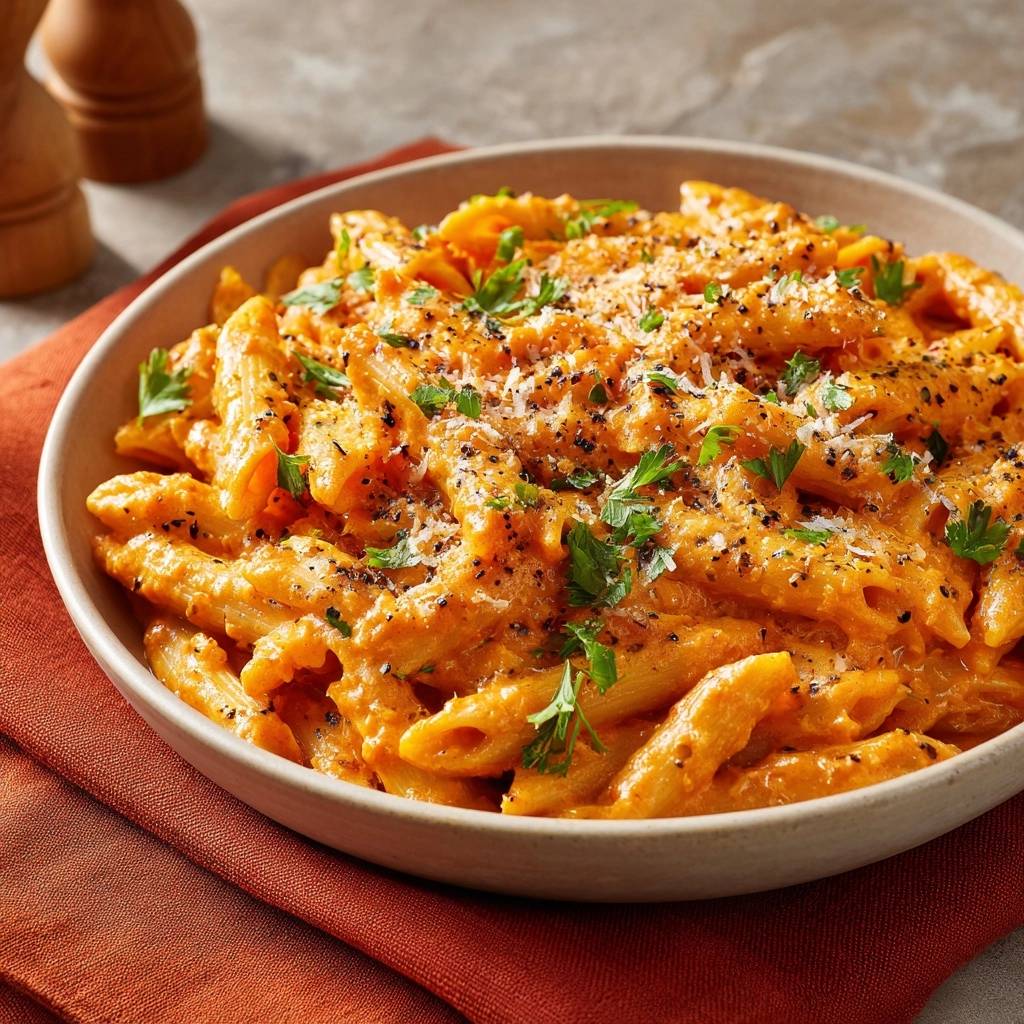
- Season generously with cracked black pepper and salt. Serve immediately in warm bowls, topped with a heavy handful of fresh parsley and an extra dusting of Parmesan cheese to match the visual texture of the dish.
Notes
- Reducing the pepper puree is vital to concentrate the sugars and prevent a watery base. Always use cold butter at the end to help stabilize the emulsion.