Mastering the Creamy Potato and Carrot Medley
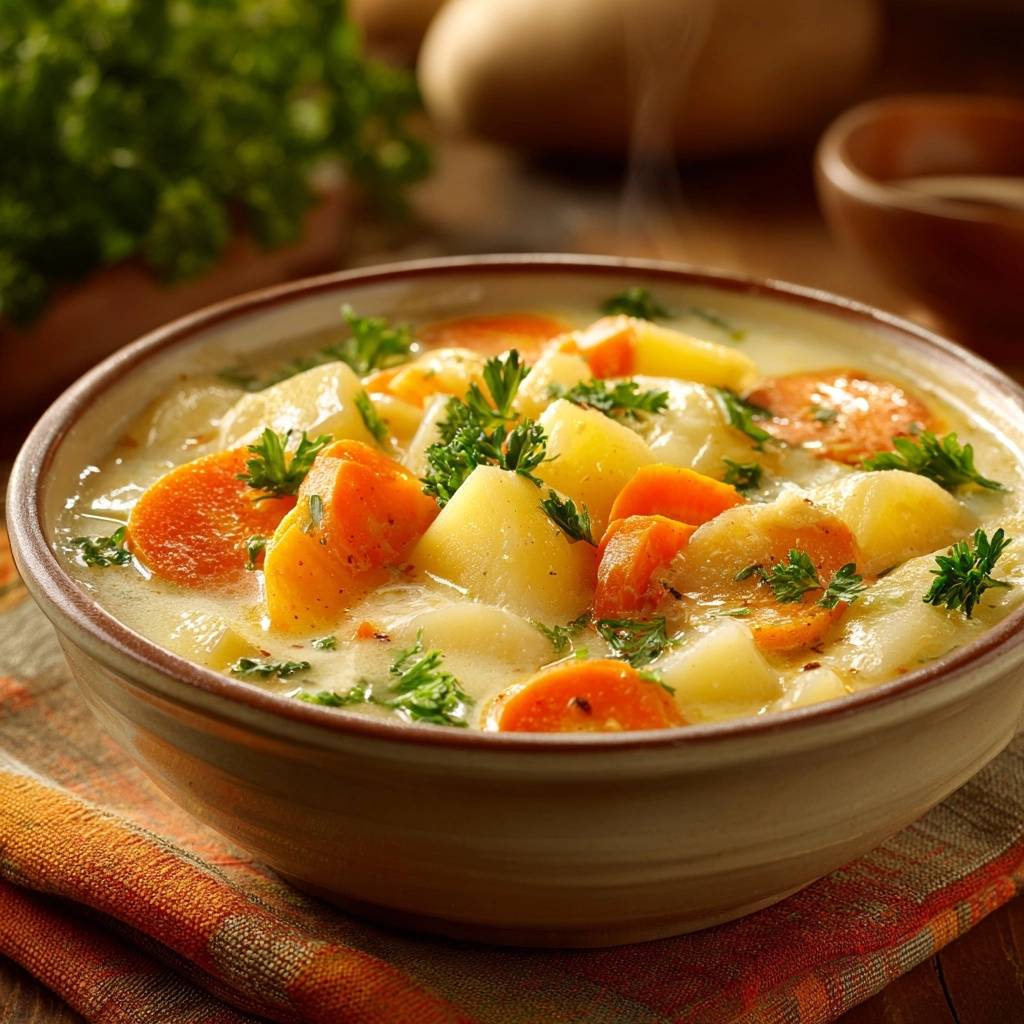
Most home cooks have experienced the disappointment of a vegetable stew where the potatoes dissolve into a gritty mush and the carrots lose all their bite. It’s frustrating when you want a hearty meal but end up with a bowl of textured water. This Creamy Potato and Carrot Medley solves that problem by focusing on structural integrity and a velvety finish.
The secret lies in the “Staggered-Simmer” technique, a method that respects the different cooking times of root vegetables. Instead of tossing everything into the pot at once, we introduce ingredients based on their density. This ensures that by the time the timer dings, every cube is fork-tender but still boasts clean, sharp edges that look beautiful on the plate.
For anyone working with this carrot and potato base, the same approach helps achieve a smooth, no-gummy soup texture.
I’ve found that the real trick to professional-grade texture is controlling the heat during the potato phase. If you let the pot reach a rolling boil, the turbulent water physically knocks the starch off the outside of the potato before the middle is soft. Keep it to a gentle bubble, and you’ll achieve that perfect, creamy mouthfeel without the grit.
The Science of Texture in Root Vegetables
Understanding why vegetables turn to mush requires a quick look at their cellular makeup. Carrots and potatoes are held together by pectin, a natural glue within the cell walls. However, carrots are significantly denser and have a more complex fiber structure than potatoes, meaning they require a longer thermal exposure to soften that pectin.
Yukon Gold potatoes are the middle ground of the potato world, containing just enough starch to be creamy but enough moisture to hold their shape. When you subject these potatoes to a violent, rolling boil, the starch granules on the surface swell and burst rapidly. This creates a “sloughing” effect where the exterior disintegrates into the broth, creating a grainy texture.
By maintaining a gentle simmer, you allow the heat to penetrate the center of the vegetable at the same rate the exterior softens. This preserves the “clean-edged” look that distinguishes a gourmet medley from a standard cafeteria stew. It’s all about managing that pectin breakdown so the vegetables remain distinct within the silky cream base.
Essential Components for the Creamy Potato and Carrot Medley
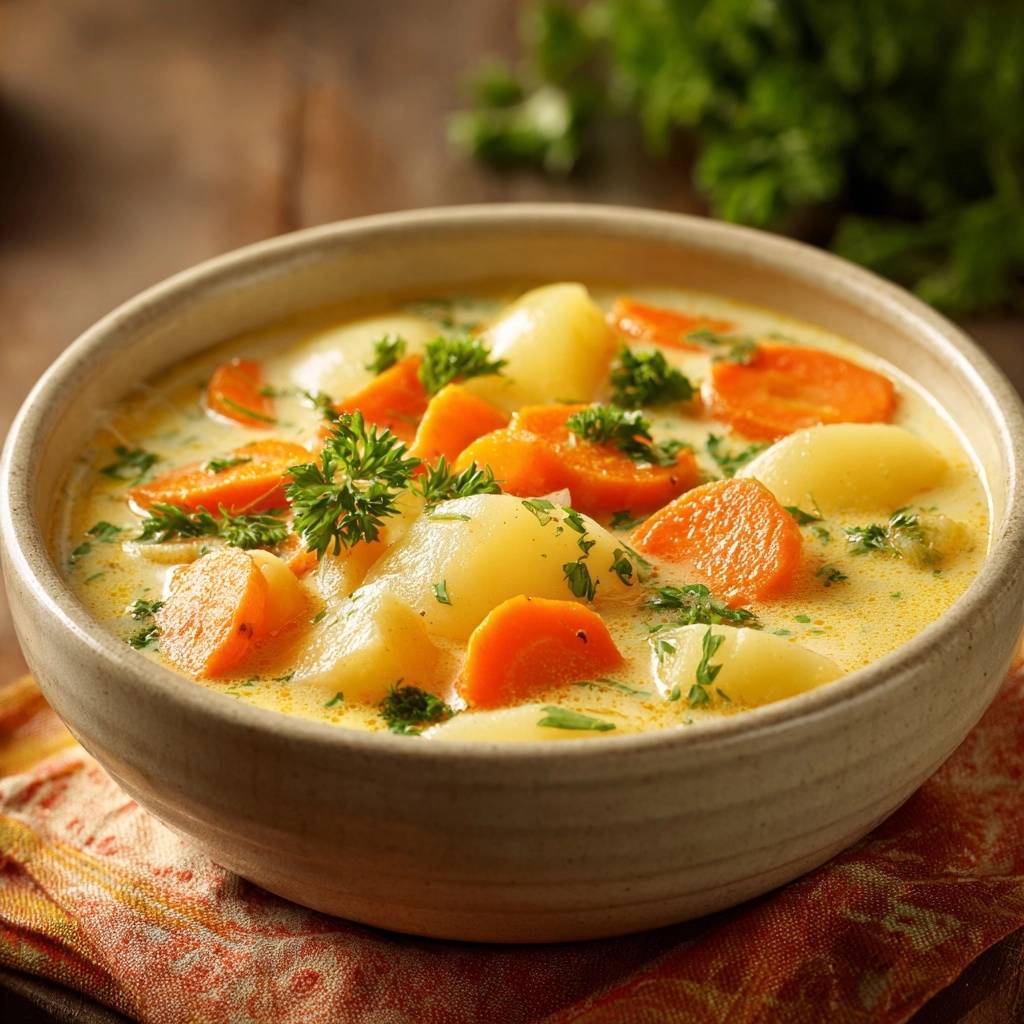
The success of this dish starts in the produce aisle. I always reach for Yukon Gold potatoes because they have a naturally buttery flavor and a waxy-yet-creamy texture. Unlike Russets, which are too starchy and prone to falling apart, or Red potatoes, which can stay a bit too firm, Yukons provide that luxurious bite we’re after.
For the aromatics, we use a simple base of yellow onion and fresh garlic. These provide a savory backbone that balances the natural sweetness of the carrots. While many recipes call for flat-leaf parsley, I specifically use fresh curly parsley here. Its ruffled texture adds physical volume to the garnish, sitting high on the vegetable peaks rather than wilting into the broth.
Don’t overlook the quality of your vegetable broth. Since this is a vegetable-forward dish, a high-quality, golden-hued broth will provide much more depth than a standard bouillon cube. It acts as the canvas for the heavy cream, ensuring the final sauce tastes rich and layered rather than just salty.
Selecting the Right Potatoes and Carrots
When shopping, look for carrots that are firm and bright orange without any soft spots or “hairy” root growth. For the best visual appeal, try to find carrots with a similar diameter to your potato cubes. When you slice the carrots into half-inch rounds and cube the potatoes into one-inch pieces, they create a sense of aesthetic symmetry in the bowl.
The Role of Fats and Thickening Agents
We use a combination of butter and all-purpose flour to create a light roux at the beginning of the process. This isn’t just for thickness; it’s about stability. The flour coats the fat molecules, creating an emulsion that prevents the heavy cream from separating or “breaking” when it hits the warm broth later on.
Step-by-Step: Executing the Staggered-Simmer Technique
Executing this recipe perfectly requires a bit of patience and a watchful eye on your stovetop dial. You’re acting as a coach for your ingredients, making sure each one enters the game at exactly the right moment to perform its best.
Building the Aromatic Base
Start by melting your butter over medium heat. When you add the onions, you’re looking for them to become translucent and soft, not brown. If they start to caramelize, the sweetness might overpower the delicate cream. Add the garlic only at the very end of this phase; it only needs about 60 seconds to release its aroma before it risks burning and becoming bitter.
Creating the Roux and Broth Foundation
Once the aromatics are soft, sprinkle the flour over the top. Stir it constantly for a minute or two to cook out the “raw” flour taste. When you start adding the vegetable broth, do it a half-cup at a time. Whisk vigorously after each addition to ensure there are no lumps. You’ll see the liquid transform into a smooth, opaque base that’s ready for the vegetables.
The Timing Secret: Carrots First
This is the most critical step for texture. Because carrots are so much denser than potatoes, they need a six-minute head start in the simmering broth. If you add them together, your potatoes will be overcooked by the time the carrots lose their crunch. This solo simmer time allows the carrots to begin their softening process in isolation.
Simmering the Potatoes to Fork-Tender Perfection
After the carrots have had their head start, gently slide the potato cubes into the pot. Check your heat immediately; you want small, lazy bubbles, not a frantic boil. After about 12 minutes, use a fork to pierce a potato. It should slide in easily but the cube should not shatter. If the edges look fuzzy, turn the heat down immediately.
Achieving the Silky Cold-Start Dairy Finish
Once the vegetables are tender, it’s time for the “cold-start” finish. Turn your burner down to the lowest setting before pouring in the heavy cream. Adding cold cream to a boiling liquid is a recipe for curdling, as the extreme temperature change can shock the dairy proteins. By lowering the heat first, you ensure the cream integrates smoothly, creating a vibrant, opaque sauce that coats the back of a spoon beautifully.
Troubleshooting Common Medley Mistakes
If you find your broth is a bit too thin after adding the cream, don’t panic. You can turn the heat up slightly and simmer for another 3-4 minutes to reduce the liquid, though you must stir constantly to prevent the bottom from scorching. If the broth is too thick, simply whisk in a splash more vegetable broth until you reach your desired consistency.
If you notice the potatoes starting to break down and “fuzz” at the edges, stop the cooking process immediately. Remove the pot from the heat and stir in the cream. The fat in the cream will help coat the loose starch and stop the vegetables from disintegrating further. It will still taste delicious, even if the edges aren’t as sharp as you planned.
Flavor Variations and Herb Substitutions
While thyme and parsley are the classic choices, you can easily pivot the flavor profile. Fresh dill and a squeeze of lemon juice can brighten the dish significantly, making it feel more like a spring soup. A tiny pinch of ground nutmeg added with the cream can also enhance the richness of the dairy without being identifiable as a specific spice.
For those avoiding dairy, full-fat coconut cream is an excellent substitute for heavy cream. It has a similar fat content which helps maintain the emulsion. Just be aware that coconut cream has a lower simmer point, so you must be even more careful not to let the pot boil once it’s added to the medley.
Optimal Pairings for a Hearty Vegetable Dish
This medley is quite rich, so it pairs beautifully with something that has a bit of “crunch” or “acid.” A thick slice of toasted sourdough bread is perfect for mopping up the creamy broth. Alternatively, a side salad of sharp arugula with a lemon vinaigrette provides a nice peppery contrast to the sweet carrots and buttery potatoes.
Storage and Reheating for Maximum Freshness
Store any leftovers in an airtight container in the refrigerator for up to three days. When reheating, avoid the microwave if possible, as it can heat the cream unevenly and cause it to separate. Instead, place the medley in a small saucepan over low heat. Add a tablespoon of water or broth to loosen it up and stir gently until it’s warmed through.
Expert Tips for Professional Presentation
To get that “chef-made” look, use the “Ladle and Layer” technique. Scoop the vegetables into the bowl first to create a small mound in the center, then pour the creamy broth around the sides. Finish with a very generous handful of curly parsley. By placing the parsley on the dry “peaks” of the vegetables, it stays bright and crisp rather than sinking into the liquid.
Frequently Asked Questions
Can I use Red potatoes instead of Yukon Gold?
You can use Red potatoes, but the texture will be slightly different. Red potatoes are waxy and hold their shape extremely well, but they won’t provide the same creamy, buttery interior that Yukon Golds offer. If you use them, you might need to simmer them for an extra 2-3 minutes as they are denser than Yukons.
Why did my cream sauce break or curdle?
Cream sauces usually break because of excessive heat or acidity. If the soup was at a rolling boil when you added the heavy cream, the proteins likely clumped together. Always lower the heat to a minimum before adding dairy. Also, ensure you aren’t adding acidic ingredients like lemon juice until after the cream has been fully incorporated and the heat is off.
Can I make this in a slow cooker?
I don’t recommend using a slow cooker for this specific recipe. The long, slow heat of a crockpot tends to break down the pectin in the vegetables completely, resulting in the “mushy” texture we are trying to avoid. This dish relies on the precision of the staggered-simmer technique which is only possible on a stovetop.
How do I make this gluten-free?
To make this gluten-free, simply omit the all-purpose flour. Instead, create a slurry by mixing 1 tablespoon of cornstarch with 2 tablespoons of cold water. Whisk this slurry into the simmering broth right before you add the heavy cream. It will provide a similar thickness and a beautiful glossy sheen without the need for wheat flour.
Is it possible to freeze this medley?
I do not recommend freezing this dish. Potatoes often become grainy and “spongy” when frozen and thawed, losing their pleasant texture. Additionally, cream-based sauces have a tendency to separate and become watery once they go through a freeze-thaw cycle. This dish is best enjoyed fresh or within a few days of cooking.
Potato Carrot Medley
Course: SoupCuisine: AmericanDifficulty: easy4
servings15
minutes25
minutes310
kcal40
MinutesThis recipe uses a specific staggered-simmer technique and a cold-start dairy finish to ensure every vegetable cube holds its shape while remaining fork-tender. You get a silky, rich broth without sacrificing the texture of the actual ingredients.
Ingredients
4 large Yukon Gold potatoes, peeled and cubed into 1-inch pieces
3 large carrots, peeled and sliced into half-inch rounds
1 yellow onion, finely diced
3 cloves garlic, minced
2 tablespoons all-purpose flour
3 cups vegetable broth
1 cup heavy cream
2 tablespoons butter
1 teaspoon dried thyme
Salt and black pepper to taste
1/2 cup fresh curly parsley, roughly chopped for garnish
Directions
- Melt the butter in a large pot over medium heat. Add the diced onion and cook for 4 to 5 minutes until translucent. Add the garlic and cook for 60 seconds until fragrant.
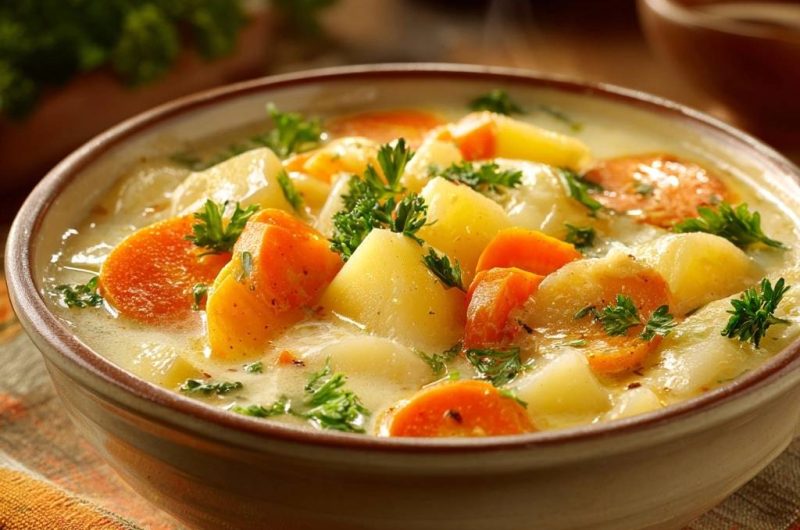
- Stir in the flour and cook for 1-2 minutes, stirring constantly. This creates a light roux that ensures the broth has the creamy, opaque body seen in the image rather than a thin, watery consistency.
- Gradually whisk in the vegetable broth to avoid lumps. Add the dried thyme and bring the liquid to a gentle simmer.
- Add the sliced carrots first. Carrots are denser and require more time to soften. Simmer the carrots alone in the broth for 6 minutes.
- Add the potato cubes to the pot. Ensure the liquid is at a gentle simmer, not a rolling boil; high heat causes the exterior of the potato to slough off into “grit” before the center is cooked.
- Cook for 12 to 15 minutes. Test the vegetables with a fork; they should be tender but hold a sharp, clean edge.
- Reduce the heat to low. Pour in the heavy cream. Stir gently to combine and heat through for 2 minutes. Do not allow the soup to boil once the cream is added to prevent curdling.
- Season generously with salt and pepper. Remove from heat.
- Ladle into bowls. To match the visual presentation, top with a very generous amount of fresh curly parsley, ensuring some is stirred in and some rests on top of the vibrant vegetable peaks.
Notes
- To prevent the potatoes from turning to grit, maintain a gentle simmer rather than a rolling boil. Do not boil the soup after adding the cream to avoid curdling.