Mastering the Shaved Brussels Sprouts and Citrus Salad
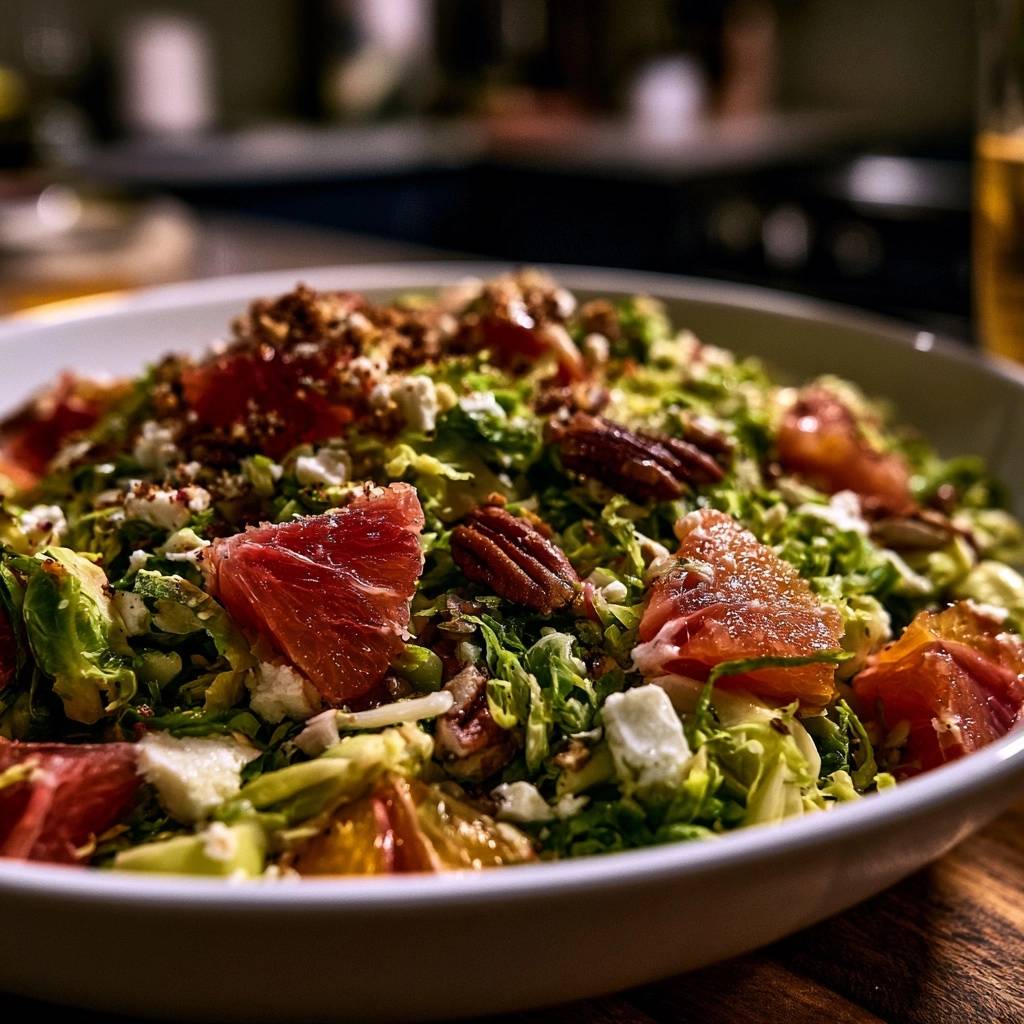
Most raw Brussels sprout salads suffer from a fatal flaw: they turn into a limp, watery mess within minutes of hitting the table. You’ve likely experienced that disappointing pool of diluted dressing at the bottom of the bowl. This Shaved Brussels Sprouts and Citrus Salad solves that problem entirely by focusing on a graphic, satisfying crunch that holds up for hours.
The secret to this restaurant-quality texture lies in the “Salt and Squeeze” method. By pre-treating the greens, you transform a tough, woody vegetable into a tender ribbon that absorbs flavor without losing its bite. When you pair that structural integrity with the bright acidity of blood oranges and the creamy tang of feta, you get a dish that feels both sophisticated and incredibly refreshing.
Expertise in the kitchen often comes down to moisture management. The key here is using your hands to physically break down the sprouts. You’ll notice the leaves change from a dusty, pale green to a vibrant, translucent emerald as the salt works its way in. This isn’t just about seasoning; it’s about changing the cellular structure of the vegetable to ensure every forkful stays crisp.
The Science of the Salt and Squeeze Method
When you sprinkle salt over shaved Brussels sprouts, you trigger an osmotic process. Salt draws water out of the plant’s cell walls, which effectively “wilts” the vegetable without the use of heat. This is vital because raw sprouts contain a high percentage of water that usually leaks out once a vinaigrette is applied, thinning your dressing and ruining the mouthfeel.
By forcing this moisture out early, you also remove the harsh, sulfuric bite often associated with raw brassicas. The liquid you squeeze into the sink carries away that bitter edge, leaving behind a mild, nutty base. It’s a similar technique to how you might prepare a traditional kale salad, but because sprouts are more densely packed, the mechanical squeeze is even more critical for success.
Furthermore, this method creates space within the fibers for the olive oil and honey to actually cling to the leaves. Instead of the dressing sliding off a slick, water-filled surface, it coats the fluffed-up ribbons perfectly. You’ll find the resulting texture is much more palatable and easier to chew than standard raw shavings.
Why Mechanical Massaging Changes the Texture
Massaging the sprouts for a full two minutes is a workout for your hands, but it’s non-negotiable. This physical action breaks down the tough cellulose fibers that make raw sprouts feel “heavy” or dry in the mouth. You aren’t looking to pulverize them, just to soften them until they feel supple.
As you massage, the sprouts will transition from a stiff, haystack-like pile into tender, manageable ribbons. They maintain their structural integrity, so they won’t turn to mush, but they lose that aggressive “crunch” that can sometimes feel like eating wood chips. It’s the difference between a rustic slaw and a refined salad.
Essential Components for the Shaved Brussels Sprouts and Citrus Salad
Quality starts with the sprouts themselves. Look for small to medium heads that feel heavy for their size and have tightly packed leaves. If the sprouts are loose or starting to sprout yellow leaves, they’ll be too bitter and won’t shave into those beautiful, clean ribbons we’re looking for.
Blood oranges are the star of the show here because they offer a complex, raspberry-like undertone that standard navel oranges lack. Their deep crimson color also provides a stunning visual contrast against the green sprouts. If you can’t find blood oranges, Cara Cara oranges are a fantastic substitute due to their pink hue and low acidity, or you could use grapefruit for a more bracing, sophisticated tartness.
The feta cheese adds the necessary fat and salt to balance the citrus. Use a block of feta packed in brine rather than the pre-crumbled kind. The brine-packed cheese is much creamier and won’t have that chalky coating, allowing it to melt slightly into the dressing and create a rich, velvety finish.
Selecting and Toasting the Perfect Pecans
Raw pecans have a soft, almost waxy texture that disappears in this salad. Toasting them is essential to bring out their earthy, buttery oils. While a dry toast in a pan works, tossing them with a tiny bit of butter before toasting adds a layer of richness that complements the honey in the dressing.
Keep a close eye on them in the oven or pan. Pecans go from perfectly toasted to burnt in a matter of seconds. You’ll know they’re ready when they smell fragrant and the centers look golden brown when snapped in half.
The Role of Toasted Panko in Salad Architecture
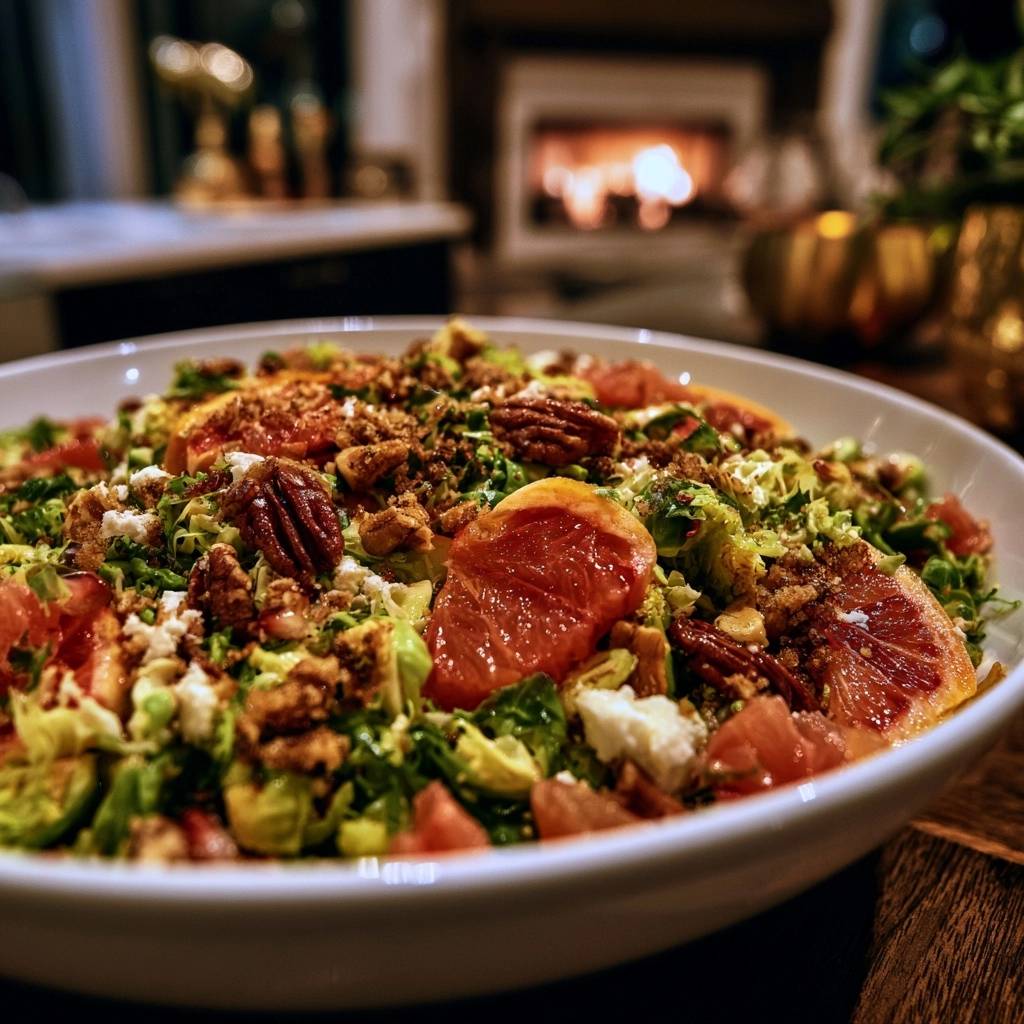
Panko breadcrumbs act as a “finishing dust” that provides a final layer of crunch. By toasting them in butter until they are deep golden brown, you create a savory element that mimics the texture of a fried topping without the heaviness. It’s a chef’s trick for adding “architecture” to a dish.
Don’t mix the panko into the salad ahead of time. It should be sprinkled on top just before serving so it stays bone-dry and crisp. This creates a wonderful contrast against the juicy orange segments and the softened, massaged sprouts.
Step-by-Step: Preparing the Base and Dressing
Start by trimming the woody ends off your sprouts. For the best results, use a mandoline set to the thinnest possible setting. If you don’t have one, a sharp chef’s knife works, but take your time to get paper-thin slices. A food processor with the slicing attachment is a great time-saver, though the results are slightly less uniform.
The dressing is a simple emulsification of extra virgin olive oil, apple cider vinegar, and honey. The honey is crucial here; it acts as a bridge between the sharp vinegar and the bitter sprouts. Whisk it vigorously in a small jar until the oil and vinegar no longer separate, creating a thick, cloudy vinaigrette that will coat the greens evenly.
Always taste your dressing before adding it to the bowl. Depending on the sweetness of your oranges, you might want an extra drop of honey or a pinch more black pepper. Remember that the sprouts already have salt from the massaging process, so keep the salt in the dressing to a minimum.
Executing the Moisture Extraction Phase
After the sprouts have sat with the salt for five minutes, you’ll see a pool of dark green liquid at the bottom of the bowl. Grab a large handful of sprouts and squeeze as hard as you can over the sink. You’ll be surprised at how much liquid comes out—sometimes up to a quarter cup for a pound of sprouts.
The compressed sprouts will look like a tight ball at first. Don’t worry; just return them to a clean bowl and use a fork to fluff them back up. They should feel damp but not wet, and they will be significantly darker in color than when you started. This is the “dry” base that is now ready to soak up your vinaigrette.
Folding and Layering for Visual Impact
To “supreme” your oranges, cut off the top and bottom, then slice away the peel and white pith following the curve of the fruit. Carefully cut between the membranes to release the clean segments. This ensures you don’t have any tough, bitter skin interfering with the salad’s texture.
When assembling, toss the fluffed sprouts with the dressing first. Only after the greens are coated should you gently fold in the orange segments, pecans, and feta. If you toss too aggressively after adding the cheese, the feta will smear and turn the salad cloudy. Layering the panko on top at the very end keeps the presentation clean and professional.
Avoiding Common Mistakes with Shaved Salads
The most common pitfall is over-salting. Because you use a half-teaspoon of salt to extract moisture, much of that salt stays on the leaves even after squeezing. Always taste the salad after it’s fully dressed before you even think about adding a finishing pinch of flaky sea salt.
Another mistake is shaving the sprouts too far in advance without treating them. Raw, cut sprouts oxidize quickly, turning brown and developing a funky, cabbage-like odor. If you aren’t ready to eat, perform the salt-and-squeeze step immediately after shaving; the salt actually helps preserve the color and flavor for a longer period.
Flavor Variations and Seasonal Swaps
This recipe is highly adaptable. If you aren’t a fan of feta, try shaving some aged Pecorino Romano over the top for a saltier, sharper kick. Goat cheese is another excellent option, providing a creamy texture that pairs beautifully with the citrus, though it will be harder to “fold” without it breaking down.
For a different crunch, swap the pecans for toasted Marcona almonds or walnuts. In the late winter months, you can add a handful of pomegranate arils for extra pops of tart juice. If you want to make it a bit heartier, adding some shaved fennel provides a lovely licorice note that complements the apple cider vinegar.
Pairing Suggestions for a Balanced Meal
This salad is bright and acidic, so it pairs best with proteins that have a bit of richness. Roasted chicken with crispy skin or a seared piece of salmon are perfect matches. The citrus in the salad acts like a palate cleanser between bites of savory meat.
If you’re looking for a vegetarian pairing, a warm farro risotto or a simple roasted squash dish works beautifully. Avoid serving this alongside heavy, cream-based pastas or soups, as the sharp vinegar and citrus can clash with the dairy and make the meal feel disjointed.
Troubleshooting and Expert Tips
Can I use frozen Brussels sprouts for this salad?
No, frozen sprouts will not work. The freezing process breaks down the cell walls, so when they thaw, they become soft and mushy. This salad relies entirely on the structural integrity of fresh, raw sprouts to achieve the desired crunch.
How do I fix a salad that tastes too acidic?
If the vinegar or citrus feels overwhelming, add a tiny bit more honey or a drizzle of olive oil. Fat and sugar are the best tools to balance out high acidity. You can also add more toasted pecans, as their earthy fat helps mellow the sharp notes.
My panko breadcrumbs got soggy immediately. What happened?
This usually happens if the panko is added while the salad is still very wet or if the breadcrumbs weren’t toasted long enough. Ensure you’ve squeezed the sprouts thoroughly and only add the panko at the very last second before the bowl hits the table.
Can I substitute the honey for a vegan alternative?
Absolutely. Maple syrup is a fantastic substitute and actually pairs very well with the earthy flavor of the Brussels sprouts. Agave nectar also works, though it has a more neutral flavor profile than honey or maple syrup.
Why does my salad taste bitter?
If the salad is overly bitter, you likely didn’t squeeze enough of the green liquid out after the salt massage. That liquid contains the bitter compounds. Next time, be more aggressive with the squeeze! Also, ensure you’ve removed all the white pith from the oranges.
Make-Ahead and Storage Logistics
Unlike most salads, this one actually benefits from sitting for 30 minutes to an hour, as the flavors meld together. Because of the moisture extraction step, it won’t get soggy. You can store the fully assembled salad in an airtight container in the refrigerator for up to 24 hours.
If you need to prepare it further in advance, keep the toasted panko and pecans in a separate dry container at room temperature. Add them just before serving to ensure they maintain their maximum crunch. The massaged sprouts and dressing can be prepped and mixed up to a day ahead without losing their vibrant color.
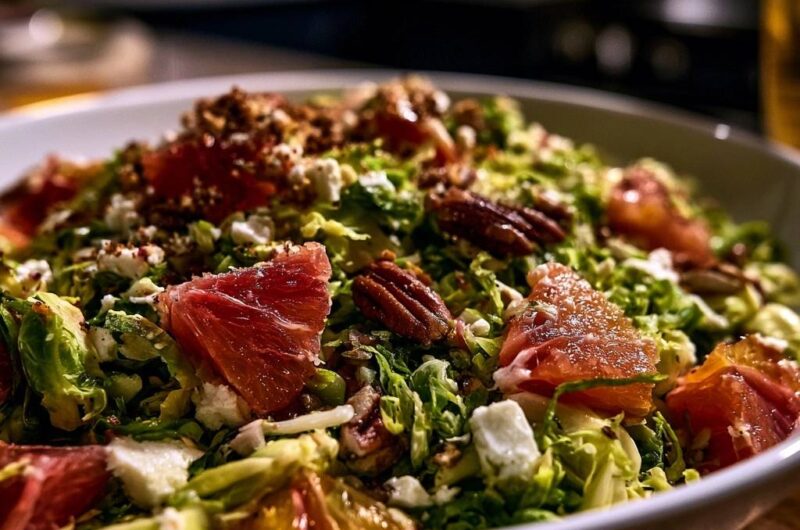
Shaved Brussels Sprouts and Citrus Salad
Course: SaladCuisine: AmericanDifficulty: easy4
servings15
minutes5
minutes20
Minutes265
kcalAmerican
Ingredients
1 pound Brussels sprouts, ends trimmed and finely shaved
2 blood oranges, peeled and cut into segments (supremes)
1/2 cup toasted pecan halves
1/3 cup crumbled feta cheese
1/4 cup panko breadcrumbs, toasted in butter until golden (for the visual “dusting” shown in the image)
3 tablespoons extra virgin olive oil
1 tablespoon apple cider vinegar
1 teaspoon honey
1/2 teaspoon sea salt (for massaging)
1/4 teaspoon cracked black pepper
Pinch of flaky sea salt (for finishing)
Directions
- Place the finely shaved Brussels sprouts in a large mixing bowl and sprinkle with the 1/2 teaspoon of sea salt. Use your hands to firmly massage the salt into the sprouts for 2 minutes until they appear slightly darker and softened. Let them sit for 5 minutes. This is the crucial step to prevent sogginess.
- After 5 minutes, grab handfuls of the sprouts and squeeze firmly over the sink to discard the bitter green liquid that has been released. Return the dry, compressed sprouts to a clean bowl and fluff them with a fork.
- In a small jar, whisk together the olive oil, apple cider vinegar, honey, and black pepper until fully emulsified.
- Pour the dressing over the massaged sprouts and toss thoroughly. Because you removed the excess water, the dressing will cling to the leaves instead of pooling at the bottom.
- Gently fold in the blood orange segments, toasted pecans, and crumbled feta cheese.
- Transfer to a serving bowl. Top with the toasted panko breadcrumbs to achieve the textured, crusty finish seen in the image.
- Serve immediately or refrigerate. Thanks to the salt-massaging technique, this salad will maintain its structural integrity and crunch even if prepared in advance.
Notes
- The Salt and Squeeze method is the secret to preventing a soggy salad. Massaging the sprouts with salt breaks down tough fibers and removes excess moisture, allowing the dressing to cling better to the leaves.