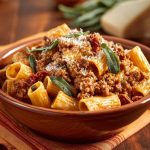
Mastering the Hearty Rigatoni Bolognese
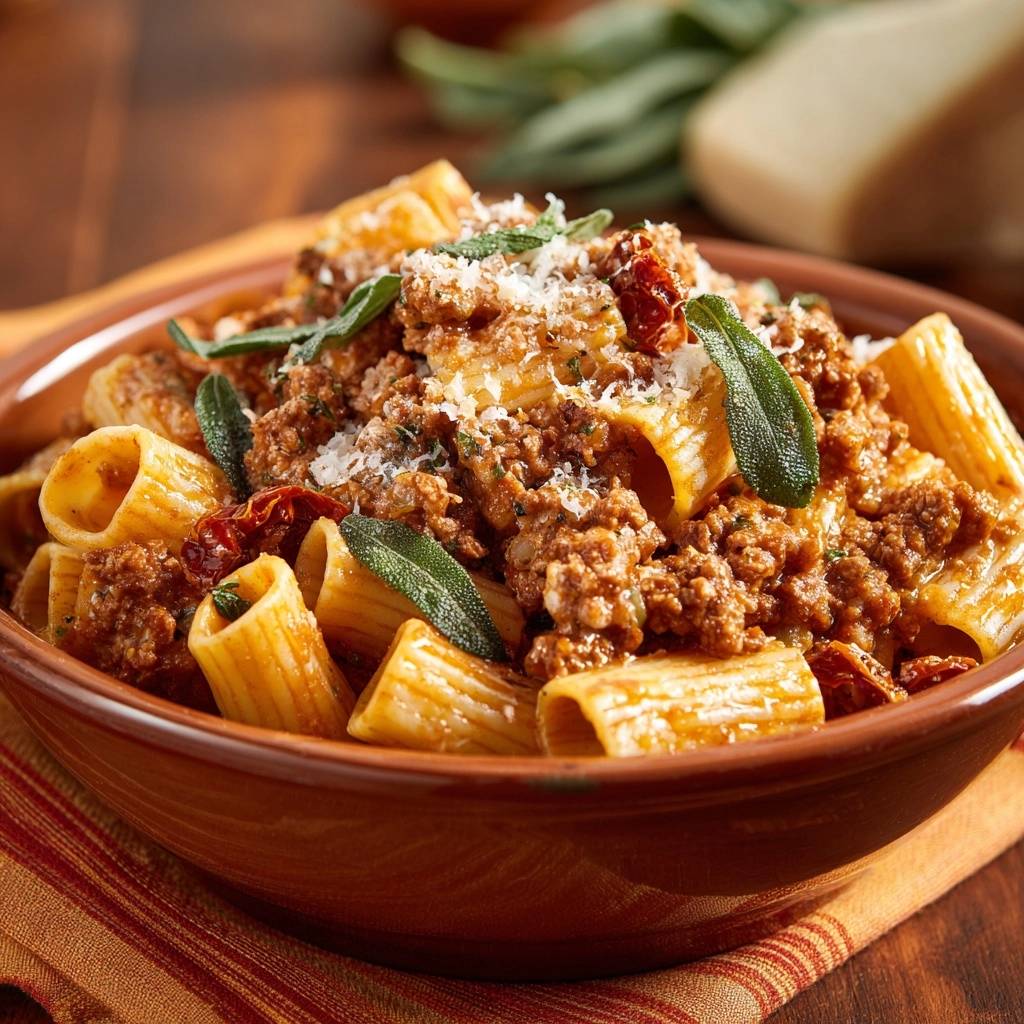
There is nothing quite as disappointing as a plate of pasta sitting in a pool of watery liquid. You spend your evening simmering a sauce, only to have the flavors separate the moment they hit the plate. This Hearty Rigatoni Bolognese solves that exact problem by focusing on a thick, emulsified texture that clings to every single ridge of the pasta.
The secret to this professional finish lies in the reduction of the tomato paste and the addition of starchy pasta water at the very end. By cooking the rigatoni for 45 minutes total, including the sauce prep, you create a meal that feels like it spent all day on the stove. It is a rich, 620-calorie comfort dish that delivers a velvety mouthfeel without the thin, runny mess common in home-cooked versions.
The same gentle simmer works beautifully for this hearty meatball tortellini soup, where the broth deepens as it rests.
I’ve found that the real trick to a “never watery” sauce is the caramelization of the tomato paste. Most people just stir it in and add liquid immediately, but you need to fry that paste until it turns a dark brick red. This removes the metallic tin flavor and creates a concentrated base that acts as a natural thickener for the beef broth and cream.
The Anatomy of a Non-Watery Meat Sauce
A truly great Bolognese isn’t just a mixture of meat and tomatoes; it is a stable emulsion. When you see water separating from the sauce on your plate, it means the fats and liquids haven’t bonded correctly. This recipe uses the proteins in heavy cream and the starches from the pasta water to bridge that gap, creating a sauce with incredible “clinging power.”
Using 80/20 ground beef is essential here because that 20% fat content provides the necessary lipids for a silky sauce. However, we don’t want a greasy finish. By browning the meat until it is slightly crispy, you develop deep flavor through the Maillard reaction, while the subsequent reduction phase ensures the liquid components thicken into a coating rather than a soup.
The final step of tossing the pasta vigorously in the skillet is where the science happens. As you stir the undercooked rigatoni with the Parmesan and reserved water, the starch molecules swell and bind the beef fats to the pasta. This creates a unified dish where the sauce stays exactly where it belongs—inside and on top of the noodles.
Why Sun-Dried Tomatoes Change the Profile
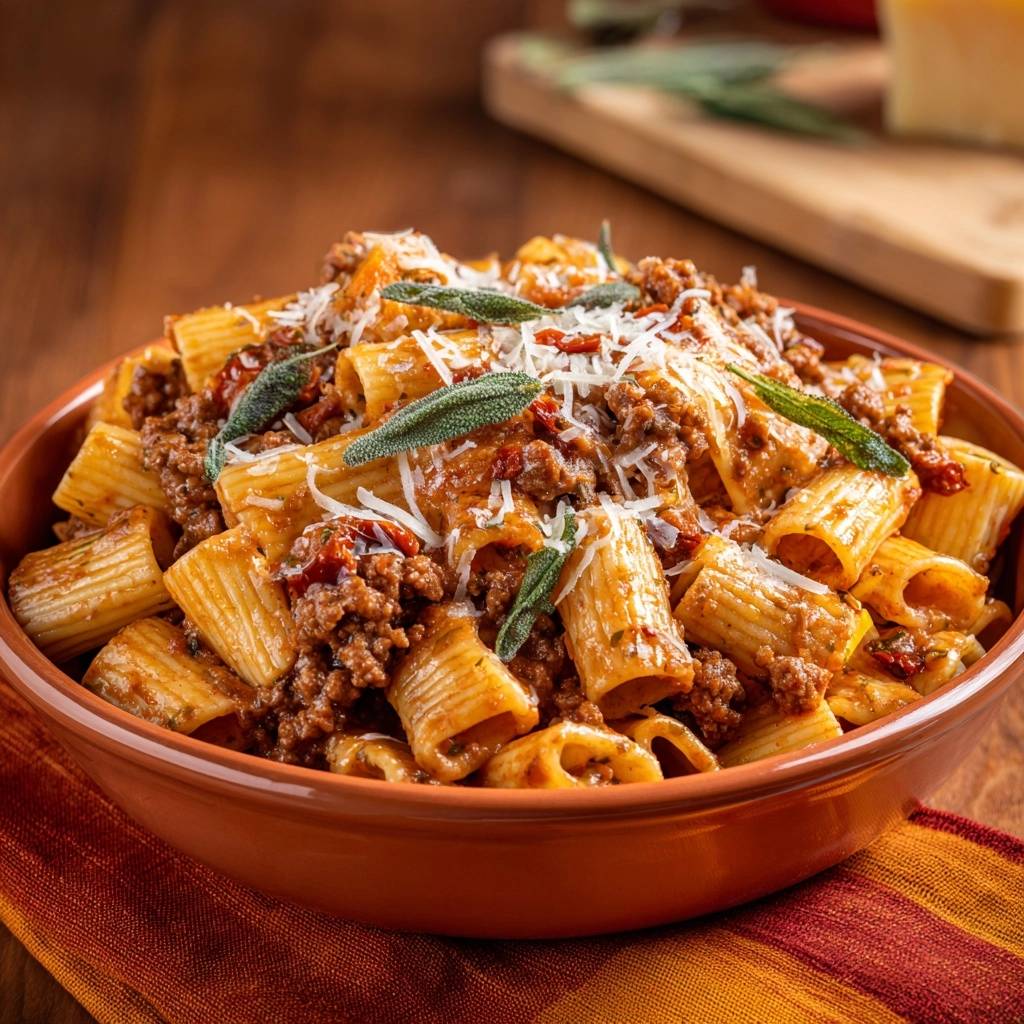
While traditional Bolognese relies on fresh or canned tomatoes, this version introduces half a cup of chopped sun-dried tomatoes. These little gems provide a concentrated, jammy acidity that cuts through the richness of the beef. Their chewy texture also adds a “meatier” bite, making the sauce feel even more substantial.
I recommend using the variety packed in oil for the best results. They are much more tender than the dry-packed kind and carry a seasoned flavor that permeates the entire dish. Just be sure to drain them well before chopping so you don’t introduce too much extra oil into your skillet.
The Role of Heavy Cream and Parmesan
Adding heavy cream might seem like a departure from a standard red sauce, but it is the key to a mellow, rounded flavor profile. The dairy proteins help to stabilize the sauce, preventing the acidic tomatoes from clashing with the savory beef broth. It turns the sauce a beautiful deep orange-red and adds a luxurious weight to the palate.
The Parmesan cheese acts as more than just a garnish; it is a functional binder. As the finely grated cheese melts into the simmering sauce, it provides a salty punch and helps thicken the liquid. This combination of dairy and cheese ensures the sauce is robust enough to fill the large hollow centers of the rigatoni.
Essential Components for Hearty Rigatoni Bolognese
Every ingredient in this recipe serves a specific purpose to ensure the final result is bold and balanced. Starting with a yellow onion is a deliberate choice because it has a higher sugar content than white onions. As it cooks in the beef fat, it softens and provides a subtle sweetness that balances the savory beef broth.
Fresh sage is the unsung hero of this dish. While many people reach for basil or oregano, sage offers an earthy, piney aroma that stands up beautifully to heavy cream and beef. It feels more “autumnal” and sophisticated. If you use dried sage, you lose that bright, aromatic punch, so try to find the fresh leaves if you can.
Don’t overlook the garlic. Three cloves might seem like a lot, but when minced and cooked just until fragrant, they provide a backbone of flavor without being overwhelming. The goal is a layered taste where no single ingredient dominates, but everything works together to create a “hearty” experience.
Selecting the Right Rigatoni
Rigatoni is the absolute best vessel for a thick meat sauce. The name comes from the Italian word “rigate,” which means ridged. Those ridges are designed specifically to catch and hold onto thick sauces. If you used a smooth pasta like spaghetti, the heavy beef crumbles would simply slide off and fall to the bottom of the bowl.
Furthermore, the large hollow center of rigatoni acts like a straw, trapping the bits of sun-dried tomatoes and ground beef inside. This ensures that every forkful gives you a perfect ratio of pasta, meat, and sauce. It is a much more satisfying eating experience than chasing small bits of meat around your plate with a fork.
The Importance of High-Quality Beef Broth
Since we are reducing the sauce for 10 to 12 minutes, the flavor of your beef broth will become very concentrated. I always suggest using a low-sodium beef broth so you can control the salt levels yourself. You can always add more salt at the end, but you can’t take it away once the sauce has reduced.
A good broth adds a depth of “umami” that water or vegetable stock simply can’t match. It bridges the gap between the browned beef and the tomato base, creating a savory liquid that feels like it has been simmering for hours. If the broth tastes good on its own, your sauce will taste even better.
Phase One: Developing the Maillard Reaction
The first step to a professional Bolognese is browning the beef correctly. You want to heat your olive oil until it is shimmering before adding the meat. Once the beef is in the pan, resist the urge to move it around constantly. Let it sit for a few minutes so it can develop a dark, crispy crust.
This browning is known as the Maillard reaction. It is a chemical reaction between amino acids and reducing sugars that gives browned food its distinctive, savory flavor. Those “slightly crispy” bits of beef are flavor bombs that will soften slightly in the sauce but retain a wonderful texture that sets this recipe apart.
Phase Two: Caramelizing the Aromatics and Paste
After the beef is browned and the onions are translucent, it is time for the most important step: frying the tomato paste. Move the meat and onions to the edges of the pan and drop the paste right in the center. Stir it constantly for about 3 to 5 minutes.
You are looking for a color change from bright red to a dark, rusty brick red. You will also notice the smell change from sharp and acidic to sweet and savory. This step is non-negotiable. It builds the “hearty” foundation of the dish and ensures your sauce has a complex, cooked-out flavor rather than a raw, metallic one.
Phase Three: The Reduction and Emulsification Process
Now, you will pour in the beef broth and heavy cream. Use your wooden spoon to scrape the bottom of the pan vigorously. All those little brown bits stuck to the bottom are called “fond,” and they are packed with concentrated beef flavor. They will dissolve into the liquid as it simmers.
Let the sauce simmer on medium-low for about 10 to 12 minutes. You aren’t just heating it up; you are evaporating the excess water. You will know it is ready when the sauce looks thick and rich, and the oil starts to just barely bead on the surface. It should look like a heavy blanket, not a thin soup.
Phase Four: The Marriage of Pasta and Sauce
This is the technical climax of the recipe. You must pull your rigatoni out of the boiling water about 2 minutes before the package says it is “al dente.” The pasta should still have a firm bite in the center. It will finish its cooking journey inside the sauce, absorbing the beefy liquid like a sponge.
Add the pasta to the skillet along with that half-cup of starchy water you saved. Toss everything vigorously over medium heat. The starch in the water acts as a natural glue, helping the Parmesan and the cream bind to the pasta. After 2 or 3 minutes of tossing, you will see the sauce transform into a velvety coating that perfectly hugs every noodle.
Troubleshooting Common Bolognese Obstacles
If your sauce looks too thick after adding the pasta, don’t panic. Simply splash in a little more of that reserved pasta water one tablespoon at a time until it reaches your desired consistency. The starch in the water will loosen the sauce without making it watery or thin.
On the flip side, if the sauce isn’t clinging to the pasta, you might need more binder. Add another sprinkle of Parmesan cheese and turn the heat up slightly while tossing. The extra cheese will help emulsify the remaining liquids. If the cream curdles, it usually means the heat was too high or the sauce was too acidic; next time, ensure your tomato paste is fully caramelized before adding the dairy.
Preventing a Greasy Surface
While fat equals flavor, nobody wants a layer of yellow oil floating on top of their pasta. If you find your 80/20 beef released more fat than expected, feel free to spoon some out before adding the onions. You want to leave about one tablespoon in the pan to help sauté the aromatics.
If the sun-dried tomatoes were particularly oily, you can blot them with a paper towel after chopping. A little bit of oil is good for the mouthfeel, but the goal is a creamy, unified sauce, not a separated one. If you see oil pooling at the end, a vigorous stir with a splash of pasta water usually brings it back into the emulsion.
Fixing Over-Salted Sauces
Between the beef broth, the salted pasta water, and the Parmesan, it is easy to overdo the salt. Always taste your sauce before adding any extra seasoning. If it does end up too salty, you can balance it with a tiny pinch of sugar or a small squeeze of lemon juice.
The acid or sweetness won’t remove the salt, but it will distract your taste buds and make the dish feel more balanced. This is why using low-sodium broth is such a helpful insurance policy. It gives you the freedom to season the beef and onions early on without worrying about the final reduction becoming a salt bomb.
Optimal Side Dishes for Rigatoni
Because this Rigatoni Bolognese is so rich and creamy, you want side dishes that offer a sharp contrast. A bitter green salad is the perfect companion. Think about using arugula or radicchio tossed in a very simple lemon and olive oil vinaigrette. The bitterness and acidity will cleanse your palate between bites of the heavy pasta.
Of course, you can’t go wrong with bread. A crusty piece of sourdough or a salty focaccia is ideal for mopping up any sauce left in the bowl. Since the sauce is so thick, it stays on the bread beautifully. Avoid sides that are also heavy in cream or cheese, as they can make the meal feel too one-dimensional.
Storage and Reheating for Maximum Quality
Leftover rigatoni is often even more flavorful the next day because the pasta has had more time to absorb the sauce. Store your leftovers in an airtight container in the refrigerator for up to three days. I don’t recommend freezing the completed dish, as the cream in the sauce can grain up and the pasta can become mushy when thawed.
When reheating, avoid the microwave if possible. Instead, put the pasta in a small skillet over medium-low heat. Add a splash of water or a tablespoon of beef broth to loosen the sauce back up. Stir it gently until it is heated through. This helps the emulsion “reset” so the sauce becomes creamy and smooth again rather than oily.
Expert Tips for Professional Presentation
To make this dish look like it came from a high-end bistro, always warm your bowls before serving. You can do this by running them under hot water or putting them in a low oven for a few minutes. This prevents the cream-based sauce from cooling down and thickening too quickly once it is plated.
The visual contrast is just as important as the taste. The deep, dark red of the sauce looks stunning against a fresh dusting of white Parmesan. Adding the final sage leaves at the very end provides a pop of green that signals freshness. It is a simple touch that makes a huge difference in how the meal is perceived.
The Importance of Fresh Sage
Sage has a very distinct, slightly fuzzy texture and a powerful aroma that pairs perfectly with heavy meats. In this recipe, it provides an “earthy” note that balances the sweetness of the sun-dried tomatoes. If you can’t find sage, you could use thyme, but avoid basil here as it is a bit too sweet and delicate for such a heavy, savory sauce.
Choosing the Right Grater for Parmesan
For the best texture, use a microplane or a very fine grater for your Parmesan. This creates a “snow” effect where the cheese is so light it melts instantly upon contact with the hot pasta. Pre-shredded cheese often has anti-clumping agents that prevent it from melting smoothly, which can lead to a gritty texture in your sauce.
How do I store leftovers?
Store any leftover rigatoni in an airtight container in the refrigerator for up to 3 days. Because the pasta continues to absorb moisture as it sits, the sauce will thicken significantly. When you are ready to eat, reheat it on the stovetop with a splash of water or beef broth to bring back that creamy, velvety consistency. I do not recommend freezing the cooked pasta, as the texture of the rigatoni will become quite soft and the cream sauce may separate upon thawing.
Why is my sauce still watery?
If your sauce is watery, it usually means one of two things: the reduction time was too short or you didn’t use enough pasta water and cheese to emulsify the fats. To fix this, let the sauce simmer for a few extra minutes without a lid to allow more moisture to evaporate. Additionally, make sure you are tossing the pasta vigorously with the Parmesan and starchy water; that mechanical action is what actually creates the thick, clinging coating.
Can I use a different type of pasta?
While rigatoni is the best choice due to its ridges and hollow center, you can substitute it with other sturdy shapes like penne rigate or fusilli. These shapes also have “nooks and crannies” that help hold onto the thick meat sauce. Avoid long, thin noodles like spaghetti or linguine, as they don’t have the structural integrity to support the heavy beef crumbles and sun-dried tomatoes, often resulting in the meat falling to the bottom of the bowl.
What can I use instead of beef broth?
If you don’t have beef broth on hand, you can use chicken broth or even a bouillon cube dissolved in water. However, beef broth is preferred because it enhances the savory, “meaty” profile of the ground beef. If you must use water, be sure to increase the amount of salt and black pepper in the recipe to compensate for the loss of depth and seasoning that the broth normally provides.
Why do I need to cook the tomato paste for so long?
Cooking the tomato paste for 3 to 5 minutes is a culinary technique called “pincé.” This process caramelizes the natural sugars in the tomatoes and cooks out the raw, metallic taste often found in canned products. It transforms the paste into a concentrated flavor base that adds a deep, “brick red” color and a savory complexity that you simply cannot achieve by just stirring it into the liquid.
Rigatoni Bolognese
Course: Main CourseCuisine: Italian-AmericanDifficulty: medium4
servings15
minutes45
minutes620
kcal60
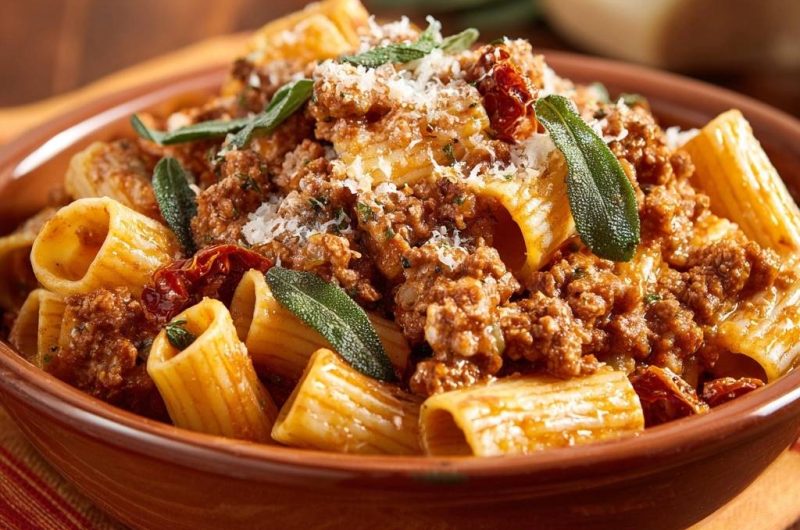
MinutesA robust meat sauce featuring ground beef, sun-dried tomatoes, and fresh sage. The sauce is specifically designed to cling to the rigatoni ridges by using a reduction and emulsification method, ensuring a velvety texture without any excess liquid.
Ingredients
1 pound rigatoni pasta
1 pound ground beef (80/20 for better flavor)
2 tablespoons olive oil
1 small yellow onion, finely diced
3 cloves garlic, minced
1/2 cup sun-dried tomatoes (packed in oil), drained and chopped
1 can (6 ounces) tomato paste
1 cup beef broth
1/2 cup heavy cream
3/4 cup freshly grated Parmesan cheese (plus extra for garnish)
12-15 fresh sage leaves
Salt and black pepper to taste
Directions
- Bring a large pot of heavily salted water to a boil. Cook the rigatoni for 2 minutes less than the package directions for al dente. This is crucial because the pasta will finish cooking in the sauce, absorbing the flavors.
- While the water boils, heat olive oil in a large skillet or Dutch oven over medium-high heat. Add the ground beef and cook, breaking it into small crumbles, until deeply browned and slightly crispy. Do not rush this; browning creates the base flavor. Drain excess fat if desired, but leave about 1 tablespoon for richness. Cook until no pink remains and it reaches 160°F (71°C).
- Add the diced onion to the beef and cook for 4 minutes until translucent. Stir in the garlic and chopped sun-dried tomatoes, cooking for another minute until fragrant.
- To solve the watery sauce problem, stir in the entire can of tomato paste. Cook it for 3-5 minutes, stirring constantly, until it turns a dark brick red and begins to stick slightly to the pan. This caramelization removes the raw metallic taste and creates a thick, concentrated base.
- Slowly pour in the beef broth and heavy cream. Use a wooden spoon to scrape up any browned bits (fond) from the bottom of the pan. Bring to a simmer and let it reduce for 10-12 minutes on medium-low heat. The sauce should be thick, rich, and deep red.
- Before draining the pasta, reserve 1/2 cup of the starchy pasta water.
- Add the undercooked pasta directly into the sauce skillet. Pour in the reserved pasta water and 1/2 cup of the Parmesan cheese. Toss vigorously over medium heat for 2-3 minutes. The starch in the water and the cheese will emulsify with the fats in the sauce, creating a velvety coating that clings to the rigatoni.
- In the final minute, stir in half of the fresh sage leaves. Serve immediately in warm bowls, topped with the remaining fresh sage leaves and a generous dusting of Parmesan cheese to match the visual presentation.
Notes
- To ensure the sauce clings perfectly, cook the pasta 2 minutes less than the package directions and finish it directly in the sauce with reserved starchy pasta water and Parmesan cheese.