Mastering Honey Pistachio Baklava Rolls: The Anti-Soggy Technique
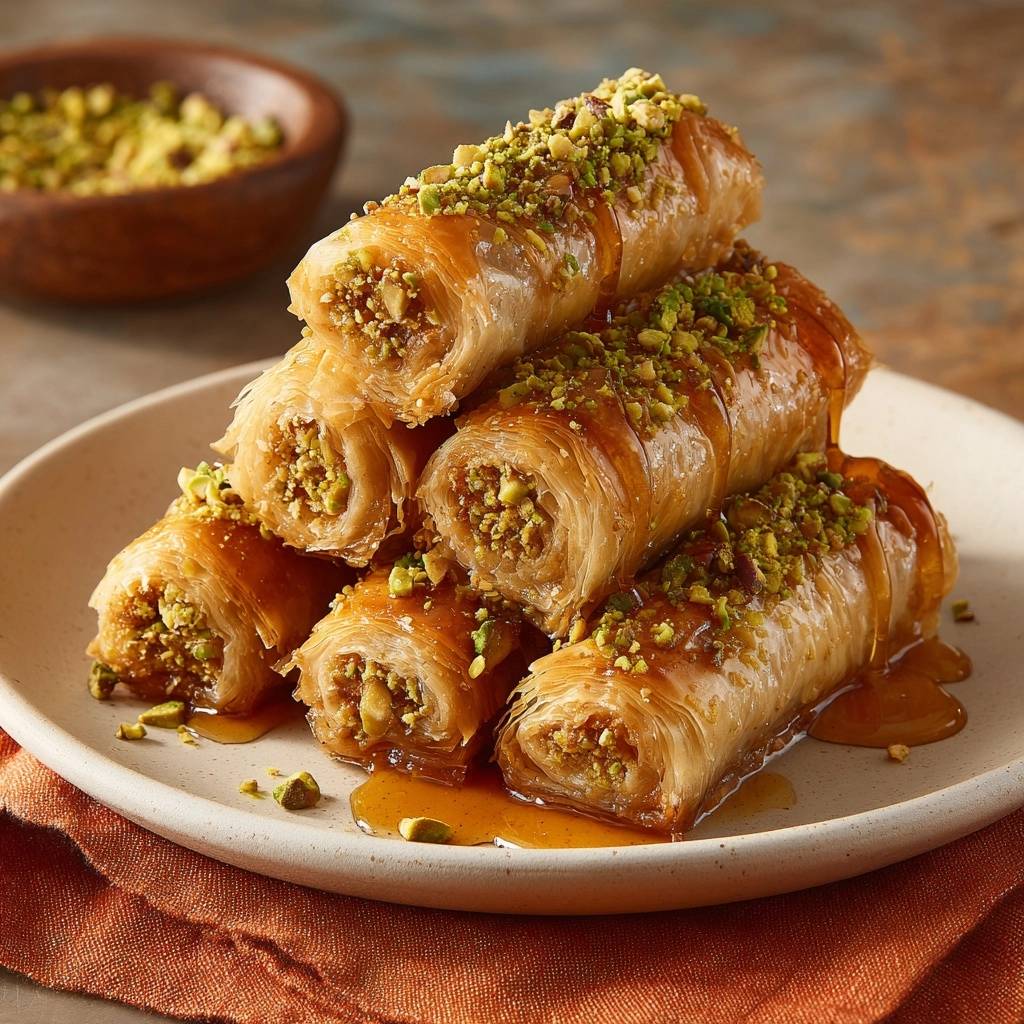
Imagine biting into a delicate, golden pastry that shatters into a thousand buttery shards before revealing a heart of spiced, roasted pistachios. That’s the promise of a perfect Saragli, or baklava roll. However, too many home cooks end up with a disappointing, oil-soaked mess that feels heavy on the palate and soggy at the base. It’s a heartbreaking waste of premium ingredients when that signature crunch is replaced by a mushy texture.
The secret to achieving a professional-grade result lies in the physics of moisture. Most recipes fail because they don’t respect the relationship between the pastry’s heat and the syrup’s viscosity. By mastering the “Temperature Contrast Method,” you ensure that your Honey Pistachio Baklava Rolls stay crisp for days, rather than hours. This technique creates a structural masterpiece where the honey clings to the ridges of the crinkled dough without compromising its integrity.
I’ve found that the real magic happens during the “sizzle” moment. When you pour chilled syrup over a tray fresh from the oven, the temperature differential forces steam out of the pastry layers instantly. This creates a vacuum effect that pulls the honey deep into the core while the outer walls remain firm. If you’ve ever struggled with limp baklava, this one specific change in your workflow will completely redefine your baking results.
The Anatomy of a Perfect Honey Pistachio Baklava Roll
A successful baklava roll is a balance of three distinct elements: structural integrity, aromatic depth, and fat distribution. The phyllo dough acts as the skeleton, providing hundreds of micro-layers that trap air and butter. Unlike flat baklava, the rolled Saragli shape increases the surface area of the dough, which means more opportunities for that satisfying crunch in every single bite.
Pistachios are the undisputed king of nuts for this specific shape. Their natural oils are stable under heat, and their vibrant green hue provides a stunning visual contrast against the golden pastry. When you add a touch of orange blossom water to the honey, you introduce a floral high note that cuts through the richness of the butter. This aromatic addition transforms a simple sweet into a complex, sensory experience that lingers on the tongue.
Why Temperature Contrast Prevents Soggy Pastry
The science of the “Sizzle” is your best friend in the kitchen. When the pastry is piping hot, the air pockets between the phyllo sheets are expanded and filled with steam. If you pour hot syrup over hot dough, the moisture simply sits there, hydrating the flour and turning it into a paste. This is the primary cause of the dreaded mushy bottom that ruins so many batches.
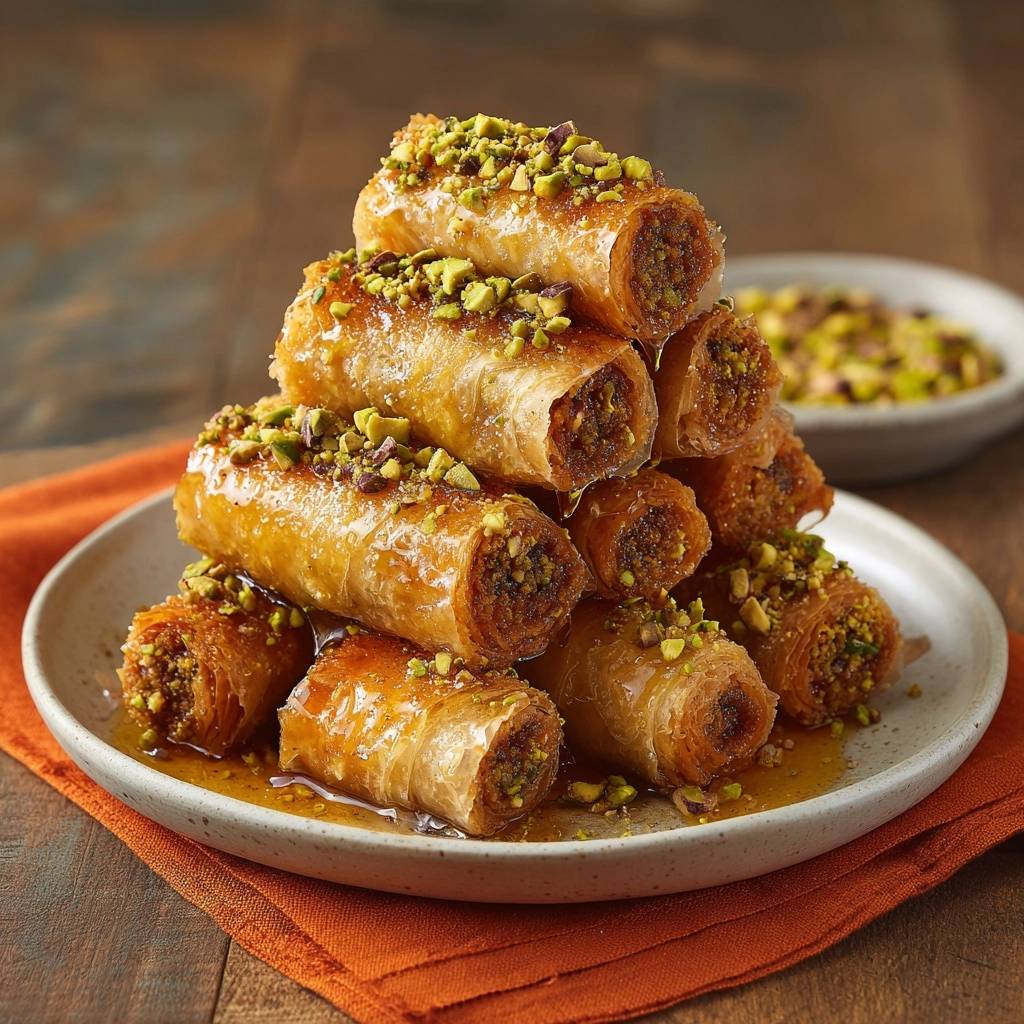
By using cold syrup, you create an immediate pressure differential. The cold liquid hits the hot fat and dough, causing the steam to escape rapidly. As the steam leaves, the syrup is sucked into those tiny gaps to take its place. Because the syrup is cold, it thickens quickly upon contact, coating the layers rather than soaking into the fibers of the dough. This keeps the “walls” of the pastry crisp while the “rooms” inside are filled with honey.
Essential Components for Honey Pistachio Baklava Rolls
Quality is everything when the ingredient list is this short. Start with a high-quality honey; a local wildflower or clover honey offers a nuanced sweetness that store-bought plastic bears simply can’t match. Since we aren’t using salt in the filling, using unsalted butter is vital. It allows you to control the flavor profile and ensures the delicate sweetness of the pistachios isn’t overshadowed by a salty aftertaste.
Fresh lemon juice is another non-negotiable component. Beyond adding a necessary brightness to the syrup, the acid acts as an interfering agent. It prevents the sugar molecules from bonding back together and crystallizing. Without that squeeze of lemon, your syrup might turn grainy and gritty after a few days, ruining the silky mouthfeel of the finished rolls.
Selecting and Handling Delicate Phyllo Sheets
Phyllo is notoriously temperamental, but it’s easy to manage once you know its quirks. Always thaw your phyllo in the refrigerator overnight rather than on the counter. Rapid temperature changes cause condensation inside the plastic, which makes the sheets stick together and tear. If you do encounter a few tears, don’t panic; just layer them in the middle of your roll where they’ll be hidden by the nuts.
If the flaky texture of these baklava rolls appeals to you, try this sheet pan almond coffee cake for another nutty, buttery treat.
The “Damp Towel Method” is your insurance policy against brittle dough. As you work, keep the stack of phyllo covered with a piece of plastic wrap, topped with a lightly damp (not soaking wet) kitchen towel. This creates a humid micro-climate that keeps the sheets pliable. If the dough dries out, it will shatter like glass when you try to roll it around the dowel.
Clarifying Butter for a Cleaner Crunch
Standard butter contains water and milk solids, both of which are enemies of a long-lasting crunch. When you melt and skim the white foam from the top of your butter, you’re removing the proteins that burn at lower temperatures. Using clarified butter, or ghee, allows the baklava to bake for the full 35 minutes without developing a bitter, burnt flavor.
This purified fat also has a much cleaner mouthfeel. Because the water has been evaporated or separated, the butter doesn’t “steam” the dough from the inside. Instead, it fries the layers of phyllo individually as they bake. This results in a translucent, golden finish and a texture that stays crisp even after the syrup has been applied.
Step-by-Step: Engineering the Perfect Saragli Shape
Creating the signature crinkled look of Saragli is more about finesse than force. Start by laying down your first sheet of phyllo and brushing it with butter using light, outward strokes. You don’t need to drench it; a thin, even coat is enough to laminate the layers. Repeat this with the second sheet, ensuring the edges are well-buttered so they don’t fray in the oven.
When you sprinkle the pistachio and cinnamon mixture, leave a small border at the top. This allows the dough to seal against itself at the end of the roll. If you get nuts in the seam, the roll might unravel during the baking process. Think of the nuts as a thin carpet rather than a thick pile; you want enough for flavor, but not so much that the roll becomes bulky and difficult to compress.
Preparing the Infused Honey Syrup
The syrup needs to be prepared first so it has ample time to chill in the fridge. Combine your honey, water, sugar, and lemon juice, bringing them to a gentle boil. You’re looking for the “thread stage,” where the liquid has thickened enough to coat the back of a spoon but still flows easily. This usually takes about ten minutes of simmering over medium heat.
Wait until you’ve removed the syrup from the heat before adding the orange blossom water. The aromatic compounds in floral waters are highly volatile and will evaporate if boiled. By stirring it in at the end, you lock that delicate scent into the syrup. Transfer the mixture to a glass jug and get it into the refrigerator immediately; the colder the syrup, the better the sizzle.
The Art of the Crinkle: Using the Dowel
Place a thin wooden dowel or a long metal skewer at the bottom of your buttered, nut-covered phyllo. Roll the dough tightly around the rod, keeping the tension even across the entire length. Once you reach the top, don’t slide it off just yet. This is where the “Saragli” magic happens.
Place your fingers on both ends of the dough-covered rod and gently push toward the center. The dough will bunch up like an accordion, creating dozens of tiny folds. These folds are essential because they act as “flavor traps” that catch and hold the honey syrup later. Carefully slide the crinkled log off the rod and into your baking dish, packing the rolls tightly against each other to maintain their shape.
If you love working with pistachios, this same nut shines in my pistachio baklava with crisp layers.
Baking for Depth: The Low and Slow Method
It’s tempting to crank up the heat to get a quick brown, but baklava demands patience. Baking at 325°F (165°C) ensures that the heat penetrates all the way to the center of the rolls. If the oven is too hot, the outside will look done while the inner layers remain raw and doughy. You want the moisture to evaporate slowly so every layer becomes a crisp wafer.
Keep a close eye on the color during the last ten minutes. You are looking for a deep, uniform golden brown. The pastry should look almost translucent, indicating that the butter has fully permeated the flour. If the rolls look pale, they will likely turn soggy once the syrup is added. Don’t be afraid of a little color; that’s where the toasted flavor lives.
The Critical Cooling and Setting Phase
Patience is arguably the most important ingredient in this recipe. Once you’ve poured the cold syrup over the hot rolls and heard that satisfying sizzle, you must walk away. The rolls need at least four hours, and ideally a full night, to rest at room temperature. During this time, the honey thickens and the flavors of the cinnamon and orange blossom water fully migrate into the nuts.
Whatever you do, do not cover the pan with plastic wrap or a tight lid while they are cooling. Even after the initial sizzle, the rolls will release a small amount of residual heat. If you cover them, that heat turns into condensation on the underside of the lid, which drips back onto your pastry and kills the crunch. Leave them open to the air or cover them loosely with a clean, dry kitchen towel.
Troubleshooting Common Baklava Roll Failures
If you find your baklava is sitting in a pool of liquid after a few hours, your syrup might have been too thin. You can’t easily fix this once it’s poured, but you can prevent it next time by simmering the syrup until it feels noticeably tacky between your fingers. If the rolls aren’t browning evenly, rotate your pan halfway through the baking time to account for any hot spots in your oven.
If a roll starts to unravel in the pan, it’s usually because it wasn’t packed tightly enough against its neighbor. Use a buttered spatula to gently nudge the rolls back together while they are still warm. The honey syrup will eventually act as a “glue” to hold everything in place once it sets, so minor structural issues often disappear after the cooling phase.
Why is my baklava swimming in oil?
A common mistake is using too much butter between the layers. While butter is essential for the crunch, the phyllo can only absorb so much. If you see a significant amount of yellow oil bubbling at the bottom of the pan after 30 minutes of baking, you can carefully tilt the pan and spoon out the excess before adding the syrup. This ensures the final product is rich but not greasy.
How to fix crystallized honey syrup
If your syrup turns grainy in the pot before you pour it, it has likely crystallized. This happens if sugar crystals on the side of the pan fall back into the mixture. To fix this, add a teaspoon of water and another squeeze of lemon juice, then heat it gently while stirring. The acid in the lemon juice will help break down the crystals and restore the smooth, syrupy texture.
Flavor Variations and Nut Substitutions
While pistachios are traditional, you can easily adapt this recipe to what you have in your pantry. Walnuts provide a deeper, earthier flavor that pairs beautifully with a pinch of ground cloves. Cashews offer a creamy, buttery texture that is less traditional but incredibly delicious. Just ensure whatever nut you choose is finely chopped so it doesn’t puncture the delicate phyllo sheets.
Sweet Morning Pairings
If the honey and pistachio flavors have you craving more sweet breakfast ideas, these pancake recipes share a love for fluffy, fruity breakfast treats.
- For a warm, spiced option that echoes the cinnamon richness of baklava, try Apple Pie Pancakes with their soft, tender texture.
- When you want a fruitier contrast to the nutty baklava, Fluffy Blueberry Pancakes offer a light, tangy counterpoint.
1 package phyllo dough (thawed)
2 ½ cups shelled pistachios (finely chopped, divided)
1 cup unsalted butter (melted and clarified/skimmed)
1/2 cup granulated sugar
1 teaspoon ground cinnamon
1 cup honey
1/2 cup water
1 tablespoon lemon juice
1 teaspoon orange blossom water (optional)
- Prepare the Syrup: Combine honey, water, sugar, and lemon juice in a small saucepan. Bring to a boil, then reduce heat and simmer for 10 minutes until slightly thickened. Stir in the orange blossom water. Transfer to a heat-proof jug and refrigerate until cold. This is essential for the “Anti-Soggy” promise.
- Preheat: Preheat your oven to 325°F (165°C). A lower temperature ensures the inner layers of the rolls crisp up without burning the exterior.
- Prepare Filling: In a bowl, toss 2 cups of the finely chopped pistachios with the cinnamon. Reserve the remaining 1/2 cup of pistachios for garnishing.
- Layer the Dough: Lay one sheet of phyllo on a clean surface and brush thoroughly with melted butter. Place a second sheet on top and brush again. (Keep remaining phyllo covered with a damp towel to prevent cracking).
- Roll: Sprinkle a generous, even layer of the pistachio mixture over the entire surface of the phyllo, leaving a 1-inch border at the top.
- Shape: Place a thin dowel or skewer at the bottom edge. Roll the phyllo tightly around the rod. Once rolled, place your fingers on both ends of the phyllo and push toward the center to create the “saragli” crinkled texture shown in the image. Slide the roll off the rod and onto a buttered baking dish.
- Butter and Cut: Repeat until all ingredients are used, packing the rolls tightly against each other in the pan. Brush the tops generously with the remaining butter. Use a sharp knife to cut the long logs into individual 4-inch rolls.
- Bake: Bake for 30 to 35 minutes or until the rolls are a deep, uniform golden brown and the layers appear translucent and crisp.
- The Secret Step: Immediately after removing the tray from the oven, pour the cold syrup over the piping hot rolls. You should hear a loud sizzle; this indicates the steam is escaping while the syrup is being pulled into the core of the roll without softening the pastry walls.
- Finish: While the syrup is still tacky, generously coat the top of each roll with the reserved crushed pistachios as seen in the image. Let the rolls sit for at least 4 hours (preferably overnight) at room temperature to allow the honey to set and the flavors to mature. Do not cover with plastic wrap, or they will lose their crunch.
You can also play with the aromatics. If orange blossom water isn’t your favorite, try rose water for a classic Middle Eastern profile. For a more modern twist, add some finely grated lemon zest to the nut mixture. This adds a pop of citrus that balances the heavy honey sweetness. Just remember to keep the ratios the same so the moisture levels don’t throw off the “Anti-Soggy” technique.
Storage Logistics: Maintaining the Crunch
The refrigerator is the absolute enemy of baklava. The high humidity in a fridge will turn your crisp rolls into a rubbery mess within hours. Instead, store your Honey Pistachio Baklava Rolls at room temperature. A vented container or a dish covered loosely with parchment paper is ideal. This allows the pastry to breathe while protecting it from dust.
When stored correctly at room temperature, these rolls will stay perfectly crisp for up to two weeks. In fact, many people find the flavor actually improves after the second or third day as the honey fully matures. If you live in a very humid climate, you can give them a quick 5-minute refresh in a 300°F oven to drive out any moisture, but let them cool completely again before eating.
Expert Tips for Professional Presentation
To get that “bakery window” look, the final garnish is key. Use the reserved half-cup of pistachios and grind them until they are almost a powder. Dust this over the rolls while the syrup is still slightly tacky so the nuts adhere to the crinkled ridges. This “Double Dusting” technique provides a pop of fresh green color that signals the flavor inside.
When it comes to cutting the rolls, your choice of knife matters. A very sharp serrated knife is usually best for phyllo. Use a gentle sawing motion rather than pressing straight down, which can crush the delicate layers you worked so hard to create. Clean the blade between every few cuts to ensure the honey doesn’t cause the dough to tear. With these small touches, your home-baked rolls will look every bit as professional as they taste.
How long do baklava rolls stay fresh?
Baklava rolls are incredibly shelf-stable due to the high sugar content of the honey and the low moisture of the baked dough. At room temperature, they stay fresh and crunchy for 10 to 14 days. For the best experience, keep them in a cool, dry place away from direct sunlight. Do not freeze them, as the thawing process introduces moisture that will inevitably make the phyllo soggy.
Can I use a different type of nut?
Yes, you can substitute the pistachios with walnuts, almonds, or cashews. The key is to maintain the same volume (2.5 cups total) and ensure they are finely chopped. If using walnuts, you might want to increase the cinnamon slightly to complement their robust flavor. Avoid using oily nuts like macadamias, as they can release too much fat and make the rolls greasy.
Why did my phyllo dough crack while rolling?
Cracking is usually caused by the dough drying out. Ensure you keep the unused sheets covered with a damp towel at all times. If the dough is already brittle when you take it out of the package, it may have been frozen and thawed multiple times at the store. You can sometimes “heal” small cracks by brushing them with extra butter, which acts as a lubricant and glue.
What if I don’t have a dowel or skewer?
If you don’t have a thin dowel, you can use the handle of a long wooden spoon or even a clean, unsharpened pencil wrapped in plastic wrap. The goal is to have a thin, sturdy cylinder that allows you to roll the dough tightly and then compress it toward the center. The thinner the rod, the tighter and more delicate the crinkles will be.
Is orange blossom water necessary?
While not strictly necessary for the structure, orange blossom water provides the authentic floral aroma associated with traditional baklava. If you don’t have it, you can substitute it with a teaspoon of vanilla extract or simply leave it out. The honey and cinnamon will still provide plenty of flavor, though the result will be less aromatic.
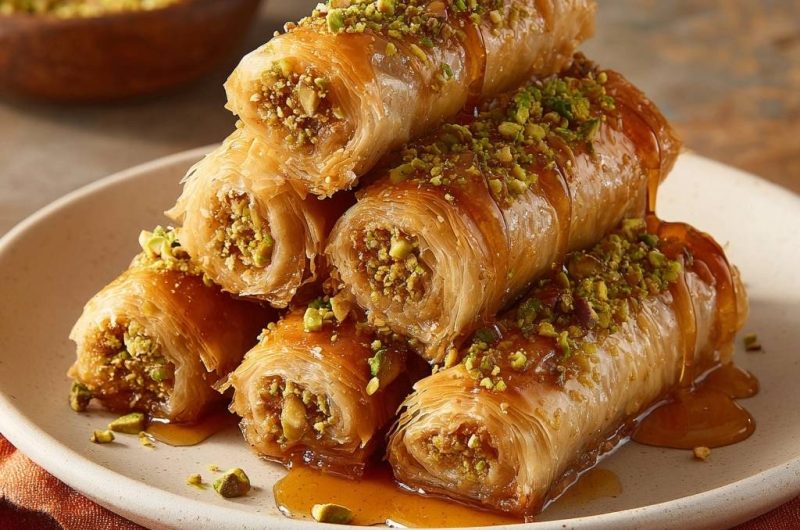
Baklava Rolls
Course: DessertCuisine: Middle EasternDifficulty: medium12
rolls40
minutes35
minutes280
kcal75
MinutesThese baklava rolls, also known as saragli, use a specific temperature contrast method-pouring cold syrup over hot pastry-to ensure a shatteringly crisp texture. Filled with cinnamon-spiced pistachios and soaked in a honey and orange blossom syrup, they offer a professional-grade crunch in every bite.
Ingredients
Directions
Notes
- The secret to the anti-soggy bottom is the temperature contrast: the syrup must be cold and the pastry must be hot. Do not cover the finished rolls with plastic wrap or they will lose their crunch.