Perfect Coconut Macaroons with Chewy Centers
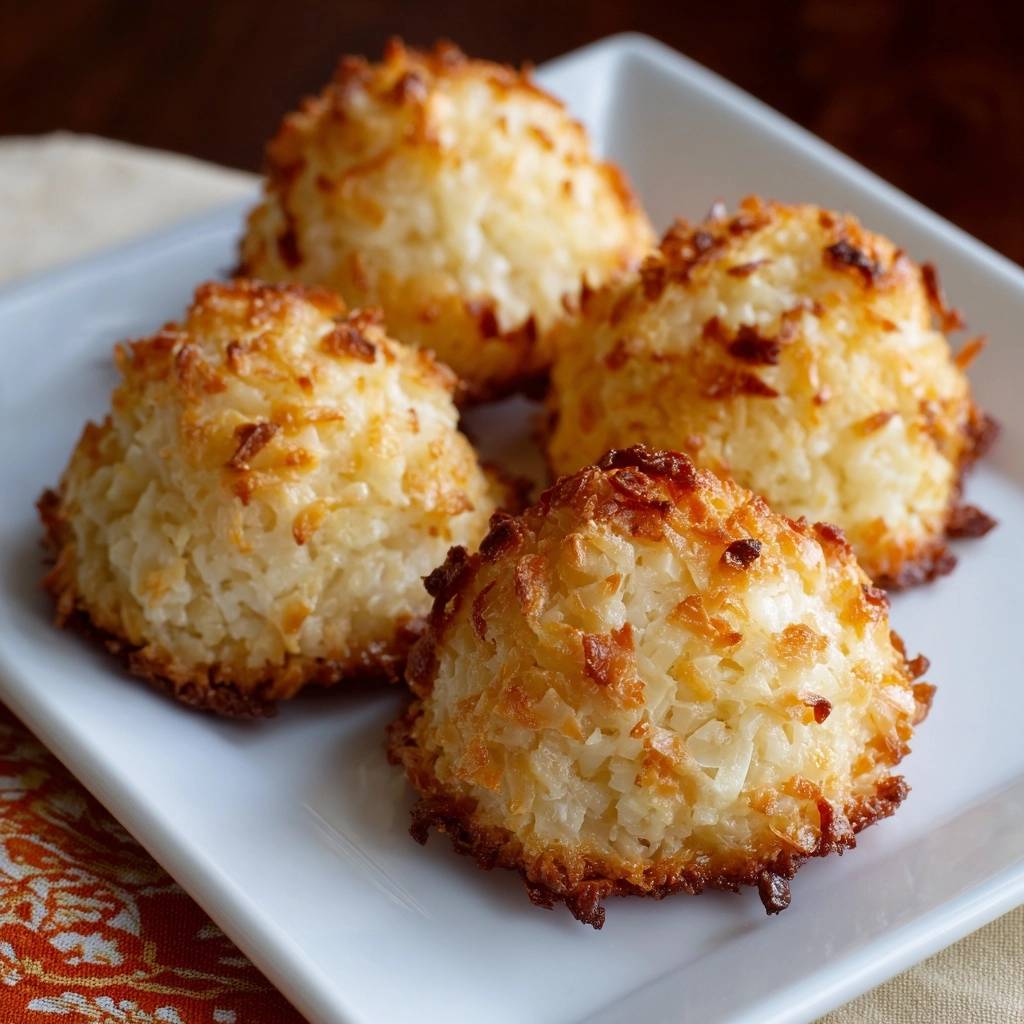
Ever bitten into coconut macaroons that crumble like sawdust? Most recipes rely on just egg whites and sugar, leaving you with dry, flavorless bites. This version fixes that frustration fast. You’ll get chewy centers and toasted edges that rival any bakery.
Therefore, sweetened condensed milk changes everything. It coats every coconut flake, trapping moisture during baking so nothing dries out. In addition, the result tastes like pure tropical bliss with that perfect contrast of crisp outside and soft inside.
Here’s the pro tip that seals the deal: use room temperature egg whites. They whip to taller, stiffer peaks, giving lift without cracking. That one tweak means your moist coconut macaroons hold their shape and stay tender every time.
Why Sweetened Condensed Milk Transforms Coconut Macaroons
Moisture Science in Coconut Macaroons
Sweetened condensed milk packs a thick sugar syrup that clings to coconut flakes. During baking, it prevents steam from escaping, unlike dry meringue-only recipes that bake out all the humidity. Therefore, you end up with easy coconut macaroons recipe results that stay plump.
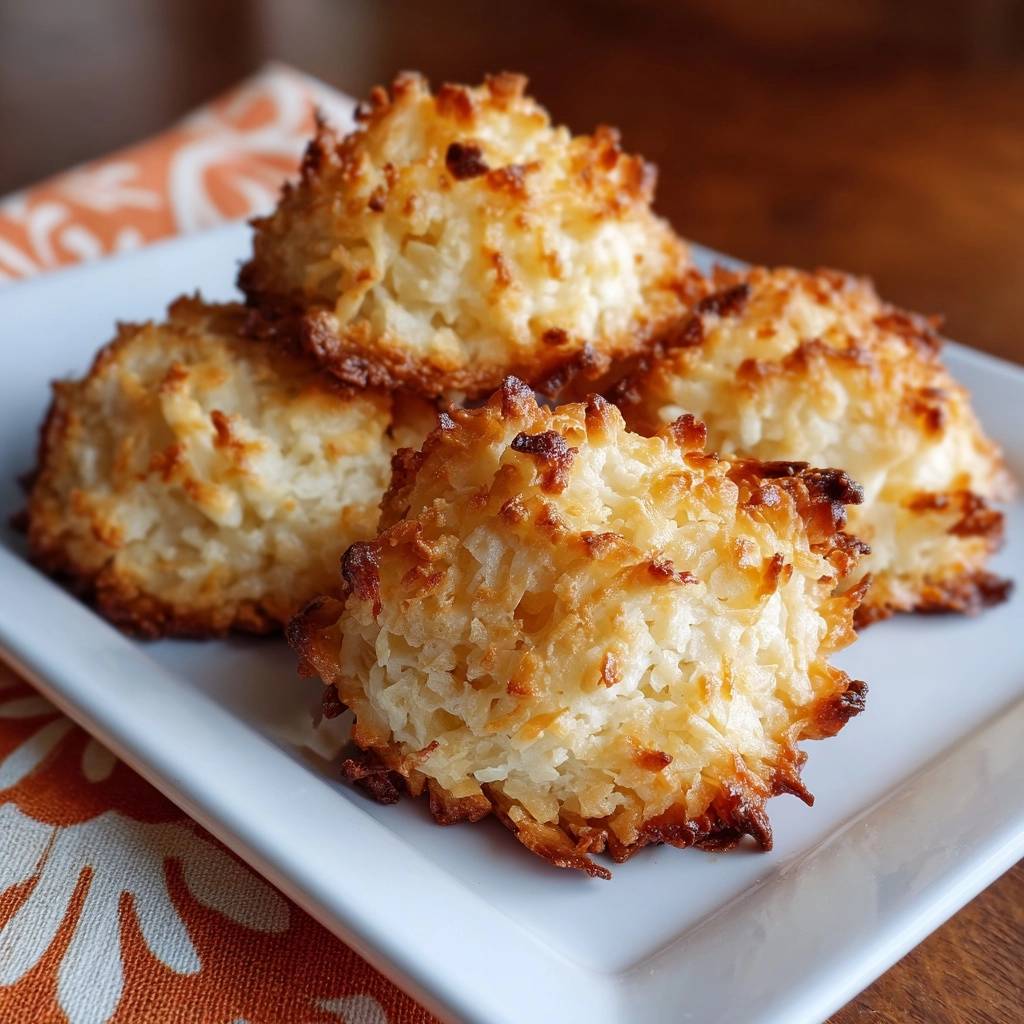
Traditional versions crack and crumble because egg whites alone can’t hold moisture. However, this method locks it in, creating flaked coconut treats with bakery shine. Oh man, the chew is addictive.
If you prefer a firmer texture that requires no oven time, try these no-bake coconut snowballs instead.
Room Temperature Egg Whites for Stability
Room temp egg whites incorporate more air for stable structure. They beat faster to stiff peaks, which you fold in gently. Overmixing deflates them, so fold with a figure-8 motion until just combined.
Essential Ingredients for Moist Coconut Macaroons
You need 14 ounces sweetened flaked coconut for that fluffy base; it absorbs milk perfectly without sogginess. Then, 14 ounces sweetened condensed milk binds everything with sticky sweetness, preventing cracks. In addition, 1 teaspoon vanilla extract adds warm aroma, 1/4 teaspoon salt balances flavors, and 2 large room-temperature egg whites provide lift.
Fresh flaked coconut toasts better than old packages. For condensed milk, any brand works, but shake it well first. No vanilla? A bit of coconut extract amps the flavor.
Choosing Sweetened Flaked Coconut
Flaked coconut gives chewiness over shredded, which can dry out faster. If swapping unsweetened, add 1/4 cup extra sugar to match sweetness. Store extras in the freezer to keep fresh.
Vanilla Extract and Salt Precision
Pure vanilla deepens the coconut taste; imitation works but fades quicker. Use sea salt for subtle crunch, not table salt which can overpower. Measure precisely for balance.
Equipment Choices for Flawless Coconut Macaroons
Grab parchment-lined baking sheets for zero stick; silicone mats trap too much heat and dry edges. An electric mixer whips whites perfectly, plus a tablespoon scoop ensures even mounds. Therefore, wire racks let air circulate for crisp bottoms without sogginess.
Calibrate your oven with a thermometer, as hotspots burn edges. No mixer? A hand whisk takes 4-5 minutes longer.
Mixer Speeds for Stiff Peaks
Medium-high speed on a clean, grease-free bowl gets glossy peaks in 2 minutes. Test by lifting beaters; peaks should hold upright. Hand whisk from frothy to stiff in about 5 minutes.
Step-by-Step: Building Coconut Macaroons Base
Preheating and Parchment Prep
Preheat to 325°F for gentle toasting that browns edges without drying centers. Line two sheets with parchment; double up thin pans for even heat. This setup keeps your coconut macaroons moist.
Stir condensed milk, vanilla, and salt until silky smooth. Every flake gets coated, locking in that humidity. Smell that sweet coconut hit? You’re on track.
Mastering Egg White Folding in Coconut Macaroons
Stiff Peak Visual Guide
Beat room-temp whites on medium-high until frothy, then glossy with stiff peaks that don’t flop when you flip the bowl. Takes 2 minutes; they’ll triple in volume and smell neutral.
Gently fold whites into coconut mix with a spatula in figure-8s. Stop when streaks vanish to keep air bubbles intact. Underfolding leaves clumps, but overfolding toughens them.
Shaping and Baking Coconut Macaroons Perfectly
Scoop tablespoon mounds, spacing 1 inch apart; the mix holds firm from milk’s grip. Bake 14-16 minutes, rotating halfway for even gold. Centers stay soft while edges toast to nutty crunch.
Cool on sheets 5 minutes; residual heat from milk sets chewiness. Transfer to racks. Pro tip: wet hands shape sticky mounds neatly.
Golden Edge Timing Secrets
Rotate at 7 minutes to dodge hotspots. Pull at first golden edges; overbaking toughens via excess Maillard. Aim for 200°F internal if checking.
The Science of Chewy Coconut Macaroons Texture
Why These Stay Moist for Days
Condensed milk’s sugars create osmosis, pulling humidity back in storage. Egg proteins coagulate softly, unlike French macarons’ crisp shells. Therefore, airtight keeping means week-long chew.
Edges Maillard-brown for flavor snap, centers gel from milk’s thickness. That contrast? Pure joy.
Avoiding Common Coconut Macaroons Pitfalls
Overmixing and Peak Collapse Fixes
Overmixing pops air bubbles, drying macaroons; remix a fresh batch with lighter folds next time. Flat ones mean weak peaks, so clean bowls beat grease. Tweak milk up 2 ounces if crumbly.
Undercooked stick bottoms? Bake 2 minutes more. Always check rotation.
Flavor Variations for Coconut Macaroons
Swap vanilla for almond extract for nutty twist. Fold in lemon zest or chocolate chips before shaping; keep 1/4 cup max to hold chew. Dip cooled ones in melted dark chocolate for crunch.
For low-sugar, cut milk by 1/4 cup and add stevia. Nut-free stays simple. All keep the moist core.
Dipping and Add-In Ratios
Melt chocolate at low heat to 110°F, dip halfway, chill 10 minutes to set. Add-ins under 1/2 cup total prevent spreading. Lemon: 1 tablespoon zest pops bright.
Storage and Make-Ahead Coconut Macaroons Guide
Freezing Without Texture Loss
Flash-freeze baked macaroons on sheets 2 hours, then bag for 3 months. Thaw at room temp; chew returns fully. Counter store airtight 5 days.
Revive day-olds in 250°F oven 3 minutes. Perfect for gifting in tins.
Pairing Ideas for Coconut Macaroons
Pair with strong coffee to cut sweetness, or tea for cozy vibes. Stack as ice cream sandwiches with coconut sorbet. Coconut water refreshes alongside on platters.
Fruit salad contrast shines; tropical fruits amplify. Holiday trays vanish fast.
Coconut Macaroons FAQ
How do I store coconut macaroons and do they freeze well?
Store in an airtight container at room temp for up to 5 days; the condensed milk keeps them moist via sugar osmosis. Freeze baked macaroons on a sheet for 2 hours first, then transfer to freezer bags for up to 3 months. Thaw on counter; texture stays chewy without graininess.
Why are my coconut macaroons dry or crumbly?
Dryness comes from overmixing egg whites, which pops air bubbles, or skipping the full 14 ounces condensed milk. Ensure room-temp whites whip stiff, fold gently until streaks gone, and coat flakes evenly. If still dry, add 1 extra ounce milk next batch for better humidity lock.
Can I use shredded coconut instead of flaked for coconut macaroons?
Yes, shredded works but yields finer, denser texture versus flaked’s chew. Use same 14 ounces; it absorbs milk quicker, so mix thoroughly. For chew match, pulse shredded briefly in processor, but flaked toasts best without clumping.
Are coconut macaroons gluten-free?
Absolutely, this recipe is naturally gluten-free with just coconut, milk, egg whites, vanilla, and salt. Double-check labels on flaked coconut and condensed milk for cross-contamination. Perfect for gluten-free baking without swaps.
Can I make vegan coconut macaroons?
Yes, swap egg whites for 6 tablespoons aquafaba (chickpea liquid) whipped to stiff peaks, and use coconut cream thickened with cornstarch instead of condensed milk. Aquafaba mimics lift; add 1/4 cup extra sugar. Bake same way for chewy vegan results.
Why do my coconut macaroons have burnt edges?
Oven hotspots or high temp cause it; preheat fully to 325°F and rotate sheets at 7 minutes. Use an oven thermometer, as many run hot. If edges blacken fast, insulate pans with a second sheet underneath for even, gentle toasting.
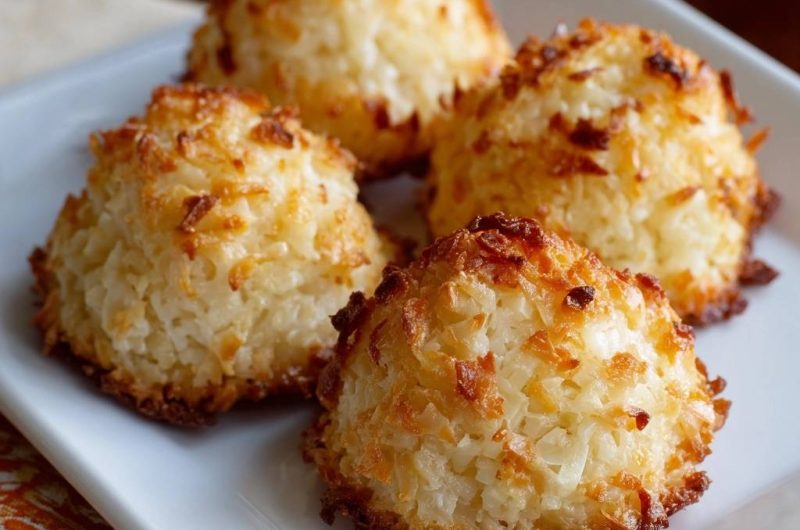
Coconut Macaroons
Course: DessertCuisine: AmericanDifficulty: easy24
macaroons15
minutes16
minutes120
kcal35
MinutesTired of coconut macaroons that turn out crumbly and dry? This recipe uses sweetened condensed milk as the secret binder that locks in moisture for chewy centers and perfectly toasted edges every single time. No more disappointment, just bakery-style bliss.
Ingredients
14 ounces sweetened flaked coconut
14 ounces sweetened condensed milk
1 teaspoon vanilla extract
2 large egg whites, room temperature
1/4 teaspoon salt
Directions
- Preheat oven to 325 degrees F. Line two baking sheets with parchment paper.
- In a large bowl, stir together sweetened condensed milk, vanilla extract, and salt until smooth. This is the key moisture lock: the condensed milk coats every coconut flake, preventing dryness by trapping humidity during baking.
- In a separate clean bowl, beat egg whites with an electric mixer on medium-high speed until stiff peaks form, about 2 minutes. Gently fold egg whites into the coconut mixture using a spatula, folding just until combined. Overmixing releases air and dries them out, so stop as soon as streaks disappear.
- Scoop tablespoon-sized mounds onto prepared baking sheets, spacing 1 inch apart. The mixture holds its shape perfectly thanks to the condensed milk’s sticky moisture.
- Bake for 14 to 16 minutes, rotating sheets halfway, until edges are golden brown and tops are toasted but centers stay soft. Do not overbake, as the residual heat from the condensed milk continues setting them chewy. Cool on sheets for 5 minutes, then transfer to a wire rack. Enjoy warm or store airtight for up to 5 days, staying moist.
Notes
- Use room temperature egg whites for best volume. Do not overmix when folding to keep them light and moist. Store airtight for up to 5 days.