Shaved Brussels Sprout and Blood Orange Salad: The Anti-Soggy Method
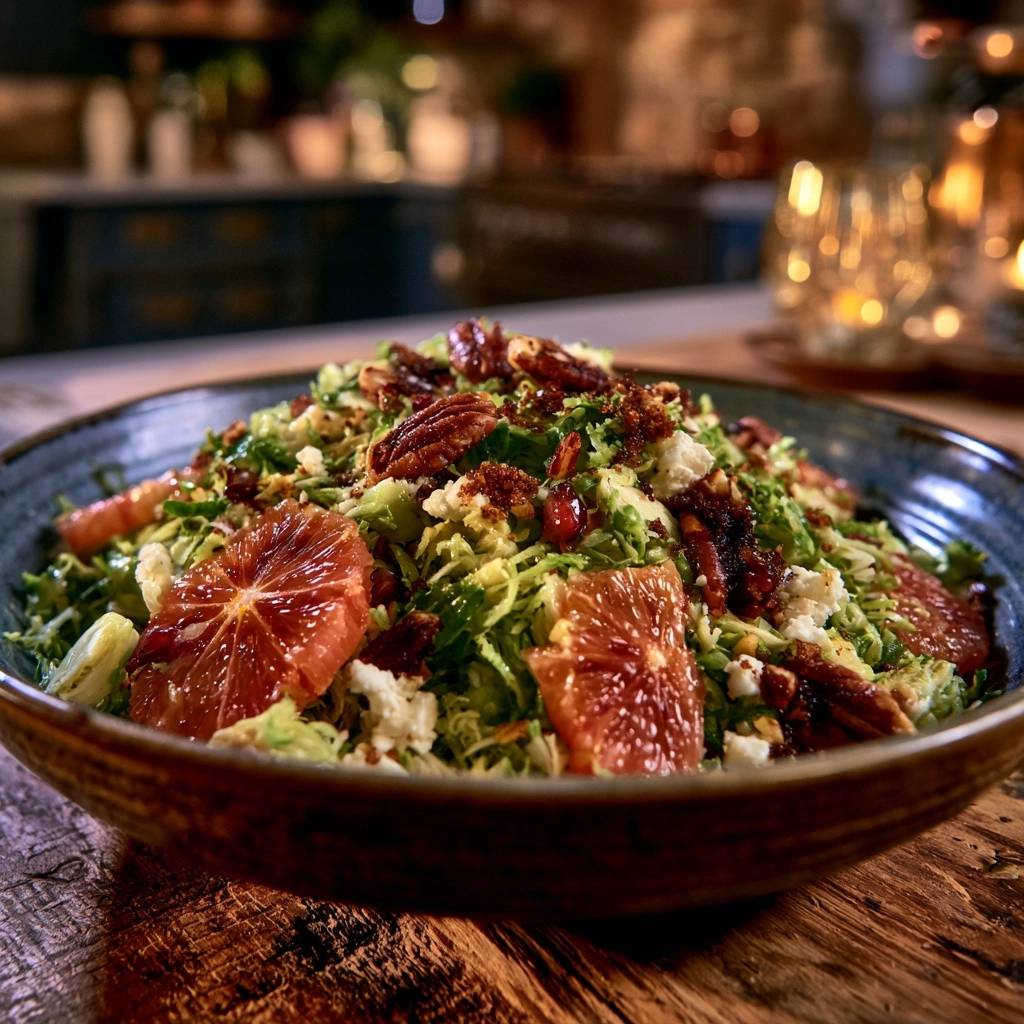
Forget every limp, watery Brussels sprout salad you’ve ever pushed around your plate. This recipe delivers a high-definition crunch that stands up to the bold, floral acidity of fresh blood oranges. It’s a vibrant study in contrasts: the earthy bite of raw brassicas meets the creamy tang of goat cheese and the deep, molasses-rich snap of glazed pecans.
Most home cooks struggle with raw sprouts because they’re naturally tough and fibrous, often releasing excess moisture that dilutes the dressing. We’re fixing that today with the “Salt and Squeeze” technique. This professional secret ensures your salad stays crisp and bright for hours rather than turning into a soggy mess ten minutes after hitting the table.
The secret to success lies in the cellular breakdown of the sprouts before the dressing even touches them. By massaging the shaved ribbons with kosher salt, you’re essentially “pre-cooking” them without heat. This softens the texture while drawing out the bitter, sulfurous liquid that often plagues raw cruciferous vegetables. You’ll see the color shift from a dusty, pale green to a brilliant, translucent emerald.
The Science of Shaving and Massaging Brassicas
Brussels sprouts are packed with cellulose and lignins, the structural components that give them that signature “woody” crunch. While great for roasting, these fibers can be difficult to digest and unpleasant to chew when raw. Shaving them into paper-thin ribbons is the first step in taming that texture, but the real transformation happens during the massage.
When you apply mechanical pressure along with salt, you’re performing a process similar to macerating fruit. The salt breaks down the cell walls, making the vegetable tender and much more digestible. It’s a physical transformation you can actually feel under your hands as the sprouts lose their rigidity and become supple.
Why the Salt and Squeeze Method Works
Osmosis is your best friend in the kitchen when dealing with watery greens. The salt creates a high-solute environment outside the sprout cells, which forces the internal moisture to move outward. This liquid isn’t just water; it carries away the heavy, bitter notes that can overwhelm the delicate citrus flavors of the blood orange.
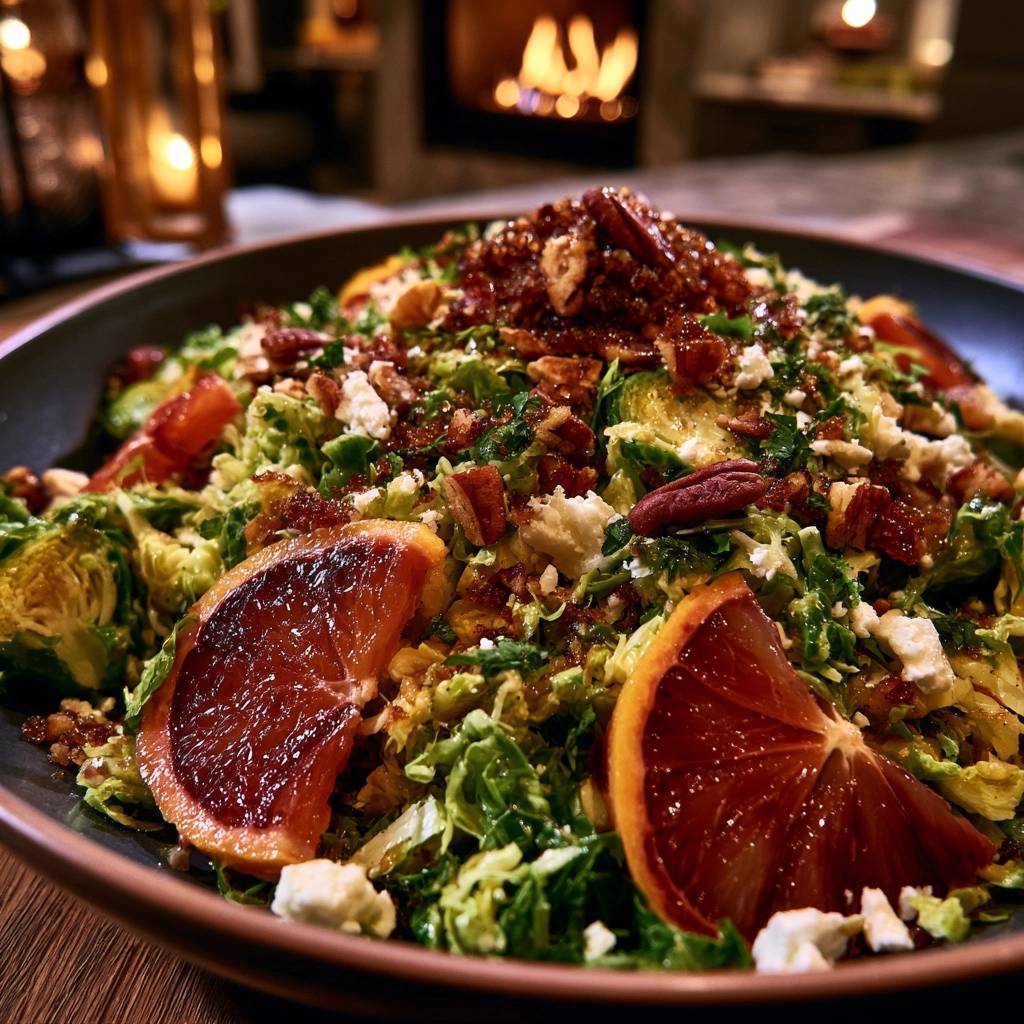
By squeezing the sprouts firmly between your palms and discarding that liquid, you create space for the vinaigrette to actually penetrate the leaves. Instead of the dressing sliding off a wet leaf, it gets absorbed into the softened fibers. This results in a salad that is seasoned from the inside out and maintains its structural integrity for a remarkably long time.
Essential Components for the Shaved Brussels Sprout Salad
Quality starts at the grocery store, especially when you’re serving ingredients raw. Look for Brussels sprouts that feel heavy for their size with tightly packed leaves. If the outer leaves are yellowing or look loose, the sprouts are likely older and will have a much stronger, less pleasant cabbage-like odor.
Blood oranges are the crown jewel of this dish, typically available from December through April. While they look like standard oranges on the outside, their interiors are rich in anthocyanins, the same antioxidants found in blueberries. These provide a complex, raspberry-like undertone that regular navel oranges simply can’t match.
Selecting and Prepping Blood Oranges
When you’re prepping the oranges, you want to remove every bit of the bitter white pith. Use a sharp paring knife to cut off the top and bottom, then follow the curve of the fruit to peel away the skin. Slicing them into rounds showcases the stunning variegated colors, ranging from bright orange to deep maroon.
Don’t let any of that precious juice go to waste! As you slice the oranges on your cutting board, pool the excess juice and add it directly to your dressing jar. This reinforces the citrus profile and ensures the vinaigrette has a consistent flavor link to the fruit segments in the bowl.
The Role of Creamy and Crunchy Textures
A great salad needs a variety of mouthfeels to keep your palate engaged. The goat cheese (chevre) provides a necessary creamy element that coats the tongue, buffering the sharp acidity of the apple cider vinegar. Its mild funkiness also plays beautifully against the sweetness of the glazed pecans.
Pomegranate seeds act as little “flavor bombs” in this mix. They provide a distinct, watery pop that contrasts with the dense crunch of the nuts. Together, these elements ensure that every forkful offers a different combination of textures, preventing the salad from feeling one-dimensional.
Step-by-Step: Preparing the Shaved Brussels Sprout Base
To get those restaurant-quality ribbons, a mandoline is your most efficient tool, but please use the safety guard! If you’re uncomfortable with a blade, a food processor fitted with the thinnest slicing disk works just as well. You want the sprouts to look like fine confetti, not chunky coleslaw.
Once shaved, place them in your largest bowl. Sprinkle the salt and get in there with your hands. You aren’t just tossing them; you’re firmly kneading the sprouts. After about 60 seconds, you’ll notice they feel damp and look much darker. Let them rest for five minutes to let the salt finish its work before you give them the final squeeze over the sink.
Glazing Pecans for Maximum Flavor Contrast
Glazing pecans is a quick process that relies on the Maillard reaction and the caramelization of sugar. We use brown sugar here because the molasses content adds a deep, toffee-like flavor that white sugar lacks. As the sugar melts in the skillet, it creates a glossy coating that hardens into a satisfying shell.
Watch the pan closely! Sugar can go from perfectly caramelized to burnt and bitter in a matter of seconds. Once the pecans look dark and glossy, move them immediately to parchment paper. The residual heat will continue to cook the sugar, so spreading them out prevents them from clumping into one giant sugary brick.
Whisking the Blood Orange and Honey Vinaigrette
A standard vinaigrette follows a 3:1 ratio of oil to acid, but we’re tweaking that slightly to account for the sweetness of the blood orange juice. The honey isn’t just for flavor; it acts as a natural emulsifier. It helps the oil and vinegar stay bonded together, creating a thick, velvety dressing that clings to the sprouts.
Use a high-quality extra virgin olive oil for this. Since we aren’t heating the oil, you’ll actually taste its peppery, grassy notes. When you whisk it with the apple cider vinegar and blood orange juice, the dressing should look opaque and slightly thickened. Give it a taste—it should be sharp but balanced by the honey.
Assembling the Shaved Brussels Sprout and Blood Orange Salad
Assembly is where you can easily ruin the visual appeal of the dish. Start by tossing the massaged sprouts with the dressing until every ribbon is coated. This base is sturdy, so you don’t have to be overly delicate yet. The sprouts will absorb the flavors while you prep the toppings.
Now, switch to a gentle folding motion. Add the blood orange slices, pomegranate seeds, and half of the pecans. If you toss too vigorously now, the orange slices will break apart and the goat cheese will smear, making the salad look “muddy.” Save the large crumbles of cheese and the remaining whole pecans for the very top to keep the colors popping.
Flavor Variations and Ingredient Swaps
If you can’t find blood oranges, Cara Cara oranges are a fantastic substitute due to their pink hue and low acidity. For the nuts, toasted walnuts or even salted pepitas work well if you have a pecan allergy. The goal is to maintain that fatty, crunchy element that balances the lean greens.
Want to turn this into a full meal? Add some grilled chicken breast or a scoop of warm farro. The grains soak up the extra dressing beautifully. If goat cheese isn’t your favorite, a salty feta or even shaved pecorino romano provides a similar savory punch that cuts through the sweetness of the fruit.
Avoiding Common Shaved Salad Mistakes
The biggest pitfall is over-massaging. You want the sprouts to be tender, not mushy. If they start to look like cooked spinach, you’ve gone too far. Stop as soon as they turn a deep emerald and feel slightly limp. They should still have a “snap” when you bite into a ribbon.
Another common error is ignoring the balance of the dressing. Blood oranges vary in sweetness depending on the time of the season. If your oranges are particularly tart, add an extra teaspoon of honey to the vinaigrette. Always taste a dressed sprout before you add the final toppings to ensure the seasoning is spot on.
What to Serve with Citrus and Brassica Salads
This salad is a powerhouse of acidity and brightness, making it the perfect partner for rich, savory proteins. It cuts right through the fat of a seared salmon fillet or a roasted chicken. The citrus notes also pair beautifully with a simple garlic and herb pasta.
Because it’s so refreshing, it works well as a palate cleanser between heavier courses. If you’re serving a creamy risotto or a dense vegetable gratin, this salad provides the necessary “lift” to keep the meal from feeling too heavy. It’s the bright spot on a winter dinner table.
Make-Ahead Strategy and Storage Tips
You can actually prep the sprout base up to 24 hours in advance. In fact, the “Salt and Squeeze” method makes them even more resilient. Store the massaged sprouts in an airtight container in the fridge, but keep the dressing, nuts, and cheese in separate containers until you’re ready to eat.
Once the salad is fully assembled with the cheese and oranges, it’s best eaten within a few hours. The acid in the dressing will eventually start to dull the bright green color of the sprouts, and the pecans will lose their crunch as they absorb moisture. If you have leftovers, they’ll still taste great the next day, but they won’t have that same “wow” factor.
Expert Tips for Professional Presentation
For a restaurant-style look, build the salad upward rather than spreading it flat. Start with a mound of the dressed sprouts in the center of a chilled plate. Tuck the orange slices into the sides so the colorful flesh is visible, then shower the top with the pomegranate seeds and cheese.
A final crack of high-quality black pepper right before serving adds a subtle heat that bridges the gap between the sweet oranges and the earthy sprouts. If you want to go the extra mile, a tiny drizzle of your best finishing olive oil adds a glossy sheen that makes the whole dish look vibrant and fresh.
Troubleshooting the Glazed Pecans
If your sugar starts to crystallize and look sandy instead of melting into a smooth glaze, don’t panic. Add a teaspoon of water to the pan and keep stirring; the water will help dissolve the crystals and allow the caramelization to restart. Just make sure to cook it long enough for the water to evaporate so the nuts stay crunchy.
If the glaze becomes too tacky and sticks to your teeth, you likely didn’t cook the sugar long enough to reach the “hard crack” stage. Next time, wait until the sugar is a deep amber color and smells toasted before removing it from the heat. Let them cool completely before chopping to ensure the glaze is set.
Managing the Bitterness of Raw Sprouts
Some people are genetically predisposed to find raw brassicas incredibly bitter due to the TAS2R38 gene. If you’re cooking for someone sensitive to these flavors, the combination of honey and blood orange is your secret weapon. Sweetness is the direct culinary counter-agent to bitterness.
The “Salt and Squeeze” method is also non-negotiable for these diners. By removing the liquid, you’re physically extracting the compounds that trigger that bitter response. When combined with the creamy goat cheese, the result is a balanced dish that even sprout-skeptics will find themselves enjoying.
How long does this salad stay fresh in the fridge?
If you use the “Salt and Squeeze” method, the shaved sprouts will stay crisp for up to 2 days in an airtight container. However, for the best texture, you should store the glazed pecans and goat cheese separately. Once the salad is fully dressed and assembled with the oranges, it is best enjoyed within 4 to 6 hours, as the citrus will eventually soften the greens.
Why is my salad watery even after squeezing the sprouts?
This usually happens if the sprouts weren’t massaged long enough or if the blood oranges weren’t properly drained. Make sure you let the salted sprouts sit for at least 5 minutes before squeezing; this gives the salt time to draw the moisture out of the cell walls. Also, ensure you aren’t adding too much extra orange juice to the dressing, which can thin it out excessively.
Can I use frozen Brussels sprouts for this recipe?
No, frozen Brussels sprouts will not work for a shaved salad. Frozen vegetables are blanched before freezing, which destroys the crisp cellular structure needed for a raw application. When thawed, they become soft and mushy. Stick to fresh, firm sprouts for the necessary crunch and vibrant color.
What can I use if I don’t have a mandoline or food processor?
You can use a very sharp chef’s knife to slice the sprouts as thinly as possible. Cut the sprouts in half lengthwise first to create a flat, stable surface, then slice across the width into fine ribbons. It takes a bit more time and patience, but the results are just as delicious as using a mechanical slicer.
Is there a substitute for blood oranges if they are out of season?
Cara Cara oranges are the best substitute because they have a similar sweetness and a beautiful pinkish-red interior. If those aren’t available, a mix of regular navel oranges and a few tablespoons of pomegranate juice in the dressing can mimic the color and tartness of blood oranges. Avoid using standard grapefruit, as it may be too bitter when combined with the raw sprouts.
My pecans are stuck together in a clump, how do I fix them?
If the glazed pecans have cooled into a solid mass, you can gently break them apart with your hands or a heavy knife. To prevent this in the future, make sure to spread them out in a single layer on parchment paper immediately after removing them from the skillet. If they are still warm and clumping, you can briefly return them to a warm pan to soften the sugar and then spread them out again.
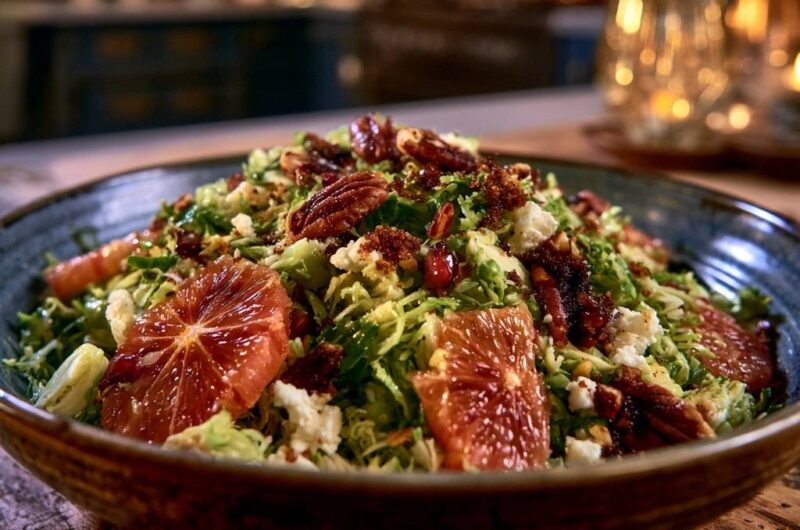
Shaved Brussels Sprout and Blood Orange Salad
Course: SaladCuisine: AmericanDifficulty: easy4
servings20
minutes5
minutes25
Minutes310
kcalAmerican
Ingredients
1 pound Brussels sprouts, ends trimmed
2 blood oranges, peeled and sliced into rounds (pith removed)
1/2 cup pecan halves
2 tablespoons brown sugar (for glazing pecans)
1/3 cup crumbled goat cheese
1/4 cup pomegranate seeds
3 tablespoons extra virgin olive oil
1 tablespoon apple cider vinegar
1 tablespoon fresh blood orange juice
1 teaspoon honey
1/2 teaspoon kosher salt (plus a pinch for the dressing)
1/4 teaspoon black pepper
Directions
- Use a food processor with a slicing disk or a mandoline to shave the Brussels sprouts into very thin, fine ribbons.
- Place the shaved sprouts in a large bowl and sprinkle with 1/2 teaspoon kosher salt. Use your hands to firmly massage the sprouts for 60 seconds until they turn a darker green and feel slightly softened. Let them sit for 5 minutes, then squeeze the sprouts firmly between your palms over the sink to discard the released bitter liquid. This is the “Anti-Soggy” secret.
- In a small skillet over medium heat, add the pecans and brown sugar. Stir constantly for 3-4 minutes until the sugar melts and coats the pecans in a dark, glossy glaze (as seen in the image). Remove from heat and let cool on parchment paper, then roughly chop half of them.
- In a small jar, whisk together the olive oil, apple cider vinegar, honey, blood orange juice, black pepper, and a pinch of salt until emulsified.
- Pour the dressing over the massaged sprouts and toss well to coat.
- Gently fold in the blood orange slices, the glazed pecans, and pomegranate seeds.
- Top with large crumbles of goat cheese and the remaining whole glazed pecans just before serving to maintain the visual contrast and creamy texture.
Notes
- The Salt and Squeeze method is essential to remove bitter liquid and prevent the salad from becoming soggy. Ensure pecans are cooled completely before chopping to maintain their crunch.