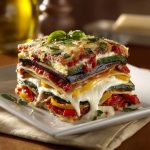
Roasted Veggie Lasagna: Firm Layers Mastery
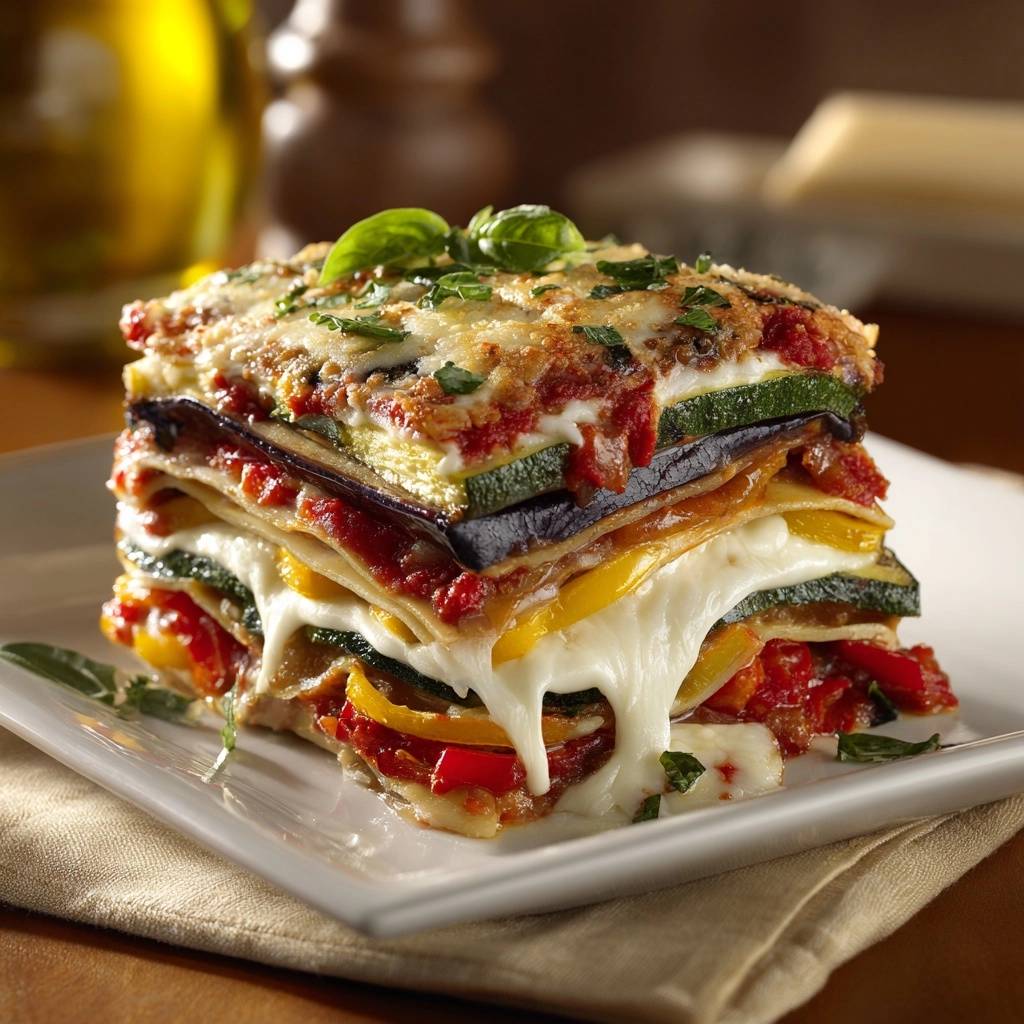
Ever pulled a veggie lasagna from the oven only to find it swimming in a puddle? You’re not alone. Most attempts end up soggy because raw eggplant and zucchini release steam right in the pan. But this roasted veggie lasagna changes everything with a quick salting and high-heat roast that pulls out up to 50% of the moisture first.
Therefore, you get those firm, caramelized layers that stack perfectly without collapsing. No more watery mess, just pure Italian comfort loaded with veggies. In addition, it’s a game-changer for weeknight dinners or impressing friends.
The secret lies in the salt draw on paper towels. It uses osmosis to wick away water before roasting seals in flavor. That’s why this roasted veggie lasagna delivers crisp edges and holds its shape slice after slice.
Why Roasted Veggie Lasagna Transforms Dinners
From Watery Mess to Firm Perfection
Common veggie lasagna pitfalls hit hard. Raw veggies steam during baking, turning layers soupy. However, roasting at 425°F caramelizes edges via the Maillard reaction and shrinks them 20-30% for stackable firmness.
Boiled or raw versions can’t compete. They flood the dish with liquid. This roasted veggie lasagna avoids that, creating concentrated flavor in every bite. Plus, it’s lower in calories than meat lasagna, around 350 per serving versus 500.
Health Edge of Roasted Veggie Lasagna
Eggplant brings fiber for gut health, zucchini packs antioxidants, and bell peppers load up on vitamin C. You get a nutrient boost without skimping on taste. Roasted veggie lasagna keeps calories down while ramping up veggies.
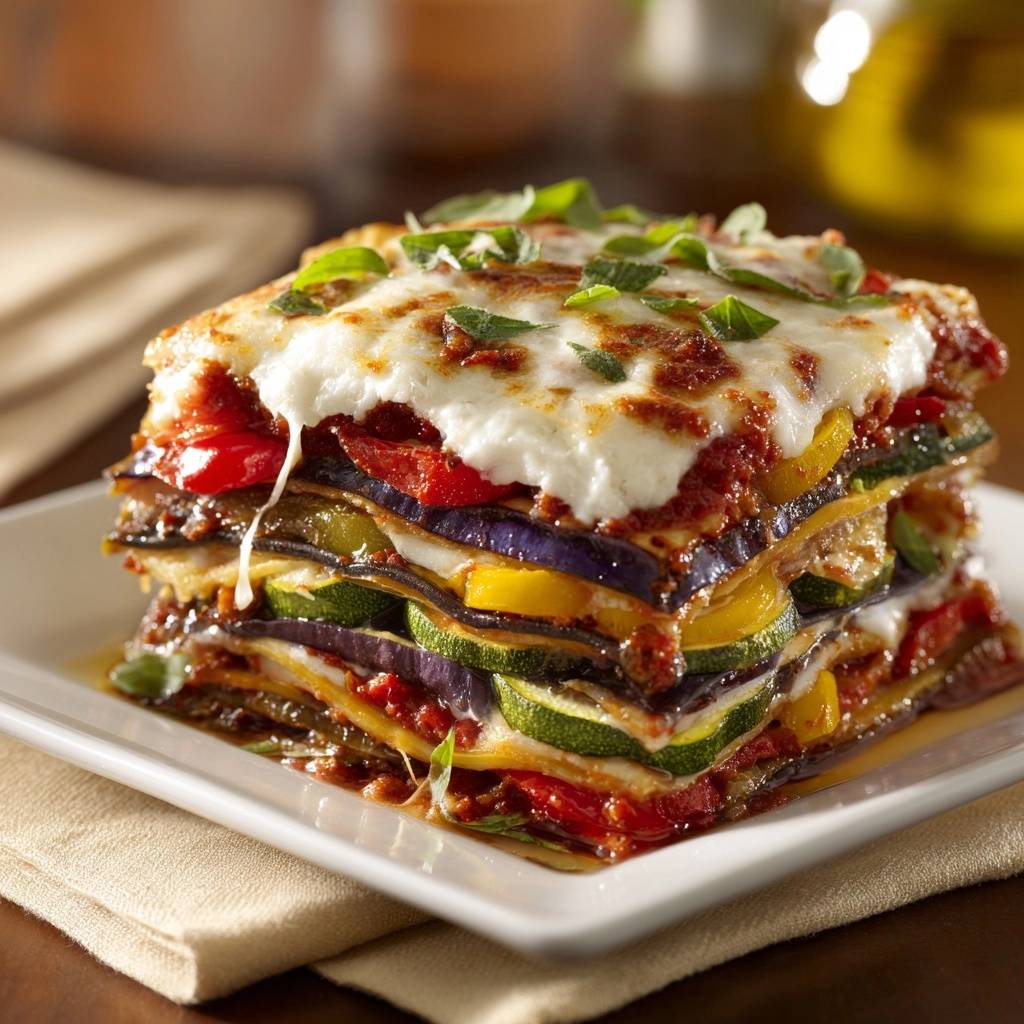
Compared to traditional lasagna, it’s lighter yet satisfying. In addition, swap in gluten-free no-boil noodles for an easy adaption. Fresh roasting preserves those vitamins better than boiling ever could.
Key Ingredients for Roasted Veggie Lasagna
Eggplant and Squash: Moisture Management Stars
Slice eggplant, zucchini, and yellow squash into 1/4-inch rounds for even cooking. These hold up best after salting. That 1 teaspoon of salt triggers osmosis, pulling out 50% of water through paper towels.
No eggplant? Portobellos mimic meaty texture. These quantities serve 12 generously. Therefore, the thin slices roast quickly without steaming.
Bell Peppers and Cheeses: Flavor Backbone
Red and yellow bell peppers add sweet pops of color and vitamin C. Slice into strips for easy layering. Ricotta in dollops keeps it airy, while mozzarella shreds melt smoothly thanks to fresh grating.
Choose quality marinara; it simmers into the veggies. No-boil noodles work perfectly here. They absorb just the right moisture since veggies come pre-dried.
Science of No-Soggy Roasted Veggie Lasagna
Salt Draw and Rinse Technique Explained
Salt creates a hypertonic solution. It draws water out of veggie cells via osmosis onto paper towels. After 20 minutes, you’ve lost up to 50% moisture, proven by weighing slices before and after.
If you prefer a more traditional version with meat, this classic beef lasagna follows a similar layering technique.
Rinse lightly to nix bitterness, then pat very dry. This ensures olive oil clings for roasting. Skip it, and your roasted veggie lasagna turns to mush.
Roasting vs. Steaming: Crisp Edge Secret
At 425°F in a single layer, veggies hit the Maillard reaction for nutty caramelization. Flip halfway for even browning. They shrink without sogginess, unlike steaming which traps moisture.
Drop to 375°F for assembly. Therefore, high heat first crisps edges, then gentle baking melds layers. Pro tip: rotate sheets for uniform results.
Equipment Choices for Roasted Veggie Lasagna
Baking Sheets and 9×13 Dish Essentials
Use rimmed baking sheets to catch olive oil drips. Line with parchment for no-stick release. A 9×13-inch dish holds three layers without overflow thanks to its depth.
Foil tenting at first traps steam to soften noodles. In addition, it prevents drying out the top.
No-Boil Noodles: Why They Excel Here
These noodles absorb marinara precisely since veggies release no extra water. Popular brands like Barilla perform best. If using boiled types, soak them first to avoid chewiness.
Step-by-Step Roasted Veggie Lasagna Build
Prep Phase: Salting Veggies Dry
Layer eggplant, zucchini, and squash on paper towels. Sprinkle salt on both sides and wait 20 minutes. You’ll see beads of water form; that’s the moisture escaping.
Rinse under cool water, then pat super dry. This step prevents soup-like lasagna. Batch it for speed.
Roast Phase: Caramelize All Veggies
Toss dried veggies and bell peppers with olive oil and pepper. Spread in a single layer on two sheets. Roast 20 minutes at 425°F, flipping halfway until edges brown and they smell sweet.
Cool slightly. This stops carryover cooking from softening noodles later. Rotate sheets top to bottom midway.
Layering Phase: Even Distribution Key
Start with 3/4 cup marinara in your 9×13 dish to seal the bottom. Fit 3-4 noodles, then scatter 1/3 roasted veggies evenly. Dollop 1 cup ricotta, blanket with 1 cup mozzarella, and pour 3/4 cup sauce.
If you enjoy this pairing, try serving it alongside a bowl of cheesy skillet spinach rigatoni for a creamy contrast.
Repeat twice more, ending with sauce and cheese. Press gently for tight layers. Imagine it as veggie-ricotta-mozzarella-sauce towers stacked neatly.
Bake and Rest: Golden Bubble Finish
Cover with foil and bake 25 minutes at 375°F. Uncover for 15-20 more until bubbly and golden, hitting 165°F inside. Rest 10 minutes; the ricotta sets and cheese firms up.
Slice with a sharp knife for clean cuts. Garnish with fresh basil right before serving.
Avoiding Pitfalls in Roasted Veggie Lasagna
Overcrowded Sheets Cause Steaming
Never pile veggies high. They steam instead of roast, staying pale and soft. Use two sheets for airflow.
Therefore, always single-layer. Fix pale veggies by spreading thinner next time.
Skipping Rest Leads to Slice Slump
That 10-minute rest lets starch gel and layers firm. Cut too soon, and it runs everywhere. Patience pays off in perfect slices.
Add basil after resting to keep it vibrant.
Flavor Twists on Roasted Veggie Lasagna
Spicy or Herbed Veggie Variations
Stir chili flakes into the oil toss for heat. Swap squash for spinach, or mix pesto into ricotta for herby brightness. These keep your roasted veggie lasagna exciting.
For vegan, use cashew-based cheese. It melts creamy without dairy.
Gluten-Free Roasted Veggie Lasagna Adaptations
Grab gluten-free no-boil noodles from brands like Jovial. They hold texture well post-roast. Or ribbon zucchini lengthwise as noodle subs; salt them too.
Make-Ahead Strategies for Roasted Veggie Lasagna
Assemble-Freeze Full Casserole Guide
Assemble unbaked, wrap tightly in foil, and freeze up to 3 months. Thaw overnight in the fridge, then bake with 10 extra minutes. Portion into singles for easy meals.
What’s Next?
Try these delicious pairings:
- Crispy Herb Arancini: Foolproof Crunch Technique
- Summer Zucchini & Burrata Salad: Your Guide to Perfect Crunch
Roast Veggies Days in Advance
Store roasted veggies airtight in the fridge for 3 days. Reheat gently before layering. This saves time on busy nights.
Pairing Sides with Roasted Veggie Lasagna
Crisp Salads and Garlic Bread Matches
Arugula with lemon vinaigrette cuts the richness perfectly. Herbed flatbread adds crunch. Sparkling grape juice pairs beautifully, or try sparkling apple juice.
Roasted Veggie Lasagna Troubleshooting
Why Layers Still Watery?
Check salt time; 20 minutes minimum draws out liquid. Pat drier after rinsing, and avoid crowding roast sheets. Retry with stricter single-layering.
Cheese Not Melting Evenly?
Low-fat mozz doesn’t melt well; use full-fat and grate fresh. Check for oven hotspots by rotating the dish.
Edges Burning Before Center Bubbles?
Extend foil time to 30 minutes, or bake on lower rack. Shield edges with strips if needed.
Noodles Chewy in Final Dish?
Press layers down firmly and ensure full sauce coverage. Soak no-boil noodles in warm water 5 minutes first if worried.
FAQ
How do I store leftovers of roasted veggie lasagna?
Let it cool completely, then portion into airtight containers. Refrigerate up to 4 days. It freezes well for 2-3 months; wrap slices individually in foil first, then into freezer bags. Thaw overnight and reheat at 350°F covered until hot, about 20-25 minutes. Avoid refreezing thawed portions to keep texture firm.
Why is my roasted veggie lasagna still watery despite roasting?
The most common issue is insufficient salting; ensure 20 full minutes with generous salt on both sides, plus thorough patting dry post-rinse. Crowded roasting sheets trap steam too, so use two and single-layer everything. If peppers seem juicy, roast them 5 minutes longer next time for extra shrinkage.
Can I substitute ingredients in roasted veggie lasagna?
Swap eggplant for portobello mushrooms for meatier bite, or use all zucchini if squash is unavailable; salt them equally. For dairy-free, cashew ricotta and vegan mozz work great and melt similarly. No fresh marinara? Jarred with no added sugar is fine, but simmer it 10 minutes to thicken first.
How can I make roasted veggie lasagna gluten-free?
Use gluten-free no-boil lasagna noodles like those from Jovial or Le Veneziane; they absorb sauce without crumbling. For zero noodles, slice extra zucchini lengthwise into ribbons, salt and roast them too. The pre-dried veggies ensure the texture stays firm either way.
What’s the best way to reheat roasted veggie lasagna?
Oven is king: cover with foil at 350°F for 20-30 minutes until 165°F inside. Microwave single slices on medium power in 1-minute bursts, covered, to avoid drying. Never zap the whole dish; it steams unevenly. Add a splash of water under foil for oven moisture if needed.
Can I prepare roasted veggie lasagna ahead for a party?
Absolutely; roast veggies up to 3 days ahead and store airtight. Assemble fully unbaked, cover tightly, and fridge overnight or freeze 3 months. Bake straight from fridge with 10 extra minutes, or from frozen adding 20-30. It serves 12 hot and firm every time.
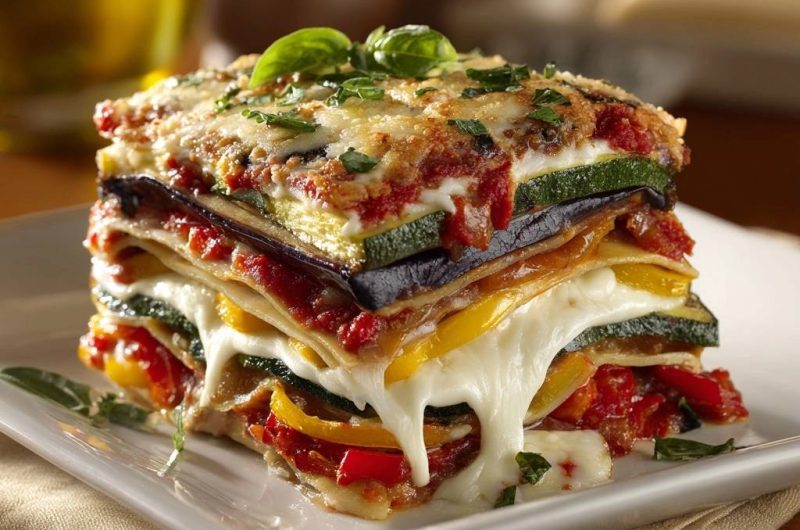
Roasted Veggie Lasagna
Course: Main CourseCuisine: ItalianDifficulty: medium12
servings30
minutes1
hour350
kcal90
MinutesSick of veggie lasagna turning into a watery mess? This recipe fixes it with a simple salting and roasting trick that draws out excess moisture from eggplant and zucchini first, locking in firm, flavorful layers that hold up perfectly.
Ingredients
2 medium eggplants, sliced into 1/4-inch rounds
3 medium zucchini, sliced into 1/4-inch rounds
2 yellow summer squash, sliced into 1/4-inch rounds
2 red bell peppers, sliced into strips
1 yellow bell pepper, sliced into strips
3 cups marinara sauce
3 cups shredded mozzarella cheese
3 cups ricotta cheese
12 no-boil lasagna noodles
1/4 cup olive oil
1 teaspoon salt
1 teaspoon black pepper
Fresh basil leaves for garnish
Directions
- Solve the soggy layer problem upfront: Layer eggplant, zucchini, and squash slices on paper towels. Sprinkle both sides generously with 1 teaspoon salt. Let sit 20 minutes to draw out water. Rinse lightly, pat very dry with clean towels. This step removes up to 50% of veggie moisture for firm texture.
- Preheat oven to 425 degrees F. Toss dried veggies and bell peppers with olive oil and pepper. Spread on two baking sheets in single layer. Roast 20 minutes, flipping halfway, until tender and edges caramelize. Veggies shrink and crisp without steaming. Reduce oven to 375 degrees F.
- Spread 3/4 cup marinara in 9×13-inch baking dish. Add 3-4 noodles to cover bottom. Layer 1/3 roasted veggies, 1 cup ricotta dollops, 1 cup mozzarella, and 3/4 cup marinara. Repeat layers twice more. Top with remaining marinara and mozzarella.
- Cover with foil. Bake 25 minutes. Uncover, bake 15-20 more minutes until bubbly and golden. Rest 10 minutes before slicing to set layers. Garnish with basil. Enjoy firm, non-soggy perfection!
Notes
- Salting and roasting the vegetables is key to preventing soggy layers. Let the lasagna rest 10 minutes before slicing for perfect cuts.