Rustic Beef Stew: Tender, Hearty Comfort
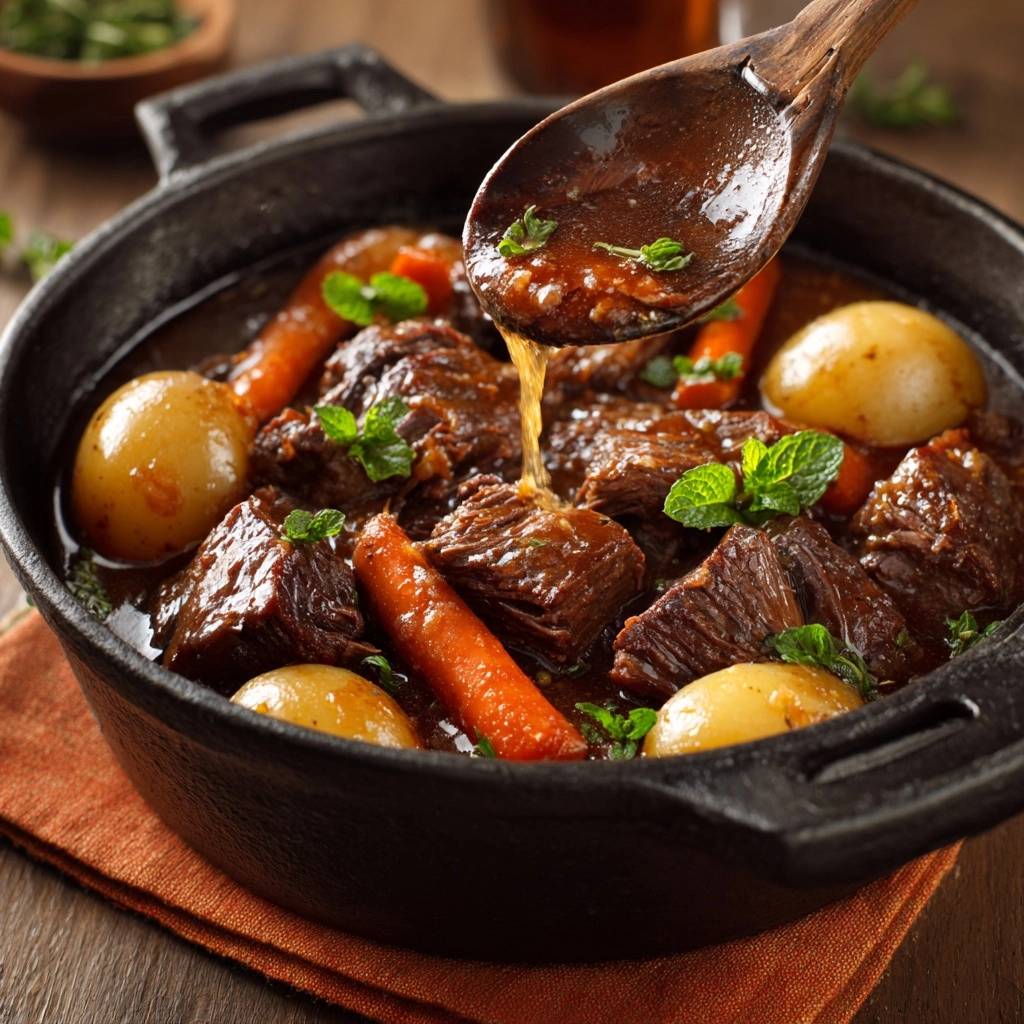
Tired of rustic beef stew that chews like shoe leather? This recipe fixes that with a dead-simple two-step trick: blast the beef with high-heat searing first, then cradle it in a low, slow simmer. You’ll get fall-apart tenderness that beats canned versions every time. Dinner for 6 hits the table after 30 minutes prep and 2.5 hours cooking, filling your kitchen with rich, savory aromas that promise pure comfort.
Why does this rustic beef stew shine? Most home cooks skip the sear and dump everything in to boil, turning tough chuck into jerky. However, searing locks in juices via the Maillard reaction, while the gentle simmer converts collagen to silky gelatin. In addition, the result tastes fresher and heartier than any store-bought sludge.
Here’s the expertise kicker: pat the beef bone-dry before dredging in flour. That moisture zap creates a crust that doesn’t steam away during searing, ensuring deep flavor and perfect thickness. Oh man, one bite, and the beef melts in your mouth with velvety texture.
Why Rustic Beef Stew Delivers Tenderness
This homemade rustic beef stew nails tenderness through science-backed steps. First, high-heat searing triggers the Maillard reaction, browning proteins and sugars for locked-in juices and nutty depth. Then, the low simmer slowly breaks down tough collagen into gelatin, without drying out the meat.
Common mistakes like boiling kill it, though. Boiling spikes temps above 180°F, toughening fibers instead of melting them. Therefore, this method keeps everything juicy and fork-tender, far superior to rushed versions.
Seared Crust Locks in Juices
Start by patting beef cubes completely dry. That step removes surface water so flour sticks and sears properly, not steams. Season with salt and pepper, dredge in flour, and shake off excess for a light coat.
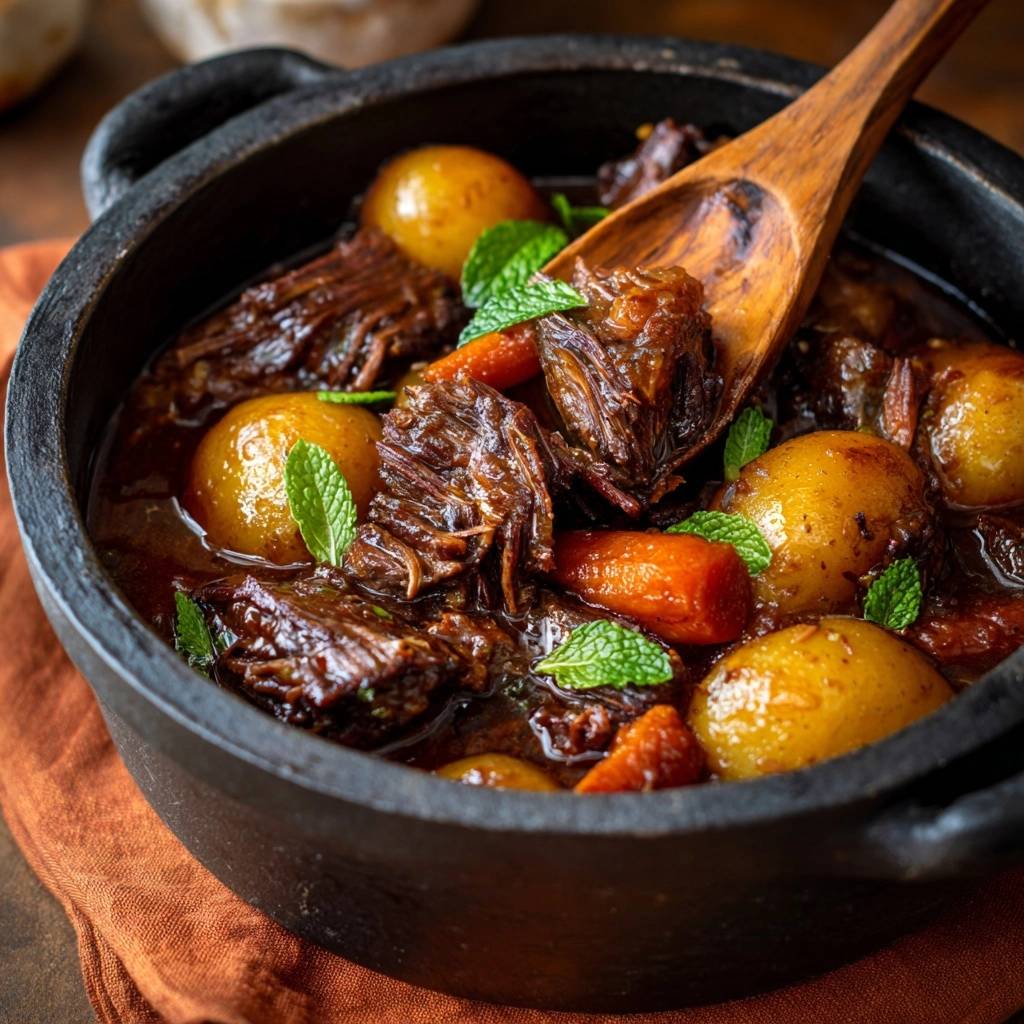
Heat vegetable oil in cast iron until shimmering, not smoking, to avoid bitterness. Add beef in a single layer; sear 3-4 minutes per side for a deep crust. Work in batches if needed, so you don’t crowd and boil the meat instead.
Slow Simmer Breaks Down Fibers
After searing, simmer covered on low for 1.5 hours. Collagen needs time at 160-180°F to turn gelatinous, creating that shreddable texture. Stir occasionally to even it out.
Add veggies later, then simmer another 45-60 minutes. Test with a fork: beef should pull apart easily, while potatoes and carrots stay firm. Covering traps steam for moist results.
Key Ingredients for Rustic Beef Stew
Beef chuck forms the rustic beef stew base with its marbling that renders into rich broth. Baby potatoes hold shape without mashing, and carrots add natural sweetness to balance savoriness. Tomato paste builds umami fond, while bay leaves lend subtle depth.
Flour dredge serves double duty: crust for searing and thickener for the sauce. Fresh mint garnish brightens the finish unexpectedly. Use 4 cups beef broth for full flavor; stock works but lacks body.
Beef Chuck: Marbling Magic
Cut 2 pounds chuck into 1.5-inch cubes. Its fat and connective tissue melt during simmering, flavoring every spoonful. Avoid lean cuts like sirloin; they dry out fast.
Grab grass-fed if you can. It brings extra beefy taste and tenderizes beautifully.
This natural thickening method works beautifully in a slow-simmered beef and potato stew as well.
Vegetables and Aromatics Balance
Dice one large onion, mince 4 garlic cloves, and stir in 2 tablespoons tomato paste for a fragrant base. Add 1.5 pounds whole baby potatoes and 6 carrots in chunks later to prevent mush.
Bay leaves infuse earthiness; discard before serving. Chop fresh mint for a zesty pop that cuts richness.
Science of Perfect Rustic Beef Stew
Maillard reaction during searing creates hundreds of flavor compounds from amino acids and sugars. Flour amplifies it, building a crust that deglazes into pure gold. Tomato paste lowers pH slightly, speeding tenderness.
Gelatinization from collagen thickens naturally, no flour overload needed. Beef broth provides proteins for body; water won’t cut it. Therefore, your rustic beef stew recipe gains restaurant-level depth effortlessly.
Maillard Reaction Builds Depth
High heat browns the dredged beef, forming umami crust. Amino acids react with sugars, releasing aromas that make your mouth water. Skip this, and it’s bland boiled meat.
Collagen Conversion Tenderizes
Low simmer hits 160-180°F ideal for collagen to gelatin. Boiling destroys it, though. Patience here yields buttery beef.
Equipment Choices for Rustic Beef Stew
A 6-8 quart cast iron pot retains heat evenly for simmering, building fond without hot spots. Wooden spoon deglazes those bits perfectly. Dutch oven works too; nonstick fails by not browning well.
Enameled cast iron cleans easy and avoids seasoning hassles. Size matters for single-layer searing without overflow.
Cast Iron Pot Advantages
Cast iron distributes heat steadily, preventing scorching during long cooks. Enameled versions resist sticking; seasoned need oil. Both hold warmth post-stovetop for serving.
Step-by-Step Rustic Beef Stew Method
Prep yields 6 servings of this rustic beef stew. Pat 2 pounds beef dry, season with 2 teaspoons salt and 1 teaspoon pepper, dredge in 1/4 cup flour. Sear in 3 tablespoons hot oil over medium-high, 3-4 minutes per side till crusty. Watch for splatters; use a screen if needed.
Build base next on medium heat. Soften onion 4-5 minutes till sweet-smelling, then add garlic and tomato paste 1-2 minutes till fragrant.
Deglaze with Broth
Pour in 4 cups beef broth, scraping fond with a wooden spoon. Add 2 bay leaves; bring to simmer for rich rustic beef stew foundation.
If you like how the flavors deepen overnight in this stew, try that same rich taste in a hearty beef and corn chili.
Simmer Beef First Hour
Return beef and juices. Cover, low heat 1.5 hours, stirring now and then. Bubbles should barely break surface.
Add Veggies, Finish Tender
Toss in potatoes and carrots. Simmer covered 45-60 minutes till fork-tender. Thin with broth if needed; discard bay leaves.
Garnish and Serve
Chop mint bunch, stir in. Taste, adjust salt and pepper. Ladle hot for cozy vibes.
Avoiding Mistakes in Rustic Beef Stew
Overcrowd the sear, and beef steams gray instead of browning. Batch it for crust. Boiling toughens post-sear; keep low for tender rustic beef stew.
Dump veggies early, and they mush to paste. Add late for bite. Pro tip: if sauce splits, whisk in cold broth splash.
Prevent Chewy Beef Texture
No crowding during sear; steam ruins Maillard. Post-sear, low simmer only. Extra 30 minutes fixes minor toughness.
Keep Veggies Firm-Shaped
Baby potatoes and carrot chunks go in after beef simmers 1.5 hours. They cook just right without falling apart.
Make-Ahead Rustic Beef Stew Guide
Cool completely, then fridge in airtight containers up to 4 days. Flavors deepen overnight. Freeze portions in broth-filled bags for 3 months; thaw overnight before reheating.
Reheat gently on stovetop low, stirring to avoid toughness. Batch-cook weekends for easy weeknight rustic beef stew wins.
Flavor Twists for Rustic Beef Stew
Swap mint for thyme or rosemary for herby depth. Stir in mushrooms or peas with veggies for earthiness. Deglaze with extra broth for non-boozy richness, or dust paprika for smoke.
Keep it rustic: no overload. These tweaks personalize without straying from hearty core.
Pairing Sides with Rustic Beef Stew
Tear crusty bread to sop rich sauce. Crisp green salad contrasts warmth. Cornbread adds sweet crunch.
What’s Next?
Try these delicious pairings:
- Velvety Sweet Potato Carrot Soup: Perfectly Thick & Deliciously Smooth
- Hearty Vegetable Soup: Perfectly Tender Veggies Every Time
Sparkling apple cider refreshes; ginger beer brings zip. Perfect for cozy nights.
Rustic Beef Stew Troubleshooting
Sauce Too Thin or Thick?
Too thin? Simmer uncovered 10-15 minutes to reduce. Too thick? Stir in broth splash till velvety. Cornstarch slurry works if rushed, but natural gelatin shines best.
Beef Still Chewy?
Simmer extra 30 minutes low and covered. Undercooked collagen needs time; rushing boils it tough. Test shreds easily before veggies.
Flavor Lacking Depth?
Boost with more tomato paste or deglaze fond thoroughly. Fresh garlic and onions build base; stale ones fall flat. Simmer longer melds it all.
Veggies Overcooked?
Add them after 1.5-hour beef simmer only. Baby potatoes hold 45-60 minutes firm. Cut uniform chunks for even cooking next time.
Best Storage Method?
Fridge airtight up to 4 days; flavors peak day two. Freeze cooled stew in broth-packed bags 3 months; potatoes soften slightly but reheat well low and slow. Avoid refreezing thawed portions.
FAQ
How do I store leftovers of rustic beef stew?
Cool completely before storing in airtight containers. They’ll keep in the fridge up to 4 days, with flavors intensifying beautifully. For freezing, portion into broth-filled freezer bags flat; they last 3 months. Thaw overnight in fridge, then reheat gently on stovetop low, stirring to prevent toughness. Potatoes may soften a bit post-freeze, but texture stays hearty.
Why is my beef still tough in rustic beef stew?
Tough beef usually means skipped sear or high boil instead of low simmer. Searing locks juices via Maillard, and 160-180°F slow cooks convert collagen to gelatin over 2+ hours. Fix by adding 30 minutes covered simmer; never rush with high heat, as it contracts fibers. Pat dry and batch-sear next time for guaranteed tenderness.
Can I substitute ingredients in rustic beef stew?
Swap chuck for brisket if needed; both have marbling. No baby potatoes? Use Yukon gold in halves to hold shape. Beef broth out? Veggie broth works but dilute with water for less intensity; avoid chicken for beefy purity. Skip mint? Thyme adds similar brightness without overpowering the rustic vibe.
How long does rustic beef stew take to cook?
Prep flies in 30 minutes, then 2.5 hours total simmer: 1.5 hours beef alone, 45-60 minutes with veggies. Hands-off mostly; stir occasionally. Pressure cooker cuts to 45 minutes high pressure for weeknights, but stovetop builds deeper fond flavor.
Why use flour dredge in rustic beef stew?
Flour creates sear crust for flavor and naturally thickens sauce as it cooks off. Shake excess to avoid gumminess; it integrates during simmer without lumps. Gluten-free 1:1 blend subs fine, maintaining that velvety body.
Can I make rustic beef stew in a slow cooker?
Yes, sear beef first on stovetop for crust, then transfer to slow cooker with all else. Low 8 hours or high 4-5 hours till fork-tender. Add veggies last 2 hours to prevent mush; it lacks cast iron fond but stays convenient and tasty.
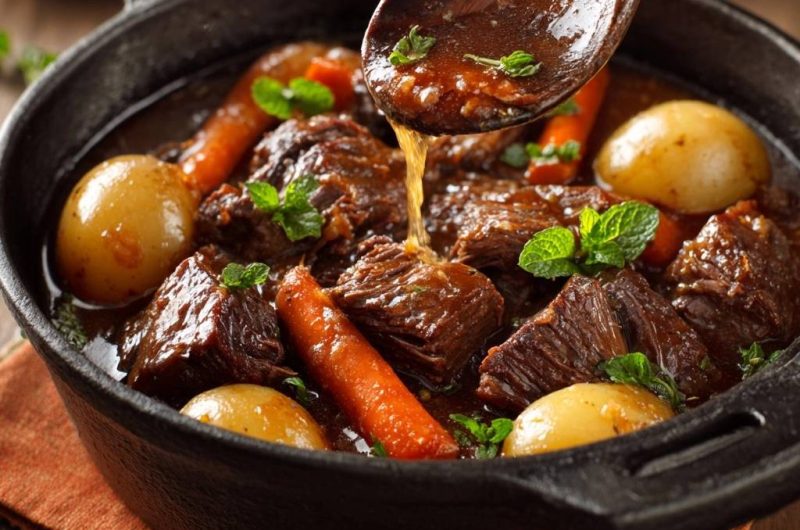
Beef Stew
Course: Main CourseCuisine: AmericanDifficulty: medium6
servings20
minutes2
hours450
kcal140
MinutesTired of chewy beef that ruins your stew? This recipe nails fall-apart tenderness with a simple two-step trick: high-heat searing to lock in juices and break down fibers, followed by a low slow simmer that tenderizes without drying out the meat. Home cooks swear by it for perfect results every time.
Ingredients
2 pounds beef chuck, cut into 1.5-inch cubes
1/4 cup all-purpose flour
1 large yellow onion, diced
4 cloves garlic, minced
2 tablespoons tomato paste
1.5 pounds baby potatoes, whole
6 medium carrots, peeled and cut into 2-inch chunks
1 bunch fresh mint leaves, roughly chopped (for garnish)
4 cups beef broth
3 tablespoons vegetable oil
2 teaspoons salt (plus more to taste)
1 teaspoon black pepper (plus more to taste)
2 bay leaves
Directions
- Pat beef cubes completely dry with paper towels. Season generously with salt and pepper, then dredge in flour, shaking off excess. This creates a crust for searing and thickens the stew.
- Heat oil in a large cast iron pot over medium-high heat until shimmering (not smoking). Add beef in a single layer without crowding; sear 3-4 minutes per side until deeply browned crust forms. Work in batches if needed. Remove beef to a plate.
- Reduce heat to medium. Add diced onion to the pot and cook 4-5 minutes until softened. Stir in garlic and tomato paste; cook 1-2 minutes until fragrant.
- Pour in beef broth, scraping up all browned bits from the pot bottom with a wooden spoon. Add bay leaves and bring to a simmer.
- Return beef and any juices to the pot. Reduce heat to low, cover, and simmer gently for 1 hour 30 minutes. Stir occasionally.
- Add carrots and baby potatoes. Cover and simmer another 45-60 minutes, until beef shreds easily with a fork and vegetables are tender but hold shape. If sauce thickens too much, add a splash of broth. Discard bay leaves.
- Taste and adjust salt and pepper. Turn off heat. Garnish with chopped mint. Serve hot.
Notes
- Use cast iron pot for best searing. Pat beef very dry before seasoning for perfect crust. Fresh mint garnish adds bright contrast to rich stew.