Skillet Shredded Beef and Onions: Tender Results Guaranteed
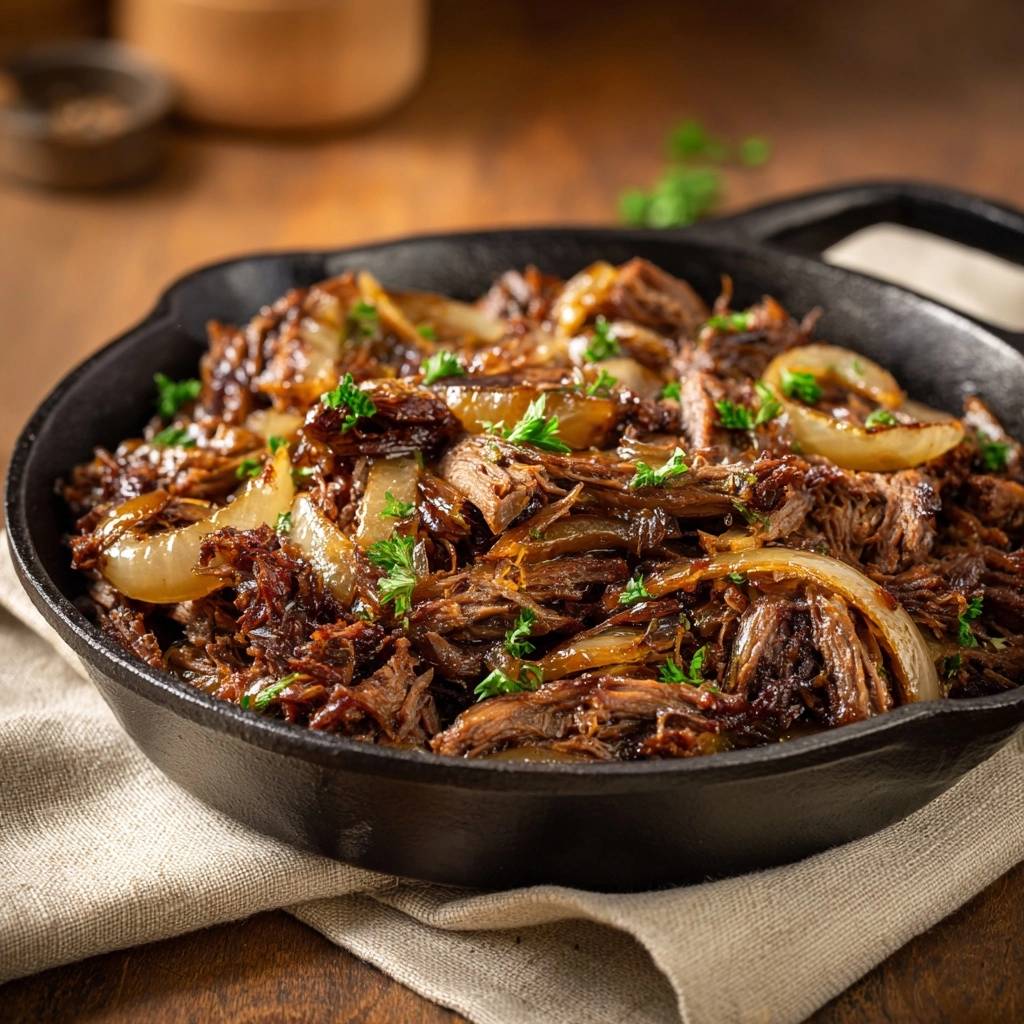
Ever yanked a fork through chewy braised beef that fights back? Most home cooks battle tough cuts because they crank the heat too high or skip full liquid coverage. This skillet shredded beef and onions recipe fixes that with a low-and-slow braise right in your cast iron. You’ll get fall-apart tenderness in just 2 hours and 15 minutes, no fuss.
Therefore, it delivers restaurant-quality shreds swimming in caramelized onion sauce. The savory aroma hits as onions soften and beef simmers, promising juicy bites every time. In addition, it’s simple despite the oven step, perfect for weeknights when you crave comfort without the chew.
Here’s the pro tip that seals it: submerge the beef completely in broth at 325°F. This low temp slowly melts collagen into gelatin without drying the meat. No more rubbery disasters, just effortless shredding.
Why Skillet Shredded Beef and Onions Succeeds
Chuck roast shines here because its collagen breaks down perfectly at 325°F. High heat toughens it by contracting proteins, but this gentle braise tenderizes without evaporation. Therefore, cast iron’s even heat retention keeps everything juicy.
Moreover, searing triggers the Maillard reaction for deep flavor, while onions caramelize into sweet umami. Stovetop attempts often fail from uneven heat, yet this method locks in moisture. You’ll smell the transformation as broth turns silky.
Chuck Roast: Ideal Cut for Shredding
Grab a 2-pound chuck roast packed with marbling and connective tissue. Cut into large chunks to avoid overcooking the edges. Grass-fed offers richer taste, but conventional works fine if it’s fresh.
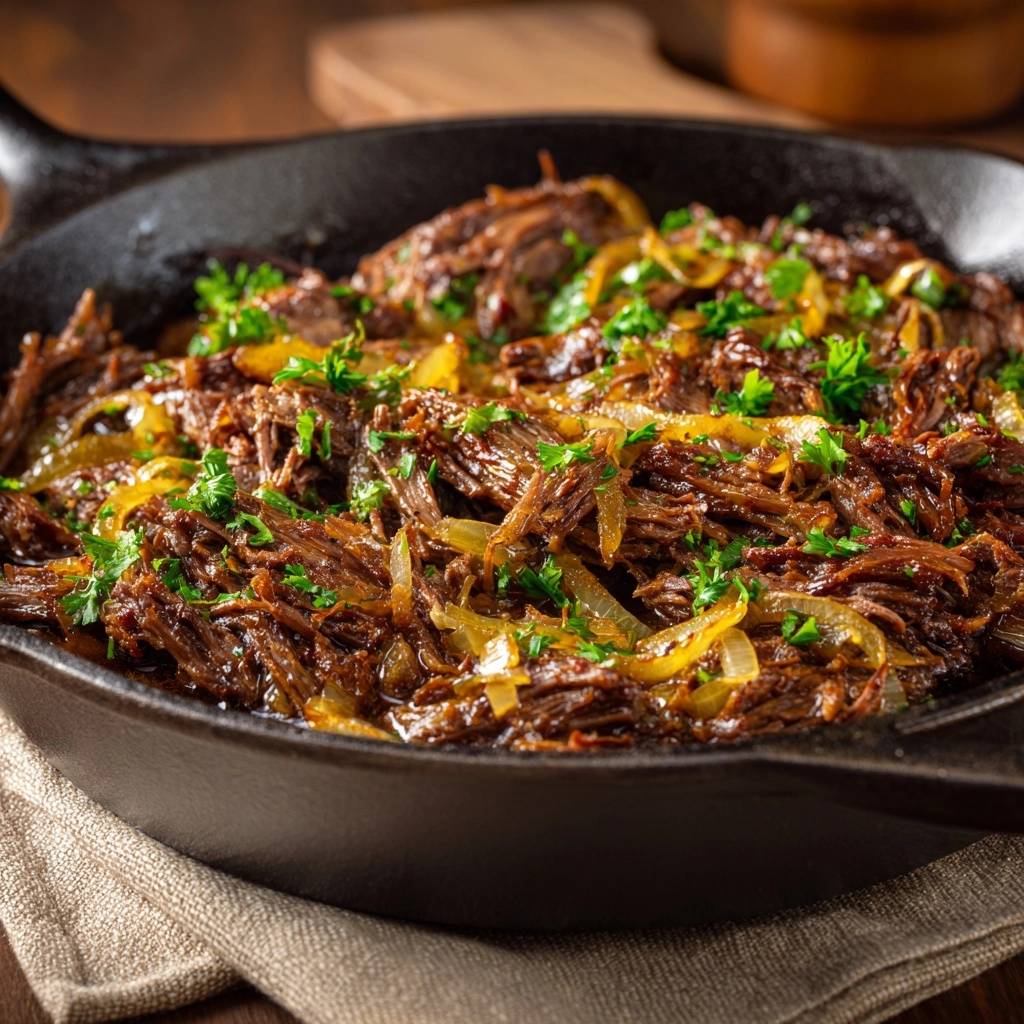
Therefore, those fat veins baste the meat during braising. Large pieces ensure even tenderness when you shred.
Beef Broth’s Role in Tenderness
Two cups of beef broth create a steamy environment that converts collagen to gelatin. It tenderizes without watering down flavor. Homemade stock adds extra depth if you have it.
In addition, full submersion prevents dry spots. That’s why your beef pulls apart effortlessly.
Key Ingredients for Juicy Shredded Beef and Onions
Start with 2 pounds beef chuck roast for its fat content that melts into juicy shreds. Three large yellow onions bring sweetness through caramelization, forming the sauce base. Two tablespoons olive oil handles high-heat searing without smoking.
Season with 1 teaspoon salt and 1/2 teaspoon black pepper before cooking. Finish with 1/4 cup chopped fresh parsley for brightness. These quantities serve 4 to 6 generously.
Fresh onions release better moisture than stored ones, so pick firm bulbs. Red onions sub in for a sharper edge if you like. However, stick to yellow for classic balance.
Onions: Building Sweet Depth
Thinly slice three large yellow onions to maximize surface area for browning. Use a sharp knife or mandoline, but watch your fingers. They’ll reduce dramatically into a flavorful bed.
Seasonings That Enhance Beef Flavor
Salt and pepper the beef pre-sear for penetration into the meat. Add parsley at the end to keep its fresh pop against rich braise. Simple, yet they elevate everything.
Equipment Essentials for Skillet Shredded Beef
A 12-inch cast iron skillet is perfect for searing then braising. It retains heat evenly and transitions seamlessly to the oven. Ensure it’s oven-safe up to 325°F.
Therefore, tightly cover with foil then the lid to trap steam. No cast iron? A Dutch oven works, but it won’t sear as crisply. Preheat your oven accurately for best results.
Clean cast iron with hot water and a brush, then dry thoroughly. A light oil coat prevents rust.
Cast Iron Skillet Advantages
Well-seasoned cast iron builds fond during searing and holds steady heat. Unlike stainless steel, it doesn’t let moisture escape. Its weight keeps things stable on the stovetop.
Mastering the Sear in Skillet Shredded Beef and Onions
Pat beef chunks dry with paper towels to promote browning. Season evenly with salt and pepper. Heat olive oil over medium-high until it shimmers, then sear all sides for 8 minutes total.
Look for a deep crust that smells nutty, not burnt. Remove beef to rest. This fond flavors everything next.
Common mistake: crowding the pan. Do batches if needed. Patience here pays off in taste.
Drying and Seasoning Beef Chunks
Paper towels absorb surface moisture for crisp sear. Coat salt and pepper lightly but evenly. Let it sit 5 minutes if time allows.
Caramelizing Onions for Flavor Base
Add sliced onions to the skillet with 1/4 cup beef broth. Cook over medium heat, stirring occasionally for 10 minutes. They’ll go translucent, then golden with sweet aroma.
This deglazes the fond without burning. Stir to scrape up bits. Umami builds fast.
Don’t rush to high heat, or they’ll scorch. Medium ensures even caramelization.
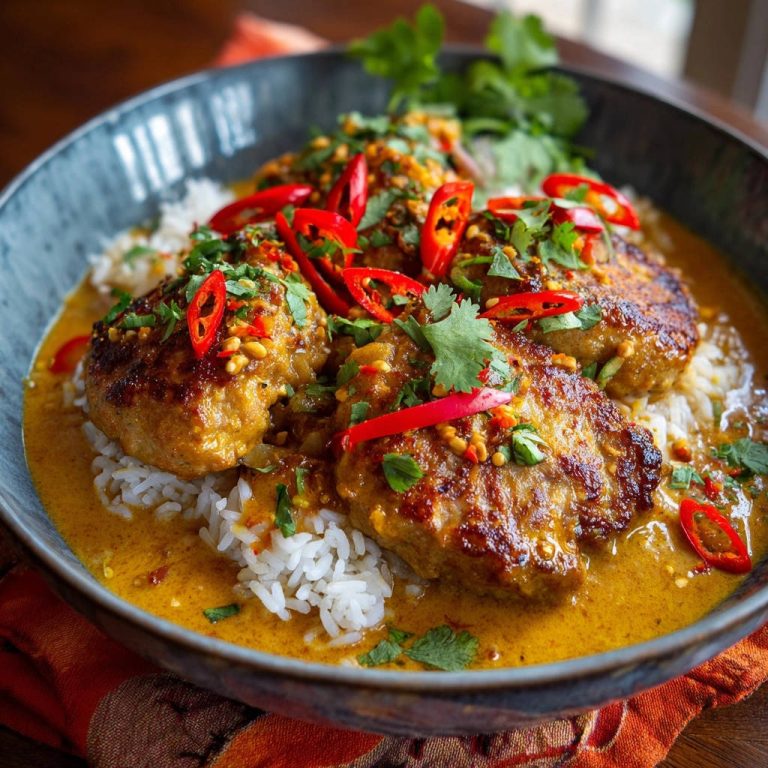
If you enjoy the tender shredded beef and caramelized onions here, try these juicy Salisbury steaks with caramelized onions for another savory take.
Thin Slicing and Cooking Stages
Slice onions pole to pole for less tears. Stir every 2 minutes to prevent sticking. Watch for soft sheen before browning.
Braising Technique for Fall-Apart Shredded Beef
Nestle seared beef among onions. Pour in remaining broth to just cover, adding water if short. Bring to a simmer on stovetop.
Cover tightly with foil, then lid. Braise at 325°F for 2 hours 15 minutes. Test with a fork; it should shred easily.
Low temp slowly tenderizes collagen. Full coverage keeps it moist throughout.
Oven Setup and Timing Precision
Preheat oven to 325°F with rack in middle. Double-cover for steam seal. Check at 2 hours, but 15 extra minutes perfects it.
Shredding and Finishing Skillet Beef and Onions
Shred beef in the skillet with two forks, mixing into onions and sauce. The meat pulls apart juicy. Garnish with parsley right before serving.
Let it rest 5 minutes off heat for flavors to meld. Serve hot for best texture.
If you love those rich, savory onions, these caramelized onion smothered beef patties are a natural next step.
Pro tip: stir pan juices well for saucy strands.
Fork-Shred Method for Even Texture
Pull against the grain for tenderness. Incorporate all liquids for moisture. Two forks speed it up.
The Science of Tender Skillet Shredded Beef
Collagen in chuck needs 160-180°F over 2 hours to become gelatin. This 325°F oven hits that sweet spot without boiling dry. Broth’s moisture balance prevents toughness from protein contraction.
Searing creates Maillard flavors upfront. Onions add pH-lowering sugars for better shredding. Higher temps speed it but dry out fat.
Experiments show 350°F cuts time but toughens edges. Stick low for foolproof results.
Collagen Breakdown Timeline
First hour softens tissue. By 90 minutes, meat yields to probe. At 2 hours 15 minutes, full shred-ready gelatin forms. Don’t shortcut.
Avoiding Mistakes in Shredded Beef and Onions
Tough beef means insufficient liquid or high heat. Add broth and extend braise 30 minutes. Dry results come from loose lids; seal tighter next time.
Bland onions skip deglazing. Scrape fond always. Over-sear blackens; watch the clock.
Check oven temp with a thermometer. Texture tells all: stringy is underdone, mushy overdone.
Fixing Undercooked or Dry Beef
Return to oven covered with extra broth for 20-30 minutes. Shred then. It recovers nicely.
Make-Ahead Guide for Skillet Shredded Beef
Prep beef and onions a day ahead. Braise fully, then cool and fridge up to 3 days. Freezes well in portions for 3 months.
Reheat low in skillet with a splash of broth. Microwave covered works too. Scale up by doubling everything evenly.
Thaw overnight in fridge for safety. Batch for meal prep heaven.
Freezing and Reheating Steps
Portion into quart bags, flatten for space. Reheat steaming low to restore tenderness. Avoid high microwave blasts.
Pairing Sides with Shredded Beef and Onions
Sop up sauce with crusty bread. Roasted veggies add earthiness. Rice or mashed potatoes bulk it out perfectly.
What to Serve with Shredded Beef
These sides bring texture and brightness that balance the rich, slow-cooked beef and soft onions.
- For a stuffing that stays fluffy and soaks up juices without getting heavy, try cranberry stuffing — the tart fruit cuts through the beef’s richness.
- A roasted cauliflower chickpea salad adds a crunchy, smoky contrast and makes the meal feel complete without being too filling.
Fresh green salad cuts richness. Sparkling cranberry juice pairs bright. Great for meal prep bowls.
Classic Sides That Balance Flavors
Garlic mashed potatoes soak juices. Buttery green beans crunch nicely. Simple and satisfying.
Flavor Twists on Skillet Shredded Beef and Onions
Swap chuck for brisket if available. Add garlic powder or thyme during braise. For heat, stir in chipotle at shred time.
Vidalia onions sweeten more. Try BBQ sauce finish for smoky twist. Mushroom version subs beef for hearty vegan take.
Spice and Herb Variations
One teaspoon garlic powder with salt. Thyme sprigs in broth, remove before shred. Chipotle: 1 teaspoon, taste first.
Common Questions on Skillet Shredded Beef and Onions
Slow Cooker Conversion Tips
Can I use a slow cooker? Yes, sear first, then low for 6-8 hours. Use same broth amount; it won’t evaporate as fast. Stir once midway.
Instant Pot Adaptation
How do I make it in an Instant Pot? Sear on sauté, add broth, 35 minutes high pressure, natural release 15 minutes. Quick but less nuanced flavor.
How do I store leftovers?
Keep in an airtight container in the fridge for up to 4 days. It reheats beautifully with a bit of broth. Freezes well in portions for 3 months; thaw overnight and warm low to avoid toughness. Potatoes don’t pair well here, so no graininess issues.
Why is my beef still tough?
Usually not enough time or liquid. Extend braise 30 minutes with extra broth cover. High oven temp contracts proteins; verify 325°F. Large chunks help prevent overcooking edges.
Can I substitute chicken broth?
Yes, but it’ll be milder, less beefy. Beef broth deepens savoriness; mix half chicken half beef if that’s all you have. Veggie broth works for lighter taste, though flavor shifts.
How do I scale for a crowd?
Double ingredients, use two skillets or a larger Dutch oven. Increase broth proportionally. Same timing, but check tenderness at 2 hours. Serves 8-12 easily.
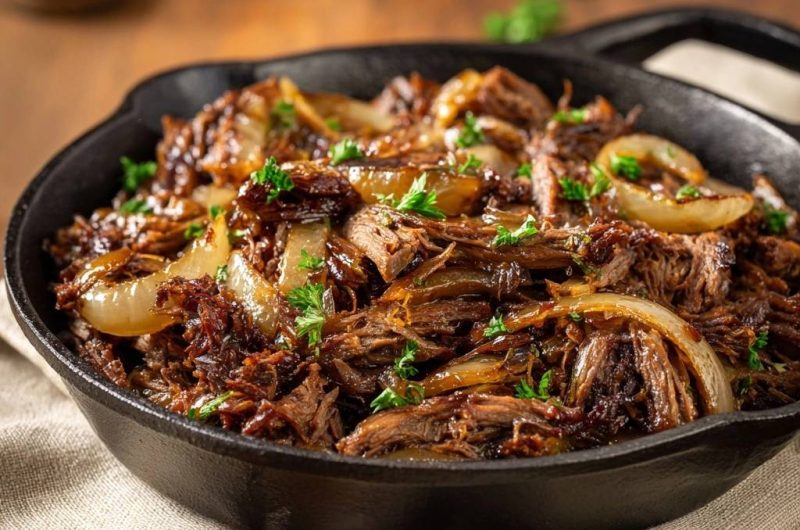
Shredded Beef and Onions
Course: Main CourseCuisine: AmericanDifficulty: medium4
servings20
minutes2
hours650
kcal140
MinutesTired of braised beef that stays chewy and impossible to shred? This recipe nails fall-apart tenderness every time with a foolproof low-and-slow braise in beef broth that breaks down the meat without drying it out. Cast iron locks in juices for perfect results.
Ingredients
2 pounds beef chuck roast, cut into large chunks
3 large yellow onions, thinly sliced
2 cups beef broth
2 tablespoons olive oil
1 teaspoon salt
1/2 teaspoon black pepper
1/4 cup fresh parsley, chopped
Directions
- Pat beef dry and season with salt and pepper. Heat olive oil in a large cast iron skillet over medium-high heat until shimmering. Sear beef chunks on all sides until deeply browned, about 8 minutes total. Remove beef and set aside.
- In the same skillet, add onions and 1/4 cup beef broth. Cook over medium heat, stirring occasionally, until onions soften and start to brown, about 10 minutes. This builds flavor without burning.
- Return beef to skillet, nestling it among onions. Pour in remaining beef broth, ensuring meat is just covered (add a splash of water if needed). Bring to a simmer.
- Cover skillet tightly with foil, then lid. Transfer to preheated 325°F oven. Braise for 2 hours 15 minutes, or until beef shreds easily with a fork. The key to no tough beef: low oven temp and full liquid submersion tenderizes collagen slowly without evaporation.
- Remove from oven. Shred beef directly in skillet using two forks, mixing with onions and sauce. Garnish with parsley. Serve hot.
Notes
- The key to no tough beef: low oven temp (325°F) and full liquid submersion tenderizes collagen slowly without evaporation. Use a cast iron skillet for best results.