Mastering Cranberry Sausage Stuffing with the Anti-Soggy Technique
Nothing ruins a holiday meal faster than a mushy, paste-like stuffing. Most recipes fail because they use fresh bread or too much liquid at once, resulting in a soggy mess that lacks character. This Cranberry Sausage Stuffing is the definitive solution for anyone tired of side dishes that look like oatmeal.
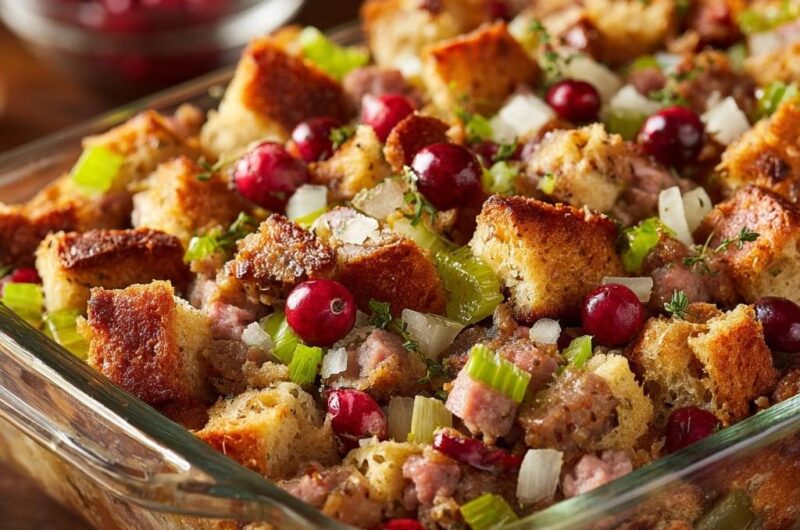
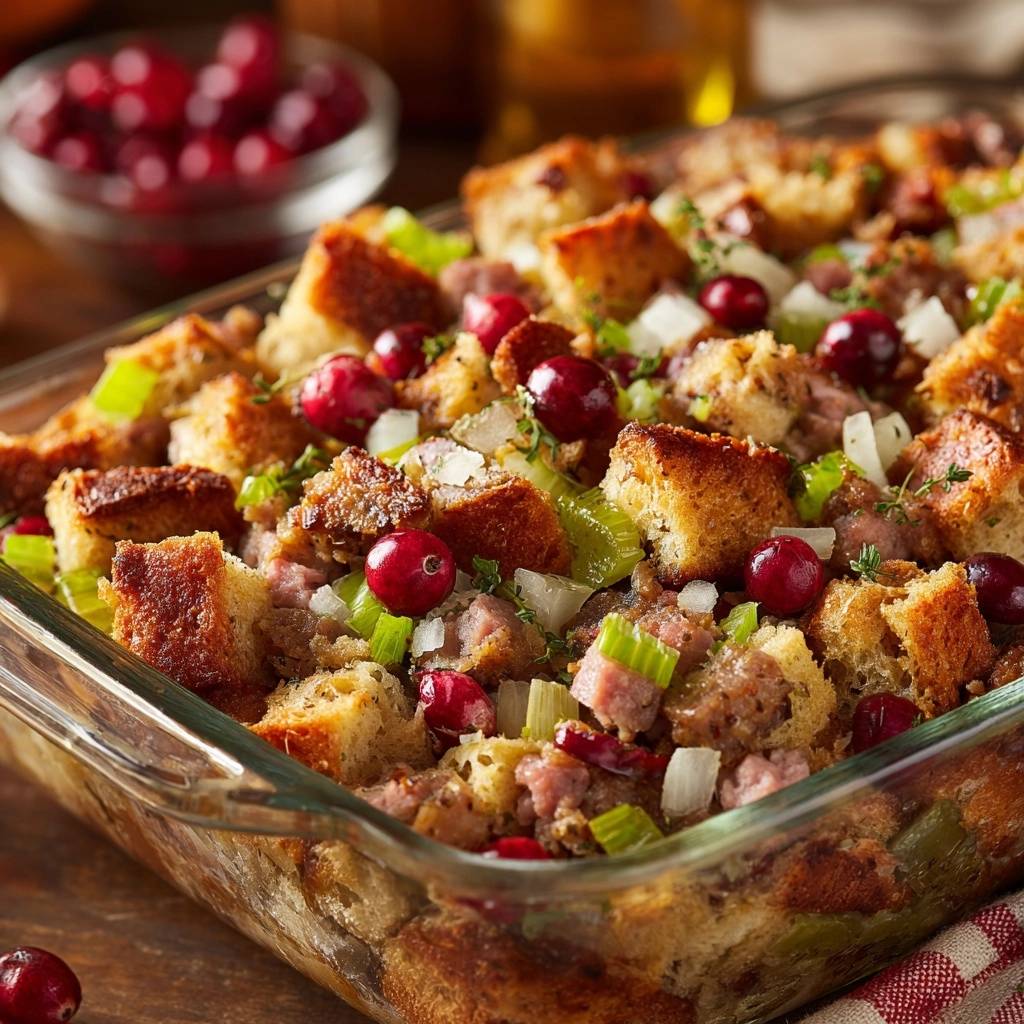
The secret lies in a specific sensory contrast. You get the structural integrity of sourdough, the tart pop of whole cranberries, and the savory depth of sage-style sausage. It’s a dish defined by its “craggy” peaks and moist, tender interior.
I’ve found that the key to success is treating the bread like a sponge that needs to be emptied before it can be filled. By using a double-toast method, we ensure every cube stays distinct. You’ll notice the difference the moment your fork hits that golden, crispy crust.
The Structural Science of Non-Mushy Stuffing
Good stuffing is actually a lesson in physics and hydration. When you use fresh or “day-old” bread, the cells are still full of moisture. Therefore, when you add broth, the bread has nowhere to store the liquid except in its starch walls, which causes them to collapse into mush.
The “Double-Toast” method fixes this by completely dehydrating the bread cubes in the oven first. This process creates a capillary effect. The bone-dry bread pulls the savory broth and melted butter into its center while maintaining its exterior shape.
For the same reasons you dry out bread cubes here, this technique prevents sogginess in our cranberry sausage stuffing.
Sourdough is the champion here because of its tight crumb and sturdy crust. Unlike standard white sandwich bread, which dissolves upon contact with liquid, sourdough holds its ground. It provides the necessary resistance to create those beautiful, distinct cubes you see in high-end holiday spreads.
Essential Components for Cranberry Sausage Stuffing
Quality ingredients are the backbone of this dish. I always recommend starting with a loaf of sourdough or crusty Italian bread from the bakery section. Avoid those pre-bagged croutons; they’re often seasoned with dusty herbs and lack the hearty texture we need for a “craggy” top.
Fresh whole cranberries are a non-negotiable for me in this recipe. While dried cranberries are convenient, they’re often loaded with sugar and can burn in a hot oven. Fresh berries provide a bright, acidic burst that cuts right through the heavy fats of the sausage and butter.
For the meat, look for a high-quality bulk sausage, specifically a sage or “breakfast” style. The earthy notes of sage pair perfectly with the tartness of the fruit. Always use a low-sodium chicken broth so you can control the salt levels yourself; you don’t want the seasoning to get away from you.
Selecting the Right Bread Base
Sourdough is my first choice because its natural tang complements the cranberries. However, a dense ciabatta or a thick French loaf also works well. The goal is a high crust-to-crumb ratio, which ensures the stuffing has plenty of “bits” that can get extra crispy during the final bake.
Fresh Cranberries vs. Dried Fruit
This is all about the acid-fat balance. The rendered fat from the sausage and the half-cup of butter need a sharp counterpoint. Fresh cranberries soften into jammy pockets of tartness, whereas dried fruit just adds more sweetness, which can make the dish feel one-note and heavy.
Preparing the Foundation: Dehydrating the Bread
Your first step is the most important: the dehydration bake. Spread your one-inch cubes on a large baking sheet, making sure they aren’t piled on top of each other. If the pan is overcrowded, the bread will steam instead of drying out.
Bake them at 350°F for about 15 to 20 minutes. You’re looking for a “bone-dry” feel. When you squeeze a cube, it shouldn’t give at all; it should feel like a rock. This ensures it can soak up the aromatics later without turning into a sponge.
Searing the Sausage and Building the Aromatics
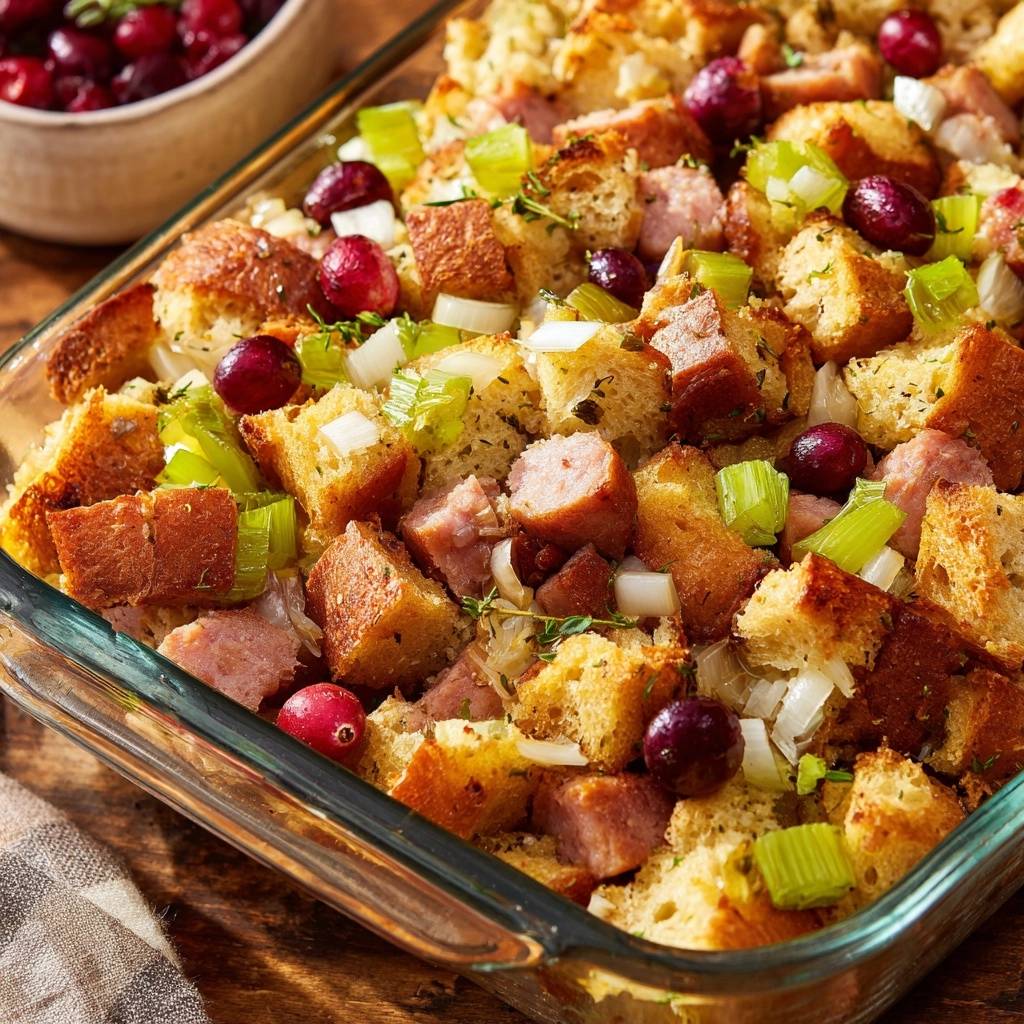
When browning your sausage, don’t aim for a fine crumble. Use your spatula to break the meat into distinct, bite-sized chunks. These larger pieces provide a meaty “chew” that matches the size of the bread cubes, creating a more rustic and satisfying texture.
Once the meat is browned, remove it with a slotted spoon but keep that liquid gold—the rendered fat—in the pan. Add your butter and let it melt before tossing in the onion and celery. This fat blend is what “blooms” your dried spices and fresh thyme, intensifying their flavor.
Sauté the vegetables for about 6 to 8 minutes. You aren’t looking for deep caramelization here. You want them to be translucent and soft enough to eat, but they should still hold their shape so they don’t disappear into the bread mixture.
The Hydration Phase: Managing Liquid Ratios
This is where most people go wrong, so listen closely. Never dump all your broth in at once. Start by drizzling one cup over your bread and sausage mixture, then toss gently with a large spoon. You want to coat the cubes, not drown them.
Add the remaining broth half a cup at a time. Stop the moment the bread feels moistened but still firm to the touch. If you see a pool of liquid at the bottom of the bowl, you’ve gone too far. The bread should absorb the liquid, not sit in it.
Remember, the bread will continue to soften as it bakes and the cranberries release their juices. It’s much easier to add a splash of broth later than it is to fix a soggy tray of stuffing. Trust your hands and the feel of the bread.
For a similar approach to keeping bread perfectly textured, try this sausage leek stuffing recipe.
Step-by-Step: Assembling and Baking for Maximum Crunch
When you transfer the mixture to your 9×13 glass dish, do not pack it down. This isn’t a casserole. Pile the cubes loosely and unevenly. Those little peaks sticking up are what will catch the heat and turn into the crunchy, golden bits everyone fights over at the table.
Bake the stuffing uncovered. This is a strategic move. An uncovered bake allows the moisture to evaporate from the top layer while the cranberries soften without bursting into a watery mess. It’s the secret to that “Anti-Soggy” finish.
Keep an eye on it around the 30-minute mark. If the top is getting dark brown but the center still looks a bit dry, you can “audible” with a loose foil tent. This protects the peaks while the heat continues to penetrate the middle of the dish.
Troubleshooting Common Stuffing Failures
If you pull your stuffing out and the bread still feels hard or “stale” after 30 minutes, don’t panic. Drizzle two tablespoons of warm broth over the dry spots and pop it back in for five minutes. The steam will quickly soften those stubborn areas.
If the mixture looks too wet before it goes into the oven, you can save it by adding a handful of extra toasted bread cubes to soak up the excess. Alternatively, extend the bake time by 10 minutes to help more of that moisture evaporate.
When sharing oven space with a large turkey, remember that the extra moisture in the oven can slow down the browning process. You might need to move the stuffing to the top rack for the last 10 minutes to ensure you get that signature crunch.
Make-Ahead Strategies and Storage Logistics
You can absolutely prep parts of this 24 hours in advance. Toast the bread cubes and store them in a sealed bag at room temperature. You can also brown the sausage and sauté the vegetables, then keep them in the fridge.
However, never mix the liquid with the bread until the moment you are ready to bake. If the bread sits in the broth overnight, it will lose its structural integrity, and you’ll end up with the very mush we’re trying to avoid.
Store leftovers in an airtight container in the fridge for up to three days. To reheat, avoid the microwave if you want to keep the crunch. Instead, put it in a small oven-safe dish at 350°F for 15 minutes. This revives the texture perfectly.
What to Serve Alongside Your Stuffing
A holiday table needs more than one standout dish. These two sides add creamy richness and a touch of sweetness that balance the savory sausage and tangy cranberries.
- A warm, gooey Honey Thyme Baked Brie Without the Mess pairs beautifully with the stuffing’s herbed notes and adds a buttery, melty contrast.
- The thick, no-watery texture of Spinach Artichoke Dip offers a cool, creamy counterpoint to the stuffing’s crumbly, savory bite.
Optimal Pairings for Cranberry Sausage Stuffing
While this is a holiday staple, it pairs beautifully with more than just turkey. Try it alongside a roasted chicken or even a beef tenderloin. The tartness of the cranberries acts as a natural palate cleanser for rich, fatty meats.
It also plays well with earthy sides like roasted Brussels sprouts or a sharp kale salad. The savory sage and sweet-tart berries bridge the gap between heavy proteins and light, acidic greens, making your entire plate feel balanced.
Expert Tips for Recipe Success
How do I prevent the bottom from getting greasy?
The key is using a slotted spoon when transferring the sausage. You want some of that flavorful fat, but not all of it. The bread cubes act as a sponge for the butter-broth emulsion, so as long as you don’t over-saturate with liquid, the bottom will stay moist rather than oily.
Can I use different herbs?
Thyme is the most versatile, but rosemary and sage are excellent alternatives. If you use fresh sage, be careful; it is much more potent than thyme. Use about half the amount called for to ensure it doesn’t overpower the delicate flavor of the cranberries.
What if I can only find dried cranberries?
You can use 3/4 cup of dried cranberries if fresh aren’t available. Since dried cranberries are sweetened, I recommend reducing the salt in the recipe by a pinch and skipping any extra sugar. They won’t “pop” like fresh ones, but they still provide a nice chew.
Is a glass or ceramic baking dish better?
I prefer a glass baking dish for stuffing. Glass has excellent heat conductivity and allows you to see exactly how much browning is happening on the bottom and sides. This helps you ensure the “Anti-Soggy” goal is met before you pull it out of the oven.
Cranberry Sausage Stuffing
Course: Side DishCuisine: AmericanDifficulty: mediumYields8
servingsPrep Time20
minutesCook Time45
minutesCalories380
kcalTotal Time65
MinutesThis stuffing recipe solves the common problem of mushy holiday sides by using dehydrated bread cubes and a specific liquid ratio. It features savory beef sausage, tart fresh cranberries, and aromatic herbs for a perfect balance of flavors and a crunchy, craggy top.
Ingredients
1 pound sourdough or crusty Italian bread, cut into 1-inch cubes
1 pound bulk sausage (Italian or Sage style)
1 cup fresh whole cranberries
1 1/2 cups celery, chopped
1 large white onion, diced
1 1/2 to 2 cups low-sodium chicken broth
1/2 cup unsalted butter
2 tablespoons fresh thyme leaves
1 teaspoon salt
1/2 teaspoon black pepper
1/2 teaspoon garlic powder
Directions
- Preheat your oven to 350°F. Spread the bread cubes on a large baking sheet in a single layer. Toast for 15 to 20 minutes, tossing halfway through, until they are completely dry and golden brown. This dehydration is the secret to preventing sogginess; the bread must be hard to the touch to absorb flavor without collapsing.
- In a large skillet over medium-high heat, brown the sausage. Use a spatula to break it into distinct, bite-sized chunks rather than a fine crumble to match the texture in the image. Once browned and fully cooked, remove the meat with a slotted spoon and set aside, leaving the rendered fat in the pan.
- Add the butter to the skillet with the sausage drippings. Once melted, sauté the diced onion and celery for 6 to 8 minutes. You want them softened but still holding their shape.
- In a very large mixing bowl, combine the toasted bread cubes, cooked sausage chunks, sautéed vegetables, and fresh whole cranberries. Sprinkle with thyme, salt, pepper, and garlic powder. Toss gently to distribute the herbs.
- Slowly drizzle the chicken broth over the mixture one cup at a time, tossing gently between additions. Stop as soon as the bread is moistened but the cubes still feel firm. Do not over-saturate; the bottom should not have standing liquid.
- Transfer the mixture to a greased 9×13 inch glass baking dish. Do not pack it down or smooth the top; pile the cubes loosely to create the “craggy” surface seen in the photo, which allows for maximum browning.
- Bake uncovered for 35 to 40 minutes. (Note: Skipping the foil cover ensures the cranberries soften without bursting excessively and keeps the top bread cubes highly toasted and crisp). If the top browns too quickly, tent loosely with foil for the last 10 minutes. Serve immediately while the top is crunchy.
Notes
- The secret to preventing sogginess is ensuring the bread is hard to the touch after toasting. Do not pack the mixture down in the baking dish to maintain the crispy peaks. If the top browns too quickly, tent loosely with foil for the final 10 minutes.