Spicy Gochujang Glass Noodles
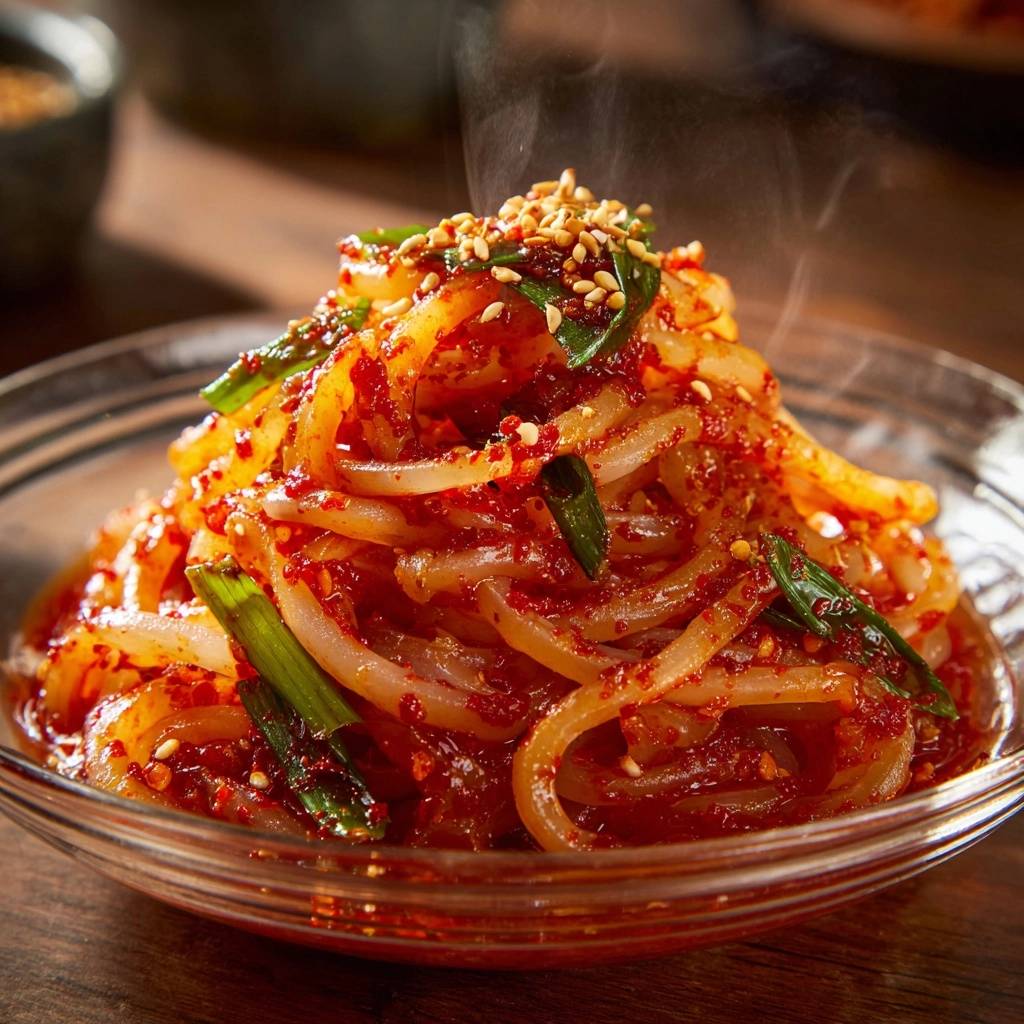
Ever pulled out glass noodles only to end up with a gummy, clumped mess that sticks to everything? This Spicy Gochujang Glass Noodles recipe fixes that frustration for good. You’ll get perfectly separate, glossy strands that shine with every forkful, thanks to a quick ice-shock rinse and sesame oil toss.
Therefore, you dive into that bold, fermenty heat from gochujang, balanced with soy’s umami and a touch of sugar. The noodles transform into a spicy delight that rivals any restaurant takeout. Imagine the satisfying chew against that glossy sauce, steam rising with a sweet-spicy aroma that hits you first.
Here’s the expertise kicker: cook those dangmyeon for exactly 4 minutes to al dente, then hit them with cold water. That precise timing plus the oil barrier keeps starch locked away, so you never deal with clumps again.
Why Glass Noodles Clump and How to Fix It
Glass noodles, or dangmyeon, release tons of starch when you boil them too long. That starch gelatinizes and turns everything sticky. However, this recipe’s 4-minute boil followed by a cold rinse stops it cold.
In addition, sesame oil acts as a slick barrier after rinsing. It coats each strand, preventing them from grabbing onto each other like overcooked pasta versus slippery rice noodles. You’ll see glossy, separate noodles every time.
Starch Science in Sweet Potato Noodles
Dangmyeon come from sweet potatoes, packed with amylopectin starch. Heat makes it swell and burst, creating gumminess if you overdo it. Therefore, hit exactly 4 minutes for al dente chew that holds sauce without mush.
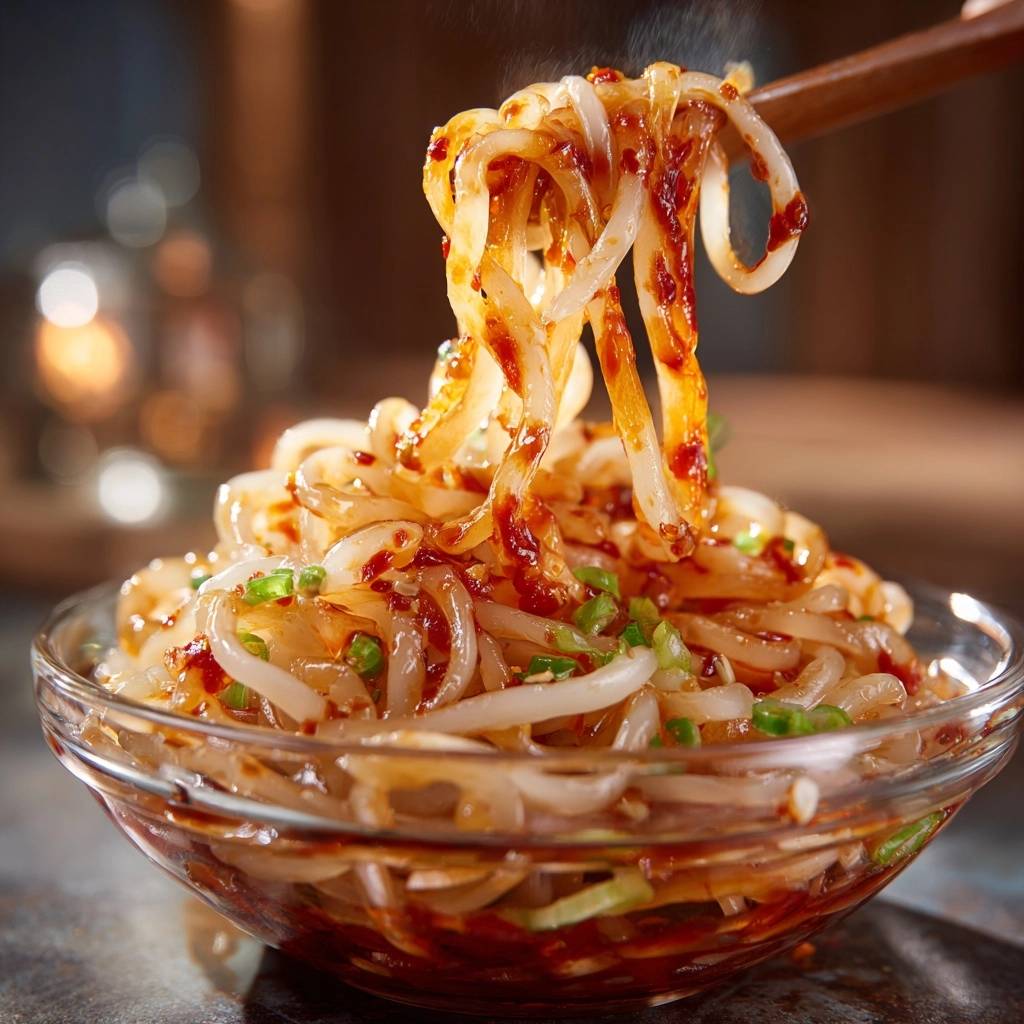
You’ll notice the noodles turn translucent but still firm. That’s your cue. Skip past that, and they soften too much in the sauce later.
Ice-Shock Rinse Prevents Sticky Disaster
Right after draining, run cold water over the noodles for 30 seconds. This shocks the starch granules, halting gelatinization just like blanching veggies keeps them crisp. Shake vigorously to ditch excess water.
Without it, residual starch turns your dish into a clump fest. However, this step guarantees silky strands that toss beautifully.
Key Ingredients for Spicy Gochujang Glass Noodles
Dangmyeon provide that signature chew; they’re translucent and springy when done right. Gochujang delivers fermenty heat and depth, way better fresh from a tub than dried out jars. Sesame oil, divided, first rinses away starch, then glosses everything up.
If you like the chewy texture of these noodles, you’ll find the same satisfying bite in this glazed salmon with soba noodles.
Soy sauce brings salty umami to balance the spice, while sugar mellows the kick without dulling flavor. Therefore, green onions add fresh bite, and toasted sesame seeds bring nutty crunch. Grab authentic Korean staples from Asian markets for peak taste.
Selecting Perfect Dangmyeon Noodles
Look for thin to medium thickness; they cling to sauce best without snapping. Brands like Ottogi or Nongshim stay chewy. Store in a cool, dry spot to avoid brittleness.
Gochujang Paste Heat Levels Explained
Mild gochujang suits gentle heat, while hot amps the fire with complex fermentation tang. Fresher paste means brighter red chiles and deeper soybean funk. Start mild if you’re spice-shy.
Equipment Essentials for Flawless Texture
You need a large pot for boiling without crowding, plus a fine-mesh strainer for quick draining. Tongs handle the slick toss without breakage, and a wide bowl lets sauce coat evenly. A wok? It fails here; too much steam restarts starch issues.
Therefore, invest in sturdy tongs and a big strainer. They make Korean noodles foolproof every time.
Why Tongs Beat Chopsticks Here
Tongs grip oiled noodles firmly without tearing fragile strands. Hold at the base, twist gently for even toss. Chopsticks slip post-oil, leading to frustration.
Step-by-Step: Mastering Spicy Gochujang Glass Noodles
Follow this sequence precisely to lock in texture. Timings matter, and sensory cues guide you. Pro tip: use unsalted water; sauce provides all the salt.
Phase 1: Precise Boiling for Al Dente Base
Bring 2 cups water to a rolling boil in a large pot. Add 8 ounces dangmyeon and set a 4-minute timer. They turn milky-translucent with a firm bite; don’t salt the water or it’ll toughen them.
Phase 2: Ice-Shock Rinse Technique
Drain fast, then rinse under cold running water for 30 seconds. Shake hard over the sink to remove every drop. Excess water dilutes sauce later, so be thorough.
If you enjoy the nutty depth of sesame oil here, try it in this glazed garlic shrimp with soba for a similar glossy finish.
Phase 3: Sesame Oil Barrier Coat
Toss drained noodles with 1 tablespoon sesame oil in a wide bowl. Rub gently until each strand shines and separates. This oil blocks starch reunion for glossy results.
Phase 4: Gochujang Sauce Whip and Mix
Whisk 3 tablespoons gochujang, 1 tablespoon sesame oil, 2 tablespoons soy sauce, and 1 tablespoon sugar until silky. Add to noodles and mix with tongs until vibrant red coats everything evenly. Avoid mashing; gentle lifts work best.
Korean Roots of Gochujang Noodle Dishes
Glass noodles star in japchae, a stir-fried classic from royal banquets. Gochujang evolved in the Joseon era, blending chiles with fermented soybeans for umami heat. This spicy twist modernizes it for home cooks.
Therefore, it honors tradition while fixing common texture fails. You’ll get restaurant shine with everyday ease.
Gochujang Fermentation Traditions
Red peppers hit Korea in the 16th century, mixed with meju soybean blocks. Families mold meju in winter for spring fermentation. That process builds the funky depth you crave.
Avoiding Gochujang Glass Noodle Pitfalls
Overboiling hits first; it unleashes starch floods. Skip the rinse, and clumps form instantly. Therefore, watch timings and coat with oil right away.
Uneven sauce? Toss more vigorously. Serve hot for steam and gloss; cold dulls the shine.
Overcooking Leads to Gummy Mess
Stick to 4 minutes; noodles soften more in sauce. Test one strand for slight resistance. Timer discipline prevents mush every time.
Skipping Oil Toss Causes Clumps
Oil creates the barrier; 1 tablespoon coats just right. Toss immediately post-rinse. Precision keeps strands free and glossy.
What Goes Well with Spicy Gochujang Glass Noodles
These bold, chewy noodles pair nicely with a cool, crunchy side and a second spicy dish that shares the same gochujang kick.
- For a crisp, refreshing contrast, add a bowl of Spicy Sesame Wakame Salad — the seaweed and sesame dressing cut through the heat.
- If you want more of that sticky, sweet-heat glaze, the
Get the full recipe in your inbox in seconds – perfect for shopping and cooking.
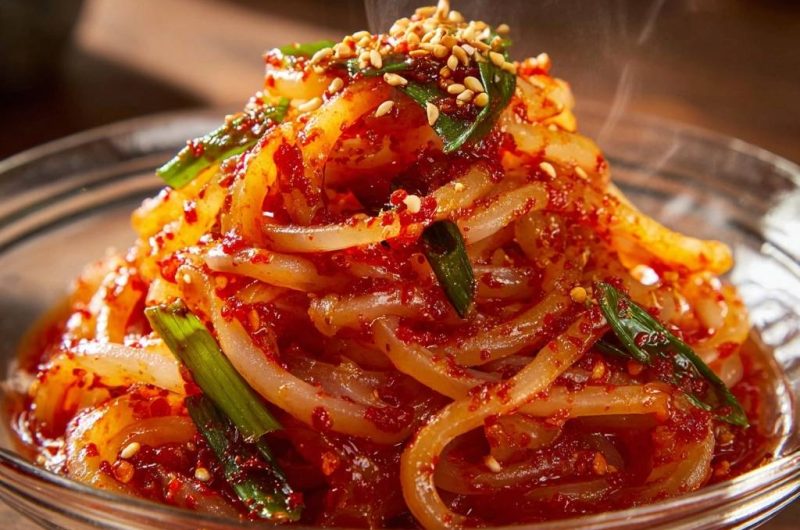
Spicy Gochujang Glass Noodles
Course: Main CourseCuisine: KoreanDifficulty: easy4
servings10
minutes10
minutes350
kcal20
MinutesTired of glass noodles clumping into a sticky disaster? This recipe delivers perfectly separate, glossy strands every time thanks to the ice-shock rinse and sesame oil toss that locks in texture.
Ingredients
8 ounces dangmyeon (sweet potato glass noodles)
3 tablespoons gochujang (Korean chili paste)
2 tablespoons sesame oil, divided
2 tablespoons soy sauce
1 tablespoon sugar
2 green onions, thinly sliced
2 tablespoons sesame seeds, toasted
2 cups water (for boiling)
Directions
- Bring a large pot of water to a boil. Add dangmyeon and cook for exactly 4 minutes until al dente (they will soften more in sauce).
- Drain immediately and rinse under cold running water for 30 seconds to stop cooking. This ice-shock step removes excess starch and prevents gumminess. Shake off water thoroughly.
- In a bowl, whisk gochujang, 1 tablespoon sesame oil, soy sauce, and sugar until smooth.
- Toss drained noodles with remaining 1 tablespoon sesame oil in a large bowl. This oil coating creates a barrier that keeps noodles separate and glossy, solving the clumping issue forever.
- Add sauce to noodles and mix well with tongs until evenly coated.
- Top with sliced green onions and toasted sesame seeds. Serve hot for maximum steam and shine. Enjoy your foolproof, non-gummy spicy delight!
Notes
- Cook noodles exactly 4 minutes for al dente texture. The ice-shock rinse and sesame oil coating are key to preventing gumminess.