The Ultimate Loaded Garlic Mashed Potatoes: Achieving a Fluffy, Non-Gummy Texture
We have all been there. You spend time peeling and boiling only to end up with a sticky, glue-like mess that feels more like wallpaper paste than a side dish. It is incredibly frustrating when your hard work results in a heavy, gummy texture that sits like a lead weight on the plate. The secret to the ultimate fluffy mash isn’t just adding more butter; it is all about how you handle the starch molecules from start to finish.
This recipe focuses on a professional-grade drying technique that ensures a light, pillowy, and rich mouthfeel every single time. By controlling moisture and treating the potatoes with a bit of scientific care, you can create a dish that feels airy yet decadent. You are looking for that perfect cloud-like consistency that holds its shape but melts the moment it hits your tongue.
The real trick to avoiding the “glue” is a quick steam-dry step right after draining. Most home cooks skip this, but returning the potatoes to the hot pot for two minutes is what separates a mediocre mash from a masterpiece. This simple move evaporates the excess surface water that usually turns potato starch into a sticky gel. Once you master this moisture control, you will never go back to soggy spuds again.
Why Russet Potatoes Are Essential for This Mash
When you are aiming for a fluffy Loaded Garlic Mashed Potato, the variety of potato you grab at the grocery store makes all the difference. Russet potatoes, often called baking potatoes, are the undisputed kings of the mash because they are high in starch and low in moisture. Their cell structure is packed with amylose, a type of starch that separates easily when cooked, resulting in a dry, mealy texture that is perfect for absorbing butter.
Waxy varieties like Red Bliss or Yukon Gold have less starch and more moisture, which makes them great for potato salad but risky for a fluffy mash. If you overwork a waxy potato, it turns into a translucent, heavy paste almost instantly. Russets, however, break down into tiny, light granules that stay separate. This high-starch content acts like a sponge, eagerly soaking up your garlic-infused cream without losing its structural integrity or becoming heavy.
The Science of Starch: Avoiding the Gummy Texture
Understanding why potatoes turn gummy is the best way to prevent it. When you boil a potato, the starch granules undergo “gelatinization,” where they swell with water and eventually burst. If you use an electric mixer or a food processor, the high-speed blades shear these swollen granules wide open. This releases a flood of starch into the surrounding liquid, creating a literal edible glue that is impossible to fix once it forms.
Retrogradation is another factor to consider; as potatoes cool, the starch begins to realign and toughen up. This is why you must work quickly while the potatoes are hot. By using a gentle hand and the right tools, you keep those starch granules intact. An electric mixer is truly the enemy here because it works the mash too aggressively. Stick to manual tools to ensure your potatoes stay light and aerated rather than dense and sticky.
Essential Components for the Loaded Garlic Base
The foundation of a great loaded mash lies in the quality of your fats and liquids. I always recommend using unsalted butter because it gives you total control over the sodium levels. Different brands of salted butter vary wildly in salt content, and you don’t want to realize your dish is a salt bomb after it is already mixed. Freshness is key here, so use the best butter you can find for that signature creamy flavor.
Heavy cream is a non-negotiable for that restaurant-style richness. However, you must warm the cream and butter together before adding them to the potatoes. Adding cold liquid to hot potatoes “shocks” the starch, causing the fibers to tighten up and turn the mash grainy. When the liquids are warm, they emulsify smoothly into the potato solids, creating a velvety sheen that looks as good as it tastes.
Selecting and Preparing Fresh Garlic
Please skip the pre-minced garlic in the glass jar for this recipe. That stuff often has a metallic, acidic aftertaste that can ruin the delicate flavor of the cream. Fresh cloves provide a sweet, sulfurous punch that mellows beautifully when simmered in butter. You want a very fine mince so the garlic pieces soften completely and distribute evenly throughout every bite.
When you simmer the garlic in the butter, keep the heat low. You aren’t looking to brown the garlic or make it crispy; you just want it to become fragrant and translucent. If the garlic turns dark brown or black, it becomes bitter and acrid. Aim for a pale gold color that indicates the oils have been released into the butter, creating a deep, aromatic infusion.
The Role of High-Quality Crispy Bacon
Texture contrast is what makes “loaded” potatoes so addictive. Thick-cut bacon is the way to go because it maintains a satisfying “bite” even when it sits against the moist potatoes. Thin bacon tends to shatter into dust or become chewy too quickly. You want those distinct, salty nuggets of crunch to pop against the pillowy softness of the mash.
After frying your bacon, make sure to drain it thoroughly on paper towels. You want the smoky flavor of the meat, but adding too much rendered bacon fat directly into the mash can make the dish feel greasy. By drying the bits well, they stay crispy longer. This creates a beautiful interplay between the salty crunch and the garlic-scented creaminess.
Step-by-Step: Preparing the Potatoes for Mashing
The road to perfect potatoes starts with a cold water bath. Always place your cubed potatoes in the pot and then cover them with cold water. If you drop potatoes into boiling water, the outsides cook and soften long before the centers are done. This leads to a mushy exterior that falls apart while the middle stays raw and crunchy, which is a recipe for lumps.
Once the water is in, add a very generous pinch of salt. This is the only time you can actually season the interior of the potato itself. As the water heats up and the potatoes soften, they absorb the salt into their core. If you wait until the end to season, the salt just sits on the surface, and the potatoes will taste bland no matter how much you add later.
The Steam-Dry Method: The Secret to Fluffiness
After your potatoes are fork-tender, drain them in a colander, but don’t stop there. This is the most critical technical step in the entire process. Return those drained potatoes immediately to the hot, empty pot and place it back over low heat for about two minutes. You need to shake the pot constantly to prevent sticking while the residual heat works its magic.
Watch for the visual cues: the potatoes will start to look dry and develop slightly “floury” or white edges. You are literally steaming off the excess surface moisture that would otherwise turn your mash into a soggy mess. By removing this water, you create space within the potato cells. This allows them to better absorb the garlic butter and cream, resulting in a much more intense flavor.
Infusing the Garlic and Cream Mixture
While your potatoes are drying, you should be gently poaching your minced garlic in the butter. Use a small saucepan over medium-low heat so the butter bubbles just slightly. This gentle heat draws out the garlic’s natural sugars without scorching them. It is a slow infusion that creates a uniform garlic flavor throughout the entire batch of potatoes.
Once the garlic is soft and fragrant, stir in your heavy cream. You want the entire mixture to be hot but not boiling vigorously. If the cream gets too hot, it might break or form a skin on top. The goal is a warm, cohesive liquid that is ready to be folded into the potatoes the moment they are mashed. This temperature matching is the secret to a stable emulsion.
For a perfect pairing, try our Loaded Bacon Mashed Potatoes: Fluffy, Crispy-Topped Perfection.
Techniques for the Perfect Mash Consistency
The tool you choose determines the final texture of your Loaded Garlic Mashed Potatoes. A potato ricer is the gold standard because it forces the potato through tiny holes, aerating it and creating “skyscraper” height. It produces a completely lump-free, uniform texture without overworking the starch. If you want that professional, cloud-like look, the ricer is your best friend.
A food mill is another great option, especially for large batches, as it removes any stray bits of skin while mashing. If you only have a hand masher, use a sturdy one and work in an up-and-down motion rather than a circular stirring motion. Whatever you do, stay away from the food processor. The high-speed spinning will turn your beautiful Russets into a bowl of glue in less than five seconds.
Folding and Incorporating the Liquids
Once your potatoes are riced or mashed, it is time to add the liquid. Do not just dump it all in and stir vigorously. Instead, use a sturdy spoon or a silicone spatula to gently fold the garlic-cream mixture into the potatoes. Think of it like folding egg whites into a cake batter; you want to combine them without deflating the air you just worked so hard to incorporate.
The goal is to emulsify the fats from the butter and cream into the potato solids without shearing the starch molecules. As you fold, you will see the potatoes take on a beautiful, silky sheen. Stop the moment the liquid is fully incorporated. Over-mixing at this stage is the most common mistake, so be gentle and patient to maintain that light, fluffy structure.
Troubleshooting Common Mashed Potato Issues
If your potatoes turn out too runny, don’t panic. You can usually fix this by placing the pot back over very low heat and stirring gently for a few minutes to evaporate the excess liquid. If they taste bland, they likely need a touch more salt or a tiny splash of lemon juice or vinegar. A tiny bit of acid can brighten the heavy fats and make the potato flavor pop.
Sometimes the garlic flavor can feel too sharp if it didn’t simmer long enough. You can mellow this out by adding a bit more butter. If the potatoes cooled down too fast during the mashing process, they might feel stiff. To fix this, fold in a tablespoon or two of very hot cream to loosen the texture and bring the temperature back up to a serving-ready state.
Presentation: Creating the Butter Well and Toppings
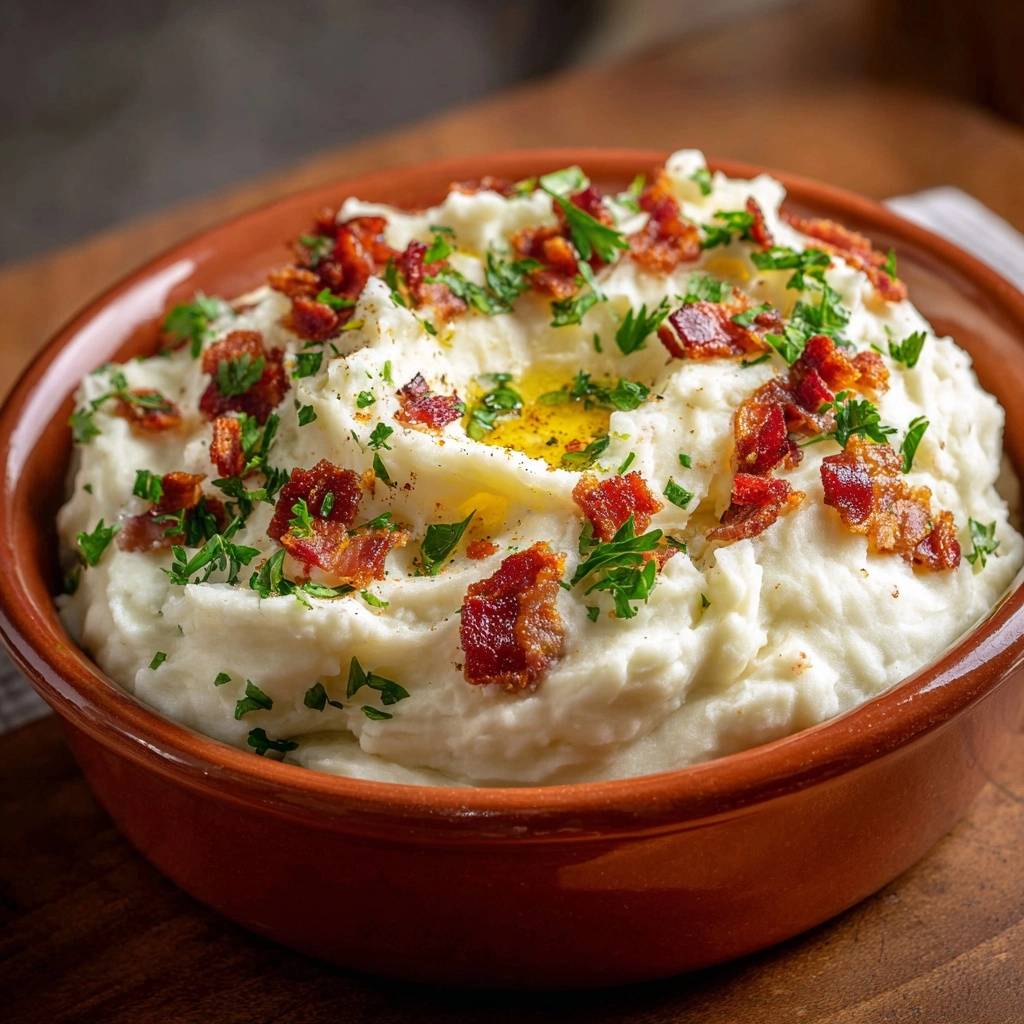
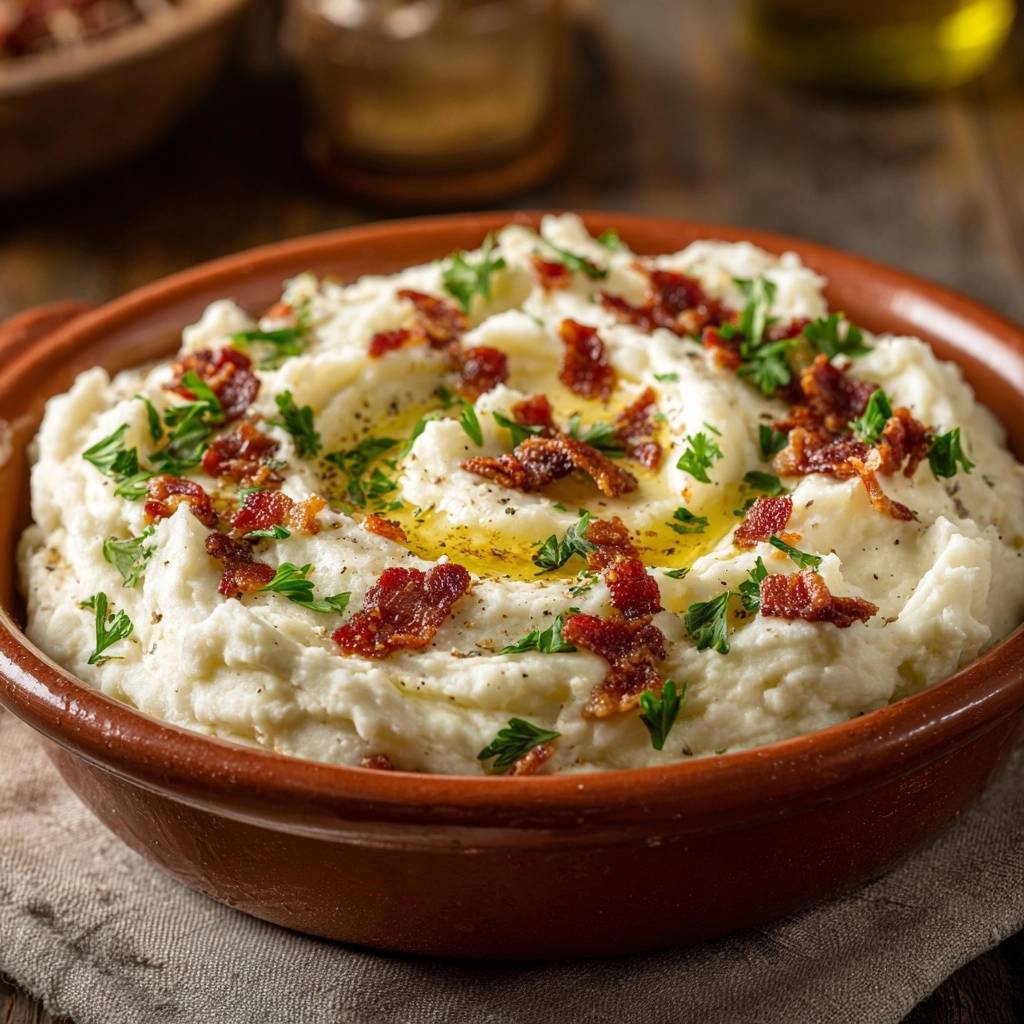
Presentation isn’t just about looks; it actually affects the flavor experience. Transfer your mash to a warm serving bowl and use the back of a large spoon to create a deep, swirling well in the center. Drop your remaining tablespoon of butter right into that well. As it melts, it creates a golden reservoir of liquid gold that seasons every scoop you serve.
Concentrate your toppings around this melting butter well. The bright green of the fresh parsley provides a beautiful color contrast against the white potatoes, while the bacon bits add that essential crunch. When people scoop from the center, they get a perfect mix of melted butter, crispy bacon, and fresh herbs in every single bite. It looks stunning and tastes even better.
Optimal Pairings for Garlic-Heavy Sides
These potatoes are incredibly rich, so they pair best with main courses that have a bit of “heft” or acidity. Roasted meats like a herb-crusted prime rib or a juicy roast chicken are classic choices. The savory juices from the meat mingle perfectly with the garlic mash. Braised beef short ribs are another winner, as the deep, grape juice-based sauce cuts through the creaminess of the potatoes.
If you are serving poultry, consider a grilled chicken with a lemon-herb glaze. The bright acidity of the lemon helps balance the heavy cream and butter in the mash, preventing the meal from feeling too one-dimensional. Even a simple seared steak works wonders here. You want a protein that can stand up to the bold garlic flavor without being overshadowed by it.
Storage and Reheating Without Losing Texture
Leftover mashed potatoes can be tricky because the starch tends to tighten up in the fridge. Store them in an airtight container for up to three days. When you are ready to eat them again, avoid the microwave if possible. Microwaving often heats unevenly and can make the edges rubbery while the middle stays cold, ruining that fluffy texture you worked so hard for.
The best way to reheat is on the stovetop over low heat. Add a small splash of heavy cream or a pat of butter to the pot first. This extra moisture helps restore the original emulsion and brings back the silky sheen. Stir gently and frequently until they are warmed through. This method ensures they stay creamy and delicious, almost like they were just made.
How do I fix mashed potatoes that have already become gummy?
Once the starch has turned into glue, you cannot technically “un-glue” it. However, you can repurpose them! Spread the gummy potatoes into a baking dish, top them with plenty of shredded cheese and breadcrumbs, and bake until crispy. The oven’s dry heat and the added texture from the toppings help mask the sticky consistency, turning a mistake into a delicious potato gratin.
Can I use a different type of potato if I can’t find Russets?
If Russets aren’t available, Yukon Golds are your next best bet. They have a naturally buttery flavor and a medium starch content. However, you must be even more careful not to overwork them. They are more prone to becoming gummy than Russets, so use a ricer and the absolute minimum amount of folding to incorporate your liquids.
Why should I start the potatoes in cold water instead of boiling water?
Starting in cold water ensures that the potato cubes heat up evenly from the outside in. If you drop them into boiling water, the exterior cooks too fast and starts to dissolve into the water before the center is soft. This results in an uneven mash with hard lumps in the middle and a watery, mushy exterior. Cold starts lead to a uniform, perfect texture.
Can I make these Loaded Garlic Mashed Potatoes ahead of time?
Yes, you can make them up to two hours in advance. Keep them in a heat-proof bowl set over a pot of simmering water (a double boiler setup) and cover the bowl tightly with plastic wrap or a lid. This keeps them warm and moist without scorching the bottom. Just give them a very gentle fold before serving to redistribute the butter.
Is it possible to freeze these potatoes for later use?
Mashed potatoes with high fat content, like this recipe, actually freeze quite well. The butter and cream help protect the potato cells during the freezing process. Store them in a heavy-duty freezer bag with the air squeezed out for up to a month. Thaw them in the fridge overnight and reheat on the stove with an extra splash of cream to bring back the fluffiness.
What is the best way to mince garlic so it doesn’t burn?
Use a sharp chef’s knife to mince the garlic into very tiny, uniform pieces, or use a garlic press for a paste-like consistency. The key is to avoid large chunks that won’t soften in time. By simmering the garlic in butter over low heat, you are essentially “confit-ing” it, which removes the raw bite and replaces it with a mellow, sweet garlic flavor.
Garlic Mashed Potatoes
Course: Side DishCuisine: AmericanDifficulty: easy6
servings10
minutes20
minutes345
kcal30
MinutesA foolproof method for creating light, pillowy mashed potatoes infused with garlic butter and topped with crispy bacon and fresh parsley. The key is a specific drying step that prevents a sticky, glue-like texture.
Ingredients
3 pounds Russet potatoes, peeled and cut into 1-inch cubes
1/2 cup unsalted butter, plus 1 tablespoon for the center well
1/2 cup heavy cream, warmed
4 cloves garlic, minced
1/2 cup crispy bacon bits (thick-cut, roughly chopped)
1/4 cup fresh flat-leaf parsley, chopped
1 teaspoon sea salt (plus more for boiling water)
1/2 teaspoon freshly cracked black pepper
Directions
- Place the cubed potatoes in a large pot and cover with at least 2 inches of cold water. Add a generous pinch of salt. Bring to a boil, then reduce heat to a simmer. Cook for 15 to 20 minutes until the potatoes are very tender and fall apart easily when pierced with a fork.
- Drain the potatoes thoroughly in a colander.
- The Critical Step: Return the drained potatoes to the hot, empty pot over low heat for 2 minutes. Shake the pot constantly. This evaporates the excess surface moisture that causes starch to turn into glue. The potatoes should look dry and slightly “floury” on the edges.
- While the potatoes dry, melt 1/2 cup of butter in a small saucepan over medium-low heat. Add the minced garlic and simmer for 1-2 minutes until fragrant but not browned. Stir in the warmed heavy cream and remove from heat.
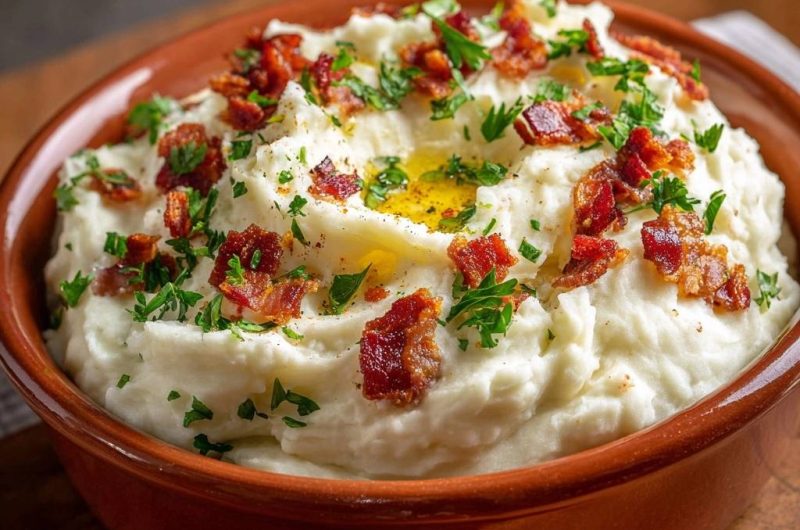
- Remove the pot of potatoes from the heat. For the smoothest texture shown in the image, pass the potatoes through a potato ricer or food mill back into the pot. If using a masher, mash thoroughly until no large lumps remain.
- Slowly pour the warm garlic-butter-cream mixture into the potatoes. Use a sturdy spoon or spatula to gently fold the liquids in. Do not overmix or use an electric mixer, as overworking the starch will create a gummy texture.
- Fold in the salt and black pepper.
- Transfer the potatoes to a serving bowl. Use the back of a spoon to create a deep well in the center and place the remaining tablespoon of butter inside to melt.
- Top generously with the crispy bacon bits and fresh chopped parsley, ensuring the toppings are concentrated around the melting butter well as pictured. Serve immediately.
Notes
- The critical step is returning the drained potatoes to the hot pot for 2 minutes to evaporate excess moisture. Avoid using an electric mixer to prevent a gummy texture.