Mastering Savory Pecan and Goat Cheese Pinwheels
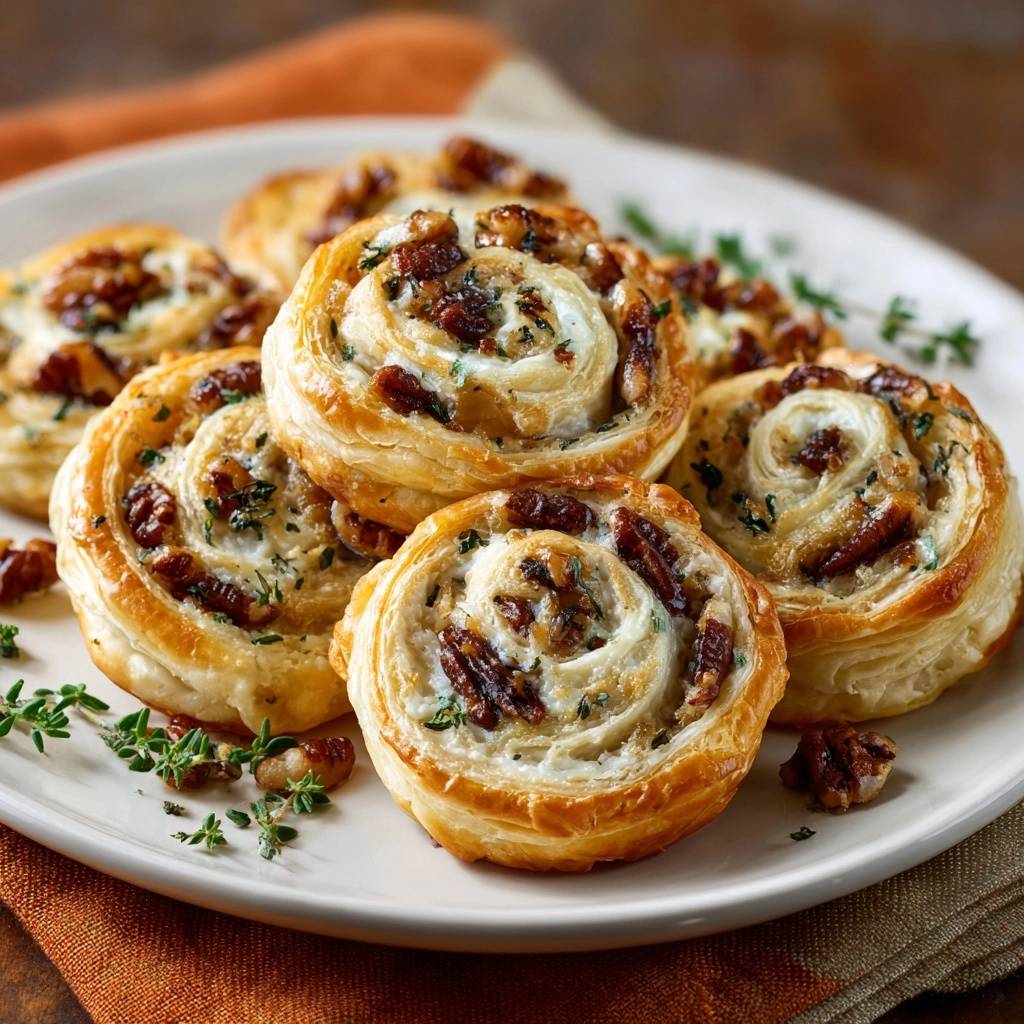
We’ve all been there. You spend time rolling out beautiful puff pastry only to have the center turn into a gummy, doughy mess because of the fillings. These Savory Pecan and Goat Cheese Pinwheels solve that forever. By using a specific layering technique and a flash-chill step, you get shatteringly crisp pastry layers from the outside all the way to the very center. No more soggy appetizers on your party platter.
The secret lies in the contrast between the creamy, tangy goat cheese and the earthy crunch of toasted pecans. When you bite into one of these, the pastry should practically explode into delicate flakes before you hit the soft, honey-kissed interior. It’s a sophisticated balance of salt, fat, and sweetness that makes these the first thing to vanish at any gathering. Oh man, the smell of the fresh thyme hitting the hot honey in the oven is absolutely incredible!
To guarantee that perfect crunch, you have to manage the moisture. Most people make the mistake of over-filling or rolling the dough while it’s too warm. I’ve found that the absolute key is a 15-minute stint in the freezer right before slicing. This firms up the fat in the pastry, ensuring the layers stay distinct rather than smashing together into a solid block of dough. It’s the difference between a professional-grade pastry and a dense, heavy roll.
The Science of Crisp Puff Pastry Layers
Puff pastry is a marvel of culinary engineering, relying on hundreds of thin layers of dough separated by even thinner layers of fat. When that cold fat hits a hot oven, it creates steam. That steam is what forces the dough layers apart, creating that signature lift. However, when you add a moist filling like goat cheese, that moisture wants to migrate into the flour, turning your flaky layers into a soggy paste. This is why we use the “Flash-Chill” method.
By popping the rolled log into the freezer for 10 to 15 minutes, you hit the “reset” button on the butter. This brief chill ensures the fat remains solid until the very second it enters the oven. If the butter is even slightly oily or soft when it goes in, it will simply soak into the dough instead of puffing it up. You want those fat layers to stay discrete so they can do their job of steam-venting the pastry from the inside out.
Furthermore, a 400°F oven is non-negotiable. You need that intense, immediate heat to trigger the “oven spring.” If the temperature is too low, the butter will slowly melt and leak out onto the pan, leaving you with a greasy, flat cracker instead of a light, airy pinwheel. That high heat sets the outer structure quickly, allowing the internal layers to cook through before the cheese has a chance to make everything weep. It’s all about that rapid thermal transition.
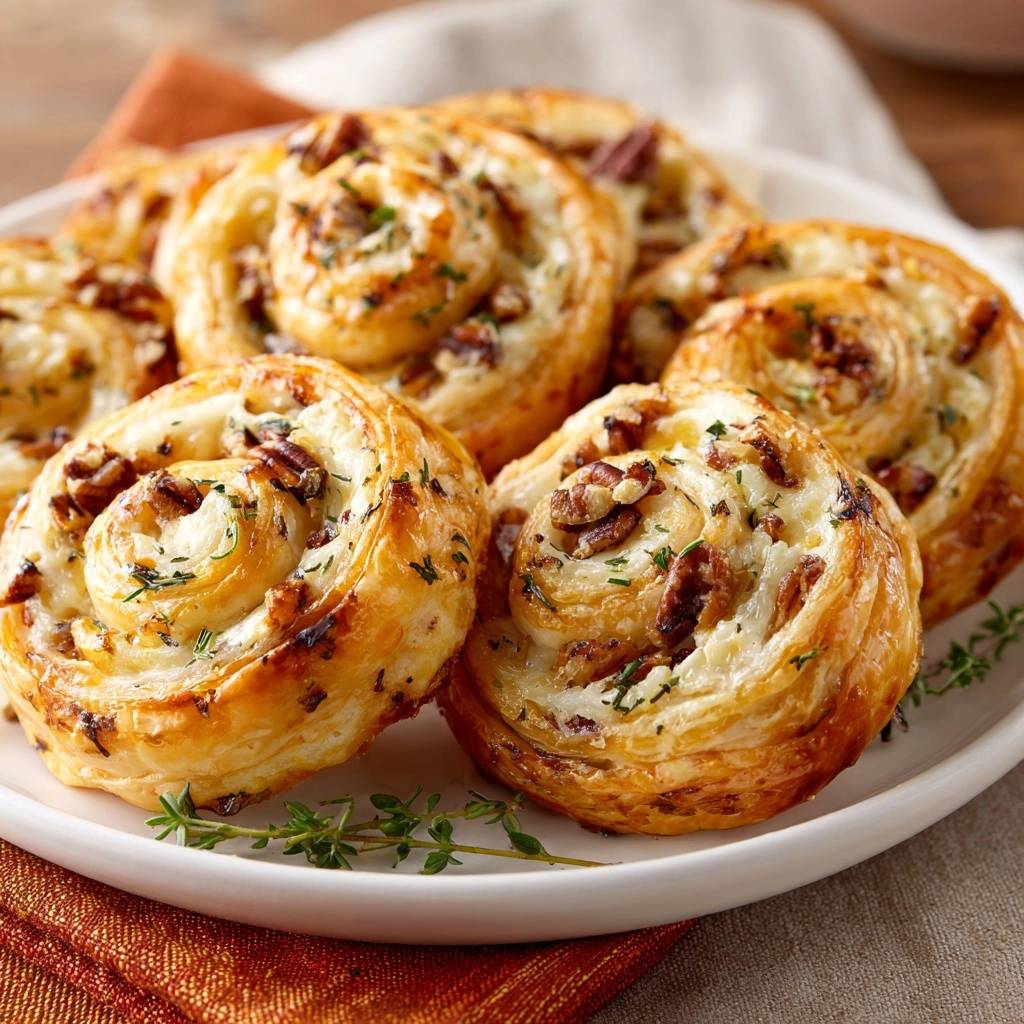
Essential Components for Savory Pecan and Goat Cheese Pinwheels
When it comes to puff pastry, the brand you choose matters immensely. If you can find an all-butter puff pastry, grab it. Shortening-based brands are easier to handle because they don’t melt as fast, but they lack that rich, melt-in-your-mouth flavor that only real butter provides. If you’re using a standard grocery store brand, just be extra diligent about keeping it cold throughout the process. If the dough feels tacky or limp, put it back in the fridge for ten minutes.
For the cheese, look for a fresh “chevre” style log. This type of goat cheese is creamy and spreadable, which is vital for achieving that thin, even layer we’re after. Avoid the pre-crumbled tubs; those are often coated in anti-caking agents like cellulose, which prevents them from melting smoothly. You want a cheese that will become almost velvety in the oven, providing a sharp, tangy counterpoint to the sweet honey and nutty pecans.
Pecans provide the structural “bones” of the filling. I recommend a rough chop rather than a fine meal. You want distinct pieces of nut that offer a definitive “snap” when you bite down. If the pecans are ground too fine, they disappear into the cheese and lose their textural impact. Fresh thyme is the final essential piece. Unlike dried thyme, which can taste dusty or medicinal, fresh leaves contain volatile oils that brighten the entire dish with a lemony, earthy aroma.
Selecting and Prepping the Goat Cheese
You want your goat cheese to be “softened but not melted.” If it’s straight from the fridge, it will be too stiff and will tear your delicate pastry as you try to spread it. However, if it’s too warm, it becomes greasy. To get it just right, take it out of the fridge about 20 minutes before you start. If you’re in a rush, mash it in a small bowl with the back of a fork for a minute; the friction and movement will soften it up without breaking the emulsion.
The Role of Honey as a Structural Glaze
Honey is more than just a sweetener here; it’s a functional ingredient. Honey is hygroscopic, meaning it attracts and holds moisture, but in this recipe, we use it in two stages. The first tablespoon drizzled inside the roll acts as a binder, helping the pecans and thyme stay put. The second tablespoon, drizzled over the hot pastry right out of the oven, creates a beautiful “tack” and a glossy shine that makes the pinwheels look like they came from a high-end bakery.
Step-by-Step: Achieving the Perfect Spiral
Creating a perfect spiral is all about finesse and temperature control. You aren’t just rolling dough; you’re building a structural masterpiece that needs to hold its shape under intense heat. If you rush the rolling process, you’ll end up with lopsided pinwheels that leak cheese everywhere. Take your time, keep your hands cool, and follow these technical phases to ensure every single piece looks as good as it tastes.
Phase 1: The Thin-Layer Spread Technique
When you spread the goat cheese, aim for a layer so thin it’s almost translucent. If the cheese is too thick, it will weigh down the pastry and prevent it from rising. Always leave a half-inch border at the top edge of the pastry sheet. This “clean” strip of dough acts as a seal when you finish the roll. I highly recommend using an offset spatula for this. Its flexible blade allows you to glide over the dough without snagging or tearing the delicate gluten fibers.
Phase 2: The Tight Roll and Freezer Set
Start rolling from the edge closest to you, tucking the dough tightly as you go. You want a firm log with no air gaps in the center. Once rolled, the 10 to 15-minute freezer window is your best friend. This isn’t just about making the dough easier to cut. It prevents the “glue effect,” where the weight of the knife fuses the layers of dough together. If those layers fuse, the steam can’t get between them, and you’ll end up with a gummy, un-puffed center.
Phase 3: Precision Slicing with Serrated Blades
Forget your standard chef’s knife for this step. A sharp serrated knife—like a bread knife—is the only tool for the job. Use a gentle sawing motion rather than pressing straight down. Pressing down will crush the air pockets and distort the circular shape. Once sliced, give each pinwheel at least 2 inches of space on the baking sheet. They need that “breathing room” for the hot air to circulate, which is what crisps up the sides and ensures the bottoms don’t get soggy.
Baking for Color and Internal Doneness
Visual cues are everything when baking puff pastry. Many people pull their pinwheels out as soon as they see a light tan color, but that’s a mistake. You are looking for a deep, golden-brown hue across the entire surface. If the edges are starting to turn a “deep mahogany,” don’t panic! That’s actually a great sign. It indicates that the heat has penetrated all the way to the center, fully cooking the innermost layers of dough.
Once you pull the tray out, let the pinwheels rest on the hot baking sheet for exactly 5 minutes. This is a crucial “carryover cooking” phase. The residual heat from the pan continues to crisp the bottom crust, ensuring it’s sturdy enough to hold. If you move them to a cooling rack immediately, the steam trapped inside might soften the base. That 5-minute rest is the final insurance policy against a soggy bottom.
That same resting technique also helps the cream cheese layer set beautifully in my layered red velvet pecan bars.
Troubleshooting Common Pinwheel Problems
If your pastry becomes too soft or sticky while you’re rolling it, stop immediately. Slide the whole thing—parchment and all—onto a tray and put it in the fridge for 5 minutes. Working with warm puff pastry is a losing battle. If you experience a “blowout” where the cheese leaks out the side, it usually means the roll wasn’t tight enough or the oven wasn’t hot enough to set the pastry quickly. Just trim the leaked cheese off with a knife after baking; they’ll still taste great!
Oven calibration can also play a role. If you’re using a convection oven (with a fan), the pastry will brown much faster. You might need to drop the temperature to 375°F or shave a few minutes off the bake time. To prevent the honey from burning on the parchment paper, make sure your drizzle stays mostly on the pastry. If a lot of honey pools on the paper, it can smoke. If that happens, just carefully slide a spatula under the pinwheels to move them to a clean spot on the tray.
Flavor Variations and Ingredient Swaps
This recipe is a fantastic canvas for experimentation. If you aren’t a fan of pecans, toasted walnuts or even pumpkin seeds (pepitas) work beautifully for a different kind of crunch. For the herbs, you can swap the thyme for finely minced rosemary or sage if you want a woodier, more autumnal flavor profile. Just remember that rosemary is very strong, so use a bit less than you would with thyme.
If goat cheese isn’t your favorite, you can use whipped feta or a very thick ricotta. If you use ricotta, make sure to strain it through cheesecloth first to remove as much moisture as possible; otherwise, you’ll definitely end up with that soggy bottom we’re trying to avoid. You could even try a thick cream cheese mixed with a little lemon zest for a milder, creamier alternative that still pairs perfectly with the honey.
Make-Ahead Strategies and Storage
These are a host’s dream because you can prep them well in advance. You can keep the unbaked, wrapped log in the fridge for up to 24 hours, or in the freezer for up to three months. If you freeze the log, let it thaw slightly for 10 minutes before slicing so it doesn’t shatter. You can actually bake them straight from a semi-frozen state; just add about 3 to 5 minutes to the total baking time to ensure the center is hot.
For leftovers, store them in an airtight container at room temperature for up to two days. Whatever you do, don’t use the microwave to reheat them! It will turn the pastry into a rubbery mess. Instead, pop them back into a 350°F oven or a toaster oven for 5 minutes. This will re-crisp the butter and make them taste like they were just freshly baked. They don’t freeze well once they’ve been baked, as the honey and cheese can make the pastry lose its integrity over time.
Optimal Pairings for Savory Appetizers
Because these pinwheels are quite rich and buttery, they pair best with something acidic to cleanse the palate. A simple arugula salad with a sharp lemon vinaigrette is a perfect companion. The peppery bite of the greens cuts right through the creamy goat cheese. You could also serve them alongside a tart fruit compote, like a cranberry or apricot chutney, which echoes the sweetness of the honey while providing a necessary tang.
If you’re putting together a full spread, a balsamic reduction drizzle over the top of the finished pinwheels adds a beautiful visual element and a punch of acidity. They also work surprisingly well as a side for a hot bowl of tomato soup. The combination of the flaky pastry and the warm, savory filling makes them a much more interesting alternative to a standard grilled cheese sandwich. They really are the ultimate versatile party food!
Expert Tips for Large Batch Hosting
If you’re scaling this up for a big party, remember that oven airflow is your priority. Don’t crowd the pans. If you’re using multiple racks, rotate the pans from top to bottom and front to back halfway through the baking time. This ensures that every pinwheel gets even exposure to the heating elements. If you notice one tray is browning faster than the other, don’t be afraid to pull it out early. Consistency is key when you’re serving a crowd!
How do I store leftover pinwheels?
Store any leftovers in an airtight container at room temperature for up to 2 days. For longer storage, you can keep them in the refrigerator for up to 4 days, but the pastry will lose some of its crispness. To revive them, always use an oven or toaster oven at 350°F for a few minutes until they are warmed through and the pastry feels firm again. Avoid the microwave at all costs, as it will make the puff pastry soft and chewy.
Why did my pinwheels turn out soggy in the middle?
Soggy centers usually happen for two reasons: too much filling or skipping the chill step. If the goat cheese layer is too thick, the moisture prevents the inner pastry layers from drying out and crisping up. Additionally, if the dough is too warm when it goes into the oven, the butter leaks out instead of creating steam. Make sure to use the “Flash-Chill” method in the freezer for 15 minutes before slicing to keep those layers separated and ready to puff.
Can I use a different type of nut or herb?
Absolutely! This recipe is very flexible. You can substitute the pecans with chopped walnuts, pistachios, or even toasted pine nuts. For herbs, rosemary, sage, or even finely chopped chives work well. If you use a stronger herb like rosemary, reduce the amount to 1 tablespoon so it doesn’t overpower the delicate goat cheese. Just ensure whatever nut you use is toasted or roasted for the best flavor profile.
Can I make these pinwheels ahead of time?
Yes, these are perfect for make-ahead prep. You can roll the log, wrap it tightly in plastic wrap, and keep it in the refrigerator for up to 24 hours before slicing and baking. You can also freeze the unbaked log for up to 3 months. When you’re ready to serve, slice the log while it’s still partially frozen and bake as directed, adding about 3-5 minutes to the total baking time to account for the cold temperature.
What is the best way to prevent the cheese from leaking out?
A little bit of cheese leakage is normal, but to minimize it, ensure your oven is fully preheated to 400°F before the tray goes in. The high heat “sets” the pastry quickly, creating a wall that keeps the cheese inside. Also, make sure you leave that half-inch border at the top of the pastry sheet when spreading the cheese; this allows the dough to seal to itself when rolled, creating a more secure package for the filling.
Can I substitute the honey with something else?
If you don’t have honey, maple syrup is a great alternative, though it is slightly thinner and won’t be quite as “tacky” as a glaze. You could also use a balsamic glaze for a more savory, acidic finish. If you want to skip the sweetness entirely, you can omit the honey and perhaps add a little extra flaky sea salt or some cracked black pepper to the top of the egg wash for a purely savory experience.
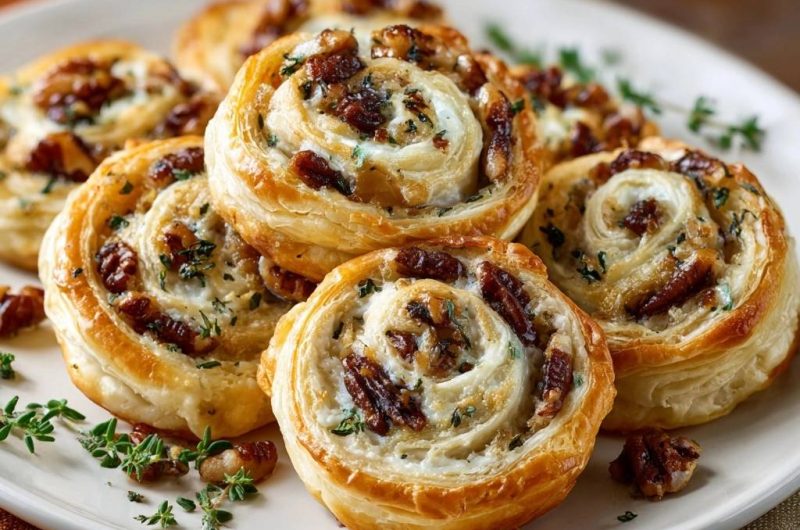
Pecan Goat Cheese Pinwheels
Course: AppetizerCuisine: French-AmericanDifficulty: easy12
pinwheels25
minutes22
minutes185
kcal47
MinutesThese savory pinwheels utilize a specific layering technique and a flash-chill step to ensure shatteringly crisp pastry layers from the outside to the center, avoiding the common gummy texture of filled puff pastry.
Ingredients
1 sheet frozen puff pastry, thawed but very cold
4 ounces goat cheese, softened
1/2 cup pecans, roughly chopped (reserve a few larger pieces for topping)
2 tablespoons fresh thyme leaves
2 tablespoons honey (divided: 1 for filling, 1 for glazing)
1 egg, beaten with 1 teaspoon water for egg wash
Flaky sea salt for finishing
Directions
- Preheat and Prep: Preheat your oven to 400°F (200°C). Line a large baking sheet with parchment paper or a silicone baking mat.
- Layering for Crispness: Lay the cold puff pastry on a lightly floured surface. Spread the softened goat cheese in a very thin, even layer, leaving a half-inch border at the top edge.
- The Filling: Sprinkle the chopped pecans and fresh thyme evenly over the cheese. Drizzle 1 tablespoon of honey in thin lines across the surface.
- The Roll and Chill: Roll the pastry tightly into a log, starting from the edge closest to you. The Secret Step: Place the log in the freezer for 10-15 minutes. This firms up the butter in the pastry and the goat cheese, ensuring the layers don’t compress or “glue” together when sliced, which is the primary cause of a gummy interior.
- The Cut: Use a very sharp serrated knife to slice the chilled log into 12 even rounds. Place them on the prepared baking sheet with at least 2 inches of space between them to allow for maximum airflow and expansion.
- The Glaze: Brush the top and sides of the pastry dough with the egg wash. Press any reserved pecan pieces into the tops of the pinwheels.
- The Bake: Bake for 18 to 22 minutes. Look for a deep, golden-brown color on the pastry-this indicates the internal layers have fully cooked through.
- The Finish: Remove from the oven and immediately drizzle the remaining 1 tablespoon of honey over the hot pinwheels. Let them rest on the hot pan for 5 minutes; this carryover heat ensures the bottom crust is fully set and crisp. Sprinkle with flaky sea salt and serve warm.
Notes
- The 10-15 minute freezer chill is the essential ‘Anti-Soggy Bottom’ secret; it prevents the layers from compressing during slicing and ensures maximum airflow during baking.