Tropical Chicken and Pineapple Bread Pudding: The Anti-Soggy Method
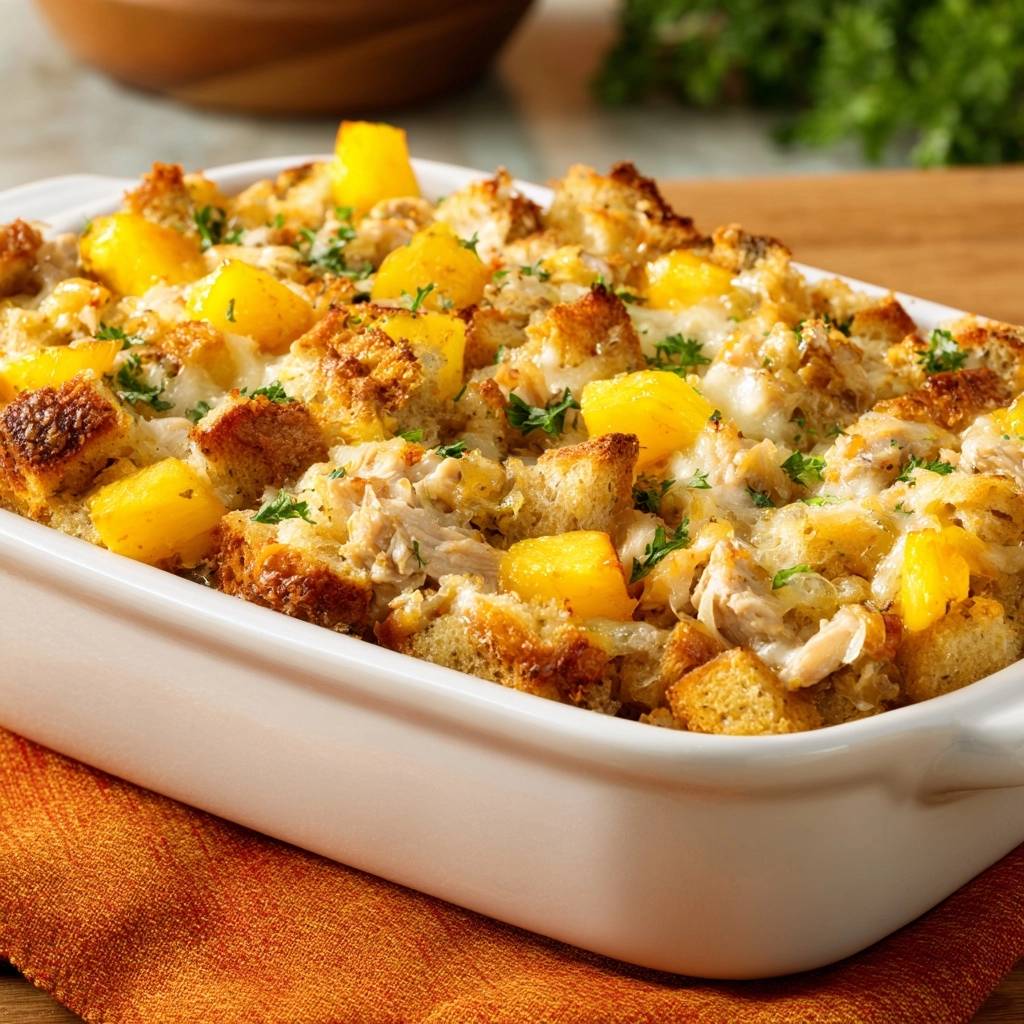
Most people think of bread pudding as a dessert, but the savory version is a sophisticated evolution of the classic breakfast strata. This Tropical Chicken and Pineapple Bread Pudding balances the salty depth of roasted chicken with the bright, acidic pop of fresh fruit. It’s a bold flavor profile that feels like a vacation on a plate, yet it’s hearty enough for a weeknight dinner.
However, the biggest hurdle with savory bakes is the dreaded mushy center. When bread sits in custard for too long, it loses its identity and turns into a sponge-like mass. This recipe solves that problem by focusing on structural integrity, ensuring you get a custard that is set and silky, rather than wet and heavy.
The secret to this masterpiece is the “bone-dry” start. By toasting your bread cubes until they are as hard as croutons before they ever touch the liquid, you create a protective barrier. This allows the bread to hold its shape while the custard bakes around it, giving you that perfect contrast of a soft interior and a crunch that actually makes a sound when you bite into it.
The Structural Science of Savory Bread Pudding
Achieving the perfect texture in a bread pudding isn’t luck; it’s physics. When you pour a liquid custard over bread, the moisture immediately begins to break down the starches. If the bread is fresh or even slightly stale, it collapses under the weight of the eggs and milk, resulting in a dense, pudding-like texture that can feel undercooked.
Therefore, we utilize a double-toast method and a high-heat finish to manipulate how the bread reacts to moisture. The initial toast removes every trace of internal humidity from the bread cubes. This creates a “thirsty” but firm structure that absorbs just enough custard to become tender without losing its cubic shape.
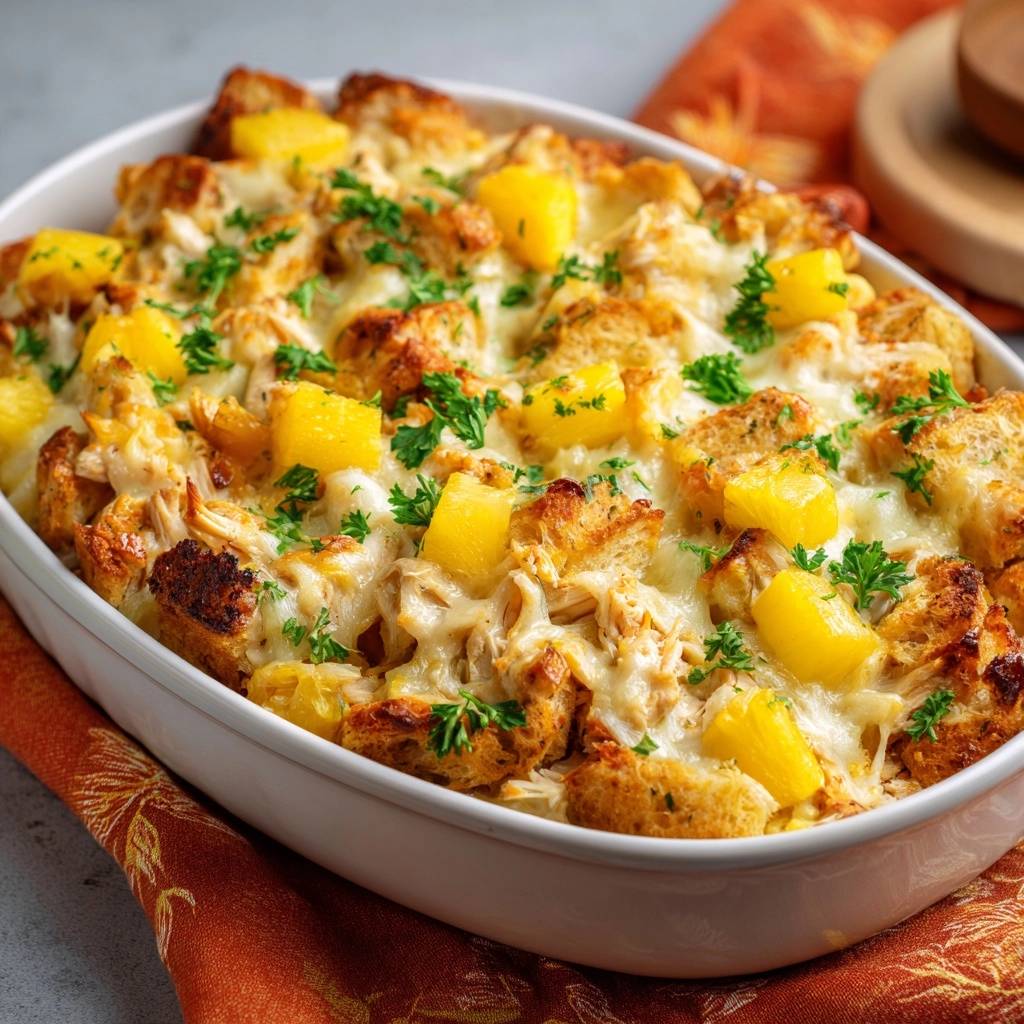
Finally, the high-heat finish at the end of the baking cycle is crucial. By cranking the oven up to 425°F for the last ten minutes, you trigger the Maillard reaction. This flash-sears the tops of the bread and the edges of the pineapple, locking in the moisture below while creating a shattered-glass crispness on top.
Why Sourdough and French Bread Excel
Choosing the right loaf is the foundation of your success. While Challah or Brioche are lovely for sweet French toast, their high fat and sugar content make them too fragile for this savory application. They tend to dissolve into the custard, which defeats our “anti-soggy” goal.
Sourdough and French bread are the superior choices because they have a sturdy, open crumb and a resilient crust. Sourdough, in particular, offers a pleasant tang that cuts through the richness of the heavy cream. Its natural acidity also acts as a beautiful bridge between the savory chicken and the sweet, tropical pineapple.
Essential Components for the Tropical Custard Base
The custard is the glue that holds everything together, so the ratio of fat to protein matters. We use a combination of whole milk and heavy cream to achieve a mouthfeel that is luxurious but not greasy. Using only heavy cream would make the dish too heavy, while using only milk would result in a watery set.
For the protein, rotisserie chicken is actually better than freshly poached chicken. Because rotisserie chicken has already been roasted, it has a lower moisture content and a firmer texture. This prevents the meat from releasing excess water into the pudding, which helps maintain that tight, clean custard set we’re looking for.
In addition, make sure your eggs are at room temperature before whisking. Cold eggs don’t emulsify as easily with the fats in the cream. Taking them out of the fridge twenty minutes early ensures a smooth, uniform liquid that coats every nook and cranny of the bread cubes perfectly.
Selecting and Preparing Fresh Pineapple
Fresh pineapple is a non-negotiable for the best flavor, but it carries a lot of hidden water. After you chop your pineapple into chunks, you must pat them very dry with paper towels. If you skip this, the juice will leak out during baking and create purple or grey soggy spots in your custard.
Furthermore, fresh pineapple contains an enzyme called bromelain, which can break down proteins and make meat mushy if left to sit for too long. Our method of immediate baking and a high-heat finish prevents this. The heat quickly deactivates the enzyme, allowing the pineapple to soften and caramelize without affecting the texture of the chicken.
The Cheese Profile: Mozzarella vs. Swiss
The choice of cheese dictates the “vibe” of the dish. Mozzarella is the go-to for that classic, gooey cheese pull and a mild flavor that lets the pineapple shine. It melts beautifully at lower temperatures and creates a golden, bubbly crust that looks incredible right out of the oven.
However, if you want a more “grown-up” flavor profile, Swiss or Gruyère is an excellent alternative. These cheeses have a nutty, slightly salty finish that complements the sourdough. They also have a higher melting point, which means they form a slightly crispier, more distinct crust during that final high-heat blast.
Step-by-Step: Achieving the Perfect Golden Crunch
Success in this recipe comes down to timing and temperature control. You aren’t just cooking the ingredients; you are managing the moisture levels at every stage. Follow these phases to ensure your bread pudding has the structural integrity of a professional bake.
Phase 1: The Bone-Dry Dehydration Toast
Start by preheating your oven to 375°F. Spread your sourdough cubes in a single layer on a large baking sheet. You want to toast them for about 12 to 15 minutes. Don’t just look for a light tan; you want them to be deeply golden and feel completely hard to the touch, like a crouton.
If the bread still feels soft in the middle when you squeeze it, it isn’t ready. That internal moisture will trap the custard and lead to a soggy base. This step is the most important part of the entire process, so don’t rush it. Let the cubes cool for a minute before moving to the assembly stage.
Phase 2: Integrating the Chicken and Pineapple
In your greased baking dish, toss the toasted bread with the shredded chicken and most of the cheese. Once the base is level, take your dried pineapple chunks and manually tuck them into the gaps. You want several pieces of pineapple poking out of the top.
By positioning the pineapple on the surface, you allow the oven’s heat to hit the fruit directly. This evaporates the surface sugars and creates those beautiful charred, caramelized edges. It also ensures that every scoop of the pudding has an even distribution of fruit and meat.
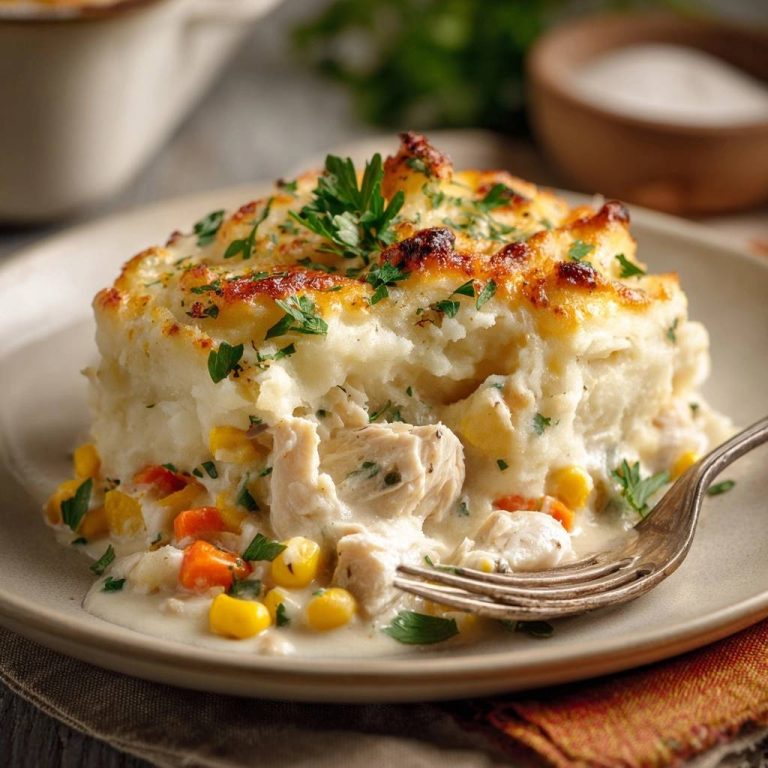
This same trick of placing ingredients on top to keep them from drying out works beautifully in a cheesy chicken and potato bake.
Phase 3: The Controlled Custard Pour
Whisk your eggs, milk, cream, and spices until the mixture is pale yellow and frothy. Pour this slowly over the bread mixture. You’ll see the liquid pool at the bottom, which is exactly what you want. Use a spatula to gently press down on the top cubes so they get a quick dip in the custard.
Unlike a sweet bread pudding or a French toast casserole, we do not let this soak for hours or overnight. We want the bread to stay firm. The goal is to have the bottom half of the cubes submerged in custard while the top halves remain relatively dry and exposed to the air.
Phase 4: The High-Heat 425°F Finish
Bake the pudding at 375°F for 30 minutes to set the custard. At this point, the center should be mostly firm but still have a slight jiggle. Now, turn the oven up to 425°F for the final 10 minutes. This is where the magic happens.
Watch closely as the tips of the bread turn a deep mahogany brown and the cheese begins to lace and crisp. This high-heat burst creates a textural contrast that is rarely found in home-baked casseroles. Once the top is bronzed and the pineapple looks slightly shriveled and sweet, it’s time to pull it out.
Troubleshooting Texture and Moisture Issues
If you notice the top of your bread pudding is browning too quickly but the center still feels liquid, don’t panic. Simply tent the dish loosely with a piece of aluminum foil. This reflects the direct heat away from the top while allowing the internal temperature to continue rising until the custard is fully set.
If you absolutely must use frozen pineapple, you have to take extra precautions. Thaw the fruit completely in a colander and then squeeze it firmly with paper towels to remove every drop of excess juice. Frozen fruit is much wetter than fresh, so failing to dry it will almost certainly result in a soggy pudding.
Flavor Variations and Savory Swaps
This recipe is a fantastic canvas for experimentation. If you love a “Sweet & Heat” flavor profile, try folding in some diced jalapeños or a pinch of red pepper flakes into the custard. The spice plays incredibly well with the sweetness of the pineapple and the richness of the cheese.
You can also swap the chicken for smoked turkey or even thick-cut pieces of smoked turkey bacon. If you want to lean into the tropical theme even further, add a tiny pinch of smoked paprika or ground ginger to the egg mixture. These small additions can completely change the personality of the dish without affecting the bake time.
Optimal Pairings for a Tropical Savory Bake
Because this bread pudding is quite rich and savory, you want side dishes that provide a sharp, acidic contrast. A simple arugula or radicchio salad is perfect. The bitterness of the greens and a zesty lime vinaigrette will cleanse your palate between bites of the creamy custard.
For a refreshing drink, try a sparkling ginger-lime spritzer. The carbonation and the bite of the ginger cut through the heavy cream and cheese beautifully. It keeps the meal feeling light and tropical rather than heavy and sluggish, making it a great choice for a weekend brunch or a patio dinner.
Make-Ahead Strategy and Reheating Instructions
You can definitely prep parts of this dish in advance to save time. Toast the bread cubes up to 24 hours early and store them in a sealed bag on the counter. You can also shred the chicken and chop the pineapple the night before, as long as you keep them in separate airtight containers in the fridge.
However, do not combine the custard and bread until you are ready to bake. To reheat leftovers, avoid the microwave, which will make the bread rubbery. Instead, use an air fryer at 350°F for 5 minutes or a toaster oven. This will revive the crispy top and keep the “Anti-Soggy” integrity intact.
Expert Tips for Professional Presentation
Patience is your best friend once the timer goes off. Let the bread pudding rest for at least 10 minutes before you even think about slicing it. This resting period allows the custard to finish setting and lets the steam escape, which prevents the bottom from becoming damp as it sits.
Finally, don’t forget the garnish. A generous sprinkle of fresh parsley provides a vibrant green contrast to the deep browns and yellows of the bake. It makes the dish pop visually and adds a hit of freshness that rounds out the savory notes. Serve it straight from the ceramic dish for a rustic, inviting look.
Frequently Asked Questions
How do I store leftovers and can I freeze this?
Store any leftovers in an airtight container in the refrigerator for up to 3 days. While you can technically freeze this dish, I don’t recommend it. The custard can become grainy and the pineapple may release too much moisture upon thawing, which ruins the carefully crafted “anti-soggy” texture.
Why is my bread pudding still wet in the middle?
This usually happens if the bread wasn’t toasted long enough or if the pineapple wasn’t dried properly. If the top is brown but the middle is wet, tent it with foil and bake for another 5-10 minutes. Next time, ensure your bread cubes are as dry as crackers before adding the liquid.
Can I use a different type of fruit?
Yes, mango or even firm peach slices work well as substitutes for pineapple. The key is to follow the same rule: pat the fruit extremely dry. Avoid very watery fruits like berries or citrus segments, as they will release too much juice and compromise the custard’s structure.
What can I use if I don’t have heavy cream?
If you don’t have heavy cream, you can use 2 cups of whole milk instead of the milk/cream split. However, the result will be slightly less rich and the custard may be a bit more prone to weeping. Avoid using skim or 1% milk, as the fat is necessary for the custard to set firmly.
Can I make this gluten-free?
You can use a sturdy gluten-free sourdough or French bread loaf. Be aware that gluten-free bread often dries out faster, so keep an eye on it during the initial toasting phase. You may need to reduce the toasting time by a few minutes to prevent the cubes from burning.
Tropical Chicken Bread Pudding
Course: Main CourseCuisine: AmericanDifficulty: medium6
servings15
minutes45
minutes410
kcal60
MinutesThis savory twist on bread pudding combines sourdough bread, rotisserie chicken, and fresh pineapple. By using a specific toasting technique and a high-heat finish, this recipe avoids the common pitfall of a mushy base, resulting in a golden, structural delight.
Ingredients
6 cups sourdough or French bread, cut into 1-inch cubes
2 cups cooked shredded chicken (rotisserie works best)
1.5 cups fresh pineapple chunks, patted very dry with paper towels
1.5 cups shredded mozzarella or Swiss cheese
4 large eggs
1.5 cups whole milk
1/2 cup heavy cream
1 teaspoon garlic powder
1/2 teaspoon onion powder
1/2 teaspoon salt
1/4 teaspoon black pepper
2 tablespoons fresh parsley, chopped
Directions
- Preheat your oven to 375°F (190°C). Spread the bread cubes on a large baking sheet and toast for 12-15 minutes, tossing halfway through, until they are deeply golden and feel like croutons. This “bone-dry” start is the critical step to prevent a soggy base.
- In a large mixing bowl, whisk together the eggs, milk, heavy cream, garlic powder, onion powder, salt, and pepper until fully combined.
- Lightly grease a 9×13 inch ceramic baking dish. In a separate bowl, toss the toasted bread, shredded chicken, and 1 cup of the cheese together. Transfer this mixture to the baking dish.
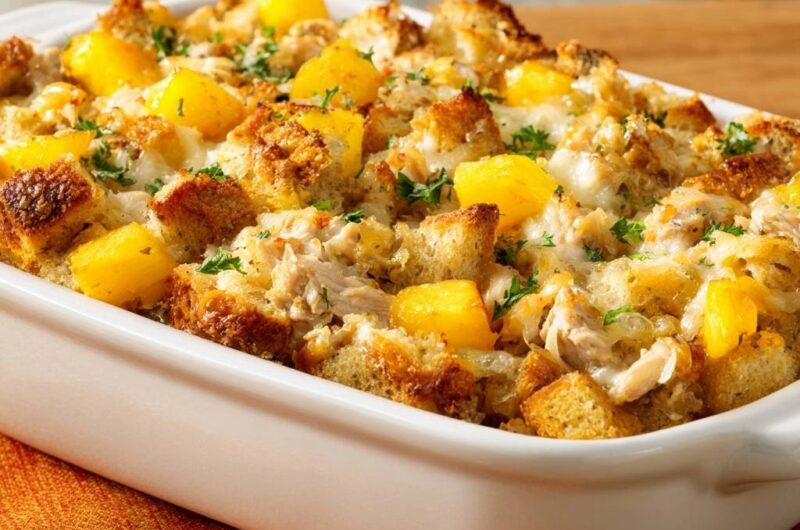
- Tuck the pineapple chunks into the gaps between the bread cubes, ensuring many are visible on the surface (as seen in the image).
- Pour the egg mixture slowly over the bread. Use a spatula to lightly press down on the bread so every piece gets a quick coating, but do not let it soak.
- Immediately sprinkle the remaining 1/2 cup of cheese over the top.
- Bake for 30 minutes. Increase the oven temperature to 425°F for the final 10 minutes. This high-heat finish creates the distinct browned edges on the bread and pineapple visible in the photo.
- Remove from the oven when the custard is set and the top is deeply bronzed. Let it rest for 10 minutes before serving. This resting period allows the custard to firm up and steam to escape, ensuring the bottom stays crisp. Garnish with fresh parsley.
Notes
- The secret to the anti-soggy bottom is ensuring the bread is toasted until bone-dry like croutons and patting the pineapple chunks dry before assembly.