Mastering Creamy Steak and Mushroom Stroganoff
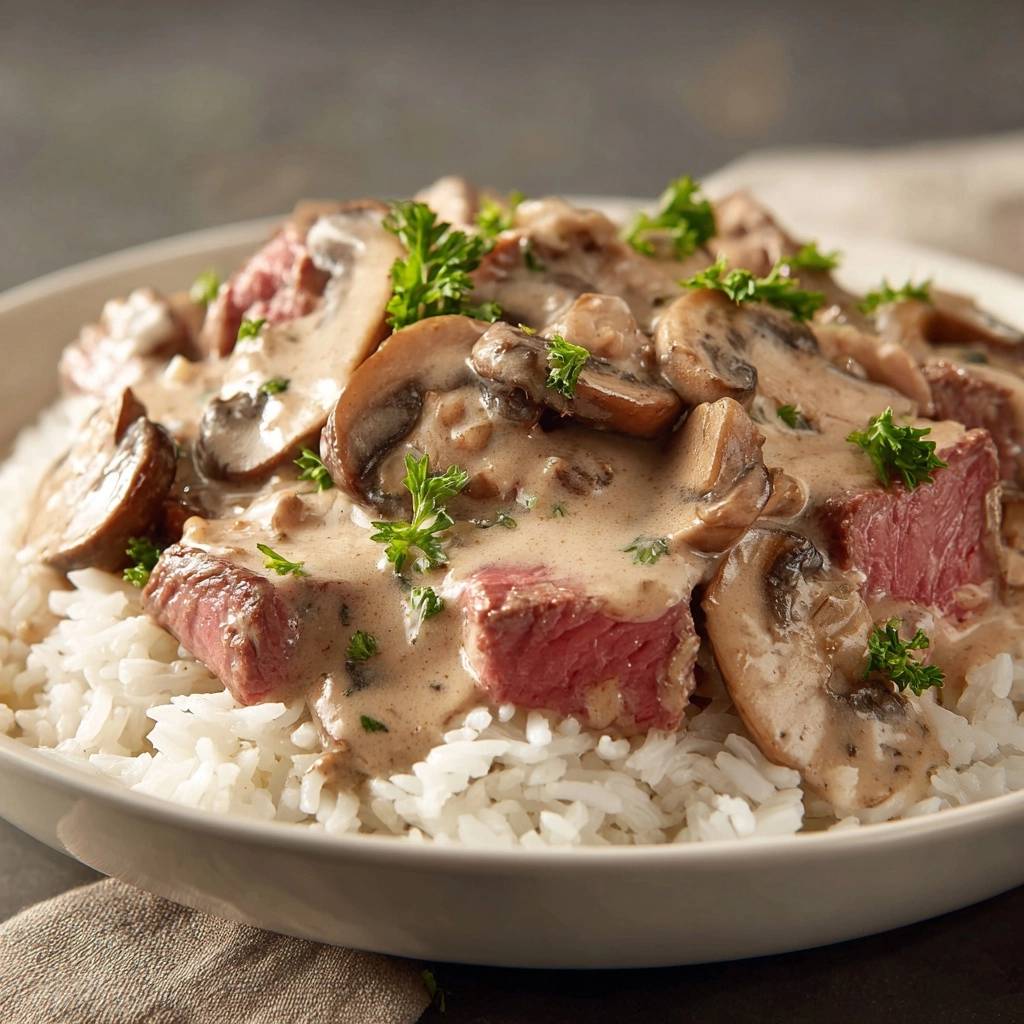
Most home cooks have experienced the disappointment of a stroganoff that looks more like a grey, watery soup than a gourmet meal. You want that thick, clingy sauce that coats every morsel of beef, but instead, the mushrooms leak water and the steak turns tough. It’s a common frustration that usually stems from a few small technical errors in the pan. When done right, this dish is a masterpiece of textures, featuring a deeply seared crust on the beef and a velvety, umami-rich sauce that feels like a warm hug on a plate.
The secret to a professional-grade Creamy Steak and Mushroom Stroganoff isn’t a hidden ingredient, but rather a focus on moisture management. By prioritizing the sear and understanding how to handle fungi, you can create a dish that rivals any high-end bistro. We’re moving away from the “dump and stir” method and embracing a technique-driven approach that builds layers of flavor. This ensures every bite is packed with the earthy depth of caramelized mushrooms and the richness of high-quality dairy.
If you want to guarantee success, the most important tip I can give you is to pat your steak completely dry with paper towels before it ever touches the pan. Any surface moisture on the meat will immediately turn to steam when it hits the heat, which prevents that beautiful mahogany crust from forming. A dry steak sears; a wet steak boils. Once you master this simple prep step, you’re already halfway to the best stroganoff of your life.
The Science of Preventing Watery Mushroom Sauce
Mushrooms are fascinating little sponges, consisting of nearly 90% water. This biological fact is the primary reason why so many stroganoff sauces end up thin and diluted. When you toss raw mushrooms into a pan filled with oil or butter, they immediately soak up the fat. Then, as they heat up, their cell structures collapse and they dump all that internal water back into your pan. If your steak is already in there, it ends up simmering in mushroom juice, which ruins the texture of the meat.
To combat this, we use the “Dry Saute” method. This technique involves placing the sliced mushrooms into a hot, dry skillet without any added butter or oil initially. It sounds counterintuitive, but it’s the most effective way to cook them. As the heat hits the mushrooms, the water evaporates quickly rather than pooling. You’ll notice they shrink significantly and start to take on a golden-brown color. Only after that moisture is gone do we add the fats and aromatics to finish the browning process.
Furthermore, adding salt too early is a major mistake. Salt is a desiccant, meaning it draws moisture out of whatever it touches. If you salt your mushrooms the moment they hit the pan, you’ll trigger a massive release of liquid that will be hard to cook off before the mushrooms become rubbery. By waiting until the mushrooms have already browned and “sealed,” you ensure they stay plump and flavorful while contributing to a thick, stable sauce base.
Why High Heat and Dry Pans Matter
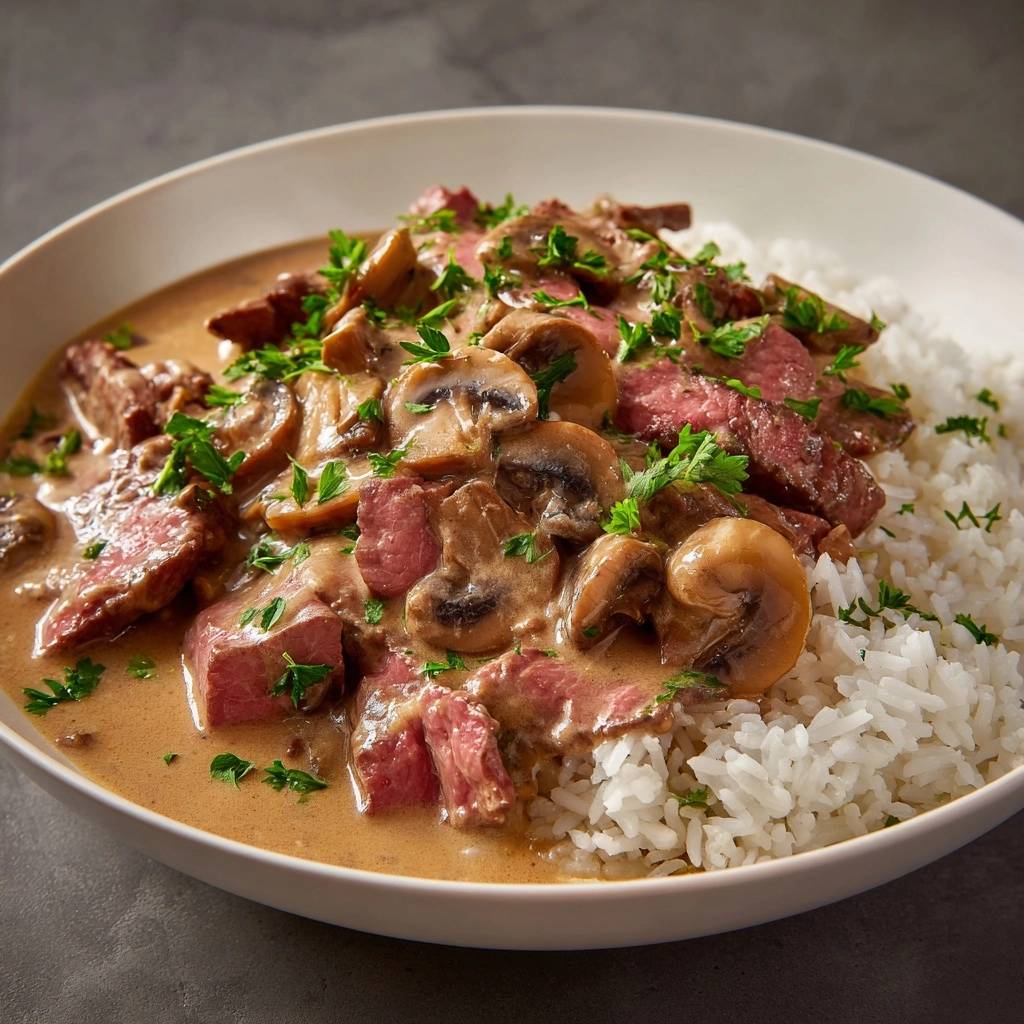
The Maillard reaction is the chemical process responsible for the savory, complex flavors in browned foods. For fungi, this reaction requires high heat and a lack of excess moisture. If the pan is crowded or the heat is too low, the temperature drops below the threshold needed for browning. Instead of caramelizing, the mushrooms simply sweat, resulting in that unappealing grey color and a bland, boiled taste.
When you use a dry pan over medium-high heat, you allow the evaporation to outpace the moisture release. This creates a concentrated mushroom flavor that serves as the backbone of your stroganoff. Once the mushrooms are golden and fragrant, they develop a meaty texture that perfectly complements the steak. This professional approach ensures that your final sauce is defined by its richness rather than being watered down by vegetable juices.
Essential Components for a Velvety Stroganoff Base
The quality of your ingredients directly dictates the success of a fast-cooking dish like this. Since the total cook time is only about 20 minutes, there isn’t enough time for tough fibers to break down. Therefore, you must choose components that are naturally tender and full of flavor. Every element, from the beef to the dairy, plays a specific role in creating that signature velvety mouthfeel that defines a classic stroganoff.
One of the most overlooked “ingredients” in this recipe is the fond. Fond is the French term for the browned bits of protein and sugars left at the bottom of the pan after searing the meat and mushrooms. These little brown specks are concentrated flavor gold. When you eventually add your beef broth and whisk the bottom of the pan, those bits dissolve into the liquid, providing a deep, roasted complexity that you simply can’t get from a carton of broth alone.
In addition to the fond, the choice of aromatics matters. Using a shallot instead of a standard yellow onion provides a more delicate, garlicky sweetness that doesn’t overpower the mushrooms. Fresh garlic, minced just before adding, ensures the oils are potent and fragrant. These small choices accumulate, resulting in a sauce that tastes sophisticated and layered rather than one-dimensional.
If you enjoy working with creamy sauces, you might like the crunchy layers in this loaded nacho rice bowl.
Selecting the Right Beef Cut
For a quick-sear stroganoff, Top Sirloin or Ribeye are your best bets. Ribeye offers incredible fat marbling, which translates to a buttery flavor and a very tender bite. However, Top Sirloin is a fantastic, more affordable alternative that remains lean yet tender if not overcooked. Avoid “stew meat” or chuck roast for this specific recipe; those cuts require hours of braising to become tender and will be incredibly chewy if cooked for only a few minutes.
When prepping your beef, always slice against the grain. Look for the direction the muscle fibers are running and cut perpendicular to them. This shortens the fibers, making the meat much easier to chew. By cutting the steak into 1.5-inch cubes, you provide enough surface area for a great sear while keeping the interior juicy and medium-rare. This contrast in texture is what makes the dish feel truly indulgent.
The Role of Full-Fat Sour Cream and Heavy Cream
The sauce’s luxurious texture comes from the combination of heavy cream and sour cream. It’s vital to use full-fat versions of both. Low-fat or “light” dairy products contain more water and less protein-stabilizing fat, which makes them highly prone to curdling when they hit the heat or the acidic Dijon mustard. Full-fat sour cream provides that iconic tang and thickness that defines stroganoff, while heavy cream adds a silky finish.
Chemistry plays a big part here. Dairy is sensitive to high temperatures and acids. To prevent the sauce from “breaking” or looking grainy, you must lower the heat before stirring in the creams. This process, often called tempering, allows the dairy to incorporate smoothly into the beef broth base. A gentle whisking motion helps emulsify the fats, ensuring the sauce remains a cohesive, glossy blanket for your steak and mushrooms.
Step-by-Step: Searing the Steak for Maximum Flavor
The first phase of cooking is all about the sear. After you’ve patted the steak cubes dry, season them generously with Kosher salt and cracked black pepper. Don’t be shy with the seasoning; much of it will stay in the pan to season the sauce later. You want your skillet to be shimmering hot before the meat touches it. If the oil isn’t hot enough, the meat will stick and tear rather than developing a crust.
When you place the steak in the pan, you should hear a loud, aggressive sizzle. This is the sound of the Maillard reaction beginning. Leave the meat alone for at least a minute before trying to flip it. If you move it too soon, you’ll interrupt the browning process. You’re looking for a deep mahogany color on the outside. Remember, we are only searing for about a minute per side. The centers should remain rare because they will continue to cook slightly when they are tossed back into the warm sauce at the end.
Once the steak is seared, remove it to a plate immediately. Do not leave it in the pan while you cook the mushrooms, or it will turn into shoe leather. Any juices that collect on the plate while the steak rests are incredibly flavorful. Make sure to pour those back into the pan during the final step. This ensures that no flavor is wasted and helps to further enrich the creamy sauce.
Batch Cooking to Maintain Pan Temperature
One of the biggest mistakes home cooks make is crowding the pan. If you dump all 1.5 pounds of steak into the skillet at once, the temperature will plummet. Instead of searing, the meat will release its juices and begin to boil in its own liquid. This results in grey, tough meat and no fond on the bottom of the pan. It’s the fastest way to ruin a stroganoff.
To avoid this “crowded pan syndrome,” sear the steak in two or even three batches. Give each cube of meat plenty of space so the steam can escape. This maintains the high heat of the skillet and ensures every piece of beef gets that delicious, crusty exterior. It might take an extra five minutes, but the difference in the final flavor and texture is massive. Patience in this step is the hallmark of a skilled cook.
Building the Roux and Deglazing the Pan
After the mushrooms are browned and the aromatics are fragrant, it’s time to build the roux. A roux is simply a mixture of fat and flour used to thicken sauces. By sprinkling the flour over the buttery mushrooms and stirring, you coat the ingredients and create a paste. It’s essential to cook this mixture for a minute or two. This “toasts” the flour, removing the raw, pasty taste and ensuring your sauce has a clean, savory flavor.
If the sauce is too thin, resist the urge to add more flour directly to the pan, as this will create lumps, and the same creamy consistency can be achieved in this cheesy ground beef and rice skillet.
Next comes the deglazing. As you slowly pour in the beef broth, use a wooden spoon or whisk to scrape the bottom of the pan. All those browned bits (the fond) will lift off and dissolve into the liquid. This is the moment the sauce transforms from a simple broth into a complex, dark gravy. The Worcestershire sauce and Dijon mustard are added now, further deepening the color and adding a necessary hit of acidity to balance the upcoming dairy.
Simmer this mixture for a few minutes until it begins to thicken. You want the liquid to reduce slightly, which concentrates the flavors. The sauce should be thick enough to coat the back of a spoon before you even add the cream. This foundation is what prevents the final dish from being runny. By taking the time to build the roux and deglaze properly, you’re ensuring a stable emulsion that won’t separate later.
Incorporating Dijon and Worcestershire for Umami
Dijon mustard and Worcestershire sauce are the “secret” powerhouses of a great stroganoff. While the cream and beef provide the bulk of the flavor, these two ingredients provide the “high notes.” The Dijon mustard offers a sharp, vinegary tang that cuts through the heavy fats of the cream and butter. It acts as a palate cleanser in every bite, preventing the dish from feeling overly heavy or cloying.
Worcestershire sauce, on the other hand, is an umami bomb. It contains fermented ingredients that enhance the natural “beefiness” of the broth and steak. It adds a savory depth that makes the sauce taste like it’s been simmering for hours rather than minutes. Together, these two ingredients bridge the gap between the earthy mushrooms and the rich dairy, creating a perfectly balanced flavor profile that keeps you coming back for another forkful.
Troubleshooting Common Stroganoff Texture Issues
Even with the best intentions, things can sometimes go sideways in the kitchen. The most common issue is a sauce that becomes too thick as it sits. This often happens because the flour in the roux continues to hydrate. If your sauce looks more like a paste than a velvety blanket, don’t panic. Simply whisk in a tablespoon or two of beef broth or even a splash of water. This will loosen the proteins and restore that silky consistency without diluting the flavor too much.
Another common fear is curdling. If you see tiny white specks in your sauce, it means the dairy has “broken.” This usually happens if the sauce gets too hot after the sour cream is added. To prevent this, always keep the heat on the lowest setting or even turn it off entirely when stirring in the dairy. If it does start to curdle, remove the pan from the heat immediately and whisk vigorously. Sometimes, a small splash of heavy cream and some fast whisking can help re-emulsify the sauce.
How to Fix a Broken Sauce
A broken sauce occurs when the fat separates from the liquid, leaving an oily film on top. This is usually a temperature issue. If the sauce is too hot, the proteins in the sour cream tighten and squeeze out the fat. The best fix is to lower the temperature and add a tiny bit of liquid. Whisking in a teaspoon of cold water can sometimes “shock” the emulsion back together.
If the sauce is too thin, resist the urge to add more flour directly to the pan, as this will create lumps. Instead, you can let it simmer for another minute before adding the dairy, or mix a tiny bit of cornstarch with water to create a slurry and stir that in. However, if you followed the roux steps correctly, the sauce should naturally thicken to a beautiful, glossy consistency that holds its shape on the plate.
Optimal Pairings for Creamy Beef Dishes
While many people traditionally serve stroganoff over wide egg noodles, this recipe shines when paired with fluffy, long-grain white rice. Rice acts like a sponge, soaking up every drop of that incredible mushroom sauce. Unlike noodles, which can sometimes feel heavy when paired with a creamy sauce, rice provides a light, neutral base that allows the flavors of the beef and mushrooms to take center stage. It also provides a nice textural contrast to the tender steak.
To balance the intense richness of the stroganoff, I highly recommend serving a bright, acidic side dish. A simple green salad dressed with a sharp lemon vinaigrette works wonders. The acidity of the lemon and the crunch of fresh greens cut through the heavy cream and butter, refreshing your palate between bites. Steamed green beans or roasted asparagus with a squeeze of lime are also excellent choices that add color and nutrition to the meal.
What to Serve Next
If you enjoyed the creamy richness of the steak and mushroom stroganoff, these recipes offer nice contrast or a shared comfort-food vibe to round out your meal planning.
- For a bold, spicy counterpoint to the stroganoff’s creaminess, try Cajun Shrimp and Sausage Creole — the tomato-based heat and smoky sausage pair well as a second main, or serve it as a separate night’s dinner.
- If you want a vegetable side that holds its shape and adds a cheesy, savory note, Cheesy Broccoli and Rice Squares are sturdy enough to sit alongside the stroganoff without turning to mush.
Expert Tips for Preparation and Storage
If you’re looking to swap ingredients, be careful with the dairy. While some people suggest Greek yogurt as a healthy alternative to sour cream, it is much more likely to curdle because it has a lower fat content and higher acidity. If you must use it, whisk it with a teaspoon of cornstarch first to help stabilize it, and only add it at the very end with the heat turned off. For a gluten-free version, you can replace the all-purpose flour with a gluten-free flour blend or use a cornstarch slurry at the end to thicken the broth.
When it comes to leftovers, stroganoff requires a gentle touch. If you blast it in the microwave, the steak will turn rubbery and the sauce will likely break, leaving a puddle of oil. Instead, reheat it in a small saucepan over low heat on the stovetop. Add a splash of beef broth or water to loosen the sauce as it warms. This slow heating process preserves the texture of the meat and keeps the sauce creamy and cohesive.
For those who want an even deeper mushroom flavor, you can incorporate dried porcini mushrooms. Rehydrate them in a little warm water, then chop them finely and add them along with the fresh cremini mushrooms. Use the soaking liquid (strained of any grit) as part of your beef broth measurement. This adds an incredible “forest floor” earthiness that takes the dish to a whole new level of sophistication. Just remember that dried mushrooms are very potent, so a little goes a long way.
Refining the Presentation with Fresh Aromatics
The final touch to any great stroganoff is the garnish. Because the dish is composed of mostly brown and cream tones, it can look a bit monochromatic on the plate. A heavy dusting of fresh curly parsley isn’t just for looks; it provides a necessary hit of freshness. The grassy, clean flavor of the parsley cuts through the umami-heavy sauce and provides a visual pop that makes the dish look as good as it tastes.
When you serve this, make sure the rice is piping hot and the sauce is freshly tossed with the steak. The goal is to have the meat just warmed through by the sauce, maintaining that tender, juicy center we worked so hard to achieve during the sear. By following these technical steps—from the dry-sauteed mushrooms to the careful tempering of the cream—you’ve created a meal that is balanced, textured, and deeply satisfying. It’s a classic for a reason, and now you have the skills to make it perfectly every time.
How do I store and reheat leftovers?
Store any leftovers in an airtight container in the refrigerator for up to 3 days. To reheat, place the stroganoff in a skillet over low heat. Add a tablespoon of beef broth or water to help the sauce regain its creamy consistency. Avoid the microwave if possible, as high heat can cause the steak to become tough and the sour cream sauce to separate or curdle.
Why did my sauce turn out thin or watery?
A watery sauce usually happens if the mushrooms weren’t cooked long enough to release and evaporate their moisture before the other ingredients were added. It can also happen if the steak wasn’t patted dry, leading to excess steam in the pan. To fix a thin sauce, simmer it for a few extra minutes before adding the sour cream, or ensure your roux (the flour and butter mixture) has cooked enough to properly thicken the broth.
Can I substitute the sour cream with something else?
Full-fat Greek yogurt is the closest substitute, but it is much more prone to curdling due to its lower fat content. If you use it, ensure the heat is very low and do not let the sauce boil. You can also use creme fraiche, which has a higher fat content and is less likely to break, though it is less tangy than traditional sour cream. Avoid using low-fat or fat-free versions of any dairy, as they lack the stability needed for a smooth sauce.
What is the best way to prevent the steak from being chewy?
The key to tender steak is twofold: choosing the right cut and not overcooking it. Use Top Sirloin or Ribeye and slice it against the grain. Sear the meat quickly over high heat just to brown the outside, then remove it from the pan. Only return the steak to the sauce at the very end for about 30 seconds to warm it through. This prevents the fibers from tightening up and becoming rubbery.
Can I make this recipe gluten-free?
Yes, you can easily make this gluten-free by substituting the all-purpose flour with a 1:1 gluten-free flour blend for the roux. Alternatively, you can skip the flour step and thicken the sauce at the end using a cornstarch slurry (1 tablespoon cornstarch mixed with 1 tablespoon cold water). Also, ensure your Worcestershire sauce is a certified gluten-free brand, as some contain barley malt vinegar.
Why should I use a dry pan for the mushrooms?
Mushrooms are like sponges and will soak up any oil or butter immediately, which prevents them from browning properly. By using a dry pan, you force the mushrooms to release their internal water first. Once that water evaporates, the mushrooms can finally brown and develop a rich, meaty flavor. Adding the butter only after they are “dry” ensures they get a beautiful golden crust without becoming soggy.
Steak and Mushroom Stroganoff
Course: Main CourseCuisine: AmericanDifficulty: medium4
servings15
minutes20
minutes580
kcal35
MinutesThis recipe solves the common problem of watery mushroom sauce by using a specific searing technique for the steak and a dry-saute method for the mushrooms. The result is a rich, restaurant-quality stroganoff served over fluffy white rice.
Ingredients
1.5 lbs top sirloin or ribeye steak, cut into 1.5-inch thick cubes
1 lb cremini (baby bella) mushrooms, sliced thick
2 cups long grain white rice, cooked
1 cup high-quality beef broth
1/2 cup heavy cream
1/2 cup full-fat sour cream
3 tablespoons butter, divided
1 tablespoon olive oil
1 tablespoon Worcestershire sauce
1 teaspoon Dijon mustard
2 cloves garlic, minced
1 small shallot, finely diced
1.5 tablespoons all-purpose flour
Fresh curly parsley for garnish
Kosher salt and cracked black pepper to taste
Directions
- Pat the steak cubes completely dry with paper towels. This is the first step to preventing a watery dish. Season generously with salt and pepper.
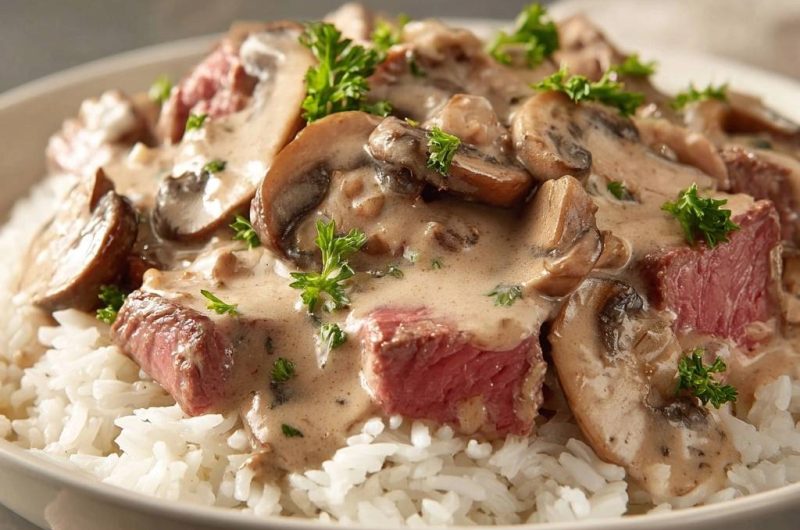
- Heat olive oil and 1 tablespoon of butter in a large heavy-bottomed skillet over high heat until shimmering. Sear the steak in batches for only 1 minute per side. The goal is a deep brown crust while keeping the center rare to medium-rare, as shown in the image. Remove steak from the pan immediately and set aside on a plate.
- To solve the watery sauce issue, add the sliced mushrooms to the empty, dry pan without adding more fat yet. Cook them over medium-high heat for 4 to 5 minutes, stirring occasionally, until they release their liquid and it evaporates completely.
- Once the mushrooms are browned and “dry,” add the remaining 2 tablespoons of butter, shallot, and garlic. Saute for 2 minutes until fragrant.
- Sprinkle the flour over the mushrooms and stir for 1-2 minutes to create a roux, ensuring no raw flour remains.
- Slowly whisk in the beef broth, Worcestershire sauce, and Dijon mustard, scraping the bottom of the pan to release the fond (browned bits). Simmer for 3-4 minutes until thickened.
- Reduce heat to low. Stir in the heavy cream and sour cream. Whisk until the sauce is velvety and thick. Do not let the sauce reach a hard boil once the sour cream is added to prevent curdling.
- Return the seared steak and any accumulated juices to the pan. Toss gently for 30 seconds just to coat the meat in the warm sauce without overcooking the centers.
- Serve the mixture immediately over a generous bed of fluffy white rice. Garnish with a heavy dusting of fresh curly parsley to match the visual presentation.
Notes
- To prevent curdling, ensure the heat is reduced to low before adding the sour cream and do not let the sauce reach a hard boil. Patting the steak dry is essential for a proper sear.