Mastering the Roasted Butternut Squash and Farro Salad
Most grain salads fail because the roasted vegetables turn into a mushy mess once they hit the dressing. You’ve likely experienced that disappointing bowl where the squash loses its shape and the grains feel heavy and damp. This Roasted Butternut Squash and Farro Salad solves that problem with a specific high-heat roasting technique and a strategic cooling step.
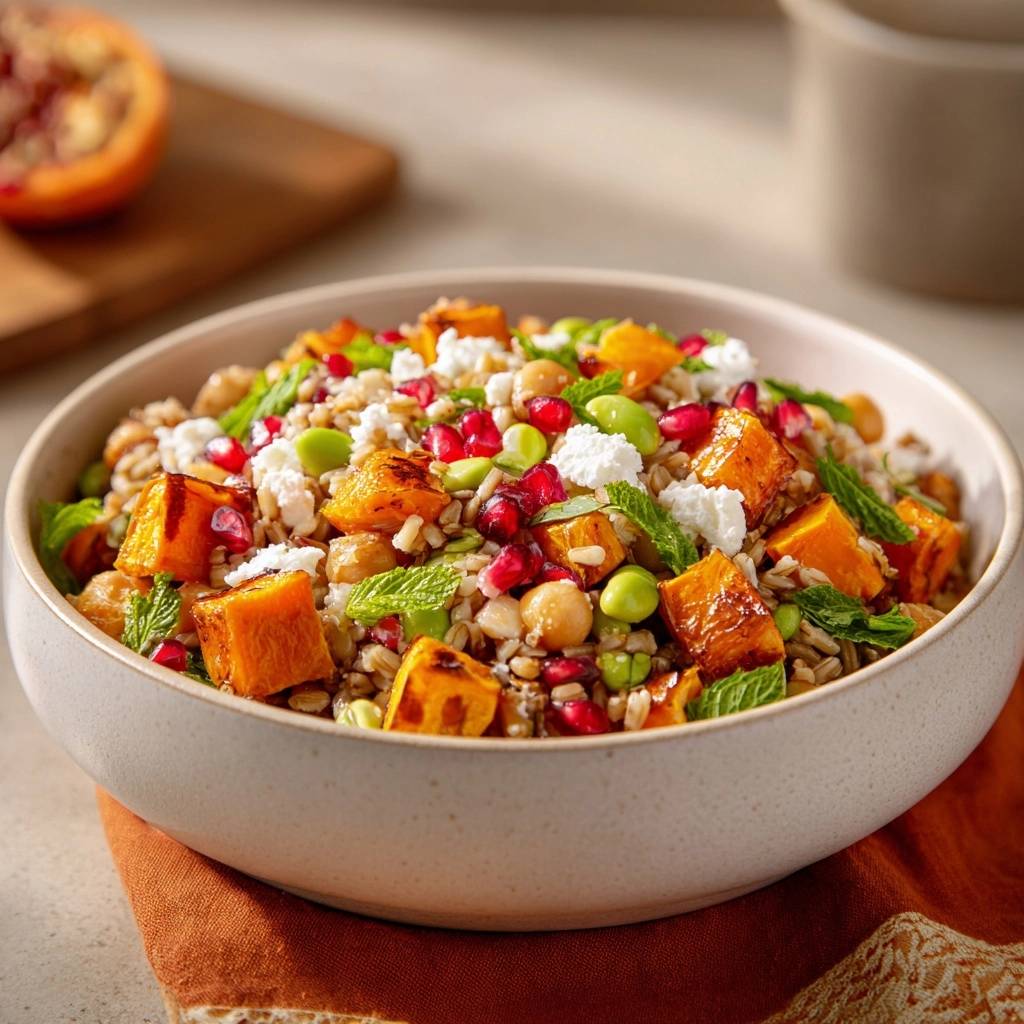
The secret to this dish lies in the incredible textural contrast. You get the bright snap of pomegranate seeds, the satisfying chew of al dente farro, and a butternut squash that is caramelized on the outside while remaining firm on the inside. It’s a technical upgrade that turns a simple side dish into a restaurant-quality meal.
I’ve found that the biggest mistake home cooks make is rushing the assembly while the ingredients are still steaming. By mastering the “anti-soggy” method, you ensure every bite maintains its integrity. The secret is using a pre-heated baking sheet to sear the squash immediately, locking in its structure before it has a chance to soften too much.
The Science of High-Heat Squash Roasting
When you roast vegetables at 425°F, you’re triggering the Maillard reaction. This chemical reaction between amino acids and reducing sugars creates that deep, savory-sweet crust we all love. For a high-sugar vegetable like butternut squash, this temperature is the absolute sweet spot for browning without causing the internal cell walls to collapse into mush.
Using a pre-heated baking sheet is a total game-changer for your kitchen routine. When the oiled squash hits that scorching metal, the moisture on the surface evaporates instantly. This prevents the squash from steaming in its own juices, which is the primary cause of that dreaded soggy texture.
Therefore, you must resist the urge to crowd the pan. If the cubes are too close together, the steam trapped between them will soften the edges you’re trying to crisp. Give them space to breathe, and you’ll be rewarded with golden, caramelized edges that hold up against the weight of the grains.
Why Room Temperature Cooling is Mandatory
Patience is a legitimate culinary technique, especially when working with grain salads. Even after you pull the squash from the oven, carry-over cooking continues to soften the vegetable. If you toss hot squash directly into a bowl with other ingredients, it releases steam that wilts your fresh mint and turns your farro gummy.
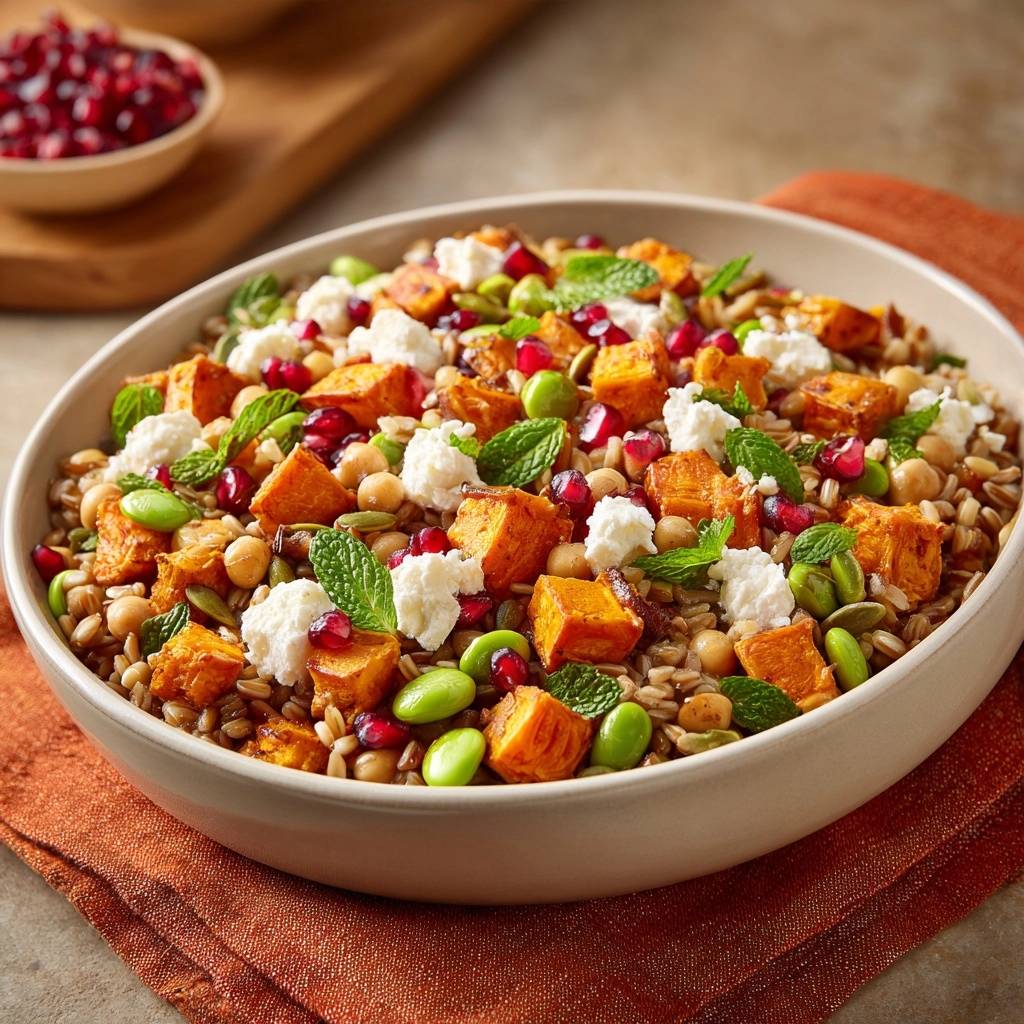
Allowing the squash and farro to cool completely on flat surfaces lets the starches and sugars set. This cooling period ensures that when you finally fold everything together, the squash pieces remain distinct. It’s the difference between a vibrant, layered salad and a bowl of vegetable mash.
Essential Components for the Perfect Grain Base
The foundation of this salad starts with the squash itself. When you’re at the store, look for a butternut squash that feels heavy for its size and has a matte, rather than shiny, skin. A heavy squash indicates higher moisture and sugar content, which leads to better caramelization in the oven.
In addition to the squash, chickpeas and edamame provide essential secondary proteins. These legumes offer a different kind of resistance to the bite than the grains do. While the chickpeas are earthy and dense, the steamed edamame adds a buttery, soft snap that brightens the overall flavor profile.
Quality matters when it comes to your fats and acids too. Since we aren’t making a complex vinaigrette, use a high-quality extra virgin olive oil. Its peppery notes will complement the sweetness of the balsamic glaze and the saltiness of the goat cheese perfectly.
Selecting and Preparing Pearled vs. Whole Farro
You’ll likely find pearled farro most often in US grocery stores. Pearled means the bran has been removed, which significantly reduces the cooking time to about 20 minutes. It’s the best choice for this recipe because it absorbs the balsamic glaze beautifully while maintaining a reliable, bouncy texture.
If you happen to have whole-grain farro, keep in mind it requires an overnight soak and a much longer simmer. Regardless of the type, always cook your farro “pasta-style” in a large pot of heavily salted water. This ensures every single grain is seasoned from the inside out, rather than just on the surface.
Once the farro is tender but still has a firm “pop” when you bite it, drain it immediately. Don’t let it sit in the hot water, or it will continue to absorb liquid and become bloated. Spreading it out on a large plate or sheet pan helps it cool quickly and prevents the grains from clumping together.
The Role of Pomegranate and Mint for Balance
Balance is everything in a dish that features sweet roasted squash and earthy grains. Pomegranate seeds act like little jewels of acidity that cut through the richness of the goat cheese. Their tart juice cleanses the palate between bites, making the salad feel light rather than heavy.
Fresh mint is the “secret” herb that ties the whole dish together. It provides a cooling sensation that contrasts with the warm spices of the roasted squash. However, make sure you tear the mint leaves just before adding them to prevent the edges from turning black.
Step-by-Step: Achieving the Perfect Roasted Texture
Start by preheating your oven to 425°F with the baking sheet already inside. While that gets hot, peel your squash and cut it into uniform 1-inch cubes. Uniformity is key here; if the pieces are different sizes, the small ones will burn before the large ones are tender.
Toss the cubes with olive oil, salt, and pepper until they look glossy. Carefully pull the hot pan out and scatter the squash across it. You should hear a distinct sizzle the moment the squash touches the metal. That sound is the “anti-soggy” magic happening in real-time.
Roast for about 25 to 30 minutes, but don’t just set the timer and walk away. Flip the pieces halfway through to ensure even browning. You’re looking for dark golden brown edges and a tender center. Once they’re done, let them cool right on the pan to preserve those crispy bits.
Step-by-Step: Cooking Farro to Al Dente Perfection
While the squash is doing its thing, bring a large pot of water to a rolling boil. Add a generous palmful of salt—it should taste like the sea. Add your farro and turn the heat down to a simmer, but keep the water moving so the grains don’t stick to the bottom.
Start testing the farro at the 15-minute mark. You want it to be chewy and substantial, not soft like overcooked rice. If it feels stuck in your teeth, it needs another minute or two. Once it hits that perfect al dente stage, drain it through a fine-mesh sieve.
To prevent the grains from becoming gummy, I like to rinse them very briefly with cool water to stop the cooking process. Spread them out on a plate and drizzle with a tiny bit of olive oil. This keeps the grains separate and glossy while they wait for the assembly phase.
If you enjoy the sweet and savory contrast here, try this pomegranate beef tagine for a similarly rich pairing.
Assembling the Roasted Butternut Squash and Farro Salad
Now comes the fun part, but you have to be gentle. In a large bowl, combine your cooled farro, chickpeas, and edamame. These are your “sturdy” ingredients that can handle a bit of stirring. Give them a quick toss to distribute the proteins evenly.
Next, add the cooled squash, pomegranate seeds, and torn mint. Instead of stirring vigorously, use a large spoon or spatula to “fold” the ingredients. Scoop from the bottom and turn the mixture over. This protects the squash cubes from breaking apart and keeps the salad looking vibrant.
Finally, sprinkle the crumbled goat cheese over the top. Drizzle the balsamic glaze in a zigzag pattern just before you’re ready to eat. This ensures the glaze stays on the surface of the ingredients rather than soaking in and turning the whole salad a muddy brown color.
Troubleshooting Common Grain Salad Issues
If your squash comes out too soft despite your best efforts, don’t panic. You can often save it by popping the cubes into an air fryer for 3-4 minutes at 400°F. This will quickly dehydrate the exterior and bring back some of that lost texture before you add them to the bowl.
If the salad tastes a bit flat or dull, it usually needs more acid or salt. While we use balsamic glaze for sweetness, a tiny squeeze of fresh lemon juice can wake up the earthy flavors of the farro. Always taste a bit of everything together before deciding if it needs more seasoning.
For those who find their farro is too sticky, it’s likely because it wasn’t drained well enough. If the grains are clumping, toss them with a teaspoon of olive oil and use your fingers to gently break them apart. This coats each grain and prevents them from bonding together in the bowl.
Flavor Variations and Ingredient Swaps
This recipe is incredibly flexible if you don’t have everything on hand. Roasted sweet potatoes or even carrots make a fantastic substitute for butternut squash. They have a similar sugar content and will caramelize beautifully using the same high-heat method.
If you need a gluten-free version, quinoa or brown rice can stand in for the farro. Just be sure to cook them until they are fluffy and dry. For a saltier, more aggressive cheese profile, try swapping the goat cheese for crumbled feta or even shaved pecorino romano.
You can also play with the herbs. If mint isn’t your favorite, flat-leaf parsley or even fresh dill provides a different but equally delicious aromatic lift. The goal is to have something green and fresh to contrast the deep, roasted flavors of the vegetables.
Optimal Pairings for a Complete Meal
This salad is hearty enough to be a main course, but it also pairs beautifully with a variety of proteins. The earthy tones of the farro and the sweetness of the squash make it a natural companion for roasted poultry or seared lamb chops. The balsamic glaze acts as a bridge that connects the salad to the savory meat.
For a vegetarian feast, serve this alongside thick-cut roasted portobello mushrooms. The meaty texture of the mushrooms complements the chew of the grains. It’s also a fantastic addition to a holiday spread, as the colors are vibrant and the flavors are universally appealing.
If you’re serving this at a dinner party, consider a simple side of crusty sourdough bread. You can use the bread to swipe up any leftover balsamic glaze and goat cheese at the bottom of the bowl. It’s a rustic, satisfying way to round out the meal.
Make-Ahead Strategies and Storage Logistics
You can absolutely prep the components of this salad 24 hours in advance. In fact, roasting the squash and cooking the farro a day early is a great way to ensure they are perfectly cooled. Store the squash, grains, and legumes in separate airtight containers in the fridge.
However, wait to add the mint, goat cheese, and balsamic glaze until the very last minute. Mint will wilt and turn black if it sits in the fridge overnight, and the cheese can become discolored by the balsamic. Keeping these “finishing” ingredients separate preserves the visual appeal of the dish.
Leftovers will stay firm in the fridge for about 2 to 3 days. While the squash will naturally soften slightly over time, the farro remains pleasantly chewy. This is one of those rare salads that actually tastes better after a few hours because the flavors have a chance to meld together.
Frequently Asked Questions
Can I use frozen butternut squash for this?
I don’t recommend using frozen squash for this specific recipe. Frozen vegetables are blanched before freezing, which breaks down their cell walls. When they thaw and roast, they release a significant amount of water, making it nearly impossible to achieve that firm, caramelized exterior we’re looking for. Fresh squash is essential for the “anti-soggy” method.
How do I prevent the farro from sticking together?
The best way to keep farro grains separate is to drain them thoroughly and then spread them out on a flat surface like a baking sheet or large plate. While they are still slightly warm, toss them with a teaspoon of olive oil. This creates a light barrier around each grain, preventing the starches from sticking to one another as they cool.
Is there a substitute for balsamic glaze?
If you don’t have balsamic glaze, you can easily make a quick reduction by simmering half a cup of balsamic vinegar with a teaspoon of honey until it coats the back of a spoon. Alternatively, a high-quality apple cider vinaigrette works well. Just look for something with a balance of sweetness and sharp acidity to cut through the earthy farro.
How long will leftovers stay firm in the fridge?
Leftovers will stay delicious for 2 to 3 days when stored in an airtight container. While the squash will lose its crisp edges and become softer as it absorbs moisture from the other ingredients, the farro and chickpeas hold their texture very well. It’s a fantastic option for meal prep lunches, though the mint may darken slightly by the second day.
Can I add nuts for extra crunch?
Absolutely! Toasted pepitas (pumpkin seeds) or chopped walnuts are excellent additions to this salad. To maintain their maximum “snap,” add the nuts right before serving. If you add them too early, they can absorb moisture from the salad and lose their crunch. Toasting them in a dry pan for 2-3 minutes beforehand will also deepen their flavor.
Roasted Butternut Squash and Farro
Course: SaladCuisine: AmericanDifficulty: easy4
servings15
minutes35
minutes340
kcal50
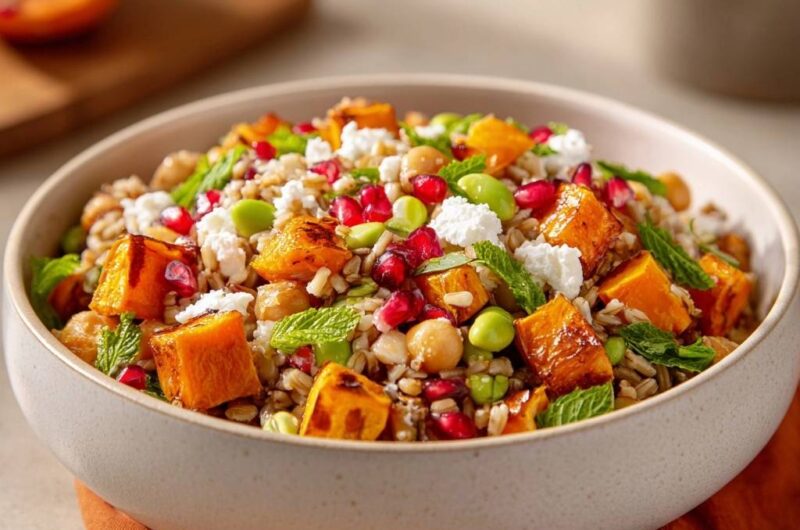
MinutesA hearty and textural grain salad featuring chewy farro, caramelized butternut squash, crunchy pomegranate seeds, and creamy goat cheese. This recipe focuses on a specific roasting technique to prevent the squash from becoming soggy.
Ingredients
1 medium butternut squash, peeled and cubed into 1-inch pieces
1 cup uncooked farro
1/2 cup pomegranate seeds
1/2 cup shelled edamame (steamed)
1/2 cup chickpeas, drained and rinsed
1/4 cup crumbled goat cheese
1/4 cup fresh mint leaves, torn
3 tablespoons olive oil, divided
2 tablespoons balsamic glaze
1 teaspoon salt
1/2 teaspoon black pepper
Directions
- Preheat your oven to 425 degrees F. Place a large rimmed baking sheet inside the oven while it preheats. This high-heat contact is the key to preventing sogginess.
- Toss the cubed butternut squash with 2 tablespoons of olive oil, salt, and pepper in a bowl until evenly coated.
- Carefully pull the hot baking sheet from the oven and spread the squash in a single layer. The immediate contact with the hot metal sears the bottom of the squash, locking in the structure so it does not steam.
- Roast for 25 to 30 minutes, flipping once halfway through, until the edges are dark golden brown and caramelized. Remove from the oven and let the squash cool completely on the pan. This is the most important step: adding hot squash to a salad causes it to break down and release moisture.
- While the squash roasts, cook the farro in a large pot of salted boiling water until tender but still chewy (al dente), about 20 to 25 minutes. Drain well and spread on a separate plate to cool to room temperature.
- In a large serving bowl, combine the cooled farro, chickpeas, and steamed edamame.
- Gently fold in the cooled roasted squash, pomegranate seeds, and fresh mint leaves.
- Top with the crumbled goat cheese. Drizzle with the remaining 1 tablespoon of olive oil and the balsamic glaze just before serving to maintain the crisp edges of the squash and the integrity of the grains.
Notes
- The secret to preventing soggy squash is preheating the baking sheet and allowing the roasted squash to cool completely before mixing it with other ingredients.