Mastering Creamy Garlic Shrimp Pasta with Crispy Bacon
We’ve all been there. You sit down to a beautiful plate of seafood pasta, only to find the shrimp has the texture of a pencil eraser. It’s frustrating because shrimp is expensive and delicate, yet so many recipes treat it like an afterthought. The secret to a restaurant-grade meal isn’t a secret ingredient; it’s all about mastering the timing and temperature to keep that seafood plump and juicy.
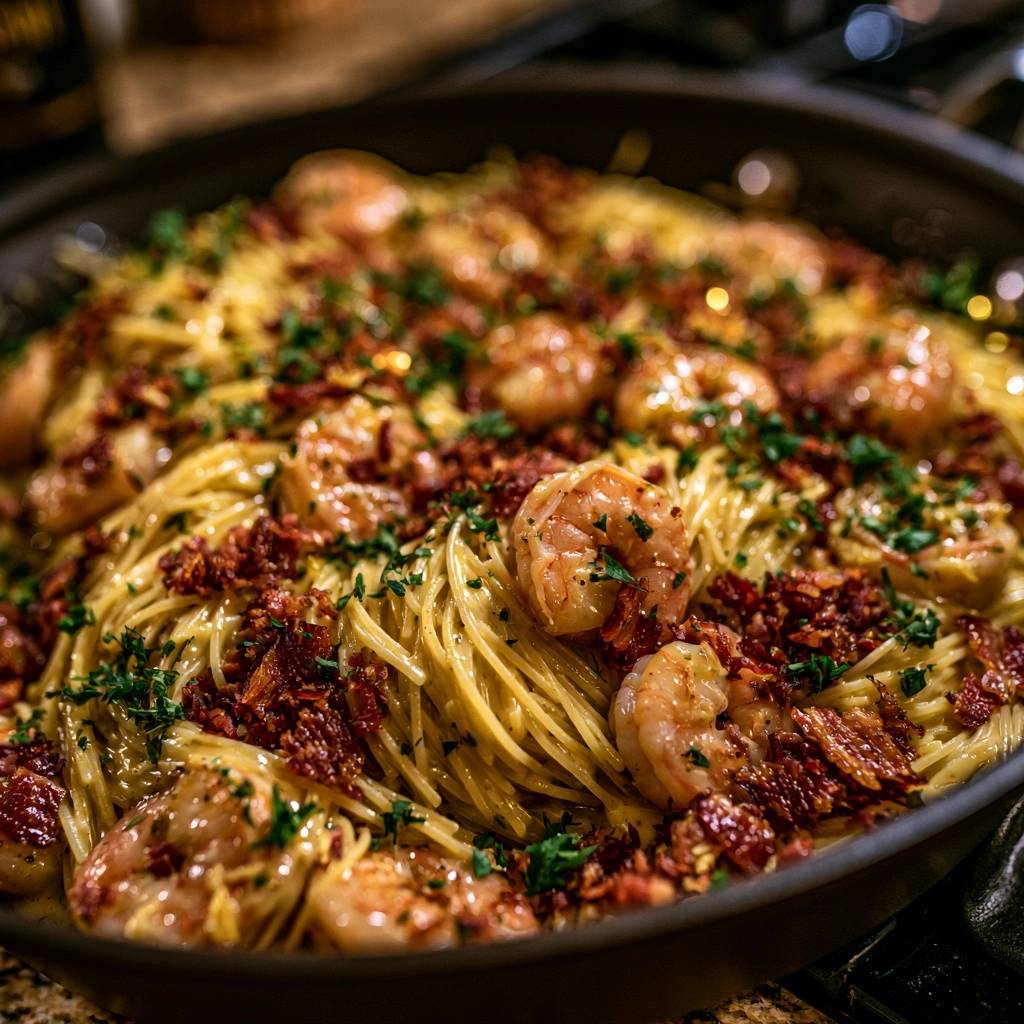
This recipe solves the rubbery shrimp dilemma by using a specific searing technique that prioritizes texture. You’ll get a silky, garlic-heavy cream sauce that clings to every strand of pasta, punctuated by the smoky, shattered crunch of beef bacon. It’s a high-end dining experience that you can actually pull off in your own kitchen in under thirty minutes.
The real trick to success here is moisture management. If your shrimp are wet when they hit the pan, they’ll steam instead of sear, leading to that dreaded chewy texture. I’m going to show you how to prep your ingredients so you get a golden crust on the outside while the inside stays tender and sweet. Let’s get into the details that make this dish a winner.
The Anatomy of Perfect Seafood Pasta
A great pasta dish is a balancing act between salt, fat, and acidity. In this version, we’re building a “surf and turf” profile that uses beef bacon as the foundation. Unlike other proteins, beef bacon provides a deep, savory saltiness and a specific type of fat that carries the garlic flavor beautifully throughout the sauce.
When you render the fat from the bacon, you aren’t just cooking meat; you’re creating a flavored cooking oil. This liquid gold coats the shrimp during the sear and later emulsifies into the heavy cream. The result is a sauce that feels rich but doesn’t taste heavy, thanks to the sharp bite of fresh garlic and the brightness of parsley.
Texture plays a massive role here too. You have the snap of the shrimp, the silkiness of the cream, the bite of al dente pasta, and the final crunch of the bacon bits. Without that contrast, the dish can feel one-dimensional. By layering these elements, you ensure every forkful offers something different to your palate.
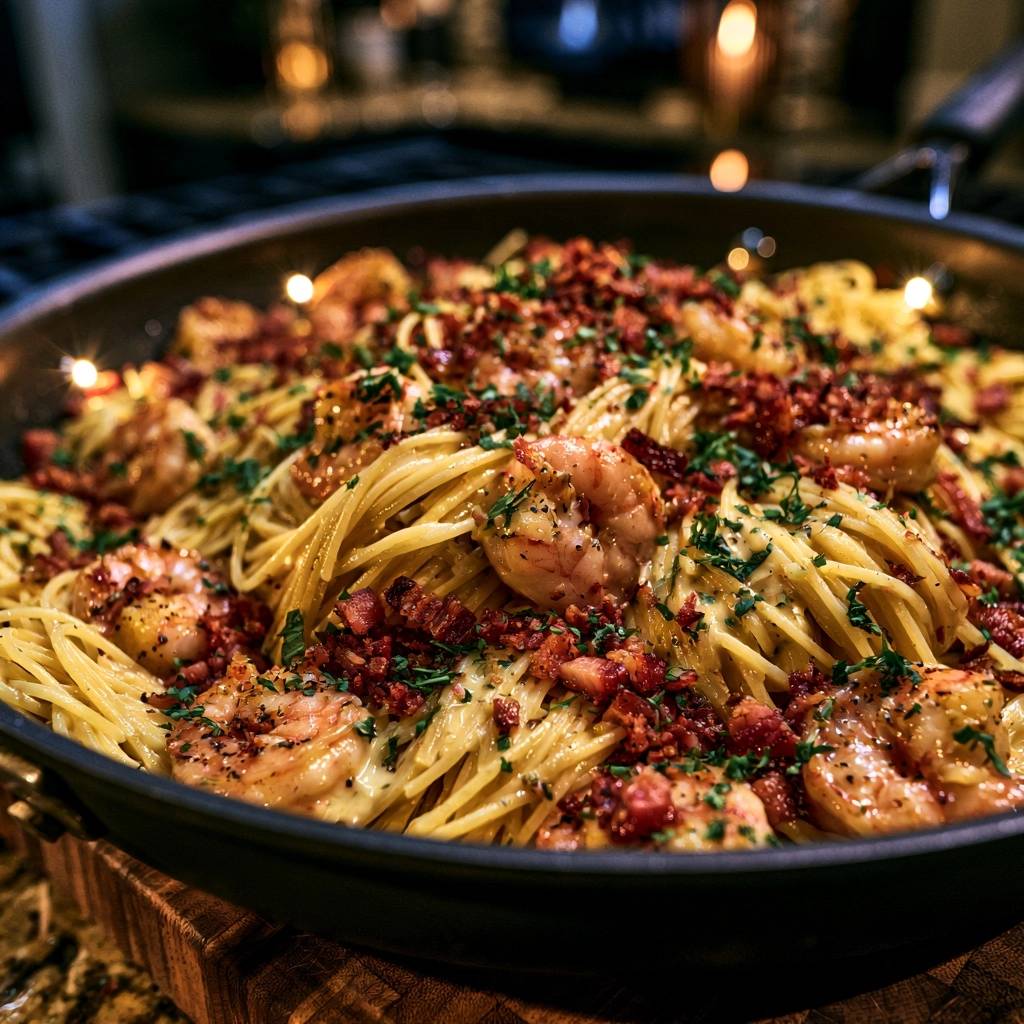
Essential Components for Creamy Garlic Shrimp Pasta
Quality ingredients are the backbone of this recipe. I recommend using large shrimp, specifically the 16/20 count. These are big enough to get a proper sear on the outside without overcooking the center in the few seconds they spend in the pan. Smaller shrimp cook too fast and often turn tough before they even brown.
For the dairy, heavy cream is non-negotiable. It has a fat content of about 36%, which makes it stable under heat. If you try to use half-and-half or milk, the sauce is much more likely to curdle or break when it meets the heat of the pan and the residual salt from the bacon. The fat provides that luxurious mouthfeel we’re looking for.
Finally, let’s talk about the cheese. Please, skip the green shaker bottle. Freshly grated Parmesan cheese contains no anti-clumping agents like cellulose. Those additives prevent the cheese from melting smoothly, which can leave your sauce feeling grainy or sandy. A fresh wedge of Parmesan will melt into a perfectly smooth emulsion every time.
Selecting and Preparing the Shrimp
Buy your shrimp peeled and deveined to save yourself a massive headache during prep. However, even “ready-to-cook” shrimp need a little love. The most important step you can take is to pat them completely dry with paper towels right before they hit the skillet.
Surface moisture is the enemy of the Maillard reaction, which is the chemical process that creates that delicious brown crust. If the shrimp are damp, the heat of the pan will turn that water into steam. Instead of searing, the shrimp will boil in their own juices, resulting in a grey color and a rubbery bite.
The Role of High-Fat Dairy and Hard Cheeses
Heavy cream acts as a thickener and a flavor carrier. Because of its high fat content, it can withstand a gentle simmer without separating. This stability allows you to reduce the sauce until it reaches the perfect consistency—thick enough to coat a spoon but thin enough to flow between the pasta strands.
When you stir in the Parmesan, you’re adding both salt and structure. The proteins in the cheese help bind the cream and the reserved pasta water together. This creates a cohesive sauce that stays on the noodles rather than pooling at the bottom of your bowl.
The Science of Searing Without Overcooking
Shrimp are almost entirely protein and water. When they’re exposed to high heat for too long, those protein fibers tighten up and squeeze out all the moisture, leaving you with a tough, shrunken result. To prevent this, we use a high-heat, short-duration sear.
You only need about 60 to 90 seconds per side. The goal is to see the color change from translucent grey to an opaque, vibrant pink. As soon as they reach that point, get them out of the pan. They will continue to cook slightly from their own internal heat—this is called carry-over cooking.
By removing them early and only adding them back to the sauce at the very last second, you ensure they stay plump. If you let them simmer in the cream sauce while it reduces, they will inevitably become overcooked. Timing is everything when it comes to seafood.
Step-by-Step: Rendering the Beef Bacon
To get the best texture from your beef bacon, start with a cold skillet. If you drop bacon into a hot pan, the outside sears shut before the fat has a chance to melt away. Starting cold allows the fat to render out slowly, which is what makes the bacon truly crispy.
Place the chopped bits in the pan and then turn the heat to medium. As the pan warms up, you’ll see the fat begin to pool. Stir occasionally so the bits brown evenly. You’re looking for a deep, mahogany color and a “shattered” crispness that snaps when you bite it.
Once they’re done, use a slotted spoon to move them to a paper towel-lined plate. Leave that rendered fat in the pan! That fat is packed with smoky flavor and is the perfect medium for searing your shrimp and sautéing your garlic.
Step-by-Step: Achieving the Golden Shrimp Sear
After the bacon is out, crank the heat up to medium-high. You want the pan hot enough that the shrimp sizzle aggressively the moment they touch the surface. If the pan isn’t hot enough, the shrimp will sit there and cook slowly, losing their juices before they ever get a crust.
Don’t crowd the pan. If you put too many shrimp in at once, the temperature of the skillet will drop instantly, and you’ll end up steaming them. Cook in two batches if you have to. It only takes an extra two minutes, and the difference in quality is massive.
Watch for the “C” shape. A perfectly cooked shrimp curls into a gentle “C.” If it curls tightly into an “O,” it’s overcooked. As soon as they look pink and opaque, move them to a clean plate and set them aside while you build the rest of the dish.
Building the Garlic and Cream Emulsion
After searing the shrimp, you’ll notice brown bits stuck to the bottom of the pan. This is called the “fond,” and it’s pure flavor. Lower the heat to medium before adding your garlic. Garlic burns quickly, and burnt garlic tastes bitter, which can ruin the entire sauce.
Sauté the garlic for just 30 seconds until you can smell it, then pour in the heavy cream. Use a wooden spoon to scrape up all those browned bits from the bottom. The cream will deglaze the pan, incorporating all that seared shrimp and bacon flavor directly into the liquid.
Let the cream come to a gentle simmer. You’ll notice it starts to thicken as the water evaporates. Once it can coat the back of a spoon and hold a line when you run your finger through it, you’re ready to add the cheese and finish the dish.
The Importance of Starchy Pasta Water
Before you drain your pasta, scoop out about half a cup of the boiling water. This water is full of starch released by the noodles. Chefs often call this “liquid gold” because it’s the secret to a perfect sauce-to-pasta bond.
When you toss the pasta into the cream sauce, add a splash of this water. The starch acts as an emulsifier, helping the fatty cream sauce stick to the smooth surface of the noodles. Without it, the sauce might slide right off, leaving you with a puddle at the bottom of the plate.
It also helps you adjust the consistency. If the sauce looks too thick or clumpy after you add the Parmesan, a little pasta water will thin it out while keeping it creamy. It’s a simple step that makes a huge difference in the final presentation.
Troubleshooting Common Texture Issues
If your sauce looks oily or separated, it has “broken.” This usually happens if the heat was too high when the cheese was added. Don’t panic! You can often fix this by adding a tablespoon of very hot pasta water and whisking vigorously off the heat to bring the fats back together.
If the dish feels under-seasoned, it’s likely because the shrimp weren’t salted enough before searing. You can add a pinch of salt at the end, but be careful—the bacon and Parmesan are already quite salty. Always taste the sauce before you add the shrimp back in.
If the pasta absorbs all the sauce before you can serve it, simply stir in another splash of cream or pasta water over low heat. Pasta is like a sponge; it will continue to soak up liquid as it sits, so this dish is best served immediately after tossing.
Fixing a Broken Cream Sauce
A broken sauce looks curdled or has pools of oil on top. To fix it, remove the pan from the heat immediately. Add a tiny splash of cold heavy cream and whisk like crazy. The drop in temperature and the fresh emulsifiers in the cold cream can often pull the sauce back into a smooth state.
Softening Overly Chewy Beef Bacon
If your bacon turned out too hard rather than crispy, it might have been cooked at too high a heat. To prevent this next time, keep the heat at a steady medium. If you’re reheating leftovers, keep the bacon separate and pop it in a toaster oven for a minute to regain its crunch without making it tough.
Optimal Pasta Shapes for Heavy Cream Bases
Long, flat noodles like linguine or fettuccine are the traditional choice for creamy sauces. The wide surface area provides plenty of space for the garlic and cream to cling to. Spaghetti also works well, though it’s a bit more delicate.
I generally avoid short shapes like penne or rigatoni for this specific recipe. Those shapes have holes that trap a lot of sauce, which can overwhelm the flavor of the shrimp. You want the pasta to support the seafood, not bury it in a mountain of cream.
Thin linguine is my personal favorite. It has enough body to stand up to the bacon bits but is light enough that the shrimp remains the star of the show. Whichever you choose, make sure to cook it “al dente”—it should still have a slight firm bite in the center.
Side Dish Pairings for Rich Seafood
Because this pasta is so rich and creamy, you want side dishes that offer a sharp contrast. Anything with high acidity or a bit of bitterness will help cleanse your palate between bites. A simple arugula salad with a lemon vinaigrette is a perfect match.
Roasted vegetables also work beautifully. Try charred broccolini with a squeeze of fresh lemon and some red pepper flakes. The slight bitterness of the greens cuts through the heavy cream, making the whole meal feel more balanced and less heavy.
Asparagus is another classic pairing. You can roast it quickly in the oven while you’re boiling the pasta water. The earthy flavor of the asparagus complements the sweetness of the shrimp and the smokiness of the beef bacon perfectly.
Expert Tips for Advanced Flavor Profiles
If you want to take this dish to the next level, try adding a pinch of red pepper flakes when you sauté the garlic. It adds a subtle background heat that balances the richness of the cream. Just a tiny bit is enough to wake up the flavors without making it spicy.
Another great tweak is a dash of smoked paprika. It enhances the smokiness of the beef bacon and gives the sauce a beautiful, slightly golden hue. It adds a layer of depth that makes the dish taste like it’s been simmering for hours instead of minutes.
Finally, always finish with a squeeze of fresh lemon juice right before serving. The acid brightens the fats and makes the garlic pop. It’s that “missing something” that often separates home cooking from professional restaurant meals.
Frequently Asked Questions
Can I use frozen shrimp for this pasta?
Yes, you can definitely use frozen shrimp. The key is to thaw them properly. Place them in a bowl of cold water for about 15 to 20 minutes until they are flexible. Never use a microwave to thaw shrimp, as it will start the cooking process and make them rubbery. Once thawed, pat them extremely dry with paper towels before searing to ensure you still get a good crust.
How do I reheat leftovers without toughening the shrimp?
Reheating seafood pasta is tricky because the microwave will almost always overcook the shrimp. The best way is to do it on the stovetop. Put the pasta in a skillet over low heat and add a splash of milk or cream to loosen the sauce. If you can, pick the shrimp out and set them aside, then add them back in just for the last 30 seconds to warm through. This prevents them from turning into rubber balls.
Is there a substitute for heavy cream?
Heavy cream is the best choice for stability and texture. If you must substitute, you can use whole milk mixed with a little cornstarch, but the sauce won’t be as rich or silky. Avoid using low-fat milk or non-dairy milks like almond or soy, as they often break when combined with the acidic garlic and salty cheese, resulting in a watery, separated mess.
Why is my garlic turning blue or green?
Don’t worry, it’s still safe to eat! This is a natural chemical reaction between the sulfur compounds in the garlic and trace minerals in your water or the acid in the pan. It usually happens with older garlic. To avoid this, use the freshest garlic cloves you can find and don’t store your garlic in the refrigerator, as the cold can trigger the enzymes that cause the color change.
Storage and Meal Prep Guidelines
This dish is best enjoyed fresh, but you can store leftovers in an airtight container in the refrigerator for up to two days. Because shrimp is a delicate seafood, it doesn’t stay at peak quality much longer than that. The sauce will also thicken significantly as it cools, so you’ll need that extra splash of liquid when reheating.
I do not recommend freezing this recipe. Dairy-based sauces often separate and become grainy when frozen and thawed. Additionally, the texture of the shrimp will degrade, becoming mushy or excessively chewy. This is a “cook and eat” kind of meal that shines brightest the moment it leaves the pan.
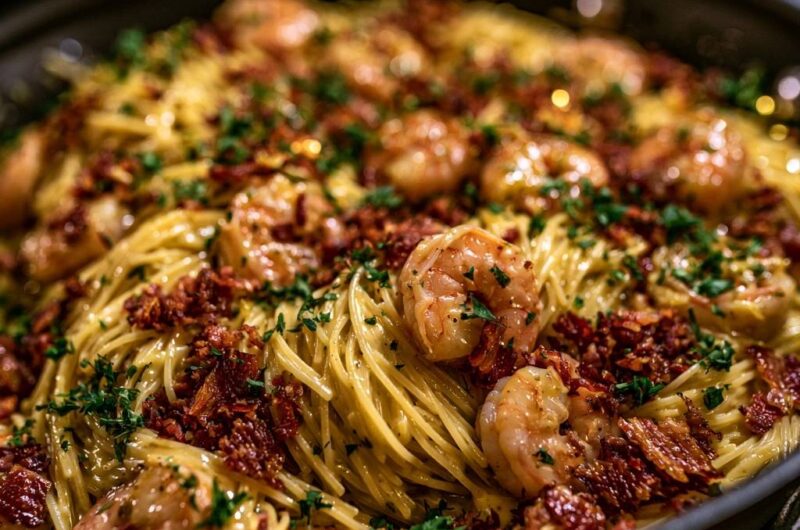
Creamy Garlic Shrimp Pasta with Crispy Bacon
Course: Main CourseCuisine: AmericanDifficulty: easy4
servings10
minutes15
minutes25
Minutes580
kcalAmerican
Ingredients
1 pound large shrimp, peeled and deveined
12 ounces spaghetti or thin linguine
6 slices beef bacon, finely chopped
4 cloves garlic, minced
1 cup heavy cream
1/2 cup grated parmesan cheese
1/4 cup fresh parsley, chopped
1 tablespoon olive oil
Salt and black pepper to taste
Directions
- Bring a large pot of salted water to a boil. Cook the pasta until just shy of al dente. Reserve 1/2 cup of pasta water before draining.
- While the water boils, place the chopped bacon in a large cold skillet. Turn the heat to medium and fry until the fat renders and the bacon is deeply browned and crispy. Remove the bacon with a slotted spoon and set aside on a paper towel.
- To solve the rubbery shrimp problem, increase the skillet heat to medium-high using the remaining bacon fat. Pat the shrimp completely dry with paper towels. Sear the shrimp for only 60 to 90 seconds per side until they just turn pink and opaque. Immediately remove them from the pan to a plate. Do not leave them in the pan while making the sauce or they will toughen.
- Lower the heat to medium. Add the minced garlic to the skillet and saute for 30 seconds until fragrant but not brown. Pour in the heavy cream and bring to a gentle simmer, scraping up the flavorful browned bits from the bottom of the pan.
- Stir in the parmesan cheese until the sauce thickens slightly. Toss in the cooked pasta and the reserved pasta water, coating the strands thoroughly.
- Fold the seared shrimp and half of the crispy bacon back into the pasta just to warm through for 30 seconds.
- Garnish with the remaining crispy bacon and fresh parsley. Serve immediately while the shrimp are at their peak tenderness.
Notes
- To avoid rubbery shrimp, pat them completely dry before searing and remove them from the pan immediately after they turn opaque. Use the reserved pasta water to adjust the sauce consistency as needed.