Mastering Creamy Roasted Mushroom Chicken with Crispy Skin
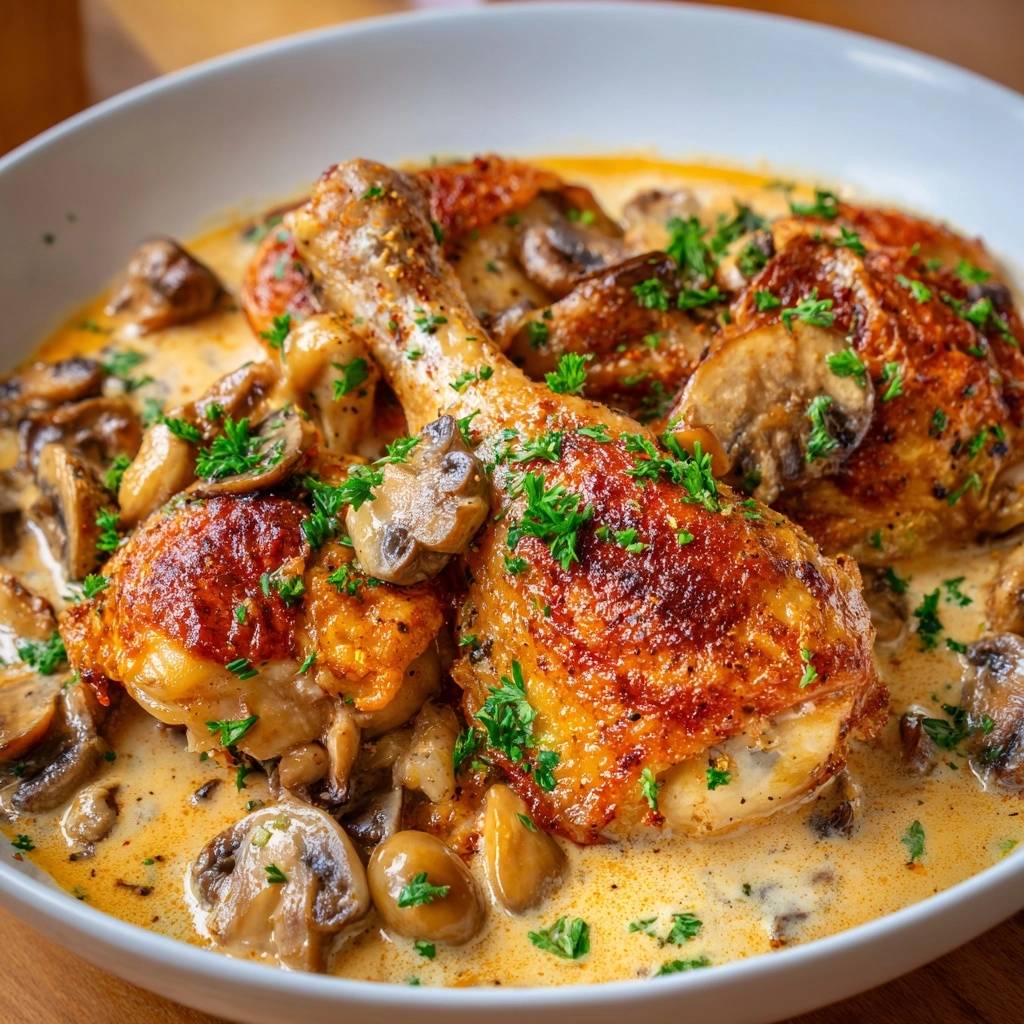
Most creamy chicken recipes share a disappointing secret: the skin is usually a rubbery, pale mess that slides right off the meat. You’ve likely experienced that soggy texture when a sauce completely overwhelms the protein. This Creamy Roasted Mushroom Chicken uses an “Anti-Soggy” philosophy to ensure you never have to choose between a rich sauce and a satisfying crunch again.
The magic lies in the sensory contrast between the mahogany-seared skin and the velvet-textured mushroom reduction. By treating the skin as a structural barrier, we keep the exterior shatteringly crisp while the dark meat braises in a savory pool of cream and garlic. It’s a sophisticated balance of textures that feels like high-end bistro cooking right in your own kitchen.
I’ve found that bone-in, skin-on thighs and drumsticks are the only way to go for this dish. These cuts contain enough fat and connective tissue to stay incredibly juicy during the simmering process. The secret to success is starting with a bone-dry surface; if there’s even a hint of moisture on that skin before it hits the oil, you’ll end up steaming the meat instead of searing it.
The Physics of the Anti-Soggy Searing Technique
Achieving a perfect crust is a matter of chemistry, specifically the Maillard reaction. This is the chemical reaction between amino acids and reducing sugars that gives browned food its distinctive flavor. However, moisture is the enemy of this reaction. If your chicken is damp, the heat of the pan goes into evaporating that water rather than browning the skin.
When you pat the chicken dry with paper towels, you’re removing the barrier to that beautiful mahogany finish. Once the chicken hits the hot oil, the protein fibers in the skin begin to tighten and dehydrate. This creates a rigid, flavorful crust that acts as an insulator for the meat underneath. Without this step, the skin remains flaccid and loses its ability to hold up against the moisture of the sauce later on.
Your choice of cookware also dictates the quality of your sear. A heavy cast-iron skillet or stainless steel pan is essential because they have high heat conductivity and retention. These materials don’t drop in temperature when you add the cold meat, ensuring the fat stays hot enough to fry the skin instantly. This consistent heat is what transforms the skin into a golden, crackling shield that stays crisp even as the bottom of the thigh simmers in cream.
Essential Components for Creamy Roasted Mushroom Chicken
Quality ingredients make the difference between a flat sauce and one with incredible depth. I always recommend using heavy cream rather than milk or half-and-half. The higher fat content in heavy cream makes it naturally stable at high temperatures, meaning it won’t curdle or break when it hits the hot skillet. It creates a luxurious, emulsified coating that clings to the mushrooms and chicken perfectly.
For the mushrooms, skip the basic white buttons and reach for Cremini (often sold as Baby Bellas). Cremini mushrooms have a lower water content and a much deeper umami profile. This means they brown more efficiently and contribute a meatier flavor to the gravy. When they hit the butter, they absorb those fats and then release a concentrated earthy essence that defines the entire dish.
Selecting the Right Poultry Cuts
Drumsticks and thighs are the superior choice here because they are “forgiving” cuts. Unlike chicken breasts, which dry out the moment they hit 165 degrees, dark meat has connective tissue that breaks down into gelatin during the simmer. This process adds body to your sauce and ensures the meat remains succulent and tender even if it stays in the pan a few minutes too long.
The Role of Aromatics and Deglazing Agents
Dried thyme and fresh garlic provide the aromatic backbone of this recipe. When you bloom the thyme in melted butter, the heat releases its essential oils, spreading a woodsy fragrance throughout the fat. Deglazing the pan with a splash of chicken broth is the most critical flavor step. This liquid lifts the “fond”—those caramelized brown bits stuck to the bottom—and incorporates that concentrated chicken essence directly into the cream.
Step-by-Step: Achieving the Perfect Mahogany Sear
Before the chicken ever touches the pan, you need to look for the “shimmer” in your oil. The oil should be thin and moving like water, with tiny wisps of smoke just starting to appear. This high initial heat is what prevents the skin from sticking. If the pan is too cool, the proteins will bond to the metal surface, and you’ll tear the skin when you try to flip it.
Once the chicken is in, you must enter the “patience phase.” Do not poke, prod, or move the pieces for at least 8 minutes. You’ll know it’s ready when the chicken releases naturally from the pan. If you feel resistance when you try to lift it, the crust hasn’t fully formed yet. Wait for that deep, dark mahogany color; it’s the difference between “cooked” chicken and “extraordinary” chicken.
After flipping, you only need a few minutes on the flesh side. We aren’t trying to cook the chicken all the way through at this stage. We are simply building a flavor foundation. The interior will finish cooking later in the sauce, which keeps the meat from becoming tough or stringy. Remove the chicken to a plate and keep it nearby, but don’t cover it with foil, or the trapped steam will soften that crust you just worked so hard to build.
Developing Deep Umami in the Mushroom Reduction
Mushrooms behave like tiny sponges in a hot pan. When you first add them to the butter, they will soak up every drop of fat and look dry. Resist the urge to add more oil! Just let them sit undisturbed for a few minutes. They will eventually release their own moisture, shrink slightly, and then begin to brown in the fat they previously absorbed.
This “undisturbed” method is how you get those crispy, golden edges on the mushrooms rather than a pile of gray, boiled fungi. Once they are browned, add your garlic and thyme. Garlic burns quickly, so it only needs about 60 seconds of heat before you pour in your deglazing liquid. As the liquid bubbles, use a wooden spoon to scrape the bottom of the pan. Those browned bits are pure gold and provide the primary seasoning for your cream sauce.
The Nestling Method: Integrating Sauce Without Softening Skin
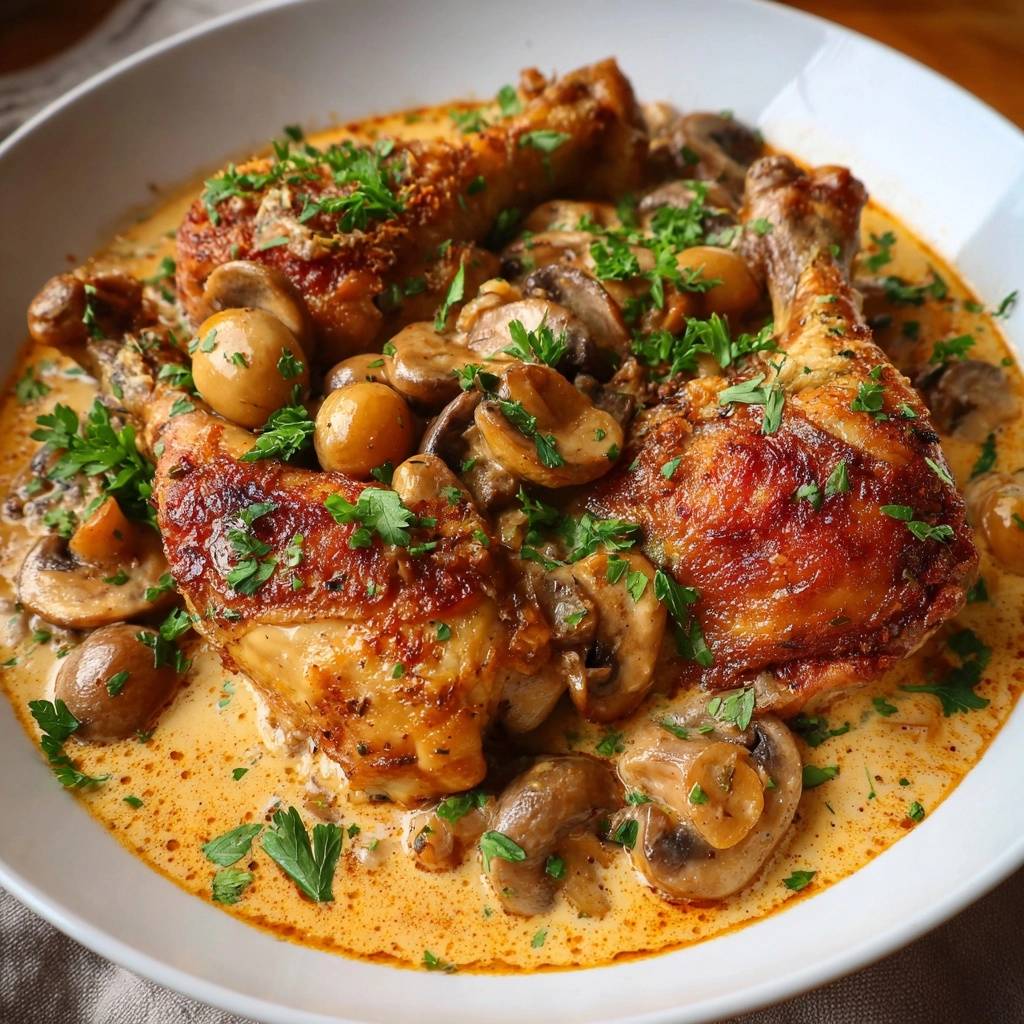
The biggest mistake people make is drowning the chicken in the sauce. To maintain that crunch, you must follow the “Liquid Line” rule. When you return the chicken to the pan, carefully nestle the pieces into the mushrooms so the bottom half of the meat is submerged. The top layer of crispy skin should remain well above the liquid, exposed to the air.
This creates a dual-cooking environment. The bottom of the chicken braises in the flavorful cream, absorbing moisture and aromatics. Meanwhile, the top stays dry, allowing the heat of the pan to keep the skin crisp. It’s a simple bit of thermodynamics that ensures every bite has both a velvety sauce and a satisfying crackle. Keep the simmer gentle; a rolling boil can splash liquid onto the skin and ruin your hard work.
Troubleshooting Common Texture Issues
If your sauce breaks or looks curdled, it’s usually because the heat was too high. Always bring the cream to a gentle simmer, never a violent boil. If it does break, a tiny splash of extra cream and a vigorous stir can sometimes bring it back together. If the skin sticks to the pan during the initial sear, it’s a sign of surface tension issues—either the pan wasn’t hot enough or you tried to move the meat too soon.
Rubbery mushrooms are almost always the result of crowding the pan. If you put too many mushrooms in at once, they steam each other. Cook them in batches if your skillet is small. Finally, if you’re worried about overcooking the meat, use an instant-read thermometer. Pull the chicken when it hits 165 degrees F in the thickest part of the thigh. This ensures the meat is safe but still at its peak juiciness.
Optimal Side Dishes for Creamy Poultry
Because this dish is so rich and savory, you need side dishes that offer a bit of contrast. A thick slice of garlic-rubbed sourdough is perfect for mopping up the extra mushroom gravy. If you prefer pasta, al dente pappardelle provides a wide surface area that catches the sauce beautifully without becoming mushy.
For vegetables, I love something with a bit of char or acidity. Charred broccolini with a squeeze of lemon cuts right through the heavy cream. A simple, bitter arugula salad with a sharp lemon vinaigrette also works wonders. The acidity cleanses your palate between bites, making every forkful of the creamy chicken feel as exciting as the first one.
For a perfect pairing, try our One-Pan Creamy Mushroom Chicken & Rice: Crispy Skin, Juicy Perfection.
Storage and Reheating for Maximum Crispness
If you have leftovers, the microwave is your absolute enemy. It will turn that beautiful crispy skin into a soggy, rubbery mess in seconds. Instead, store the chicken and sauce in an airtight container for up to three days. When you’re ready to eat, use the “Oven-First” reheating method to bring the dish back to life.
Place the chicken on a baking sheet in a 350-degree oven for about 10 to 12 minutes. This high, dry heat recrisps the skin while warming the meat through. You can warm the sauce separately in a small saucepan over low heat. If the sauce has thickened too much in the fridge, just whisk in a splash of chicken broth or water to emulsify it back into a silky consistency before serving.
Expert Tips for Creamy Roasted Mushroom Chicken
Can I use chicken breasts instead of thighs?
You can, but you have to be very careful with the timing. Breasts cook much faster and lack the fat of thighs, so they can become dry and stringy during the 15-minute simmer. I recommend reducing the simmering time and using a thermometer to ensure they don’t go past 165 degrees F.
How do I prevent the garlic from burning during the mushroom sear?
The trick is to wait until the mushrooms are fully browned before adding the garlic. Mushrooms take several minutes to sear, while garlic takes less than a minute to turn bitter and burnt. Add the garlic only when you are about 60 seconds away from adding your liquid.
What is the best substitute for heavy cream to maintain the same viscosity?
If you don’t have heavy cream, the best substitute is a mixture of whole milk and a little bit of cornstarch (a slurry). However, it won’t have the same rich mouthfeel. Coconut cream is another option, though it will significantly change the flavor profile of the dish.
Why is my sauce too thin after the 15-minute simmer?
If the sauce is too thin, it likely didn’t reduce enough before you added the chicken back in. You can remove the chicken and turn the heat up to medium-high for 2-3 minutes to boil off excess moisture. The sauce should be thick enough to coat the back of a spoon.
Can I use fresh thyme instead of dried?
Absolutely! Fresh thyme is wonderful in this dish. Since dried herbs are more concentrated, use about three times the amount of fresh thyme. Strip the leaves off the woody stems and add them at the same time you would add the dried version.
How do I store leftovers and does this freeze well?
Store leftovers in an airtight container in the refrigerator for up to 3 days. I do not recommend freezing this dish. Cream-based sauces often separate and become grainy when frozen and thawed, and the chicken skin will lose all of its characteristic crunch.
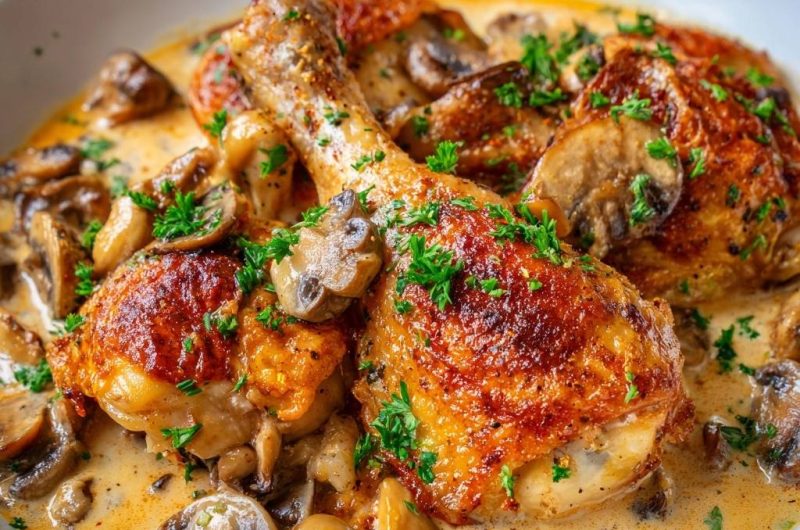
Creamy Roasted Mushroom Chicken
Course: Main CourseCuisine: AmericanDifficulty: medium4
servings15
minutes35
minutes485
kcal50
MinutesThis recipe solves the problem of soggy skin in creamy chicken dishes by using a specific searing method and late-stage sauce integration to maintain a golden-brown crunch while the chicken simmers in a savory mushroom and cream sauce.
Ingredients
4 bone-in, skin-on chicken thighs and drumsticks
1 pound cremini mushrooms, sliced
3 tablespoons olive oil
4 tablespoons unsalted butter
1 cup heavy cream
1/2 cup chicken broth
4 cloves garlic, minced
1 teaspoon dried thyme
1/2 teaspoon paprika
Salt and fresh cracked black pepper to taste
Fresh parsley, finely chopped for garnish
Directions
- Pat the chicken skin completely dry with paper towels. This is the most important step for crunch. Season generously with salt, pepper, and paprika on both sides.
- Heat olive oil in a large, heavy cast-iron skillet or stainless steel pan over medium-high heat. Place chicken skin-side down. Do not move it for 8 to 10 minutes. This creates the “Anti-Soggy” barrier. Once the skin is deep mahogany and releases easily from the pan, flip and cook for 4 minutes. Remove chicken to a plate.
- In the same pan, melt the butter. Add mushrooms and cook undisturbed for 3 to 5 minutes to develop a deep golden sear. Stir in the garlic and thyme, cooking for 1 minute until fragrant.
- Pour in a splash of chicken broth to deglaze the pan, scraping up all the flavorful brown bits (fond) from the bottom.
- Stir in the heavy cream and bring to a gentle simmer. Let the sauce reduce for 3-4 minutes until it begins to thicken slightly.
- To keep the skin crispy, do not submerge the chicken. Carefully place the chicken pieces back into the pan, nestling them into the mushrooms, but ensuring the top skin layer remains well above the liquid line.
- Reduce heat to medium-low and simmer for 10 to 15 minutes until the chicken reaches an internal temperature of 165 degrees F.
- Spoon the creamy mushroom sauce around the chicken pieces into a shallow bowl, ensuring the crispy skin remains exposed. Garnish heavily with fresh parsley and serve immediately while the skin is at peak crispness.
Notes
- To keep the skin crispy, do not submerge the chicken in the sauce; ensure the top skin layer remains above the liquid line during the final simmer.