Mastering Slow-Simmered Southern Baked Beans
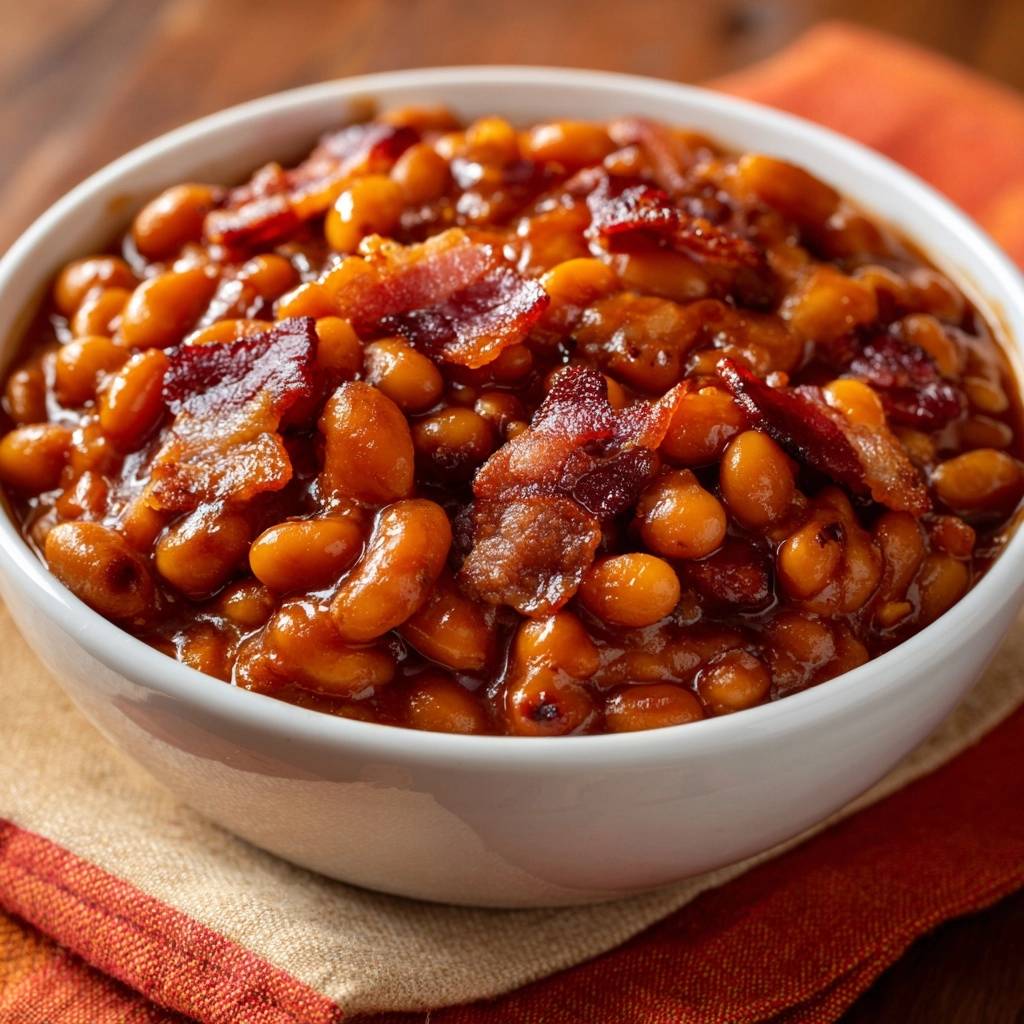
Imagine a backyard barbecue where the ribs are tender and the brisket is smoky, but everyone is talking about the side dish. That is the power of truly great Slow-Simmered Southern Baked Beans. Most home versions fall short because they end up as a soupy, watery mess that runs all over your plate and soaks into your potato salad. You want a sauce that is thick, syrupy, and clings to every single bean with a glossy finish that looks like it came straight from a professional smokehouse.
The secret to that legendary texture isn’t a mystery; it is all about managing moisture and starch. By ditching the lid and using a specific two-stage baking process, we transform a simple can of beans into a rich, jam-like masterpiece. You are looking for that deep mahogany color and a sauce that moves like warm honey. This recipe focuses on building layers of flavor, starting with rendered bacon fat and ending with a high-heat caramelization that seals the deal.
I’ve found that the biggest mistake people make is adding extra liquid like water or broth. You might think the beans need it to stay moist, but the onions and sugars provide all the hydration necessary. The goal is to reduce the sauce, not dilute it. When you follow this method, you’ll notice the starches from the beans naturally thicken the liquid as it simmers, creating a velvety mouthfeel that no “quick” recipe can replicate.
The Science of a Thick Bean Glaze
Achieving a professional-grade glaze is a lesson in evaporation and concentration. When you bake these beans uncovered, you allow the water content in the ketchup and vinegar to escape as steam. Therefore, the sugars from the molasses and brown sugar become more concentrated, increasing the viscosity of the sauce. This process is what creates that “sticky” quality that defines authentic Southern BBQ beans.
Furthermore, the beans themselves play a structural role. As they heat up, they release a small amount of natural starch into the surrounding liquid. This starch acts as a natural thickener, binding the fats from the bacon with the sugars in the sauce. If you were to trap that moisture under a lid, the sauce would remain thin and the flavors would stay muted. By leaving the pot open, you are essentially creating a reduction right in your oven.
Viscosity is also heavily influenced by your choice of sweeteners. Molasses is a heavy hitter here because it is naturally thick and contains minerals that add a complex, slightly bitter edge to balance the sugar. This thickness ensures the sauce doesn’t just sit at the bottom of the pan but actually coats the beans. When you see those slow, lazy bubbles popping on the surface toward the end of the cook time, you know the reduction is complete.
Essential Components for Southern Baked Beans
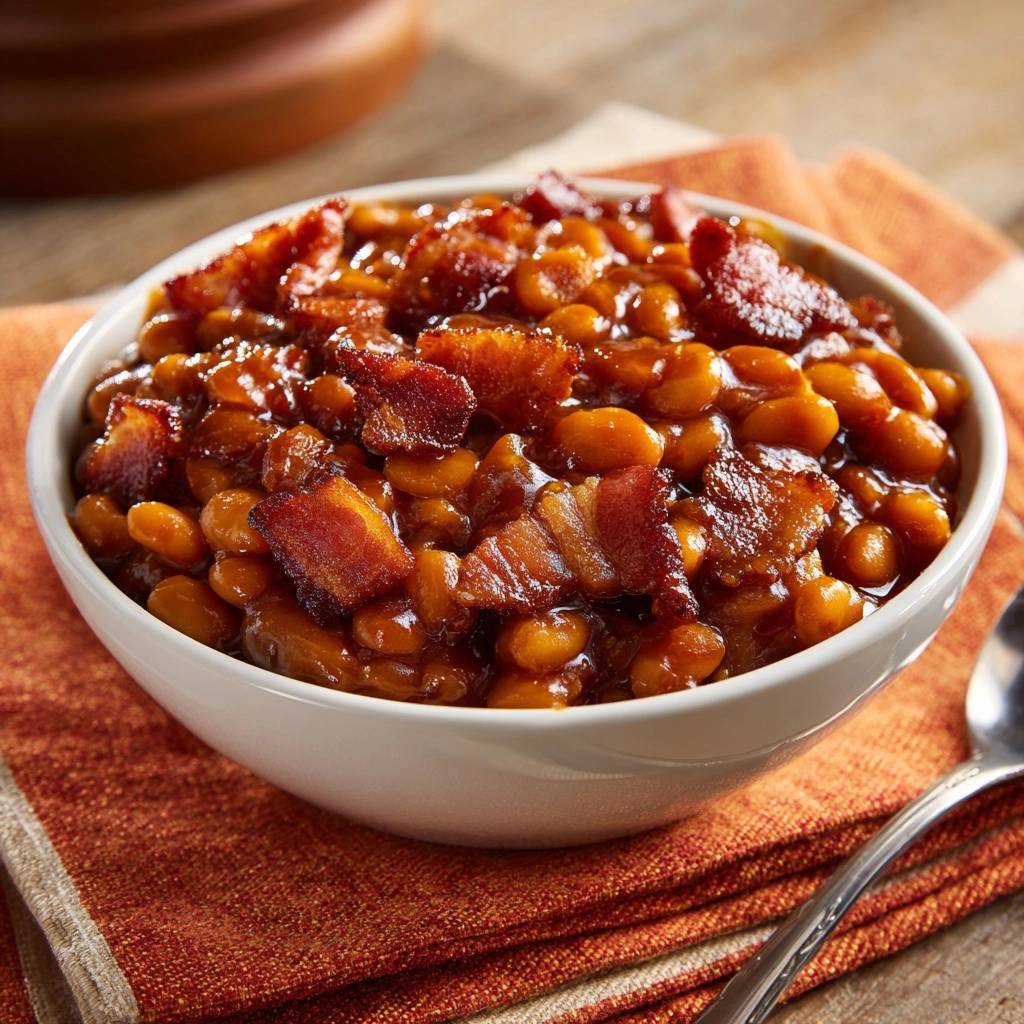
A balanced Southern bean sauce relies on a specific “Holy Trinity” of flavors: acid, sugar, and umami. The apple cider vinegar provides the necessary brightness to cut through the heavy sugars. Meanwhile, the molasses and dark brown sugar offer a deep, earthy sweetness. Finally, the Worcestershire sauce and bacon bring the savory umami punch that keeps the dish from tasting like a dessert.
Navy beans are the gold standard for this dish because of their size and texture. They are small enough to ensure a high sauce-to-bean ratio in every spoonful, yet they are sturdy enough to hold their shape during an hour of baking. Their high starch content is the secret weapon for that creamy interior that contrasts so well with the sticky glaze.
Selecting the Right Canned Bean Base
While some purists start with dried beans, high-quality canned navy beans are a fantastic time-saver that yields excellent results. However, you must drain and rinse them thoroughly before starting. The liquid inside the can is often loaded with excess salt and metallic-tasting preservatives that can ruin your carefully balanced sauce. Rinsing gives you a “blank slate” to control the sodium and texture perfectly.
The Role of Aromatics and Spices
Finely dicing your yellow onion is a small step that makes a massive difference. You want the onion to melt into the sauce rather than having large, crunchy chunks. Additionally, smoked paprika is your best friend in this recipe. It provides that “just-stepped-out-of-the-smoker” aroma and flavor without requiring you to actually tend a fire for eight hours.
Step-by-Step: Achieving the Perfect Reduction
The journey to perfect beans starts with the foundation of flavor. You’ll begin by rendering your bacon in a heavy skillet or Dutch oven. This isn’t just about the meat; it’s about the liquid gold (the fat) left behind. That fat is what gives the sauce its glossy sheen and rich mouthfeel. If you skip this and use oil, you’ll lose that signature Southern depth.
Rendering Fat and Sautéing Aromatics
Cook your chopped bacon over medium heat until it is crispy and the fat has completely melted out. Use a slotted spoon to remove exactly half of those crispy bits. Set them aside on a paper towel; if you leave them all in the pot, they will get soggy during the long bake. By saving half for the end, you guarantee a salty, crunchy topping that contrasts beautifully with the soft beans.
Next, toss your onions into that hot bacon fat. You aren’t looking to brown them deeply, but rather to get them translucent and soft. This takes about five minutes. As they cook, they release their natural sugars, which mingle with the bacon fat to create a savory base for your sauce. You’ll smell a sweet, oniony aroma that signals they are ready for the next step.
Building the Mother Sauce
Now, you’ll whisk in your ketchup, molasses, sugar, and spices. It is vital to stir these together until the brown sugar is completely dissolved. If you add the beans too early, the sugar might stay grainy. Once the sauce is smooth and starts to bubble gently, fold in your beans. The mixture might look a bit thick at this stage, but don’t be tempted to add water! The onions will continue to release moisture as they bake.
The Two-Stage Uncovered Baking Method
The first stage of baking happens at 350°F for 45 minutes. This is the “reduction phase” where the sauce thickens and the flavors marry. Because the pot is uncovered, the top layer will start to darken. After 45 minutes, take them out and give them a good stir. This redistributes the heat and ensures the beans on the bottom get some of that caramelization action too.
For the second stage, sprinkle those reserved bacon bits on top and crank the heat to 400°F. This final 10-15 minute “blast” is the secret to the jam-like consistency. The high heat quickly caramelizes the sugars on the very top, creating a crust-like layer of flavor. When you pull them out, the sauce should be bubbling vigorously and look dark, rich, and incredibly thick.
Troubleshooting Common Baked Bean Issues
Even the best cooks run into trouble sometimes. If you find your beans are still a bit too liquidy after the first 45 minutes, don’t panic. Simply extend the second baking stage by five or ten minutes. The extra time at 400°F will force more evaporation. Just keep a close eye on them so the sugars don’t burn, as they can go from caramelized to scorched very quickly.
Fixing a Thin or Runny Sauce
If you accidentally added water or used beans that weren’t drained well, you can salvage the dish. You could use a small cornstarch slurry (one teaspoon cornstarch mixed with one teaspoon cold water), but it’s better to just keep reducing. A longer bake time is always the preferred method because it deepens the flavor while thickening the texture, whereas thickeners can sometimes dull the taste.
Balancing Excessive Sweetness or Acidity
Sometimes a batch of molasses is stronger than usual, or your ketchup is particularly sweet. If the sauce feels too heavy, add a teaspoon of apple cider vinegar at the very end. The extra acid will brighten the dish immediately. Conversely, if it’s too tangy, a tiny pinch of salt can help neutralize the sharp vinegar notes and bring the sweetness back into balance.
Equipment: Why the Dutch Oven Wins
While you can use a standard baking dish, a cast-iron Dutch oven is the superior choice for baked beans. Cast iron retains heat better than glass or ceramic, which means the beans cook evenly from all sides. This consistent heat is crucial for the slow breakdown of starches and the steady reduction of the sauce. It prevents “hot spots” that could burn the sugars on the bottom of the pan.
Additionally, the wide surface area of a Dutch oven or a large oven-safe skillet is a major advantage. A deeper, narrower pot limits the surface area exposed to the air, which slows down evaporation. A wider pan allows more steam to escape quickly, leading to a better glaze. If you use a deep pot, you might find the beans at the bottom stay watery while the top gets too dry.
Make-Ahead Strategies and Storage
Baked beans are one of those rare dishes that actually taste better the next day. As they sit in the fridge, the starches continue to set and the flavors of the spices penetrate deeper into the beans. If you are cooking for a party, feel free to make these a day in advance. Just be sure to let them cool completely before covering them to prevent condensation from thinning out your perfect sauce.
When it comes to reheating, the oven is your best friend. Place them back in a 350°F oven until they are bubbly. If the sauce has become too thick in the fridge, you can stir in a tiny splash of water before reheating to loosen it up. Avoid the microwave if possible, as it can heat the sugars unevenly and cause “explosions” or tough, chewy beans.
Pairing Your Slow-Simmered Southern Baked Beans
These beans are incredibly rich and sweet, so they need a partner that can stand up to that intensity. Smoked beef brisket or pulled chicken are classic choices. The savory, salty meat balances the sugary glaze of the beans perfectly. For a complete Southern plate, add a side of creamy coleslaw. The cold, crunchy cabbage and tangy dressing provide a much-needed “bright” contrast to the warm, heavy beans.
For a perfect pairing, try our Southern Pecan Baked Beans with Crunchy Topping.
Cornbread is another non-negotiable pairing. Use a piece of crusty, buttery cornbread to swipe up every last drop of that syrupy sauce. Because these beans have a lot of personality, you don’t need many other sides. A simple green salad with a vinaigrette or some grilled corn on the cob will round out the meal without competing for attention.
Expert Tips for Recipe Success
1. Use “Dark” or “Full Flavor” molasses rather than light. The darker version has a more robust, smoky profile that is essential for that deep Southern color and a sauce that isn’t just “sweet” but has real character.
2. Do not skip the 10-minute rest after taking the beans out of the oven. This is when the starches fully “lock in.” If you serve them piping hot, the sauce might still seem a little loose, but it will thicken significantly as it drops a few degrees.
3. If you are doubling the recipe for a crowd, use two separate pans rather than one giant deep pot. This maintains the correct surface-area-to-volume ratio so your sauce reduces at the same rate as the original recipe.
4. Watch for the “jam-like” bubble. Toward the end of the 400°F bake, the bubbles should be large and slow to pop. This is a visual cue that the water has evaporated and you are left with a concentrated, syrupy glaze.
How should I store leftovers?
Store your leftover baked beans in an airtight container in the refrigerator for up to 4 to 5 days. They actually thicken even more as they chill, so don’t be surprised if they look like a solid mass the next morning. When you’re ready to eat, reheat them slowly on the stovetop or in the oven. You can add a tablespoon of water if the sauce is too thick to stir. These beans also freeze surprisingly well for up to 3 months, though the texture of the beans may soften slightly upon thawing.
Why is my sauce still runny after baking?
The most common reason for a runny sauce is either not draining the canned beans well enough or baking with a lid on. If you followed the recipe and it’s still thin, your oven temperature might be running low. You can fix this by continuing to bake at 400°F for an extra 10 minutes. Remember that the sauce will also thicken significantly as it cools during the 10-minute resting period, so don’t judge the final thickness while it’s still boiling hot.
Can I use a different type of bean?
Yes, you can substitute Great Northern beans or pinto beans if you can’t find navy beans. Great Northern beans are slightly larger and creamier, while pinto beans have a bit more of an earthy flavor. However, avoid using very large beans like Kidney or Lima beans, as they won’t release enough starch to create that specific syrupy glaze we are looking for. Regardless of the bean you choose, make sure to rinse them well to remove the canning liquid.
What can I use instead of molasses?
If you don’t have molasses, you can substitute it with an equal amount of honey or maple syrup, but keep in mind the flavor will change. Molasses provides a specific deep, slightly bitter “burnt sugar” note that is hard to replicate. If you use maple syrup, the beans will be much sweeter and thinner, so you might need to bake them for an extra 5 to 10 minutes to achieve the same thickness. Adding an extra tablespoon of dark brown sugar can also help mimic the color.
Is a Dutch oven really necessary?
While a Dutch oven is the best tool for the job due to its superior heat retention, you can use a deep 12-inch oven-safe skillet or a 9×13-inch ceramic baking dish. The key is the surface area. If you use a very deep, narrow casserole dish, the moisture won’t evaporate as quickly, and you’ll likely end up with a thinner sauce. If using a ceramic dish, you’ll need to sauté the bacon and onions in a separate pan first, then transfer everything to the dish for baking.
How do I make these beans extra smoky?
If you want a more intense “pit” flavor, you can add a few drops of high-quality liquid smoke to the sauce before baking. Another trick is to use smoked black pepper or a bit of extra smoked paprika. If you have access to a grill or smoker, you can even do the entire baking process outside at 350°F. The beans will absorb the natural wood smoke as the sauce reduces, resulting in an incredibly deep, authentic barbecue flavor.
Baked Beans
Course: Side DishCuisine: AmericanDifficulty: medium8
servings10
minutes1
hour310
kcal70
MinutesA foolproof recipe for Southern-style baked beans that focuses on a thick, jam-like sauce and crispy bacon topping. By using a specific reduction technique and baking uncovered, these beans achieve a professional BBQ quality without the common issue of runny liquid.
Ingredients
56 ounces canned navy beans, drained and rinsed
1/2 pound thick-cut bacon, chopped
1 small yellow onion, finely diced
1 cup ketchup
1/2 cup dark brown sugar, packed
1/4 cup molasses (for deep color and viscosity)
1/4 cup apple cider vinegar
2 tablespoons yellow mustard
1 tablespoon Worcestershire sauce
1 teaspoon smoked paprika
1/2 teaspoon black pepper
1/2 teaspoon garlic powder
Directions
- Preheat your oven to 350 degrees F.
- In a large oven-safe skillet or Dutch oven over medium heat, cook the chopped bacon until it is fully rendered and crisp. Use a slotted spoon to remove half of the crispy bacon bits and set them aside on a paper towel for the final topping.
- In the remaining bacon fat, add the diced onions and saute for 5 minutes until translucent and slightly caramelized. This fat base is essential for a glossy, thick sauce.
- Stir in the ketchup, brown sugar, molasses, vinegar, mustard, Worcestershire sauce, paprika, pepper, and garlic powder. Bring the mixture to a gentle simmer, whisking to ensure the sugar is fully dissolved.
- Fold in the drained beans. To solve the watery sauce problem, do not add extra water or broth. The moisture from the onions and the sugars in the sauce are sufficient.
- Bake uncovered for 45 minutes. Baking without a lid is the critical step that allows excess moisture to evaporate, concentrating the sugars into a thick glaze.
- Remove from the oven briefly. Stir the beans once, then sprinkle the reserved crispy bacon bits evenly over the top. Increase the oven heat to 400 degrees F.
- Return to the oven for the final 10-15 minutes. This high-heat blast caramelizes the top layer and ensures the sauce reaches a perfect, jam-like consistency that stays thick even as it cools.
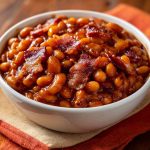
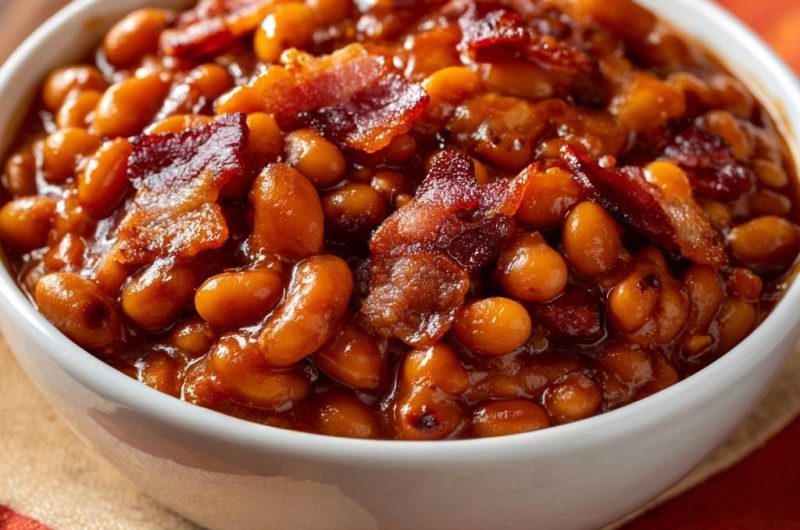
- Remove from the oven and let sit for 10 minutes before serving. This resting period allows the starches to fully set, guaranteeing the perfect texture shown in the image.
Notes
- Baking uncovered is the critical step to prevent a watery sauce. The final 10 minute rest period is essential for the starches to set and achieve the perfect consistency.