Mastering Creamy Spicy Garlic Ramen: The Emulsion Method
Imagine walking into a bustling ramen shop in Tokyo, where the air is thick with the scent of toasted garlic and simmering broth. You take that first sip, and it’s not just salty water; it’s a velvety, rich experience that coats your tongue and warms you to your core. Most home cooks struggle to recreate that depth, often settling for the thin, watery broth that comes from a standard instant packet.
The secret to achieving that restaurant-quality mouthfeel doesn’t require boiling bones for twelve hours. Instead, it relies on a clever emulsion technique that transforms humble pantry staples into a luxurious soup base. By combining specific fats and proteins before adding your liquid, you create a broth that is opaque, creamy, and incredibly satisfying.
The real trick to this recipe is the temperature of your egg. Always use a room-temperature egg because it emulsifies much more easily with the mayonnaise and hot water. If the egg is straight from the fridge, it can shock the mixture and prevent that frothy, uniform texture we’re looking for. Let’s dive into how you can turn a three-minute meal into a gourmet masterpiece.
The Anatomy of a Rich Ramen Broth
A great bowl of ramen is built on layers of flavor and texture. In traditional cooking, the “creamy” factor usually comes from collagen and fat rendered out of marrow over several hours. However, we can achieve a similar structural integrity by creating a stable emulsion right in the serving bowl.
This recipe uses a “Tare” or flavor base, which acts as the soul of the soup. When you whisk the concentrated seasoning with fats like mayonnaise and egg yolk, you’re building a foundation that can hold onto the noodle water. This interaction prevents the water from feeling “thin” and instead gives it a heavy, satisfying body that clings to every strand of noodle.
Why Japanese Mayonnaise is Non-Negotiable
You might be tempted to grab a jar of standard American mayo, but Japanese mayonnaise, specifically Kewpie, is a different beast entirely. While Western versions use whole eggs and soybean oil, Kewpie uses only egg yolks and a blend of vinegars like rice or apple cider. This results in a much higher fat content and a deeper yellow color.
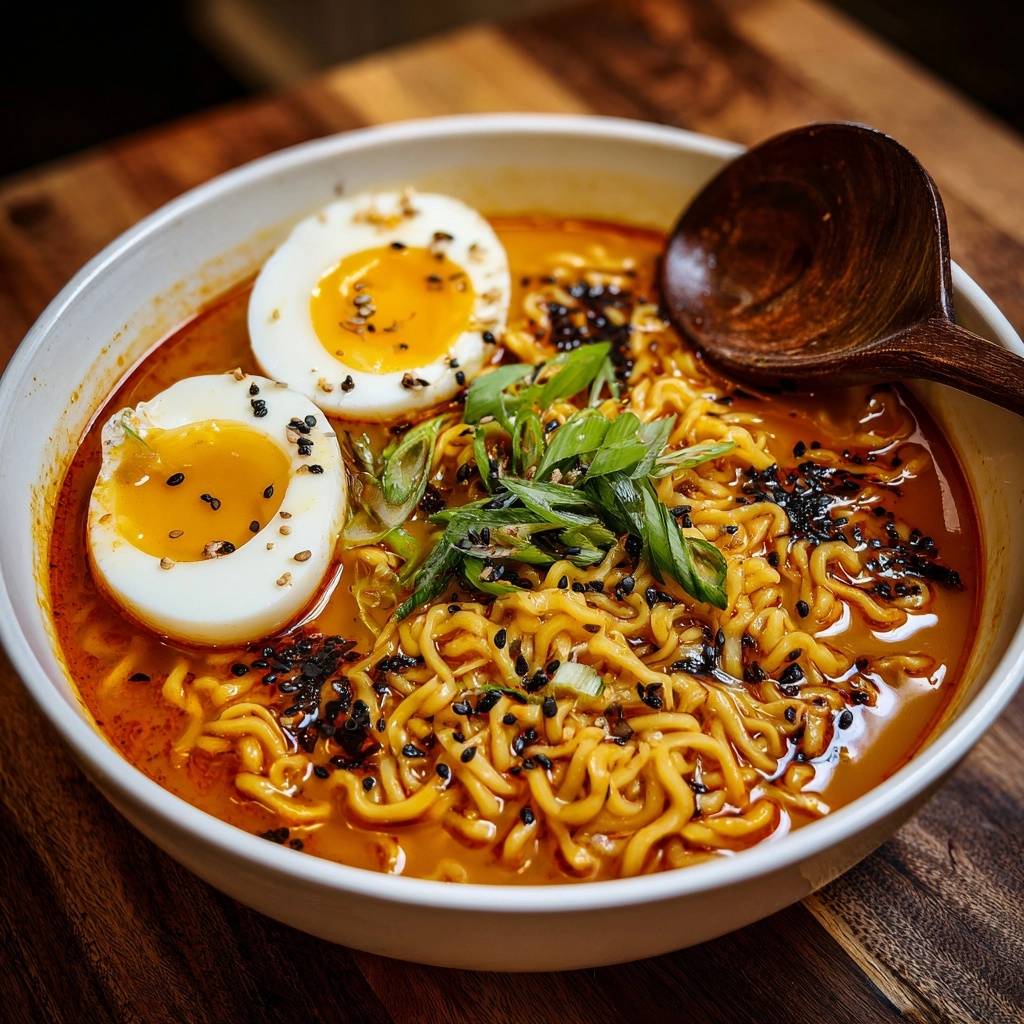
Furthermore, Japanese mayo contains a touch of MSG and a unique spice blend that provides an immediate umami punch. These emulsifiers are what allow the broth to become so thick and “lip-smacking.” It provides the richness that usually takes hours to develop in a traditional tonkotsu, acting as a shortcut to high-end flavor without the wait.
The Role of Fresh Grated Garlic
Garlic is the aromatic backbone of this dish, but you must use fresh cloves. Pre-minced garlic from a jar often sits in citric acid, which dulls the flavor and adds a sour note that ruins the creaminess of the broth. When you grate a fresh clove, you rupture the cells and release allicin, the compound responsible for that pungent, spicy kick.
Don’t worry about the garlic being too “raw” or overpowering. The beauty of this method is that the boiling noodle water partially cooks the garlic as you whisk it into the emulsion. This mellows the sharp bite into a sweet, aromatic warmth that permeates the entire bowl without leaving you with a harsh aftertaste.
Essential Components for Creamy Spicy Garlic Ramen
While the technique is the star, your ingredients need to be high quality to stand up to the bold flavors. Start with a spicy instant ramen variety, as the seasoning packet provides the necessary salt and capsaicin backbone. These packets are specifically engineered to balance with water, so they provide a reliable flavor profile that we can then enhance.
The noodles themselves matter just as much as the soup. Look for wheat-based noodles that feel dense in the package. If you can find air-dried noodles rather than the standard deep-fried ones, you’ll get a cleaner taste and a better “chew.” The goal is a noodle that stays bouncy and firm, providing a textural contrast to the silky, heavy broth.
Selecting the Right Chili Oil
Not all chili oils are created equal, and for this ramen, you want one with plenty of “sediment” or chili crisp. These flakes of fried garlic, onion, and peppers add tiny bursts of texture and heat throughout the meal. The oil itself acts as a carrier, spreading fat-soluble flavors across your palate so you taste the spice in every corner of your mouth.
If you prefer a cleaner heat, a standard chili oil works, but the “crisp” varieties add a smoky depth that complements the fresh garlic perfectly. Since we aren’t using beef or alcohol, this oil provides the necessary complexity and “funk” that makes the dish feel authentic and layered.
Step-by-Step: Building the Creamy Emulsion
The technical heart of this recipe happens in your serving bowl before the noodles even finish cooking. You’ll combine the raw egg, Japanese mayo, grated garlic, chili oil, and the seasoning packet into a concentrated slurry. Whisk this mixture vigorously with a fork until it changes color, becoming a pale, frothy orange.
This step is vital because you are pre-mixing the fats and proteins. By creating a smooth paste first, you ensure that when the water hits the bowl, it integrates immediately rather than clumping. You’re looking for a consistency that looks almost like a thick salad dressing before any liquid is added.
Tempering the Egg to Prevent Scrambling
The biggest fear most people have is ending up with a bowl of egg drop soup. To avoid scrambled bits in your broth, you must “temper” the egg mixture. This means you slowly raise the temperature of the egg by drizzling in about half a cup of the boiling noodle water while whisking constantly with your other hand.
As you whisk, the mixture will begin to foam and turn into a rich, opaque liquid. Once that first half-cup is fully incorporated and smooth, you can safely pour in the rest of the water. This gradual process stabilizes the proteins in the egg, allowing them to thicken the soup without solidifying into chunks.
Timing the Noodle Boil for Maximum Bounce
Timing is everything when it comes to the noodles. You want to cook them for exactly three minutes in boiling water. This leaves them slightly underdone, or “al dente,” which is crucial because they will continue to soften once they are submerged in the hot, creamy broth.
If you appreciate the careful timing for tender noodles, the same precision gives these silky pumpkin deviled eggs their smooth texture.
If you overcook them in the pot, they will become mushy and lose their ability to hold onto the soup. A firm, bouncy noodle provides the perfect structural element to cut through the richness of the garlic and mayo base. As soon as that timer hits three minutes, get those noodles into the bowl immediately.
Troubleshooting Thin or Broken Broth
If your broth looks thin or separated, it usually means the water wasn’t hot enough or the whisking wasn’t vigorous enough. The water must be at a rolling boil when it hits the egg mixture to trigger the thickening process. If it’s just simmering, the emulsion won’t hold, and you’ll lose that velvety texture.
Don’t panic if it looks a little broken! You can often save the broth by using a handheld milk frother for ten seconds. The high-speed aeration will force the fats and water back together, creating that beautiful froth. Just be sure to do this before you add the noodles so you don’t break them apart.
Flavor Variations and Ingredient Swaps
This recipe is a fantastic canvas for customization. If you want a “Tantanmen” style twist, try adding a tablespoon of tahini or unsweetened peanut butter to the base mixture. This adds a nutty, earthy depth that pairs beautifully with the chili oil and garlic, making the broth even thicker and more savory.
You can also easily adjust the spice level without thinning out the soup. If the seasoning packet isn’t enough, whisk in a teaspoon of gochujang or a few drops of hot sauce into the initial paste. Because the base is so creamy, it can handle a lot of heat while still remaining balanced and palatable.
Vegetarian and Protein-Rich Additions
To make this a more substantial meal, consider adding toppings that play well with garlic. Pan-seared tofu cubes or a handful of canned corn add great texture and sweetness. Steamed bok choy or sautéed spinach are also excellent choices, as they provide a fresh, crisp contrast to the heavy broth.
Since we are avoiding pork, these vegetable additions keep the dish light yet filling. Just remember to prepare your toppings before you start the noodles. This ramen is best served the second it’s assembled, so you don’t want to be chopping vegetables while your noodles are getting soggy in the bowl.
The Art of the Soft-Boiled Ramen Egg
No bowl of ramen is complete without a jammy, soft-boiled egg. To get that perfect consistency, lower room-temperature eggs into boiling water and cook for exactly six and a half minutes. Immediately move them to an ice bath to stop the cooking process, which ensures the yolk stays liquid and bright orange.
The magic happens when you slice the egg and place it on top of the hot noodles. As you eat, the jammy yolk slowly dissolves into the broth, adding even more richness to the soup. It’s a small detail that makes the entire experience feel like it came from a high-end kitchen rather than your own stove.
Expert Tips for Restaurant-Style Presentation
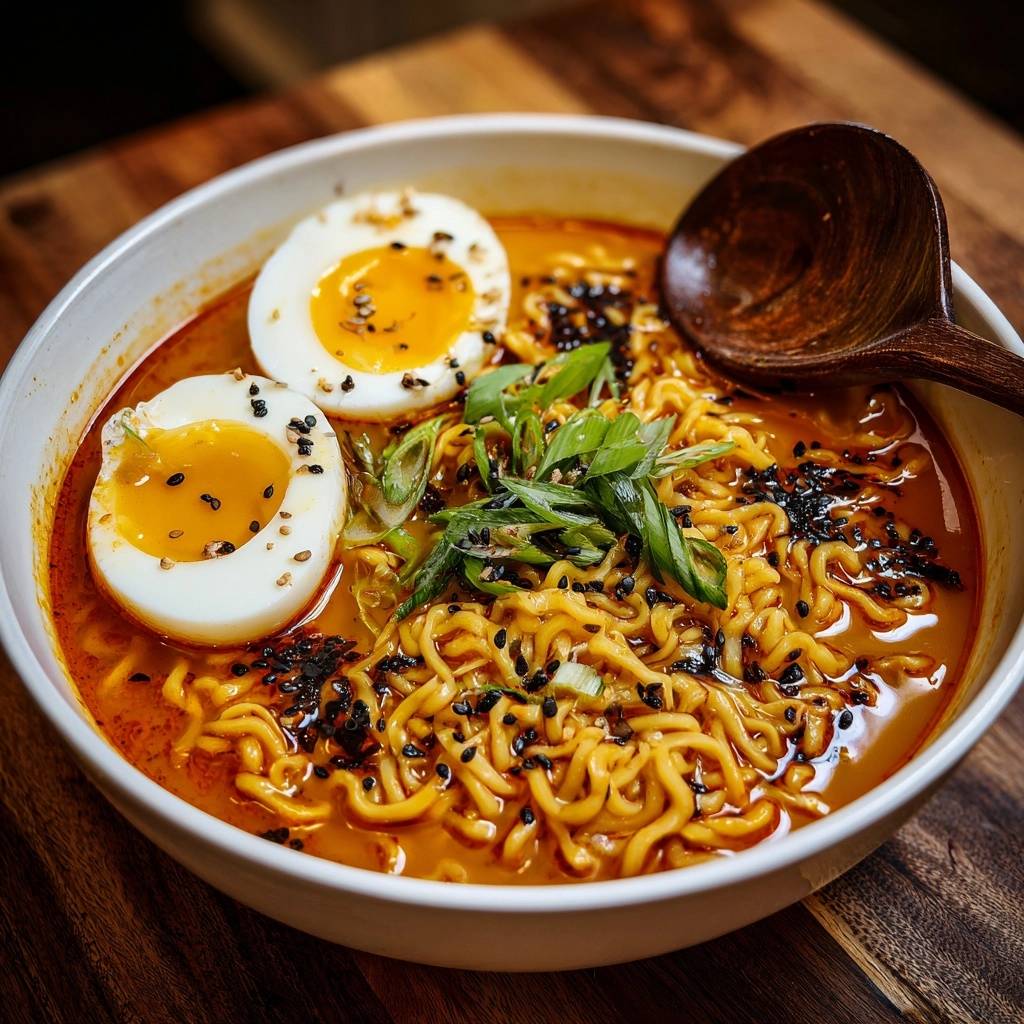
We eat with our eyes first, so take a moment to assemble the bowl with care. Use your chopsticks to lift the noodles and swirl them into a neat mound in the center of the broth. This creates height and makes the dish look professional. Place your egg halves gently on one side so they don’t sink.
For the garnishes, slice your green onions on a sharp diagonal to create long, elegant slivers. Sprinkle the black sesame seeds directly over the eggs and the center of the noodles; the dark color provides a stunning visual contrast against the pale orange broth. Serve it immediately while the steam is still rising and the aroma is at its peak.
Frequently Asked Questions
Can I use regular mayonnaise instead of Kewpie?
You can use standard mayonnaise, but the flavor will be slightly different. Regular mayo is more acidic and less “eggy” than Kewpie. To compensate, add a tiny pinch of sugar and a dash of soy sauce to the mixture to help mimic that deep, savory umami profile found in Japanese brands.
Is the raw egg safe to consume?
When you pour boiling water (212°F) into the bowl while whisking, it effectively pasteurizes the egg. The heat is high enough to kill common bacteria while the constant motion prevents the egg from solidifying. However, if you are concerned, you can use pasteurized eggs found in the carton at most grocery stores.
How do I make this even spicier?
The best way to ramp up the heat is to add fresh Thai bird’s eye chilies or a teaspoon of gochujang to the base mixture before you add the water. This ensures the spice is fully integrated into the broth. You can also drizzle extra chili oil over the top of the finished bowl for a spicy kick that hits you right away.
Can I save leftovers for the next day?
This specific ramen does not reheat well. Because the broth is an emulsion of egg and mayonnaise, reheating it in a microwave or on a stove will likely cause the egg to curdle and the fats to separate. It is strictly a made-to-order dish that should be enjoyed immediately for the best texture.
What are the best noodles for this broth?
While standard instant ramen packets work great, you can upgrade the dish by using fresh alkaline noodles found in the refrigerated section of Asian grocery stores. These have a much better “snap” and a yellow hue that looks beautiful in the creamy broth. Just be sure to adjust your boiling time according to the package instructions.
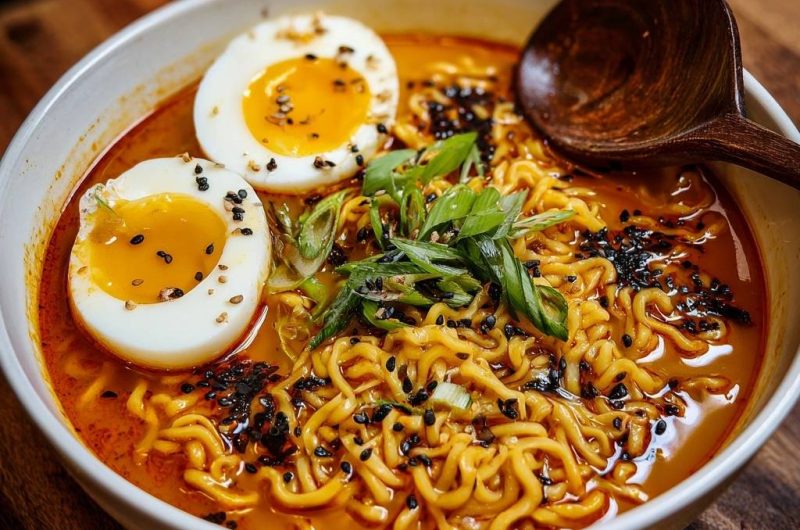
Creamy Spicy Garlic Ramen
Course: Main CourseCuisine: Japanese-FusionDifficulty: easy1
serving5
minutes5
minutes550
kcal10
MinutesA gourmet upgrade to instant noodles that uses a simple whisking technique with Kewpie mayo and egg to create a velvety, thick broth without hours of simmering.
Ingredients
1 pack instant ramen noodles (preferably a spicy variety like Shin Ramyun)
2 cups water
1 large egg (at room temperature)
1 tablespoon Japanese mayonnaise (Kewpie)
1 clove garlic, finely grated
1 tablespoon chili oil with flakes (Lao Gan Ma or similar)
1 teaspoon soy sauce
2 green onions, sliced diagonally
2 teaspoons black sesame seeds
1 soft-boiled egg (marinated or plain), halved for topping
Directions
- Create the Creamy Base: In your serving bowl, combine the raw egg, Japanese mayonnaise, grated garlic, chili oil, soy sauce, and the ramen seasoning packet. Whisk vigorously with a fork or small whisk until the mixture is completely smooth, pale, and slightly frothy. This creates the base for a thick, creamy emulsion.
- Cook the Noodles: Bring 2 cups of water to a boil in a small pot. Add the ramen noodles and cook for exactly 3 minutes. Do not overcook; the noodles should remain bouncy to match the texture in the image.
- The Emulsion Step: This is the critical step for the perfect texture. While whisking the egg mixture in the bowl with one hand, slowly pour about 1/2 cup of the boiling noodle water into the bowl with the other. Whisk constantly to “temper” the egg, preventing it from scrambling. Once smooth, pour in the remaining water and whisk until the broth is rich and opaque.
- Assemble: Transfer the cooked noodles into the creamy broth. Use chopsticks to lift and swirl the noodles so they are fully coated and sit high in the bowl.
- Garnish: Top with the two halves of the soft-boiled egg. Generously sprinkle the black sesame seeds over the eggs and the center of the noodles. Finish with a pile of diagonally sliced green onions. Serve immediately while the broth is at its creamiest and the noodles are firm.
Notes
- Ensure the egg is at room temperature to prevent curdling during the tempering process. Use a spicy ramen variety like Shin Ramyun for the best flavor profile.