Mastering Fluffy Cheddar Herb Rice Without the Clumping
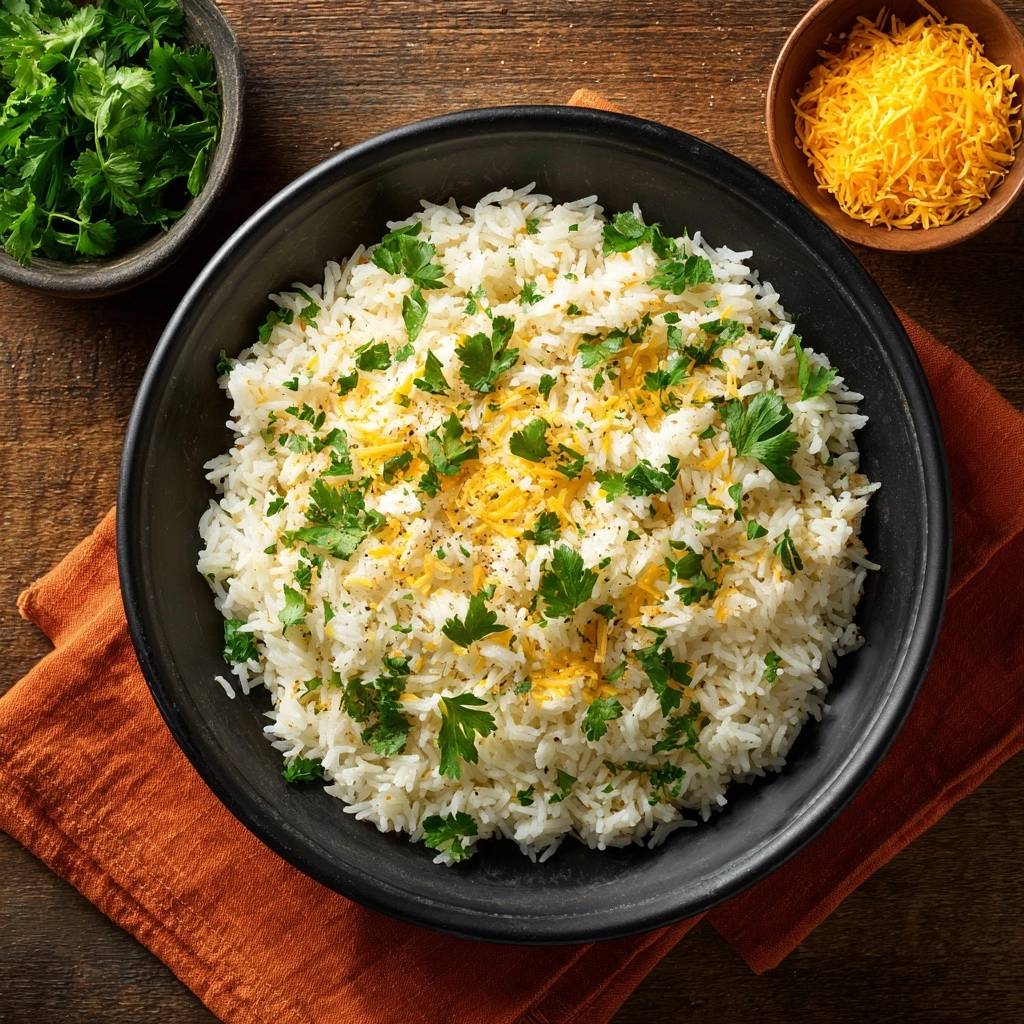
Imagine plunging your fork into a bowl of rice where every single grain is distinct, tender, and coated in a delicate layer of sharp cheddar. There is nothing more disappointing than a side dish that turns into a gummy, heavy mass on your plate. This Fluffy Cheddar Herb Rice solves that problem by focusing on the science of the grain, ensuring a light texture that carries the bold punch of fresh parsley and melted cheese.
The secret to this recipe isn’t just the ingredients; it’s the mastery of starch and steam. By controlling how the rice releases its natural sugars, you create a foundation that stays airy even after you fold in the richness of the dairy. It’s a vibrant, savory side that feels sophisticated but relies on simple, reliable kitchen techniques.
If you’ve struggled with mushy rice in the past, the fix is easier than you think. The absolute key is the mechanical removal of surface starch before the rice ever touches the pot. I’ve found that a full two-minute rinse under cold water is the non-negotiable step that transforms this from a standard home meal into something you’d expect from a high-end bistro.
The Physics of Non-Sticky Long-Grain Rice
To understand why rice gets sticky, we have to look at two types of starch: amylose and amylopectin. Long-grain varieties like Basmati and Jasmine are high in amylose, which helps the grains stay firm and separate after cooking. Short-grain rice, on the other hand, is packed with amylopectin, which creates that signature “gluey” texture perfect for sushi but disastrous for a fluffy pilaf.
When rice is packaged, the grains rub against each other, creating a fine powder of surface starch. If you don’t wash this off, that powder hydrates in the boiling water and turns into a sticky paste. This paste acts as a literal glue, bonding the grains together into clumps. By choosing a long-grain variety, you’re already halfway to success because the internal structure of the grain is designed to hold its shape.
Using Jasmine rice provides a buttery, floral aroma that pairs beautifully with cheddar, while Basmati offers a slightly nuttier profile and maximum grain length. Both options work perfectly here because they respond well to the steaming method. The goal is to let the heat penetrate the center of the grain without breaking the exterior, which is why we treat the rice with such care during the rinsing and simmering phases.
Essential Components for Fluffy Cheddar Herb Rice
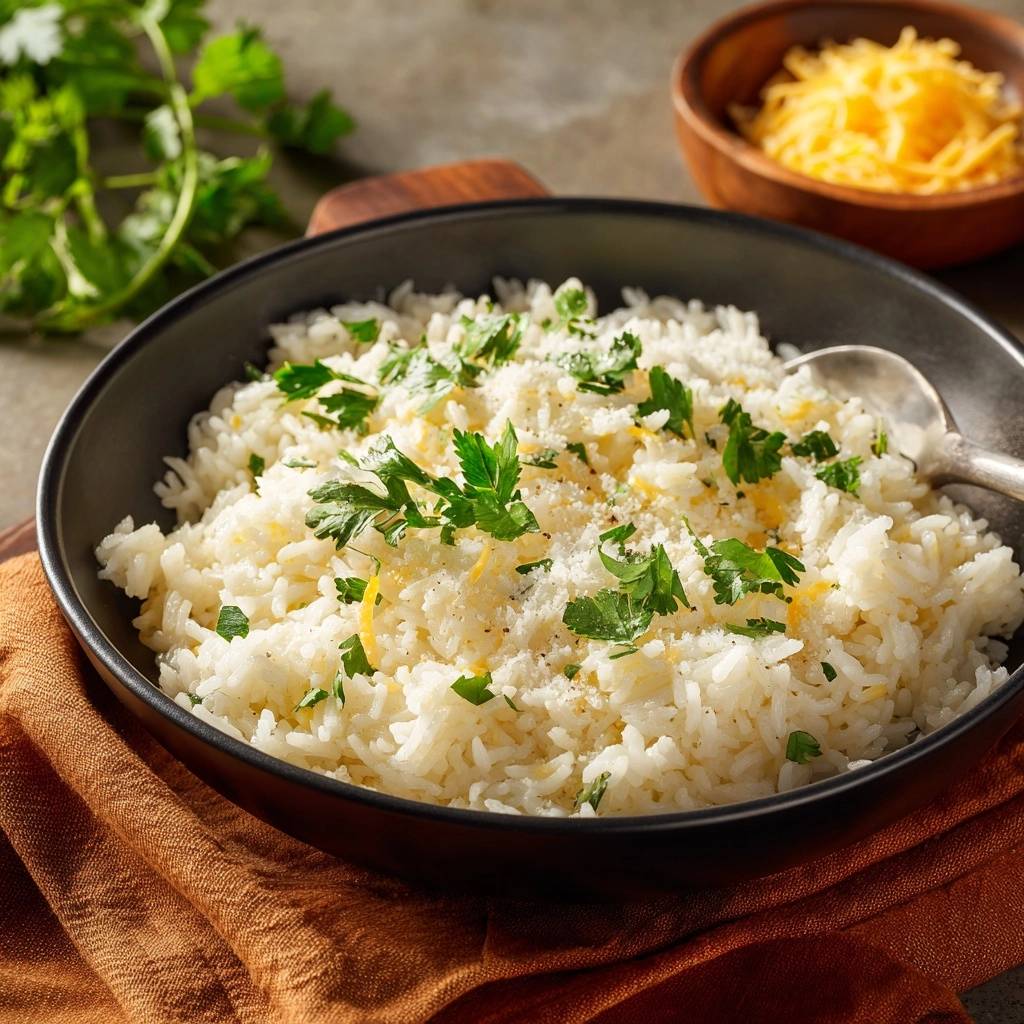
Quality ingredients make a massive difference when the list is this short. I always reach for unsalted butter because it allows me to control the seasoning precisely. Since cheddar cheese naturally contains a fair amount of salt, starting with a neutral fat ensures the final dish isn’t overwhelming. The butter doesn’t just add flavor; it lightly coats the grains as they boil, providing an extra layer of insurance against sticking.
For the cheese, “Sharp” or “Extra Sharp” cheddar is the only way to go. Mild cheddar tends to disappear into the heat of the rice, whereas a sharp variety holds its own against the earthy parsley and black pepper. I also highly recommend grating your own cheese from a block. Pre-shredded bags are coated in potato starch or cellulose to prevent clumping in the package, which can interfere with the smooth melt we want in our rice.
Fresh parsley is another non-negotiable element. Dried parsley flakes often taste like nothing more than dust and lack the vibrant green color that makes this dish pop. Freshly chopped flat-leaf parsley adds a hit of “green” freshness that cuts through the richness of the cheese, making the whole dish feel balanced and light rather than heavy.
Selecting the Right Long-Grain Variety
While you can use standard long-grain white rice, Basmati and Jasmine are the gold standards for this recipe. Basmati grains can expand to nearly twice their length, creating a dramatic, elegant look on the plate. Jasmine is slightly softer but offers a wonderful fragrance that complements the herbs. Avoid “converted” or parboiled rice for this specific dish, as the texture won’t be as delicate.
For a perfect pairing, try our Cheesy Zucchini Rice Bake: The Secret to Creamy Perfection.
The Role of Fat and Seasoning
Adding the butter and salt to the water before the rice goes in is a strategic move. The salt seasons the grain from the inside out as it absorbs the liquid, while the melting butter creates a thin barrier on the surface of the water. This fat helps manage the bubbles, preventing that starchy foam from boiling over the sides of your pot and making a mess of your stove.
The Critical Importance of the Cold Water Rinse
If you skip the rinse, you’re essentially inviting the rice to fail. You need to place your dry rice in a fine-mesh strainer and run cold water over it. Don’t just let the water sit; use your fingers to vigorously toss and agitate the grains. You’ll notice the water running out of the bottom looks milky or cloudy at first. That’s the excess starch you’re trying to eliminate.
Keep rinsing until that water is crystal clear. This usually takes about two full minutes of constant flow. It might feel like a chore, but this mechanical removal is the only way to guarantee that “fluffy” result. A bowl soak isn’t enough because the starch just sits in the water with the rice; the constant flow of a strainer carries the starch away for good.
Step-by-Step: Achieving the Perfect Steam Cycle
Once your water reaches a rolling boil and you’ve added your rinsed rice, the most important rule of the kitchen applies: do not lift the lid. When you cover the pot and drop the heat to low, you are creating a pressurized steam chamber. Every time you “peek” to see if the water is gone, you release that built-up pressure and drop the internal temperature significantly.
This temperature drop causes the rice to cook unevenly, often leaving you with grains that are mushy on the outside but have a hard, crunchy core. Trust the timer. Set it for 15 minutes and let the steam do the heavy lifting. The low heat ensures the bottom doesn’t scorch while the trapped moisture gently swells each grain to its maximum capacity.
Managing Heat and Timing
Your “low” setting should be the lowest your burner can go while still maintaining a tiny bit of activity. If you hear a loud sizzling sound, your heat is too high and the water is evaporating before the rice can absorb it. If the 15-minute mark hits and there is still visible liquid, give it another two minutes, but keep that lid clamped down tight.
The Five-Minute Rest Period
When the timer goes off, resist the urge to serve immediately. Moving the pan off the heat and letting it sit, covered, for five minutes is the “pro move” that separates good rice from great rice. During this time, the moisture that was concentrated at the bottom of the pot redistributes itself upward. This ensures the bottom layer isn’t soggy and the top layer isn’t dry.
Techniques for Incorporating Cheese and Herbs
When it’s finally time to open the lid, put the spoon away. A spoon is a blunt instrument that smashes the delicate, softened grains. Instead, use a fork to gently lift and “fluff” the rice. This allows air to move between the grains, letting excess steam escape so the rice doesn’t continue to cook and soften into a mash.
To get that beautiful, marbled look, don’t dump all the cheese and herbs in and stir vigorously. Sprinkle about three-quarters of your cheddar and parsley over the top, then use the fork to gently fold them in with just one or two turns. This leaves pockets of melted cheese and bright green herbs throughout. Finish by topping the bowl with the remaining ingredients so the fresh garnishes are the first thing your guests see.
Troubleshooting Common Rice Texture Issues
If you find your rice is still a bit crunchy after the resting period, don’t panic. Sprinkle two tablespoons of water over the top, put the lid back on, and place it over low heat for three more minutes. The extra steam will usually finish the job. However, if the rice is already gummy, you can’t really “un-gum” it. In that case, your best bet is to spread it on a baking sheet to dry out and use it for fried rice the next day.
The most common mistake is stirring the rice while it simmers. Stirring agitates the grains and releases even more starch into the remaining liquid, which is a one-way ticket to a sticky mess. Once the lid goes on at the start of the simmer, your job is done until the timer beeps. Let the physics of the pot handle the rest.
Flavor Variations and Herb Substitutions
Once you master this base technique, you can play with the flavors. If you want a sharper bite, try using a White Sharp Cheddar and swapping the parsley for fresh chives. For a more Southwestern flair, use Monterey Jack cheese and fresh cilantro, perhaps adding a squeeze of lime juice right at the end. The method remains exactly the same regardless of the cheese or herb you choose.
You can also boost the savory notes by adding a smashed clove of garlic or a few slices of shallot to the water while it boils. Just remember to fish them out before you fluff the rice so you don’t end up with a big chunk of boiled garlic in a single bite. The goal is to layer the flavors without compromising that light, airy texture.
Optimal Pairings for Cheddar Herb Rice
This rice is incredibly versatile, but it shines brightest next to roasted poultry. A simple roasted chicken or turkey breast benefits from the richness of the cheddar. It also works beautifully with grilled vegetables, where the cheese provides a satisfying fat content to balance out the charred, smoky flavors of peppers or zucchini.
If you’re serving something with a bit of acidity, like a tomato-based bean stew or a lemon-garlic chicken, this rice acts as the perfect foil. The creaminess of the melted cheese cuts through the acid, creating a well-rounded palate. It’s a comforting side dish that feels substantial enough to be the star of a vegetarian plate alongside a crisp green salad.
Storage and Reheating for Maximum Freshness
Rice should be cooled quickly to keep it safe and fresh. Spread any leftovers in a shallow container rather than a deep bowl so the heat can escape fast. It will stay good in the refrigerator for up to three days. I don’t recommend freezing this specific recipe, as the cheese can become slightly grainy when thawed and reheated.
To reheat, avoid the microwave if possible, as it tends to dry out the grains. Instead, put the rice in a small saucepan with a splash of water or broth. Cover it with a lid and heat it over low for about five minutes. The steam will revive the fluffiness of the rice and remelt the cheddar perfectly without making it oily.
Expert Tips for Restaurant-Quality Results
If your pot lid feels a bit loose or steam is escaping out the sides, place a clean kitchen towel over the top of the pot before putting the lid on. This creates a better seal and traps every bit of moisture inside. Just make sure the edges of the towel are tucked up away from the heat source!
Also, keep in mind that if you live at a high altitude, water boils at a lower temperature. You might need to add an extra two or three minutes to your simmer time to ensure the grains are fully cooked. Finally, always use the finest shred possible for your cheese. Smaller shreds melt instantly upon contact with the hot rice, creating a more even distribution of flavor.
How do I keep the rice from sticking to the bottom of the pan?
The combination of the butter and the low heat setting is your best defense. The butter provides a non-stick barrier, while the low heat prevents the bottom layer from dehydrating and scorching. If you consistently have issues with sticking, your “low” setting might still be too hot, or your pot might have a very thin bottom that doesn’t distribute heat evenly.
Can I use brown rice for this recipe?
You can, but you will need to adjust the water ratio and the cooking time significantly. Brown rice typically requires about 45 minutes of simmering and more water (usually a 2:1 ratio). Because brown rice has a much chewier texture and a nuttier flavor, it won’t be quite as “fluffy” as the white long-grain version, but the cheddar and herb additions still taste fantastic.
Why is my cheese clumping instead of melting smoothly?
This usually happens if you use pre-shredded cheese from a bag. Those products are coated in anti-caking agents like cellulose which prevent the cheese from melting into a cohesive sauce. For the best results, grate a block of sharp cheddar yourself using the small holes on a box grater. The smaller the shred, the faster and smoother it will melt into the rice.
What is the best way to chop the parsley?
Make sure your parsley is completely dry before you start chopping. If it’s wet, it will turn into a green paste rather than distinct flakes. Bunch the leaves together tightly and use a very sharp chef’s knife to slice through them. Avoid “rocking” the knife back and forth too many times, as this bruises the herb and turns it dark. One or two clean passes are all you need.
Can I use a rice cooker for this recipe?
Yes, you can definitely use a rice cooker. Follow the machine’s instructions for the water-to-rice ratio, but still perform the 2-minute rinse first. Add the butter and salt to the cooker with the water. Once the cycle is finished, let it rest for 5 minutes, then move the rice to a bowl to fluff in the cheese and herbs manually. Do not add the cheese inside the rice cooker, as it can be difficult to clean.
Is it okay to use dried herbs if I don’t have fresh?
While you can use dried herbs in a pinch, the flavor will be much more muted. If you must use dried parsley, use only about one-third of the amount called for in the recipe, as dried herbs are more concentrated. Add them to the water at the beginning of the boil so they have time to rehydrate and release their flavor, rather than folding them in at the end.
Cheddar Herb Rice
Course: Side DishCuisine: AmericanDifficulty: easy4
servings5
minutes20
minutes210
kcal25
MinutesA foolproof method for long-grain white rice that eliminates stickiness. This recipe features sharp cheddar cheese and fresh parsley for a light, flavorful side dish that stays perfectly tender.
Ingredients
1.5 cups long-grain white rice (Basmati or Jasmine recommended for the visual length shown)
2.25 cups water
1 tablespoon unsalted butter
1 teaspoon salt
1/2 cup finely shredded sharp cheddar cheese (divided)
1/4 cup fresh parsley, roughly chopped (divided)
1/4 teaspoon cracked black pepper
Directions
- The most critical step to prevent gumminess is rinsing. Place the dry rice in a fine-mesh strainer and run cold water over it for at least 2 minutes, tossing the grains with your hand, until the water running underneath is crystal clear. This removes the powdery starch that causes sticking.
- In a medium saucepan, bring the water, butter, and salt to a rolling boil.
- Add the rinsed rice to the boiling water. Stir once just to submerge the grains, then immediately turn the heat to the lowest possible setting and cover with a tight-fitting lid.
- Do not lift the lid. Peeking lets out the steam required to cook the grains evenly and can result in hard centers. Simmer for 15 to 17 minutes.
- Remove the pan from the heat and let it sit, still covered, for 5 minutes. This allows the moisture to redistribute so the bottom doesn’t get soggy.
- Remove the lid and use a fork to gently fluff the rice. Do not use a spoon, as it can mash the grains.
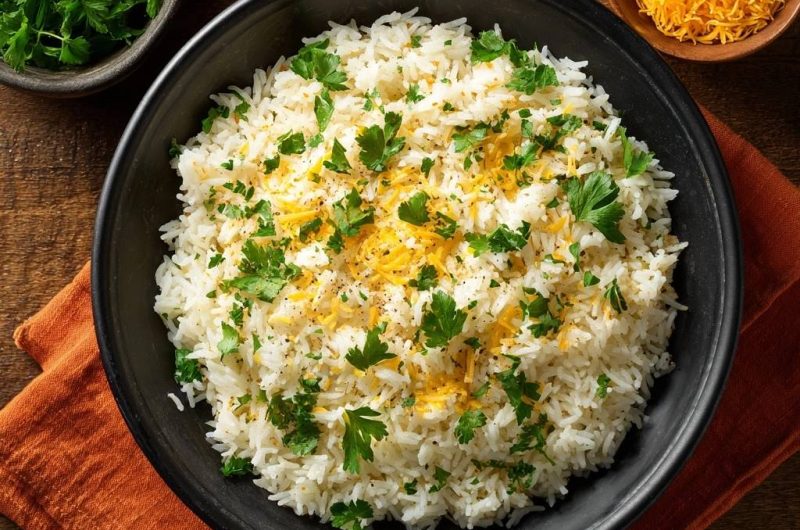
- To achieve the visual presentation in the image: Transfer the fluffed rice to a serving bowl. Do not fully stir in the ingredients. Instead, sprinkle 3/4 of the shredded cheddar, 3/4 of the parsley, and the black pepper over the top. Gently toss once or twice with the fork so some ingredients fall into the crevices while leaving distinct, bright garnishes visible on the surface. Top with the remaining cheese and parsley for a fresh, vibrant finish. Serve immediately.
Notes
- The most critical step to prevent gumminess is rinsing the rice for at least 2 minutes until the water runs clear. Use a fork instead of a spoon to fluff the rice to avoid mashing the grains.